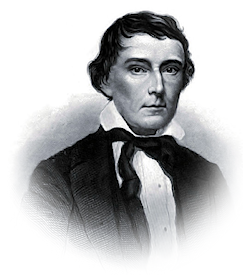
Alexander H. Stephens to J. Henly Smith

Miscellaneous document sources

Crawfordville [Ga.], July 24th, 1860.

Dear Smith, Your letter of the 20th inst. came to hand last night. It gave me some trouble on your account. When I saw as I did the extensive circulation that was given to your letters and the marked impression that they were making on the public mind everywhere, I thought the writer would be hunted up. I felt the embarrassment of your situation in that event. All these things I thought of some weeks ago. Now I am at a loss on the question of the advice I should give you. I do not know what to say to you; and in this state of mind the best thing I can say perhaps is to follow your own sense of duty. Where duty leads there we may never fear to tread. If I wrote, I would be respectful to all persons in my language. I would not confine my letters to the Confederacy; I would write for the Constitutionalist, and I would write for other papers. Perhaps if you should be turned out you could make as much by correspondence as you now do. Gardner[i] ought to pay you well for such letters as you could write. Hampton I suppose can pay nothing. His paper moreover has no influence. If you write you ought to appear in a paper of more character. I have not time to say more today. The drought continues—crops ruined. Let me know the prospect. How will Pa. go? Do the seceders stand any chance there? Has Douglas any hopes in N. York, New Jersey, Ohio or Indiana ? Let me know your opinion from the best lights you have on the subject. I had heard of Garland’s[ii] running away. I saw Mr. Toombs last week. Did not talk politicks with him except in a very general way. We differ widely and radically on present issues; but as I do not intend to take any active part again in public matters, I have made up my mind never to let such things interfere with my private relations.


[i] James R. Gardner was editor of the Augusta Constitutionalist ; Hampton was editor of the Southern Confederacy, published at Atlanta.
[ii] Body-servant of Robert Toombs.


From Annual Report of the American Historical Association for the Year 1911.

Alexander Hamilton Stephens was an American politician who served as the vice president of the Confederate States from 1861 to 1865. After serving in both houses of the Georgia General Assembly, he won election to Congress, taking his seat in 1843. After the Civil War, he returned to Congress in 1873, serving to 1882 when he was elected as the 50th Governor of Georgia, serving there from late 1882 until his death in 1883.

J. Henley Smith was a Georgia journalist.
0 comments

The Great Dallas Fire

News of the Day

New York Times, July 23, 1860

The Houston (Texas) Republic, of the 14th inst., contains an account of the great fire, which destroyed the town of Dallas on the 8th inst., a brief notice of which we obtained by telegraph. It says:

“Just as we were going to press we received intelligence of one of the most terrible conflagrations it has of late been our fortune to record. On Sunday, July 8th, at about half after one o’clock, the citizens of Dallas, Dallas County, Texas, were startled with the terrible cry of fire. The flames had broken out in front of PEAK’s new-drug store, which almost immediately enveloped the whole house. It was a two story frame, and filled with stores of all kinds. The fire then spread to SMITH’s warehouse, then to the Herald Office, from which nothing but the books could be removed. The Herald office was a total loss, four presses, material of every kind, clothing, in fact everything. But we learn from a letter received in this city from the proprietor, that the paper will again be in operation in less than six weeks, new material of every kind having been ordered.

The St. Nicholas Hotel, a large three-story frame-building, 100 feet front, by 100 feet back, is totally consumed. SMITH & MURPHY’s brick store burnt. SHIEK’s new warehouse and store, with entire stock of goods; the Crutchfield House and all its furniture, including the Post office and the mail matter in it. WESTEN’s corner, SIMON’s new building just framed; the old tavern, SADDLER’s shop, HIRCH’s large storehouse with entire lot of goods. CARR’s new frame building.

SIMON’s store and goods. NICHOLSON & FERRI’s Exchange office. THOMAS’ drug store. ELLETT’s storehouse and goods. MCCAY’s law office and books. STACKPOLE’s entire establishment and goods. LYNCH’s establishment. CAMTH’s store-house and goods. FLETCHER’s mercantile establishment. BIRTLE’s old establishment and private residence. Mrs. BINGHAM’s old residence. Law office, books and papers belonging to LEONARD, MCKENZIE, CROCKETT, ADAMS, CHAPMAN, RUSSELL, HAY, and the medicine, surgical instruments and libraries of Drs. PRYOR, SPENCER, JOHNSON and THOMAS.

It was impossible to compute the exact loss, which will in all probability exceed $300,000. All are houseless and homeless, now, and was indeed a rude awakening from last Sunday’s afternoon siesta, the citizens of Dallas experienced. Many barely escaped with their lives, and clothing they happened to have on at the time.

0 comments

William T. Sherman to Thomas Ewing, Jr.

Miscellaneous document sources

Dear Tom : . . . The fact that Congress did not admit Kansas must be a disappointment to you all, but the certainty of her giving a Republican vote was too much for a Democratic Congress, with the almost certainty of the election going into the House. Down here no one thinks of Lincoln. The struggle will be between Douglas and Breckenridge; the latter will win. . . If Lincoln should win I don’t know but that something would turn up to my liking, but it won’t do for me to say Lincoln down here. The devil himself would be a more welcome guest than a Black Republican, yet I have no fears myself of the election of anybody; if our form of government will not endure any man as president it is not a fit machine and should break up; but of course I know that no man would now disturb property in slaves; as to the limitation of its sphere, that is comparatively a small matter. . .


adapted from General W.T. Sherman as College President, A Collection of Letters …. (1912).

“William T. Sherman to Thomas Ewing, Jr., July 22, 1860,” House Divided: The Civil War Research Engine at Dickinson College, http://hd.housedivided.dickinson.edu/node/32609.

0 comments

The American Press

News of the Day
1860s newsprint

Daily Gazette & Comet [Baton Rouge, LA], July 21, 1860

There is said to be about three hundred daily papers at this time in the United States. Five hundred and seventy thousand is estimated as the regular circulation of the daily press, or 184,080,000 per annum. There are also about two thousand five hundred tri-weeklies, semi-weeklies, and weeklies, which would probable make the aggregate number of newspapers annually distributed throughout the United States 412,800,000.

A first-class daily paper in such a city as New York has generally twelve editors and reporters, forty printers, two proof-readers, thirteen pressmen, engineers and other employees in the press-room, half a dozen correspondents in Europe, two or three regular correspondents in Washington, thirty-five persons in the clerk, wrapping and mailing departments, and about as many more engaged as carriers.

0 comments

At the Court of St. James

Diary of George Mifflin Dallas, United States Minister to England 1856 to 1861

1860. July 21.–The Peers don’t approve their troublesome “chartered libertine” Brougham. Shaftesbury writes. Lansdowne comes to make impressive assurances. And Overstone denounces ore rotundo.

0 comments

The Camels.

News of the Day

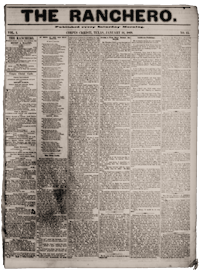
The Ranchero [Corpus Christi, TX], July 21, 1860

In his late report, Gov. Floyd, the present Secretary of War, says:

The experiments thus far made (and they are pretty full) demonstrate that camels constitute a most useful and economical means of transportation for men and supplies through the great deserts and barren regions of our interior. A camel will go safely with its burden over ground so rough and precipitous that a mule will scarcely pass over it unladen without assistance. They require no forage but what they gather in the most sterile and barren parts of our continent, and for many days together live conveniently without water. An abundant supply of these animals would, beyond all doubt, enable our army to give greater and prompter protection to our frontiers, and to all our interoceanic routes, than three times their cost expended if any other way. As a measure of economy and efficiency, I cannot too strongly recommend the purchase of a full supply to the favorable consideration of Congress.

0 comments

Three Negroes Carried South

New York Times

The New York Times, July 21, 1860

Shameful Outrage.

Three negroes living near Clifton, Iroquois County, Illinois, were kidnapped on the 2d. The local papers give the following account of the transaction.

On Sunday the Kidnappers met at the house of JOHN O’NEAL, about three-fourths of a mile west of Clifton, procured a team, and placed sentinels along the road and in and about Ashkum. On the afternoon of that day GEO. D. SMITH went into the village and procured a room. He then went out and enticed the unsuspecting five negro men into this place, and called for, and was supplied with whisky and cards. At a preconcerted signal, the whole company entered the house with knives and revolvers and attempted to take the negroes and fetter them. A general fight ensued, several of the negroes fighting desperately, and two made their escape. The three, SLATER, who leaves a wife, and who is a free negro from Boston, JOHN, from Maryland and WILLIAM, a little boy from Florida, were finally subdued and tied. They were immediately put into a lumber wagon in waiting and run under the whip to Ashkum. The alarm having been given in and about Clifton, the citizens of the neighborhood assembled, and the down train from Chicago coming along in a short time, they got aboard of the cars and went to Ashkum for the purpose of effecting a rescue. Arriving at that place the conductor ran into town without giving a signal, stopped but a moment, until the negroes could be rolled into the baggage-car, and started his train without even attempting to make the usual signal. A large company was there armed, ready to prevent a rescue, and the Clifton men were compelled to jump off the train without having accomplished anything. The three negroes were taken South, and have undoubtedly, ere this time, been sold.

0 comments

A Court of Quarrels.

News of the Day
1860s newsprint

Daily Gazette & Comet [Baton Rouge, LA], July 20, 1860,

Mr. Comet:—We of the “milder sex”—a term applied to us, by masculine humanity are not disposed to object to the edicts of the lords of creation, who, by virtue of muscel, claim to govern the world. I am not a woman’s right’s  woman, I would have you also to understand in preface; yet there are evils and wrongs under which we live, that might be modified to suit the advancing spirit of the age. Do you notice Sir how our cases are treated by the semi-barbarians, who set on benches and in jury-boxes, and determine between us in that God-forsaken place, the city of New Orleans. Notice this sir, and then notice how the press handles us. Here is a sample from the Picayune. It is rather short for the dog days, but will suffice.

Ladies Quarrels.—Miss Betty and her mother had an introduction to Recorder Adams, yesterday, at the request of Mrs. Carr, who stated that they had been persecuting her for the last three months, and finally on the 14th inst., at the corner of Rousseau and St. Mary, had threatened to cowhide her. The case was fixed for examination on the 19th.

Now Sir, I appeal to you if such a case is a case for the sneers, and low jests of a masculine court? Could not the arbitration of friends and neighbors of the parties—people occupying the same status in society and of the same sex; fix a difference of this nature, in a better and more satisfactory manner, than the Court Recorder? There is one at least who thinks so, and she is your friend.

 Marie.

0 comments

At the Court of St. James

Diary of George Mifflin Dallas, United States Minister to England 1856 to 1861

1860. July 20.–Lord Brougham called at ten A.M. I had just time to tell my servant to refuse me. He is so old, and has been so remarkable a man in his day and generation, that I have to remind myself of his offence, and of his aggravating it by the form and manner of his pretended explanation, or I could scarcely screw my mind up to the point of turning him from the door. He came a second time, between twelve and one. I was then at the Kensington Museum, and my secretary, receiving him with the utmost deference, was, nevertheless, silent. He said once or twice, “You know who I am? Lord Brougham, Lord Brougham!” He went to the front door, and then returned in the front office, and remarked, “You know you don’t treat your negroes as well as they are treated in the Brazils!”

The treat I enjoyed at the Kensington Museum was one of the richest I have had in England. The Turners, the Hogarths, the Leslies, etc., are all delightful.

What an admirable reply to Lord Grey is that Fourth of July speech of Everett’s. He has literally overwhelmed Grey in the spirit of truth and moderation.

Received a note from Lord Shaftesbury, hoping that I won’t report to my government the “very foolish and very unwarrantable conduct of Lord Brougham”! This advice is about as silly as Lord Harry’s act, and perhaps much less excusable.

0 comments

The Town of Dallas Consumed

News of the Day
1860s newsprint

Daily Gazette & Comet [Baton Rouge, LA], July 19, 1860

The Houston Telegraph gives an account of a destruction conflagation  which visited Dallas on Sunday the 8th inst. With the exception of a few dwelling houses, the entire place is in ashes. The loss is estimated at $300,000.

0 comments

Reports of Imported Africans

New York Times
The New York Times, July 19, 1860
            (The New-Orleans papers…) contained a dispatch, three days since, from our city, to the effect that 103 negroes had been safely delivered, per schooner, to persons in this vicinity. It’s a true bill, we hear. The sons of Afric were brought here, delivered to a steamboat, and are now, we take it for granted, safe, and not likely to undergo what the imported darkies so detest—deportation.1 Whoever conducted this affair, has our congratulations on his or their success, as the case may be, whether the Africans came from the Gold Coast via Key West, or whether they made a straight-out trip by the shortest route from their native land.
We take it that the trade is, to all intents and purposes, opened; why not? Why should not those who are in want of negro labor import it at a low cost when they are civilizing and christianizing a set of barbarians by the same course which redounds to their interest? — Mobile Register, July 14.

  1. This statement is blatantly ridiculous. The imported “negroes” on the Clotilda wanted nothing more than to be returned to the homes that they had been stolen. Bewildered as to what their future held and unable to communicate with any but  a few that had been imported with them, they certainly did not feel safe in their new “home.”
0 comments

The War Against the Pawnee Indians

New York Times
Special Dispatch to the New-York Times.
Washington, Wednesday, July 16.
Another Attack on the Pawnee Indians
Agent GILLIS, of the Pawnee tribe of Indians, who lately reported the attack upon that tribe by the Cheyennes, Sioux and other bands, as noticed in the TIMES, again reports, under date of July 5, that the Pawnees started on their Summer hunt on June 2[???], crossing the Platte River at Eagle Pass, and leaving behind their sick and cripples, consisting of six men, six squaws, and about the same number of children. On the morning of July 5, the same war party, which had made the previous attack, again returned, caught and scalped one squaw and burned twenty of the principal lodges, and destroyed their growing corn and vegetables. The war party remained three hours roaming about the place, and then left, passing up the Loup fork of the Platte. Agent GILLIS has concealed these helpless Indians in two underground caves near his residence, where he says he will feed and protect them as far as he can, trusting that the War Department will soon afford them the protection guaranteed them by treaty. The Indian Office has already called the attention of the War Department to these depredations, and asked the military intervention of the President, as authorized by the nineteenth section of the intercourse act of 1834.
0 comments

Fire at Dallas

News of the Day
1860s newsprint

Texas Baptist [Anderson, TX], July 19, 1860

We are sorry to learn that nearly the whole of the town of Dallas was destroyed by fire on the 7th instant, leaving not a hotel, store, or office hardly remaining. The loss is estimated at between $3000,000  and $500,000. The fire spread with such rapidity that very little was saved, and part of the goods taken out of some of the buildings were consumed. This will be a severe blow on that growing place, as we understand there was but little insurance. It is supposed to have been the work of abolition incendiaries.

0 comments

The Drouth

News of the Day
1860s newsprint

Texas Baptist [Anderson, TX], July 19, 1860

We have just returned from Huntsville. The roads continue dry and dusty. Farmers are much discouraged. Corn crops are about a total failure in many fields, and the best is not half a crop.—Cotton is now presenting a gloomy prospect, a few very small bolls have matured and are opening. The most of the young bolls and forms will soon fall off unless it rains soon. The cotton crop is likely to be a worse failure than the corn crop, in the counties we have seen. We hope our friends in the northern part of the State will pity us and send us some flour, and some small grain of different kinds to sow for our stock during the winter. We want Barley, Rye, Wheat and oats.

0 comments

At the Court of St. James

Diary of George Mifflin Dallas, United States Minister to England 1856 to 1861

1860. July 18.–Judge Longstreet, the United States Delegate to the International Congress, sent yesterday his written withdrawal, in consequence of Lord Brougham’s conduct.

There is no telling to what this outrage may lead. Brougham is already feeling the weight of a unanimous public opinion. He attempted to-day to make an explanation or apology; said he meant no disrespect to me or my government, and then, with a fatuity scarcely comprehensible, went on to make the matter worse. Is he, on this question of slavery, deranged?

Dr. J–, the delegate sent by the Statistical Association of Massachusetts, called upon me. He said he came from Lord Brougham, and was by him authorized to remove any impression that I might have imbibed that he intended to wound my feelings. I interrupted Dr. J–, and said that I could receive nothing from Lord Brougham at second-hand; if he wished to do what was right and restore the state of things his folly had disturbed, he must make an ample and distinct apology for the insult upon the United States; he must do this in the very body where he had made the attack, and what he said should be sanctioned and approved by that body; if this was satisfactorily done, the personal indignity to myself would melt into nothing before the infirmities of his great age. Alas! that an American citizen should have witnessed, as Dr. J– did, this outrage upon his country, and yet be so bent upon his wretched statistical essay or report as to prefer reading this last to resenting the former. Dr. J– distinguishes: says Lord Brougham’s act don’t touch him, because he is from a free State! “Out upon such half-faced fellowship!”

0 comments

Letter to Hannibal Hamlin-Nominee for Vice President

Civil War Day-by-Day

SPRINGFIELD, ILLINOIS, July 18, 186o.

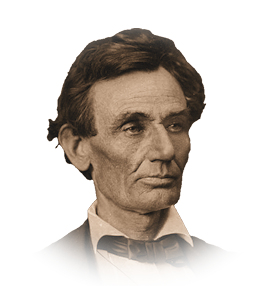
My dear Sir: It appears to me that you and I ought to be acquainted, and accordingly I write this as a sort of introduction of myself to you. You first entered the Senate during the single term I was a member of the House of Representatives, but I have no recollection that we were introduced. I shall be pleased to receive a line from you.

The prospect of Republican success now appears very flattering, so far as I can perceive. Do you see anything to the contrary?

Yours truly,

A. Lincoln

0 comments

John L. Scripps to Abraham Lincoln

Civil War Day-by-Day
John Locke Scripps, author of the first biography of Lincoln.
Chicago, July 17th 1860
My Dear Sir,
I send you by this day’s mail a copy of the Campaign Biography.
You understand some of the difficulties under which it has been prepared. First, I labored two weeks after my return from Springfield upon the plan of making a pamphlet of 96 pages. Then Medill made the arrangement in New York for a pamphlet of 32 pages — and the Tribune people would consent to no delay. My only resource then was to condense here and omit there, instead of writing it over as I wished upon the plan of making a pamphlet of 32 pages. After I got to New York I had the printers estimate how much of my manuscript, with the accompanying extracts, it would require to make the 32 pages. I furnished the precise amount. As fast as the the pages were set up it was they were stereotyped. When the whole was in type, it was found we had 35 pages, and Greeley & Co, insisted upon having the 32nd page reserved for their advertisment. I then had to take out cut down four pages, and there were only about eight pages remaining to be stereotyped. I did the best I could, but you will see that both the account of your debates with Douglass [Douglas] as well as the conclusion, are sadly botched. There was no help for it. I have also reason to feel a little hard at some of my Springfield friends. Before I left there, I had the promise from some there of certain material which they could easily have furnished. I was to have it without delay. After waiting a week, I wrote. My letters have not yet been answered. However, I will not complain.
I believe the biography contains nothing that I was not fully authorized to put into it. In speaking of the books you read in early life, I took the liberty of adding Plutarch’s Lives. I take it for granted that you had read that book. If you have not, then you must read it at once to make my statement good. I cannot expect that you will be greatly pleased with the performance. It fails very much of pleasing me, and of course I cannot hope any one will have a higher opinion of my own offspring than myself. But while I do not anti expect it to excite any positive gratification on your part, I shall be much pleased to know that there is nothing in it that is positively painful to you. More than this I cannot expect.
Very Truly Yours
J. L. Scripps

John Locke Scripps (27 February 1818 – 21 September 1866) was an attorney, journalist, and author. He wrote the first published biography of Abraham Lincoln in 1860 — this is what he is referring to in the letter. He was the first cousin once removed of E.W. Scripps, the founder of E. W. Scripps Company.

0 comments

At the Court of St. James

Diary of George Mifflin Dallas, United States Minister to England 1856 to 1861

1860. July 16.–The International Statistical Congress opened its fourth session to-day in this city. I had declined being a member, when invited a month ago by the President of the Board of Trade, Mr. Milner Gibson. On Saturday last the Committee of Organization sent special cards to the members of the Corps diplomatique, and, in order to manifest my respect for the Prince Consort, I went to hear his opening address. Lord Brougham took the opportunity, after the delivery of the address, which was really very good, abruptly to call out to me by name, and hoped I would observe that there was “a negro in the assemblage!” I perceived instantly the grossness of the act, and, seeing the black in the very centre of the philosophers, hadn’t a doubt that it was a premeditated contrivance to provoke me into some unseemly altercation with the coloured personage. I balked that by remaining silent and composed. The gentleman of colour, however, rose, and requested permission of the Prince Consort, as chairman, to thank Lord Brougham for his notice, with an emphatic conclusion, “I am a man.” Query: Is not the government answerable for this insult? Or must it be regarded as purely the personal indecency of Lord Brougham? Curia advisare vult.

0 comments

$150 Reward

Civil War Day-by-Day

Runaway slave broadside from Charles County, dated July 15, 1860.

$150 Reward: Ran away from the subscriber, on Wednesday, July 11, Negro Man, Nace Dorsey. He is about 5 feet 11 inches in height--may be 6 feet--large and muscular, black, and with a few grey hairs. Is about 40 years old. 1 will give the above reward for his apprehension and delivery to me in Charles County, Maryland. A. JACKSON SMOOT. July 15. 1860.

Public domain; Wikimedia Commons


0 comments

Alexander H Stephens to J. Henly Smith

Miscellaneous document sources

Crawfordville [Ga.], July 15th, I860.

Dear Smith, I have but a moment to acknowledge receipt of two letters from you—the dates I forget. I am about to start in a few moments for Augusta where I am to be at court tomorrow. I am glad you corrected the lying report that I was going to support the nomination of the seceders[i]. Never could I do such a thing until I became as inconsistent and as regardless of my public record and long cherished principles as those who put upon [us] this nomination. And I trust I may never live to see the day when I shall feel the personal degradation that such a consciousness would inflict upon me. I shall support the nominees of the National Democratic party as long as its flag floats bearing upon its folds the principles upon which I at first entered its ranks. But I can say no more. I shall take no active part in the canvass. In quitting public life my object was to quit all political strifes and keep out of such contests. I am out, and intend to stay out. As a private citizen I shall exercise my franchise and most cordially shall I vote for Douglas and Johnson. I had forgotten what you wrote about the Cyclopoedia. Do as you propose. Send me the 3 vols, when out as you propose or get Shillington to send them. I have got the newspapers you sent me and am obliged to you. Send me more of the same sort. I have been highly entertained with them. I am better than I have been but am still an invalid. The drought here is distressing. We shall make very little corn. The prospect is gloomy beyond conception. On the 11th inst. the thermometer here was at 102°—never before above 98°.


[i] The Breckinridge ticket, whose supporters had seceded from the Charleston and Baltimore conventions.


From Annual Report of the American Historical Association for the Year 1911.

Alexander Hamilton Stephens was an American politician who served as the vice president of the Confederate States from 1861 to 1865. After serving in both houses of the Georgia General Assembly, he won election to Congress, taking his seat in 1843. After the Civil War, he returned to Congress in 1873, serving to 1882 when he was elected as the 50th Governor of Georgia, serving there from late 1882 until his death in 1883.

J. Henley Smith was a Georgia journalist.

0 comments

Ranaway

Civil War Day-by-Day

Runaway slave broadside from Clay County, Missouri, dated July 14, 1860.

RANAWAY — FROM the residence of the undersigned, one mile north of Barry, Clay county, Mis- souri, on the night of the 13th inst., a mulatto negro girl named VERCILLA, aged about 17 years, weighs about 135 lbs., and has a scar on her left jaw. ..A liberal reward will be given for the delivery of said negro girl to me, or her confinement so that I can get her GIDEON THOMPSON. Clay Co., Mo., July 14, 1860.

Digital Commons—University of Southern Maine, Accessed 7-14-2020

Note: This broadside is public domain by virtue of being published and distributed 160 years ago.  Any copyright would have lapsed long ago.


1 comment

Incendiaries.

News of the Day

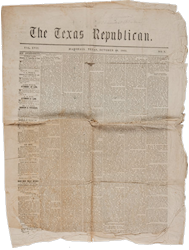
[Marshall] Texas Republican, July 14, 1860

On Friday last, during the absence of the White family, the residence of Dr. C. B. Raines, Jr., about four miles from this town on the Palestine road, was destroyed by fire. The house and kitchen together with all the furniture, the wearing apparel of the family, silver ware and a considerable quantity of jewelry were consumed. The fire is supposed to be the work of a negro man belonging to the family, who is now in jail awaiting his trial.

On Friday night last, the house of Dr. Shelton, in New Salem, Rusk County was burnt, supposed to be the work of a white incendiary.—Rusk Enquirer.

0 comments

Dallas Burned

News of the Day

Navarro Express [Corsicana, TX], July 14, 1860

The news has just reached us of the destruction by fire of almost the entire town of Dallas on the 8th inst. The loss is estimated at $400,000. All the buildings on the public square, excepting two groceries and a law office, have been consumed. The fire originated in a drug store from either spontaneous combustion of what is commonly known as prairie matches, or the ignition of such matches by rats gnawing them. We understand that several dwelling houses off the square have been burned also…

We cannot too forcibly call the attention of all persons to the danger of having these prairie matches about. They are of French manufacture, and have something in their composition of which rats and mice are fond. We learn that Waxahachie narrowly escaped burning from the same cause. A merchant of this place showed us a box of the same article, which had been gnawed into, in his store, and it is astonishing that his store was not set on fire by them. The slightest friction during the warm weather is sufficient to ignite them. The storehouse and stock of goods of A. M. Byers, of Mount Pisgah, in in this county, was burned on the 8th inst., from the same cause it is supposed.

P.S. Since writing the above, Mr. Stackpole, of Dallas, has brought the intelligence that thirty-three houses were destroyed by fire in Dallas, and the loss estimated at $500,000! It is now believed Abolition emissaries were the incendiaries, two of whom are now pursued by a number of persons…

0 comments

The Drouth

News of the Day

[Marshall] Texas Republican, July 14, 1860

The drouth still continues. For weeks the thermometer has stood at a hundred and over in the shade. Each day seems to excel its predecessor in intensity of heat and sultriness. On Saturday, the thermometer, we are told, stood in the shade at the railroad office at 113, and on the West side of the square in the interior of brick houses at 111. The air was so hot as if it came from over a furnace. The corn crop is ruined beyond redemption, and we have every reason to fear that the cotton crop will share the same fate. The most of the cotton is scarcely 16 inches high, and the squares are falling off.

The State Gazette seems to think that the accounts of this drouth are over estimated. This is a sad mistake. The disaster is greater even than men are willing to admit. It will approach, in some portions of the State, nearly, if not quite, to a famine, and we have every reason to believe it will be necessary to call the legislature together to pass laws to postpone the collection of debts until another crop is made. Such is the actual condition of affairs, extending from the Rio Grande to the Ouachita river in Louisiana, and how far Eastward we know not, and from the Gulf to the 33rd parallel of latitude, with perhaps here and there a favored farm or neighborhood. And yet, to read the newspapers, one would suppose that a tolerably fair crop was being made.

0 comments

Serious Calamity—Great Fire

News of the Day
1860s newsprint

Standard [Clarksville, TX], July 14, 1860

We made a notice for our last issue, of the enlargement of the Dallas Herald, and now, as will be seen below we have to record the destruction of the establishment, and of nearly all the business section of Dallas; the stores, offices, hotels, &c., around the Square. We sincerely sympathize with the serious losses of all, several of them our personal friends; and we feel the sympathy of fraternal association with our brethren of the Herald. Mr. Swindells had just got back from the North, where he had made purchases; only a part of which, we think, had been received. We presume he will be able to put his Press in working order again; the Herald building being a one story framed house, we suppose the heat of the conflagration hardly melted any of the iron. We hope soon to see the Herald, in the field once more, making its announcements, as usual, with the force of a trumpet blast; and we trust that the several mercantile houses will be able to fill up their stocks and renew. We would suppose that much merchandise might have been packed out to places of safety. At least we hope so. Dallas was a delightful little village, and we feel certain, with the notable enterprise of the inhabitants, that the burnt district will renew all its late reputable appearance, and perhaps remodel and improve.

Dallas, Texas, July 10, 1860.
Major C. DeMorse, Clarksville:

Dear Sir:—I write this morning to inform you of the occurrence of the most appalling event that has ever visited Dallas. On Sunday, the 8th about 2 o’clock, a fire broke out among some rubbish on the outside of the store of Messrs. W. W. Peak & Bro., and such was the rapidity of the flames, that in less than two hours, every building on the western and northern sides of the square, and half of those on the eastern were consumed, together with very nearly all their contents. Both the hotels,—the Dallas and the Crutchfield—the “Herald” office, and every store in town are now a mass of ruins. I have not time now to give you a list of the buildings destroyed,—the loss is variously estimated at from $300,000 to $400,000, on which there was but about $10,000 insurance. Already I hear the sound of the carpenters, &c., preparing to rebuild some of the stores. Most if not all our merchants will go to work at once to rebuild, and I hope to see our town, in a short time, rebuilt more substantially if not more elegantly than it was before the fire.

Will you please announce in the “Standard” that I have ordered an entire new outfit for the Herald, and shall issue the paper just as soon as I can get the material here. I saved nothing from the office but my books.

Yesterday afternoon another fire took place, about a mile and a half from town. The residences of Mr. J. J. Eakins and Silas Leonard, were entirely consumed together with all their contents. The families were in town at the time, and nothing was saved but a bed or two.

 Very truly, yours, in haste,
John W. Swindells,
Publisher Dallas Herald.

 Since receiving the above, we learn that the Store of Mr. Dupree at Ladonia, Fannin County, was burned some three days since believed to have ignited from combustion of matches, resulting from the heated atmosphere. Also a store at Milford; similar cause; also a fire fortunately suppressed, but commencing from the same cause, ignition of matches, in the Drug Store at Honey Grove.

0 comments