Ranaway

Civil War Day-by-Day

Wilmington Journal, Wilmington, North Carolina, August 2, 1860

$10 REWARD. RANAWAY from the subscriber on the 12th instant, a negro woman named ORRY. Said negro is about 5 feet high. She is a mulatto, with nearly straight hair, and about 27 years old. I will give the above reward for her delivery to me, or for her confinement in Jail so that I can get her. She will be lurking about Magnolia, in Duplin county, and in Sampson. J. B. PIGFORD. Oak Grove, New Hanover co., July 23, '60. 48-3w

$10 REWARD.

RANAWAY from the subscriber on the 12th instant, a negro woman named ORRY. Said negro is about 5 feet high. She is a mulatto, with nearly straight hair, and about 27 years old. I will give the above reward for her delivery to me, or for her confinement in Jail so that I can get her. She will be lurking about Magnolia, in Duplin county, and in Sampson.  J. B. PIGFORD.

Oak Grove, New Hanover co., July 23, ’60.
48-3w

0 comments

The Plot in Texas

News of the Day
1860s newsprint

Semi-Weekly Mississippian [Jackson, MS], August 3, 1860

For diabolism of intent—revolting cruelty—and savage ferocity—this affair has no parallel in the annals of Abolition outrage. The details present a fertility of wicked invention and an exuberance of depravity sickening to all but the most hardened in vice, villainy, cruelty and corruption. The scheme extended in its ramifications throughout the Northern counties, some of them settled by numerous, thrifty, intelligent and prosperous communities. There is scarce anything in the dark and bloody calendar of crime, but it contemplates—theft—murder by poison, murder by midnight assassination, murder by fire, murder of the old, murder of the young—rape—arson—all were to be enacted in the tragedy for which the actors were rehearsing their parts. Fortunately the plot was revealed before the day of its consummation, and its authors will be held to a fearful accountability. Who thus stealthily laid this mine—who were the concoctors of this scheme of conflagration, terror and blood—the account below fully explains.

They were the emissaries of Northern Abolition Societies, wolves in sheep’s clothing, who, for the most part had come into unsuspecting communities under pretence  of preaching the gospel, of teaching the young, &c., &c. They had come to put into practice the theories which the Sewards and Sumners, the Lovejoys and Sherman’s are preaching in the councils of the nation—animated by the same spirit which gives vitality to the Black Republican organization and which seeks to place Lincoln at the head of the Government.

Let Southern men of all parties, study these details, and learn from them profitable lessons concerning the designs of that party which has already obtained control of more than three-fourths of the Northern State governments and which is filling both branches of Congress with its devotees.

But read:

The outhouses, granaries, oats and grain of Mr. Crill Miller were destroyed a few days after the destruction of Dallas. This led to the arrest of some white men, whose innocence, however, was proved beyond a doubt. Several negroes belonging to Mr. Miller were taken up and examined, and developments of the most startling character elicited. A plot to destroy the country was revealed, and every circumstance, even to the minutiæ, detailed. Nearly, or quite, a hundred negroes have been arrested, and upon a close examination, separate and apart from each other, they deposed to the existence of a plot or conspiracy to lay waste the country by fire and assassination—to impoverish the land by the destruction of the provisions, arms and ammunition, and then, when in a state of helplessness, a general revolt of the negroes was to begin on the first Monday in August, the day of election for State officers. This conspiracy is aided and abetted by Abolition emissaries from the North, and by those in our midst.

 The details of the plot and its modus operandi, are these: Each county in Northern Texas has a supervisor in the person of a white man, whose name is not given; each county is laid off into districts under the sub-agents of this villain, who control the action of the negroes in the districts, by whom the firing was to be done. Many of our most prominent citizens were singled out for assassination whenever they made their escape from their burning homes. Negroes never before suspected, are implicated, and the insurrectionary movement is widespread to an extent truly alarming. In some places the plan was conceived in every form shocking to the mind, and frightful in its results. Poisoning was to be added, the old females to be slaughtered along with the men, and the young and handsome women to be parceled out amongst these infamous scoundrels. They had even gone so far as to designate their choice, and certain ladies had already been selected as the victims of those misguided monsters.

 Fortunately, the country has been saved from the accomplishment of these horrors; but then, a fearful duty remains for us. The negroes have been incited to these infernal proceedings by Abolitionists, and the emissaries of certain preachers who were expelled from this county last year. Their agents have been busy amongst us, and many of them have been in our midst. Some of them have been identified, but have fled from the country; others still remain, to receive a fearful accountability from an outraged and infuriated people. Nearly a hundred negroes have testified that a large reinforcement of Abolitionists are expected on the first of August, and these to be aided by recruits from the Indian tribes, while the Rangers are several hundred miles to the North of us. It was desired to destroy Dallas, in order that the arms and ammunition of the artillery company might share the same fate.

 Our jail is filled with the villains, many of whom will be hung and that very soon. A man was found hung at our neighboring city of Fort Worth, two days ago, believed to be one of those scoundrels who are engaged in this work. We learn that he had stored away a number of rifles, and the day after he was hung a load of six-shooters passed on to him, but were intercepted. He was betrayed by one of the gang, and hence his plans were thwarted. Many others will share his fate.

 I have never witnessed such times. We are most profoundly excited. We go armed day and night, and know not what we shall be called upon to do.

 The Galveston News of the 28th furnishes further particulars as follows:

 We learn from a gentleman, a resident of Ellis county, who left Waxahatchie on Monday last, and arrived this morning, some further details of the results of the discovery of the diabolical abolition plot, that was to sweep over Northern Texas with the incendiary’s torch and murderer’s weapon.

 In Dallas and Ellis counties, committees, composed of the coolest, steadiest and most respectable citizens, were appointed, and were at work all last week investigating the whole affair. No one but those immediately interested knows who compose the committees, nor where or when they meet, or what they are doing. Their chief object is to ascertain what whites are at the bottom of the plot. No one else interferes in the investigation.

 In Ellis, the County Court has organized patrols on an extensive and well managed system.

 The negroes’ confessions—made apart and at great distances—concur in the leading points; and all aver  white men originated the plot and directed their movements.

 They promised the negroes their liberty and their masters’ goods, etc., and to lead them to Kansas; the negroes were told also that the next President would be a Northern man, who would free them all.

 The negroes concerned in Ellis county were principally of mature age and those allowed by their owners a good deal of liberty. The young ones were not allowed to participate in the plot, and many were not trusted with the secret at all. Their idea was to burn all the stores where arms and ammunition were kept; and on election day—the 6th August, when the citizens were away from their farms and houses; the negroes were to rise, seize on all arms, and, headed by their white leaders, to attack the houses here and there, murder defenseless women, burn and destroy, and finally, it is presumed, march off in a body towards Kansas.

 Waxahatchie was to have been set fire to on the 8th—the same day Dallas and so many other places were fired; but an accidental fire in the town, that day, aroused the citizens, and the negro appointed to the deed became alarmed, and left. He was to have returned and repeated the attempt last Sunday, had not the plot been discovered.

0 comments

Lord Brougham’s Apology.

Civil War Day-by-Day

The New York Times, August 3, 1860

In the session of the Statistical Congress, held in London on the 18th ult., Lord Brougham called upon Judge Jervis to read the report from the United States. In doing so he said: “I exceedingly regret that the observations I made on the first day have been interpreted into something disrespectful to the United States. No one who has known me will accuse me of such an intention. I respect our brethren of the United States, even when I differ from them. When I called attention, in the presence of our friend, Mr. Dallas, to the, in my opinion, important statistical fact, that a most respectable colored gentleman from Canada was a member of the Congress1, I only called his attention to it just as I would the attention of our excellent friend the representative of the Brazils, who is here to-day; and God knows I do not entertain the slightest disrespect for the Brazils. I ought also to have called the attention of the Count de Repalda (the Spanish representative) to the same subject; they have colonies, and they have persons of various colors in their possessions. I call his attention to it hereby. [Applause]

Judge JERVIS said that in the United States all that was done to secure statistics as to the three great events of life—birth, marriage, and death—was done by the local governments of the States and the municipal authorities. The enumeration was consequently defective. In the census of 1860, however, the marshals had been ordered to return the number of deaths in the previous twelve months, and the causes from which they occurred; and the same would be done in the present year. The promoters of statistical science hoped that ultimately all the States would be brought to concur in some general statistical system.


  1. On July 16, United States Minister to England George Mifflin Dallas wrote in his diary, “Lord Brougham took the opportunity, after the delivery of the address, which was really very good, abruptly to call out to me by name, and hoped I would observe that there was “a negro in the assemblage!” I perceived instantly the grossness of the act, and, seeing the black in the very centre of the philosophers, hadn’t a doubt that it was a premeditated contrivance to provoke me into some unseemly altercation with the coloured personage. I balked that by remaining silent and composed. The gentleman of colour, however, rose, and requested permission of the Prince Consort, as chairman, to thank Lord Brougham for his notice, with an emphatic conclusion, ‘I am a man.’ Query: Is not the government answerable for this insult? Or must it be regarded as purely the personal indecency of Lord Brougham? Curia advisare vult.”
0 comments

Kidnapping in Kansas; Free “Arkansas Exiles” kidnapped by a band organized for selling them into slavery.

Civil War Day-by-Day

The New York Times, August 2, 1860

Leavenworth, Kansas, Wednesday, July 25, 1860

Our colored population has of late been in almost constant alarm, in consequence of several cases of kidnapping. The unfortunate victims have been seized at night by armed men, and secretly conveyed into Missouri, and there sold to slavetraders going South, or lodged in jail until a favorable opportunity should occur to send them down the river to the Southern market. Within the last week there have been taken from the heart of this—the largest city in the Territory—no less than 3 of these young men. Two of them are now in jail at St. Joseph, Mo.; the other one, no trace has yet been found of his whereabouts; parties of friends have been out searching for him in vain. It is supposed that he was assaulted late in the evening while on his way home, gagged, put into a close vehicle, conveyed over into Missouri, and there secreted until the search for him is suspended, and then he will be shipped down the river.

An attempt was made in Lawrence only a few nights since to kidnap a woman, but she raised the alarm; the people were aroused, the kidnappers escaped, and the town was preserved from the lasting disgrace of having a human being taken from it by force and sold into Slavery.

An Indian was forcibly seized on the Delaware Reserve a few nights since, taken into the timber on the river bottom, there severely beaten, head shaved, and then taken to St. Joseph and imprisoned. The kidnappers suddenly became alarmed and released him; he returned to his home in a very disabled and suffering state, only a day or two since.

These kidnapping cases have become quite frequent of late, and our people take but little interest in them, and the negroes have no protection whatever. The statute for the punishment of such crimes is very severe, but we have no officer to serve the writ; and if brought into court, our Federal judiciary manifest their reverence for Dred Scottism, and refuse to admit negro testimony.

The victims of these infamous kidnapping proceedings are free, and well known in this Territory as the “Arkansas Exiles.” A few years since they were extirpated from that State, and forced to find a habitation elsewhere.

They came to Kansas, and have settled in various potions of our Territory, proving themselves an intelligent and industrious class of people. They were driven out of Arkansas because free; now a band of kidnappers has been organized for the purpose of selling them as slaves. The free papers found upon their persons when captured are of no use, for they are immediately destroyed by the captors, and the negro is whipped into an admission that he is a runaway slave, and with that be upon his lips he is ready for a Southern slave market.

The success of the kidnappers has rendered them very bold in the prosecution of their infamous business. For a long while they confined themselves to the stealing of horses, until the people became aroused, captured and hung a few of them, making the occupation a very dangerous one; they then turned their attention to kidnapping with success.

it is a humiliating confession, but nevertheless true, that a large a majority of the people of Kansas, notwithstanding their early struggles and sufferings, in opposition to the designs of the slave oligarchy, have the negro, and rejoice to see them taken out of the Territory, even into slavery. They are determined to have what they call a Free white State, and are indifferent as to the means used to effect that purpose. The kidnappers are doing their work effectively, and unless the people take more interest in the matter than they have done, they will soon have all the negroes on their way to the South.

0 comments

The Railsplitter

Civil War Day-by-Day

“The Railsplitter” Cincinnati, August 1, 1860. Lincoln campaign newspaper mast-head. (Reproduction)

From Lincoln Financial Foundation Collection, Lincoln: The Image

0 comments

Letter from Hon. Jefferson Davis

Civil War Day-by-Day

The New York Times, August 1, 1860

Hon. Jefferson Davis wrote the following letter in reply to an invitation to address a Breckinridge ratification meeting at Vicksburgh, Mississippi:

(To William B. Sloan)

Washington, D.C., July 8, 1860.

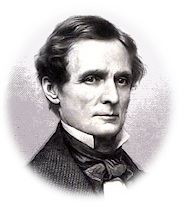
My Dear Sir—It gives me pleasure to acknowledge yours of the 2d inst., informing me that the Democrats of our county were to assemble on the 14th to ratify the nomination of Breckinridge and Lane; and that they particularly desired me to be present on that occasion. My health does not permit me to return home at this season; and to the many regrets connected with that fact is to be added the inability to unite with my Democratic neighbors in declaring our acceptance of the ticket which is the fair exponent of our political faith. Though we cannot but lament that in a general Convention Democratic delegates denied articles of our creed so essential as to produce division, it is a matter of congratulation that our party had enough of vitality to bear amputation, and adhering to fundamental principles, to give us good candidates on a good platform.

Believing the preservation of the Government in its vigor and purity to depend mainly on the Democracy, I hoped earnestly for its unity and harmony; but when it became manifest that the organization and consequent power of the party could only be maintained by the surrender of constitutional duties, I rejoiced that Mississippi was represented at the Convention by men who were equal to the nobler part of vindicating her equality and honor, regardless alike of empty promises and emptier threats.

To admit that our property1 is not entitled to receive from the General Government such protection as it affords to the property of other sections, is to consent to be degraded below our fellows. Such a proposition needs no argument—to state it is to present its condemnation. Our party alone, of those now seeking popular support, recognizes the equality of the right of the South to the common Territories, and pledges there to give Federal protection to the property of our citizens by all the constitutional powers of the Federal arm. Can a Southern man hesitate under such circumstances as to which of the tickets he will adopt?

The political sky is daily growing brighter, and permits us to look with increasing hope for the triumph of the National—that is the Constitutional Democracy.

Please offer assurances of my affectionate remembrance of my friends and neighbors, the Democrats of Warren, and believe me to be, very truly, yours,

Jefferson Davis.


  1. The specific property that was in dispute was their slaves.
0 comments

The Modern Pyramus and Thisbe

Civil War Day-by-Day

Harp Week, Cartoons, 1860 Presidential Election, Stephen Douglas and the Democrats
Cartoonist: Henry Louis Stephens
Source: Vanity Fair
Date: July 31, 1860, p. 43

Complete HarpWeek Explanation:

Based on a Babylonian folk tale of two lovers who suffer a tragic end, the Roman poet Ovid retold the legend of Pyramus and Thisbe in his Metamorphoses. The theme of Pyramus and Thisbe is akin to that of Romeo and Juliet and other ill-fated lovers in poetry and prose. Shakespeare incorporated a travesty of “Pyramus and Thisbe” into A Midsummer Night’s Dream.

Pyramus and Thisbe, members of two neighboring Babylonian families, fall in love, but their marriage and even their mutual communication are forbidden by both families. The young lovers circumvent the prohibition by whispering to each other through a crack in the wall between their houses. They finally decide to meet beneath a white mulberry tree at the tomb of King Ninus of Assyria, then to runaway together.

Thisbe arrives first and spies a lion whose mouth is bloody from its recent prey. Startled, the young woman flees and, in her haste, leaves her veil (or cloak), which the lion picks up in its mouth. When Pyramus arrives he sees the bloody veil and jumps to the conclusion that Thisbe was the lion’s latest meal. In agony at the thought of living without his love, he takes his sword and kills himself, staining the white mulberries with his blood. (According to legend, that is why the fruit of the mulberry tree is purple.) Returning to the scene and finding Pyramus dead, Thisbe also takes Pyramus’s sword and commits suicide in the hope of reuniting with her beloved in the hereafter.

This Vanity Fair cartoon blames Democratic President James Buchanan for the 1860 split of the Democratic party into Northern and Southern factions, with each running rival presidential candidates, Stephen Douglas and John Breckinridge, respectively. The cartoonist depicts Douglas as the male Pyramus, Breckinridge as the female Thisbe, and Buchanan as the wall keeping them apart. The caption quotes Pyramus from Shakespeare’s A Midsummer Night’s Dream. Buchanan grasps stalks of wheat symbolizing his Lancaster estate, Wheatland, where he would retire.

0 comments

Thomas W Thomas to Alexander H Stephens

Miscellaneous document sources

Madison Springs, Geo., 30th July, 1860.

Dear Sir: In justice to myself I ask leave to occupy your attention with a brief letter. I am informed that in the argument of the state case which went up from Hancock[i] to the Supreme Court at Athens you compared me to the late Judge Kenan and related an anecdote the point of which was to show he was a tyrant and I was like him. I could easily show this was unjust by recapitulating my whole conduct in that matter but my object is not to defend myself.

Nor do I intend to assume that I have a right to complain that you thought proper to use any line of argument that in your own judgment would increase the chances of success, and I am well aware that to disparage me would be favourably listened to by a majority of that court.

Nor do I intend to say or intimate that your course was ungrateful for though I have been your faithful and devoted friend for more than ten years, I never yet had it in my power to place you under obligations, but on the contrary am indebted myself for many and striking proofs of confidence and regard.

But I have this complaint to make which I think just and well-founded. Entertaining the opinion you do of my conduct in the case alluded to you ought not to have continued to treat me as an intimate and highly esteemed personal friend. Whenever I acquire such an opinion of you, you will never afterwards while I hold it, be my honoured guest.

I will not deny that I have felt most keenly this reproach from yon—few men live who could have wounded me so deeply. It is putting out of remembrance many pleasant years to write you this letter but justice to myself demands that I should do it and my feelings dictate that I should do it as I have endeavoured to do without any mixture of bitterness and without any design to give you offence.

I heard of what you said a few days after but it is unnecessary to explain the delay as I am not demanding redress or seeking explanations.


[i] Thomas was at this time judge of the Superior Court of Georgia (northern circuit), from which Stephens had taken a case on appeal to the State Supreme Court.


From Annual Report of the American Historical Association for the Year 1911.

Thomas W. Thomas born 1822, died 24 Apr 1864 was a soldier, lawyer, and judge of Elberton, GA.

Alexander Hamilton Stephens was an American politician who served as the vice president of the Confederate States from 1861 to 1865. After serving in both houses of the Georgia General Assembly, he won election to Congress, taking his seat in 1843. After the Civil War, he returned to Congress in 1873, serving to 1882 when he was elected as the 50th Governor of Georgia, serving there from late 1882 until his death in 1883.

0 comments

Abraham Lincoln to James Putnam

Civil War Day-by-Day
Springfield, Ills, July 29. 1860
Hon. James O. Putnam
My dear Sir
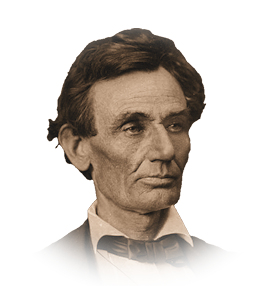
        I have just read the speech you sent me, with your note of the 23rd. attached. I do not mean to flatter you when I say it is, indeed, a very excellent one. The manner in which you point out to Gov. Hunt that his objections to the election of the Republican candidate apply with manifold force to the candidate he would elect instead, is truly admirable.
        And now allow me to name one error. John Adams was not elected over Jefferson by the H.R; but Jefferson was over Burr. Such is my recollection.
                        Yours very truly
A. LINCOLN

Hertz, Emanuel. Abraham Lincoln: a New Portrait. New York: H. Liveright, Inc., 1931.

0 comments

Excitement in Northern Texas

News of the Day
1860s newsprint

Bellville [TX] Countryman, July 28, 1860

By an extra from the office of the Brenham Enquirer dated the 23d inst., we learn that [tear in paper] excitement in Northern Texas [tear in paper] an insurrection movement among the negroes, led on by white men. Enough has been discovered to show that a deep laid plot was on the eve of being consummated to free the negroes and destroy the whites. The insurrection was to take place on the election day in August. The burning of the town of Dallas on the 8th inst., and of Denton, Pilot Point, Belknap, Gainesville, Black Jack Grove, etc., has been traced to the agency of these emissaries. With such warnings about us it is time to beware. Let every citizen and every member of the households in our County be on the look-out—be vigilant, be watchful. There are many itinerating strangers among us. Some pretending to follow one occupation and some another. They may be spies and fiends intent on the destruction of our homes, our property and our lives. No harm can result from “Eternal vigilance.”

P.S.—We learn since writing the above, that a meeting has been held at Hempstead, to devise ways and means on these matters. What will our people do?

0 comments

The Destruction of Property at Dallas

News of the Day

[Marshall] Texas Republican, July 28, 1860

The fire at Dallas broke out on Sunday, the 8th inst., at 2 o’clock, P.M. Mr. John W. Swindells, furnishes the Galveston News with the following account of the property destroyed:

Dallas Hotel, three story brick, owned and occupied by Mrs. Cockrell.
Brick store of Smith & Murphy, with their stock of goods; goods partly saved.
Small frame office of Jas. T. Smith, occupied by himself, Gen. J. J. Good, and Dr. A. A. Johnson.
Drug and Grocery store of W. W. Peck & Bro., with a heavy stock of goods.
Vacant two story house, owned by J. W. Smith.
Storehouse and stock of goods, owned by A. Shirek, total loss.
Upper story of same building, occupied by J. W. Swindells, Dallas Herald office, total loss.
Crutchfield House, owned and occupied by T. F. Crutchfield, total loss. Post office in the same building all burned, with mails.
Office occupied by Drs. Pryer and Col. J. M. Crockett, and rear of building occupied by a family, total loss.
Barbershop of E. Wester, total loss.
A building just being erected for A. Simon.
Old tavern stand, occupied by several persons as boot shop by J. Bertoy, L. Burkhart, jeweler, and a family.
Law office of B. W. Stone.
Young Carr, saddler, total loss.
Storehouse of H. Hirsh, total loss—partly insured.
Storehouse of W. Casutte & Bro., occupied by A. Simar, total loss—partly insured—up stairs occupied by law office by Nicholson & Ferris.
Mr. Stuble’s house just being erected, total loss.
House of Wm. K. Brutle, occupied as a shoe shop and residence, total loss.
Drug store of Dr. D. B. Thomas—stock and house, total loss—up stairs occupied by a law office by Mr. Hay.
Storehouse of J. W. Ellett—house and stock lost.
Vacant house, adjoining, total loss.
Blacksmith shop occupied by Joseph Lockett.
Storehouse of R. R. Fletcher & Co.—stock partly saved.
Storehouse of Cuneth, Simonds & Co. stock partly saved.
Saddle shop of Lynch & Son, total loss.
Storehouse of E. M. Stackpole—building and stock total loss.
Law office of J. C. Motley and stable owned by same, total loss.
G. W. Guess’ law office, pulled down and law books saved.
Over Pratt & Bro.’s drug store were the offices of Dr. C. C. Spencer and W. S. J. Adams, J. S. Chapman, and J. K. E. Record, as law offices, their libraries and clothing total loss.
The Court House in the centre of the square, a fine brick building, was saved by the superhuman exertion of a few spirited individuals.
Over A. Shirek’s store was also the law office of E. C. McKenzie and Dr. C. R. Pryor, editor of the Herald—contents all lost.
Over H. Hirsh’s tore was the office of Dr. H. C. Scvott, whose library was totally lost.

The total loss is estimated variously at from three to five hundred thousand dollars, on which there is, I learn, not to exceed $10,000 insurance. The whole number of buildings destroyed is thirty-two or thirty-three, comprising the best built part of the place and including every store in use in it. Our town, which has been the admiration of all strangers, and which it is no exaggeration to say, was one of the prettiest small towns in the State, is now nearly a mass of ruins. All the stores had good stocks of merchandise, and some of them very heavy ones. It is sickening to look around and view the ruins of what was but yesterday morning a flourishing and beautiful place.

A great many goods from the stores and other buildings were saved, and piled up on the square, only to be destroyed where they were placed, the heat being so intense as to preclude al possibility of saving them. I write in haste and there may be some inaccuracies in my statement, but it is nearly correct I think.

For myself and the “Herald,” I shall at once order another new office, and the Herald shall be revived just as soon as I can get the material here. My loss was total—only my account books were saved.

0 comments

Suspicious Characters

News of the Day

[Marshall] Texas Republican, July 28, 1860

We learn from some of our citizens who were at Dallas a few days since, that two individuals (strangers) are suspected of being the incendiaries who set fire to that town on the 8th inst. They were first seen at Dallas the evening preceding the fire. One, a young man, was riding a large dun horse, the other a man of apparently forty-five, was riding a roan. They avoided the hotels and are supposed to have lodged in the Court House Saturday night. They were observed in town next day, and about the time the alarm of fire was given, they crossed the Trinity at the ferry, making sundry enquiries about the distances to neighboring towns, among the rest to Waxahachie, where they said they were going. They rode in the direction of that place to Judge Hoard’s, three miles south of Dallas, where they stopped and inquired if they could get dinner. The Judge invited them into his house, promising to have dinner prepared, and at the same time, discovering a dense smoke in the direction of Dallas, ordered his horse, saying he would ride to town and ascertain the cause. The strangers remained until his return, and in the interim were questioned by Mrs. Hoard, who learned from them that they were from Kansas. They said they were traveling to see the country, and were going to Waxahachie. They were armed with Colt’s repeaters, which they carefully re-capped while at Judge Hoard’s. The lady, suspecting all was not right, communicated her suspicions to her husband on his return, who concluded to watch the strangers. After supper they set out in the direction of Waxahachie, but soon changed their course and took the road to Dallas. The next day one of these men was seen a couple of miles west of town, in the neighborhood of Mr. Eakins’, whose house was burned that day, and the other was seen about the same distance east of town. In the evening of the same day both were seen together a few miles north of Dallas, on the McKinney road, and the next day, about noon, two individuals with horses answering the description, passed through this place and it is supposed took the road to Bonham. They were observed by a number of school boys, of whom they inquired the name of the town. The next day (Wednesday) they were seen fourteen miles north of town on the Bonham road. We hope our Bonham friends will keep a sharp look out for them.—McKinney Messenger.

0 comments

Set On Fire

News of the Day

[Marshall] Texas Republican, July 28, 1860

The Paris Press of the 21st says that the house of Dr. W. W. Stell was set on fire, by one of his negro women, (who has acknowledged the deed,) on the night of the 16th inst., and was consumed with all its contents—furniture, books, &c.—except two trunks. The loss, we are told, is not less than $4000. What next?

0 comments

Incendiaries

News of the Day

[Marshall] Texas Republican, July 28, 1860

Our town, on Monday night last, was thrown into a fever of excitement by the detection of an individual, a stranger in our place, in the act of attempting to fire the town. He was shot at two or three times by the patrol, but succeeded in making his escape, not, it is to be hoped, without carrying with him some evidence of the skill of our marksmen. Our people are on the alert, and woe to the scoundrel who, arrested in the act, falls into their hands.—Tyler Reporter, of the 14th.

0 comments

Destructive Fires

News of the Day

The Ranchero [Corpus Christi, TX], July 28, 1860

The town of Dallas, Texas, was almost totally destroyed by fire on the 8th inst. Loss $400,000.

Our Austin and other State exchanges bring accounts of most destructive fires in different sections of the State, whereby thousands of dollars worth of property has been destroyed. The general opinion is, that these conflagrations are caused by a regularly organized band of incendiaries.

0 comments

Fearful Abolition Raid

News of the Day

[Marshall] Texas Republican, July 28, 1860

Fearful Abolition Raid—Negro Insurrection—Northern Texas to be Laid in Waste—Intense Excitement.

We have received an extra from the Bonham Era of the 17th, from which we learn that the most intense excitement exists throughout Northern Texas, predicated upon revelations recently made at Dallas, which are mentioned in the following letter:

Dallas, July 15th, 1860.
Capt. DeLisle, Editor of Bonham Era:

Dear Sir:–I write in haste that you may prepare your people for the most alarming state of affairs that has ever occurred in Texas. On the 8th July the town of Dallas was fired, and the whole business portion entirely consumed, every store in town was destroyed. The next day the dwelling house of J. J. Eakens was burned; after that the residence of E. P. Nicholson was fired but discovered in time to arrest the flames. On Thursday, the premises of Crill Miller, with a large amount of oats, grain, etc., were totally consumed. This led to the arrest of some negroes and white men. A most diabolical plan was then discovered to devastate this entire portion of Northern Texas, extending even to the Red River counties. White men, friends of the Abolition preachers Blunt and McKinney, who were expelled from the country last year, are the instigators of the plot. The whole plan is systematically conceived, and most ingeniously contrived. It makes the blood run cold to hear the details. This whole country was to be laid waste with fire, destroying all the ammunition, provisions, arms, etc., to get the country in a state of helplessness, and then on Election day in August to make a general insurrection, aided and assisted by emissaries from the North, and persons friendly to them in our midst. Their sphere of operations is districted and sub-districted, giving to each division a close supervision by one energetic white man who controls the negroes as his subordinates. A regular invasion, and a real war. You and all Bonham are in as much danger as we are. Be on your guard, and make these facts known by issuing extras to be sent in every direction. All business has ceased, and the country is terribly excited.

In haste,
Yours truly,
Chas. R. Pryor.

Two of our citizens, who returned from Dallas a few days ago, state that the excitement at that place is intense. They learned that about 65 negroes were under arrest, and from them the facts set forth in Mr. Pryor’s letter had been satisfactorily ascertained. The abolition preachers, Blunt and McKinney, some time last year, were lynched and driven out of the country, instead of being hung or sent to the penitentiary, and this is the first fruits of their vengeance.

0 comments

Recent Fires a Fearful but Well Grounded Suspicion

News of the Day

[Marshall] Texas Republican, July 28, 1860

Destructive fires in this portion of our State have recently been so numerous—so simultaneous in their occurrence, as to impress a conviction, amounting almost to absolute certainty, upon the minds of many of our people, that they are the result of preconcerted arrangement; the communication of a diabolical plan of revenge, set on foot and deliberately executed by fiends in human shape, sympathizers with those intermeddling abolition emissaries, who on former occasions have been expelled from the country by outraged and indignant communities.

That this conviction is not without facts to sustain it, will abundantly appear by a perusal of the following brief summary of fires which have occurred within a few days past in this and neighboring counties.

In the latter part of last week, a steam saw and grist mill was burned down at Millwood in this county. Supposed loss ten or twelve thousand dollars.

Sunday last, about 2 p.m., the great fire occurred at Dallas, an account of which will be found elsewhere in this week’s paper. Loss estimated at nearly 400,000. Supposed to be the work of an incendiary.

In the evening of the same day, about the same hour, the store house of a Mr. Dupree, at Ladonia, Fannin county, was destroyed by fire, together with material for a new building, a lot of carpenter’s tools, &c. Loss estimated at $25,000.

On the same day, about 2 o’clock in the evening the store house at Pilot Point, Denton county, owned by Mr. James M. Smoot, of Denton, was wholly consumed by fire together with a considerable amount of merchandise and nearly two thousand dollars in money. Total loss $10,000. The same day, between two and three o’clock in the evening, a fire broke out in the store house of J. M. Smoot, Denton, which, with the store house of Jacobs, and that of Baines & Turner, with nearly their entire stocks of merchandise, was wholly consumed. Loss estimated at $100,000.

Strong suspicions of incendiarism are entertained both at Denton and at Pilot Point.

On the same day, and about the same time of day, Milford, in Ellis county, was destroyed by fire; also a mercantile establishment at Black Jack Grove, in Hopkins county, the property of a Mr. Cato. A gentleman of the Grove informs us that the fire at that place was believed to be accidental. It occurred at 3 p.m. The loss is estimated at $30,000.

We have not heard the particulars of the burning of Milford. The news comes to us from Dallas, with the additional item that a fire occurred the same day at Waxahachie, but that it was extinguished before much damage was done.

These facts speak volumes in support of the fearful suspicion to which allusion has been made, and cannot fail to create the most lively apprehensions in the breast of every good citizen. We learn that strenuous efforts are being made in some quarters to ferret out the offenders and bring them to justice. All should be willing to assist in doing this, but should exercise a becoming caution and moderation, to the end that the innocent may not suffer, not the State be disgraced by lawless proceedings. Let offenders be arrested, and the laws of the land enforced, but nothing more.—McKinney Mes.

Attempts have been made to burn up Tyler, Quitman, and Jefferson, and we presume there is not town, store, or farmhouse safe from these diabolical miscreants.

The extra of the Bonham Era, which we have noticed in another article, mention the following fires, in addition to those mentioned above.

Fort Worth.—A mercantile house. Loss not given.
Waxahachie.—One house.
Belknap—Eight large store houses were destroyed. The buildings were owned by Drs.Foote & Thogmorton of McKinney. Loss not given.

0 comments

More Kidnapping In Kansas

Civil War Day-by-Day

The New York Times, July 27, 1860

The Leavenworth Times, 21st, says: “We are again called upon to record a case of kidnapping in this vicinity. Two free negro men have resided for the last six months in the South part of this county, with Mrs. SAMPSON, a colored woman, near the Delaware Mission. They were banished from Arkansas under the recent law, and have been industriously employed all the season in raising a crop of corn. On Wednesday night the house of Mrs. SAMPSON was broken into by three men, the negroes seized and forced into a close carriage and driven off in the direction of Delaware. No paper or authority was shown. The residence and names of the captors are unknown, but suspicion points to the same men who captured HOPE KUNARD. These negro men had certificates of good character from several men in Arkansas, and certificates of freedom from the clerk of one of the courts, which had been exhibited to several white persons in the vicinity.”

0 comments

One Hundred Negroes Liberated

Civil War Day-by-Day

The New York Times, July 27, 1860

The Iredell Express (N.C.) states that the case of SOLOMON HALL’s will occupied the Supreme Court of that county eight days, and was finally compromised after the Jury had retired. Mr. HALL had made a will leaving one hundred negroes and other property to his only child, a daughter, who afterwards married Mr. NEELY against his wish, whereupon he made another will, leaving his negroes free, and leaving most of his property to them. The suit was to set aside the last will. An hour after the case had gone to the Jury, Mrs. NEELY proposed to receive $13,000 and $2,000 which the will gives her, the estate to pay the Court cost, $800. She is to pay her own lawyer $5,000. The proposition was adopted. The negroes will be sent to Liberia. The Jury stood nine against and three for the will; but it is said the Judge would have set aside the verdict if it had been against the will.

0 comments

Octoroons in a Virginia Court

News of the Day
1860s newsprint

Daily Gazette & Comet [Baton Rouge, LA], July 27, 1860

At a recent session of the Alexandria county court, two men of mixed blood appeared before the court, and having proved themselves to be octoroons, or possessing but one-eighth negro blood, asked the court to certify that they were not negroes. The court having heard the evidence, granted the certificate asked for. The object of this process is to release the parties applying from the obligation and penalties attached to free negroes by the laws of that commonwealth.

0 comments

Reception of the Wide Awake Club of New York By the Wide Awakes of Hartford

Frank Leslie’s Illustrated Newspaper

(Festivities of July 26 and 27, 1860, as reported in Leslie’s Illustrated Newspaper, August 11, 1860)

Reception of the Wide-Awake Club of New-York by the Wide-Awakes of Hartford.

The Wide Awakes, as our readers are probably aware, is an organization having its origin in partisan spirit and is made up of members of the Republican party, the majority being young men. Its objects and aim is to aid in bringing about the election of Lincoln and Hamlin. The idea was suggested by the appearance of several young men wearing caps and capes in the torchlight procession which paraded the streets of Hartford on the evening of February 25th 1860, to escort the Hon. Cassius M. Clay. A meeting was called, and some thirty young men organized themselves into a Wide-Awake Club. A constitution was adopted, and officers chosen. Within the short time which has elapsed since it has increased to over five hundred, and Wide-Awake Clubs have sprung up in various other cities, towns and villages in other States as well as in Connecticut.

The Wide-Awake Club of Newark having notified their brethren of Hartford of their intention to visit them on Thursday and Friday of last week, the latter Club prepared a right royal reception for their guests, and the ladies having been enlisted in the cause, they were entertained in a manner is which must have impressed them with an elevated sense of the hospitality of their New England compeers.

The Newark Club, having chartered the steamer Josephine, left home on Thursday morning, the 26th, and arrived at Saybrook at the mouth of the river at half-past five o’clock, and at Hartford about half-past nine o’clock.

The weather threatened to be unpropitious, a dark bank of clouds in the south-west, filled with rain and electricity, seemed only awaiting a favorable wind to spread itself over the city and discharge its pluvial contents. The Hartford Club, notwithstanding, assembled at seven o’clock and proceeded to the dock, where they awaited the arrival of the steamer with whatever of patience they could summon.

There were in the ranks some three hundred or more young men, each uniformed with an oilskin cape and glazed cap, and bearing a torch similar to those in use by our own fire department. At half-past nine o’clock the signal rocket from the steamer was seen to dart heavenward as she rounded the point about a mile below the city, and it was immediately answered by others on the dock and by the booming of cannon and strains of martial music. In a few moments she neared the dock, and after a little delay the visitors landed amidst the shouts of welcome from thousands of voices. The scene at this moment, as described by our artist, was one of great beauty and interest. The dark thunder cloud had passed eastward, and was lighted up occasionally by gleams of lightning, forming a fitting background to the scene.

Procession of the Wide-Awake Club of Hartford, Conn, on Thursday, July 26

The line was formed and marched through the principal streets to the City Hall, where justice was done to a bountiful collation, which, with the speeches that followed, kept all engaged until half-past twelve o’clock, when the line was again formed, and the guests were escorted to their quarters on board of the boat.

On Friday evening, the 27th, the Hartford Club, together with their friends, repaired to the depot, where they received various Clubs from other towns, and escorted them to the camp or wigwam on Asylum street, a frame structure, erected for such purposes, and where they were addressed by several prominent individuals, and presentations were made of banners, capes, lanterns, rails, mauls, &c., &c.

At ten o’clock the grand torchlight procession was formed, and marched through the principal streets of the city to Charter Oakplace, amidst the firing of rockets, the burning of blue lights and a profusion of other fireworks. The sight presented has rarely, if ever, been excelled, and baffles description. At Charter Oak place the vast assembly was addressed by Hon. Dwight Loomis, after which it proceeded on its line of march to and across the Park, through Asylum and other streets to the City Hall, where another bountiful collation was served and partaken of. The sight as the procession crossed the Park was magnificent in the extreme. From four to five thousand torches could be seen at one time winding their way through and around the sinuous paths; the whole landscape was lit up with Innumerable roman candles and other fireworks, and far in the background the city was illuminated with flaming rockets, which sent their shower of parti-colored rain across the heavens in every direction, while the moon, as if paling her ineffectual light, sunk slowly beneath the western horizon.

At half-past one the Wide-Awakes escorted their guests to the cars and their quarters on the boat, and the city gradually sunk to its accustomed rest.

The Newark Club returned home on Saturday morning early, highly pleased with their trip and the reception which they had received.

The captain and lieutenants’ uniform consists or an Inverness mantle or overcoat with cape, made of black enamel cloth, and glazed hat. The captain carries a red, and each lieutenant a blue or green lantern. The privates wear a black enamel circular cape, quite full and of good length, glazed cap, and carry a swinging or fireman’s torch. Two pioneers, the tallest men in the company, carrying very large torches, are stationed on the extreme right. They are drilled in a few simple military movements, according to Hardee’s tactics.

0 comments

Six-Month Exchange Note

Civil War Day-by-Day

$3000 for $5000 in 6 months

0 comments

The Disunion Bugaboo

New York Times

The New York Times, July 25, 1860

As long as there was a reasonable chance that the one section or other of the Democratic Party would be able to place its candidate in the White House, or that an arrangement could be effected for concerted or harmonious action at the polls, Disunion was never named in Democratic councils. In fact, six weeks ago it was impossible to find a disunionist anywhere. All the fire-eaters denied that they had ever dreamed of such a thing. WISE had “folded his pale hands” as meekly as if he had never expressed the smallest thirst for a campaign against the Yankees and the British Abolitionists. YANCEY was almost as ardent in his devotion to the Union as EDWARD EVERETT, and TOOMBS was silent, the strongest evidence of pacific intentions which TOOMBS has ever afforded. More wonderful still, the Northern Democrats, for the first time in two years, had ceased to express any apprehensions with regard to the safety of the Government. They were evidently reveling in the novel sensation of confidence, or rather of absence of terror, and were lulled into the foolish, fond belief that ruin was not impending over them. Drygoods began to flow in freely, and the jobbers got so saucy and defiant that some of them were actually heard to speak disrespectfully of HAMBLETON, of the Confederacy, and declare that the next time he came round for his blackmail they would snap their fingers in his face. Even the real estate men, whom dissolution would affect most seriously, have been for a month or two unusually calm.

But unfortunately it has recently become quite apparent that a Democratic fusion is impossible, and that without a fusion a Republican triumph is certain; so the tocsin has been once more sounded, and as a last resource the dogs of war have been set to bay at us. [continue reading…]

0 comments

The Presidential Canvass the Real Peril to the Union

Civil War Day-by-Day

The New York Times, July 25, 1860

The political contest is assuming a curious shape. The shattered condition of the Democratic Party has destroyed everything like an organized opposition to the Republicans, based upon principle, and converted the whole campaign into a desperate struggle not to get into power themselves, but to keep their opponents out. The highest ambition of the motley Anti-Republican host just now, is to play the dog in the manger. Not a solitary man among them believes that either DOUGLAS, BELL or BRECKINRIDGE can possibly be elected President by the people. Everybody surrenders this expectation. But they all have a lingering hope that, by uniting their forces, they may possibly prevent any election at all; and the great aim of each faction just now is, not to vindicate its own position,—not to justify its own principles and policy, — but to hit upon some expedient by which they can slur over their differences and unite their votes, so as to defeat the election of a President.

Gov. HUNT has proclaimed this to be his special purpose and wish. He is willing to unite with any party, for the purpose of defeating the Republican candidate. Yet Mr. LINCOLN holds not a single political principle to which Gov. HUNT has not, in time past, given his full assent. He is not pledged to a single act which Gov. HUNT has not pronounced judicious, just and essential to the public good. It would not have been easy to find a man for a candidate who represents more accurately the position Gov. HUNT has maintained, through the more active portion of his political career, than Mr. LINCOLN. His votes in Congress were less radically Anti-Slavery than Gov. HUNT’s. Yet for the special purpose of defeating him, Gov. HUNT is eager to unite with Mr. DOUGLAS, for whose public character he has never professed the slightest respect, and whose public conduct he has rebuked in the strongest terms! [continue reading…]

0 comments

At the Court of St. James

Diary of George Mifflin Dallas, United States Minister to England 1856 to 1861

1860. July 24.–Judge Longstreet has issued a letter addressed to the International Statistical Congress about their gross conduct in applauding Lord Brougham. It is printed in the Morning Chronicle, and evinces considerable ability and tact. I shall not be surprised if, on this sensitive topic, my countrymen, who never can be rational about it, should consider me as having too tranquilly submitted to the remark of Brougham. One of them here wishes I had “jumped to my feet and knocked the old blackguard down!” This is not “ma manure d’agir.” First, it would have been great folly to imply, by word or act, that the question of slavery in the United States could legitimately be discussed before the American Minister at a European Congress of any sort. Second, the Congress was unanimously and vociferously hostile; the words of Brougham were cheered loudly; it was palpable that the act was the result of a contrivance between Brougham and his associate to get up an altercation between the latter and myself, which was defeated by my treating the movement with silence. Third, quitting the room was impossible, because my doing so was physically impeded, and would instantly have been followed by loud and prolonged indignities. Fourth, to attempt, at a moment of sudden astonishment and indignation, to vindicate the United States from the slur thrown out, would have been extremely imprudent and AT hazardous; no man is authorized to commit his country in a manner so unprepared. Fifth, my individual opinion as to the races being unequal in intellect is strong, but the point has never been studied, and could not be handled in the slightest manner without exhibiting weakness. Sixth, a foreign Minister cannot be justified or excused in taking the attitude of a public declaimer in a Congress where he was only an invited guest, and where such a topic was not only not to be anticipated, but wholly out of order. Indeed, such are my convictions that I have thanked Heaven frequently and profoundly that I had presence of mind enough to take the course I did. Brougham has attempted in the very Congress itself, and only two days after his extravagance, a feeble and unsatisfactory apology; he has sought me that he might apologize in person, and has been turned from the door. He is now perpetually inculcating that what he did was not intended to be disrespectful to me or the United States, and that it should be regarded as insignificant.

0 comments