The Excitement

News of the Day

[Marshall] Texas Republican, August 26, 1860

The two German Jew pedlars , noticed in our [illegible] undergoing an examination before the Vigilance Committee of our town have been disposed of. Friedman was turned loose several days ago, the Committee not finding anything against him. His partner, however, Rotenburg,  has been under close examination for the past week. Several negroes implicated him as inciting them to insurrection. His case was finally submitted to a jury of fifty men selected from various parts of the county—men who were believed to be free from exciting prejudice and who would see coolly and dispassionately. After a patient hearing of the evidence which had been taken from the confessions of the negroes, the accused being allowed counsel, a vote was taken as to whether he would be hung. There were eighteen votes for hanging and thirty-two against it. The jury believed that the accused had been guilty of very improper conduct towards our negro population, but did not believe that the evidence was such as to warrant putting him to death. The sentence of the court was unanimous, however, that he should leave the county, within forty-eight hours, and the State within four days. He left the same afternoon, and we doubt much whether he will ever again be found peddling among a slave population. His family resides in New York. This is not exactly a safe location for Dutch peddlers just at this time.

We have been informed that a Yankee abolition school master was hung on Thursday last in Anderson county, within ten miles of the Neches river. He had been convicted of inciting the negroes to insurrection.—Rusk Enquirer.

0 comments

Affair near Magnolia

News of the Day

[Marshall] Texas Republican, August 26, 1860

The News gives the subjoined abstract from a private letter to a commission house in Galveston:

Magnolia, August 5th, 1860.

“Several negroes and one white man have been hung above this place and others are in jail. Last night they attempted to make a break in Palestine but were prevented. Several negroes who were taken up, had a full supply of poison wherewith they confessed they intended poisoning all the drinking water in town, and what white folks they did not poison they intended to kill on election day; which was set apart as a day for the general rising. They acknowledged that there are a good many white men engaged in this affair.”

0 comments

Negro Plot

News of the Day

[Marshall] Texas Republican, August 26, 1860

An Austin correspondent of the Galveston News, says that a committee of investigation had been appointed at that city, to examine the negro quarters, and gives the following as the result of their work:

One keg of powder, a large quantity of bullets, lead, muskets, caps and bowie knives were found distributed at various places. The negroes implicated in the conspiracy belong to Messrs. Edward Clark (our present Lieut. Governor), Seth Harris, and Mrs. Beall. The investigation is still going on, and it is supposed that the leaders, who were doubtless white men, have fled from this city.

0 comments

A Daughter among the Sons

News of the Day
1860s newsprint

Alamo Express [San Antonio, TX], August 25, 1860

A woman disguised in man’s clothes gained admittance to the Sons of Malta lodge-room in Hartford, the other evening, and passed all the several degrees of initiation successfully until the worshipful commander came to apply the emblem. Then the trick was discovered, the candidate being found unworthy to receive it. The affair has caused considerable excitement.

0 comments

Snippets

News of the Day
1860s newsprint

Alamo Express [San Antonio, TX], August 25, 1860

A caravan of Camels arrived in our city to-day, from the Pacific.

We are glad to learn that the foot bridge near the Convent is to be re-built.

Several gay affairs have happened in our city during the week among the lovers of Terpsichore.

The city council have ordered twenty-five lamp posts of the gas company. It appears to us this is a small number, but perhaps will do to start with.

In consequence of the building operations going on at the old market, the vegetable venders hold forth on the south side of Main Plaza.

0 comments

The Fall of the Alamo

News of the Day
1860s newsprint

Alamo Express [San Antonio, TX], August 25, 1860

We publish the following account of the “Fall of the Alamo” from the Texas Almanac for 1860. It is beyond a doubt the most authentic account extant. The writer was within almost stone-throw of the Alamo during the final assault, was in the fort immediately after, and as Alcalde of the town attended to burying the Mexican dead; was eye-witness to the burning of the bodies of the Texan heroes, and hunted out the bodies of Travis, Crockett and Bowie. Mr. Ruiz certainly ought to know the truth, and he is an honest truthful gentleman, the son of one of the signers of the declaration of Texas Independence. Capt. Potter, is entirely at variance with this account in some very essential particulars—in regard to the numbers, the assault, the resistance and the loss of life. According to Mr. Potter’s statement he was in Matamoras when the event happened and gathered his information from many incorrect sources, which consequently do not deserve the same credence as the statement of a Mexican gentleman of truth and intelligence, who was present and partook in some of the ceremonies of that heroic tragedy. Mr. Potter does not mention this account given by Mr. Ruiz, and will no doubt for the sake of history, make some very important corrections in his interesting reminiscence, when it is brought to his notice.

We wish to state that when we noticed Capt. Potter’s account we had merely glanced at it, and concluded, very naturally, that, coming from the gifted pen of Capt. Potter, it must be all its publishers claim for it; and besides we had not seen Mr. Ruiz’ account, which we repeat comes up with a better show of authority, than any we have yet seen.

The Fall of the Alamo, and Massacre of Travis and His Brave Associates.

By Francisco Antonio Ruiz.

On the 23d day of February, 1839, (2 o’clock P.M.) Gen. Santa Anna entered the city of San Antonio with a part of his army. This he affected without any resistance, the forces under the command of Travis Bowie, and Crockett, having on the same day, at 8 o’clock in the morning, learned that the Mexican army was on the banks of the Medina river, they concentrated in the fortress of the Alamo.

In the evening they began to exchange fire with guns, and from the 23d of February to the 6th of March (in which the storming was made by Santa Anna,) the roar of artillery and volleys of musketry were constantly heard.

On the 9th of March, at 3 o’clock P.M., Gen. Santa Anna at the head of 4,000 men, advanced against the Alamo. The infantry, artillery and cavalry had formed about 1000 varas. from the walls of said fortress. The Mexican army charged and were twice repulsed by the deadly fire of Travis’ artillery, which resembled a constant thunder. At the third charge the Toluca battalion commenced to scale the walls and suffered severely. Out of 800 men, only 130 were left alive.

When the Mexican army had succeeded in entering the walls, I, with the Political Chief (Gefe Politico) Don Ramon Murquiz, and other members of the Corporation, accompanied the Curate, Don Refugio de la Garza, by Santa Anna’s orders, had assembled [illegible] temporary fortification erected in Potrero street, with the object of attending the wounded, etc.—As soon as the storming commenced, we crossed the bridge on Commerce street with this object in view, and about 100 yards from the same a party of Mexican dragoons fired upon us and compelled us to fall back on the river and place we occupied before. Half an hour had elapsed when Santa Anna sent one of his aid-de-camps with an order for us to come before him. He directed me to call on some of the neighbors to come up with carts to carry the dead to the Cemetery, and also to accompany him, as he was desirous to have Col. Travis, Bowie, and Crockett shown to him.

On the north batter of the fortress lay the lifeless body of Col. Travis on the gun-carriage, shot only in the forehead. Toward the west, and in the small fort opposite the city, we found the body of Col. Crockett. Col. Bowie was found dead in his bed, in one of the rooms of the south side.

Santa Anna, after all the Mexicans were taken out, ordered wood to be brought to burn the bodies of the Texians. He sent a company of dragoons with me to bring wood and dry branches from the neighboring forest. About 3 o’clock in the afternoon, they commenced laying the wood and dry branches, upon which a file of dead bodies were laid; more wood was piled on them and another file brought, and in this manner they were all arranged in layers. Kindling wood was distributed through the pile, and about 5 o’clock in the evening it was lighted.

The dead Mexicans of Santa Anna were taken to the grave-yard, but not having sufficient room for them, I ordered some of them to be thrown into the river, which was done the same day.

Santa Anna’s loss was estimated at 1600 men. These were the flower of his army.

The gallantry of the few Texians who defended the Alamo was really wondered at by the Mexican army. Even the Generals were astonished at their vigorous resistance, and how dearly victory had been bought.

The Generals, who under Santa Anna participated in the storming of the Alamo, were Juan Amador, Castrillon, Ramirez, Sesma, and Andrade.

The men burnt numbered 182. I was an eye witness, for as Alcalde of San Antonio, I was with some of the neighbors collecting the dead bodies and placing them on the funeral pyre.

[Signed] Francisco Antonio Ruiz.

 P.S. My father was Don Francisco Ruiz, a member of the Texas Convention. He signed the Declaration of Independence on the 2d of March, 1836.
0 comments

From The Plains on the Overland Mail Line

News of the Day

[Little Rock] Arkansas True Democrat, August 25, 1860

In Camp, Lion Holes, }
20th July, 1860 }

Friend M.—In compliance with my promise on leaving Little Rock, I now write, being the first letter written by me since our departure. We are now in camp, resting our stock at this place, which you will find by consulting your map, is about 900 miles west of Fort Smith, and about 200 east of the Rio Grande. We have been out fifty-five days, and traveled about 1100 miles, in the heat of summer, and are yet between 600 and 700 miles short of our destination; and although we have had the worst season of the year in which to make a trip across the Plains, in every respect, in consequence of the great scarcity of water and grass, yet we have been extremely fortunate thus far, having lost none of our stock, and the whole company being in fine health and excellent spirits.

We now have passed, entirely, the Comanche country, and although during our passage we were continually reminded by the overland mail station keepers of the hazard and extreme danger of so small a party as ours attempting to cross the plains, yet we have made the trip without seeing an isolated Indian; and as our travels in this direction have not been the offspring of a desire for vain-glorious honors to be acquired by fighting these sons of the prairie, you may imagine we have lost less sleep in consequence of seeing none than the fear that we might possibly make an unceremonious acquaintance with more than would be healthy or profitable for our party.

We are now in the Apacha country, and have been, since we crossed the Pecos river. The Apaches bear the character of a subtle and treacherous race of Indians, pretending the most disinterested friendship, while at the same time they are secretly plotting your destruction, being totally different in this respect from their more brave and magnanimous neighbors, the Comanches, who, when they attack you, always give you at least daylight and an open field.

We have been thus far, extremely vigilant and watchful, always ready to receive the “poor Indian” in a warm and expressive manner, which, we hope, may not fail to express to the aforesaid “poor Indian” our appreciation of their considerate attention whenever it may be bestowed upon us; and while there are but seven of us, yet we can fire a salute of fifty-two shots upon the appearance of Mr. Indian without the trouble of loading.

We are all full of untried courage, willing, if needs be, to measure arms with any number of savages that may wish to try our nerve; yet our courage may, when the time for its display comes, (if it does come,) prove of no better material than old Jack’s, of sack drinking celebrity, for no man, I am convinced, knows what would be his conduct in the face of extreme danger, who has never been in that situation. That there is great danger to any number of white men encountering a body of Comanches at all superior in number to their own, all experience abundantly shows; for while they are probably the best equestrians in the world, and always fight on horseback, they are much better armed than persons in the States generally suppose; great numbers of them being armed with rifles and six shooters in addition to their inseparable companion, the bow and arrow, which, of itself, is no contemptible weapon in the hands of an Indian; being of as much efficiency as the six-shooter, because they can do execution with it at as great a distance as the majority of men can shoot a pistol with accuracy.

We have almost universally received at the hands of the employees of the overland mail company, kind treatment, and gentlemanly consideration; in fact we have met with but one exception, which was at the hands of the station keeper at the crossing of the Colorado, who refused some of our party a drink of water, which so enraged some of our number, that had it not been for the interference of cooler heads, he would undoubtedly have received rough treatment. This, I am pleased to say, was the only exception, which speaks well for the mail company and those employed by it. No one who has not traveled over the overland mail line can form any just idea of the magnitude of this successful enterprise, and the complete system necessary to its permanent establishment as a means of communication between the Eastern States and the Pacific. Indeed, I am convinced that it is one of the greatest achievements, as a coach mail line, that the world has ever seen, considering the extreme length of the line, (2,700 miles), the character of the country through which it passes, and the immense distance necessary to transport provender for stock, and the additional fact that during the whole time of its existence, but three mail failures have occurred on this line, and they were produced by high water. There are several “dry stations” on the line, to which water has to be hauled, in some instances, the distance of 25 miles.

 G.

0 comments

Incendiary Work

News of the Day

[Little Rock] Arkansas True Democrat, August 25, 1860

Startling News!
Henderson in Ashes—the Incendiary Work Still Going On.

 We have just received news of the most startling character, and hasten to lay it before our readers, that they may be prepared for the worst.

Through the kindness of our friend, Hon. L. G. Harman, of Tarrant, Hopkins county, we are in possession of the following startling intelligence:

Quitman, Aug. 7th, 1860.

Z.G. Matthews:–Dear Sir: I write to apprise you that the work of desolating the country is yet going on. Henderson was burned to ashes on Sunday night, while the guard were at supper. It was fired in eight places. Many wells have been poisoned and the slaves are running away. Be wide awake. These things are perfectly reliable.

 Respectfully yours,
W. J. Sparks.

 Tarrant, August 8th.

The above is a true copy—we have no comments to offer—we are all vigilant here.

 Wm. M. Ewing.

 The above speaks for itself, and tells a deplorable tale. We have not time for much comment, but comment is unnecessary. We say to the patrol and public generally, be vigilant. Let every nook and corner be guarded constantly.

On yesterday morning, a man by the name of Peers, hailing from Sulphur Springs, from which place he was driven as an abolitionist, left, or pretended to leave this place. Perhaps he is still lurking in our midst. He is a cabinet workman by trade, heavy built, about 30 or 35 years old, dark complexion, talks politics, and sometimes speaks of having been engaged in the mercantile business. We learn that he left Shreveport at one time in haste, for forgery and swindling. He is ordinarily dressed, and wore while here, shoes without socks.—Texas Ex.

0 comments

Texas Burning

News of the Day
1860s newsprint

Bellville [TX] Countryman, August 25, 1860

The Houston Telegraph says: We are informed that an attempt was made a day or two since to set the town of Owensville, Robertson county, on fire. The incendiary has been arrested. The report comes to us direct and appears authentic. The reported burning of Palestine, Tyler, McKinney and other towns, as well as the reported attempts on half the towns in the interior are not to be believed until they are confirmed. Palestine, McKinney and Tyler were all safe at latest direct accounts, which are later than any rumor could have brought the truth.

The report of the burning of Henderson is confirmed. Loss $211,500.

0 comments

Much Excited in Denton

News of the Day

[Marshall] Texas Republican, August 25, 1860

A gentleman from Little Elm in Denton county, on Saturday last informed us that the citizens of Denton are as much excited as elsewhere in the State. A negro had been arrested in that county, in whose possession 24 bottles of Strychnine were found. Our informant further says that a man calling himself W. M. Courtney, was arrested in that county, but upon examination he turned out to be a desperado named Black, who had killed a man in Houston, one in Grimes, one in Bell county, besides three other men in the State. He was taken back to Bell county, where he was killed by some of the citizens of that county.—Quitman Herald of the 15th inst.

0 comments

Burned Up

News of the Day

[Marshall] Texas Republican, August 25, 1860

A gentleman of this place has received a letter from Tyler, dated the 15th inst., to which is attached the following postscript: “A Mr. Thomas had his gin house, cotton press, plows, wagon, with all his newly picked cotton, etc., burned up last night, three miles from Starrville; a clear case of incendiarism. There is considerable feeling on the subject in Tyler.”

0 comments

The Condition of the Country Reflections

News of the Day

[Marshall] Texas Republican, August 25, 1860

Sectional hatred is increasing. Should Lincoln be elected, it will culminate. The Union will not survive the shock for it will be taken throughout the entire South, as a formal declaration of hostilities; an endorsement of Black Republicanism with all its enormities.

For several weeks past, we have furnished our readers with as circumstantial and minute accounts of what has transpired throughout the State in reference to the late excitement as we have been able to gather from our exchanges, letters, and from other sources. We have done this with no desire to add to the excitement already pervading our entire borders, nor with a view of gratifying a prurient, vitiated, sordid taste for the horrible; but have been actuated solely by the purpose of placing those who read our paper in possession of that character of information which would enable them to measure the extent of the danger, and cause them to institute such vigilance, in due season, as would prevent its recurrence in those districts of the country which have not been visited by calamity. We have been satisfied that there has been a great deal of exaggeration in much that has been published. Men, usually prudent, partake of the alarm which exists around them, and lend a credulous ear to many things which would wear a different appearance if carefully and critically examined. Hence if they write from places that have either been visited or threatened by incendiary movements, (but particularly the latter), their letters partake of the character of their feelings. Added to these exaggerations, a thousand unfounded reports have been set afloat of towns being burned down, or attempts at burning, persons being put to death, or developments made, which have had no real existence. It is a remarkable fact, that in the very places which have been desolated by incendiarism, there has been, from all that we can gather, less sacrifice of human life, an exhibition of greater prudence, and a manifestation of a better spirit to respect the proper regulations of society, than in many other places where no such causes have existed. But aside from exaggerations and false rumors, there has been and still exists great reason for apprehension, and the exercise of the greatest vigilance. Towns, stores, mills, and farm houses have been burned down. In many localities negroes have been found in the possession of poison and with unusual quantities of powder and fire arms. We say unusual, because there are planters in this State, who have very imprudently been in the habit of permitting their negroes to hunt with fire arms. These are startling realities. Within the last two months nearly a million of dollars worth of property has been destroyed by fire, about seven hundred thousand dollars of this amount in the Northern district of the State. This wholesale destruction has occurred at a time of unparalleled distress in the country. The crops in a large portion of Texas are almost an entire failure. In many counties sufficient corn has not been raised for bread. Relief committees are being formed in many places to relieve the distress, and meetings held and resolutions passed invoking the Governor to call the Legislature together to endeavor to obtain the passage of a stay law to prevent ruin. Our rivers are down, and we can get nothing from abroad. And at a time like this, our towns, with their deposits of provisions and merchandise are destroyed, and the inhabitants rendered penniless by the torch of abolition incendiaries.

We wish our friends abroad, throughout the Southern States, to properly understand and appreciate our condition. All the investigations that have taken place in the burnt district, have shown that there has been a deep laid, well matured, mysterious plot, to compass the destruction of a portion if not the entire State. Our situation to-day may be that of Louisiana, Alabama, and Mississippi to-morrow. We also want the substantial men of the North to understand this question, and to realize in all its enormity and direful consequence, this unnatural war upon the South. It commenced with the invasion of Virginia by John Brown, and has been fomented by the fanatical sympathy of Northern men with the atrocious crime which led to his execution. They festooned their houses with the emblems of mourning, bells were tolled, and every evidence given of popular sympathy. Sixty-eight members of Congress endorsed the Helper book, proclaiming the same traitorous sentiments, and not a single one of the entire Black Republican delegation had a word of reproof to utter against John Brown. Let Northern men, if they have any patriotism left, behold the fruits of these things, and ask themselves where it is to end? It is in the power of conservative men in that section to put down this spirit, and to restore the country to the position it occupied in the earlier and better days of the Republic. The South has been devoted to the Union, but that spirit, under these continual assaults, is rapidly dying out. Men now speak of disunion not as a mere possibility, but as a “consummation devoutly to be wished.” Sectional hatred is increasing. Should Lincoln be elected, it will culminate. The Union will not survive the shock for it will be taken throughout the entire South, as a formal declaration of hostilities; an endorsement of Black Republicanism with all its enormities.

0 comments

Nacogdoches in Ashes

News of the Day

The Ranchero [Corpus Christi, TX], August 25, 1860

The Texas Pioneer, published in Freestone county says:

From a letter received by A. L. Reed, Esq., dated New Salem, Rusk co., we learn that the town of Nacogdoches was destroyed by fire, on Monday last, the 6th inst. No particulars given in reference to the extent of the fire. No doubt exists of its being the work of abolition cut-throat incendiaries.

The fearful plot seems to be fast culminating, and from all indications we are led to believe that there is not a county in the State but where the organization has been perfected in a greater or less degree.

Attempt to Fire Indianola.—From the Indianola Courier, we learn that that place has had a narrow escape from the destruction of a vast amount of property. On the 13th inst., a house on Water street, adjoining Murdock’s livery stable was set on fire, but was fortunately discovered and extinguished before any damage was done. A young man who gave his name as Ed. King, was suspected, he having been seen on the premises but a few minutes before the fire was discovered. King was given to understand that a change of location might be better for his health, and at his election, he accordingly took his departure for New Orleans. These circumstances induced the formation of a Vigilance Committee.

The Courier says:

We trust that extreme care and prudence will mark their operations, else the remedy may become as bad as the disease. The times do certainly demand vigilance, but they do not require a regular banded organization to usurp the powers and exercise the functions of established legal authority. We were glad to see public sentiment aroused but hoped it would operate in a different way. The provisions of the State code are ample for the emergency, and the demand of public sentiment for their strict enforcement, and an augmented patrolling force, would be sufficient.

 Sensible talk.

0 comments

Town Of Henderson Burned Up

News of the Day

Navarro Express [Corsicana, TX], August 25, 1860

We learn from a gentleman who passed through Henderson, Rusk county, on last Monday morning that the town of Henderson was set on fire last Sunday night, the 5th inst., and was almost entirely consumed. Every house on the square except one, including all the business houses in the place was destroyed.

The people of Henderson, our informant says, put no faith in the reported conspiracy, and neglected to appoint a patrol or keep watch. The fire was discovered on Sunday night about 9 o’clock. No clue had been discovered to the perpetrators of the deed.

The above report we give as we have received it. So many unreliable rumors have come through stage passengers heretofore that many will doubt the correctness of this. The mails of to-morrow and possibly those of this evening will make the matter certain.—Houston Telegraph.

0 comments

Fire in Houston

News of the Day

Navarro Express [Corsicana, TX], August 25, 1860

The Houston Telegraph says: “Last night about 11 o’clock a fire broke out between Kennedy’s steam bakery and Hoffman’s hotel (old New Orleans House) Travis street.” The loss falls on Mr. Kennedy, who owned all the property, including his bakery, Hoffman’s hotel, and Hogan’s grocery, R. P Boyce, C. S. Kelley, who had recently purchased the large hotel building called by his name, P. H. Hennessy, whose tin and hardware shop and store were among the first buildings destroyed, and several other whose names we have not learned. The loss amounts to about $40,000, of which we are informed there was $5,000 insured.”

A blind man by the name of Perkins was burned to death. The fire is supposed to have started accidentally.

The burning of Nacogdoches is contradicted.

The Telegraph learns that an attempt was made to fire Owenville several days since, and that the incendiary has been arrested.

We learn by a letter from Palestine to one of our citizens, that William Steaton was hung on Friday, the 17th inst., at Sugg’s Mill, in Anderson county, for attempting to incite a negro to fire the mill. About 200 persons were present all of whom approved the act. We learn through the same source, which is entirely reliable, that on the 19th inst., the stable of Col. J. G. Stewart, of Palestine, was attempted to be set on fire, but was discovered before it made any progress.

0 comments

The Reported Conspiracy in Texas

News of the Day

Navarro Express [Corsicana, TX], August 25, 1860

“The telegraphic report of an abolition conspiracy in Northern Texas, is viewed here by Southern men as a humbug gotten up for political effect.”—New York Herald, July 25th.

A paper published at Austin styling itself the Southern Intelligencer, of the 15th inst., alluding and quoting the above extract from the Herald, says:

“They understand it. The late excitement about negro insurrection, which frightened all our women and children, and kept thousands of true conservative men from the polls, seems as well understood at Washington as here.”

Horace Greeley, of the New York Tribune, said that he thought it was the work of pro-slavery men, done to exasperate the community against abolitionists. The Intelligencer says very near the same thing as the leader of Abolitionists. That paper, on the 15th of August, at Austin, after more than one and a half million of property has been destroyed—after hearing of the destruction of the town of Henderson—endorses what the New York Herald thought about it on the28th of July, regarding it as “a humbug gotten up for political effect.” The object which actuates a paper in saying such a thing, is too disgusting to invite investigation or justify refutation. It brings disappointment to but few, for little better was expected of the Southern Intelligencer. Does the editor of that paper believe in the doctrine of concerted and concurrent accidents? or does that paper wish to beget or strengthen the anti-slavery element in Texas, as the New York Tribune stated the Douglas ticket was doing? The public mind is too firmly and logically fixed in the conclusion that nine-tenths of the recent fires in Texas were the work of abolition incendiaries, to accept the apology which the Intelligencer makes for Northern Abolitionists, while attempting to explain the want of those “conservative voters who were kept from the polls.”

0 comments

Preacher Hung at Veals Station, Parker County

News of the Day

Navarro Express [Corsicana, TX], August 25, 1860

We cut the following from the Fort Worth Chief of the 1st inst.:

We learn that a preacher by the name of Buley was hung at Veal’s Station last week, for being an active abolitionist. A majority of three hundred men condemned him. This is decidedly an unhealthy climate for all such, and we would advise all of that kind to move instanter.

0 comments

Political Effect

News of the Day

[Marshall] Texas Republican, August 25, 1860

The Galveston News says that even in New Orleans, many of the citizens, merchants and other men of sense seem to think the excitement in Texas has been gotten up for political effect. It would be very strange for men to burn up their towns, stores, mills, and dwellings, and to hang their slaves for such a cause. But it would be much more strange for them to select a season like the present for such wholesale destruction, when there’s almost a famine in the land.

0 comments

Marshall Cavalry Company

News of the Day

[Marshall] Texas Republican, August 25, 1860

The Marshall Cavalry Company will hold a meeting at the Courthouse on Saturday, the first of September. All that desire to join it should attend. On the day of the previous meeting the Courthouse was occupied by a political gathering, and many who would have perhaps desired to join the Company were forced to go home without doing so. A Cavalry Company will be quite an ornament to our town, and in case of necessity, may render effective service.

0 comments

A Harmless Preparation

News of the Day

[Marshall] Texas Republican, August 25, 1860, p. 2, c. 2

[illegible] Mr. John [illegible] Evans, who has made a turn through the counties of Upshur, Rusk, and Cherokee informs us that the crops although very light, will turn out much better than was anticipated. There will be a larger yield of both corn and cotton. In the most of neighborhoods there will be sufficient corn for bread. About a sixth of a crop of cotton will be gathered, but of a very trashy and indifferent quality. He also informs us that what was supposed to be poison in the hands of the negroes in Cherokee county, when subjected to chemical analysis turned out to be a harmless preparation. And yet the negroes stated that it was poison, and that they had been instructed to place it in the wells and in the food of their masters. Very little reliance can be placed in testimony obtained by coercion or intimidation. It is a matter of history, that during the prevalence of the plague in the 17th century, many persons acknowledged themselves as having been the cause of it by poisoning the wells, &c. In Massachusetts, during the witch excitement, a great many innocent people were put to death who confessed their guilt, some of whom acknowledged direct intercourse with the devil. These things should teach caution.

0 comments

The Condition of the Country

News of the Day

[Marshall] Texas Republican, August 25, 1860

For the Republican.

Mr. Editor:

The excitement which has been produced by the burning of several Towns, and the attempts which have been made to burn others, have caused our Citizens of this county and other counties, to hold meetings, and organize Vigilant Committees and Patrols, to protect our persons and property, to watch our interests, and to keep in subjection our slaves. Under the pressure of existing circumstances, this is the only means of safety we can adopt. It may be well for us to take a calm and deliberate view of what has been done already, and what in all probability will yet be done, so that our citizens may act with more energy and prudence than has characterized their conduct heretofore in some portions of our State. We do sincerely desire, that they will not act hereafter, with that indecision, and weakness on the one hand, and that rashness and want of reflection on the other, which has influenced their motives in some places. They have taken up men, have examined them, and by letters, papers, and in other ways, clearly proved them to be Abolitionists. Yet they have allowed these same scoundrels a certain length of time to quit their neighborhood, thereby turning them loose again upon society, with more acrimony and more vindictiveness against us than ever, and with just as much power, to plot treason and instigate our slaves to rebellion. When to hang them as high as Haman was what they richly deserved, because we had no law that would fully meet such cases. In other portions of our State, horse- thieves have been caught, and without judge or jury hung to the nearest tree.

Now let us look at these cases rightly. In the first place, where our lives and liberties are actually in danger,–where the urgency of the case demands prompt decision, and where our laws do not protect us, we tamely and quietly allow the criminal to escape. In the second case, where our lives, and liberties are in no danger whatever and where our laws can protect us, we hang. Is there any justice in such doings? Is there any good reason in such conduct? If there is, we must confess we cannot see it. It may be said, and that with some show of reason, that our jails are insufficient to hold these scoundrels, that our laws are too slow in their action upon such cases, and that not more than one in twenty are ever brought to trial, but that they most always make their escape. These are facts which we are bound to admit, and will bring us to the consideration of the subject in another point of view. The opinions which will be here merely suggested we will leave to the wisdom and discretion of our fellow-citizens, that they may, or may not act upon if they choose.

Would it not be right and is it not important for us to have as soon as possible “called Courts,” to administer justice as soon as the offender is caught whether he be Murderer, Abolitionist or Thief. If it is said we have no power, then we say let us have power. Let us have an extra session of our Legislature immediately, to make us such laws, the same to continue in operation until the regular meeting of our Legislature which will decide whether such laws are good or not. It seems to us that the critical condition of our country calls aloud for some such measure, and until we are guarded by such, our only safety is in vigilant committees. These it must be confessed are liable to abuse, for it matters not how they may decide in any case, there will always be some cause of complaint. This together with the fact that some of them will get tired and resign, and other men of a more violent disposition be substituted in their place, will be sufficient reason why we should not rely for any length of time upon the benefits they may confer, besides by outward influences the very body to which we at first looked for assistance— may in time become a terror to us all. It is our only help now. But we must have some more permanent means, restricted and regulated by law, for our future welfare. We should all be a law-abiding people, and if we are not governed by that, there is no telling to what excesses an excited and infuriated multitude may be driven to.

We live in critical times and are now upon the eve of a great Presidential election, which in all probability will decide the fate of this great Republic. And we are free to confess, for we do most sincerely believe, that all the excitement which has been produced of late by Abolitionists among us has been done to paralyse the South and to prevent a full vote in November next. All that men can devise—every exertion and every act—no matter how unscrupulous it may be—will be brought to bear upon this election. If they can elect Lincoln, it is all they desire. Let us ask what will be the consequences if he is elected. One of the very first acts of his administration, will be to repeal the “Fugitive slave law,” and then to deny the right of Congress to protect slavery anywhere. On all our border States the effect will be terrible. The running of our slaves, flooding our country with Abolitionists and Plunderers; will produce such a state of bloodshed, anarchy, and confusion, as the mind of man cannot conceive, but such as will bring upon us a civil revolution to a certainty. God forbid that the times of the Inquisition, or the bloody days of the French Revolution should come upon us. To prevent such a terrible catastrophe, we must be governed by experience and discretion. We must watch, demand, and protect our rights and liberties, under all circumstances and at all times.

It has been said, and nothing strikes us with so much power and truth, that “Eternal vigilance is the price of Liberty.” Let us treasure the advice, and act upon the principle it inculcates. By so doing, and by the assistance of a wise and just God, we may safely pass through the night of storms and clouds which now envelop us, and our political and domestic sky may yet burst upon us, with a more peaceful and brighter day.

0 comments

Burning Of Henderson

News of the Day

Navarro Express [Corsicana, TX], August 25, 1860

The Tyler Reporter confirms the report of the burning of Henderson. The town was set on fire in several places at dusk. The patrol had just left the public square for supper. A white man and two negroes, we understand, have been arrested. The loss is estimated at near half a million.

It is reported here that Dangerfield in Titus county, was destroyed by fire on Sunday night, the 6th inst. The Tyler Reporter of the 7th, states that the mail rider from Gilmer confirms the report. The same paper says over one hundred men are on patrol duty every night in Tyler.

The Tyler Reporter says, a man by the name of Simmons, who was expelled from Wood county some time ago for expressing abolition sentiments, went to Illinois and started an abolition paper. He lately returned to Quitman, and after remaining a few days, suddenly vamoused. On the night of his departure an attempt was made to set the town on fire, which caused the citizens to arrest him, and his life would have paid the forfeit, had not his wife’s tears and supplications prevented it.

More Incendiarism in This County.—The house of John Morrel, Esq., at Dresden, was set on fire last Sunday morning, 19th inst., just before day break, by some scoundrel. The fire was discovered immediately under the eaves before it had made much progress, but before efforts to extinguish it could be made, the house was wrapped in flames. Almost the entire contents of the building was destroyed. It is to be hoped that ere long the perpetrators of this damnable act may be swung up to the limb of a post oak. It is an excellent plan to rid our country of such characters, and the only sure one. Let us put it in practice. A little more watchfulness and promptness would surely enable our citizens to discover who these incendiaries are. Some time since a school teacher by the name of Ray was requested by the citizens of and near Dresden to leave, for uttering Abolition sentiments. This probably is the clue to the burning of Mr. Morrel’s house. In this place a Vigilance Committee has been organized for a month past, and a strong patrol kept up with unremitting watchfulness.

0 comments

Three Negroes Hung

News of the Day

[Marshall] Texas Republican, August 25, 1860

The correspondent of the Houston Telegraph, writing from Dallas, under date of the 28th of July, says:

Ed. Telegraph: Three negro men, the leaders in the insurrectionary plot, were executed at this place last Tuesday evening. One of them, Pat. Jennings, was the man who applied the torch to the town of Dallas, and one of the most prominent of those who were engaged in the work. Sam Smith, another, and a preacher, was a hardened old scoundrel; and the third—old Cato—has always borne a bad character in this county. They were taken out of jail, escorted to the place of execution by the military, and, in the presence of a large concourse of people, expiated their crimes as justice demanded. They betrayed no discomposure in view of the awful fate before them. Pat positively refused to say anything, and died with as much indifference as if he had been about his ordinary occupation. With apparent nonchalance, he retained his chew of Tobacco in his mouth, and died with it there. They hung about twenty minutes, Pat dying very hard, and the other two without a struggle—the former by asphyxia, and the two latter by dislocation of the cervical vertebrae.

This is a fearful warning to the rest, who yet may share the same fate. In Waxahachie many important developments have been made, and a large amount of poison found in the possession of negroes. The whole affair will have the most important results. The dangerous sentiments entertained by some people, will be shown up in their practical results, and be laid open before the country in their naked deformity, stripped of all adventitious coloring. Men in high places will find a practical interpretation of their political dogmas in the view taken of them by deluded negroes. The plot to devastate Northern Texas is dated from a certain time, and calculated to mislead a people no better informed than our negro population. The danger of suffering negroes to go out to celebrations to hear political speeches and to hold meetings of their own, is rendered apparent by the developments connected with this matter. We have learned a lesson, and will profit by it.

0 comments

Alexander H. Stephens to J. Henly Smith

Miscellaneous document sources

Crawfordville [Ga.], Aug. 25th, 1860.

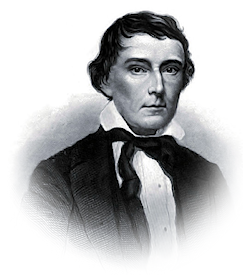
Dear Smith, I have been absent two weeks—went over to Sparta where I could be more completely retired and at rest—got back health—found your letter of the 18th inst., etc. I have promised to make a speech next week in Augusta. This was in response to a call from some 130 or 40 persons of that place. It was very much against my will to do it, but the call was of such a character I could not refuse. I suppose I shall have to permit the use of my name as an elector. This is a great embarrassment to me. I was almost offended at those who put it forward. I had expressly forbidden it. They ought not to have done it. But now the question for me is whether I shall sacrifice my individual feelings or permit myself to be the cause of injury to principles which lie so near my heart. Were I to decline, the reasons would never go with the act. I therefore [think it] better to suffer individually than for the public to suffer through me. This is the light in which I view it. I cannot write my letter immediately. Our court sit[s] here next week. I must attend to its business. That being on my mind I am not in condition to write on public affairs. Douglas is gaining rapidly in Georgia. The idea that Breckinridge must carry the State by 40,000 majority is all gammon in my judgment. He will however carry the State I think—if not by the popular vote at least before the Legislature. But if he carries the popular vote it will not be by a large majority unless I am greatly mistaken, and if he loses the popularity in the State, and Ky., Tenn., and Va., with N. C. and Mo. vote for Bell, I think there will be a chance for his losing the vote of the Legislature. That body will in that event be much more impressible than at present. How it will turn out however I can not now venture any satisfactory opinion. Public sentiment in the State is now in a tumult.

The caldron is just beginning to boil. It will get worse daily. Fermentation sometimes seems much higher than is expected when it first set in. Contrary to my expectations and what I knew at the time to be his feelings when I wrote you last, my brother Linton has taken the stump. He is to speak tonight in Augusta. He had no idea of this two weeks ago—none in the world—but his feelings have become very warmly enlisted in the national cause. Men who a few weeks ago cared or thought but little of the questions crowding themselves upon public attention are now like him beginning to realize the dangers ahead. To what extent this reaction, if it may be so termed, will go I cannot say. As for myself I look to the future with but little hope. The great evil of the day is the want of that high tone of political integrity and loyalty to principle which constitute the basis and lie [at] the foundation of all republican or representative government. These are virtues without which our Govnt. cannot stand. I doubt if there is enough pure disinterested patriotism in the land to save it. The signs now point to a speedy national rupture; and the same causes that will bring about that result will inevitably lead very soon to general anarchy. When a people lose or fall from a high tone of political morality they like individual men who have lost character and principles, become ready for anything. The right and the truth of any matter is not what they desire or look for but everything that will provide indulgence to their base propensities. This has been the history of the world and mankind everywhere. We are no better by nature than other people—no better than were the Greeks, the Romans or the French. The only difference thus far between us and the last named nation has been that our public men have been more thoroughly schooled in sound principles of political morality. In our worst crises of corruption there has been a predominance of public virtue and loyalty to the country in the national councils. This I fear is not the case now. Who in the Senate or House of Representatives would risk his reelection upon the advocacy of what his convictions assured him was right in itself, if he apprehended even that his seat should be hazarded thereby ? This is our trouble South as well as North. But I must close this homily. Continue to let me know the varying prospect as new features present themselves in the canvass in the different sections and states. These are always better and sooner perceived and understood at the centre than in the more distant parts. Send me the vol. of the Cyclopoedia when the one you mention is ready for delivery.


From Annual Report of the American Historical Association for the Year 1911.

Alexander Hamilton Stephens was an American politician who served as the vice president of the Confederate States from 1861 to 1865. After serving in both houses of the Georgia General Assembly, he won election to Congress, taking his seat in 1843. After the Civil War, he returned to Congress in 1873, serving to 1882 when he was elected as the 50th Governor of Georgia, serving there from late 1882 until his death in 1883.

J. Henley Smith was a Georgia journalist.

0 comments

Not Hung

News of the Day
1860s newsprint

Alamo Express [San Antonio, TX], August 25, 1860

The report which we mentioned in our last in regard to the hanging of the map man, Mr. Parker, is contradicted by the Herald. We have obtained some more particulars. Mr. L. Zork, of our city, who was in Richmond on Thursday the 16th, says that Parker was then in jail, and was to be tried on the Saturday following, and that he heard it mentioned that he would be hung. The letter upon which the report is contradicted, is dated Matagorda the 6th inst.

0 comments