The “Floyd gun” fired.

New York Times

 The New York Times, September 3, 1860

Correspondence

Old Point Comfort, (Va.) Wednesday, Aug. 29.

The curiosity of the Artillery officers, and of the guests at Old Point was gratified yesterday by the first firing of the great “Floyd” Gun of which I have before spoken. The first shell weighing 360 pounds was thrown fifteen hundred and forty yards at an angle of five degrees and striking the sand, bounced seven hundred and fifty yards further. The charge of powder was twenty pounds. The second shell weighing 328 pounds was thrown something upwards of four miles on the water, at an angle of forty degrees and with a charge of twenty-five pounds of powder. The powder with which this gun is fired is in grains of about one inch cube. The report is not so loud as that made by the ten inch guns on the ramparts, but the whistling of the shell through the air is terrific. The shell thrown upon the water was forty-two seconds in the air before striking. The “Floyd” Gun is pronounced a success and there seems to be no doubt it will reach a range of six or eight miles. It weighs 49,099 lbs—and cost in its casting $10,000. Both the projector (Capt. RODMAN), and the proprietor of the Pittsburg foundry (Mr. KNAPP) where the cannon was cast, are here superintending the firing of this monster Gun. The experiments are conducted by Capt. DYER of the Ordnance Department—one of the most experienced and scientific officers belonging to the army—and quite as an accomplished gentleman as he is an able officer.

Lieut. BOGGS, a promising young officer, is preparing to test the “Floyd” shells by means of an ingenious telegraphic arrangement. As the shell passes from the mouth of the cannon it cuts a wire, which produces a current and sets in motion a pendulum at an instrument securely arranged under the casemate of the fort. The target, placed at a fixed distance, is covered with a series of wires, one of which must be cut by the shell when it strikes the target. The moment the second wire is cut the current is broken, and the pendulum instantly stops, marking the space through which it had passed during the time the shell was passing between the two wires.

0 comments

State Seminary of Learning and Military Academy

News of the Day
1860s newsprint

The Constitutional [Alexandria, LA], September 1, 1860

 We are informed that Col. Sherman has succeeded in procuring at Washington a large number of Minnie rifle muskets made especially for the use of Cadets, together with other arms and accoutrements, so that he can now fully equip a corps of two hundred and fifty cadets.

That looks like getting the sons of Louisiana ready for any emergency of civil war or servile insurrection that may arise; the thanks of the people of the State are due Col. Sherman for his promptness and efficiency, not only in this important matter, but in everything that pertains to the good of the Seminary.

We also learn that steps are being made to secure Bragg’s famous “Buena Vista Battery,” which gave the Mexicans “a little more grape,” and the Presidency to Genl. Taylor. Col. Bragg generously offers to purchase it for the Seminary if the authorities at Washington can be induced to part with it.

While speaking of the Seminary, we should correct a wrong impression in regard to the admission of cadets for next session. It is generally believed that no one can be admitted who has not obtained, before the beginning of the session a special appointment from the Superintendent, this is not so. The session commences the first of November, and any one between fifteen and twenty one years of age, with a knowledge of the primary English Branches, who presents himself in person at the Seminary, may be received as a cadet.

It is already known that there will be a large number of cadets next session, and probably more will apply for admission than the building can accommodate. We would then advise those who wish to reap the advantages of the Seminary, not to fail to be present by the first of November, else the opportunity might be lost.

We will also warn the public not to judge of the course of the study by that of most other Military Institutions, where very little attention is paid to literary studies. The Board of Supervisors of the Seminary being firmly of the opinion that a thorough study of language is one of the best means of mental discipline and development, has determined that every facility shall be given for literary culture. Hence there will be taught a very extensive course of ancient and modern languages.

As the Seminary educates, free of cost, one cadet from each Parish and four from the city of New Orleans, we hope the city and Parish papers will join us in laying the above facts before the public.

0 comments

Fire!

News of the Day
1860s newsprint

The Constitutional [Alexandria, LA], September 1, 1860

 On Thursday night about 10 o’clock a fire broke out in or near the store kept by a Mr. Davis, situated on the corner, in the rear of the Rapides Hotel, commonly called “Tucks Row,” the whole of which was burnt. The loss we suppose is about $4,000.

It was by the greatest exertion of the firemen and citizens that the Rapides Hotel was saved as also the residence of Mrs. Bogan both buildings being closely connected with the row of buildings which were burnt. The latter building was saved by the use of buckets alone. It was no doubt the work of an incendiary.

We have no doubt that this is the continuation of that damnable plot which was concocted and has laid in ruins a number of towns in the State of Texas.

Our citizens should be on the alert and every suspicious character who arrives here should be made to leave forthwith. A strict watch should be kept every night for there is no telling what a night “may bring forth.” We shall have more to say upon this subject next week.

0 comments

Enthusiastic Political Meeting

News of the Day
1860s newsprint

The Constitutional [Alexandria, LA], September 1, 1860

Catahoula Wide Awake!
Great Out-Pouring of the Union
Men at the White Sulphur Springs!
Tremendous Enthusiasm!!
The Whole Parish in a Blaze!!!

One of the largest and most enthusiastic political meetings ever held in the good old parish of Catahoula, took place at the White Sulphur Springs, in that parish, on Saturday last, the proceedings of which will be found below. It shows that the friends of the Constitution, the Union and the Enforcement of the Laws, are up, and are nobly going on with the good work. We have no doubt that when the ides of November come, Catahoula will roll up a good old fashioned majority in favor of our gallant and patriotic standard bearers, Bell and Everett. May success attend the efforts of our friends in their noble efforts.

A great number of ladies graced the occasion by their presence. This speaks well for the cause of Bell and Everett. We are sure that the eloquent and true-hearted patriot, Everett, is a favorite with all the ladies who honor the name of Washington. . .

0 comments

The Pole Raising

News of the Day
1860s newsprint

The Constitutional [Alexandria, LA], September 1, 1860

 It was apparent to the most casual observers on Saturday last, that something unusual was about to occur to break in upon the dull monotony of our town. At an early hour in the day  people commenced coming in from the country and by 12 o’clock quite a large and respectable crowd had gathered to assist in raising the Bell and Everett pole, announced to take place at this hour. . . .

Shortly after the conclusion of the last address, amid the shouts of the multitude and the booming of cannon, the pole was elevated to its position, and the national ensign was unfurled to the breeze, having inscribed upon it the names of Bell and Everett.

Upon the summit of the pole, 125 feet high, is placed a gilded figure of a bell. Some of our Democratic friends, with a puerile attempt to be witty, remarked that it has no clapper. Their favorite figure has been a rooster, but we never heard that the figure crowed, and now that the Democracy is divided, we have yet to learn which faction owns the famous rooster.

Our figure is but symbolical of that great National Bell which will ring out in November next, on occasion of the mighty resurrection of dry bones among which there is now such a shaking.

The proceedings of the day were characterized by much enthusiasm, convincing all that Bell and Everett have a deep hold upon the hearts of the people.

0 comments

Barbecue

News of the Day
1860s newsprint

The Constitutional [Alexandria, LA], September 1, 1860

 The Douglas men will give a grand Barbecue on Saturday next. It is expected that some of the most distinguished speakers in the South will be present. There will be a chance to hear  all sides of the question. Arrangements are being made to accommodate every body and the  “rest of mankind.”

We hope that men belonging to every party which will be supported in the South will be  on hand, as they then can discern the “true path to tread.”

The ladies God bless them! they are expected to be present in large numbers, as upon them rests the stability and permanency of our glorious institutions. Much depends upon the women of America, they should instill into the minds of their children those noble principles,  which have been handed down to us by the fathers of the Revolution.

The Union of these States will then be ever safe. It is a proud duty and we know that every patriotic women in the land will endorse it.

0 comments

The Liquor Law

News of the Day

[Little Rock] Arkansas True Democrat, September 1, 1860

From the Arkansas Baptist.

Ladies and Gentlemen of Arkansas: We have prepared the following Petition to be circulated throughout the length and breadth of Arkansas in every county and in every nook and corner of every county. Let us all, Ladies and Gentlemen, make on united effort and we can succeed by the first of January next in placing our state in an enviable position—free from those Licensed Dens of Iniquity.

Obtain every signature you can—many beastly inebriates would rejoice to sign the Petition to have the temptation removed from before them that they might spend their remaining days in sobriety, happiness and peace.

Let us have tippling houses put down throughout the State and immediately a population of worth would seek homes in our growing state—unsurpassed in point of natural resources by none of her sister States.

Let every lady interest herself in this great movement and take a noble part in freeing our State from its most potent foe.

Let every Gentleman act nobly in this matter as much of his future happiness in this life and that to come may depend upon the success of this movement.

We specially and earnestly invoke the aid of all the ministers of the word of God and of all the Editors of newspapers in the State. Your facilities for doing are superior to most others: will you use these advantages to aid in accomplishing this noble work? We are persuaded you all will.

PETITION OF THE CITIZENS OF ____________ COUNTY ARKANSAS, TO BOTH HOUSES OF THE LEGISLATURE WHEN ASSEMBLED IN LITTLE ROCK, IN 1860-’61.

We, your petitioners, free white persons of both sexes, from the age of fifteen years upward, do most earnestly yet humbly pray your Honorable Body to grant us the following petition; namely, The entire abolition of the Law or Laws authorizing the Licensing of houses to retail ardent spirits within the State of Arkansas; but, if your Honorable Body should not grant the above in full, then we ardently pray you to grant the above by special enactment, to our county as named in the caption of this petition.

We would not ask this at your hands without offering a few of the many reasons which urge us onward in this matter.

Reasons for the Petition:

  1. Tippling houses afford temptations that induce large numbers to drink to excess who would otherwise remain sober.
  2. Tippling houses manufacture and bring into market the hordes of loafers, spendthrifts, “fast young men,” blacklegs, thieves and cut-throats that infest our country—especially our villages, towns and cities.
  3. Tippling houses are the direct or indirect cause of perhaps nine-tenths of all the crimes committed within the state, and consequently of an enormous tax upon the sober and industrious classes, in order to pay court fees, etc. etc., in criminal prosecutions.
  4. Tippling houses lead to incarceration in our county and State Prison of perhaps nineteen-twentieths of all the inmates of those places for human punishment; furnish the hangman most of his subjects after having made them too bad to live on the earth; furnish large numbers annually for our poor house; make squalid poverty take possession of what but for doggeries, would be houses of plenty; make great numbers of almost broken hearted wives, become widows surrounded by weeping children, and scatter causes for weeping and wailing all around.
  5. Tippling houses are justly chargeable with nine-tenths of all the quarreling, fighting, stabbing and shooting that occur every year.
  6. Tippling houses should be held accountable for three-fourths of the accidents that occur by steamboat explosions, railroad collisions, personal drowning, freezing, suicides, etc.
  7. Tipping houses demoralize to some extent any place where even one is sustained— that community lacks the subtraction of at least one doggery in order to moralize it.
  8. Tippling houses are detrimental to religion, morality, education, prosperity, honesty, industry and individual and general happiness.
  9. Tippling houses being continued, there will be drunkards raised up from amongst the children at present around our firesides now in perfect sobriety! Horrible thought!!
  10. Tippling houses are obstructions in the road to all that is good, great and ennobling— they are in the way of the gospel of Christ, in the way of happiness in this life and of that to come.

In consideration of the above with numerous other reasons, we again urge your Honorable Body to grant our humble request, and we as in duty bound will ever pray.

Males over 15 years.                                     Females over 15 years.

|__________________________                      _____________________________________

|__________________________                      _____________________________________

|__________________________                      _____________________________________

Cut out the above Petition, paste blank paper to the bottom of it, and place the names of males on the left and of females on the right; then send the list of names to us before the meeting of the Legislature, and we will see that the subject be presented to that body in proper time. Up, let us all act at once.

0 comments

The “Olymp”

News of the Day
1860s newsprint

Alamo Express [San Antonio, TX], September 1, 1860

On any night of the week if you happen to strole [sic] down [illegible] street, you will be greeted with the enlivening strains of a hand organ, proceeding from an establishment with the above sign on it. The building is devoted to the lovers of “lager beer” and an occasional “hop” takes place in the upper rooms. But if you neither wish to take a whirl in the German waltz or “wet your whistle” you can step into the back yard and look at the hobby-horse performance, which will cost you nothing unless you are silly enough to straddle one of the “fiery steeds” and try your luck at stringing a couple of rings on an iron poker. Night after night is this “hobby-horse” arrangement resorted to, and affords an easy and simple mode to our people for throwing away their surplus and unnecessary dimes. The “Olymp” is one of our varieties, but in its performances present the same variety every night, especially the “hobby-horse” department, —the “artistic ” gentleman from Italy “grinds” us the same tunes over and over again, and the “steeds” never deviate from their circle, which we must call the “magic circle” as it congregates the humble, the proud, the rich and the poor about it nightly—there must be a charm that we can’t see. Truly is man a simple being chasing bubbles on life’s current. The wise and the simple ride their hobbies.

0 comments

Snippets

News of the Day
1860s newsprint

Alamo Express [San Antonio, TX], September 1, 1860

Removal.—Our New Office.—We have hatched ourselves out of the “hole in the wall,” into a more convenient and pleasant stand opposite the Post Office. Call on us.

Our Bell.—We are indebted to the cunning workmen at the old and well known silver smith firm of Bell & Bros., for the neat cut at the head of our editorial column.

Returned.—We learn that the exploring expedition under the control of Lieut. Eckeles and accompanied by an escort under the command of Lieut. Holman, has returned. During the expedition they encountered considerable hardship and found their camels to be useful. We have not learned how far the Lieutenant was successful in accomplishing the objects of the expedition.

0 comments

Joseph M. Peers

News of the Day

[Marshall] Texas Republican, September 1, 1860

The Paris Press published the statements from the Clarksville Standard and Mt. Pleasant Union, of the hanging of Peers, whose name is given in the latter paper as Pearce, and says:

“The individual referred to is Joseph M. Peers, formerly of Virginia, and well known to Mr. Overstreet, of this place, while living there. He is fond of talking, and tells the most marvellous stories, and is thought by many to be deranged. His erratic movements and doubtful statements led to his arrest in Clarksville, by a committee from Paris. He was brought here and after an impartial examination was discharged, there being no evidence to justify his detention. Another individual, who spent some time in idleness in Sulphur Springs, and preferred negro to white company, was, on his arrival in Paris, arrested, and upon examination it was determined that, as he had no legitimate business in Texas, he should seek some other country, and a committee, composed of some of our most responsible citizens, escorted him out of the State, and admonished him to remain out of it for the present.”

0 comments

The Fall of the Alamo – Mr. Potter’s Defence.

News of the Day
1860s newsprint

Alamo Express [San Antonio, TX], September 1, 1860

In Friday’s Daily Herald, Captain Potter attempts to defend his account of “the fall of the Alamo” against the stubborn facts presented in the simple and straight-forward narrative given by Don Francisco Ruis. We thought to let this matter go until answered by an impartial compilation of the existing facts and knowledge relating to this event, which we shall place before the public as soon as possible, but as Mr. Potter has presented to the public an account which he attempts to defend as infallible against all others, we propose to take a brief review of the two accounts as they now stand.

In the outset of his narrative, Mr. Potter says that so far as the final assault was concerned, the details have never been correctly given by any of the current Histories of Texas; that the official reports of the enemy cannot be relied on; and that a trust-worthy account can only be compiled by comparing the verbal accounts of assailants with military documents.

Mr. Potter either was not aware of, or ignores the fact that an account had been given by an eye-witness—Don F. Ruis; declares the accounts of the enemy to be unreliable, and then gives as his authority the narrative of assailants, and the second-hand statements of Mexican officers; to wit: Gen. Bradburn, who had been driven out of Anahuac by Travis, and whose evidence to Capt. Potter was only hearsay derived from Mexican officers.—The reliability of such authority we must be allowed to doubt when it faces the statements of Mr. Ruis.

Again, in his estimate of Santa Anna’s army he attempts to establish on probability, the actual force. He says that there were thirteen battalions of foot, and two regiments of cavalry, which, if full, would amount to 22,500 men. Mr. Potter reduces this number down to 7,500 men. His reason:

“The nominal compliment of a Regiment or Battalion is 1500 men; but I have never known one to be full, or to much exceed a third of that number.”

It is quite probable, for we have the Captain’s word for it, that these battalions were not full when he saw them, but this does not controvert the probability that they were full or half full when they appeared before the Alamo.

He makes a few minutes’ work for the Mexicans to take the Alamo; and declares that the account given by Yoakum “is evidently one which popular tradition has based on conjecture.” In his defence , in relation to Mr. Ruis’ account, he says: “It is in substance, the very account I refer to as adopted by Yoakum and others.” And Mr. Potter calls this account of Mr. Ruis’ a tradition. The narrative of an eye-witness a tradition?

In regard to the Mexican loss, Mr. Potter says:

“The estimate made by intelligent men in the action, and whose candor I think could be relied on, rated their loss at from one hundred and fifty to two hundred killed, and from three to four hundred wounded.”

What is Mr. Ruis’ testimony on this point? He says:

“The dead Mexicans of Santa Anna were taken to the grave-yard, but not having sufficient room for them I ordered some of them to be thrown into the river, which was done the same day.

“Santa Anna’s loss was estimated at 1600 men. These were the flower of his army.”

He disposed of the dead; had them carted off, and knew how many a cart would contain, and how many cartloads there were. We therefore contend he is the best possible authority on this point; and it is absurd for any man to call this statement a “tradition based on conjecture,” and to attempt to impeach Mr. Ruis’ authority as Mr. Potter has in saying in his defence that “the credulity which can swallow this, cannot be relied on for historical data.” Let us turn the tables on the Captain: The credulity that can swallow the account of such men as Gen. Bradburn and other Mexican [illegible] cannot be relied on for historical data. We think [illegible]

Now let us in conclusion [illegible] up the points of difference, briefly:

The first is as to the time of day.—Mr. Ruis says, “on the 6th of March, at 3 o’clock P.M.” Mr. Potter says just at the peep of day.

Mr. Ruis says the attacking forces amounted to 4000 men. Mr. Potter says 2500.

Mr. Ruis says the Mexicans were twice repulsed. Mr. Potter says they walked right in.

Mr. Ruis says the Mexican loss was 1600. Mr. Potter says only 500.

Now let us review their capabilities as witnesses: Mr. Potter was, according to his own admission, several hundred miles away when the storming of the Alamo took place; therefore is of himself no authority, and surely cannot have the face to claim before the people of Texas the same credence for his sources of information as the direct testimony of Mr. Ruis deserves.

Mr. Ruis is one of our most respected and intelligent Mexican citizens; was Alcalde or Mayor of the City at the time of the fall of the Alamo; was present and as close as a reporter could have been, during the action; disposed of the dead; know, and was in company with the most prominent actors of that occasion; has been a resident here from that time to this, and would therefore be more likely than any other man to come in possession of all the existing traditions, narratives and incidents in relation to this event, and would hardly make a statement contrary to his knowledge and all the evidence of the case.

We suppose he gave this account at the solicitation of the compilers of the Texas Almanac, in as condensed and simple a style as possible, without any idea of literary display, or as a correction of any former accounts. It is simply his straight-forward narrative.

Mr. Potter was hundreds of miles away from the scene of battle; gathers his statements from indirect sources; and takes the probabilities in the case as truth; therefore we must set him down as probable, not positive authority, however much he may object to the contrary. If Mr. Potter is desirous of acquiring, or adding to this literary fame as a writer and historian, we have no objections; in fact we wish him success, provided he does not jump to conclusions upon assumed facts, or such as are not entitled to belief; and does not introduce so many probabilities to contradict existing authority.

0 comments

Lynch Law in Upshur

News of the Day

[Marshall] Texas Republican, September 1, 1860

The report that a man was taken out of jail at Gilmer, Upshur county, and hung in the vicinity of the town, by a mob, turns out to be true. The hanging took place on the 14th inst. The man’s name was Morrison. He had been lodged in the Upshur county jail, charged with stealing a negro woman from a Mr. Farris, near Pittsburg, Upshur county. After he was placed in jail, seventy-five citizens of the counties of Wood, Hopkins, and Titus made their appearance, called a meeting of the citizens of Gilmer, and demanded that Morrison should be delivered up to them.

A public meeting was convened to consider its propriety. A. U. Wright was called to the chair and R. W. Ford appointed Secretary. Hon. Jonathan Russel, in behalf of the 75, explained the object of the meeting. It is alleged that Morrison had been engaged in inciting the negroes to insurrection in the above counties. We presume the people were satisfied of his guilt, for he was given up and hung. We expect he was a depraved, bad man. The Quitman Herald says of him:

“Morrison, from what we can learn, was about 28 years of age, rather small in form and fair complected. He was married to his wife in Indiana, but removed to this State from Kansas, (where he was a participant in the troubles with the free soil party,) and first settled in Montague county. He had been living at Winnsborough in this county for several months, and was a well digger by trade. Lately he had abandoned his wife and had been working in the neighborhood of Pittsburg in Upshur county. He confessed decoying off the negro and also to stealing a watch and other articles of value which were found as he directed.”

The wretch detected in burning or attempting to burn a town, or in inciting the negro population to insurrection richly merits death. Such a man is an enemy to society, and stands in the relation of a pirate. But it would be better for the community in every case where the law is effectual to punish crime, to permit it to take its course; and in all cases where the death penalty is inflicted, the proof justifying it ought to be published to the world. The parties engaged in the transaction owe it to themselves and to society.

The parties engaged in this affair, whose names are mentioned, are among the most respectable citizens of Upshur and wood counties. The Democrat states that the hanging of Morrison is universally justified. About two hundred persons witnessed the execution.

0 comments

Hanged

News of the Day

[Marshall] Texas Republican, September 1, 1860

The Henderson Times of the 27th contains the following:

Hanged.—The vigilance committee found Green Herndon and his servant girl guilty of burning our Town, and they were hung on last Saturday night.

An application had been made, we understand, to bring Green Herndon before Judge Frazier upon a writ of Habeas Corpus, which, we presume, expedited the hanging. It is stated, that the brother of this man Herndon had been previously taken out and severely lynched, without eliciting anything from him. What became of him we are not advised. He is reported to be dead; another that he was turned loose. The proof against the parties condemned and executed, is only a matter of rumor in this community, and we are therefore not prepared to say whether the vigilance committee acted wisely or imprudently. We know several gentlemen connected with the vigilance committee personally, and have always regarded them as discreet men. How far they were effected with the prevailing excitement and the terrible disaster which reduced their town to ashes and many of them to want, we are left to imagine, not having visited Henderson since the fire. We cannot but believe that they had satisfactory proof of the guilt of the parties hung. We certainly hope they have done nothing that they may have cause to regret.

0 comments

Burning of Henderson

News of the Day

[Marshall] Texas Republican, September 1, 1860

We notice that our exchanges in commenting upon the burning of Henderson, state that the citizens of that place put no faith in the reported conspiracy to burn the Texas towns, and neglected to appoint a patrol or set a watch. This is incorrect. A regular night watch or guard had been on duty, if we are correctly informed, for several nights previous to the fire. The guard did not turn out, however until 9 o’clock, and the incendiaries took advantage of the interval between dark and this hour, and the absence of the citizens, who were attending church, to set fire to the town.

0 comments

Marching and Countermarching

News of the Day

[Marshall] Texas Republican, September 1, 1860

We have marching and countermarching, fife blowing and drum beating, in Marshall. An infantry and cavalry company have been organized, and will soon make their appearance on the public review. Success to them.

0 comments

Contradiction

News of the Day

[Marshall] Texas Republican, September 1, 1860

The Mt. Pleasant Union contradicts the rumor of the burning of the flourishing little town of Mt. Vernon, in Titus county, as published by the Jefferson Gazette, nor has any body been hung in Titus county, so far as the editor has learned, since the era of town burnings in Texas.

The Union also says:

“The rumor of Daingerfield, another flourishing town in Titus county, as chronicled in other exchanges, being destroyed, is without foundation. In fact our county has been blessed with order and quiet to an unusual degree, during the reign of terror.”

0 comments

More Abolition Outrages

News of the Day

The Ranchero [Corpus Christi, TX], September 1, 1860

It is reported that an attempt has been made to burn Athens, and that two white men had been hung, some negroes shot, and others hung. Every negro who has been implicated in this plot, even more than a hundred miles off, has testified to the same facts, the same dates, names and circumstances that were detailed at Dallas.

It is also reported that three men who fired Henderson have been taken and summarily punished. The Tyler Reporter of 7th says that a report has just reached there that Belleview, in Rusk county, was burned on the night of the 4th inst.

The loss by fire at Henderson, will amount, it is estimated, to $250,000. Efforts have been made to fire many other places, but discovered in time to prevent its execution.

0 comments

Fire at Houston

News of the Day

The Ranchero [Corpus Christi, TX], September 1, 1860

On the night of the 17th ult., a large fire consumed a large part of the business houses of Houston. The Kelly House, a large three story building was destroyed. The next morning the charred remains of a man were found, who was burned in Hoffman’s hotel. It is supposed his name was Perkins. The fire, judged from the evidence, was accidental.

0 comments

Later From Texas

News of the Day
1860s newsprint

Semi-Weekly Mississippian [Jackson, MS], August 31, 1860

New events almost daily occur in some parts of Texas to keep alive the excitement that exists. We glean again the most important from our exchanges.

The Jefferson (Cass county) Herald has the following paragraph:

A guard of twenty-four men is nightly stationed around the place, and not an individual passes through the streets after dark without being hailed and made to give an account of himself. Several suspicious individuals have recently been arrested, and some are now in custody.

 A man named Pearce has been arrested at Clarksville charged with burning Henderson:

The proof against him is almost positive.—He hired a negro woman at the hotel to do the work. His brother, also implicated, has fled.

 The Jefferson Herald says:

 The citizens of Lamar and Fannin counties have ordered a certain James R. Brown to leave the State in less than 24 hours. The evidence against him was sufficient to justify more severity.

 They are now driving from all the upper counties every individual upon whom rests the least suspicion of abolitionism. It will, no doubt, fall pretty hard on some parties, but the peace and safety of the country demand it.

 We learn that the flourishing little town of Mount Vernon, Titus county, was burned down a few days since. It was the work of incendiaries, one of whom, we are informed, has been caught and hung.

 A letter from Sulphur Springs, dated the 10th inst., says:

 Last Saturday a plan to burn this place was discovered. A negro preacher belonging to Mr. Goodson, acknowledged that he and others had set apart last Tuesday night as the time to burn all the stores and dwellings, commit all other depredations they could, and then take horses, in case they could not whip out the white men, and fly for the Indian nation. One Taylor, who has been loafing about here for the past sixteen months, was partially implicated as a confederate. He has made the negro his only companion and associate during the whole time he has been here. But as several negroes were implicated and the prospects good Taylor and two negro men to hang, a “self-constituted” committee of six (the owners of said slaves) held a second investigation and the negroes being permitted to talk together the result was contradiction and confusion, and the whole posse were let off! But this has not satisfied the citizens, and yesterday we organized a regular vigilance committee, to exist as long as any fears of burning are entertained. Mr. Taylor will get his traveling card to-day, or be hung; and if the negroes suspected are not taken from our midst, they will be dealt with according to justice.

 The 13th inst., an attempt to burn Indianola is said to have been discovered in time to prevent serious loss.

A suspicious looking young man, a loafing stranger, named Edward King, who was seen about the premises a few moments before, was arrested and given to understand that a change of locality might be better for his health. He went to New Orleans on the first steamer. The citizens of Indianola have since formed a vigilance committee.

0 comments

Returning Texans

News of the Day

[Fayetteville, Ark.] The Arkansian, August 31, 1860

A great number of people are emigrating from Texas, passing through our streets nearly every day. They have been driven thence by the scarcity of food and water. We always said that Texas was no place for the small farmer.

Owing to the watching paid all persons from Texas, these emigrants may fear trouble; but they need not apprehend any, for the honest man need fear nothing in this community.

0 comments

For Kansas

News of the Day

[Fayetteville, Ark.] The Arkansian, August 31, 1860

The Vigilance Police appointed by the late Public Meeting are doing their duty.—One man who has been residing in this town some time, was known and found to be entirely too free with negroes—had even sent negro wenches valentines, and the like—was put on the right road to Kansas.

Another, a refugee from the incensed Texans and whose son as is reported was there recently hung for Abolitionism and complicity in the house burnings there, was waited on by a committee appointed by the vigilance police and respectfully requested to start forthwith for cooler regions.

These examples and more than are sure to follow will give all immigrants hither ample warning to bring no abolition or freesoilism, no abolitionist or freesoiler with them—for here they cannot, shall not live.

All other classes of honest immigrants are welcome and invited. Come among us. We want men, women and children, more labor, more sinews.

The Vigilance Committee have started. W. L. Reed and his family, the Rev. Anthony Buley, his son-in-law David Roper, and their families, northward.

These last admitted that they were anti-slavery, that they upheld and defended anti-slavery sentiments, and Roper impudently avowed he’d vote for an abolitionist if he wanted to. Buley also said he had heard that a reward was offered for him in Texas of $1000.

These gentry have been invited to leave Arkansas and not stop ’til they reach a free state. Our fellow citizens of Missouri are advised to keep them moving north, unless they would see trouble.

0 comments

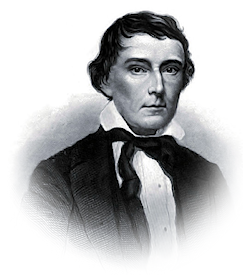
Alexander H Stephens to J Henly Smith

Miscellaneous document sources

Crawfordville [Ga.], Aug. 30th, 1860.

Dear Smith, . . . Douglas is gaining very rapidly just at this time in Ga., from all I can hear. But of course there is no prospect of his getting the vote of the state. If he gets 20,000 votes it will be a wonderful success, with all the leading [men] of the party and the press, except two or three papers, against him. If his friends should carry Maine next Monday week it will give him a much stronger impetus. But I have no expectation of that. I hope but do not look for it. Let me hear from you often.


From Annual Report of the American Historical Association for the Year 1911.

Alexander Hamilton Stephens was an American politician who served as the vice president of the Confederate States from 1861 to 1865. After serving in both houses of the Georgia General Assembly, he won election to Congress, taking his seat in 1843. After the Civil War, he returned to Congress in 1873, serving to 1882 when he was elected as the 50th Governor of Georgia, serving there from late 1882 until his death in 1883.

J. Henley Smith was a Georgia journalist.

0 comments

Fifty Negroes for Sale

News of the Day
1860s newsprint

Semi-Weekly Mississippian [Jackson, MS], August 28, 1860

Slave Depot, Crystal Springs.

We have established a Depot at Crystal Springs, Mississippi, for the sale of Negroes, and as our facilities for buying cheap and desirable Negroes are unsurpassed, we can say to purchasers, that we will make it to their interest to call on us before purchasing elsewhere, and purchasers who are visiting New Orleans, would find it convenient and to their interest to examine our stock.

Relying entirely on making large and quick sales to sustain us in offering such liberal inducements, and any Negro sold by us, that does not come up to our representation, as per bill of sale, will be taken in exchange with as little trouble as possible to the purchaser.

Being permanently located here, we can be found at all times to make our guarantee good. We have just received a large lot of young and likely Negroes and will continue to receive, as may be required, No. 1 Men, Boys, Women, Girls and Families; also, extra Cooks, Washers and Ironers, Blacksmiths, &c.

  1. N. Robertson & Co.

Crystal Springs, Miss.

0 comments

Letter to C H Fisher

Civil War Day-by-Day

SPRINGFIELD, ILLINOIS, August 27, 1860.

Dear Sir: Your second note, inclosing the supposed speech of Mr. Dallas to Lord Brougham, is received. I have read the speech quite through, together with the real author’s introductory and closing remarks. I have also looked through the long preface of the book to-day. Both seem to be well written, and contain many things with which I could agree, and some with which I could not. A specimen of the latter is the declaration, in the closing remarks upon the “speech,” that the institution is a “necessity” imposed on us by the negro race. That the going many thousand miles, seizing a set of savages, bringing them here, and making slaves of them is a necessity imposed on us by them involves a species of logic to which my mind will scarcely assent.

(Apparently unfinished.)

0 comments

The Abolition Plot

News of the Day

[Marshall] Texas Republican, August 26, 1860

The Houston Telegraph learns that in Montgomery county, there is considerable excitement about the negroes.

A white man by the name of Simmons was arrested on the 2d and put in jail. He was implicated by several negroes as being their agent to furnish them with arms.

On the 4th there was a large meeting of the citizens in Montgomery, which appointed a Vigilance committee. This Committee was at last accounts investigating the whole affair. They had not yet reported on Simmons case. The Sheriff had resigned to be out of their way, the Committee by the common consent of the people having all the authority.

We learn by word of mouth that Col. Shannon, of that county, observing something wrong in the deportment of his negroes Saturday night, had them taken up and separately examined. They all concur in saying that they had formed a plot to burn his premises and murder him and his family, and then escape.

A man by the name of Williamson, who had been suspected of tampering with negroes at the Navasota City Depot, was arrested there on Saturday. On being brought to trial, none but negro evidence appeared against him, in consequence of which he was not convicted, though it was perfectly evident that he had received stolen property from the negroes for months, and that the negroes by his instigation were to have set fire to the town and made their escape on Sunday night. It was decided to send him out of the State.

At a public meeting of the citizens of Gay Hill, Washington county, a committee of safety was appointed; patrol organized; a rifle company recommended to be raised; cessation of assemblies of negroes for religious worship recommended, unless on the premises of owners and under their supervision; liquor selling to slaves to be stopped peremptorily and dealers therein strictly watched; no one of intemperate habits to be on the patrol or committee, etc.

The Anderson (Grimes county) Texian says:

In our own county, while there has been no well defined plan detected, enough has been ascertained to settle the conviction upon the minds of all that something was in expectancy, although the impression in general that there has been nothing like organization, or any plan matured by them for definite action. An active Vigilance Committee of our citizens has been formed, and there are now engaged in ferreting out all which will tend to throw light on the presumed complicity of the negroes of this county in the movement.

The Brenham Ranger of the 10th says:

A few days since several negroes were arrested on Mill Creek, in this county, who acknowledged to their having poison given them by white men, for the purpose of poisoning their owners and families, and that the day of election was the time fixed for a general insurrection. They also implicated some negroes about town as being concerned in the murderous plot.

  1. W. Flournoy, Esq., Democratic candidate for Attorney General, passed through Belton a fortnight ago on his way to Austin from Northern and Eastern Texas. The Democrat understands he reported the hanging of two more abolition incendiaries in Tarrant county.

The Belton Democrat has this paragraph:

A letter from Meridian, dated July 28th, says “The men who had gone in pursuit of tucker, the accomplice of Covington, have returned with him, and the people will meet to-morrow to dispose of the case in whatever manner may seem best. It is said he has made some important disclosures.”

The same paper says:

We understand that several abolitionists have been quietly hung in Northern Texas—the object being not to spread such facts until they secure many others, whose names have been revealed to the appropriate committees.

The young men of LaGrange have formed a sub-vigilance committee; the citizens of Fayetteville have organized a committee for the same purpose.

The Fort Worth Chief of the 1st says:

A preacher by the name of Buley was hung at Veal’s Station last week, for being an active abolitionist. A majority of three hundred men condemned him.

The people of Tarrant county have appointed a vigilance committee, Hon. Isaac Parker chairman, with power to examine suspicious strangers, and take such other action as they may deem proper in case of emergency.

Matagorda city is vigilantly patrolled every night. A meeting is to be held there on the 18th to bring about concert of action in the whole county.

A vigilance committee has been appointed at Bellville, Austin county; separate slave congregations for religious worship were advised to be stopped; pedlars to keep out of the way, and special patrols appointed.

The citizens of Cameron met on the 1st inst., appointed a special patrol, warned all abolition favorers away, and organized a vigilance committee. Arms have been found in the negroes’ hands.

After the meeting, a school teacher who had before been privately warned, concluded to leave suddenly.

The Sentinel says:

A negro woman, belonging to Gray, who resides some four miles from town, voluntarily confessed to her master, that all the negroes around were in possession of the news relative to the intended revolt on election day; that they had been freely discussing the matter, and for him to be on the alert.

  1. O. Campbell, postmaster at Travis, writes to the Bellville (Austin county) Countryman:

It is no trivial matter to find, in the post office, a paper published by Black Republicans, and bearing upon its first page the names of Abraham Lincoln and Hannibal Hamlin.

Such a paper I find in the office at this place, published at St. Louis, Missouri, in the Bohemian language, with no less than three Agents at Austin county and one in Colorado.

The following are the names of the Agents as published in the paper: Industry P. O., J. Lesikar; Catsprings P.O., Reisnershofer; New Ulm, P.O., G. Schiller; Freisburg P. O., Colorado Co., Fr. Piskacek.

The paper is taken by one Gobri, in this neighborhood.

There was much excitement at Industry on account of this.

A night police has been organized at Gonzales, in view of the startling news from the northern and central part of the State.

A negro was hung on the 5th inst., near Science Hill, Henderson county.

The Telegraph says:

On Monday last a white man rode up to Mr. Dick Breedings, near Round Top, at noon, and finding nobody but a negro girl at home, questioned her about runaway horses, etc., and finally asked her how she and the negroes were satisfied. He then went off, and soon after returned with three negroes, demanding something to eat. The woman gave them food. After eating they broke open a trunk in search of money. They then put a shovel full of fire in the bed and left. After they were gone the negro woman extinguished the fire and then ran in the overseer’s house to tell him what had happened.

The Huntsville Item of the 8th says an old gentleman, who has lived in that county for some time, dealing in lands and land claims, and who has always stood fair with the community, has been arrested and taken to Montgomery, on a charge of being connected with the insurrection plot there.

The citizens of Huntsville, at a large meeting on the 2d inst., adopted strict measures for guarding the town and watching the slaves, prohibiting preaching to them, and otherwise exercising due vigilance.

0 comments