Vigilance Police

News of the Day

[Fayetteville, Ark.] The Arkansian, September 21, 1860

We are authorized to announce to the Public, that the committee organized and appointed by the people, by three several Mass Meetings, have surrendered their powers to the people from whence they were derived.

This committee acted in good faith throughout and for the public safety. Political prejudices operated against the committee and therefore they have disbanded.

0 comments

A Woman Tarred and Feathered

News of the Day

Daily Times [Leavenworth, KS], September 20, 1860

One night last week a number of citizens of Romulus, Mich., took from her bed a woman whom they charged with immoral and cruel conduct, tarred and feathered her, and rode her on a rail! She was living with a man in whose family she formerly resided as a domestic, and whose wife being dead, she is alleged to have cruelly treated her orphan children. She recognized a number of her assailants, and thirty-nine have been arrested.

0 comments

Knights of the Golden Circle

News of the Day
1860s newsprint

[Little Rock] Old-Line Democrat, September 20, 1860

It is a fact well known to all who read the public journals of the day that there is a party in the Southern portion of this Union that has been organized for the purpose of colonizing Mexico. This party is known as the Knights of the Golden Circle, and have continued to increase so rapidly that from five men, they have in three years reached the formidable number of fifty thousand. These men were scattered through the country from the mountains of Virginia to the Gulf of Mexico, and for some time have been awaiting orders to concentrate at some point convenient to the scene of their future operations. Gradually these men have been sent through the country, and are now collecting on the confines of Texas. Already large numbers of them are concentrated in that State, and this nucleus is being surrounded by men from all the various States.

The first movement of the K. G. C’s from Virginia will take place to-morrow from the little town of Hampton. One company, in command of a competent officer and a worthy Virginia gentleman, will embark for Texas, and will then inaugurate the exodus of the K. G. C’s. That the object of this organization is to change the political and social principles of the country to which they go, there is little doubt, for they avow this their purpose; but they do not go unlawfully armed, at least from here; they profess to go as peaceful citizens and will revolutionize that unhappy country not by fire and sword, but by settling in sufficient numbers within its borders, and changing and making wholesome laws, and seeing that they are enforced. They are going to introduce Anglo-Saxon energy and American prudence among a people who have heretofore been incapable of self-government, and who are actually inviting them to come and teach them how to live and be happy.

The movement of these men toward the Rio Grande is pregnant with much importance to the South, and is the commencement of a grand programme that has been preparing for several years.—Norfolk Day Book.

0 comments

A Negro Killed

News of the Day
1860s newsprint

Daily Advocate  [Baton Rouge, LA], September 20, 1860

A party of gentlemen were out hunting this morning when their dogs got on the trail of a negro in the cornfield of Mr. J. A. Dougherty, just above town, and run him up to a heavy briar thicket near the Montesano, where he took refuge and fought desperately against his assailants. He killed five of the dogs with a large butcher knife, then fled on hearing the hunters approach. He refused to obey their orders to stop and surrender, when a number of shots were fired with effect, and he fell dead. He is of copper complexion, heavy moustache, and bears a striking resemblance to an Indian. His place of retreat in the briar thicket was found and was well stored with provisions.

0 comments

Military Training

News of the Day
1860s newsprint

[Little Rock] Old-Line Democrat, September 20, 1860

We are glad to note the spirit with which our citizens enter upon the military training of our militia musters. On Saturday we drove out to Fourche township in the war-like association of a Colonel, a Major, an Adjutant, two Captains, a Sergeant, and a fifer; we ourselves being a ‘prigh-hivate’ in the Pulaski Lancers. Arrived upon the ground, we met three companies of militia, from as many townships of the county, under command of Capts. Vance, Johnson and Robertson. They were drilled and reviewed for about three hours by Adjutant Newton, detailed for the duty, assisted by Sergeant Lockman, acting as his aid, mounted, of course, and in “full feather.” Major McAlmont and Capt. Peay were on the ground, and assisted actively during the review, in teaching the manual of arms as well as the marchings. The protest of the “ear-piercing fife and the spirit-stirring drum,” together with a broad bunting, which unfurled the “stars and stripes,” gave a great deal of the “pride, pomp and circumstance of glorious war” to the scene.

Col. Peyton was present, a watchful observer of the exercises, and at the conclusion of them, offered the battalion some very appropriate remarks, upon the subject of their duties, under the requirements of the militia law.

He said the South was threatened by aggressions, which might any day assume a shape to bring into practical requisition the military skill he was anxious for them to acquire. That the State of Arkansas, to which they owed their first allegiance, could afford no standing army in the mere dread of this danger, and the first aggression upon her rights would have to be repulsed by the bravery and discipline of the militia. She had no forts, no arsenals, and her only defence   was the brave hearts of her sons. That, coupled with discipline, would, he thought, serve her utmost need.

0 comments

The Republican Party Going to The Right House.

Civil War Day-by-Day

The Republican Party Going to the Right House - Currier & Ives (1860)The Republican Party Going to the Right House—Currier & Ives lithograph (1860)

Lithograph print on wove paper

From Library of Congress:

Abraham Lincoln’s supporters are portrayed as radicals and eccentrics of various stripes. The satire is loosely based on an anti-Fremont cartoon from the previous presidential race, “The Great Republican Reform Party” (no. 1856-22), also issued by Nathaniel Currier. Here Lincoln, sitting astride a wooden rail borne by Horace Greeley, leads his followers toward a lunatic asylum. Greeley instructs him, “Hold on to me Abe, and we’ll go in here by the unanimous consent of the people.” Lincoln exhorts his followers, “Now my friends I’m almost in, and the millennium is going to begin, so ask what you will and it shall be granted.” At the head of the group is a bearded man, arm-in-arm with a woman and a Mormon. He claims to “represent the free love element, and expect to have free license to carry out its principles.” The woman looks at Lincoln, saying “Oh! what a beautiful man he is, I feel a ‘passional attraction’ every time I see his lovely face.” The Mormon adds, “I want religion abolished and the book of Mormon made the standard of morality.” They are followed by a dandified free black, who announces, “‘De white man hab no rights dat cullud pussons am bound to spect’ I want dat understood.” Behind him an aging suffragette says, “I want womans rights enforced, and man reduced in subjection to her authority.” Next a ragged socialist or Fourierist, holding a liquor bottle, asserts, “I want everybody to have a share of everybody elses property.” At the end of the group are three hooligans, one demanding “a hotel established by government, where people that aint inclined to work, can board free of expense, and be found in rum and tobacco.” The second, a thief, wants “the right to examine every other citizen’s pockets without interruption by Policemen.” The last, an Irish street tough, says, “I want all the stations houses burned up, and the M.P.s killed, so that the bohoys can run with the machine and have a muss when they please.” Source: Reilly.

Source Citation:

Currier & Ives & Maurer, L. (1860) The Republican Party going to the right House. United States, 1860. [New York: Published by Currier & Ives, 152 Nassau St. N.Y] [Print] Retrieved from the Library of Congress. Accessed 9-19-2020

Selected Library of Congress Notes:

Title from item.
Probably drawn by Louis Maurer.
Publication date based on copyright statement on item.
Currier & Ives : a catalogue raisonné / compiled by Gale Research. Detroit, MI : Gale Research, c1983, no. 5546
Forms part of: Popular graphic art print filing series (Library of Congress).
Published in: American political prints, 1766-1876 / Bernard F. Reilly. Boston : G.K. Hall, 1991, entry 1860-32.

Note – This image has been digitally adjusted for one or more of the following:
– fade correction,
– color, contrast, and/or saturation enhancement
– selected spot and/or scratch removal
– cropped for composition and/or to accentuate subject matter
– straighten image

0 comments

Outrageous Conduct

News of the Day
1860s newsprint

Daily Gazette & Comet [Baton Rouge, LA], September 18, 1860

On Sunday evening last, our city was visited with a most pestilential simoon of drunkness . A company of men paraded the streets under the Democratic doctrine, that “in union there is strength,” committing all manner of outrages on persons and property, causing the stores and houses to close, and for a time taking complete possession of the place. It cannot be said the parties are not known—it cannot be said that there is not evidence to convict them, and it the question arises, where are the authorities, who are in the regular pay of the people to do what is clearly their duty, if any duty at all is required of them. This is not the first or second time that such disgraceful scenes have been witnessed in Baton Rouge of late years, and the violators of the law do so with impunity. Shall we admit that the parties, who are charged with the duty of arresting such and calling on others to aid them, when their power fails, are incompetent to the duty? Yes—this is the naked truth. The people are responsible for this condition of things. The evils all come out of that pandoras box, of all evil; the ballot box, which we for one are in favor of abolishing, if it can do nothing better than elevate to place, men, notoriously unfit for place. Where is the Mayor of the city—the Justice left to administer justice—the Marshal of the city and his assistant? We are all interested in these inquiries, and if there are not sober people enough—law abiding citizens, to see these evils corrected, the entire machinery of the city government had better be turned out to grass.

0 comments

Pavement Petition

News of the Day

Daily Times [Leavenworth, KS], September 17, 1860

To the Honorable, the Mayor and Commoners of Leavenworth’s City, Greeting:

We, the undersigned residents and assistant tax-payers of this most beautiful city, respectfully petition and entreat your honorable body to so amend, alter, and repair the foundations on which we tread when exposing ourselves to the piercing gaze of corner loungers, lager bier loafers, and general street gabblers, that we shall not be cruelly compelled to elevate the lower part of our garments. Now there is but one alternative with us, either to raise our skirts full ankle high (which we dislike to do and which is very unladylike) or submit to have them torn from our persons by the protruding nails, and spikes, splinters and broken corners of the slabs, you permit to be used and called pavements. We are willing to do all in our power to beautify and adorn your city, but we will not submit that our schooled graces, and the beauties of our persons shall be made common things, and thereby lose their charms, by their inevitably frequent use when walking the streets. We cannot submit to that gentlemen; we won’t submit to it. We are no woman’s rights women; if we were we would shoulder our axe and quickly make a different sidewalk from the one you have given us; but we are not, and we freely allow you to do as you please.

If you have any regard for our happiness; if you have any regard for our long, graceful, flowing robes; if you have any regard for our pure modesty; if you expect to continue to receive the smiles and joys of our gladdened hearts; if you intend that our husbands shall not be made bankrupts by an excess of pin money for shoes and skirt binding, and finally if you have any regard for your women, you will certainly grant us the prayer of this our petition.

Yours in perfect love,

Mrs. Rose Stone,

Mrs. Blackesell Lucy,

and 98 others.

P. S.—We will keep in the house until our petition is granted.

0 comments

Rowdyism

News of the Day
1860s newsprint

Daily Advocate  [Baton Rouge, LA], September 17, 1860

Sunday last witnessed the most disgraceful scenes of rowdyism that ever occurred in this city. Intoxicated bullies took possession of the streets in the evening and paraded around with impunity, breaking open coffee-houses, smashing furniture, knocking down harmless men (and we learn a woman in one instance) without any effort on the part of the authorities to arrest their proceedings. Scenes were enacted that we trust will never be enacted again in our city. Those whose persons and property were assaulted owe it to themselves and to society to prosecute the offenders to the full extent of the law. Every good member of society should see that no peaceable citizen should be trampled upon when the law affords a remedy, and we trust all will be ready to back those who have been so grossly outraged in obtaining legal redress and punishing the criminals. Especially is it the duty of the press of this city to compel the officers of the law to do their duty.

0 comments

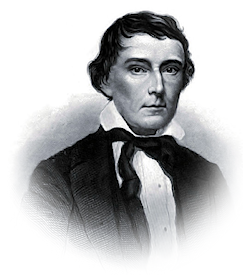
Alexander H Stephens to J. Henly Smith

Miscellaneous document sources

Crawfordville, [Ga.], Sept. 16th, 1860.

Dear Smith, This is Sunday as you see from the date. Yesterday I wrote you a long letter. Last night I got the third and last slip from the Constitution in review of my Augusta speech. I notice nothing in any of these pieces that I feel any desire to answer or to have answered. The last piece is very disingenuous in one particular—that is in its attempt to make me inconsistent with myself on the matter of abstract principles. But this is quite apparent to all who are familiar with the facts. In my speech of July 1859 on the importance of maintaining abstract principles at any cost and hazard I spoke definitely and particularly of those abstract principles effecting any essential interest, right or honor; and in the speech of 1st Sept. 1860 I stated distinctly that the principle of allowing the territorial legislatures to settle the question of slavery did not involve any essential right, our present security, future safety, or honor. So the effort to show off my inconsistency was a vain and futile one. Indeed in that speech of July 1859 I stated that it was useless to war against those who refused to give us congressional protection in the Territories—that there was nothing practical or essential to our rights, interest or honor in it. I have not the speech before me, but I know this was the substance of it; and I doubt not the reviewer knew it too very well. But let it all pass—as I said yesterday the right and the truth is not what these secessionists and revolutionists are after. Their object is to hide the truth. Personal spite is their aim, and not the public good. They rely upon misleading the people hj appeals to their passions and prejudices. This is the policy of all bad men bent upon mischief. Their game is that of the demagogue always a low, mean and base one. The people by nature are prone to error. Their inclinations in politicks are that way as in morals they are to sin. To do right, to counteract these inclinations in the one sphere or the other, requires an effort. The high mission of a patriot and a statesman is by appeals to truth and virtue to raise the good sense of the masses above their natural propensities, to get them to do right against their natural inclinations. Herein lies the difference between a demagogue and a statesman. It was this high and ennobling quality that caused Webster to tell the men of Boston that they must “conquer their prejudices “, as the same great quality caused Aristides on one occasion to say “O Athenians, what Themistocles proposes is greatly to your interest, but it is unjust” Our demagogues look to nothing but success and rely upon nothing but the weakness of human nature in yielding to their selfish propensities. Such practices have always been the forerunners of the overthrow of all republics. Free institutions, representative government, can be maintained only by the intelligence and virtue of the people. These are the sustaining fountains of patriotism, and when these fountains fail or become polluted patriotism ceases, love of country sours into a rabid passion of undefined rage and hate without aim or object, driving the unfortunate subjects to the wildest and most reckless ends. Such has been the history of all popular governments. The first fatal step has been that of those who, entitled to their confidence, misled the masses instead of keeping them ton the right, even against their seeming interests and their strong natural erroneous inclinations and propensities. This in all times past has most generally as is the case in our country now, originated in the selfishness and ambition, in the personal likes, dislikes and hates, in the rivalships of public aspirants. For it is a sad and melancholy truth, such is the frailty and weakness of human nature, that even the best of patriots generally hate their enemies or rivals more than they love their Country. From this weakness or imperfection of man’s constitution come most of the evils and troubles which disturb the peace, unsettle the foundations and destroy the prosperity and happiness of the wisest and best constituted human societies and governments. These are the evils and troubles that now beset and threaten this fair and happy land, this land of hope and promise to the world. There is a war among the leaders and aspirants for public favour and public trust. It is not a contest for the wisest, safest and soundest policy looking to the security of the rights, interest, welfare and prosperity of all parts and sections of the country. So far from it, it is a contest based upon disloyalty to principle, upon abandonment of principle, and waged with an audacious effort to make the public believe a lie, that there is no abandonment of principle but that the object is to subserve their interests.

This is the state of things here at this time. Its parallel or prototype is to be found in all incipient revolutions. I can look upon it in no other light; and as like produces like in the moral and political as well as the physical world, I look to the same almost inevitable result. The contemplation is a sad one. It presents but little ground of hope. Had revolution been forced upon us as it was upon the colonies by a violation of principle, by the assertion of unjust power incompatible with our security and safety, my hopes and views of the future would be altogether different from what they are. Men who set out in a revolution by an abandonment of the principles and professions of their lives offer no guaranty to me that they will conduct it to any good result. Their conduct shows that other objects than the public welfare are at the bottom of their movement. These objects are personal, and all things in the end as in the beginning will be made to tend to these same purposes, which purposes are utterly inconsistent with any well-grounded hope for good government. The future to me therefore is gloomy enough! Whether there is virtue and patriotism sufficient in the country to realize its situation and arrest the evil tendency before it is too late I do not know. I cannot answer that question satisfactorily to myself. But perhaps I have tired you with this long Jeremiad, as you may consider it, and therefore I will say no more. Why do you not continue to send me the New York papers? I have got none lately. Have they ceased to be interesting? Have they become as dark and as incapable of throwing light upon the future as my own incoherent speculations? I feel anxious to know how the fusion movements succeeded in N. Y. and Pa. In them lay my only hope for the defeat of Lincoln. I have seen nothing about that matter in Pa. In New York I saw that the Americans and National Democrats had united and that it was expected that the Secession Democrats would also join in the union. But whether they have or not I have not seen. And I am intensely ignorant or uninformed as to how matters stand in Pa. Write to me to Kingston on these points and send your newspapers to that place. I am feeling better today in health than I have felt for several weeks. The weather is still pleasantly cool.


From Annual Report of the American Historical Association for the Year 1911.

Alexander Hamilton Stephens was an American politician who served as the vice president of the Confederate States from 1861 to 1865. After serving in both houses of the Georgia General Assembly, he won election to Congress, taking his seat in 1843. After the Civil War, he returned to Congress in 1873, serving to 1882 when he was elected as the 50th Governor of Georgia, serving there from late 1882 until his death in 1883.

J. Henley Smith was a Georgia journalist.

0 comments

He was a She

News of the Day
1860s newsprint

The Constitutional [Alexandria, LA], September 15, 1860

 Such is Life.—A jotter down of doings in Saratoga says that a gentleman from New York, married and wealthy, visited the springs last week with his nephew “Charley”—a bright handsome youth, who attracted the envy of the men and the attention of the ladies. Charley rode, smoked, drank, and did many other fashionable things, and was what might be called “fast.” One day he drank too much, and in consequence talked too much, stating among many funny things that he was a she—and that “Charley” was a woman. This proved to be a fact, and on the development the married New Yorker and the female Charley left for elsewhere.

0 comments

The National Democratic Barbecue

News of the Day
1860s newsprint

The Constitutional [Alexandria, LA], September 15, 1860

 The citizens of Rapides turned out in large numbers on Saturday last to attend upon the barbecue given by the friends of Mr. Douglas, and to listen to the eloquent Soulé who it had been announced would deliver an address on the occasion.

Preparations were made on a very extensive scale, and everything passed off creditably. The gathering was larger than any political assembly held here during the present campaign, numbering nearly a thousand persons, and must have been fully twice as large as the Breckinridge barbecue sometime since. We observed that a considerable proportion of the fair sex graced the occasion by their presence, showing that their warm hearts are now, as ever, true to the UNION.. . . .

The dinner hour having now arrived, the people crowded around the tables spread in Court House Square, and did full justice to the sumptuous repast which had been so liberally provided for their wants.

The big gun also was brought into requisition during the day, ever and anon pealing out its thundering tones.

The spirit and enthusiasm of the day was sufficient to convince all, that old Rapides is firmly opposed to the disunion schemes of the Breckinridge faction, and the friends of Mr. Douglas may justly congratulate themselves on the respectable turnout of their party.

0 comments

The Abolition Plot

News of the Day

[Marshall] Texas Republican, September 15, 1860

[Note: The recipient of this letter, Reverend William Buley, lost it and, after fleeing Texas, was arrested in Missouri by an Arkansas vigilance committee and sent back to Fort Worth, where he was hung. MpG 10/20/20]

The following document appears in a recent number of the State Gazette, without note or comment.

Denton Creek, July 3, 1860.

Dear Sir:—A painful abscess on my right thumb is my apology for not writing at Anderson. Our glorious cause is progressing finely, as far South as Brenham. I there parted with Bro. Wempler; he went still further south; he will do good wherever he goes. I traveled up through the frontier counties, part of the time under a fictitious name. I found many who had been initiated, and understand the Mystic Red. I met with a good number of our friends near Georgetown; we held a consultation, and were unanimously of opinion that we should be cautious of our new associates; most of them are desperate characters, and may betray us, as there are slave holders among them, and value poor negro much higher than a horse. The only good they will do us will be destroying towns, mills, etc. which is our only hope in Texas at present. If we can break Southern merchants and millers, and have their places filled by honest Republicans, Texas will be an easy prey, if we only do our duty. All wanted for the time being, is control of trade. Trade, assisted by preaching and teaching, will soon control public opinion. Public opinion is mighty, and will prevail. Lincoln will certainly be elected; we will then have the Indian Nation, cost what it will. Squatter sovereignty will prevail there as it has in Kansas; that accomplished, have at least one more step to take—but one more struggle to make—that is, free Texas. We will then have a connected link from the Lakes to the Gulf. Slavery will then be surrounded by land and by water, and soon sting itself to death. I repeat, Texas we must have, and our only chance is to break up the present inhabitants, in whatever way we can, and it must be done. Some of us will most assuredly suffer in accomplishing our object, but our Heavenly Father will reward us for assisting Him in blotting out the greatest curse on earth. It would be impossible for us to do an act that is as blasphemous in the sight of God as holding slaves. We must have frequent consultations with our colored friends. (Let your meetings be in the night.) Impress upon their clouded intellects the blessings of freedom, induce all to leave you can; our arrangements for their accommodation to go North are better than they have been, but not so good as I would like. We need more agents, both local and traveling. I will send out traveling agents when I get home. You must appoint a local agent in every neighborhood in your district. I will recommend a few I think will do to rely upon, viz: Bro’s Leake, Wood, Ives, Evans, Mr. Daniel Viery, Cole, Nugent, Shaw, White, Gilford, Ashley, Drake, Meeks, Shultz, and Newman. Brother Leake, the bearer of this, will take a circuitous route, and see as many of our colored friends as he can; he also recommends a different material to be used about town, etc. Our friends sent a very inferior article: they emit too much smoke, and do not contain enough camphene. They are calculated to get some of our friends hurt. I will send a supply when I get home. I will have to reprove you and your co-workers for your negligence in sending funds for our agents; but few have been compensated for their trouble. Our faithful correspondent and industrious agent, Bro. Webber, has received but a trifle, not so much as apprentice’s wages, neither have Bro. Willet, Mangun and others. You must call upon our colored friends for more money; they must not expect us to do all; they certainly will give every cent, if they knew how soon their shackles will be broken. My hand is very painful, and I close.

Yours truly,

W. H. Bailey.

N. B.—Brother Leake will give you what few numbers of “Impending Crisis” I have; also Bro. Sumner’s speech, and Bro. Beecher’s letter, etc. Farewell.

The State of Texas, }

County of Tarrant }

Personally appeared before me, the undersigned authority, Paul Isbell, a man to me well known, who, being by me duly sworn according to law, says that the above, and foregoing letter, was found by George Grant and himself, near the residence of said Grant, six miles west of Fort Worth, near where a horse had been fed, stealthily as it seemed, and that the said letter has not been out of their possession till now, and has not been altered in any respect whatever.

Given under my hand, and seal of the county Court, this tenth day of August, 1860.

C. M. Matthews, Dep. Cl’k,

for C. Vance, Clerk; C. C. T.

I hereby certify that the foregoing is a true and correct copy of the original letter, now in my possession, excepting that some of the spelling has been corrected.

Witness my hand and seal of office, this Aug. 18th, 1861.

C. M. Matthews, Dep. C. C. C. T.

We should like to know something of the character of the men who found, or pretend to have found the foregoing letter. While all the evidences elicited in this State point to the existence of an abolition plot such as is here detailed, it is not very probable that a man engaged in such business, would be so careless as to drop a letter revealing it with such minuteness. The affair looks suspicious.

0 comments

That Bell

News of the Day

Sugar Planter [West Baton Rouge, LA], September 15, 1860

We omitted last week to announce the arrival of the huge bell weighing some eight hundred pounds in Baton Rouge, for the Bell and Everett club of that city. It will be mounted upon a platform, and will be used in the great demonstration shortly to take place there. Let it ring, and may its echoes float all over the Union, striking terror and dismay into the hearts of all disunionists and rail-splitters.

0 comments

Ordered to Leave

News of the Day

Sugar Planter [West Baton Rouge, LA], September 15, 1860

A little butcher, named Sam Bernard, or Hirsch, living at the Ferry Landing of this parish, was politely ordered on Monday last, by our Vigilance Committee, to leave—bag and baggage—for other quarters. Cause—buying stolen corn from negroes. Sam now finds a home in classic Red Stick.

0 comments

KGC

News of the Day

The Ranchero [Corpus Christi, TX], September 15, 1860

A detachment of Knights of the Golden Circle, under the command of Capt. P. H. Thorpe, passed through this city—leaving here this morning on foot, for the general rendezvous near Brownsville, on the Rio Grande.

0 comments

Letter from Dallas

News of the Day

[Marshall] Texas Republican, September 15, 1860

From the Galveston News.

Dallas, August 18th, 1860.

Editor News:–It is very much to be regretted that exaggerated reports should have been circulated regarding the recent excitement in this section while the community has been deeply agitated, there has been very little confusion, and the sentences of the committees passed after long and patient investigation, have been carried out to the letter.

The most absurd rumors as to the state of affairs have gained credence; while there are among us more men of Northern birth than there are in South Eastern Texas, the community is sound on the subject of African Slavery. Those of our Northern fellow-citizens who came here at an early day are identified with us in feeling, sentiment, and interest. In most cases, they are owners of slaves and as vigilant in detecting and as severe in punishing abolitionists as any others. A large proportion of those who have come in recent years from Illinois and Indiana are natives of the South, and have come here on account of their preference for southern men and southern institutions. During the recent excitement the community seemed as one man in sentiment. If there were among us any more disposed to leniency than others, it was generally a Southern man who could not believe his own household servants could be guilty of complicity in a plot of murder and conflagration.

Most particularly is it to be regretted that such statements as were copied into your columns from the Gilmer Tribune should gain currency. I allude to the statements that the country between Grayson county and Upshur “not to be excelled for richness and beauty of scenery,” was “settled by a majority of abolitionists in some places.” I think this must be a mistake. During the past few years the people there have been very prompt in getting rid of such characters. In no part of Texas have they been more roughly handled. If any have been detected in complicity with the recent disturbances and caught, they have been emissaries recently arrived, and will hardly be seen again in Texas, unless some of them reach the low country after the next rise in the Trinity.

We presume the prairie counties lying North of the parallel of 32° may be considered in Northern Texas. We venture the assertion that there is not in the South as large a body of the richest land, out of the Mississippi bottom, nor a country where negro property is more secure. We have come nearer failure in crops this year than ever before, and yet we have both corn and oats to sell. Our soil and climate are suited to cotton, and as the railroads approach us the culture of the great staple is extending. The increase of our slave population has been very rapid. In 1850 by the U. S. Census the slaves in Northern Texas numbered 3559. By the assessors’ returns for 1859, there were 12,975; and as the assessor’s return for 1850 fell short of the U. S. Marshalls’, nearly 25 per cent, it is fair to presume that the number here now is much greater than that indicated. In conclusion we would say to Southern men, come and look at our fine country. You will find the richest land, excellent health, good water, and perhaps some day or other, a railroad both to Galveston, and through Shreveport to Vicksburg on the Mississippi. At present your down freight hence to the railroad would be $1,00 to $1,25 per hundred.

F. A. W. S.

0 comments

The National Game Three Outs and One Run

Library of Congress

The National Game. Three Summary: A pro-Lincoln satire, deposited for copyright weeks before the 1860 presidential election. The contest is portrayed as a baseball game in which Lincoln has defeated (left to right) John Bell, Stephen A. Douglas, and John C. Breckinridge. Lincoln (right) stands with his foot on “Home Base,” advising the others, “Gentlemen, if any of you should ever take a hand in another match at this game, remember that you must have a good bat’ and strike a fair ball’ to make a clean score’ & a home run.'” His “good bat” is actually a wooden rail labeled “Equal Rights and Free Territory.” Lincoln wears a belt inscribed “Wide Awake Club.” A skunk stands near the other candidates, signifying that they have been “skunk’d.” Breckinridge (center), a Southern Democrat, holds his nose, saying, “I guess I’d better leave for Kentucky, for I smell something strong around here, and begin to think, that we are completely skunk’d.'” His bat is labeled “Slavery Extension” and his belt “Disunion Club.” At far left John Bell of the Constitutional Union party observes, “It appears to me very singular that we three should strike foul’ and be put out’ while old Abe made such a good lick.’ Bell’s belt says “Union Club,” and his bat “Fusion.” Regular Democratic nominee Douglas replies, “That’s because he had that confounded rail, to strike with, I thought our fusion would be a short stop’ to his career.” He grasps a bat labeled “Non Intervention.”

0 comments

Alexander H Stephens to J. Henly Smith

Miscellaneous document sources

Crawfordville [Ga.], Sept. 15th, 1860.

Dear Smith, The second slip from the Constitution was received last night. I still see in this review not one thing that I desire to answer or see answered. As to the remarks and comments of the writer on my candour, etc., of course that is a matter beyond the reach of proof or disproof. Those who know me must judge of it for themselves and those who do not would be influenced very little by any discussion upon the subject. The truth is I have almost despaired of the Republic. Sometimes I take or catch the glimpse of a faint hope, and then the stunning truth seems to flash me full in the face that we are rushing rapidly to the brink of destruction! The times are all sadly out of joint. Men have no regard for past principles or professions. Consistency is wholly disregarded. Passion and prejudice rule the hour; reason has lost its sway. The truth and the right are not sought after. Public virtue is no longer held in its proper estimation, and all our discussions remind me more of the wranglings of the Jacobins in France than anything else. I mean the discussions on the stump and in the newspapers. Perhaps I should not say all. Mr. Douglas’s speeches are an exception. In all of them that I have seen he holds a high and statesmanlike position and in them breathes a lofty, national and patriotic tone. But I see no response to this tone either North or South. Most of the Douglas papers and speakers with us seem to me not to rise to the real gravity and dignity of the questions before the country. I do not believe they realize the magnitude of the issues involved. Douglas’s speech at Baltimore I think is decidedly the best he has made. Had the whole South planted themselves upon the doctrines and principles of that speech as they ought, all would have been well with us. But they will not, and as I look out upon the country and contemplate the probable future I feel as Jesus did when he came near the city of Jerusalem and wept over it, “saying if thou hadst known even thou at least in this thy day the things that belong unto thy peace, but now they are hid from thine eyes!” Such are my feelings. I may be in error, and those who are driving events as they go may come out right at last. If they do no one will be more rejoiced than I; but I can see no probability of such a fortunate result. To me at present all is gloom and darkness. I have seen partial returns from the election in Maine. This I fear is but a sample of the public sentiment at the North generally. With a divided Democracy what better could have been expected? This is but the realization of my first conviction when the rupture was consummated at Baltimore. What will now come of the attempts of fusion in N. Y. and Pa.? There lie our only hopes for the defeat of Lincoln. Will these attempts succeed, or will not the prevailing sentiment of the North, encouraged by our divisions sweep everything before it? This I now seriously fear. And if so what then? Yes, as I said in Augusta, what then? The question oppresses me. I feel well assured that the bare election of any man under the constitution is not sufficient cause for the withdrawal of any State. But are there not several States that will do it? And if the attempt even is made, who can tell the ultimate consequences? Oh my country, what is to become of it?

I am as you see still at home. I have improved a good deal in strength within the last week since the cool weather set in, but am yet unable to undertake any physical exertion. I have given up all idea of taking any active part in the present canvass. I see no good that anything I can say will accomplish, even if I had the strength to say anything, without serious injury to myself. I may be too desponding, but I really look upon all as lost, not only the party and its principles, but the country. These sentiments you may keep to yourself, for I do not wish my depression of spirits to affect in the least those who are more sanguine. Let those who have hopes remit no effort to attain their object. Write to me forthwith to Kingston what you think from a survey of the whole field. I shall go to the upcountry next week and remain there the week after. At Kingston I can get your letter.


From Annual Report of the American Historical Association for the Year 1911.

Alexander Hamilton Stephens was an American politician who served as the vice president of the Confederate States from 1861 to 1865. After serving in both houses of the Georgia General Assembly, he won election to Congress, taking his seat in 1843. After the Civil War, he returned to Congress in 1873, serving to 1882 when he was elected as the 50th Governor of Georgia, serving there from late 1882 until his death in 1883.

J. Henley Smith was a Georgia journalist.

0 comments

Suspicious

News of the Day
1860s newsprint

Daily Advocate  [Baton Rouge, LA], September 14, 1860

A traveling company of suspicious looking individuals, composed of men, women and children, drew up in our city on Thursday last. They represented themselves to be dealers in horses and mules, manufacturers of barrels, repairers of broken umbrellas, and fortune-tellers generally. As it was thought by some of our citizens that they came to a bad market, they were promptly ordered to vamoose, which they did instanter. These, and like suspicious stragglers, now passing through the country, should be carefully watched—we know not what their true designs may be.—Tuscaloosa Observer, 5th inst.

0 comments

Danger at Home

News of the Day
1860s newsprint

[Little Rock] Old-Line Democrat, September 13, 1860

We have been permitted to extract from a letter received by one of our citizens from Camden, Wilcox county, on yesterday, the following startling intelligence:  “We heard yesterday of an occurrence that took place near Coffeeville, Clark county, last week, that should put us upon our guard. A party purporting to be Gipsies,   went to the house of a gentleman of that neighborhood, informed him that one of their number had died, and requesting permission to bury him upon this gentleman’s land, and also the assistance of his negroes. The permission was given, the negroes sent, and the coffin interred. On the next day one of the negroes remarked to his master that the coffin that had been buried was exceedingly heavy. This excited inquiry, and the coffin was dug up by a committee, when it was found to be filled with arms and ammunitions! A party had left Coffeeville in pursuit of the “Gipsies,”   as these scoundrels called themselves. When such things are taking place it sounds well for Southern men to be abusing the Military Bill.”

If there is any who can longer doubt the existence of a deeply laid plan to involve us in the most fearful perils, we do not envy them their skepticism. How long will we slumber over a volcano and yet denounce those who warn us of danger? The source of the above information is the most reliable—Selma Issue.

The Montgomery Mail says:

We learn, through a gentleman just from the up country, that on Tuesday night last (28th August) the citizens of Talladega took from jail, at that place, the white man who was the ringleader in the lately discovered plot among the negroes of that vicinity, and hanged him. Yesterday morning, he was gracefully pendant to a Pride of China tree. We did not learn his name.—Mail.

0 comments

August Belmont Speech at Jones’s Wood, New York

Civil War Day-by-Day

SEPTEMBER 12, 1860.

Fellow Democrats,—I thank you most cordially for the honor which you confer upon me by permitting me to preside over your deliberations on this occasion. It is an occasion the importance of which cannot be impressed too much upon our minds. We have come together in order to pledge our support to the nominations of our National and State Conventions, determined to withhold the thirty-five electoral votes of the great Empire State from Abraham Lincoln, and thus to save the glorious Republic from the horrors of disunion and anarchy. We have come together to listen to the heart-stirring eloquence of our noble and gallant standard-bearers, Stephen A. Douglas, the bold and fearless champion of the Constitution and the rights of the people, and Herschel V. Johnson, the patriot and the statesman. In order to share this rare privilege with you, I have sacrificed the pleasing duty of attending the celebration by which the city of Cleveland honored this week the memory of an illustrious kinsman of my family. It is forty-seven years since the gallant Perry fought and conquered, after a most bloody struggle against fearful odds, the enemies of his country on Lake Erie. Let us this day pledge our united and unwavering energies to fight and conquer the enemies of the Constitution and the Union, arrayed against us by sectional fanaticism North and South. We are fighting for the maintenance of our beloved and blessed Union, and the sacredness of our cause should give us the victory. Let us, then, advance to the charge, and the lion-hearted Democracy of this vast Republic, from the Atlantic to the Pacific, will in November next inscribe on its banners the memorable words of Perry, “We have met the enemy and they are ours.”

0 comments

Alexander H Stephens to J. Henly Smith

Miscellaneous document sources

Crawfordville [Ga.], Sept. 12th, 1860.

Dear Smith, Your letter of the 8th inst. enclosing editorial of the Constitution was received last night. I wrote to you a few days ago. In that letter I believe I told you I expected this week to go to the mountain country with a view of recruiting strength, health, etc. But I am still here as you perceive. A very sudden change of temperature caused me to postpone my travel. It is now very cool here. In the up-country I suppose it is quite uncomfortable in the mornings and evenings for an invalid, without fire. Such weather is unsuitable for me to be away from home in. But enough of this. I only meant to let you know why I am still at home. As to the article in the Constitution, I do not think it requires any answer or reply—not even a notice, at least from me. The Va., Ky., Tenn., and N. C. and Ga. delegations bolted at Baltimore because the seceders from Ala. and La. were not permitted to take the seats that they had abandoned and because the convention assigned the seats to those delegates which the Democracy of Ala. and La. had sent up to fill the vacancies etc. according to the call of the convention. This is the whole of it. These very states of Va., Tenn., Ky., etc., had asked the Democracy of the states whose delegates had seceded at Charleston to send up other delegates to fill their places. This they did and then instead of standing by those who had been sent at their call they turned and joined the seceders themselves. The pretence was that the seceders were the true representatives of the Democracy of their states—and that too after they had joined another organization, adopted another name and [had] even [been] commissioned to another convention to be held at another place, etc. My judgment was and is that the seceders had unpartyed themselves and should not have been admitted from any state whether there was a representation of the National Democracy from it or not. But when all the States seceded who chose to do so, from whatever cause, there was a quorum of the convention left—and Douglas got a two-thirds vote of that quorum and is the regular nominated candidate of the party. That is my point, and there is no getting round it or under it or over it. Men may bolt when they please, but they cannot escape the proper characterization of their deed. My opinion is that the whole rupture at Charleston and Baltimore is chargeable entirely upon the Southern bolters. They ran not from a platform but from a man. The platform was a pretext. The whole rupture originated in personal ambition, spite and hate. This is my deliberate opinion. I cannot however say more. I have not yet seen Mr. Breckinridge’s Lexington speech—am anxious to see it—am anxious also to hear from the Maine election. Not a word yet have we heard from that. I am apprehensive that the Republicans have increased their majority. In this State the tendencies are favourable to Douglas—becoming more so daily. If there was any prospect of his election a perfect enthusiasm could be got up for him—much more than for any other candidate. But his chances seem to be [a] hopeless battle before the people and in the House, and hence the indifference of thousands who would otherwise be active, warm and zealous in his cause. It is now thought here that Lincoln will be defeated, that the election will go into the House and if Douglas, Lincoln and Bell should be the three returned to the House may be Douglas might be chosen. But we shall see what we shall see. My greatest desire is to defeat Lincoln and thus prevent the evils that such an event might precipitate upon us.


From Annual Report of the American Historical Association for the Year 1911.

Alexander Hamilton Stephens was an American politician who served as the vice president of the Confederate States from 1861 to 1865. After serving in both houses of the Georgia General Assembly, he won election to Congress, taking his seat in 1843. After the Civil War, he returned to Congress in 1873, serving to 1882 when he was elected as the 50th Governor of Georgia, serving there from late 1882 until his death in 1883.

J. Henley Smith was a Georgia journalist.

0 comments

Sante Fe, New Mexico

News of the Day

Daily Times [Leavenworth, KS], September 11, 1860

Santa Fe, New Mexico,}
Aug. 18, 1860. }

Dear Times:–When I wrote to you two weeks ago, the city was in a fever of excitement on account of the daring depredations of the Navajos, but now it is as quiet as the dogs and bells will permit, for this, as you must know, is a Catholic town containing three or four churches of that denomination, each having as many bells as it can afford, and these keep a continual jingle; but what makes it particularly annoying to me is that I am obliged to listen to the ding-dong of at least half a dozen heavy bells of the cathedral which is only across the way from my room. Then, if it is after sun down and the bells by chance should cease their clatter, the barking, howling and fighting of dogs may be heard. Every Mexican has, or is supposed to have, two dogs, if not more. Here can be seen all the varieties belonging to the canine kingdom—the greyhound, setter, shepherd’s dog, the shaggy Newfoundland and the hairless dog of the tropics, all have to be kicked out of the way or stumbled over, as you see proper, although the last is sometimes not the most desirable plan, as they are not often choice upon what they close their teeth.

The Indians are at present quiet in this part of the country. Small bands of three or four have frequently been seen among the hills, but they have made no more attempts upon the property or lives of citizens. . . .

New flour and fresh hay have just come into market; the former is worth $15 per 100 pounds, and the latter $30 per ton. Bacon brings 18c per pound, coffee 30, sugar 25, and other things in proportion, so you can guess what it costs a person to live here.

H.G. L.

0 comments

Letter from de Soto

News of the Day
1860s newsprint

Daily Advocate  [Baton Rouge, LA], September 11, 1860

 De Soto Parish, Aug. 27th, 1860.

Dear Advocate: According to previous notice, a large number of the Democracy of De Soto parish assembled in Mansfield, on Saturday the 25th inst., to ratify the nominations made by the conservative element of the Democratic party for President and Vice President of the United States.

At least five hundred of our most intelligent citizens were present and participated in the proceedings. The meeting was organized by appointing Gen. H. Phillips President, and the following gentlemen as the Vice Presidents; Messrs. Blackshear, De Soto, Dickson, Edwards, Fortson, Lewis, McCraw, Tomkies, Wagner, etc., and Messrs. Ashton, Cunningham, Gibbs and Jenkins, Secretaries. . . .

After this [speeches] the meeting adjourned, when the assembled multitude partook of an excellent collation, got up in the old fashion barbecue style.

Be assured that the Democracy of De Soto has always been, and is right now, and will remain so when the crisis comes in November next.

Santa Claus.

0 comments