The Government Arsenal at San Antonio

News of the Day
1860s newsprint

Daily Gazette & Comet [Baton Rouge, LA], October 3, 1860

The new arsenal in course of erection at San Antonio, is thus noticed in the Herald of the 21st:

The office, which is now nearly completed, is a very unique and substantial building; size, 25 by 60 feet, with a ten foot gallery on both sides, divided into two rooms 25 feet square, 15 feet ceiling, with a hall in the center 10 feet wide.

The laboratory, which is not yet completed, is also 25 by 60 feet in size, and will be divided into two rooms.

The whole force are now engaged upon the magazine, which is progressing rapidly toward completion. The size is 110 by 30 feet; from floor to crown of arch 16 feet, and from outside 25 feet. The whole building presents a perfect specimen of strength and durability.

The main building will probably be commenced some time during the coming winter. Its dimensions are 45 by 130 feet, three stories in height, will stand 100 feet from Flores street, and will be a beautiful structure.

There are also several other buildings yet to be erected, after which the entire premises will be enclosed with a stone wall.

0 comments

Photographs

News of the Day
1860s newsprint

Alamo Express — [San Antonio, TX], October 1, 1860

We notice some excellent photograph views on exhibition on the corner  of the plaza. They were executed by Negel & Williams. A few of these views sent abroad  would make people fall in love sooner with our city than the most glowing pen and ink sketches.

0 comments

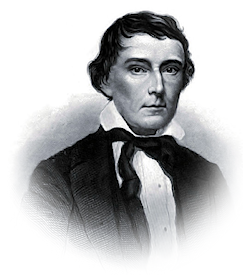
Alexander H Stephens to J. Henly Smith

Miscellaneous document sources

Crawfordville [Ga.]; Sept. 30th, 1860.

Dear Smith. I have just got back from my up-country trip—am to go to Warren court tomorrow—health somewhat improved, would have been more so but for speechmaking that I could not get round. I spoke at Atlanta, Marietta, Floyd Spring and Dalton. There is quite a strong feeling springing up for the national cause in that section of the country. Linton has stirred them up greatly. He has spoken in Gwinnett, Newton, Hall, Gobb, Cass, Whitfield, Catoosa, Walker and Dade—and with great effect. I verily believe that if we had three months to go on we should carry a majority of the Democracy with us. The meeting yesterday at Dalton was large—two thousand perhaps—and enthusiastic. Where four weeks ago there were not ten Douglas men to be found, our friends assure me that Douglas and Johnson will get 3,500 votes in the 5th district. I can hardly think it is so, but such is their belief. The changes are daily and numerous. From all parts of the State I hear that our cause is gaining daily and rapidly. How far this opinion entertained by those who give it is well founded I cannot say. I give it as it is given to me. I saw some gentlemen from Tenn. yesterday who say that Bell will certainly carry that State. I saw one on the cars today from La. who says that Bell will carry that State too. I have all along counted La. for Breckinridge. Send your papers for the future here, and write to me here the present prospect. I shall be back next Saturday. I have no time to say more.

P. S.—I got a great many papers from you at Kingston and one letter.


From Annual Report of the American Historical Association for the Year 1911.

Alexander Hamilton Stephens was an American politician who served as the vice president of the Confederate States from 1861 to 1865. After serving in both houses of the Georgia General Assembly, he won election to Congress, taking his seat in 1843. After the Civil War, he returned to Congress in 1873, serving to 1882 when he was elected as the 50th Governor of Georgia, serving there from late 1882 until his death in 1883.

J. Henley Smith was a Georgia journalist.

0 comments

Diary and Letters

Diary and Letters of Rutherford Birchard Hayes
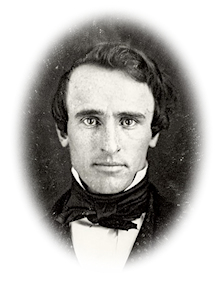
Rutherford B. Hayes (young)

CINCINNATI, September 30, 1860.

DEAR UNCLE:–. . . . I have made a few little speeches in the country townships, and shall make a few more. I cannot get up much interest in the contest. A wholesome contempt for Douglas, on account of his recent demagoguery, is the chief feeling I have. I am not so confident that Lincoln will get votes enough as many of our friends. I think his chances are fair, but what may be the effect of fusions in such anti-Republican States as New Jersey and Pennsylvania, is more than I can tell or confidently guess until after the state elections. In this county, the fight is doubtful, but probably against us.

We saw the Prince yesterday as he passed our house. A modest, decently behaved youngster. His visit has been without unpleasant incidents. — Love to all.

Sincerely,

R. B. HAYES.

S. BIRCHARD.

0 comments

Expedition

News of the Day
1860s newsprint

Standard [Clarksville, TX], September 29, 1860

Belknap, Young Co.
Sept. 11th, 1860.

Major DeMorse—Since my last, preparations were made to move up Red and Canadian rivers, from Rhadminski. When all was ready in fact some of the companies had started word was brought to Col. Johnson that there were 100 Kickapoo Indian Warriors, painted and on the war path, camped on Red River, near the mouth of the Witchata, preparing to invade Texas. The information came so direct that Col. Johnson thought best to take part of the command, and attack them if they could be found. So, August 16th, Capt. Ross’s, Capt. Johnson’s, and the remainder of the Fannin County company, were ordered down to hunt the Indians, our force led in person by Col. Johnson. The Col. met with considerable opposition in determining to make the scout; met with opposition from officers and men. They thought the Indians would not dare to go into Texas. The Col. thought it was better to be positive, and not go on and leave an enemy in his rear, and between him and the settlements; so we went down, scoured the country—could not find any Indians, —found some troops, who said there were no Indians there, and had not been. So we returned back to Rhadminski; our company stopped on Otter Creek; the rest of the command went up the river 40 miles. Col. Johnson came by our camp, (having remained behind a few days,) said we would be discharged—(which information elated the majority of us very much)—ordered Capt. Woods to proceed up to head quarters, and turn all camp equipage over to the Quartermaster, and straighten up company accounts, and receive our discharge. Capt. Woods went. When we got there, he received an order from Col. Johnson (as fresh Indian signs had been discovered) to bring the available part of his command, and join the scout, or take his entire company (38 men all told) and guard the waggons to Belknap, and remain there until the scout came in—Capt. Woods preferred the scout; sent me an order to bring the men. I sent all the available men; the rest, unavailable. I brought to Belknap, where we now are, awaiting their return, which I look for in about 20 or 30 days.

The beeves have all stampeded and gone; the scout will have to depend on Buffalo for meat. There are plenty of them. . . .

From Rhadminski to Trinity, there have been very heavy rains. The prairies had all been burned, so that the grass is coming up very fine. So, between the grass and muskeet beans the horses can do well; but it comes at the 11th hour, when our time has nearly expired. The drouth has been very severe here, this summer. There has been scarcely anything raised. There will be thousands of Buffalo upon the Witchatas and Red River, this fall, so that any and all who may desire the excitement of a Buffalo hunt, can have it in comparative safety, by coming up Red River as far as the mouth of the Witchata. More anon.

 Respectfully, I remain yours, &c.,
A. M. Gass,
1st Lieut. Capt. Wood’s Comp.
Texas Rangers.

0 comments

The Work of an Incendiary

News of the Day

[Little Rock] Arkansas True Democrat, September 29, 1860

 From the Ft. Smith Herald, Sept. 22, 1860.

Fire!—Loss 113,000!!

On Thursday morning, at about 4 o’clock, our citizens were aroused by the alarm of fire. The fire originated in the post-office block—probably in the room occupied as a billiard saloon. When first entered, the room was so completely filled with smoke as to render it utterly impossible to remain but a moment. The floor was fired near the door and immediately behind the counter. Our city being destitute of a fire engine, or any organized fire department, a long time elapsed after the alarm of fire was given before a sufficient number of persons reached the ground to effectually suppress the further progress of the flames and by the time the citizens were aroused all efforts to save the block in which the fire originated were useless. The entire block occupied by A. H. Cline, druggist, the post office; J. P. Spring’s law office; Gridley’s billiard saloon; Sutton & Spring, merchants; the Fort Smith Times office; Walton & Bourne, merchants; Beaner & Foss, merchants; G. W. Sisson, daguerotype gallery; and A. M. Callahan & Co., boot and shoe dealers, was entirely consumed—as was also the City Hotel. Very fortunately, it was a still, calm morning and to this is due the preservation of the opposite block. For a long time it was in imminent danger, but well directed and persevering efforts saved it.

Some months since an effort was made to purchase one or two fire engines. Had this been done, this great destruction of property could have been avoided. One engine, with a proper supply of water, could have extinguished the fire without its spreading beyond the room in which it originated.—Experience is a dear teacher, and we trust our citizens may be able to profit by the severe lesson given them on this occasion.

That the fire was the work of an incendiary, is the prevalent opinion; and circumstances that have since transpired, go far to establish the assertion.

0 comments

Minden Burnt to Ashes

News of the Day

[Little Rock] Arkansas True Democrat, September 29, 1860

We have heard it rumored for a few days past, and now have it confirmed by a gentleman just returned from New Orleans, that the town of Minden, La., was entirely destroyed by fire a few nights ago. It undoubtedly was the work of an incendiary—or rather a number of incendiaries, as the place was fired, it is said, in some fifteen or twenty places at the same time, making it impossible for the citizens to arrest the progress of the flames until every house was consumed. We learn that there was a large lot of goods burnt after being removed into the street. Surely these are dangerous times, when a man dare not leave his own door—in a civilized country, too—without coming in contact with fire, and nine times out of ten falling a victim to the knife of the assassin. Our citizens should keep a sharp look out at all times, for it is drawing nearer and nearer to us, and our turn may come next. Let us arrest and hang all stragglers who may come into our midst and cannot give strictly a correct account of themselves. A few examples might do some good.—Hamburg [Ark.] Reporter.

0 comments

The Knights

News of the Day

The Ranchero [Corpus Christi, TX], September 29, 1860

The last detachment of Knights of the Golden Circle that arrived here, instead of going farther toward the “seat of war,” left, we understand, for their respective homes. Those who went to the Banquete, came back here and did likewise; and as they performed the trip into the country and back on foot, will satisfy the Civilian they did not carry bridles with them.

This morning another party of K. G. C., from the States, arrived here. There must be mismanagement on the part of the leaders, or else a concentration of forces would be better understood.

0 comments

Reply to a request for a Presidential Candidate’s Endorsement

Civil War Day-by-Day

Letter to Professor Gardner

SPRINGFIELD, ILL., September 28, 1860.

Dear Sir: Some specimens of your Soap have been used at our house and Mrs. L. declares it is a superior article. She at the same time protests that I have never given sufficient attention to the “soap question” to be a competent judge.                                                                       Yours very truly,

A. LINCOLN.

0 comments

Go it while you’re young.

Harper’s Weekly

?Young America rising at the Ballot Box and Strangling the Serpents Disunion and Secession
Young America Rising at the Ballot Box and Strangling the Serpents Disunion and Secession

Columbia: “Well done, Sonny! ‘Go it while you’re young, for when you’re old you can’t.'”

The potential for secession and disunion because of the issue of slavery was part of the contentious election campaigns of 1860.

The quoted phrase in this September 1860 political cartoon from Harper’s Weekly appears to be from a tune, “Go It While You Are Young” that can be dated at least as early as 1845.

50383452172_86580a23f4_t 50383452277_973d0b5896_t 50383272031_860ed32a6c_t

Publisher: Keith’s Music Publishing House, 67 & 69 Court St.
Publisher Location: Boston
Publication Date 1845
Form of Composition: strophic with chorus
Instrumentation: piano and voice
Engraver, Lithographer, Artist: Lith. of E.W. Bouve

The Sheridan Libraries, Johns Hopkins University, The Lester S. Levy Sheet Music Collection, T.G. Booth’s Celebrated Comic Songs, Go it While You’re Young, (accessed 9-25-2020)

0 comments

Abolition Outrages in Texas

News of the Day
1860s newsprint

Semi-Weekly Mississippian [Jackson, MS], September 25, 1860

Extract from a private letter, Houston, Texas, to a friend in Hartford, Ct.:

Tell your abolition friends to go on, and soon they will have the pleasure of seeing the negro reduced to such a state of hopeless bondage that they may well pity them. I solemnly declare that to-day the negro is not as free as he was two or five years ago; and why?—Simply because his master has been goaded on to desperation by incendiary acts and speeches. One year ago all was peace and quietness here. The negro was allowed to go out to have dances and frolics; to-day one dare not show his head after 9 o’clock in the evening. Seven companies of patrol are organized and guard the city each night. Sixteen horse patrol scour the county around.—Forty-eight vigilance men say live, banish or die, as the proof may go to show. And so it is all over the country. Men are hung every day by the decision of planters, lawyers, judges and ministers. It is no hot, impetuous act, but cool, stern justice. It is the saving of wife and daughter, mother and sister from the hand of desecration. It is the stopping of scenes that would

make the Druses and Turks blush for shame.

We had one more fire.

 Yours truly.
***

0 comments

Energetic Youngsters

News of the Day
1860s newsprint

Alamo Express [San Antonio, TX], September 24, 1860

Young America—had a happy time of it on Wednesday evening last. Judging from the  noise they made there were about one thousand boys on the main plaza and as they are not  interested in Squatter Sovereignty and politics generally, they take it upon themselves to build  bonfires, throw turpentine balls and keep up a noise. A more energetic set of youngsters cannot  be scared up anywhere; they declared themselves decidedly pleased with the arrangement of  having speaking on this side the river, as they had “burnt out” the Alamo.—Foraging parties  were dispatched over the city and a bonfire soon made out of a collection of barrels, boxes &c.  Turpentine balls went sailing thro’ the air and were particularly annoying to some melon vendors  near the old Catholic church. One little fellow got his coat tail on fire and went a kiting with the  whole tribe at his heels. Fuel getting scarce, some keen scented youngsters discovered that the  vegetable vendors had their benches &c stowed away on the corner amongst the old buildings  they were immediately brought forth amidst yells and shouts and consigned to the flames. There  were an angry set folks at market next morning.

0 comments

Hanged

News of the Day
1860s newsprint

Standard [Clarksville, TX], September 22, 1860

We learn from Mr. Wright that he saw the people taking one Wm. Staten, a one-legged schoolmaster out to be hung, at or near Ioni P. O., on Friday last the 17th. Staten has taught school in this county for some year or more, was examined by the committee, but he professed to teach only primary scholars, and after some hesitation a certificate to that effect was granted him. His crime was tampering with negroes; his familiarity with them had long since brought suspicion upon him, and he had been repeatedly arrested for this offence. This time the evidence was broader, plainer, and of an ugly character: he had told several negroes to go ahead, burn and steal all that they could, that although now about to leave for a while he would not be far off to advise or counsel them. These and other like words and deeds made too strong a case. The people went after him, caught him about the river on the 15th, brought him back to the scene of his villainies, tried him and on the 17th hung him to a limb. His death may have saved our town—though mob law is terrible—terrible!!—Crockett Printer.

0 comments

The Texas Disturbance

News of the Day

Daily Times [Leavenworth, KS], September 22, 1860

It will probably be ascertained—as soon as the object which the alarmists hope to attain, is either secured or effectually prevented—that the recent extraordinary excitement and attendant horrors in Texas, were founded upon nothing more tangible than the fears which must ever beset those who hold their fellow men in servile bondage. The New Orleans Picayune already reveals to the utter baselessness of the alarming reports which have been spread so industriously.

“The investigations which have been prosecuted in the disturbed districts of Texas have not developed, with any degree of distinctness, the existence of any other plot for ruin than what a few desperate characters, without connection with or hope of help from any other quarter, might have formed. In some cases the negro population have been demoralized evidently by the insidious promises of those white men, and the work of ruin wrought has doubtless been mainly their work. But not half of what has been confessed seems to be borne out by later facts. The strychnine said to have been discovered in the hands of negroes turns out to be very harmless, having no affinity to the deadly poison, which it was supposed to be. The wells thought to have been poisoned, late accounts declare to be untainted with any deleterious substance.—Texas, like all other frontier States, has been the point where desperate men have congregated, and her whole history is full of violence and outrage inflicted by the foes of society. Aroused by the present danger, the citizens have now taken the most effectual means to bring such offenders to justice, and to break up all combinations for their protection.”

0 comments

Antebellum Central Park

Harper’s Weekly

Winslow Homer, The Drive in the Central Park, New York, September 1860, from Harper's Weekly, September 15, 1860,  wood engraving on paperLess than a year before the war broke out, Central Park bore little resemblance to the park many of us know today from film and pictures or, for many of us, the opportunity of having visited there.


Image information:

Winslow Homer, The Drive in the Central Park, New York, September 1860, from Harper’s Weekly, September 15, 1860,  wood engraving on paper, Smithsonian American Art Museum, The Ray Austrian Collection, gift of Beatrice L. Austrian, Caryl A. Austrian and James A. Austrian, 1996.63.109 (Accessed 9-22-2020)

This image showing Central Park in Progress — simultaneously under construction and in use — suggests that it is not the formal aesthetic moves that make the landscape Central Park, but rather the array of instruments at work (carriage drives, horses, top hats, may poles, topograhic slopes) that constantly make and remake the landscape.
(Davis, Brian. “Landscapes and Instruments.” Landscape Journal 32, no. 2 (2013): 293-308. Accessed September 22, 2020. www.jstor.org/stable/43323945.)

This image has not been adjusted or edited, just resized, from image downloaded from Smithsonian American Art Museum.

0 comments

A Very Injurious Effect

News of the Day

[Marshall] Texas Republican, September 22, 1860

For the Texas Republican.

Kaufman, Sept. 8th, 1860.

Mr. Editor:

While a large portion of the Press in this State are continually filled with the most alarming accounts of incendiarism and of excitement of negroes to insurrection, the large part of which perhaps have no foundation in fact, I have been much gratified to see that your paper is lending its large influence to conserve the peace of society by the able articles you have published from your own pen and others, on this subject. Having been absent from the State for sometime past, and to which I have but just returned, I have but little personal knowledge of what has been taking place at home, but I do know that the exaggerated accounts published, are having a very injurious effect in preventing emigrants from even the Southern States settling among us, and also in the withholding of foreign capital so greatly needed to help forward our internal improvement enterprise.

It appears to have been represented by most of the papers, that almost every town, particularly in eastern and northern Texas has been burnt, and that the negro’s have not only been excited to insurrection, but that large quantities of poison has been found in their possession, for the purpose of destroying the white families to which they belonged; most of which reports are untrue so far as I have been able to ascertain.

In some of our counties we have a considerable population from the free States, and who are in general, a worthy class of citizens, while I am also satisfied that there are some abolitionists among them, who have given “aid and comfort” to others from abroad of the same stripe. The violent expulsion of certain abolitionists by the whip, instead of the rope, it is reasonable to suppose, excited a spirit of revenge and retaliation, which has probably been the cause of the beginning of the excitement, which when once started ran like wildfire over the country, and almost frenzying the mind of many people. Altho’ the facts in many instances were really startling, yet all sorts of exaggerated and untrue statements have obtained currency, under the fevered state of the public mind.

Your allusion Mr. Editor to the history of the 17th century in regard to the plague, and the witch excitement, may have an applicability to some cases, which it would be serious to contemplate. If persons then from coercion or intimidation, acknowledged themselves as having been the cause of the plague, and under the witchcraft excitement, acknowledged that they had direct intercourse with the Devil and were put to death, may not some of the confessions retorted under the lash, particularly from negroes, partake somewhat of this character. As you truly say, “these things should teach caution” at least.

My only object in writing then, is to allay undue excitement, correct false and injurious impressions, that have went abroad and where our laws provide remedies, I would with yourself and other correspondents urge the enforcement of those laws.

The wheat and corn crops of this county are more than amply sufficient for our own population, but the quantities being taken to the other counties less favored, serves to keep up the prices very high, so that many of our farmers are realizing more cash than they have in more favored seasons, and the citizens here in general will be much better able to meet their engagements than those who depend upon cotton, which not only in Texas, but throughout the cotton states has this year been so great a failure.

There is a peculiar system of agriculture adapted to Texas and particularly to our prairie country, which must be observed to secure good crops. In the first place the lands should be broken up early and subsoiled, so that the winter rains may go down into the earth, instead of running off and being wasted. Besides the early plowing enables the frosts to have a more fertilizing effect upon the soil, and causes it to pulverize much better than it otherwise would do. Preparing the land thus, planting early and pushing the crop forward from the start will prevent the miserable failures so much complained of, while the late shallow surface plowing and half working of crops is in general so much work thrown away.

Although the soil and climate of our rich Prairies are well adapted to cotton, yet the growing of wheat, barley, and other grains, together with the advantages of stock raising, will for many years at least, make them much more profitable for our prairie farmers than the raising of cotton. True there have been some partial failures of our small grain from causes, the most of which might have been easily remedied. Much of our last crop of wheat was winter killed, from not having been put in properly and particularly from not rolling the ground after being sown.

In some future number I would be pleased to enlarge upon this subject, but for the present must close.

Warsaw.
0 comments

The KGC

News of the Day

The Ranchero [Corpus Christi, TX], September 22, 1860

Another small detachment of K. G. C. arrived here this week. Those who passed through here last week are at the Banquete. It appears that they are bound to suffer disappointment, as they expected to meet a large force composed of members of their order at some point in Encinal county, a place of rendezvous, subsequent to a march upon Matamoras, which place was to be occupied by a portion, while the main force marched and occupied Monterey, as a place for head-quarters. As it is, there are no Knights in Encinal county, nor no one, ten, or fifty thousand concentrated at any point in this section—hence the disappointment. Manuel Doblado is no where to be heard of and the pronunciamento of Comonfort is still in the dark.

The Knights who are here, and have passed through this place, are orderly and gentlemanly in their bearing, and one would suppose them to be of those who are not likely to be gulled by the prospect of a rancho in Mexico, or in case it did not suit, to receive in lieu thereof eight hundred dollars in cash. The fallacy of such stories, it seems, will never be apparent other than to such as have gone “regularly through the mill.”

0 comments

Negro Killed

News of the Day
1860s newsprint

Daily Gazette & Comet [Baton Rouge, LA], September 22, 1860

A party of gentlemen were out hunting this morning when their dogs got on the trail of a negro in the cornfield of Mr. J. A. Dougherty, just above town, and run him up to a heavy briar thicket near the Montesano, where he took refuge and fought desperately against his assailants. He killed five of the dogs with a large butcher knife, then fled on hearing the hunters approach. He refused to obey their orders to stop and surrender, when a number of shots were fired with effect, and he fell dead. He is of copper complexion, heavy moustache, and bears a striking resemblance to an Indian. His place of retreat in the briar thicket was found and was well stored with provisions.—Advocate, Thursday.

The necessity which requires the use of dogs, to capture runaways must be regretted by all, and it ought to be the very last resort. Those who know the evils, which require such violent correctives, are more competent to judge of the practice than we are. The training of dogs for such a purpose, commenced we believe, in the cruel warfare against the Indians of Florida, and for our part, we wish it had ended there.

That the fugitive should fight for his life when beset by a pack of savage dogs, is in obedience to the common dictates of humanity.—There should be some other cause for the use of the gun in such cases. Coroner Jones informs us, that the man referred to by the Advocate, was one of the poor, miserable, and degraded race of Indians, who were at one time the lords and landholders of the country. As far as Louisiana is concerned, they are nearly extinct, and the verdict of any jury of inquest, might be “died of whiskey.” What few remain, as long as they do not violate the laws—of which like others, better circumstanced—they live in ignorance—they should receive our protection, if they have not our sympathy.

0 comments

To Mrs. M. J. Green

Uncollected Letters of Abraham Lincoln—1917

SPRINGFIELD, ILLS. Sep 22, 1860.

MRS. M. J. GREEN

My dear Madam: Your kind congratulatory letter, of August, was received in due course, and should have been answered sooner. The truth is I have never corresponded much with ladies; and hence I postpone writing letters to them, as a business which I do not understand. I can only say now I thank you for the good opinion you express of me, fearing, at the same time, I may not be able to maintain it through life.

Yours very truly,

A. LINCOLN

0 comments

Letter to A. G. Henry

Civil War Day-by-Day

SPRINGFIELD, ILLINOIS, September 22, 1860.

Dear Doctor: Yours of July 18th was received some time ago. When you wrote you had not learned the result of the Democratic conventions at Charleston and Baltimore. With the two tickets in the field I should think it possible for our friends to carry Oregon. But the general result, I think, does not depend upon Oregon. No one this side of the mountains pretends that any ticket can be elected by the people, unless it be ours. Hence great efforts to combine against us are being made, which, however, as yet have not had much success. Besides what we see in the newspapers, I have a good deal of private correspondence; and without giving details, I will only say it all looks very favorable to our success.

Make my best respects to Mrs. Henry and the rest of your family.

Your friend, as ever,

A. LINCOLN.

0 comments

Havoc

News of the Day
1860s newsprint

Semi-Weekly Mississippian [Jackson, MS], September 21, 1860

A Clergyman of the Methodist persuasion writes the following, among other things, to the Journal of Commerce, from Vicksburg:

Our papers are teeming with accounts of the havoc of another John Brown raid on the border counties of Texas. Abolitionists have been there in the character of Methodist Preachers, Teachers, &c., and instigated a general insurrection among several hundred negroes. They had planned matters for a most bloody and fatal catastrophe. Firearms of all sorts; arsenic, to be put in wells for poisoning the people, and means for setting fire to the whole town at once, were detected, but not until five towns had been burned, and great mischief done. One woman has been hung for distributing arsenic, to be put in cisterns and wells. And one or two preachers have been hung for aiding and inciting to revolt. If things go on at this rate, a man suspected of anti-slavery proclivities will be hung or shot like a dog; a fate they court, it would seem. Dissolution of the Union is inevitable, with abolitionism in the ascendant, at Washington. Here we are trying to lead the negroes to Christ and Heaven, while those incendiaries lead them to the gallows.

0 comments

Abolition incendiarism

News of the Day
1860s newsprint

Daily Advocate  [Baton Rouge, LA], September 21, 1860

Abolition incendiarism seems not to be confined to the State of Texas, but also embraces portions of Georgia. Late papers state that insurrectionary plots have been discovered among the negroes near Dalton and Marietta. A plot to burn Dalton had been frustrated and thirty-six negroes arrested, who have made confession. From Dalton to Marietta, the people were under arms to protect the women and children.

0 comments

Inquest

News of the Day
1860s newsprint

Daily Advocate  [Baton Rouge, LA], September 21, 1860

The Coroner’s Jury on the body of the man shot on Thursday, by a hunting party, came to the conclusion that said man came to his death by being shot” by some one of a party of men who were in the woods hunting runaway negroes.” We learn that the unfortunate being is supposed to have been a wandering Indian who has been in this neighborhood for some time. His resistance led to his death under the supposition that he was a runaway.

0 comments

Texas Correspondence

News of the Day
1860s newsprint

Semi-Weekly Mississippian [Jackson, MS], September 21, 1860

 Austin, September 3, 1860.

 Editor Mississippian: Our State has achieved a great victory over the Opposition, and the Democracy are wide awake and hard at work for a more important and more glorious triumph in November next. Our ticket, as far as heard from, is seventeen thousand ahead.

The Opposition are busy in getting up a fusion ticket, with Bell and Douglas. A petition to that end is circulating to-day. Numbers who have heretofore voted with them, refuse to sign it. They can home for nothing in Texas. We will beat them at the very lowest twenty thousand votes. All their work and zeal will only mount to a bid for office under Bell or Douglas, should either of them by any possibility be elected.

We have every confidence in the success of Breckinridge and Lane. Our electors are canvassing the State. Besides, in the Western District, Oldham, Potter, Scurrey, Neal, and a host of others, are doing good work on the stump. We will dry them up worse in November than our corn and cotton was dried up in June and July by the drouth . The South will never rebuke Tennessee for rebuking a man with such a record as John Bell. Move on the ball.

Very truly,

Texas.

0 comments

More Smoke than Fire

News of the Day

Navarro Express [Corsicana, TX], September 21, 1860

 The report of the burning of Dangerfield, Titus county, is untrue.

 Pleasant T. Tannehill, who was Secretary of the Vigilance Committee at Athens, Henderson county, denies the report that over one hundred bottles of strychnine was found in the possession of the negroes there, and intimates that there was more “smoke than fire” any how. According to his report we presume no negroes have been hung there as reported.

0 comments