The Military Spirit

News of the Day

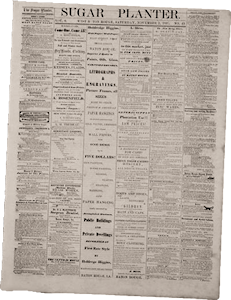
Sugar Planter [West Baton Rouge, LA], November 17, 1860

For some days past there has been much talk of forming three military companies in this parish. It is suggested that one cavalry, one artillery, and one infantry company be raised, organized, and equipped, and when necessary, to offer their services to the Governor, or to do so at once. We hope the gentlemen who have, or are about to take this important matter in hand, will not flag in their exertions until completely successful in every particular.—Whether the services of these companies are ever called into requisition or not, is a matter of minor importance compared with the great necessity of having our citizens trained to the use of military weapons and tactics. Taking the southern people as a whole, they are neither deficient in courage or intelligence, but at times the most courageous give way before the experience and skill of those far beneath them. Let us arm say we—and the sooner the better.

0 comments

Capture of Runaway Slaves

News of the Day

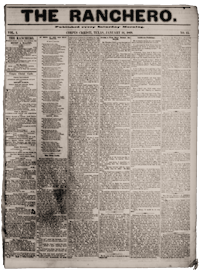
The Ranchero [Corpus Christi, TX], November 17, 1860

 Corpus Christi, Nov. 12th, 1860.

 Editors Ranchero:–The following circumstances, communicated to me by Mr. Santos Benavides, of Laredo, are, I think, of sufficient importance to excuse my troubling you or your numerous readers:

On the 5th inst., a negro arrived at Laredo with two horses, both of a light cream color, (in Mexican, Malados,) one a stallion. He persuaded the ferryman to pass him over the Rio Grande, by representing himself as a free negro. Shortly afterwards the fact came to the knowledge of Mr. Santos Benavides. That gentleman, who has ever been foremost in confronting danger in support of the laws and institutions of Texas, immediately got together a small party of ten of his friends, crossed the river at 8 o’clock P.M. same day, and in the face of the entire population of the place, seized the negro, and succeeded in making good their retreat to the boat. The moment they pushed out into the stream, the Mexicans opened a heavy fire upon them; which was returned as warmly as the number of the party assailed would allow. They, however, landed on this side of the river, with the negro, who was immediately lodged in the City Jail, there to await the orders of his owner when discovered.

I regret to say that one of our friends (Fines Mussett) was severely wounded during the firing.

It is not the first time that Mr. S. Benavides has distinguished himself in restoring runaway slaves to their owners; always with the same indifference to danger, the same prudence and foresight in forming his plans, and complete disinterestedness, as he has invariably refused to receive any recompense for his exertions.

The above facts, when known to the people of Texas, will, I hope, go far towards opening the eyes of many to the erroneous impressions so generally entertained regarding the portion of our fellow-citizens of Mexican origin.

Similar action if not so daring, and dangerous as the present, frequently repeated, have sufficiently proved, that the citizens of the counties on the Rio Grande have as much at heart the interests of the country and the welfare of its citizens as the most rabid orator of the party now inimical to them.

Respectfully Yours,

 Mich. Lidwell.

 We are in receipt of a letter from a reliable gentleman residing at Laredo, who corroborates the above, and states that Mr. Mussett is recovering very fast from his wound. The ball entered just below the eye and came out under the jaw.

Our correspondent also gives an account of another capture of runaway negroes by a part of Americans going from Laredo to San Antonio, on Saturday, the 3rd inst. They met two negroes in the road, who broke and ran, but were fired into by the party, and one of them was wounded and taken on to San Antonio. The other boy escaped, but was captured and lodged in jail at Laredo the next day by a party of Mexicans residing there. He says he belongs to Mr. Harris, who resides near Halletsville . The Americans who took the boy on to San Antonio, reside in Atascosa county.

0 comments

Senator Toombs and the Ladies

News of the Day

[Des Arc, Ark.] The Constitutional Union, November 16, 1860

The Columbus (Ga.) Times, of the 30th ult., says:

“Senator Toombs was in the streets of Columbus, on Saturday, the “blue cockade” given him by the fair ladies of Montgomery. God bless them! We are for them and a union with them, where love, harmony, and good feeling exists, but are opposed to any other sort of Union.” The night that the Senator spoke in Montgomery many ladies wore the badge of secession.

0 comments

Knights of the Golden Circle

News of the Day

[Des Arc, Ark.] The Constitutional Union, November 16, 1860

Gen. Bickley, who signs himself “President American Legion,” writes as follows to The Galveston News of the causes of his delay to cross the Mexican Rubicon:

“The recent failure of Gen. Walker in his expedition to Honduras, and the silence of our Government in reference to the intervention of the British, has caused many to fear that our take would be more difficult than had been previously supposed. The difficulty of transporting large quantities of material and troops across the country, and the approaching Presidential contest, have all shown how necessary to success is the element of time. Arms that ought to have been at our rendezvous have not arrived, and agents have to be sent in search of them. Corn must be shipped from the Ohio river, and the force in this State simultaneously assembled. All this is the work of time. To throw ourselves in a body of 400 or 500 men only across the river would insure disaster. This will not do—if I cross it must be with every element of success in my hands, viz: men, arms, and materials. We shall cross at the earliest possible moment.”

0 comments

An Abolitionist Arrested

News of the Day
1860s newsprint

Daily Advocate  [Baton Rouge, LA], November 16, 1860

The Brandon Herald, of the 7th inst., says:

A young man named Edward Chandler, was arrested on Monday evening last, a few miles east of Brandon, and lodged in jail, charged with trying to incite one of James W. Williams’ negroes to insurrection, and cutting his throat because he refused to enter into his schemes. It appears from the evidence of two negro fellows, that Chandler went to them where they were at work, and insisted on one of them going some distance with him, to show him the road to Seymore’s mill. After the negro put him in the road he asked the negro to step into the bushes with him, as he had something to tell him. The negro obeyed, and he told him that the negroes were going to rise against their masters on Christmas, and he wanted him to join them, and he would supply him with a pistol, etc. The negro replied that he would have nothing to do with it, when Chandler made a lick at him with a knife, and cut him very severely on the neck and chin, saying as he made the lick, that he would stop him from telling on him. The negro broke and ran home and informed his master, when the neighbors started after Chandler and arrested him. The negro’s description of Chandler and the knife he used was perfect. He will be tried to-morrow. He was raised in this State and Alabama, and married a very respectable lady in this county.

At the same time, an Irishman, convicted of selling liquor to slaves, was ordered to leave and was escorted out of the jurisdiction of the county officer.

0 comments

Letter to N.P. Paschall

Civil War Day-by-Day

I am not at liberty to shift my ground.

(Private and confidential.)

SPRINGFIELD, ILL., November 16, 1860.

My dear Sir: Mr. Ridgely showed me a letter of yours in which you manifest some anxiety that I should make some public declaration with a view to favorably affect the business of the country. I said to Mr. Ridgely I would write you to-day, which I now do.

I could say nothing which I have not already said, and which is in print, and accessible to the public. Please pardon me for suggesting that if the papers like yours, which heretofore have persistently garbled and misrepresented what I have said, will now fully and fairly place it before their readers, there can be no further misunderstanding. I beg you to believe me sincere when I declare I do not say this in a spirit of complaint or resentment; but that I urge it as the true cure for any real uneasiness in the country that my course may be other than conservative. The Republican newspapers now and for some time past are and have been republishing copious extracts from my many published speeches, which would at once reach the whole public if your class of papers would also publish them.

I am not at liberty to shift my ground—that is out of the question. If I thought a repetition would do any good, I would make it. But in my judgment it would do positive harm. The secessionists per se, believing they had alarmed me, would clamor all the louder.

Yours, etc.,

A. LINCOLN.

0 comments

Military Organization

News of the Day

Navarro Express [Corsicana, TX], November 16, 1860

We notice in the South West that the citizens of McLennan county have taken steps to raise a company of Militia. Once hundred and twenty-five persons enrolled their names at one meeting, and there was subscribed $1,125 to arm and equip the company with breech loading sword bayonet guns. It is said Waco alone will organize two corps. the most substantial men joined in the movement, while one old Revolutionary soldier said “he was still ready to do his own fighting.” We rejoice to learn that all parties joined in the move—of course except Abolitionists.

The citizens of Ellis county have also commenced organizing a military corps and all are taking steps to arm and equip it.  Navarro county is not behind. A company is also being formed here.

0 comments

The Lone Star Rises Again

News of the Day
1860s newsprint

Daily Advocate  [Baton Rouge, LA], November 15, 1860

Our Texas exchanges come to us filled with evidences of the determination of the people of that gallant State never to submit to a Black Republican Administration. From the Galveston News, of the 10th inst., we extract the following:

A goodly number of our citizens assembled last evening in the Mayor’s Court room— there being no formal call made or published, and very many being thus absent, who would undoubtedly have been present, and participated in the quiet resolve and entire harmony that characterized the proceedings. . . .

On the 1st inst., a number of the citizens of Gonzales assembled on the public square and raised a lofty “liberty pole,” from which the Texas banner of independence, the Lone Star flag, soon floated to the breeze. . .

On Thursday last, says the Galveston News, when the news came of the election of Lincoln, Mr. J. P. Austin and J. E. Love, two young men of our city—Texans and sons of Texans—procured a Lone Star Flag, and hoisted it in a central locality. The spirit that animated them pe[fold in paper]aded other breasts, who wished to do the same thing, but were not so fortunate as to obtain one of the old flags. . . .

0 comments

Fanny Complains

News of the Day
1860s newsprint

Daily Gazette & Comet [Baton Rouge, LA], November 15, 1860

In the last Ledger Fanny Vern thus complains of men, women and things:

I am sick of politics. I am sick of torchlight fizzles. I am sick of “the Prince.” I am sick of men who never talk sense to women.—I am sick of boys of seven smoking cigars. I am sick of gloomy Pharisees, and worthy, idealess sermons, and narrow creeds. I am sick of lawless Sabbatarians, and female infidels, and free-lovers. I am sick of unhealthy, diseased books, full of mystifications and transcendental bosh. I am sick of “chaste ribbons” and “ravishing lace.” I am sick, in an age which produced a Bronte and a Browning, of the prate of men who assert that every woman should be a perfect housekeeper, and fail to add, that every man should be a perfect carpenter. I am as sick of women self-styled “literary,” who think it a proof of genius to despise every day household duties. I am sick of schools for the manufacture of bent spines. I am sick of parents, the coffins of whose children are already being made, asking teachers to add “another branch” to the already suicidal pile of lessons. I am sick of over-worked, ill-paid female operatives. I am sick of seeing tracts distributed where soup and bread should go. I am sick of seeing noodles in high places, and intelligence and refinement sitting in inglorious ease by their own firesides. I am sick of the encouragement held out to women by the other sex to remain pretty idiots, followed by long moral essays upon the enormity of being such. I am sick of flummery and nonsense and humbug and pretension of every kind. I am sick of this everlasting scrabbling and crowding, and punishing and jostling, on the edge of the five feet of earth which is all any one of us can have at last, after all our pains.

Now, don’t lay this growl to indigestion, for I never had it, or billiousness, for I feel as if I were just made, or long arrears of unpaid bills, because I pay as I go. No sir—as the Episcopals have it, “all this I do steadfastly believe.” There—now I feel better.

0 comments

Operations in Charleston Harbor

War of the Rebellion: from the Official Records of the Union and Confederate Armies and Navies

.
.

SPECIAL ORDERS,
No. 137.

HEADQUARTERS OF THE ARMY,
New York, November 15, 1860.

Major Robert Anderson, First Artillery, will forthwith proceed to Fort Moultrie, and immediately relieve Bvt. Col. John L. Gardner, lieutenant-colonel of First Artillery, in command thereof; who, on being relieved, will repair without delay to San Antonio, Texas, and report to the commanding officer of the Department of Texas for duty, with that portion of his regiment serving therein.

By command of Lieutenant-General Scott:

L. THOMAS,

Assistant Adjutant, General.


0 comments

For Texas

News of the Day

Daily Times [Leavenworth, KS], November 14, 1860

About two hundred recruits left the Fort, yesterday, for Texas. They were under command of Capt. Palmer, and went by way of Fort Leavenworth, in order to get the horses which Capt. Van Vliet had purchased for them, in this vicinity.

0 comments

Speech Against Secession by Alexander H. Stephens

Civil War Day-by-Day

On November 14th, 1860, Alexander H. Stephens, who would later become vice-president of the Confederate States of America on February 11, 1861, argued against secession in a speech delivered before the Georgia legislature.   In it, he countered most, if not all of the arguments for secession and identified one of the strongest arguments against it:

The greatest curse that can befall a free people, is civil war.

While the exact phrase, “states’ rights,” is not specifically used, the rights of Georgia, “our rights, interest, and honor,” is a central theme to the speech.   Also important to the speech is the question of how successful Georgia would have been and would be in the future without being in the Union.

There are defects in our government, errors in our administration, and short-comings of many kinds, but in spite of these defects and errors, Georgia has grown to be a great State. Let us pause here a moment. In 1850 there was a great crisis, but not so fearful as this, for of all I have ever passed through, this is the most perilous, and requires to be met with the greatest calmness and deliberation.

There were many amongst us in 1850 zealous to go at once out of the Union–to disrupt every tie that binds us together. Now do you believe, had that policy been carried out at that time, we would have been the same great people that we are to-day? It may be that we would, but have you any assurance of that fact? Would we have made the same advancement, improvement, and progress, in all that constitutes material wealth and prosperity that we have?

Read the whole Speech Against Secession by Alexander H. Stephens

0 comments

Declarations of Independence

News of the Day
1860s newsprint

Daily Advocate  [Baton Rouge, LA], November 13, 1860

The following dispatch, dated Galveston, November 12th, was received here last evening:

“Considerable excitement here about the election of Lincoln. Disunion poles are being raised, and Lone Star Flags are flying. Declarations of Independence are being signed and military companies raised.”

0 comments

Exciting Procedings

News of the Day
1860s newsprint

Daily Advocate  [Baton Rouge, LA], November 13, 1860

The Charleston papers of the 8th come to us filled with accounts of the recent exciting proceedings in Charleston and Columbia. The Mercury has the following paragraphs:

The States Rights Flag Thrown to the Breeze.

. . . The most exciting incident was the unfurling of the State flag of South Carolina from an upper window of the Mercury office, which was greeted with vociferous cheers, proclaiming, in trumpet tones, that the “colors were to be nailed to the mast.” . . .

At 12 o’clock was unfurled from our windows, and stretched across the street, a red flag with the Palmetto and the Lone Star. A shout from below, and twice three hearty cheers, greeted its appearance. . .

0 comments

Revolution in South Carolina

News of the Day
1860s newsprint

Daily Advocate  [Baton Rouge, LA], November 12, 1860

Revolution in South Carolina.
Immediate Secession Anticipated.
The Flag of Independence
A Red Star on a White Ground.
Convention Called.
Resignation of Senator Chesnut.
Great Excitement at Charleston.
Removal of Government Arms Attempted.
Special correspondence of the Delta.

Columbia, S. C., Nov. 10.—The bill calling a State Convention to meet on the 17th of December, for the purpose of taking measures to assert and maintain the independence of the State, has passed both Houses of the Legislature by a unanimous vote.  Senator Chesnut has resigned his seat in the United States Senate.  The flag of secession—a red star on a white ground—is waving in all the public places and from all public edifices. . .

0 comments

Operations in Charleston Harbor

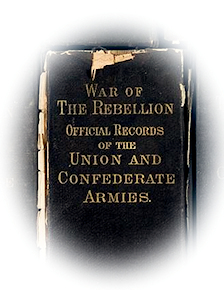
War of the Rebellion: from the Official Records of the Union and Confederate Armies and Navies

ADJUTANT-GENERAL’S OFFICE,
Washington, D. C., November 12, 1860.

Maj. ROBERT ANDERSON,
First Artillery, Care of A. A. G., Hdqrs. Army, New York:

SIR: The Secretary of War desires to see you, and directs that you proceed to this city and report to him without unnecessary delay.

I am, sir, very respectfully, your obedient servant,

S. COOPER,

Adjutant-General.

0 comments

Operations in Charleston Harbor

War of the Rebellion: from the Official Records of the Union and Confederate Armies and Navies

CHARLESTON ARSENAL, S.C.,
November 12, 1860.

Col. H. K. CRAIG,

Chief of Ordnance, U. S. A., Washington, D.C.:

SIR: In view of the excitement now existing in this city and State, and the possibility of an insurrectionary movement on the part of the servile population, the governor has tendered, through General Schnierle, of South Carolina Militia, a guard, of a detachment of a lieutenant and twenty men for this post, which has been accepted.

Trusting that this course may meet the approval of the Department, I am, sir, very respectfully, your most obedient servant,

F. C. HUMPHREYS,

Military Storekeeper Ordnance, Commanding.

0 comments

A Few Letters and Speeches of the Late Civil War

Civil War Day-by-Day

To JOHN FORSYTH,

Mobile Ala.

New York, November 11, 1860

My Dear Sir,—I have followed, with the most intense anxiety, the events which the election of Lincoln has called forth at the South. While I fully appreciate the legitimate grievances of your section of the country, I deprecate sincerely the means which a large portion of your citizens seem determined to adopt for their redress.

Nobody can regret more than I do the election of Lincoln, and I certainly need not tell you how earnestly I strove to prevent that calamity; but now that we are defeated, I think that it behooves every good Democrat, North and South, to reflect calmly upon what course it will be most wise and patriotic to pursue, in order to guard against the evils with which a Republican administration threatens our country. I take it for granted that a large majority of our Southern brethren are in favor of the Union, provided they can have their rights secured under the Constitution, and their property protected against the inroads of Northern Abolitionism. I hope and trust that the disunionists per se stand alone in their conspiracy against the Union, which they have labored to undermine for the last twenty years. Unfortunately, they have been able to bring a large number of the patriotic men of the South to the belief that Lincoln’s election is a convincing proof of an overwhelming anti-slavery feeling at the North; but this is by no means the case, and it is evident that the unfortunate result of the late election was mainly owing to other causes.

The country at large had become disgusted with the misrule of Mr. Buchanan, and the corruption which disgraced his administration. The Democratic party was made answerable for his misdeeds, and a change was ardently desired by thousands of conservative men out of politics. This feeling was particularly strong in the rural districts, and did us infinite harm there.

Had we made an unanimous nomination at Charleston, we should most probably have overcome our opponents; though, for the reason just named, our struggle must have [continue reading…]

0 comments

Lincoln’s Home

Frank Leslie’s Illustrated Newspaper

Frank Leslie’s Illustrated Newspaper, November 11, 1860

Residence of the Hon. Abraham Lincoln at Springfield, Illinois.

The Residence of Abraham Lincoln, President Elect, at Springfield, Illinois

The simple home of this American Statesman, and President Elect of the United States, is situated on the corner of Eighth and Edward streets, and here he has resided twenty years out of the three and twenty he has been a dweller in Springfield. It stands on a sort of platform of brickwork, and is two stories high, having two windows on each side of the door and five on the upper story. The side view shows that it has an extension and side entrance, with a receding stoop running the whole length of the extension. In the rear are the stables and barn. The edifice is painted of a pale chocolate color, and the window blinds are of deep green. The roof extends a little over the edges, like that of a Swiss cottage. The rooms are elegantly and comfortably furnished with strong, well-made furniture, made for use and not for show. On the front door is a black door plate, on which, in silvered Roman characters, is inscribed the magical name,

“A. LINCOLN.”

Here dwells the great exponent of Republicanism and the victor of Stephen A. Douglas in 1858. It has no ornaments, no deftly-trimmed shrubberies, no marble vases; it is all in keeping with the man—plain, unpretending, comfortable and substantial.

0 comments

Procession, Whangdoodles and Election

News of the Day
1860s newsprint

The Constitutional [Alexandria, LA], November 10, 1860

Monday night last was announced for the Bell and Everett torchlight procession, but owing to the wretchedness of the weather, the turnout was but small in comparison to their previous magnificent demonstrations. After the Bell and Everett procession disbanded, the “Whangdoodles,” some twenty in number, “turned out,” dressed in comic costumes, and disguised with hideous masks, paraded the principal streets of the town. Their rather comical appearance was quite amusing to all lookers-on. The “Whandoodles’  is the title of a new order in this town, and is withal quite a unique concern.

Tuesday dawned clear and pleasant. The election passed off quietly; less excitement was manifested than perhaps at any Presidential election ever before held in the parish. The utmost order prevailed throughout the day.

The town presents quite a lively and flourishing appearance. The “dengue” (an unpleasant visitant) has, we believe, totally disappeared from our midst; navigation is fairly resumed; our planters are busy harvesting their crops, which we regret to say are comparatively small; business of all kinds is getting brisk; money market is unchanged, and politics is slightly on the decline.

0 comments

The Death of Grizzly Adams

Diary of US patent clerk Horatio Nelson Taft.

Harper’s Weekly, November 10, 1860

James C. "Grizzly" AdamsThe telegraph has announced the mere fact that James C. Adams, better known as “Old Adams,” or “Grizzly Adams,” is dead. Born in the very eastern woods of Blaine, brought forth in a forest where not even a hut was ready to shelter him, he passed naturally through a rough youth into a wilder and more uncivilized manhood. In 1848, he being then forty-three years old, he went to California, and there ten years hunted among the mountains of that coast. His tastes led him to cultivate the society of bears, which he did at great personal risk, but with remarkable success, using them as pack-horses by day, as blankets by night, as companions at all times. Taking a collection of them, he came to the East, arriving in this city last spring. His menagerie was stationed for some time on Thirteenth Street, and few of our city readers have not seen the strange old man taking a morning airing with a bear or two, accompanied by a limited but noisy band, composed of a bass drum and a piccolo flute. He had frequent personal encounters with his bears, and after a time people began to feel a want of something in their daily paper if the chronicle narrated not how Old Adams had lost a leg, an arm, or part of his head on the day before, through the petulance of his chief grizzly. The gray-bearded, sharp-eyed, rough old hunter finally, however, succumbed to his destiny. He could conquer the passing obstinacy or ugliness of his animals, but the strife left its marks, and repeated attacks of bear were at last too much for him. Almost for the first time in his life, he spent the closing hours of his pilgrimage in the quiet repose of a civilized country home, dying with his friends.

0 comments

Lincoln on the Front Page of Harpers Weekly, November 10, 1860

Harper’s Weekly
Lincoln on the Front Page of Harpers Weekly, November 10, 1860Click on image to access other sizes.

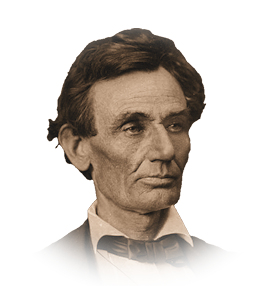
While President-elect Abraham Lincoln’s image graced the front page of the November 10, 1860 edition of Harper’s Weekly, there was no accompanying article.  There was however, a short piece on the “Death of Grizzly Adams.’

0 comments

The Abolition Raid in Texas

News of the Day

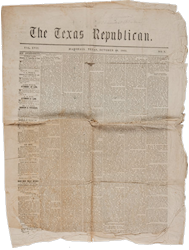
[Marshall] Texas Republican, November 10, 1860

Now that the election is over, doubtless the vast majority of our people can regard dispassionately the course pursued by the Opposition party and Governor of Texas, relative to the recent incendiary movements in this State. They have contended through the press, in their public speeches, and by every means through which the public mind could be reached, that the reports of an abolition raid in Texas were without foundation; that there was not a particle of proof to justify such a belief, and that these reports were originated and circulated for no other design than to make political capital for Breckinridge. Gen. Houston in his Austin speech, which was republished in the Flag, to the surprise of every right-thinking, intelligent man in the State, made the same statement, denying that there had been, at any time, cause for alarm. Judge Evans, we learn from our exchanges, occupied similar ground, assuming the position that the numerous fires which have occurred in Texas were the result of accident, and out of these causalities, the Breckinridge party set afloat thousands of unfounded rumors calculated and designed to influence the public mind, with a view to manufacture political capital.

What are the facts? The fires alluded to commenced in July last, and, in the short period of one month, property to the amount of over a million of dollars, was destroyed, including two of the largest and most flourishing towns in Eastern Texas. Eleven fires occurred in Northern Texas in one week, involving a loss of upwards of seven hundred thousand dollars. There was scarcely a county in the State that claimed an immunity from these outrages. Farm houses, gins, mills, and stores were destroyed in almost every county. Every newspaper that reached us during those exciting times, contained from one to a half dozen accounts of these burnings.

The people became alarmed, and, as we contend, there was just reason for the liveliest apprehensions. Vigilance committees were formed in every neighborhood. No one ever thought then of denying that it was necessary to adopt measures for our safety. Men met without distinction of party. That there should have been a great deal of excitement, that many reports should have been circulated having no foundation and that acts of unjustifiable violence should have taken place, were perfectly natural. Such results have followed similar excitements everywhere else, and why should Texas prove different from the rest of the world?

But if the number, frequency, and the accounts given of these fires were insufficient to dispel the idea that they were [illegible line] elicited by committees appointed to examine into the facts, is sufficient to show that that they were caused by incendiaries. We are free to admit that testimony elicited by violence or fright is not to be depended on, but, in this case, it is a noted fact, that negroes, over a hundred miles apart, in a number of counties, all concurred in the general outlines of this abolition movement. In addition to this, we have the Bailey letter which the notorious abolitionist Buley who was hung near Fort Worth, acknowledged to be a genuine document. At the time that letter was published in our columns, it was regarded as a document that had been manufactured. Now that it is known to have been written by an active abolitionist, who was in Texas, it may not be uninteresting to give it a more searching examination. It here follows:

Denton Creek, Tex., July 3d 1860.

Dear Sir—A painful abscess on my right thumb is my apology for not writing to you from Anderson. Our glorious cause is progressing finely as far south as Brenham. There I parted with Brother Wampler; he went still further south; he will do good wherever he goes. I traveled up through the frontier counties, (a part of the time under a fictitious name.) I found many friends who had been initiated and understood the mystic red. I met with a good number of friends near Georgetown. We held a consultation and were unanimously of opinion that we should be cautious of our new associates—most of them are desperate characters and may betray us, as there are some slaveholders among them, and value the poor negro much higher than horses. The only good they will do us will be to destroy towns, mills, &c., which is our only hope in Texas at present. If we can break Southern merchants and millers, and have their places filled with honest Republicans, Texas will be an easy prey if we only do our duty. All we want, for the time, is the control of trade. Trade, assisting by preaching and teaching, will soon control public opinion. (Public opinion is mighty and will prevail.) Lincoln will be elected; we will then have the Indian Nation—cost what it will; Squatter Sovereignty will prevail there as it has in Kansas. That accomplished, we have but one more step to take, one more struggle to make, and that is free Texas. We will then have a connected link from the Lakes to the Gulf. Slavery will then be surrounded by land and water, and soon sting itself to death.

I repeat, Texas we must have, and our only chance is to break up the present inhabitants in whatever way we can. It must be done. Some of us will most assuredly fall in accomplishing our object, but our Heavenly Father will reward us for assisting him in blotting out the greatest curse on earth. It would be impossible for any of us to do an act that is as blasphemous in the sight of God, as holding slaves. We must have frequent consultations with our colored friends— let your meetings be in the night—impress upon their clouded intellects the blessings of freedom; induce as many to leave as you can. Our arrangements for their accommodation to go North are better than they have been but not as good as we would like. We need agents, both local and traveling. I will send out traveling agents when I get home. You must appoint a local agent in every neighborhood in your District. I will recommend a few that I think will do to rely upon, viz.: Bros. Leak, Jones, Evans, McDunley, Victory, Cole, Nugent, Shaw, White, Guilford, Ashley, Drake, Meek, Shultz, and Newman. Brother Leak, the bearer of this will take a circuitous route, and see as many of our colored friends as he can. It is also recommended that a different match be used about towns, &c. Our friends sent a very inferior article, they emit too much smoke, and don’t contain enough camphene. They are calculated to get our friends hurt. I will send a supply when I get home. I will have to reprove you and your co-workers for your negligence in sending funds for our agents. But few have been compensated for their trouble. Our faithful correspondent and industrious agent, Brother Webber, has received but a trifle, not as much as an apprentice’s wages, neither has Brothers Willett, Mangum and others.

You must call upon our colored friends for more money, they must not expect us to do all. They certainly will give every cent if they knew how soon their shackles will be broken. My hand is very painful, and I will close. Yours truly,

Wm. H. Bailey.

N.B.—Brother Leake will give you what few numbers of Impending Crisis we have; also, Brother Sumner’s speech and Brother Beecher’s letters, &c. Farewell.

From the foregoing it will be seen that there was, and doubtless is yet, a secret abolition organization extending throughout our State, denominated the “Mystic Red,” whose purpose is to drive out the present population of Texas, and supply their places with abolition fanatics. Read this letter again carefully; and consider its import in connection with the alarming events that immediately followed it.

But we are not left to this letter alone. In “Helper’s Impending Crisis,” page 59, will be found the following prediction:

“Ere long, mark our words–there will ascend from Texas a huzza for freedom and for equal rights, that will utterly confound the friends of despotism, and set at defiance the authority of usurpers, and carry consternation to the heart of every slavery propagandist.”

The San Antonio Ledger pithily and forcibly remarks. “That it has been verified, in burning and yet bloody characters, let the wail of those rendered childless and homeless by the conflagrations in Eastern Texas tell!”

Now, in the face of these facts, is it not to be lamented that there should be a party in our own State, so far misled by party spirit, as to contend that there was no reasonable cause for alarm, and that exaggerated reports were originated for the purpose of creating political capital? Is it not to be deplored, that the Governor of the State, instead of taking [illegible line] citizens, should have lent himself to those who are defaming the character of our people? The Northern abolition press, deriving their evidence from the statements of the opposition in Texas, backed by the speeches of the Governor of the State, represented us as a band of outlaws and assassins, thoroughly demoralized and in a state of anarchy, and that our social condition was even far worse than that of unhappy Mexico. These accounts have reached Europe, and there we are held up in colors that ought to make our defamers at home blush for shame. The London Times of Sept. 21st thus speaks of Texas:

“In the pending decennial Census of the United States, Texas is expected to shine, both as regards increase of population and productive capacity. In short, it is predicted that before many years she is likely to stand as the Empire State of the South, as New York is that of the North. For some months past, however, a reign of terror has existed in the country, which at least reached a climax for which a parallel could scarcely be found in the history of the frantic orgies of the early French Revolution. The plea is a fear of insurrection among the slaves. Not a single piece of evidence has been produced to justify any such suspicion, and it is clear that the whole thing arises from the deadly feud between the South and the North, a desire to influence the approaching Presidential election, and also, as Texas is largely indebted to the North, to provide an excuse for the non-payment of liabilities. The State is now entirely at the command of a mob, who burn and destroy at pleasure in order to create a list of ‘incendiary’ acts by the negroes, and who forge ‘intercepted’ correspondence against any person whom they may desire to hang.

Numbers are thus executed every week, and it is plain that each man holds his life only at the will of an enemy who may choose to point to him as an abolitionist. Negroes and white men are tortured with astounding ferocity, and if, in their agony, they consent to charge any number of persons with having incited them to commit offences, these charges are entirely sufficient as a ground for the death of the inculpated parties. The public journals gloat over each instance of cowardly slaughter, and deal with the whole subject as a theme for humor. According to the records by the last mail ‘two white devils were publicly hanged in Anderson county, for having furnished the negroes with more than 100 bottles of strychnine to poison the wells—the ‘incontrovertible proof’ on the point consisting in allegations made by some of the colored people during ‘severe punishment.’ In Williamson county three white men and three negroes were hanged on similar pretences. In Upshur county a man named Morrison was hanged in the presence of 500 ‘citizens,’ for the crime, as it is stated, of having been ‘charged’ with inciting negroes to insurrection. In Cook county three white men were hanged, after having, in their desire for life, implicated 15 others, who will doubtless, in due time share the same fate. The San Antonio Ledger announces that a wandering mapseller who had lately visited that city ‘has been translated to another sphere of action, and that a negro boy accompanied him in his permanent suspension from earthly duties.’ The Galveston News, an old established journal of large circulation, mentions that a Mr. Lemon, ‘an abolitionist,’ who was under directions to leave the State, had been ‘prevented by a material impediment from obeying instructions.’ The editor adds, ‘We presume he climbed a tree and hurt himself in coming down.’ This, it must be observed, is but the record of a single week, and it may be presumed that not a tithe of the events of similar character that occur that find their way into print. The State Government does not make any pretence to check the will of the people, and the federal authorities have not the constitutional right, even if they had the inclination, to do so. In the neighboring States tendencies are exhibited, only in a less extensive form. We thus see that Mexico, although reduced to a pandemonium by its military brigands, may be held up almost as a model of civilization in contrast with the neighbors before whom she is destined to fall. The New York journals denounce with vigor the disgrace thus inflicted on the Union, but it is to be feared that every work they may write will but serve as a stimulus for new horrors in retaliation.”

Comment on the foregoing is unnecessary. Every unprejudiced man must see that the statements which authorized the rational belief that our people were in a demoralized and degraded condition, outraging all law, human and divine, was calculated to do us much more injury than a proper presentation of the facts. In the great struggle through which we have just passed, what effect were it likely to have upon Northern men to be told that in Texas their brethren were hung and lynched for no other crime than being born in a Northern State? Yet such were the statements of Northern Abolition journals, whose positions were sustained by the press and orators in Texas opposed to Breckinridge and Lane. They thus lent aid and comfort to the Republicans, who were enabled thereby to picture the demoralizing effects of slavery. Will our opposition friends, who have been misled by these acts of their leaders, now that the election is over, reflect upon them?
0 comments

Impolite

News of the Day

[Marshall] Texas Republican, November 10, 1860

Eighteen things, in which young people render themselves very impolite:

1. Loud laughter.
2. Reading when others are talking.
3. Cutting finger nails in public.
4. Leaving meeting before it is closed.
5. Whispering in meeting.
6. Gazing at strangers.
7. [illegible]
8. A want of reverence.
9. Reading aloud in company without being asked.
10. Receiving a present without some manifestation of gratitude.
11. Making yourself the topic of conversation.
12. Laughing at the mistakes of others.
13. Joking others in company.
14. Correcting older persons than yourself, especially parents.
15. Commence talking before others are through.
16. Answering questions when put to others.
17. Commencing to eat as soon as you get to the table. And—
18. In not listening to what one is saying in company—unless you desire to show open contempt for the speaker. A well bred person will not make an observation whilst another of the company is addressing himself to it.

0 comments

Operations in Charleston Harbor

War of the Rebellion: from the Official Records of the Union and Confederate Armies and Navies

CHARLESTON ARSENAL, S. C.,
November
10, 1860.

Col. H. K. CRAIG,
Chief of Ordnance, U. S. A., Washington, D. C. :

SIR: On the 7th instant I received an order from Colonel Gardner, commanding troops in the harbor, to issue to him all of the fixed ammunition for small-arms (percussion caps, primers, &c.) at this arsenal, such a step being advisable, in his estimation, for the better protection of the property in view of the excitement now existing in this city and State. Being allowed no discretion in the matter, his order being peremptory, I proceeded to obey it on the afternoon of the 8th. Captain Seymour having come up from Fort Moultrie, with a detachment of men and schooner, for the purpose of removing the stores, the shipment of them was interfered with by the owner of the wharf until the city authorities could be notified, and there were but three or four cart-loads on board. I considered it best that they should be reconveyed to the magazine until something definite should be determined upon, which was done. Not having heard anything further from Colonel Gardner relative to this matter, I conceive it my duty to report the facts in the case, which I respectfully submit.

Very respectfully, I am, sir, your most obedient servant,

F. C. HUMPHREYS,

Military Storekeeper Ordnance, Commanding.

[Indorsements.]

ORDNANCE OFFICE, November 13, 1860.

Respectfully referred to the Adjutant-General for the information of the Secretary of War, with the remark that I am not aware by what authority Colonel Gardner undertook to give such an order.

H. K. CRAIG,

Colonel of Ordnance.

0 comments