Excitement on Grosse Tete

News of the Day

Sugar Planter [West Baton Rouge, LA], November 24, 1860

Quite an excitement was raised on Grosse-Tete a day or two since, by the apprehension of two men who had been detected in tampering with negroes. One of the individuals got clear of summary punishment from some little extenuating circumstance in his favor; but the other, said to be an Irishman, was tied up, soundly flogged, branded on both cheeks, and ordered to leave—quick! While we hope our citizens will ever be on the alert to detect and bring to justice any one found interfering with our slave population with a view of creating discontent, or endeavoring to enveigle  any of them from their homes, we question the propriety of their taking the law into their own hands and inflicting such punishment upon offenders as their judgment may dictate. If one set of men claim such a privilege, another may do the same thing, and so on to the end of the chapter. Such behavior is subversive of all law and order—the first principles of all free governments.

0 comments

The Feeling in Texas

News of the Day

The Ranchero [Corpus Christi, TX], November 24, 1860

Our State exchanges come to hand this week containing calls for meetings, and reports of meetings already held, which indicate that Texas is in a blaze, and that the people are moving and preparing to meet the crisis, consequent upon the triumph of abolitionism. The propriety of Texas again rallying under the Lone Star is freely discussed, and resolutions to that effect have been passed in many places. An unmistakable disposition is manifested never to submit to the humiliation which now threatens the South.

0 comments

Lincoln at the Illinois State House

Frank Leslie’s Illustrated Newspaper
Hon. Abraham Lincoln, The President Elect, Receiving His Visitors in the Governors's Room in the State House, Springfield, Ill. - From a Sketch by a Special Artist, Mr. Henri Lovie

Frank Leslie’s Illustrated Newspaper, November 24, 1860

Abraham Lincoln Receiving his Friends in the Court Room of the State House, Springfield.

We give in our present number a sketch of the President elect receiving the congratulations of his friends and neighbors in the Court Room of the State House, Springfield. It would seem from all accounts that he received the news of his elevation with that equanimity which has distinguished his whole career. The capital of Springfield is a large handsome building of a yellowish stone, and has been erected about twenty years.

0 comments

Disapprobation at the election of Abraham Lincoln

News of the Day

[Marshall] Texas Republican, November 24, 1860

On Friday last the citizens of our city and vicinity assembled in mass meeting to express their disapprobation at the election of Abraham Lincoln as President of the United States. . .

[among other resolutions]
Resolved, That Texas entered the Union as a free and sovereign State, and that we to-day hoist the Lone Star Flag, as an indication that she will not submit to inequality in the Union, but will maintain if necessary her independence out of the Union. Under that Flag she was wrested from the despotism of Mexico, and under it she will resist tyranny, come from whatever source it may, acknowledging the principle that

“Resistance to tyranny
Is obedience to God.”

After the unanimous adoption of the Resolutions, amid the firing of cannon and the national air of Texas, the “Lone Star Flag” was hoisted and unfurled to the breeze, when Judge Ochiltree was introduced to the vast multitude, by Mayor Curtis, and addressed them as follows:

The Lone Star—dear flag of our once glorious Republic—I live again to see its azure folds spread to the breeze, never again to be furled or to be merged into another is my fervent prayer!

Twenty-five years have passed away since it was baptized in blood upon the embattled walls of the Alamo—consecrated upon the bloody field of Goliad, and borne aloft to glorious victory upon the plains of San Jacinto. For near ten years it shed its chaste and radiant light o’er the fair land wrested from the despotism of Mexico—our own beloved Texas, when it sunk into an embrace, to which it was wooed by faithful promises of equality and prosperity, which I stand here to-day and say in sorrow, deep and heartfelt sorrow, has been most shamefully, most profligately falsified and betrayed.

The same breeze which stirs yon banner on high, has wafted to us the sad news, that, despite every principle of justice and of right, a portion of the States forming our national compact, have elected Abraham Lincoln, President of the United States. There is no longer doubt—the delusion to-day has been dispelled—the terrible calamity has overtaken us! . . .

0 comments

A Splendid Barbeque

News of the Day

[Marshall] Texas Republican, November 24, 1860

On the 3rd inst., there was a splendid barbecue, and a large meeting of the citizens of Walker county, at Huntsville, Texas. Among the transparencies at night was one bearing the following inscription:

“We had rather be the widows of State Right patriots than the wives of submissionists.”  Well done for the ladies of Walker county.

0 comments

A Southern Churchwoman’s View of Slavery

News of the Day

[Fayetteville, Ark.] The Arkansian, November 24, 1860

I have thought it might be interesting to some of your readers, especially the northern portion, to hear something of what the Germans call “Our inner life.” In a word it may be interesting to them to hear, honestly, a southern woman’s opinion on slavery. I know, in spite of the great efforts made to enlighten the world in general, and the northern portion of these United States in particular, by Emerson, Greely, Mrs. Stowe, H. W. Beecher, and others, there is a very great amount of ignorance as to the position and feelings of the white population of the south on this subject. I promise you to express frankly and truly, in the presence of God and the world, as an honest “Daughter of the Church,” my belief on these matters. It may be used as a psychological curiosity by those of your readers who are interested in examining the philosophy of mind. I have spent a great deal of time at the North. Our country is not healthful for white people, for at least three of the Summer months. In Summer, with the majority of southern people, I have spent this time annually in travel. The north attracts us by its coolness and salubrity; we cannot be long among you without hearing ourselves and our institutions freely discussed; and, it has often been amusing and at the same time painful to me, to listen to the fierce argument and fierce vituperation poured out against my country and my people—amusing from the absurdity of the positions and premises of the adversaries, and sorrowful from their ignorance, hate and bitter condemnation. The southern people held up to view are an arrogant, ignorant, uneducated, inhuman, tyrannical set of men and women, lording it over the amiable, unoffending, innocent, oppressed slaves, driving them to work under the cruel lash, loading them with irons; in short, if you will just cut out a few pages of Irving’s matchless “History of Columbus,” detailing the iniquitous cruelty and barbarity, of the early Spanish settlers, under Orando, against the peaceful islanders of San Domingo, you will have a very correct description of the portrait frequently made before me, and to me, of southern masters and their servants. That is terrible! It makes me shudder and breathe hard to read the early history of America; and yet, there are many persons who believe we live in the constant exercise of the same fearful barbarities. “God forgive our enemies, persecutors and slanderers, and turn their hearts.”

In very early times, perhaps, there may have been some excesses committed by slave- owners. There may be, even yet, exceptions; I have heard of such; thank God, I never knew them. but I will say, “setting down naught in malice,” that in every instance these lawless acts were committed, not by southern men and women, born and bred, but by men who came from other portions of the world, who bought negroes and land to make money as fast as possible, then to sell out and go back from whence they came, to spend it, and to become very loud-mouthed abolitionists.—They demanded of the negro more than he is physically capable of performing, broke his spirit by overwork and want of sympathy, and then deserted him in his helplessness and inefficiency. We do not act so. Our interest forbids it, if no other feelings actuate us. Our homes are here; our lives, our fortunes, our associations, past, present, and future are here. The earth is precious to us; the graves of our beloved sanctify it. We are an agricultural people. History proves that they are always most deeply attached to the soil from whence they draw their subsistence. Our negroes, in most instances, were our playmates; our nurses were negroes; our dear old black “mammys” are, to a southern child’s heart, next to the mother that bore him.—We are attached to these people by every tie that can bind a human heart,–by these associations, by pity for their ignorance, their helplessness, their confiding nature, their loyalty, and their warm affection.

God help us—weak, infirm and fallible beings! We err often; but I say boldly, never, as a people, are we cold, indifferent, or systematically cruel to our poor slaves. Again, if we wished to be cruel, we dare not. Do abolitionists know that cruelty to negroes is a criminal offence, by our laws?—that we cannot separate a child from its mother, under ten years of age, without danger of the penitentiary?—that, if a master maltreats a slave, he is “obliged to be presented” by his neighbors before our Grand Juries, which met in every parish in this State?—that the negro is forcibly taken from the master and sold, and the master is compelled to pay a heavy fine? Not only is the negro thus protected by law, but custom—scarcely less inexorable—does not allow families to be separated, if it is possible to avoid it. When estates are sold or divided, negroes are usually sold in flocks, or families; a southern planter never sells, if he can possibly avoid it. What is he to do, if he sells?—There is no other profession or vocation open to him in his own country. Unless he expatriates himself, he has no wish to sell.

As for southern mistresses—noble southern women, whose pecas I have never met in any class of women, in any portion of the civilized world!—I throw the gauntlet down, and defy any man to point out such a class of women in the world as they are. Moral, chaste, devoted wives; tender and self-denying mothers; active, industrious housekeepers—not disdaining the most menial occupations, if it but add to the comfort and welfare of their dear ones; faithful mistresses—providing with their own hands, often, the clothing of their negroes— visiting and nursing the sick, day by day, and by night—caring for the little children—teaching to the best of their knowledge—these poor ones; refined, accomplished, intellectual, as many southern mistresses are—thinking it no more than their duty to exhaust their time, their sympathies, their affections, their lives, for these objects of their love; where can their equals be found? I do not know of such women, except in the days when Penelope spun, and Lucretia and Cornelia sat with their maidens. This, I say, is the general, not the exceptional, character of southern women. I honor and reference my sisters beyond any class of women in the world; it is my proudest boast that I, too, am a “southern woman.”

What can you know, our northern sisters, of the life and work of a planter’s wife?—you who are so comfortably fixed—your houses so conveniently arranged—your markets near and well furnished?—If your servants do not suit you they are discharged. Water, gas, coal, social advantages, books, lectures, music—how can you understand the position of a southern mistress—her many cares and anxieties, her responsibilities, her frequent isolation, her daily self-sacrifice? Would you like to spend all day long, with a pair of heavy shears in your hand, and cut out coarse negro clothing, till your hand ached with weariness? I know many hands, small and delicate as yours, that do this!—Would you like to go into the negro houses and stand hour after hour by the bed of the sick and dying, cheering and comforting the poor creatures? I know many as refined as you, who do this, and think nothing of it. Would you like to struggle with ignorance, stupidity, and the fearful tendency to immorality—alas, almost inherent in the negro? All around me, throughout the length and breadth of the land, are women who do this. And these are the women who, I have often been told, were helpless, indolent, weak, tyrannical creatures, who scarcely spoke “good English,” but drawled out their apathetic sentences in a mixed jargon of Africanisms and English! I have been all over England, and my conclusion is that we speak better English than the English themselves; and many of us speak French, and Italian, and Spanish, and German as well as English; and almost every southern woman has some knowledge of music—I have sometimes spent an evening at the north, in the society of fifteen or twenty ladies, (I use the word advisedly), not one among them could play even on the piano! I know of but two Southern women, in all my acquaintance, who are entirely ignorant of music. I recommend to my countrywomen to use the Choral Service for their negroes, because as a usual thing, they all have some knowledge in music.

I could go on, and tell you of the experiments made, and still making, by southern people, to improve and Christianize their servants,–tell you of a neighbor of ours who has even tried to introduce trial by jury among them, making them judge, among themselves, their misdemeanors; but I should be also obliged to inform you that the experiment failed—he finding, as Dr. Krapf, and all other African missionaries have, “that Africans live better under a monarchy than under republics;” that under the latter form of government, “the Africans are profitable in nothing, either to God or man.” Dr. Livingston says, “running away is a disease among these people;” and so, I suppose, we will have to endure that idiosyncrasy as well as we can. I am happy to say it is of much rarer occurrence among us now than formerly.

The times look dark for us now. God only knows what is to become of us and ours. The fearful storm of fanaticism that has been gathering, urged on by demagogues, is about to break over our heads.—The “irrepressible conflict,” as you perceive, is near at hand. We have never sought it; we have retreated before it, step by step. We are driven now to our only fastnesses— our hearths, our homes. We stand at bay. God help us! God help you, and avert this fearful conflict! His arm only can help us now. But man’s extremity is his opportunity. Let us pray, all of us; you, that you may be enlightened as to your true duty, and we, that we may be guided in the right way. Forsake our country, our institutions, we cannot. It is for life we contend—life for ourselves, life for these helpless, improvident people under our care and guardianship, who cannot endure, and exist, but under the protection and fostering care of white people. We cannot be false to this trust. Stir up, if you will, insurrection, rebellion, amongst us; arm with the assassin’s knife the hands we have taught to be lifted in prayer; teach the tongues to curse us which we have taught to sing God’s praises. We can die but once—the “noble army of martyrs praise Thee.” Like Queen Esther, “if we perish, we perish.”

Filia.
0 comments

Our Position

Frank Leslie’s Illustrated Newspaper

Frank Leslie’s Illustrated Newspaper, November 24, 1860

On our pages this week, we illustrate passing events of great and stirring interest, both in the South and in the North — the Seceding movements in the South and the Presidential campaign in the North.   We claim to be strictly and entirely neutral in our course of Journalism, chronicling events as they transpire in every section of the country, without bias, and without feeling; adhering closely to facts, but advocating neither one side nor the other of the disturbing element of partisan politics.

In pursuing this course we do not bate one jot of our independence; we truckle to neither party, nor do we ask favors of any party.   The necessity of our position is, that our circulation must be universal — our expenses are so vast that the patronage of one class, however liberal, would be but a drop in the bucket in the way of enumerating our outlay.

Our aim is to produce a paper which shall be entirely free from objectionable opinions or partizan views of national policy, that it can be circulated in every section of the union and be receive in every family as a truthful exponent of facts as they occur, and a reliable Illustrated History of the time in which we live.

Bearing this aim steadily in view, we do not swerve from our design.   Our Artists and Correspondents furnish us with illustrations and descriptive matter of every event of importance, which we transfer to our pages, and we must not be held responsible if our pages illustrate scenes of which the actors therein are ashamed.   We are Historians, and represent the World as we find it, without fear, favor, or prejudice, confident that, while we persevere in that course, Frank Leslie’s Illustrated Newspaper will be welcomed in every section and in every home in the United States.

Secession orators addressing the people outside the city hall, Charleston, S.C. — from a sketch by our special artist. (depicts event from November 12, 1860)
0 comments

Corpus Christi Awake

News of the Day

The Ranchero [Corpus Christi, TX], November 24, 1860

On Thursday morning last the Lone Star Flag was hoisted on Cahill’s flag-staff, and one gun for each southern State was fired. Considerable excitement exists in this city, concerning the result of the late election, and a spirit is manifested by many of our citizens in favor of secession and the re-establishment of the Republic of Texas.

0 comments

Secession in the Cabinet

Turning on the Light: A Dispassionate Survey of President Buchanan’s Administration, From 1860 to its Close, by Horatio King

(Confidential.)

P. O. Department, Appt. Office, November 23, 1860.

My Dear Sir,—Your private note of yesterday is received. I have shown it to the Postmaster-General. I am told both the President and Mr. Cobb are under a good deal of excitement. I have no doubt the friends of the President are determined to know whether there is secession in the Cabinet, and whether the President is responsible for the infamous course of the Constitution. And all you can do to this end will be a public benefit. . . .

Things are looking a little better in Georgia to-day.

Very respectfully and truly yours,

Horatio King.

Hon. John A. Dix, New York.

0 comments

The Country is in a Panic

News of the Day

Alexander H. Stephens to J. Henly Smith.

Crawfordville, Ga., Nov. 23, 1860.

Dear Smith, I have just received your letter of the 16th Inst. By some strange mishap it has been delayed. I wrote to you day before yesterday stating I had received nothing from you lately. Last night I got the Tribune and N. Y. Herald of the 16th Inst. When I see the Elberton Star I will write to you what I think of your article on retaliatory legislation. You will see from my last speech that I am inclined to favour that policy. I think a course perfectly constitutional might be pursued on that line that would effect the desired result. What our State convention will do is very uncertain. I should not be at all surprised to [see] secession adopted by them as the proper remedy. The country is in a panic and there is no telling where it will end. I do not know whether I shall be in the convention or not.

I have not made up my mind to go yet. I am inclined to let those who sowed the wind reap the whirlwind, or control it if they can. It does seem to me that we are going to destruction as fast as we can.


From Annual Report of the American Historical Association for the Year 1911.

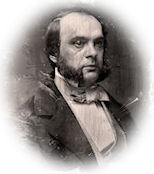
Alexander Hamilton Stephens was an American politician who served as the vice president of the Confederate States from 1861 to 1865. After serving in both houses of the Georgia General Assembly, he won election to Congress, taking his seat in 1843. After the Civil War, he returned to Congress in 1873, serving to 1882 when he was elected as the 50th Governor of Georgia, serving there from late 1882 until his death in 1883.

J. Henley Smith was a Georgia journalist.

0 comments

Operations in Charleston Harbor

War of the Rebellion: from the Official Records of the Union and Confederate Armies and Navies

.FORT MOULTRIE, S.C., November 23, 1860.

Col. S. COOPER,

Adjutant-General, U. S. Army:

COLONEL: In compliance with verbal instructions from the honorable Secretary of War, I have the honor to report that I have inspected the forts of this harbor. As Major Porter has recently made a report in relation to them, I shall confine my remarks mainly to other matters, of great importance, if the Government intends holding them. At Fort Moultrie the Engineer, Captain Foster, is working very energetically on the outer defenses, which will, should nothing unforseen occur to prevent, be finished and the guns mounted in two weeks. There are several sand hillocks within four hundred yards of our eastern wall, which offer admirable cover to approaching parties, and would be formidable points for sharpshooters. Two of them command our work. These I shall be compelled to level, at least sufficiently to render our position less insecure than it now is. When the outworks are completed, this fort, with its appropriate war garrison, will be capable of making a very handsome defense. It is so small that we shall have little space for storing our provisions, wood, &c. The garrison now in it is so weak as to invite an attack, which is openly and publicly threatened. We are about sixty, and have a line of rampart of 1,500 feet in length to defend. If beleaguered, as every man of the command must be either engaged or held on the alert, they will be exhausted and worn down in a few days and nights of such service as they would then have to undergo.

At Fort Sumter the guns of the lower tier of casemates will be mounted, the Engineer estimates, in about seventeen days. That fort is now ready for the comfortable accommodation of one company, and, indeed, for the temporary reception of its proper garrison.

Captain Foster states that the magazines (4) are done, and in excellent condition; that they now contain 40,000 pounds of cannon powder and a full supply of ammunition for one tier of guns. This work is the key to the entrance of this harbor; its guns command this work, and could soon drive out its occupants. It should be garrisoned at once. Castle Pinckney, a small casemated work, perfectly commanding the city of Charleston, is in excellent condition, with the exception of a few   repairs, which will require the expenditure of about $500. They are—1st, replacing three water Casks and the old banquette on the gorge; 2d, repairing one of the cisterns and the old palisading, which, though much rotten, may at a trifling expense be made to answer for the present; 3d, making six shutters for the embrasures and doing some slight work to the main gates. Two mortars and a few other articles belonging to this work were taken to the United States Arsenal in Charleston some months since for repair. They are still there. I shall ask [continue reading…]

0 comments

Disagreements in the Cabinet

Turning on the Light: A Dispassionate Survey of President Buchanan’s Administration, From 1860 to its Close, by Horatio King

(Private)

New York, November 22, 1860.

My Dear Sir,—. . . We have divers reports of disagreements in the Cabinet in regard to the disunion movements in the South. I hear nothing from Cobb in reply to my letter.

There is a great fallacy at the basis of all the secession movements. It is this, that the violation of a compact by one of the parties releases all, assuming our federal system to be identical with a contract between individuals for certain purposes. It is totally different, and is not subject to the same reasoning and conclusions. The States have organized a central government and ceded to it a part of their sovereignty. The violation of the compact, to warrant a release of the parties, must be on the part of the central government, and not of one of the associates. Mr. Cushing, in his late letter, loses sight of this distinction—a vital one, as I think, in all our reasonings concerning the present disunion movements. In haste, I am,

Truly yours,

John A. Dix.

Hon. Horatio King.

0 comments

On precipitating secession without an appeal to the people.

Civil War Day-by-Day

To the Hon. Herschel V. Johnson

Speir’s Turnout, Jefferson City, Ga.

New York, November 22, 1860.

My Dear Sir,—I have seen with great satisfaction that amidst all the turmoil of passionate madness, fed by the incendiary speeches of Yancey and Toombs, your patriotic voice is loud in favor of the Union.

Heaven grant that the wise counsels of such men as you, and the noble Alex. Stephens, may be listened to, and that our Southern brethren may act firmly and manly, but without precipitation. In that case all must in the end come right, and the South will ride triumphantly through the storm.

My only fear is that the secession leaders, reckless of patriotic considerations, and only bent upon the accomplishment of their treasonable ends, may succeed in manufacturing packed conventions in South Carolina, Georgia, and Alabama, for the purpose of precipitating secession without an appeal to the people.

This ought to be prevented at all hazards, and I hope that you, and other patriotic leaders, will rouse the people of your State to a full appreciation of the nefarious game played by their pretended friends. I have expressed my views more at length in a letter, which I addressed to-day to Mr. Forsyth, and of which I beg to hand you a copy.

The South has got the game in her own hands, and it is for her to choose whether to give peace and greatness to our common country, while at the same time securing for herself every Constitutional right, or whether to bury us all in one desolating ruin, which would be to the enemies of human liberty a vindication of the justice of their uncompromising opposition to self-government. The dissolution of the American Union is the death-knell of human liberty.

0 comments

Past Salvation

Miscellaneous document sources

Alexander H. Stephens to J. Henly Smith.

Crawfordville [Ga.], Nov. 21st, 1860.

Dear Smith, I got home yesterday from Milledgeville after an absence of ten days. I was expecting a letter from you and some papers but found none. I wrote to you soon after our election before I left home. I am anxious to see the tone of Northern leading papers on the present state of public affairs and prospect for the future, and also anxious to know the state of feeling among the public men at Washington, what will be the course of the President and the Administration when South Carolina declares herself out of the Union, as it is generally supposed here that she will certainly do at an early day.

My views of the state of the republic were given to the Legislature last week. You will see a tolerable report of them in the Southern Recorder, republished in other papers. The report was by no means full or clear in some particulars but the outline of the policy I advo[ca]ted will be seen in it. Let me know how it is received at Washington by all sides. I fear we are past salvation—that there is not patriotism enough in the country North or South to save it.


From Annual Report of the American Historical Association for the Year 1911.

Alexander Hamilton Stephens was an American politician who served as the vice president of the Confederate States from 1861 to 1865. After serving in both houses of the Georgia General Assembly, he won election to Congress, taking his seat in 1843. After the Civil War, he returned to Congress in 1873, serving to 1882 when he was elected as the 50th Governor of Georgia, serving there from late 1882 until his death in 1883.

J. Henley Smith was a Georgia journalist.

0 comments

Village Life in America

Village Life in America, 1852 – 1872, by Caroline Cowles Richards

(1860) November 21.–Aunt Ann gave me a sewing bird to screw on to the table to hold my work instead of pinning it to my knee. Grandmother tells us when we sew or read not to get everything around us that we will want for the next two hours because it is not healthy to sit in one position so long. She wants us to get up and “stir around.” Anna does not need this advice as much as I do for she is always on what Miss Achert calls the “qui vive.” I am trying to make a sofa pillow out of little pieces of silk. Aunt Ann taught me how. You have to cut pieces of paper into octagonal shape and cover them with silk and then sew them together, over and over. They are beautiful, with bright colors, when they are done. There was a hop at the hotel last night and some of the girls went and had an elegant time. Mr Hiram Metcalf came here this morning to have Grandmother sign some papers. He always looks very dignified, and Anna and I call him “the deed man.” We tried to hear what he said to Grandmother after she signed her name but we only heard something about “fear or compulsion” and Grandmother said “yes.” It seems very mysterious. Grandfather took us down street to-day to see the new Star Building. It was the Town House and he bought it and got Mr Warren Stoddard of Hopewell to superintend cutting it in two and moving the parts separately to Coach Street. When it was completed the shout went up from the crowd, ” Hurrah for Thomas Beals, the preserver of the old Court House.” No one but Grandfather thought it could be done.

0 comments

Gov Houston and the Late Panic

News of the Day

Daily Times [Leavenworth, KS], November 20, 1860

Gov. Houston recently made a speech at Independence, Texas, in which he attributed the late insurrection panic to the false accounts circulated by one Pryor of Dallas, a brother of the Virginia Pryor. Gov. Houston denied the stories and incendiary fires, and said that the panic had greatly injured the State, depreciating property and preventing immigration, and that a gentleman just in from Northern Texas had told him he had met at least 200 wagons, with five persons to each wagon, going out of the State to Kansas and Arkansas, simply because property and life had been made insecure by the panic makers. Mr. Houston also said:

“However much he might regret the election of Lincoln, still, if constitutionally elected, he ought to and should be inaugurated. Yes! they would have to walk over his dead body if he was not!”

0 comments

Thieves, Beggars and Loafers

News of the Day
1860s newsprint

Daily Gazette & Comet [Baton Rouge, LA], November 20, 1860

Respectable Dimensions.—The fact that there is as yet no workhouse in our limits, is known far and near. There is a kind of fraternity among thieves, beggars and loafers, under which they are all kept posted, as to the best places for them to migrate to, when driven out of the last community infected by their presence. Because we have no workhouse here, as well as because of the fact that under the new regeme  of Democratic ethics, we have no right to take even the lowest of the vulgar swell mob, and put him to work on the streets, to keep him out of the gutter in which he falls at the expense of the public, is the cause of an effect which gives indifferently honest people a right to complain of a burthen of taxation, not only for the legitimate purposes of government, but also for the illegitimate. In the last category may be placed the onerous burthen of bearing the taxes needed for the support of the vilest vagabonds.

In the early history of Red Stick, there was a chain-gang employed on the public works. Democracy having touched the verge of liberty, we hope to see a reaction and a restoration of some of the primitive features of government. It cannot be safe for the interest of government, even under the broad branches of the tree of liberty, to allow the liberty to steal; the liberty to get drunk and fall in the gutter; the liberty of vagabondage. We are infested with a motley crew of vagabonds; not only in the city, but in the country. Idle scoundrels who travel from house to house, and where they cannot obtain what they want by begging—steal. The offences are all within the limit of the law, which prescribes the penitentiary as a remedy, and the offenders go to the Parish prison, and are fed at the public cost. On Monday last there were no less than thirteen of this crew before his Honor the Mayor, all taken up by the watch on Sunday night. Mayor Elam, we are proud to say it, is disposed to deal upon them the full rigor of his authority; but what is it? It is limited to imprisonment in the Parish jail for a few days. He may fine them, but fining amounts to nothing. There is but one deprivation to the motley crew in jail, and that is whisky. Give it to them say we—enlarge the dimensions of the prison and keep them out of the streets. It will be the cheapest way to get rid of them.

0 comments

Operations in Charleston Harbor

War of the Rebellion: from the Official Records of the Union and Confederate Armies and Navies

CHARLESTON ARSENAL November 20, 1860.

Col. H. K. CRAIG,

Ordnance. Department:

SIR: In obedience to the instructions of the War Department I came to this place and have assumed command of the arsenal. The excitement concerning this arsenal which existed here a short time since is very much allayed, and this result is in a great measure due to the prudence and discretion of the military storekeeper, Mr. Humphreys, whose conduct on the occasion meets my commendation.

Very respectfully, your obedient servant,

BENJ. HUGER,

Brevet-Colonel, U. S. Army.

[Indorsement.]

ORDNANCE OFFICE, November 24, 1860.

Respectfully submitted to the Secretary of War for his information.

WM. MAYNADIER,

Captain of Ordnance.

0 comments

The Union to Be Preserved only so Long as

New York Times

New York Tribune, November 19, 1860

Bullying the Free States.

Abraham Lincoln has been designated for next President of this Republic by the popular vote of nearly every Free State, and the ruling politicians of the Slave States are not pleased with the selection. We can fancy their feelings, as we felt much the same when they put a most undesired President upon us four years ago. Moreover, we can and do in good faith advise them to do as we did—Bear it with fortitude, and hope to do better next time. There are other courses that may seem more inviting at first, but this will prove altogether safest and wisest in the end.

But the Southern politicians are not so used to adversity as we have been, and they do not at first take it kindly. Everybody among them is expected to tear and rave over this Free-Soil triumph, under the suspicion of being marked and denounced as tin Abolitionist. Of course, the howl throughout the Cotton States is very general—partly in earnest, and partly not. And the life-long Disunionists of South Carolina, and two or three sympathizing sister States, seize upon the excitement as a godsend, by whose aid they hope forthwith to achieve their darling end.

Messrs. Rhett, Ruffin, Yancey, and other leaders in this crusade were just as much Disunionists a year ago as they now are; the circumstances have changed, but they have not. They are intensely busy and noisy just now, because they fear that the golden moment will speedily pass away—that if they do not succeed in dissolving the Union before the excitement cools and Mr. Lincoln is inaugurated, they never will. Hence, the indecent haste with which South Carolina is hurried along the path of treason, without allowing time for reflection or consultation. The Disunionists dare not trust their cause to a general council of the Slave States, nor even of the Cotton States, for they know they would be overruled. Their game is to rush South Carolina into a point-blank collision with the Federal Government, and then call upon the other Slave States to rally to the defense of the champion of their common cause, By thus raising a false issue and appealing to the sympathies rather than the reason of the other slaveholding States, they hope to effect what, on a direct appeal, they know to be impossible. And this, though a desperate resort, is the only one open to them consistent with their resolution to shiver the Union at all hazards.

Now we believe and maintain that the Union is to be preserved only ao long as it is beneficial and satisfactory to all parties concerned. We do not believe that any man, any neighborhood, town, county, or even State, may break up the Union in any transient gust of passion; we fully cemprehend that Secession is an extreme, an ultimate resort—not a Constitutienal but a Revolutionary remedy; but we insist that this Union shall not be held together by force whenever it shall have ceased to cohere by the mutual attraction of its parts; and whenever the Slave States, or the Cotton Stites only, shall unitedly, coolly say to the rest, “We want to get out of the Union,” we shall urge that their request be acceded to.

But one thing we must firmly and always insist on—that there shall be no bribing, no coaxing, no wheedling those to stay in the Union who want to get out. Every step in this direction tends to confirm the Slave States in their mistaken notion that the Union is more advantageous to us than to them—that it is a contrivance to pamper and enrich the North at the cost of the South. And this is to-day the chief source of National peril. It is because the Southern people have been persistently told that the Free States would be pecuniarily ruined by disunion—that our people live by their sufferance and thrive on their bounty—that we are eternally threatened with Secession. Let it be fully and fairly understood that the benefits of the Union are mutual—that we don’t want the south to remain in the Union out of charity to us—and this eternal menace of Nullification and Secession will be hushed forever.

The Herald has a bulletin from Richmond, which foreshadows the part which Virginia is to be induced to play in the drama now opening, as follows:

“I have taken considerable pains to ascertain what the attitude of Virginia shall be in the coming crisis. Her purpose is to maintain a position of armed neutrality until she is prepared to tender her services as mediator, under the official sanction of the Legislature, or a Convention called by its authority.  It is known that she will, meanwhile, prepare for the worst, for if the States now threatening to secede shall adopt her programme, and that shall fail to be carried out by non-compliance on the part of the North, Virginia will unite in the secession movement.  She will ask the Souther States to go into a Southern Conference with her, and it is understood that they will go, provided she lays down beforehand the programme which shall form the basis of action.  This, it is supposed, Virginia will do, and from information communicated to me it will be of a character sufficiently comprehensive and exacting to satisfy the most ultra Southern men.
.
It will embrace. first, a repeal of the statutes nullifying the Fugitive Slave law by those States which have passed such statutes, with a guaranty of a faithful enforcement of that law in the future; second, a concession that the Constitution authorizes the carrying of slaves into the common territory, and consequent protection for slave property therein; and third, that neither Congress nor the Executive shall interfere with Slavery in the States, except for protection in the latter when necessary.  Some favor a change in the programme to the extent of a demand for the passage of a law by Congress, forthwith, for its protection in the Territories.
.
“If this programme shall be adopted by the Conference, and the North show any disposition to compromise upon it, then a National Conference will be called the pending difficulties upon that basis.  Should these measures fail to obtain the sanction of the North, secession of all the Southern States will follow.”
.

—This is tolerably cool, in faith, considering that is hardly past the middle of November. Those who have been beaten in the late contest propose to graciously forgive the victors, provided they will give up all that was at stake on the issue and a good deal more. We can tell the gentlemen who lost that this programme will not even be considered by the Free States, much less submitted to. If Cornwallis at Yorktown had offered Washington a free pardon in case he would lay down his arms and sue to George for mercy as a repentant rebel, his demand would not have been more preposterous than that above quoted. Those to whom the People have just voted to intrust the Administration of the Federal Government do not believe that the Constitution authorizes the carrying of “Slavery into the common territory,” any more than Jefferson or Roger Sherman did, and they will do nothing to favor such transplantation, but everything in their power to prevent it. Congress will pass no law for the protection of Slavery in those Territories: if the next Congress should, Mr. Lincoln would certainly veto it. And as to the laws of certain States, designed to secure the personal liberty of their inhabitants, those States will modify, repeal or retain them
exactly as their own people shall see fit, and when they see fit—and this will
never be while they are menaced with terrible consequences if they do not promptly comply with the arrogant demands of outsiders. On this point, the Republican Platform adopted at Chicago says, explicitly: ”

“That the maintenance inviolate of the rights of the States and especially of the right of each State to order and control its own domestic institutions according to its own judgment exclusively is essential to that balance of power on which the perfection and endurance of our political fabric depends.”
.

—Who disputes this doctrine? Certainly no one who professes to be a disciple of Jefferson and Madison. Read the celebrated Virginia and Kentucky Resolutions of ’98 and ’99, and judge how a supporter of the doctrines therein proclaimed would look advocating the above proposition to dragoon the Free States into a repeal of their own statutes.

The simple fact is, that this clamor about the Personal Liberty acts of certain Free States is hollow and delusive. Those acts are not the cause of but a mere pretext for the present slaveholding furor. Those who are fanning the flames of civil discord, hate to own that their only grievance is the election as President of the candidate they most dislike: so they look in every direction for excuses for their treason. That the Personal Liberty acts are only used as pretexts, is proved by the fact that the very Governors who officially inveigh against them do not know which States have passed them. New-York has been repeatedly denounced as a leading offender; Indiana as another; Illinois as a third; when in fact neither of these States has passed any such law! Of all the border Free States, only Pennsylvania has any act on her statute-book that even attempts to protect those claimed as Slaves, and Pennsylvania’s is a weak, flimsy affair. Generally, we may say that the States which have Personal Liberty acts are those into which slaes seldom or never do or can flee. Practically, those acts are of no account except to the Secessionists. If every one of them were repealed to-morrow, not five more fugitive slaves per annum would be caught and returned than are now. And the only effect of repealing those acts at this juncture would be to incite new and more unwarrantable exactions.

If any State has passed an Anti-Slavery act at variance with the Federal Constitution, the Supreme Court, on the proper presentment of the matter, will be ready enough to declare that act a nullity. Mr. Lincoln, as President, will probably feel bound to recognize and enforce the decrees of that Court. Here is a way—and it is the only practicable way—to overrule these acts if they be really exceptionable. All the other States, with the new President and Congress, might command, entreat, implore Vermont or Wisconsin to repeal her Personal Liberty act, yet the act would remain unrepealed and in full force; but let the Supreme Court declare it invalid, and there is in substance an end of it. The Secessionists understand this; but they don’t want those laws repealed—on the contrary, they wish there were more of them, and that they were a great deal more objectionable than they are. Let it be understood, then, that the South has full sway in the Supreme Court, and can there demolish the Personal Liberty acts if she will, If she chooses to have them stand, the reason will be generally understood.


0 comments

Buchanan’s Alleged Treason

The Abraham Lincoln Papers at the Library of Congress

From Ulysses Doubleday to John G. Nicolay1

Bank of North America

New York Nov 18. 1860

Dear Sir.

Since I last wrote, enclosing letters from my brother, I have received many others from him, which, coupled with other information in my possession, left no doubt in my mind of the complicity of the President with the designs of the secessionists. I took my proofs, when the election was over, to the editor of the Evening Post, in which a series of articles has been commenced, exposing Mr. Buchanan’s treason, with the hope that the publicity thus given to it, may force him to do at least part of his duty. These articles have been brought to Mr. B’s personal notice, and both he and Secretary Floyd2 have denied their truth. As they are true, this looks as if they were becoming frightened, and the superseding of Col. Gardner, ³ an avowed secessionist, by Maj. Anderson4 a loyal Kentuckian, seems still further to confirm this idea. My brother writes that a settled determination to have the forts, as a necessity of their positions, is evinced by the South Carolinians, who begin to ask why the President does not keep his promise to withdraw the troops. I think he is afraid, and, by directing public attention to these disclosures, hope to force him to send more troops. This would greatly simplify Mr Lincoln’s position after the 4th of March. The present aspect of financial affairs here, though gloomy, is not nearly so bad as in 1857. The simple fact that our exports largely exceed our imports is a proof that in a very short time gold must flow this way from Europe in large amounts. I look to a decided and permanent improvement in less than thirty days. I do not expect any answer to this letter.

Respy Yours

U. Doubleday


Note 1 – Ulysses Doubleday was the brother of Abner Doubleday, a captain in the U. S. Army who was stationed at Charleston Harbor. Ulysses Doubleday sent copies of his brother’s letters to Lincoln.

Note 2 – John B. Floyd

Note 3 – Lieutenant Colonel John L. Gardner commanded the U. S. forces at Charleston Harbor until he was replaced by Major Robert Anderson in November 1860.

Note 4 –Robert Anderson

0 comments

Found Drowned

News of the Day
1860s newsprint

Daily Gazette & Comet [Baton Rouge, LA], November 17, 1860

A white man was found floating in the river opposite the residence of Sidney A. Robertson, in West Baton Rouge, on the 14th inst. The man appeared to be a laboring man, perhaps a deck-hand on a steamboat; the body gave evidence of murderous treatment, having several cuts on the head and a knife wound in the side. No papers or money found on his person. On the right arm in India ink, under two clasped hands, were the initials H. F., with a flower on each side, such as are usually made by sailors.

0 comments

Minute Men

News of the Day

Sugar Planter [West Baton Rouge, LA], November 17, 1860

A meeting was held at Academy Hall, in Baton Rouge on Wednesday night last for the purpose of forming a company of Minute Men for the protection of Southern Rights should they be assailed. The Hall was filled, but the enthusiasm, such as it was, was confined to the first three or four rows of benches. By far the larger portion of the audience did not participate in the proceedings. Although the object of the meeting was fairly set forth in a Baton Rouge paper, it afforded an excellent opportunity to our friends Judge Robertson, P. D. Hardy, Major Dunn, and others to let the ‘dear peeps’ know they were in favor of secession right off—without waiting any longer. We have been informed that names enough have been secured to form one company— which we hope soon to see increased to a regiment.—That parish out of her voting population could easily raise five hundred men, it can be done if a little energy is only thrown into the movement.

0 comments

The K.G.C.s

News of the Day

[Marshall] Texas Republican, November 17, 1860

Gen. George Bickley and Col. Groner of the K. G. C.’s, have been in Marshall for several days. The former, who is quite a fluent, easy, graceful, and forcible speaker, addressed the citizens at the Courthouse on Friday night, and Saturday evening, explaining the character and objects of the organization to which he belonged.

  1. Its original object, it appears, was the colonization of Mexico, peaceably and under invitation from the liberal party of that country.
  2. It was not a political organization; that is, it was not connected, directly or indirectly with either of the political parties of the day.
  3. It was not in a reprehensible point of view a secret organization, inasmuch as it published its principles to the world, and every thing connected with it, except the forms that bound members of the order together.

Gen. Bickley claimed to be a Southern man and the individuals connected with him were Southern men. His organization presented a nucleus around which Southern men could rally. The “wide awakes” of the North were organized as was apparent to enforce Black Republican misrule upon the South—to subjugate resisting Southern States. We require a counteracting organization in the South. The K. G. C.’s numbered upwards of 115,000 men, 50,000 of whom could be concentrated at ten day’s notice to protect any Southern State struggling for its rights. He presented the necessity of military organizations all over the South, so as to keep down insurrections and to repel invasions.

We present the foregoing as a brief outline of Gen. Bickley’s views and purposes, without endorsing or being understood as endorsing them. His speech was very well received. What success he met with, in adding to the number of K. G. C.’s we are not advised. We have understood the order was quite numerous in this county already.

We believe in Southern organizations, but that whatever is done, shall be done openly and with the knowledge of our entire people. In other words, we do not believe in secret organizations, and particularly secret military and political organizations. We regard them as dangerous in a republic. Whenever the day of resistance comes, if come it must, there is not a Southern State that cannot send forth, armed and equipped, ten thousand men, who have been accustomed to the use of arms from their youth. These men will scarcely be missed from among us, and yet they will constitute an army of 150,000 men, who, in point of efficiency, intelligence, discipline, determined valor, intrepidity, and all the elements that constitute a valuable army, will be superior to any force that has ever been sent to the field since the world began. We have the strength to maintain ourselves. What we need is prudent counsels to avert a collision, which if once commenced will be terrible in its results to both sections.

0 comments

Fort Moultrie (Sullivan’s Island).   Charleston, South Carolina in the Distance

Harper’s Weekly
Fort Moultrie (Sullivan’s Island).   Charleston, South Carolina in the Distance — Harper’s Weekly, November 17, 1860Fort Moultrie (Sullivan’s Island).   Charleston, South Carolina in the Distance — Harper’s Weekly, November 17, 1860 (click on image for other sizes)

THE HARBOR OF CHARLESTON.

(related article from Harper’s Weekly)

We publish on the following page a fine engraving of the City and Harbor of Charleston, South Carolina, showing Fort Moultrie, on Sullivan’s Island, and the entrance to the Palmetto City. It is a surpassingly lovely view, and one which once seen is never forgotten. An eminent Soutisern writer has thus described it, and we can not do better than give his description in his own words

“As you enter from the sea, between the Islands of Sullivan and Moultrie, the city opens before you in the foreground, five miles distant—rising, like another Venice, from the ocean. It is built like Venice, upon flats and shoals of sand and mud. So low is the land, that the illusion that i is built directly in the sea continues til you approach quite near It This illusion is productive of a picturesque effect, but not sufficiently to compensate you for the relief which would be yielded by an elevated background, or by lofty eminences of land on either side. As you advance the bay expands, wide and majestic, forming a harborage to which there can be no objection, were it not for the embarrassments of the bar at the entrance, which forbids the admission of ships of very heavy draught of water. It is a present project with the Charlestonians — supposed to be quite feasible— so to dredge this channel us to remove every difficulty. In that event, Charleston must necessarily acquire a large had imposing commercial marine of her own. In front of you, commanding the channel, is Fort Sumter, a formidable pile of fortress, with double tier of heavy cannon, rising upon a mole at the head of a sand-bar. In passing Sullivan’s Island, the eye readily distinguishes the Moultrie House, famous as a local watering-place; and the still more famous fortress, which also bears the name of Moultrie, distinguished in American history as the scene of one of the first and best-fought battles of the Revolution, when a few hundred native riflemen, who bud never fired a cannon before, beat off, and nearly destroyed, a formidable British fleet, making such slaughter among them as in proportion to the numbers engaged, was not even reached by that of Trafalgar and the Nile. On the right you see Haddrill’s—Mount Pleasant village—which also constituted one of the fortresses of ’76. On the left are the shores of James and Morris Islands, the latter bearing the light-house of the port; the former the site of old Fort Johnson, which was wrested from the British prior to the battle of Fort Moultrie, by the enterprise of a small body of citizen soldiery. Here, at the very portals of the city, you encounter Castle Pinckney, covering an ancient mud reef; and here we propose to give you a bird’s-eye view of the city itself. We are now in the ancient city itself—the Palmetto City! You see the tout ensemble at a glance, and perceive its two most prominent characteristic—the verandas, balconies, piazzas, with the ample gardens and their foliage, which issolate every dwelling-house, and form a substitute for public squares, in which Charleston is lamentably deficient. But for the largeness of the several lots, and the taste of the people for shade-trees, the deficiency would be fatal at once to the health and the beauty of the place.

“This city is one of many beauties, arming from this isolation of the dwellings, and from the ample verdure which girdles them.”

0 comments

Southern manufactures, the Brogan Movement

News of the Day

Sugar Planter [West Baton Rouge, LA], November 17, 1860

We take the following from the Yorkville (S. C.) Enquirer:

An inquiry made in a recent number of the Southern Guardian, whether negro shoes of Carolina make could be had anywhere in Columbia, together with other advertising influences, has developed the grateful fact that more than one, perhaps between two and three hundred thousand pairs of brogans are made yearly in South Carolina. The largest factory we have heard of—Mr. Lynch’s, of Cheraw—turns out one hundred pairs per day, and is patronized by planters in various parts of the State. The next largest belongs to Mr. Allen, of Camden, who now puts in the Florida, Alabama, Mississippi and Arkansas market upwards of 15,000 pair annually; and is making arrangements hereafter to manufacture 50,000 pairs per annum, to meet the demand which the popularity of his shoes has created on the plantations of the West. We could place our finger on perhaps more than a dozen shops, in the upper districts, which manufacture each from 500 to 5000 pairs of negro shoes annually.

0 comments