Terrible Accident at Castle Pinckney.

Civil War Day-by-Day

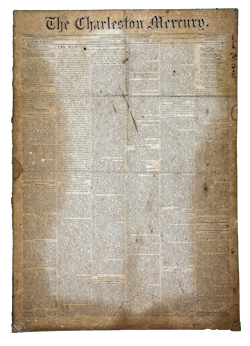
January 9, 1861, The Charleston Mercury

We are pained to record, that, on Monday night, shortly after 10 o’clock, as one of the sentinels at Castle Pinckney was going on is rounds, he was approached by a person at the time unknown. The sentinel presented his musket in the act of challenging him, when the piece unfortunately when off, and the stranger immediately fell. On examination, in proved to be Private R.L. HOLMES, of the Carolina Light Infantry. The ball had taken effect in the left side under the shoulder, traversing both lungs, and inflicting a wound, from the effects of which he survived only twenty minutes.

ROBERT LITTLE HOLMES was the son of WM. H. and M.P. HOLMES. He was born in this city on the 10th of February, 1830, and has thus fallen the first victim in the noble cause of South Carolina independence. He is deeply mourned by his parents, brothers and sisters, as well as by a large number of relatives and friends. His high sense of the duties of life had in no ordinary degree endeared him to those who knew him best. Is remains will rest in the cemetery of Magnolia. The funeral services will be at the Circular Church, at 10 o’clock this day (Wednesday).

0 comments

“Fires and Burglaries occur every night. I sleep with a loaded revolver within reach.”—Horatio Nelson Taft

Diary of US patent clerk Horatio Nelson Taft.

WEDNESDAY 9

Mr Thompson has resigned and another day has passed in the greatest anxiety of all classes to hear from Charleston, but there is no news from there today. The City is arming for self-protection and some Companys of U S troops are expected tomorrow. Fires and Burglaries occur every night. I sleep with a loaded revolver within reach. Was an hour at Willards tonight. Everything quiet but men look anxious. Met Mr Butterfield M.C. and a number of other gentlemen, all looking for news.


The three diary manuscript volumes, Washington during the Civil War: The Diary of Horatio Nelson Taft, 1861-1865, are available online at The Library of   Congress.

0 comments

The Letters of Samuel Ryan Curtis

The Letters of Samuel Ryan Curtis

H R Washington Jany 9. 1861

My dear Wife

Your letter of the 2d and one from Goodi– on the subject of changing our household arrangements were received last night. I am inclined to think we had better give up housekeeping, some time soon, but I dislike to do so without some further reflection: for I have a longing anxiety to unite our dear family with you at our quiet fireside in March and if then the troublesome times permit, allow us a few weeks or months of family home enjoyment.

I will not precipitate a determination. We need not be in great haste. I presume Goodrill [?] will not be required to move hastily.

Although things look quite cheerless in many respects, we are not in desparate straits just yet and we need not be in great haste.

Goodril proposes that he take the house and in consideration board you and Carrie. This does not seem to me a safe arrangement for us. You may or may not desire to remain there. If I am to be here most of the time to attend called cessions as now seems probable you would probably prefer to be nearer to me and I should prefer to have you. I would of course prefer that Goodril should have the house and furniture, but is he so settled now as to feel certain he will remain in Keokuk. Hard times are down on all of us and we must arrange our domacils to suit the revolutionary times that now seems to embarrass all matters of business and may influence the peace and quiet of different localities.

We have got through the Committee of 331 and the Chairman Mr. Corwin2 is now writing out his report. Our recommendations are only explanatory of our views of Southern rights under the Constitution with provisions to give a little more clearness to matters in controversy.
Mr. Adams’ proposition to admit New Mexico as a State is the only important matter.3

It would stifle the question about territory as this is all there is South of 36.30 The disunionists will of course refuse everything; but we want [to] deprive them of every ground of complaint and then let them stand clearly on persistent wrong. In the Caucus and among republicans I have opposed this because I preferred a general organization of the territories as incohate states which would in my judgment settle the matter and organize all necessary territories. But Mr Adams does not by his propositions violate our platform and if it tends to peace or tend to expose the obstancy of the revolutionists I am willing to go with those who must take some responsibility in their support of the chairman and Mr Adams.

We are in momentary anxiety to hear from Charleston where it is said troops and provisions have been sent to the relief of Major Anderson.4 As I said to you in a former letter, I do not care now how much S Carolina displays her quo animo it will rally the entire North to the resentment of insults and outrages already committed. My resolutions favoring the use of force were defeated in the Committee of 33 by a substitute introduced by Mr Dunn of Indiana–5 There is still a hope existing among some that we may avoid blood. I consider it impossible and therefor the sooner the appeal to arms be made the less extended will be the conflict and the sooner we may hope to see peace.

Nat Sturges is hear boarding with us and is enjoying himself generally He seems [as] clever and kind as ever and has some hope of securing some office under the incoming administration.

Last night we called on Miss Juliana May her mother and sister where we had a feast of music and very agreeable visit.

After that I went with the Mr Pennyman6 and made a call at the Speakers.7 Miss May gives a concert Thursday even’g for the benefit of some persons who sustain losses by a fire that occurred last week.

Legislation is proceeding while I write. We are very quiet while the gathering storm of the South continues to threaten the entire country. Perhaps you had best show this to Goodril. I will write him soon Give my love to our folks. I will answer Laiffe and brother Hosmer very soon.

Affectionately yours
Sam. R. Curtis


1. The Committee of Thirty-three was appointed December 6, 1860, upon motion of Boteler of Virginia. Curtis was appointed the member of the Committee from Iowa. Majority reports of the committee were filed January 14, and the minority January 16. A consideration of the same was made a special order of the day for Monday, January 21. No formal action of the House was had, however. Its purpose was to consider the proposals of compromise which might avert secession. Tension was so high, and tempers and mind so determined, that several members refused to serve on the Committee, stating they knew they could accept no compromise. See the Congressional Globe 36th Congress, 1st session, for appropriate dates.
2. Thomas Corwin, Whig and Republican leader of Ohio served in both branches of the national legislature. In 1861 he was completing his last term as a Representative before taking duties under the new administration as minister to Mexico.
3.See Congressional Globe for references to New Mexico being admitted as a state.
4. Major Robert Anderson, West Point graduate, Southerner by birth and antecedents, assigned to protect Charleston Harbor in 1860, was an unintentional hero of Fort Sumter. An earnest soldier he adhered to the Union cause in the war that followed.
5. William McKee Dunn, representative from Indiana 1859-1863, later rose to become Judge Advocate General in the U. S. Army.
6. William Pennyman, Governor of New Jersey 1837-1843, Whig member of Congress but one term, 1859-1861, was elected Speaker for that term, one in which much contention with the Chair was inevitable.
7. William Pennyman

0 comments

The Crisis

Civil War Day-by-Day

January 9, 1861, The New York Herald

WASHINGTON, Jan. 8, 1861.

Secretary Thompson this morning called upon the President and showed him a despatch which he had just received from Judge Longstreet, of Charleston, desiring to know whether reinforcements had been sent to Major Anderson. The President at once informed him that the steamer Star of the West had been chartered and was on her way to Charleston with two hundred and fifty United States troops.

This was the first intimation Secretary Thompson had that troops had been sent. He states that an order had been given some ten days ago by Secretary Holt and Gen. Scott, but that the President revoked it. The day following the Cabinet met, and the whole subject was discussed, and it was finally determined that a messenger should be sent to Major Anderson, with a view of ascertaining his exact condition, and whether he really desired reinforcement. They had his letters before them at the time, in which he distinctly stated that he did not require any reinforcements unless attacked. The messenger was despatched, and it was agreed that nothing should be done until they heard from Major Anderson.

Last Saturday Secretary Thompson and Secretary Toucey had heard of the movement of troops in New York, and called upon the President to know the facts. He stated that if any such orders had been given he would have them revoked. He authorized the Secretary of War, on Saturday, to telegraph to the commander of the Star of the West to land the troops at Norfolk, of Fort Monroe, and not to go to Charleston. The President was informed on the following day that the vessel had departed before the telegraph reached there. This is the whole story.

Secretary Thompson immediately telegraphed Judge Longstreet, at Charleston, that [continue reading…]

0 comments

The News

Civil War Day-by-Day

January 9, 1861, The New York Herald

The news from Washington is highly important. Mr. Thompson yesterday resigned his post as Secretary of the Interior. The despatch of reinforcements to Major Anderson at Fort Sumter by the Star of the West from New York is the cause of this step on the part of Mr. Thompson. It would seem that these reinforcements were sent forward without authority from the President. In fact, it is stated that the President directed the Secretary of War on Saturday to telegraph the commander of the Star of the West to land the troops at Norfolk or Fort Monroe, but the despatch did not reach New York until after the departure of the steamer for Fort Sumter.

The official confirmation of the report of the reinforcement of Major Anderson created intense excitement at the capital and the secessionists there immediately telegraphed to Charleston to sink the steamer if possible before she lands her troops. The act is regarded by the Southerners as a declaration of hostilities, and news of the inauguration of a blood civil war is looked for at any moment.

The brother of Major Anderson arrived in Washington from Fort Sumter yesterday, having been sent thither by the President to ascertain the state of affairs. He reports that Major Anderson has ample supplies, and is confident of being able to hold the fort against any force. He makes no requisition for reinforcements, leaving that matter to his superiors.

The government has chartered the steamer Joseph Whitney, at Boston, to convey troops and munitions of war to the forts on the Florida coast. She will sail on Saturday next.

Our Washington despatches state that news has reached there that the Mississippi [continue reading…]

0 comments

A Diary of American Events – January 9, 1861

The Rebellion Record – A Diary of American Events; by Frank Moore

–Mississippi State Convention passed the ordinance of secession. Delegations from South Carolina and Alabama were invited to seats in the Convention. They were greeted with applause. Efforts were made to postpone action, which were voted down. The fifteen delegates who opposed the ordinance will sign it to-morrow, making the vote unanimous.

Fireworks were displayed at the capitol in Jackson this evening. The excitement is intense.–N. O. Picayune, Jan. 10.

–At half-past 7 A. M. the steamship Star of the West was signaled at the entrance of Charleston harbor. As she made her way toward Fort Sumter, a shot was sent across her bow from a battery on Morris’ Island, when she displayed the United States flag, and was repeatedly fired into from the Morris’ Island battery and from Fort Moultrie. Her course was then altered, and she again put to sea. Guns were ran out at Fort Sumter, but none were fired. At 11 o’clock Major Anderson sent a flag with a communication to Governor Pickens, to inquire if this act had the sanction of the State Government; was informed that it had, and thereupon sent a special messenger to Washington with dispatches.–(Doc. 18.)

0 comments

Secretary of War denies information request of Senators from Florida—Operations in Florida

War of the Rebellion: from the Official Records of the Union and Confederate Armies and Navies

WAR DEPARTMENT,
Washington, January 9, 1861.

Hons. D. L. YULEE and S. R. MALLORY:

GENTLEMEN: In reply to your note of the 2d instant I have the honor to state that the interests of the service forbid that the information which you ask should at this moment be made public.

Very, &c.,

J. HOLT,
Secretary of War ad interim.

0 comments

“They came to my door at the time above stated and demanded the keys of the magazine of me. I told them I would not give up the keys to any person with my life.”—The Secession of North Carolina

War of the Rebellion: from the Official Records of the Union and Confederate Armies and Navies

FORT JOHNSTON, N. C.,
January 9, 1861–9 o’clock a. m.

SIR : I have the honor to report herewith that this post has been taken possession of this morning at 4 o’clock a. m. by a party of the citizens of Smithville, N. C. They came to my door at the time above stated and demanded the keys of the magazine of me. I told them I would not give up the keys to any person with my life. They replied that it was no use to be obstinate, for they had the magazine already in their possession, and that they had a party of twenty men around it, and were determined to keep it; if not by fair means, they would break it open. I considered a while and seen it was no use to persevere, for they were determined to have what ordnance stores there was at the post. I then told them if they would sign receipts to me for the ordnance and ordnance stores at the post, I would give it up to them. (There was no alternative left me but to act as I did.) They replied that they would do so. The receipt was signed. and [they] left fifteen men in charge of the post; the remainder proceeded to take Fort Caswell, which is in their possession by this time. I do not know what arrangement Ordnance Sergeant Dardingkiller made with them.

They have taken out of the magazine at this post nearly all the musket cartridges in it; they are also taking the guns out of the block-house and mounting them. I would have telegraphed long since, had I an opportunity of doing so, to the Department, but I could get no means of going to Wilmington–no person would hire me their horse or boat for that purpose. Please send me instructions how I am to act hereafter, as there is expected this afternoon 300 men from Wilmington, N. C., to occupy both posts.

They have not as yet decided what to do with me or Sergeant Dardingkiller. I expect they will send us away as soon as they get some kind of an organization amongst them.

I am, sir, very respectfully, your obedient servant,

JAMES REILLY,
Ordnance Sergeant, U. S. Army.

Col. S. COOPER,
………………Adjutant-General, U. S. Army, Washington City, D. C.

0 comments

Star of the West — Operations in Charleston Harbor

War of the Rebellion: from the Official Records of the Union and Confederate Armies and Navies

FORT SUMTER, S.C., January 9, 1861.
(Received A. G. O., January 12.)

Col. S. COOPER, Adjutant General:

COLONEL: I have the honor to send herewith the correspondence which took place to-day between the governor of South Carolina and myself in relation to the firing by his batteries on a vessel bearing our flag. Lieutenant Talbot, whose health is very much impaired, will be the bearer of these dispatches, and he will be enabled to give you full information in reference to this and to all other matters.

I am, colonel, your obedient servant,

ROBERT ANDERSON,

Major, First Artillery, Commanding.

[Inclosures.]

FORT SUMTER, S.C., January 9, 1861.

To his Excellency the GOVERNOR OF SOUTH CAROLINA:

SIR: Two of your batteries fired this morning upon an unarmed vessel bearing the flag of my Government. As I have not been notified that war has been declared by South Carolina against the Government of the United States, I cannot but think that this hostile act was committed without your sanction or authority. Under that hope, and that alone, did I refrain from opening fire upon your batteries. I have the honor, therefore, respectfully to ask whether the above mentioned act–one, I believe, without a parallel in the history of our country or of any other civilized government–was committed in obedience to your instructions, and to notify you, if it be not disclaimed, that I must regard it as an act of war, and that I shall not, after a reasonable time for the return of my messenger, permit any vessels to pass within range of the guns of my fort. In order to save, as far as in my power, the shedding of blood, I beg that you will have due notification of this my decision given to all concerned. Hoping, however, that your answer may be such as will justify a further continuance of forbearance upon my part,

I have the honor to be, very respectfully, your obedient servant,

ROBERT ANDERSON,

Major, First Artillery, Commanding.

_________

STATE OF SOUTH CAROLINA, EXECUTIVE OFFICE,
Headquarters, Charleston, January 9, 1861.

Maj. ROBERT ANDERSON,

Commanding Fort Sumter :

SIR: Your letter has been received. In it you make certain statements which very plainly show that you have not been fully informed by your Government of the precise relations which now exist between it and the State of South Carolina. Official information has been communicated to the Government of the United States that the political connection heretofore existing between the State of South Carolina and the States which were known as the United States had ceased, and that the State of South Carolina had resumed all the power it had delegated to the United States under the compact known as the Constitution of the United States. The right which the State of South Carolina possessed to change the political relations which it held with other States under the Constitution of the United States has been solemnly asserted by the people of this State in convention, and now does not admit of discussion. In anticipation of the ordinance of secession, of which the President of the United States has received official notification, it was understood by him that sending any re-enforcement of the troops of the United States in the harbor of Charleston would be regarded by the constituted authorities of the State of South Carolina as an act of hostility, and at the same time it was understood by him that any change in the occupation of the forts in the harbor of Charleston would in like manner be regarded as an act of hostility. Either or both of these events, occurring during the period in which the State of South Carolina constituted a part of the United States, was then distinctly notified to the President of the United States as an act or acts of hostility; because either or both would be regarded, and could only be intended, to dispute the right of the State of South Carolina to that political independence which she has always asserted and will always retain. Whatever would have been, during the continuance of this State as a member of the United States, an act of hostility, became much more so when the State of South Carolina had dissolved the connection with the Government of the United States. After the secession of the State of South Carolina, Fort Sumter continued in the possession of the troops of the United States. How that fort is at this time in the possession of the troops of the United States, it is not now necessary to discuss. It will suffice to say that the occupancy of that fort has been regarded by the State of South Carolina as the first act of positive hostility committed by the troops of the United States within the limits of this State, and was in this light regarded as so unequivocal that it occasioned the termination of the negotiations then pending at Washington between the Commissioners of the State of South Carolina and the President of the United States. The attempt to re-enforce the troops now at Fort Sumter, or to retake and resume possession of the forts within the waters of this State, which you abandoned, after spiking the guns placed there, and doing otherwise much damage, cannot be regarded by the authorities of the State as indicative of any other purpose than the coercion of the State by the armed force of the Government. To repel such an attempt is too plainly its duty to allow it to be discussed. But while defending its waters, the authorities of the State have been careful so to conduct the affairs of the State that no act, however necessary for its defense, should lead to an useless waste of life. Special agents, therefore, have been off the bar to warn all approaching vessels, if armed or unarmed, and having troops to re-enforce the forts on board, not to enter the harbor of Charleston, and special orders have been given to the commanders of all forts and batteries not to fire at such vessels until a shot fired across their bows would warn them of the prohibition of the State. Under these circumstances, the Star of the West, it is understood, this morning attempted to enter this harbor, with troops on board, and having been notified that she could not enter, was fired into. The act is perfectly justified by me. In regard to your threat in regard to vessels in the harbor, it is only necessary to say that you must judge of your own responsibilities. Your position in this harbor has been tolerated by the authorities of the State, and while the act of which you complain is in perfect consistency with the rights and duties of the State, it is not perceived how far the conduct which you propose to adopt can find a parallel in the history of any country, or be reconciled with any other purpose of your Government than that of imposing upon this State the condition of a conquered province.

F. W. PICKENS.

_________

FORT SUMTER, S.C., January 9, 1861.

General TOTTEN:

MY DEAR SIR: I have only a moment to write by Lieutenant Meade [?], who comes with dispatches from Major Anderson. I wish to assure you, however, that the officers of your corps are doing everything in their power to make this work impregnable, even with the present small garrison of seventy men. We even mount all the guns, as we can do it much more rapidly than the garrison. We have twenty-nine guns on the first tier and eleven on the barbette tier. Four 8-inch columbiads are ready to mount to-morrow. I shall place the 10-inch on the parade as mortars.

The firing upon the Star of the West this morning by the batteries on Morris Island opened the war, but Major Anderson hopes that the delay of sending to Washington may possibly prevent civil war. The hope, although a small one, may be the thread that prevents the sundering of the Union. We are none the less determined to defend ourselves to the last extremity. I am in want of funds, and would respectfully urge that as soon as possible $15,000 may be placed to my credit in New York. In haste.

Very respectfully,

J. G. FOSTER,

Captain, Engineers.

P. S.–I beg to refer you to Lieutenant Meade [?] for particulars.

J. G. F.
0 comments

Affairs at the Forts

Civil War Day-by-Day

January 9, 1861, The Charleston Mercury

Up to one o’clock last night, when our reported left the vicinity of Fort Sumter and Morris’s Island, all was quiet in our harbor. The guard boats were actively plying up and down the entrance, overhauling every unknown craft. The rumors that the Star of the West would make her appearance in our waters, kept the sentinels on the qui vive, and the cry of ‘All’s well!’ could be heard echoing over the waters from Fort Moultrie to Fort Sumter. At the latter post it is evident that the greatest vigilance is kept, and not even the smallest boat can approach the walls without the gruff hailing of the sentinels on the ramparts. In a former article upon the defences of Fort Sumter, we noticed the fact that the second tier of casemates had been walled up. We observed yesterday that the masonry closing two of these casemates, pointing towards Fort Moultrie, has been removed, the guns for those casemates being completely mounted.

No steamer has made her appearance up to the hour of our going to press. We shall take care to keep our citizens advised, through our bulletins, of her approach, if she should come.

0 comments

Civil War Day-by-Day

Civil War Day-by-Day
Firing on the 'Star of the West' from the South Carolina Battery on Morris Island, January 9, 1861

January 9, 1861

  • “Star of the West” incident occurs near Charleston, South Carolina. Secessionist forces in South Carolina fire at the Star of the West, forcing it to withdraw. Artillery fires on the Star of the West from Morris Island as it crosses into the main entrance channel to Charleston Harbor. As the ship comes about, Fort Moultrie opens fire, also with cannon shot. A mile and a half from Fort Sumter, the ship withdraws.
    • The ship was fired upon by cadets from the Citadel Academy and was hit three times by what were effectively the first shots of the American Civil War. Although Star of the West suffered no major damage, her captain, John McGowan, considered it to be too dangerous to continue and turned about to leave the harbor. The mission was abandoned, and Star of the West headed for her home port of New York Harbor.
  • Mississippi becomes the second state to secede from the Union before the outbreak of the American Civil War.

Image is of the firing on the ‘Star of the West’ from the South Carolina Battery on Morris Island. (Harper’s Pictorial History of the Civil War)

0 comments

Through Some Eventful Years

Through Some Eventful Years by Susan Bradford Eppes
Susa Bradford Eppes

January 8th, 1866.—This is Aunt Sue’s birthday and she has invited us to spend it with her. We accepted with pleasure. It is the first time I can remember that she did not spend her birthday with us, but we have no servants. Mrs. James sends milk for Father every night and morning. She, (fortunate woman) can milk her own cow. I fear I could never learn to do that. You see I am so terribly afraid of Bossy. She looks like a dreadful monster to me. I must stop now and dress for Goodwood.


Susan Bradford is 19 years old when this entry was made.

0 comments

Susan Bradford: “As near as I can remember it was this way: ‘Georgia will certainly secede. Has Florida occupied the fort?’”

Through Some Eventful Years by Susan Bradford Eppes
Susa Bradford Eppes

January 8th, 1861.—We are at home again after a day filled to overflowing with excitement and interest. We were in such a hurry to get to town that the convention had not assembled when we reached the Capitol. There were groups of men talking earnestly and there were other men running hither and thither with papers in their hands. Father has a great many friends and I stood quietly beside him while he and they discussed the situation. The ambassador from South Carolina had evidently made an impression on his audience of yesterday and somebody had been busy last night, for in every direction could be seen Palmetto cockades, fastened with a blue ribbon; there were hundreds of them. When at last the hall of representatives was opened and Father and I took our seats, Judge Gwynn came in and pinned a cockade on Father and one on me. Oh, I was so proud.

Judge McGeehee is Father’s friend and he shook hands with us as he entered the hall.

The members of the convention took their seats and Mr. Blake, our dear Mr. Blake, whom we love so well, opened the day’s session with prayer; such a beautiful prayer. I had never seen a convention until Father brought me here and it is strange to me. I wish I could tell all I heard today but the language the members used is not familiar to me and some of the things they talk about are just as new. Then, too, I am just a little girl. A message was read on the floor of the convention, from Governor Brown of Georgia, to Governor Milton. As near as I can remember it was this way: “Georgia will certainly secede. Has Florida occupied the fort?” [continue reading…]

0 comments

Interesting from Charleston.

Civil War Day-by-Day

January 8, 1861, The New York Herald

We have learned, from information gathered from gentlemen recently arrived from the city of Charleston, some few later details relative to that part of South Carolina, which we believe will be interesting to most of our readers. People belonging to the city and State of New York, and in fact to the North generally, are not aware – or if they are, are not willing to admit the fact to their own minds let alone to others – that much are the preparations being made in the South as would preclude all chance of coercing the revolting States.

THE DEFENCES OF THE HARBOR.

Such measures have been adopted to prevent all vessels of an offensive character entering the harbor of Charleston that even those belonging to that city cannot get out without aid. All the buoys have been removed, and some, if not all of the beacons taken down. All lights are extinguished at night, except that upon fort Sumter, which, for the purpose of navigation, might as well be a hundred miles off, and the lightship has been withdrawn. From Cummin’s Point to the lighthouse, a distance of several miles, sandbank batteries have been erected and well manned, and vessels laden with paving stones and other heavy substances are placed at important points to sink, so that any vessels of an opposing character that might presume to prowl in would be stopped. If the Star of the West attempts to carry her living cargo to the help of Fort Sumter she will be at once sunk by the South Carolina troops stationed along the entrance of the harbor, as a determination exists among them not to allow of reinforcements arriving at that fort. Pilots have been firmly charged not to pilot vessels-of-war into the harbor, but no restrictions are placed upon vessels of commerce and trade. When the steamship Columbia was ready for sea, although she belonged to the city of Charleston, so completely had all marks of the channel been obliterated that it cost the sum of one hundred and fifty dollars to get her clear of the harbor. It was estimated that the value of the vessel and cargo, which consisted of cotton, rice, domestic produce, &c., was not less than $440,000, and yet this large amount was (held) up for some time, rather than allow chances for the vessels of the enemy to make their way up to the fort or the city.

0 comments

Diary of George Mifflin Dallas, United States Minister to England

Diary of George Mifflin Dallas, United States Minister to England 1856 to 1861

1861. January 8.–South Carolina, it appears, adopted her Ordinance of Secession on the 19th of December, unanimously. It has been hailed with exultation in most of the Southern States. Mr. Mason rather intimates that the movement is designed to compel adequate concessions from the North, or to form a basis upon which the confederacy may be reconstructed.

The first article of Blackwood’s Magazine for this month, “The Political Year,” is one of much ability. Its purpose is to depreciate the present government by special attacks on Mr. Gladstone and Lord John Russell. In the concluding paragraph I find the following: “The last news from America announces that, Lord John Russell having complained of the inactivity of the American cruisers in the suppression of the slave-trade, Mr. Dallas informed his Lordship, in October last, that ‘the British Foreign Office had better mind its own business.’ He wound up by stating that ‘the government at Washington did not require to be continually lectured as to its duty by our Foreign Secretary.’ Can anything be more absurd? We have a Foreign Secretary who writes letters and gives good advice to all the world, and who, at one time, cannot get his effusions answered, at another time gets snubbed for them, yet again finds them quoted as authorizing rebellion, and always finds himself doing more harm than good.” It is true, that, on the 24th of November, I read, as instructed, a despatch from General Cass, dated the 27th of October, to Lord John Russell. His Lordship did not like it; said that all Christendom had condemned the slave-trade, and he had a right to speak against it. I merely remarked that perhaps the serenity of the State Department at Washington would not be disturbed by one or two exhortations, but that his Lordship must be aware that too frequent recurrences in diplomatic correspondence to the obligations of humanity imply a neglect of them by those addressed, and cannot but be unacceptable. When I reported this matter to the Secretary of State, I added: “English statesmen generally have a complacent and irrepressible sense of superior morality, and are apt, without really meaning incivility, to be prodigal of their inculcations upon others.” Here is the basis of Blackwood’s remarks.

0 comments

“U. S. troops have been ordered to this City to defend it if necessary.”—Horatio Nelson Taft

Diary of US patent clerk Horatio Nelson Taft.

TUESDAY 8

The weather has been moderate today M[ercury]. 44—Streets muddy, and the crossings bad. Statements that troops have been sent to reinforce Maj Anderson at Fort Sumpter created much excitement, a collision is expected. It is reported tonight that the Sec’y of Interior Mr Thompson has resigned, and also that a collision has occured at Charleston. U. S. troops have been ordered to this City to defend it if necessary. Genl Scott is here and will remain until after 4th March. 100 guns were fired today in remembrance of the Battle of New Orleans. I was at the “National” this evening, called with wife at Mr Fenwick’s on I St.


The three diary manuscript volumes, Washington during the Civil War: The Diary of Horatio Nelson Taft, 1861-1865, are available online at The Library of   Congress.

0 comments

“The transfers in specie have attracted attention and produced a good deal of unpleasant speculation.”—Horatio King, Postmaster General at the end of the Buchanan Administration

Turning on the Light: A Dispassionate Survey of President Buchanan’s Administration, From 1860 to its Close, by Horatio King

(Confidential.)

New York, Jan. 8,1861.

My Dear Sir,–Why is money to very large amounts being transferred to Washington? It may be all right, but it is unusual. Nearly a million of dollars has been sent on in specie within the last week. I write you in confidence. Are these transfers made by order of the President? Is he aware of them? These questions have suggested themselves to me. There is a good deal of uneasiness in regard to the Treasury Department. The Secretary and his assistant are known to be secessionists, and our capitalists, who furnish the Government with money, naturally feel a solicitude in regard to the disposition made of it. The transfers in specie have attracted attention and produced a good deal of unpleasant speculation. The Assistant Treasury Office is in Wall Street, and any considerable quantity of gold cannot be moved without being known. I met, a few days ago, a large number of boxes going out, and on inquiry I found $400,000 were going to Washington.

In haste, very truly yours,

John A. Dix.

Hon. Horatio King.

0 comments

A Diary of American Events – January 8, 1861

The Rebellion Record – A Diary of American Events; by Frank Moore

–The Southern Confederacy (published at Atlanta, Ga.), a paper which has been fighting most gallantly for the Union and the laws, says of the late election for members of the Georgia Convention:

“It is a notable fact, that, wherever the ‘Minute Men, as they are called, have had an organization, those counties have voted, by large majorities, for immediate secession. Those that they could not control by persuasion and coaxing, they dragooned and bullied, by threats, jeers, and sneers. By this means thousands of good citizens were induced to vote the immediate secession ticket through timidity. Besides, the towns and cities have been flooded with sensation dispatches and inflammatory rumors, manufactured in Washington city for the especial occasion. To be candid, there never has been as much lying and bullying practised, in the same length of time, since the destruction of Sodom and Gomorrah, as has been in the recent State campaign. The fault has been at Washington city; from that cess-pool have emanated all the abominations that ever cursed a free people.”

–The Baltimore Exchange says “the whole population of Maryland is united in the desire to preserve the Union; yet it may be that the people, by a blind and ill-advised course, may render the State obnoxious in future to the charge of having contributed, by her indecision and weakness, to the overthrow of the republic.”–Evening Post, Jan. 8.

–Governor Hicks, of Maryland, in a letter to J. L. Curry, Commissioner from Alabama, says he regards cooperation between the slave States as an infraction of the Constitution, which he, as Governor of Maryland, swore to support. The people of that State are firm in their friendship for the Union, and will never swerve from it; they have seen, with mortification and regret, the course taken by, South Carolina; for in their opinion it is better to use the Union for the enforcement of their rights than to break it up because of apprehensions that the provisions of the Constitution will be disregarded, and they will cling to it until it shall actually become the instrument of destruction to their rights and peace and safety. Disunion would be ruin to Maryland, and in the proposed Southern Confederacy she sees no refuge from the ills she must suffer in such an event. “Let us,” says Governor Hicks, “have our rights in the Union, and through and by the Constitution.”–Baltimore Sun.

–The N. C. troops, and persons residing in the vicinity of Forts Caswell and Johnson, took possession of those defences this day. (A correspondence on this subject took place immediately between Governor Ellis and Secretary Holt. The forts were surrendered and the State troops removed.–Doc. 17.)

–Secretary Thompson resigned his place in the Cabinet, upon learning that the Star of the West had sailed from New York with troops.

–From Charleston it is announced that the messages to Fort Sumter cannot be delivered, as there is no communication between the fort and the city.

–The Sub-Treasurer of Charleston has communicated to the Government, that the South Carolina authorities will not allow him to pay any more drafts, not even to pay Anderson’s. All the cash in his vaults is to be retained there.

–It is ascertained that all the seceding States lave drawn their quota of arms for 1861 in advance. The order from South Carolina was filled only a few days before the passage of the ordinance of secession.–Commercial, Jan. 8.

0 comments

Barrancas Barracks and Fort Barrancas Threatened.—Operations in Florida

War of the Rebellion: from the Official Records of the Union and Confederate Armies and Navies

BARRANCAS BARRACKS, FLA.,
January 8, 1861.

SIR: There are rumors that the citizens of Florida and Alabama intend taking possession of the fortifications in this harbor. They have already taken those at Mobile and Savannah. I am stationed with one company (G, First Artillery) at Barrancas Barracks, having also Fort Barrancas in charge. There are no accommodations for troops in the fort. Fort Pickens (unoccupied) commands the harbor, and should that work be taken possession of, our position would be useless as far as any protection to the harbor goes. Please furnish me with orders for my direction in the case before me. I have already telegraphed to the same effect.

……….I am, sir, very respectfully, your most obedient servant,

A. J. SLEMMER,
First Lieutenant, First Artillery, Commanding.

Col. S. COOPER, Adjutant-General U. S. Army.

0 comments

“I need not suggest the danger to Florida and Alabama that must result from permitting a strong force to get possession of these forts.” (Operations in Florida – Confederate Correspondence)

War of the Rebellion: from the Official Records of the Union and Confederate Armies and Navies

[STATE OF ALABAMA,] EXECUTIVE DEPARTMENT,
January 8, 1861.

Hon. WILLIAM M. BROOKS,
President of the Convention of the State of Alabama:

In reply to a verbal communication from the body over which you preside, made by one of its members, I make the following statement:

My information in regard to Pensacola is that Governor Perry, of Florida, has informed me by dispatch that he has ordered the forts to be occupied by the troops of Florida and asks aid from Alabama.

The force at his command in West Florida is small and not sufficient to take and maintain the forts. Troops from Alabama could reach that point before the troops of East and Middle Florida. This fact, with the importance of the position to Alabama as well as to Florida, induces him to make the request, as I am informed. It is believed at Washington, in South Carolina, and Georgia, as I am advised from high sources, that it is not only the policy of the Federal Government to coerce the seceding States, but as soon as possible to put herself in position by re-enforcing all the forts in the States where secession is expected. I need not suggest the danger to Florida and Alabama that must result from permitting a strong force to get possession of these forts.

With sentiments of high consideration and respect,

A. B. MOORE.

0 comments

Western Virginia

Civil War Day-by-Day

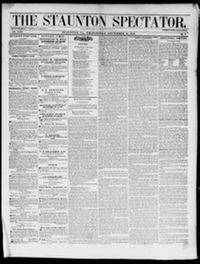
January 8, 1861, The Staunton Spectator

A correspondent of the Alexandria Gazette, writing from the county of Marion, under date of December the 22nd says: Western Virginia is becoming aroused on the great question of disunion. Groaning under a burden of unequal taxation, the people are wide awake to their interest. The forum of the Legislature at Richmond this winter will present an interesting scene for demanding and conceding rights, long withheld, to the west, and long cherished by our eastern brethren in their enjoyment. The west is uncompromisingly in favor of the Union, not merely for the sake of the Union, but for the sacred and inestimable rights it guarantees to the people. “If a State Convention is called, the first question to be settled is the basis of representation. The west will accept of nothing but the white basis as now represented in the lower House. “The Convention, when called, must have power to amend the Constitution of the State, at least in that part which exempts a large portion of the slave property from taxation. “If delegates are to be appointed to a Southern Convention, those delegates must be appointed by districts, arranged on the basis of the white population of the State. “The obvious justice of these demands must commend them to the approval of all just thinking men. If our eastern brethren withhold these rights from the west at this juncture it will take one hundred thousand bayonets from a Southern Confederacy to force western Virginia into a union with the Cotton States. We want all these questions settled before we join co-partners with South Carolina.”

0 comments

On this Day

Civil War Day-by-Day

The Alabama state convention received Commissioner from South Carolina.

North Carolina Senate bill arming the State passed the North Carolina House: yeas 73, neas 26.

The Virginia state legislature passed anti-coercion resolution.

Jacob Thompson , Buchanan’s Secretary of the Interior, went to Raleigh, to persuade the North Carolina Legislature to vote for secession, November 18, 1860. He resigned January 8, 1861, after betraying the sailing of the “Star of the West” to reinforce Fort Sumter.

0 comments

Secret Movements of United States Troops

Civil War Day-by-Day

January 8, 1861, The New York Herald

The rumors which prevailed in this city on Sunday last that there was in the wind’s about Governor’s Island, were the cause of great excitement and public concern. The report, which it now appears was not altogether unfounded, was to the effect that a considerable body of federal troops had been quietly removed from the island garrison to some unknown point. The peculiar situation of affairs in South Carolina, of course, very naturally pointed to that region of country as the destination of the troops. The embarkation and transfer of the soldiers, it is said, were effected during Saturday night last with as little noise as possible. The steamer Star of the West, which arrived at this port from Havana on Monday last, was, as far as we have learned, the capacious vessel selected for the conveyance of the military and warlike stores which were to be sent south. According to the usual practice and in accordance with public advertisement, this steamer should have left New York for Havana and New Orleans yesterday, or this morning; but instead of this, she suddenly disappeared from the harbor at a time when no one expected her departure. The fact is that private arrangements are said to have been made for the charter of the vessel, and the preliminary management had been conducted with so much skill and prudence that nothing was known to the public until the steamer was far away on her trip. It was not long, however, before a ubiquitous reporter got upon the scent. All the secrecy and mystery of the Governor’s Island folks were useless to blind his clear vision. But as all communication with the island was positively interdicted, it was next to impossible to obtain anything like reliable information. That the troops had been embarked during Saturday night, and that the steamer had slipped her cables and put to sea early on Sunday morning, there was scarcely any doubt at all expressed. There were wakeful watchers enough between the Battery and Hamilton avenue to observe the stealthy midnight movement of blue coated soldiery, but the only difficulty was to ascertain their destination. Some people thought that they were sent to Washington, others that they were intended to garrison and protect unoccupied federal forts, but the majority were very clearly of opinion that Fort [continue reading…]

0 comments

Our Washington Correspondence.

Civil War Day-by-Day

January 8, 1861, The New York Herald

WASHINGTON, Jan. 5, 1861.

Among the causes of the prevailing excitement may justly be designated, as one of the most productive, the telegraphic correspondence from the seceding States. Much of this may be quite correct, but a very great deal of it is extremely exaggerated, and not a little totally fictitious. So many startling rumors, conflicting with and often contradictory of each other, are born to this city along the wires, that the public, unable to discriminate between the false and true, are kept in a perpetual fever of anxiety. Such were the stories that were tossed about for two days past, as to Major Anderson’s communications being cut off–as to the means taken by government to open the way of communication with him at any hazard–of his constant expectation of attack–and of his having intimated to the secessionists forces that if they intended to assault Fort Sumter they ought first to remove the women and children from the city of Charleston. All these reports fan the popular fire into flame, and hence the notice taken in the Senate today of a system of misrepresentation, not less detrimental to the public welfare than annoying to individuals. No despatches, however, are more deserving of censure, as unjust and mischievous, than those sent from this city to the Charleston Mercury and the Columbia Carolinian, during the time Commissioners’ honored us with their presence. They were calculated to mislead the people of South Carolina, and drive them on in their career.

have it however, from reliable authority, that Messrs. Barnwell and Orr, at least (if not Mr. Adams), would exert their influence on their return home, to prevent any attack upon Fort Sumter, and generally to stay all proceedings that would precipitate armed collision with the federal forces. And this intelligence has contributed to allay somewhat the painful solicited which the bogus despatches of yesterday were calculated to produce.

0 comments

John has been appointed Lieutenant in the State Service, and is now at Fort Moultry, where he is rather uncomfortable.

Journal of Meta Morris Grimball
Meta Morris Grimball

[January] 7th

       Elizabeth arrived from the North with her Aunt, who went on to Butlers Island, where she is to stay for some time, a month at least. E. looks very well in health and in spirits, and gives a pleasant account of her visit. John has been appointed Lieutenant in the State Service, and is now at Fort Moultry, where he is rather uncomfortable.—

       William was at the Arsenal with his Company, Lewis is in some trouble about his commission and has gone to Town to day to see the Governor about it, he, the Gov. does not seem to be a very military chief and consequently is in rather a tight place. Berkley has joined the Sumpter Guards, which is an elderly and sedate bodey of men with an elderly and sedate Captain, John Russel of King Street, a book seller.—Charles sent me word by Elizabeth that Harry thought it proper for the security of the Northern property to have it made over to himself but felt a delicacy in proposing it. I spoke to Papa, & he wrote to Harry this morning,—& sent the letter by Lewis. E. has gone to town to see her friends & brothers.

0 comments