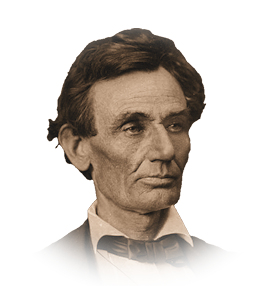
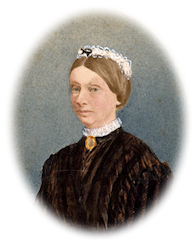
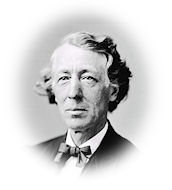
The Choctaws

News of the Day
1860s newsprint

Daily Gazette & Comet [Baton Rouge, LA], December 20, 1860

It is generally understood that there is a secret organization in the State of Georgia, known as “The Choctaws,” pledged to precipitate the State into a revolution, even should the sovereign people in convention, decided against immediate secession. The organization is said to number, at this time, more than ten thousand men, who are well supplied with all the improved impliments  and munitions of war.—Atlanta Confederacy.

0 comments

Secession Ordinance

Miscellaneous document sources, News of the Day

Charleston Mercury  broadside, December 20, 1860

Secession ordinance of South CarolinaWe, the People of the State of South Carolina, in Convention assembled do declare and ordain, and it is hereby declared and ordained, That the Ordinance adopted by us in Convention, on the twenty-third day of May in the year of our Lord One Thousand Seven hundred and eighty eight, whereby the Constitution of the United States of America was ratified, and also all Acts and parts of Acts of the General Assembly of this State, ratifying amendment of the said Constitution, are here by repealed; and that the union now subsisting between South Carolina and other States, under the name of “The United States of America,” is hereby dissolved.


The Charleston Mercury’s “The Union is Dissolved” broadside was the first Confederate publication as South Carolina was the first state to secede. It went to press 15 minutes after the secession ordinance was passed. The editors commented, “Within a very few minutes after the announcement of the secession vote, our messengers arrived . . . in less than fifteen minutes our Extras, containing the long looked for Ordinance, were being thrown off by fast presses and distributed among the eager multitude that thronged under the great banner of the ‘Southern Confederacy.’ As the brief and expressive words of the ordinance were read from our bulletin by the crowd, cheer after cheer went up in honor of the glorious event.” (National Museum of American History)

0 comments

Civil War Day-by-Day

Civil War Day-by-Day

December 20, 1860

  • South Carolina becomes the first state to attempt to secede from the United States.
  • Governor Francis W. Pickens takes office in South Carolina.
  • Governor Francis Pickens of South Carolina demands President Buchanan relinquish control of Fort Sumter and Fort Moultrie.
  • Edwin Stanton becomes Attorney-General in the Buchanan Administration
  • Secretary of War John Floyd orders 113 columbiad cannon and 11 32-pounders from the Pittsburgh arsenal to Ship Island, Mississippi, and Galveston.
0 comments

At the Court of St. James

Diary of George Mifflin Dallas, United States Minister to England 1856 to 1861

1860. December 19.–The message of the President was sent in to Congress on the 4th instant. I got it yesterday. The President has been weighed down by the vast load he carries; his sagacity, firmness, and patriotism have given way under the appalling condition of the country and the violence in his Cabinet. He argues too much, becomes inconsistent, and does vastly more harm than good. His propositions of compromise, as stated, he must know to be impracticable. The Northern States never will repeal their Personal Liberty statutes while the Fugitive Slave Law remains in its present shape. They profess not to be opposed to the Constitution, but to this statutory form of carrying it into execution. It undoubtedly has provisions capable of amendment. These provisions may not make it unconstitutional, but may shock the feelings of many and render it odious. In order to save the Union, the Committee in the House, composed of one from each State, should report on this point, first, an amendment of the law, and, second, the repeal of the acts founded on it. There should be no concession asked except upon compensatory ground; no victory should be awarded to either section. The idea of restoring the old Missouri line, itself a palpable violation of the Constitution, is a weak suggestion. . . .

0 comments

DNC Chairman August Belmont: “I hail… your intention to call… your legislature together for… having the personal-liberty bill of your State repealed.

Civil War Day-by-Day

To Governor WM. SPRAGUE,

Providence, R.I.

New York, December 19, 1860

My Dear Sir,—I have been confined to my bed for the last few days, and therefore was unable to acknowledge the receipt of your favor of 16th inst. before this.

I hail with the most heartfelt satisfaction the expression of your intention to call at once your legislature together for the purpose of having the personal-liberty bill of your State repealed, and I hope sincerely that mature reflection will have confirmed you in that wise and patriotic resolve.

You must see all around you evidences of a healthy reaction in the Northern sentiment, and a return to that spirit of equity and justice which alone can keep the two sections together.

In Boston, and throughout Massachusetts, the leading men of both parties are loud in their clamors for a repeal of the personal-liberty bill of that State. Last evening I was present at an informal meeting of about thirty gentlemen, comprising our leading men, Republicans, Union men, and Democrats, composed of such names as Astor, Aspinwall, Moses H. Grinnell, Hamilton Fish, R. M. Blatchford, etc. They were unanimous in their voice for reconciliation, and that the first steps have to be taken by the North. [continue reading…]

0 comments

DNC Chairman August Belmont: “Mr. Lincoln had proved himself, in his controversy with Douglas, in 1858, a very conservative and unobjectionable man to the South…”

Civil War Day-by-Day

To JOHN FORSYTH,

Mobile, Ala.

New York, December 19, 1860

My Dear Sir,—Your favor of 8th inst. reached me a few days ago, but I was prevented by indisposition from replying to it before. It was very gratifying that you should have deemed my last letter to you of sufficient import to give it a place in your journal, but I regret deeply that so far from advocating the policy of co-operation, and deliberate, united action by the Southern States, for which I appealed to your support, I find your paper as warmly and uncompromisingly for immediate and unconditional secession as ever Yancey has been.

When we Douglas men of the North stood by our colors against the combined onslaughts of the Black Republicans and the administration, we were upheld in our struggle by the consciousness that we were fighting the battle of the Union and the Constitution against fanaticism North and sectionalism South. We fought to the last, and hopefully to the end, because we trusted that our friends at the South would never forsake that glorious cause, even in defeat, which our noble banner-bearer had so fearlessly defended during the canvass in every Northern and Southern State.

Douglas declared repeatedly in that memorable campaign, that the election of Mr. Lincoln was not, in his judgment, a justifiable ground for secession. How do those stand now before the country, who, after having been the most prominent instruments of his nomination, and having adhered to him after this declaration, and now, because he is defeated, forsake the Union-loving principles which were the main hold he had upon the American people? I know that the disunionists at the South taunt those who counsel the more wise, efficient, and patriotic course of seeking redress within the Union, by calling them “submissionists;” but I, for one, would most certainly rather submit to the constitutional election of an opponent than to the terrorism evoked by a faction whose treasonable designs my best efforts had been exerted to defeat. [continue reading…]

0 comments

Present Crisis

News of the Day
1860s newsprint

Bellville [TX] Countryman, December 19, 1860

 Gen. Portis addressed a considerable meeting at Millheim yesterday, on the subject of the present crisis. The Lone Star flag was flung to the breeze.

0 comments

DNC Chairman August Belmont note to Thurlow Weed.

Civil War Day-by-Day
Albany, N.Y.

New York, December 19, 1860

Allow me, though a comparative stranger, to express to you the heartfelt satisfaction with which I have read your very able and patriotic article of last Monday.

The statesmanlike view which you take of our present difficulties, and the wise and conciliatory course which you, with so much truth, counsel as the only remedy which can save this great Republic from untold calamities, must command, not only the warm support of your friends, but also the unqualified respect and admiration of your opponents.

As one of the latter, it gives me much pleasure to convey to you my sincere assurances of these feelings.

I have fought to the last against the great party, of which you have proved so formidable a leader, but I shall never regret our defeat if your wise counsels prevail, and with God’s blessing peace and concord are restored, under Mr. Lincoln’s administration, to our distracted country.

0 comments

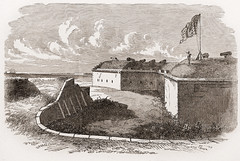
Operations in Charleston Harbor

War of the Rebellion: from the Official Records of the Union and Confederate Armies and Navies
“I propose to connect a powerful Daniels battery with the magazine at Fort Sumter, by means of wires stretched across under water from Fort Sumter to Fort Moultrie, and to blow up Fort Sumter if it is taken by an armed force, and after Lieutenant Snyder and my men have time to escape from it.”

FORT MOULTRIE, S. C., December 19, 1860.

Col. R. E. DE RUSSY,
Commanding Corps of Engineers, U. S. Army, Washington, D.C.:

COLONEL: I have the honor to inform you that I had an interview to-day with General Schnierle (general of division in this vicinity) and several other prominent citizens of Charleston, in relation to the little excitement attending the issue of forty muskets to me at the arsenal on the 17th instant.

The main facts connected with this were communicated in my letter of yesterday.

The interview to-day was satisfactory to me, as I saw that the action of General Schnierle had arisen from his great desire to allay the temporary excitement among some of the citizens. Although I declined to return the muskets until I was directed by the Government so to do, yet I proposed at once to refer the matter to Washington, and accordingly telegraphed to Captain Maynadier, Ordnance Corps, to inquire whether the muskets should be returned to the arsenal or not. Up to this time I have received no answer. The reasons for my doing so are these: General Schnierle asserted that Colonel Huger had assured the governor of this State that no arms should be removed from the arsenal, and Captain Humphreys, military storekeeper, felt himself placed in a peculiar position from having acted contrary to the colonel’s assurance, while on the other hand neither Captain Humphreys or myself had been informed by Colonel Huger that he had made such assurance; neither had we any positive written testimony of the fact. To solve the question, the Ordnance Bureau must be appealed to for a decision, and I did this immediately, in order to allay, as soon as possible, any irritations that might have arisen. I was actuated in all I did by a sincere desire to remove all cause of irritation, so that if the extremists are disposed for violent measures they must force the issue themselves. [continue reading…]

0 comments

A. Hood to Howell Cobb

Miscellaneous document sources

Cuthbert, Ga. Decr. 19, 1860.

Dear Governor, I see by the papers you are to be in Macon tomorrow. I am glad to find you again upon Georgia soil; there is work to be done and nobody doing it. I am fearful of the consequences of such supineness and neglect. Where are all our speakers? We have done what little we can here but there is great need for missionaries in every part of the State. The cry of cooperation is injuring us. While it means submission, it deceives a great many brave and patriotic people who would scorn it if they only knew the result of it.

I think our district is in a very good condition unless there is a great change. 20 out of 24 counties will be true; still to hold our own we want enthusiasm that can only be created by speaking. Can you find time to make two or three speeches in So. West Ga.? Our people are all anxious to hear you, it will do you more good than any speeches you can make. You know our district has always been hostile to you. Can you not find time to remove the hostility? If you can spare a few days let me know so that I can make the appointments. We have had nothing from So. Ca.[i]; if they go out at once we are safe, if not we are in danger. Write me.

P. S.—Benning made us a glorious speech on Monday.


[i] South Carolina


From Annual Report of the American Historical Association for the Year 1911.


0 comments

Thomas R. R. Cobb to Howell Cobb

Miscellaneous document sources

Athens, Dec. 19/60.

Dear Brother, Your appointments are received and a man sent around with hand bills to post them up in each county.

I have barely time to write this to get it into the mail.

A thousand cheers for So. Ca.! We have a torchlight procession tonight.


From Annual Report of the American Historical Association for the Year 1911.

Thomas Reade Rootes Cobb (April 10, 1823 – December 13, 1862) was an American slave owner, lawyer, author, politician, and Confederate States Army officer, killed in the Battle of Fredericksburg during the American Civil War. He is the brother of noted Confederate statesman Howell Cobb

Howell Cobb was an American political figure. A southern Democrat, Cobb was a five-term member of the United States House of Representatives and Speaker of the House from 1849 to 1851. He also served as the 40th Governor of Georgia and as a Secretary of the Treasury under President James Buchanan. Cobb is, however, probably best known as one of the founders of the Confederacy, having served as the President of the Provisional Congress of the Confederate States.

0 comments

Operations in Charleston Harbor

War of the Rebellion: from the Official Records of the Union and Confederate Armies and Navies

CHARLESTON ARSENAL, S.C.,
December 18, 1860.

Capt. J. G. FOSTER,
U. S. Engineer Corps, Sullivan’s Island, S.C.:

DEAR CAPTAIN: The shipment of the forty muskets, &c., has caused intense excitement. General Schnierle called upon me this morning, and assures me that some violent demonstration is certain unless the excitement can be allayed, and says that Colonel Huger assured the governor that no arms should be removed from this arsenal. As the order under which I made the issue to you was dated prior to Colonel Huger’s visit here, I am placed in rather a delicate position. I have pledged my word that they (the forty muskets and accouterments) shall be returned by to-morrow night, and I beg that you will return them to me. I informed General Schnierle that you only desired two muskets, but that I could not issue them without the proper order, but that I had an old order covering the issue of the forty. In view of my pledge that the muskets shall be returned, and the position which Colonel Huger is placed by the issue, I feel satisfied that you will comply with my request. In haste.

Very truly, yours,

F. C. HUMPHREYS,

Military Storekeeper Ordnance, U. S. Army.

_________

FORT MOULTRIE, December 18, 1860

F. C. HUMPHREYS, Esq.,
Military Storekeeper, Charleston Arsenal:

DEAR SIR: I have received your note of this date, begging me to return to the arsenal the forty muskets which I obtained yesterday (in accordance with an order from the Ordnance Department, issued some time since), because of a threatened violent demonstration on the part of some persons of Charleston. You state that [continue reading…]

0 comments

Civil War Day-by-Day

Civil War Day-by-Day

December 18, 1860

  • Pro-Union Senator John Crittenden of Kentucky proposes the Crittenden Compromise, which allowed states south of the old Missouri Compromise line to determine for themselves whether they entered the Union slave or free. Crittenden Compromise fails.
0 comments

Letter to Thurlow Weed from A. Lincoln

Civil War Day-by-Day

SPRINGFIELD, ILLINOIS, December 17, 1860.

My dear Sir: Yours of the 11th was received two days ago. Should the convocation of governors of which you speak seem desirous to know my views on the present aspect of things tell them you judge from my speeches that I will be inflexible on the territorial question; that I probably think either the Missouri line extended, or Douglas’s and Eli Thayer’s popular sovereignty, would lose us everything we gain by the election; that filibustering for all south of us and making slave States of it would follow, in spite of us, in either case; also that I probably think all opposition, real and apparent, to the fugitive-slave clause of the Constitution ought to be withdrawn.

I believe you can pretend to find but little, if anything, in my speeches about secession. But my opinion is, that no State can in any way lawfully get out of the Union without the consent of the others; and that it is the duty of the President and other government functionaries to run the machine as it is.

Truly yours,

A. LINCOLN.

0 comments

Secession Convention in a Church

Frank Leslie’s Illustrated Newspaper

The Baptist Church at Columbia. S. C., Where the Great Secession Convention was held, Dec. 17, 1860The Baptist Church at Columbia. S. C., Where the Great Secession Convention was held, Dec. 17, 1860

from Frank Leslie’s Illustrated Newspaper, January 5, 1961

0 comments

Civil War Day-by-Day

Civil War Day-by-Day

December 17, 1860

  • South Carolina Secessionist Convention is called to order. The convention decides unanimously (169 to 0) to secede from the United States and appoints a committee to draw up the needed documents.
0 comments

Southern Desperation.—”The brutal dastards and bloody-minded tyrants… are now furiously foaming at the mouth.”

Miscellaneous document sources

The Liberator, Boston, November 16, 1860

by William Lloyd Garrison

The election of the Republican candidate, Abraham Lincoln, to the Presidency of the United States, has operated upon the whole slaveholding South in a manner indicative of the torments of the damned. The brutal dastards and bloody-minded tyrants, who have so long ruled the country with impunity, are now furiously foaming at the mouth, gnawing their tongues for pain, indulging in the most horrid blasphemies, uttering the wildest threats, and avowing the most treasonable designs. Their passions, set on fire of hell, are leading them into every kind of excess, and they are inspired by a demoniacal phrenzy. To the South is strikingly applicable, at this hour, the language of the Revelator:—Babylon is fallen, is fallen, and become the habitation of devils, and the hold of every foul spirit, and a cage of every unclean and hateful bird. Her sins have reached unto heaven, and God hath remembered her iniquities. In the cup which she hath filled, fill to her double. In her is found the blood of the cup which she hath filled, fill to her double. In her is found the blood of prophets and of saints. How much she hath glorified herself, and lived deliciously, so much torment and sorrow give her. Therefore shall her plagues come in one day, death, and mourning, and famine; and she shall be utterly burned with fire; for strong is the Lord God who judgeth her. So much for dealing in slaves, and souls of men, trampling upon all human rights, defying God and his eternal law, and giving unlimited indulgence to every sensual and devilish inclination! Rejoice over her, thou heaven, and ye holy apostles and prophets; for God hath judged the great whore, which did corrupt the earth with her fornication, and hath avenged the blood of his servants at her hand.

Never has the truth of the ancient proverb, Whom the gods intend to destroy, they first make mad, been more signally illustrated than in the present condition of the Southern slaveholders. They are insane from their fears, their guilty forebodings, their lust of power and rule, their hatred of free institutions, their consciousness of merited judgments; so that they may be properly classed with the inmates of a lunatic asylum. Their dread of Mr. Lincoln, of his [continue reading…]

0 comments

1840 and 1860

News of the Day
1860s newsprint

The Constitutional [Alexandria, LA], December 15, 1860

 From the Cincinnati Enquirer.

It seems but recently since we were in the midst of the political campaign of 1840, yet twenty years have flown since that year of humbug, log cabins, hard cider and gold spoons. Twenty years is a great period in the life of man, and a whole generation have grown up who have no recollection of the days of “Tippecanoe and Tyler too.” It is difficult to realize the fact that 1840, with all its memories, has faded back so far into the history of the past, and that we now stand as far from that era as we did in 1840 from the date of the Missouri Compromise of 1820; yet, when we look around us we see the indications of the tremendous ravages which time has made and the momentous changes he has wrought.

Nearly all the statesmen of 1840—those who were connected with the administration at that time—are in their graves, or have long ceased participating in public affairs. Of Mr. Van Buren’s cabinet of 1840, John Forsyth, Secretary of State, Levi Woodbury, Secretary of the Treasury, Mahlon Dickinson, Secretary of the Navy, John M. Miles, Post-master General, Benjamin F. Butler, Attorney General, Joel R. Poinsett, Secretary of War, are all dead save Butler. There is not a man in the United States Senate who was there in 1840. Nearly all of the prominent Senators are dead, such as Clay, Calhoun, Webster, Silas Wright, Col. Benton, Berrien, Preston, Poindexter and Choate.

In the House of Representatives, save Thos. Corwin, we look in vain for any of the members of 1840. General Jackson and John Quincy Adams, venerable ex-Presidents, were then on the stage of action and exercising a great influence on public affairs. Two of the chiefs of political strife in 1840, Mr. Van Buren and John Tyler, still alive, in extreme old age, but long ago ceasing to take part in the strife of the times. In other respects, what mighty changes have these two brief decades that separate us from 1840 witnessed! What a difference between the United States of 1840 and the United States of 1860! Not a mile of telegraph wire then in all our borders; few railroads completed—scarcely any in the West; stages and steamboats the general method of traveling; the daguerrean art, invented in 1839, hardly known in 1840; seventeen millions of people in the United States then, nearly double, or thirty-two millions of people now; California, Oregon and our Pacific coast, now the seat of flourishing members of the American Union, as little known to the people almost as the centre of Africa is now; gold scarce and hard to obtain, now it comes almost at the rate of a million dollars a week from California. When we looked at Europe, we beheld Nicholas of Russia, Louis Phillippe in France, the Duke of Wellington in England, Metternich in Austria, as the great representative men of that continent. They have all gone!

The youthful Queen of Great Britain, then just married—now a grandmother! Hardly a steamer upon the ocean, and fifteen or sixteen days considered a quick passage to Europe. The vast continent of Australia has been lifted up from the mists of the southern ocean, which had obscured it from the light of civilization, and become a great member of the family of nations, with an illimitable future before it. The twenty years past have indeed been active ones in the history of the world, and will keep the pen of the future historian busy to record their momentous events. The twenty years from 1820 to 1840 were comparatively quiet and unimportant. The world was taking its rest, and recovering from the tremendous shocks and the unparalleled exertions of the wars of Napoleon and the French Revolution of 1789. What a retrospect flashes across our memory as we look back to 1840! The annexation of Texas; the war with Mexico; the conquest of California; the French revolution or rather the European revolution of 1848; the downfall of Louis Phillippe and the rise of Napoleon III; the coup d’etat; the alliance of France and England against Russia; the Crimean war; the struggle before Sebastopol—a siege which has no parallel in modern times; the mutiny in India; the war of France with Austria, and the appearance again of the French eagles upon the Italian plains, from which they had been so long banished.

At home the rise and progress of the abolition agitation, which has been marching steadily to the overthrow of our Union and the destruction of our national prosperity, has been one of the leading features of the times. We saw its germs in 1840, when Birney, as an abolition candidate for President, received but seven thousand votes in the United States. Then it was neglected and despised. Little or nothing was said about Slavery in 1840, outside of the small band of Birney fanatics. Log cabins, hard cider, coon-skins and gold spoons, intermixed with something about the currency and hard times, were then the great themes of discussion and political dispute. Trivial and contemptible as was the electioneering trash and slang of 1840, how infinitely preferable to the pestiferous issues which have been made between North and South in 1860! What patriot would not like to see now a national and political campaign conducted without the appearance of the inevitable negro! Who would not rejoice to see the harmony and fraternal feeling which characterized the intercourse of the States in 1840, again returned! Politics were then national, having their adherents in every State in the Union—not as now divided upon geographical lines. From 1840 to 1860 we had a continual and unnecessary wrangle in the United States upon this slavery question. The strands of our Union have been frittering away with a slow and gradual process. It has implanted the bitterest feeling of sectional hate between brethren—between States of the same Union. No bondsman has been freed, no benefit has occurred from it to any human being! Still it is going on with accelerated pace and there are not wanting prophets who tell us that this second from 1840 will witness the final of the American Union as now constituted!

When we look at the changes since 1840, we are filled with wonder as to what will be the condition of the world and of this country in 1880, another period of two decades. The men to-day, who are now acting their parts upon the busy stage of public life, will have vanished as completely as those of 1840 have now. What an effect it would have on the actions of many, if not all of our people, could the great scroll of future history be unloosed by the hand of Omnipotence, and its mighty events—its tale of individual short-sightedness, of party madness and national convulsions—be exposed to view!

0 comments

I do hope there will be no war, but a peaceful arrangement of our difficulties.

Journal of Meta Morris Grimball
Meta Morris Grimball

[December] 15 [1860]

It seems strange that we should be in the midst of a revolution so quiet, and plentiful, & corn for table up here. Everything goes on as usual, the planting, the negroes, all just the same; & a great Empire tumbling to pieces about us; and a great pressure in the money market in all parts of the country; westrange to say; were never so easy, and I hope thankful. Went yesterday to see Charlotte, Mrs Wayne, & Papa found the last at home, Charlotte had gone up to Mrs Barings on a visit. They think of purchasing a place in Buncomb and of Mrs B’s place. Mrs Wayne begged to be excused she was putting her garret to rights.

Charles is coming up to day on his way to Philadelphia to bring Mrs Britten & Elizabeth home. I have made up my mind now for E to remain until January and do not care for her to come before.—

We pass our evenings very pleasantly with music and reading & sewing & talking, the boys Lewis & John are agreeable. L belongs to a company in this parish and seems most anxious for a war, a restless young man: I do hope there will be no war, but a peaceful arrangement of our difficulties.—

Mr Aiken paid us a long morning visit waiting for some friends by the cars. Mr & Mrs James baby & nurse, she was a Miss Lowndes and he a rich New York beau, a funny time they take for their visit; but her Mother & father live on Santee in winter where he had a plantation they are all rich and high born. Mrs Robert Lowndes was a Miss Livingston the daughter of Mrs Maturin Livingston who was a Miss Lewis, the only child of Gen. Lewis who left a fortune of a Million which Mrs M. L. on her death divided equally among her 9 children giving thereby great satisfaction, to all of them. I recollect Mrs Robert Lowndes when she first came to Charleston as a bride, and a most beautiful bride, she was dressed in the highest fashion & taste & exceedingly refined and elegant looking.

Received a letter from Elizabeth today, she & her Aunt will leave Norwood [?] the 1 week in January it is very cold there now every thing covered with snow. –

An envelope came containing cards from Emma Watts & Lieut. Carr U.S.A. just married. When her father died nearly 2 years since the family had each 10 thousand dollars which is a very neat fortune and Emma although not beautiful is very sensible and amiable. It seems to me all the world are getting married except my children. I wish a suitable offer would come in Elizabeths way & that it would please her to accept it & that Berkley could find some nice girl with a little money to get married to. John will be obliged to resign & then he must try something else. – All this troubles me.

0 comments

The Gold Regions of Kansas

Frank Leslie’s Illustrated Newspaper

Pike’s Peak and Long’s Peak.

The Kansas Gold Region - View of Auraria and Denver City, Cherry Creek - from a sketch made by Col __ H. Hutett, expressly for Frank Leslie's Illustrated Newspaper
The Kansas Gold Region—View of Auraria and Denver City,
Cherry Creek—from a sketch made by Col D. H. Huyett,
Expressly for Frank Leslie’s Illustrated Newspaper

That  part of the Rocky Mountains which is called Pike’s Peak was discovered, or rather named by Lieutenant Z. M. Pike, who made an exploring expedition under the authority of the United States Government in 1807. According to his measurement, its altitude is ten thousand five hundred and eighty-ono feet above the level of the prairie, or eighteen thousand feet above the level of the sea. It was then renowned among the savage tribes for its wonderful altitude, and regarded with almost a species of veneration by their untutored minds.

Street in Gregory's Gulch, Pike's Peak. - From a sketch made on the spot, expressly for Frank Leslie's Illustrated Newspaper, By Col. D. H. Huyett
Street in Gregory’s Gulch, Pike’s Peak. –From  a sketch made on the spot,
expressly for Frank Leslie’s Illustrated Newspaper, By Col. D. H. Huyett

The gold regions, according to some accounts, extend about two hundred to three hundred miles north and south, and from fifty to one hundred east and west, and are situated to the south-west of Nebraska, the west of Kansas and the north of New Mexico. Lieutenant Pike states that in his wanderings, from the 14th November to 27th January, the Peak towered into the skies, the great object of vision, and was never out of sight except when they were in some deep valley. The summit of this remarkable mountain is
bare of vegetation, and is constantly covered with snow. The snow line is above one thousand eight hundred feet above the three small mountain lakes described by Fremont. Standing upon this peak, you behold innumerable streams and lakes, and a vast stretch of prairie to the south-east, east and north-east, dotted here and there with immense herds of buffalo; while around, on either hand, the ridge is split into chasms and fissures, between which rise their lofty walls, terminating with slender minarets and columns, which impress one with the conviction that this chain of mountains was thrown up by some terrible convulsion of Nature. The summit rock is gneiss, succeeded by sienite. and feldspar continues to the snow line, where is found the feldspathic granite.

Mrs. Holmes, of Lawrence, Kansas, who was the first woman to ascend Pike’s Peak, gives a very glowing description of the magnificent view from its summit. She says, “Think of the huge rocks projecting out in all imaginable shapes, with the beautiful eve-greens, the pines. the firs, the spruces interspersed among them, and then the clear, cold mountain stream, which appears as though it started right out from under some great rock, and on it goes, rushing, rumbling and hissing down over the rough mountain side, now sparkling in the sunbeams, and hiding behind some huge rock. Extending, as far as the eye can reach, lie the great level plains, stretched out in all their verdure, while the winding of the Arkansas River is visible for many miles.”

The reader will perceive that the mountain sides are covered with creeks or rills, which stream down, and at certain places rest and form small lakes. The washings of the eastern slopes are particularly rich. Along the banks of Cherry Creek, the Fontaine que Bouille, the South Platte, and smaller affluents in the vicinity of Pike’s Peak, surface explorations have shown an abundance of precious metals. Farber along there are equally promising appearances in the Three Parks, and southward, among the huge formations that skirt the Rio Bravo del Norte.

Pine trees of immense size and is large tracts grow along the base of the mountains, and the spruce is scattered along the mountain side. Some of the streams are skirted by timber, and upon the plains are large groves of noble great pines that shoot up a hundred feet high, clear of limbs and straight as an arrow. The sides of the Mountains are indurated with gullets, as they are termed, caused by the melting of the snows, and these are made serviceable by being converted, as it, were, into patent washers.

The towns of Auraria and Denver, of which we give faithful and graphic pictures, are situated near the month of Cherry Creek, where the roads from Bent’s Fort and Taos meet. They are remarkable proofs of the agency of gold in the creation of towns, and are doubtless destined to become great cities, even when the present gold excitement bas passed away. The climate of these regions is so delightful and invigorating, that no more favorable spots can be found for health and longevity. Auraria and Denver cities are situated at the base of Long’s Peak, a mountain summit of the Rocky Mountains. Pike’s Peak is situated 38.25 north latitude, and 105 west longitude. Long’s Peak is in 40.10 north latitude, and 106 west longitude.

Sketch of Gregory's Quartz Mill, Pike's Peak, Made on this Spot by Col. D. H. Huyett, Expressly for Frank Leslie's Illustrated Newspaper
Sketch of Gregory’s Quartz Mill, Pike’s Peak, Made on this Spot by Col. D. H. Huyett,
Expressly for Frank Leslie’s Illustrated Newspaper

Mr. Greeley in his amusing work thus describes Auraria and Denver cities. as they appeared to him in June, 1859: ” The rival cities of Denver and Auraria front on each other from either bank of Cherry Creek, just before it is lost in the South Platte. The Platte has its sources in and around the South Park of the Rocky Mountains, a hundred miles southwest of this point; but Cherry Creek is headed oil from them by that river, and winding in its northward course of forty or fifty miles over the plains, with its sources barely touching the mountains, is a capricious stream, running quite smartly when we carne here, but whose broad and thirsty sands have since drank it ail up at this point, leaving the log foot-bridges which connect the two cities as useless as an ice-house in November.

“Of these rival cities. Aurelia is by far the more venerable—some of its structures being, I think, fully a year old, if not more. Denver, on the other hand, can boast of no antiquity beyond September or October last. In the architecture of the two cities there is, not withstanding, a striking similarity—cotton-wood logs, cut from the adjacent bottom of the Platte, roughly hewed on the upper and under sides and chinked with billets of spit cotton-wood on the inner, and with mud on the outer side, forming the walls of nearly or quite every edifice which adorns either city. Across the centre of the interior, from shorter wall to wail, stretches a sturdy ridge pole, usually in a state of nature, from which “shooks” or split saplings of cotton-wood, their split sides down, incline gently to the transverse or longer sides; on these (in the more finished strucures) a coating of earth is laid; and, with a chimney of mud-daubed sticks in one corner, a door nearly opposite and a hole beside it representing or prefiguring a window, the edifice is complete. Of course, many have no earth on their covering of shooks, and so are liable to gentle inundation in the rainy season; but, though we have had thunder and lightning almost daily, with a brisk gale in most instances, there has been no rain worth naming such here for weeks, and the unchinked, barely shook covered houses, through whose sides and roofs you may see the stars as you lie awake nights, are decidedly the cooler and the airier. There is a new hotel nearly finished in Auraria, which has a second story (but no first story) floor; beside this, mine eyes have never yet been blessed with the sight of any floor whatever is either Denver or Auraria. The last time I slept or ate with a floor under me (our wagon box and mother earth excepted) was at Junction City, nearly tour weeks ago. The Denver House, which is the Astor House of the gold region, has walls of logs, a floor of earth with windows and roof of rather flimsy cotton-sleeting; while every guest is allowed as good a bed as his blankets will make.”
0 comments

Mrs. Lincoln and Her Sons

Frank Leslie’s Illustrated Newspaper

Mrs. Abraham Lincoln, Wife of the President Elect, And Sons. - From a Photograph by P. Butler, of Springfield, IllMrs. Abraham Lincoln, Wife of the President Elect, And Sons
From a Photograph by P. Butler, of Springfield, Ill

Mrs. Lincoln, the wife of the President elect, is a Southerner by birth, the daughter of a planter, and brought up in all the traditions of conservatism. Mrs.Lincoln (n e Mary Todd) is the daughter of the Hon. Robert S. Todd, of Lexington, Kentucky, and was educated with great care by her excellent parents, and is much respected and beloved by all who come within the sphere of her social influence. She was united in marriage with the President Elect in November, 1842, and the fruits of this marriage were four sons, three of whom are now living. The eldest., a lad of seventeen, is now studying at Harvard College, and is highly esteemed by his comrades and tutors. The two youngest are represented in the picture we this day present to our readers, and are fine specimens of our Western youth.

Our engraving is from a photograph by P. Butler, of Springfield, Ill.


Related material:

Mary, Willie, and Tad Lincoln, c1860
Mary, Willie, and Tad Lincoln, c.1860

A surviving 1861 carte de visite print shows the family in approximately the same poses. It was likely printed from the same negative that was used for the print that the engraving for Frank Leslie’s paper was based on or another negative that was shot during the same photo session.

0 comments

Thomas R. R. Cobb to Howell Cobb

Miscellaneous document sources

Athens [Ga.], Dec. 15/60.

Dear Brother, By all means come directly to Athens or else send me a list of appointments for you to speak in the following counties—Franklin, Banks, Habersham-, Union, Lumpkin, Forsyth, Hall and Gwinnett. We have trouble above here, and no one but yourself can quell it. Have you seen my letter on Co-operation? I intended it for the So. Ga. Convention. I mailed a copy to Col. Gregg at Columbia


From Annual Report of the American Historical Association for the Year 1911.

Thomas Reade Rootes Cobb (April 10, 1823 – December 13, 1862) was an American slave owner, lawyer, author, politician, and Confederate States Army officer, killed in the Battle of Fredericksburg during the American Civil War. He is the brother of noted Confederate statesman Howell Cobb

Howell Cobb was an American political figure. A southern Democrat, Cobb was a five-term member of the United States House of Representatives and Speaker of the House from 1849 to 1851. He also served as the 40th Governor of Georgia and as a Secretary of the Treasury under President James Buchanan. Cobb is, however, probably best known as one of the founders of the Confederacy, having served as the President of the Provisional Congress of the Confederate States.

0 comments

Gloom and Depression is Still Over This City

Miscellaneous document sources

Mrs. Jacob Thompson[i] to Mrs. Howell Cobb.

Washington City, Dec. 15/60.

My Dear Mrs. Cobb, … I did not see Gov. Cobb after you left. Mr. Thompson went to see him every day and often invited him to take dinner with us but he never could spare the time. His resignation created great excitement here. Mr. Thomas[ii] has entered upon the discharge of his duties but I have not seen any of the family since their new laurels have fallen upon them. There is great excitement now that Genl. Cass has resigned[iii], and before I finish this letter I will see Mr. Thompson and write you the truth about it. The same gloom and depression is still over this city—no parties, no dinners, every body looks sad—but I think we Southern people ought to be looking up, for all seems to be going well with us, but I am afraid to hollow until I am entirely out of the woods. I think if you could have heard some of the Black Republican speeches that have been made here even your devotion to this Union would have given away. You will read the President’s proclamation for fasting and prayer on the 4 of Jan., that tells whether he sees the danger or not. Miss Lane and I continue our silence on political questions—I go to see her and the President as often as I can because I know they feel their old friends are many of them deserting them. I will do all I can to stand by them until the 4 of March, and hope that day may come quickly. It is also rumored that Mr. Clayton[iv] has sent in his resignation to Mr. Thomas—if it is accepted Mr. Thompson says he will try to give Clayton the Comr. of Patents which will give him a place until the end of our term. Mr. Thompson has received an appointment from the Gov. of Missi. to go as Commissioner to N. Carolina, and leaves here on Monday the 17 and I am going with him, he will be absent a week or ten days and I can’t stay here by myself. The President approves of his going. Mr. Lamar[v] 3 has returned home to be a candidate for the State convention. He is very reasonable on the secession question, does not go as far as your husband nor mine, but he amuses me, telling me how delighted he is with his present home and position in the College and yet he can’t stay there more than a month at a time. . . .

All your friends here enquire a great deal about you. The Gwins are all well and go up to the Capitol every day. I have been up twice, the galleries crowded. I have made no Senatorial calls except upon old friends. I shall not call upon or leave cards upon a single B. Republican or Douglas. “Straws tell which way the wind blows,” and to be prepared for any emergency, I had ½ doz. packs of cards for Mr. Thompson struck off and left off the Sec. of the Interior, as I have no idea of his cards ever being left anywhere as Mr. Ex. Sec. as some of the old broken down politicians here do. Gov. and Mrs. Floyd came over to spend the evening with us last evening and I enjoyed it very much. I find I have a great deal of time to stay at home since you left, as I have no place to go to that fills up your house. I felt like some duty was left undone if I did not go to see you every day for several weeks before you left. Some company has just come in, social visitors, this bad day, and I will lay my pen aside until they are gone.

After dinner.—Mr. Thompson returned from his office after 5 o’clock and brought Mr. Ashe of N. Carolina home to dine with us; he gives good accounts of the secession movement in that state., and will go with us to Raleigh on Monday. Maj. McCulloch has just left, and he has the steam high up for secession and war if we can’t do better. Dr. Maynard (the gun man) has been here two hours trying to sell Mr. Thompson 3.000 guns, so my head is nearly crazy and my heart goes pit-a-pat, at any sound I hear. What are we all coming to? Where is the end of all this trouble? I trust there is a kind Providence whose hand is directing this great revolution and will all go down to his glory and our happiness. . . .

P. S.—Mr. Thompson says it is all true Genl. Cass has resigned and is a miserable man.


[i] Wife of the Secretary of the Interior in Buchanan’s Cabinet.
[ii] Philip F. Thomas, of Maryland, Secretary of the Treasury ad interim.
[iii] From the secretaryship of state.
[iv] Philip Clayton, Auditor of the Treasury.
[v] L. Q. C. Lamar.


From Annual Report of the American Historical Association for the Year 1911.

Sixteen-year-old Catherine Jones, the daughter of a wealthy Mississippi planter, and Jacob Thompson, 28, married in 1838, The couple had one child, Macon Caswell Thompson, born the next year. In addition to a success in his law practice and as a cotton planter, Jacob Thompson was involved in state politics and was elected to Congress in 1839, where he served six terms in the House of Representatives as chairman of the Committee on Public Lands and later as chairman of the Committee on Indian Affairs. In 1857, President James Buchanan appointed him Secretary of the Interior.

Jacob resigned at the outbreak of the American Civil War and was appointed Inspector General of the Confederate States Army. In 1864, Jefferson Davis asked Thompson to lead a delegation to Canada, where he appears to have been leader of the Confederate Secret Service. From here, he is known to have organised many anti-Union plots and was suspected of many more, including a possible meeting with Lincoln’s assassin, John Wilkes Booth.

0 comments

Presumptuous

Turning on the Light: A Dispassionate Survey of President Buchanan’s Administration, From 1860 to its Close, by Horatio King

Washington, Dec. 14, 1860.

My Dear Sir,—It may seem presumptuous in me, an humble subordinate, to address you on great matters of state, but my apology, if any is necessary, must be that I am an American citizen, with all that ardent love for my country and its government which should ever animate the true patriot, and especially in times of danger like the present.

I am amazed that some decided action is not taken by the Government to cut itself entirely loose from disunion and disunionists. Look at the Constitution newspaper of to-day—and, indeed, I may say, of every issue since the Presidential election. Its whole bearing is for disunion; and, say what you will, the Government is held, and will be held, in a great degree responsible for it. It was the organ to which the message was confidentially intrusted, and its columns are daily filled with advertisements which it receives and can receive only by favor of the President, for its circulation would not secure them to it by law.

I saw, as every person of observation must have seen, the very day after the election, that its influence was directed toward secession, and I felt myself compelled immediately to call the attention of the President to it, as I did in a letter, a copy of which I herewith inclose for your perusal.

I know how the President is pressed by the secessionists, and I sympathize fully in all reasonable measures to be taken within the Union to secure the rights of the South, and consign to infamy the leaders of black republicanism at the North; but, as his devoted friend and the friend of every member of his Cabinet, I cannot restrain myself from the expression of the deepest astonishment and mortification that the Government should for one moment allow itself to occupy such a position as to afford even its enemies a pretext to charge it with giving the slightest countenance, either directly or indirectly, to secession or secessionists.

Is it not possible to relieve the administration from the infamy which must attach to it for all time, so far as it is made responsible for the course of the Constitution, and for keeping men in responsible positions who are known and avowed disunionists? For God’s sake, let us see the Government placed squarely and unequivocally on the side of the Union!

With great respect,

Very sincerely your friend,

Horatio King.

Hon. J. S. Black, Attorney-General U. S.

0 comments

Appointment of Alabama Commissioners to Confer with North Carolina Authorities

Miscellaneous document sources

EXECUTIVE DEPARTMENT OF ALABAMA

Montgomery, December 14, 1860.

Whereas, the election of Abraham Lincoln, a Black Republican, to the Presidency of the United States, by a purely sectional vote, and by a party whose leading and publicly avowed object is the destruction of the institution of slavery as it exists in the slaveholding states, and whereas, the success of said party will greatly endanger the peace, interests, security and honor of the slaveholding States and make it necessary that prompt and effective measures should be adopted to avoid the evils which must result from a Republican administration of the Federal Government, and as the interests and destiny of the slaveholding states are the same, they must naturally sympathize with each other, they therefore, so far as may be practicable, should consult and advise together as to what is best to be done to protect their mutual interests and honor. Now therefore, in consideration of the premises, I, Andrew B. Moore, Governor of the State of Alabama, by virtue of the general powers in me vested, do hereby constitute and appoint Hon. Robert H. Smith in conjunction with Hon. I. W. Garrott, a citizen of said State, a Commissioner to the Sovereign State of North Carolina, to consult and advise with his Excellency Gov. John W. Ellis and the members of the Legislature now assembled, as to what is best to be done to protect the rights interests and honor of the slaveholding states, and to report the result of such consultation in time to enable me to communicate the same to the convention of the State of Alabama, to be held on Monday, the 7th day of February next.

In testimony whereof I have hereunto set my hand, and caused the great seal of the State to be affixed in the City of Montgomery, this the 14th day of December, in the year &c aforesaid.

Andrew B. Moore, Governor.


The Magazine of History With Notes and Queries, Vol. III No. 1, January 1906, page 50

0 comments