Village Life in America.

Village Life in America, 1852 – 1872, by Caroline Cowles Richards

December. – I went with the girls to the lake to skate this afternoon. Mr Johnson, the colored barber, is the best skater in town. He can skate forwards and backwards and cut all sorts of curlicues, although he is such a heavy man. He is going to Liberia and there his skates won’t do him any good. I wish he would give them to me and also his skill to use them. Someone asked me to sit down after I got home and I said I preferred to stand, as I had been sitting down all the afternoon! Gus Coleman took a load of us sleighriding this evening. Of course he had Clara Willson sit on the front seat with him and help him drive.

Thursday.–We had a special meeting of our society this evening at Mary Wheeler’s and invited the gentlemen and had charades and general good time. Mr Gillette and Horace Finley made a great deal of fun for us. We initiated Mr Gillette into the Dorcas Society, which consists in seating the candidate in a chair and propounding some very solemn questions and then in token of desire to join the society, you ask him to open his mouth very wide for a piece of cake which you swallow, yourself, instead! Very disappointing to the new member!

We went to a concert at the Seminary this evening. Miss Mollie Bull sang “Coming Through the Rye ” and Miss Lizzie Bull sang “Annie Laurie” and “Auld Lang Syne.” Jennie Lind, herself, could not have done better.

December 15.–Alice Jewett, Emma Wheeler and Anna are in Mrs. Worthington’s Sunday School class and as they have recently united with the church, she thought they should begin practical Christian work by distributing tracts among the neglected classes. So this afternoon they ran away from school to begin the good work. It was so bright and pleasant, they thought a walk to the lake would be enjoyable and they could find a welcome in some humble home. The girls wanted Anna to be the leader, but she would only promise that if something pious came into her mind, she would say it. They knocked at a door and were met by a smiling mother of twelve children and asked to come in. They sat down feeling somewhat embarrassed, but spying a photograph album on the table, they became much interested, while the children explained the pictures. Finally Anna felt that it was time to do something, so when no one was looking, she slipped under one of the books on the table, three tracts entitled “Consolation for the Bereaved,” “Systematic Benevolence” and “The Social Evils of dancing, card playing and theater-going.” Then they said goodbye to their new friends and started on. They decided not to do any more pastoral work until another day, but enjoyed the outing very much.

Christmas.–We all went to Aunt Mary Carr’s to dinner excepting Grandmother, and in the evening we went to see some tableaux at Dr Cook’s and Dr Chapin’s at the asylum. We were very much pleased with the entertainment. Between the acts Mr del Pratt, one of the patients, said every time, “What next!” which made every one laugh.

Grandfather was requested to add his picture to the gallery of portraits of eminent men for the Court Room, so he has had it painted. An artist by the name of Green, who lives in town, has finished it after numerous sittings and brought it up for our approval. We like it but we do not think it is as good looking as he is. No one could really satisfy us probably, so we may as well try to be suited.

I asked Grandmother if Mr Clarke could take Sunday night supper with us and she said she was afraid he did not know the catechism. I asked him Friday night and he said he would learn it on Saturday so that he could answer every third question any way. So he did and got along very well. I think he deserved a pretty good supper.

0 comments

“The situation is deplorable already….It is impossible to be merry when one’s country is gasping for breath.”—George Mifflin Dallas, United States Minister to England

Diary of George Mifflin Dallas, United States Minister to England 1856 to 1861

1860. December 23. –The Arabia brings the news that Secretary Cobb has resigned. He goes then to join the Disunionists, who, in Georgia, object to joint, but are in favor of separate, secession. Mr. Cobb is forty-five years of age; before he becomes sixty, he will have discovered that a good cause is really only injured by violence, and best promoted by calm and steady action; he will then have become, for he has ample ability, a safe American statesman.

The news in no respect diminishes the gloom of affairs in the United States. The situation is deplorable already, and worse is in prospect. I think it at once proper and becoming to manifest sympathy with my countrymen in their present trials. I have, therefore, declined Mr. Bates’s invitation to the New-Year festivities at Sheen. It is impossible to be merry when one’s country is gasping for breath.

China news is highly interesting. The first Napoleon has been always condemned by the British press for despoiling the academies and temples of Italy of their treasures of art, which he collected in his gallery of the Louvre. Still, they vindicated the burning of our Capitol and White House in 1814 by Ross; they bombarded the superb private residence of Prince Woronzow at Odessa; and here they are again, this time conjointly with the French, avowedly plundering and carrying off the ornaments and comforts of an imperial summer palace! War necessarily leads to excesses, which every effort should be made to restrict as much as possible. What conceivable benefit to the cause in which they are engaged could the allies derive from purloining pictures, statuary, and articles of novelty? But such are the two heads of European civilization. The French have made a separate convention, after the Treaty of Peace, bargaining for liberty to carry off coolies (hem!), for a recognition of Catholicism throughout China, and an indemnity of twelve millions of dollars! Pretty well for Louis Napoleon, and better, considering his looting, for Marshal Montauban.

0 comments

Georgeanna Muirson Woolsey to her sisters in Europe.– “Alarming news has been received from Charleston.”

Woolsey family letters during the War for the Union

Dear Girls: Mother and Abby have just come down from Fishkill, Mother declaring that she feels like a different person in consequence of her visit. We are none of us making a time over Christmas presents this year. Abby has had a little bureau just to fit shirts made for Mr. Prentiss, who was in high delight while they lived abroad because he had a drawer to keep his things in. No calls will be received at No. 8 this New Year and indeed I don’t think there will be many made, people are so depressed about the times.

The papers today report from Washington that “alarming news has been received from Charleston. Apprehensions of immediate collision with the Federal government are entertained. Influential Northern men are doing their utmost to avert the calamity. The intention of the people of North Carolina is to seize the forts and arsenals and to prevent the government from collecting the revenues. Despatches have been received stating that the forts would be taken in less than twenty-four hours. The Cabinet is in council. It has not transpired what course the government will pursue. A naval fleet will probably be despatched to Charleston. The amendment of the Constitution to settle the controversy between North and South forever, by a division of the country from ocean to ocean on the parallel of the Missouri line, is the great subject of discussion.” Notwithstanding all this trouble, and the secession ordinance which was published on Saturday, “the stocks of the North have gone up steadily for some days both before and after the fulmination of the ordinance. Never was the strength of the business condition of the northern and central states more decisively proved than now.” I hope you are interested in all this; politics are the only things talked of among all classes of men and women here in this country, now, and foreign affairs relating to the “state of Europe” are comparatively of no importance. In fact, [continue reading…]

0 comments

Secession Should be Thundered from the Ballot Box

Miscellaneous document sources

Robert Toombs to the People of Georgia (telegram).[i]

[Washington, D. C, Dec. 23, 1860.]

Fellow Citizens of Georgia:

I came here to secure your constitutional rights or to demonstrate to you that you can get no guarantees for these rights from your Northern confederates.

The whole subject was referred to a committee of thirteen in the Senate yesterday. I was appointed on the committee and accepted the trust. I submitted propositions, which so far from receiving decided support from a single member of the Republican party on the committee, were all treated with either derision or contempt. The vote was then taken in committee on the amendments to the Constitution proposed by Hon. J. J. Crittenden, of Kentucky, and each and all of them were voted against, unanimously, by the Black Republican members of the committee.

In addition to these facts, a majority of the Black Republican members of the committee declared distinctly that they had no guarantees to offer, which was silently acquiesced in by the other members.

The Black Republican members of this committee of thirteen are representative men of their party and section, and, to the extent of my information, truly represent the committee of thirty-three in the House, which on Tuesday adjourned for a week without coming to any vote, after solemnly pledging themselves to vote on all the propositions then before them on that date.

The committee is controlled by Black Republicans, your enemies, who only seek to amuse you with delusive hope until your election, in order that you may defeat the friends of secession. If you are deceived by them, it shall not be my fault. I have put the test fairly and frankly. It is decisive against you; and now I tell you upon the faith of a true man that all further looking to the North for security for your constitutional rights in the Union ought to be instantly abandoned. It is fraught with nothing but ruin to yourselves and your posterity.

Secession by the fourth of March next should be thundered from the ballot-box by the unanimous voice of Georgia on the second day of January next. Such a voice will be your best guarantee for liberty, security, tranquillity, and glory.


[i] From the True Democrat, Augusta, Ga., extra edition, Dec. 24, 1860.


From Annual Report of the American Historical Association for the Year 1911.

Robert Augustus Toombs was an American lawyer, planter, and politician from Georgia who became one of the organizers of the Confederacy and served as its first Secretary of State. He served in the Georgia House of Representatives, the US House of Representatives, and the US Senate.  In the Confederacy, he served in Jefferson Davis’ cabinet as well as in the Confederate States Army, but later became one of Davis’ critics.

0 comments

Civil War Day-by-Day

Civil War Day-by-Day

December 23, 1860

  • President Buchanan, tipped to upcoming problems for Secretary of War John Floyd, requests his resignation.
0 comments

The Last Delegates from South Carolina in the Congress of the United States

Miscellaneous document sources

Harper’s Pictorial History of the Civil War, October 1861

The Last Delegates from South Carolinain the Congress of the United States

Top: Representative Lawrence M. Keitt, Representative John McQueen, Representative Milledge Luke Bonham

Middle: Senator James Chesnut, Senator James Henry Hammond

Bottom: Representative William Waters Boyce,  Representative John D. Ashmore, and Representative William Porcer Miles


Note: Even though this was published late in 1861, the Harper’s Weekly version was published December 22, 1860, so it has more relevance at this point 160 years after the beginning of secession, since this blog is progressing through events 160 years later.

0 comments

Will he come this year?

News of the Day
1860s newsprint

Daily Gazette & Comet [Baton Rouge, LA], December 22, 1860

Will the ship of the driver be heard this year, will his footprint be found on the chimney side, and the tap at the door when the new year comes, clothed in the garments of promise? Santa Claus, will come, young folks. He will visit you just as others in the time gone by. Even now, he is filling his pipe again, and his rein-deer team is waiting to be loaded with the handsome things at Capdevielle’s, Bogel’s, Heude’s, Rauhman’s and Stewart’s. He will bring all these things to the house-top and down the chimney, as he has done before, and will not mash the trumpets, or soil the white satin dress of the doll for Nelly.—Jolly old fellow he, and yet not old, for his face wears no wrinkles; it is smooth and bright with the smiles of delight gathered here and there, as he drives his car, to distribute the things selected. He gives at the tightness of the times, but not to sadness; his face is as bright as ever.—Look for him little folks—go to bed early and dream that you see him when he comes at the hour of twelve, or sleep with an eye open and realize the fact.

0 comments

Country Life

News of the Day
1860s newsprint

The Constitutional [Alexandria, LA], December 22, 1860

 Within the last forty years country life has quietly and almost imperceptibly undergone great changes, and, under the influence of modern discoveries and inventions, will, ere long, be wholly revolutionized. The pursuits and amusements of our parents are not our pursuits and amusements, nor has anything new come in to supply the place of what has passed away. The whole tenor and complexion of country life has changed, and that change consists in the country having become more and more dependent on the towns. Whether in pursuit of business, pleasure, or information, men leave the country and visit some neighboring city. Agriculture is the only rural avocation, and country is mere plantation life. The private social festive board is rarely spread; the barbecues, with its music and its dance, is obsolete and almost forgotten; the report of the following [sic—fowling]-piece disturbs not the slumber of the woods or fields; the huntsman’s horn is not heard, the cry of the hounds, and the clattering hoofs of pursuing steeds enliven but rarely the dreary monotony of country life. The boys, like men, look to visiting town for amusement, and neglect their traps and snares, their guns, and their boats, and their fishing tackles, their dogs and their riding horses. The anvil rings no more under the sturdy strokes of the stalwart smith, the shoemaker has ceased to ply his awl, the seamstress neglects her needle, and the sounds of the shuttle and the spinning-wheel are forgotten. Our fields are clothed in living drapery of black negroes, black mules, black birds, and black crows, and there and there a forlorn looking master or overseer. Our bodies are in the country, our souls are in town. There used to be far more variety, more leisure, more refinement, and more social enjoyment, in the country than in town. Each farm was a little community, producing within itself most of the necessaries and luxuries of life, and each neighborhood a little world within itself, with its store, its post-office, its church, its school-house, its carpenters, blacksmiths, tanners, tailors, doctors, lawyers and farmers. Men used to make fortunes in town and retire to the country to enjoy them. Hospitality was unbounded, and the guests always in attendance. Now the tables are sometimes spread, but the invited guests have gone to the city or the springs.

Men used to go to town to labor and to make money, and return to the country to enjoy it. How sadly is this changed. The country is the scene of mere monotonous agricultural labor—labor neither lightened by variety nor relieved by amusements. Men endure country life merely to make money, and go to town to spend it—to cease work and give themselves up to enjoyment.  Steam, and other modern inventions and improvements, but principally steam, has effected these great changes, and will bring about, ere long, much greater. Towns are become the foci of all art, industry, education, wealth, amusement, and civilization. They will rob the country at a distance of its wealth and its civilization, and only shed their enlivening rays over little neighborhoods that encircle them. Countries with many and large towns will become enlightened, powerful, and wealthy; countries without them, dreary, poor, ignorant, weak, dependent, and tributary.

It has become cheaper to visit New York or Saratoga than to keep an equipage to visit our neighbors, and as every one goes now to cities and watering-places, ’tis there we are most likely to meet with our friends, neighbors, and acquaintances. Railroads and steamboats enable farmers to send daily to town for every article they need, and this breaks up country stores, villages, and mechanic shops. Men are wholly segregated in the country, and meet each other in the cities in pursuit of business or pleasure. Our daughters mope and pine at home, and desire to visit town for amusement, or for religious, social, moral, and intellectual association. Our little girls beg to be sent to school in town, in order that they may see something of the world. Our boys long for the holidays and hoard every cent they can get, in order that they may go to town and see the great world—the theatre, the legislature, the ships, the printing establishments, the factories, and the great stores. Our wives, too, wish to go to town because there is no society in the country, because there is nothing going on to improve the minds of their children, because there are no openings for business or any sort in the country, in which a talented or industrious child can get a living or attain reputation. The women all hate the country, and they are right, for in the country woman is now a mere fixture, with few occupations and no associations. The domestic manufacturing, sewing, knitting, weaving, cutting, and making the clothes for her children and the negroes, which she formerly superintended and took part in, gave some interest and variety to life. These occupations superseded and done away with, and visiting all tending downward, has left woman solitary and disconsolate. The negroes are the most social of all human beings, and after having hired in town, refuse to live again in the country.

No doubt the census will exhibit proofs of our theory. It will be found that population increases much more rapidly in all well located towns, than in the country. This tendency to aggregate population in the cities, will be of great advantage to the South, which has all along suffered much from the opposite tendency. Mr. Jefferson has taught us that cities were evils. So they are, great evils to distant country people that trade with, but great blessing to their neighbors. They afford variety of occupation, increase wealth, and improve civilization in their immediate vicinities, by robbing their distant customers. They hoard the wealth which their far-off customers make. The wealth of London, of New York, and of Paris, is not made in those cities, but transferred to them by trade, from a tributary world. Agriculture as the sole or common pursuit, impoverishes a people; and the larger their crops, the greater the draft on their land, and the more rapid the process of impoverishment.

We must have cities, towns, and watering-places, in the South for country life is daily becoming more unpopular; and unless we have cities at home, our rich people will spend half their time and all their money abroad. We must not leave trade, commerce, fashion, manufactures, taste, education, and public amusements, to take care of themselves, and to pursue their natural courses and direction. The great centers of fashion, trade, manufacturers, literature, and education, are all without the South, and all exploitate, tax, and fleece the South. If we let things alone, they will daily grow worse for us; and the great foreign centers will daily become more wealthy, enlightened, and attractive, while we daily become poorer, more ignorant, and dependent. We must make country life tolerable, nay, fashionable, by bringing the country nearer to the town. We must have many small towns, and in each State at least one city. We must have attractive centers at home, or become daily more and more the tributaries and dependents of centers abroad.

 * * * * *

 Town life and country life are both required, in order for the full development of human character. He who has lived always in the country is a mere rustic or clown; but he who has spent his whole life in town, is a far more awkward, uncouth, and artificial character. His notions are narrower than the rustic’s, because there is more of the world in the country than in the city. A Londoner is proverbial for his narrow notions, his bad English, his vulgar conceit, and his uncouth deportment. But cockneys are not peculiar to London. Every town rears them; and the smaller the town the more intense the cockney. To mistake London for the world, makes a man ridiculous; to mistake a small town for the world, makes him absurd.

Country youths should spend some years of their lives in business or at school, in town. It not only varies and enlarges their experience but it teaches them orderly, systematic, and industrious habits. Every pursuit in life is carried on more systematically in town than in country; and men are more industrious, because they gain their daily bread by their daily work, while in the country, people, rich or poor, can idle away half their time, and get along tolerably well. Two years as clerk in a store in a city, is the proper education for a farmer. He learns to keep accounts, and becomes habituated to calculating and balances, expenses and profits, outgoings and incomings. Merchants always make the best farmers.—De Bow’s Review.
0 comments

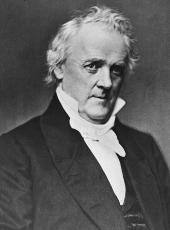
President James Buchanan.—”No time for resolutions of kindness.”

Turning on the Light: A Dispassionate Survey of President Buchanan’s Administration, From 1860 to its Close, by Horatio King

(Private.)

Washington, 22d December, 1860.

My Dear Sir,—I have received your favor of the 20th inst, and rejoice to learn the change of public sentiment in your city. Still secession is far in advance of reaction, and several of the cotton States will be out of the Union before anything can be done to check their career. I think they are all wrong in their precipitation, but such I believe to be the fact.

It is now no time for resolutions of kindness from the North to the South. There must be some tangible point presented, and this has been done by Mr. Crittenden in his Missouri Compromise resolutions. Without pretending to speak from authority, I believe these would be accepted though not preferred by the South. I have no reason to believe that this is at present acceptable to the Northern senators and representatives, though the tendency is in that direction. They may arrive at this point when it will be too late.

I cannot imagine that any adequate cause exists for the extent and violence of the existing panic in New York. Suppose, most unfortunately, that the cotton States should withdraw from the Union, New York would still be the great city of this continent. We shall still have within the borders of the remaining States all the elements of wealth and prosperity. New York would doubtless be somewhat retarded in her rapid march; but, possessing the necessary capital, energy, and enterprise, she will always [continue reading…]

0 comments

The Feeling in South Carolina

News of the Day

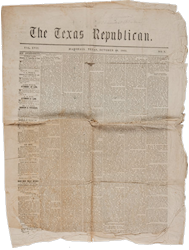
[Marshall] Texas Republican, December 22, 1860

The following letter from a lady, published in the Charleston Mercury, exhibits the determined feeling in South Carolina in favor of secession,

In your paper of yesterday you paid an eloquent, and I would fain believe, a deserved tribute to the patriotic devotion of women.

At this period, our sex at the South have grave duties to perform. We should animate our husbands and sons, strengthen them for the great conflict that is at hand, by every means in our power. Let us, women of Carolina, prove that the same noble spirit which incited the matrons and maidens of ’76, is alive and glowing in the spirits of their descendants. I am myself a widowed mother, but I have said to my three sons, that if any one of them should be craven enough to desert their State now, to temporize in her councils, or be backward if her honor should call them to the field—let him never look upon my face again! In the thrilling words of Volumnia to the wife of Coriolanus, “Here me profess sincerity. Had I a dozen sons—each in my love alike, and none less dear than thine, and my good Marcius—I had rather have eleven die nobly for his country, than one voluptuously out of action.”

A Carolina Mother.

I think I have done all that I can, in writing, to prove to you that the people of South Carolina are in earnest in this secession movement. Do not accuse me of being prolix, if I am compelled to reiterate this statement. For what with the flaming, exaggerated, and, in some cases, false accounts, published in the New York Herald on the one hand, and the deprecating sneers of the Opposition journals on the other, the people of the North have to-day about as accurate a notion of the state of mind of the inhabitants of interior Senegambia, as they have of the popular feeling in South Carolina and the adjacent States.

0 comments

The Law Offices of Abraham Lincoln

Frank Leslie’s Illustrated Newspaper

Frank Leslie’s Illustrated Newspaper, December 22, 1860

The First Law Office Rented in 1837 By Abraham Lincoln, President-Elect, in Hoffman's Row, Third Division, Up-Stairs, Springfield, Ill.
The First Law Office Rented in 1837 By Abraham Lincoln, President-Elect, in Hoffman’s Row, Third Division, Up-Stairs, Springfield, Ill.

When Abraham Lincoln first went to Springfield, nearly thirty years ago, he ran for the Legislature, was elected, and served several terms.  In 1837 he opened a law office under the firm of Stuart & Lincoln, in Hoffman’s Row.  This house, which still stands, is a very humble edifice, and the step from thence to the White House is a stride which even Lincoln at that time but little dreamed of.

The Present Law Office of Abraham Lincoln, The President Elect, in Fifthe Street, West Side of the Public Square, Springfield, Ill.— from a sketch by our Special Artist

Mr. Lincoln’s present law office is situated in Fifth street, west side of of State Square.  He is in partnership with Mr. Herndon, a lawyer of considerable ability and reputation.  We give a sketch of both offices, taken by our special artist.  They present a contrast almost as wide as the last step in the career of their occupant from either the one or the other.

0 comments

Young Man

News of the Day

[Fayetteville, Ark.] The Arkansian, December 22, 1860

Young Man, you look healthy, hearty, why don’t you go to work? You are able to drink whisky and smoke cigars, why don’t you earn the money to pay for them, instead of being a constant drain on your daddy’s pocket? How long do you expect your daddy to live? His money has paid for your education and your law books, or medical books, now out for yourself and don’t lounge on daddy. Resolve to be somebody. If you can’t find work to do with your head, go to work with your hands. “Work!” is the watch work of the age—the safeguard of industry. It won’t hurt you, People will only think more of you, and the young ladies will like you better—at least, the sensible portion of them—for they know if you ever marry, you’ll be able at least to give your wife a good living. Then cut loose from the nursery strings and hang no longer to daddy, waiting for something to happen, but go to work, and make something happen. Don’t wait forever for the iron to get hot before you strike, but go to work and make it hot by striking! Strike long, loud, late and early; and whether you become rich or not, (riches are not for all) you will enjoy a quiet conscience and a good living, and have the right to hold up your head among men and women, not as a drone, but as a pillar of society.

0 comments

Governor Letcher of Virginia

Frank Leslie’s Illustrated Newspaper

Frank Leslie’s Illustrated Newspaper, December 22, 1860

Governor Letcher of Virginia; Frank Leslie's Illustrated Newspaper, December 22, 1860

Governor Letcher of Virginia; Frank Leslie's Illustrated Newspaper, December 22, 1860-1
….
Image7

Click on image to view article.

0 comments

Christmas 1860

Harper’s Weekly

Harper’s Weekly, December 22, 1860

Chistmas Day Then and Now

Christmas-Day Now and Then
The Adoration of the Shepards
&
What Santa Brought Us.

Dreams and Reality - Santa Claus; Harper's Weekly, December 22, 1860

Dreams and Reality—Santa Claus

Click on image to view larger version

0 comments

Lincoln to Stephens — For Your eyes Only

Miscellaneous document sources
To Alexander H. Stephens
For your own eye only.
          
Springfield, Ills. Dec. 22, 1860
Hon. A. H. Stephens
           My dear Sir
                                 Your obliging answer to my short note is just received, and for which please accept my thanks. I fully appreciate the present peril the country is in, and the weight of responsibility on me.
          Do the people of the South really entertain fears that a Republican administration would, directly or indirectly, interfere with their slaves, or with them, about their slaves? If they do, I wish to assure you, as once a friend, and still, I hope, not an enemy, that there is no cause for such fears.
          The South would be in no more danger in this respect than it was in the days of Washington. I suppose, however, this does not meet the case. You think slavery is right and should be extended; while we think slavery is wrong and ought to be restricted. That I suppose is the rub. It certainly is the only substantial difference between us.
                    Yours very truly
A. Lincoln          


Alexander H. Stephens, in Public and Private: With Letters and Speeches, Before, During, and Since the War by Henry Cleveland; National Publishing Company, 1866 – Confederate States of America – 833 pages

0 comments

The Seceding South Carolina Delegation

Harper’s Weekly

Harper’s Weekly, December 22, 1860

The Seceding South Carolina Delegation, Harper's Weekly, December 22, 1860.


Representative Lawrence M. Keitt, Representative William Waters Boyce, Senator James Chesnut, Representative John McQueen, Representative John D. Ashmore. Senator James Henry Hammond, Representative Milledge Luke Bonham, and Representative William Porcher Miles

From photographs by Mathew Brady

Ascribed by some to Winslow Homer


0 comments

Civil War Day-by-Day

Civil War Day-by-Day

December 22, 1860

  • South Carolina selects 3 commissioners to arrange for delivery of public lands, including Fort Moultrie and Fort Sumter, to the independent state.
0 comments

“These orders are strictly confidential.”—Operation in Charleston Harbor

War of the Rebellion: from the Official Records of the Union and Confederate Armies and Navies

WAR DEPARTMENT,
Washington, December 21, 1860.

Major ANDERSON,
First Artillery, Commanding Fort Moultrie, S.C.:

SIR: In the verbal instructions communicated to you by Major Buell,   you are directed to hold possession of the forts in the harbor of Charleston, and, if attacked, to defend yourself to the last extremity. Under these instructions, you might infer that you are required to make a vain and useless sacrifice of your own life and the lives of the men under your command, upon a mere point of honor. This is far from the President’s intentions. You are to exercise a sound military discretion on this subject.

It is neither expected nor desired that you should expose your own life or that of your men in a hopeless conflict in defense of these forts. If they are invested or attacked by a force so superior that resistance would, in your judgment, be a useless waste of life, it will be your duty to yield to necessity, and make the best terms in your power.

This will be the conduct of an honorable, brave, and humane officer, and you will be fully justified in such action. These orders are strictly confidential, and not to be communicated even to the officers under your command, without close necessity.

Very respectfully,

JOHN B. FLOYD.

0 comments

Operations in Florida

War of the Rebellion: from the Official Records of the Union and Confederate Armies and Navies

SENATE CHAMBER, December 21, 1860.

Hon. JOHN B. FLOYD,   Secretary of War:

SIR: You will oblige me by a statement of the officers connected with the Army of the United States who were appointed from Florida, their rank, and pay.

Respectfully yours,

D. L. YULEE.

0 comments

Indian News

News of the Day

Navarro Express [Corsicana, TX], December 21, 1860

We make the following extract from a letter received by Maj. W. P. Darling from Parker county. It speaks for itself. They need assistance. Will our citizens, who are beyond danger, extend it to them?

 Dec. 2nd, 1860

Maj. H. P. Darling,

Sir: —Our country is in a great state of commotion at this time. The Indians have made a descent upon us; have killed one man in about ten miles of this place, and most inhumanely shot and abused a woman. After beating her with rawhides and shooting her, they scalped her and left her to die. Her corpse was brought to town yesterday, for burial, and I heard a gentleman who saw it, say that it was a most heart rending spectacle. They also took about four hundred head of horses in the county.

They are now trying to make up a company to protect our frontier; and also want men to pursue and chastise them. We want men, arms and means to assist us, and, we do hope our sister counties who have peace within their borders will come to our aid. Their depredations in Jack county have been terrible—murdering and stealing as they go. The men here are enlisting generally, and I fear the women and children will be left to their cruelties. Any assistance from your county will be thankfully received by all here, and especially by us weak women. Please let our condition be known around you; and if none will come to help us fight, if they will help us with means to support those who are fighting we will be thankful.

We have this minute heard that we are surrounded by them, and the people are about to fly to some place for protection.

If any one about you is disposed to help us with means, they can correspond with John Prince, county clerk, at Weatherford.

I am too much excited to add more.

 Yours respectfully,
Fannie S. Davidson.

0 comments

Military Company

News of the Day

Navarro Express [Corsicana, TX], December 21, 1860

A military company was formed in this place last Saturday, immediately upon the adjournment of the meeting. They are to hold themselves in readiness to fight for the State at any point desired. The officers elected are as follows: W. W. McPhaill, Captain; H. D. Garden, First Lieutenant; W. A. Lockhart, Second Lieutenant; Thos. J. Haynes, Orderly Sargent .

We trust this company, with the addition of those formed in Freestone, Limestone and other counties, will soon visit the frontier and pay their respects to the Indians who are now murdering the citizens and destroying the property in that section. It does appear to us that when such news is received as we this week publish from Jack, Palo Pinto and Parker counties, the citizens of the lower counties would rise en masse, as one man, and go there and wipe the last Indian from the face of the earth at once! Think of the fate of Mrs. Sherman, and remember that you have mothers and sisters, and if you have the heart of a man, go to their assistance, or contribute to enable others to do so.

0 comments

A Diary From Dixie — Secession Ordinance

Civil War Day-by-Day

December 21st.—Mrs. Charles Lowndes was sitting with us to-day, when Mrs. Kirkland brought in a copy of the Secession Ordinance. I wonder if my face grew as white as hers. She said after a moment: ”God help us. As our day, so shall our strength be.” How grateful we were for this pious ejaculation of hers! They say I had better take my last look at this beautiful place, Combahee. It is on the coast, open to gunboats.

We mean business this time, because of this convocation of the notables, this convention.¹ In it are all our wisest and best. They really have tried to send the ablest men, the good men and true. South Carolina was never more splendidly represented. Patriotism aside, it makes society delightful. One need not regret having left Washington.


¹The Convention, which on December 20, 1860, passed the famous Ordinance of Secession, and had first met in Columbia, the State capital.

0 comments

Letter to E. B. Washburne from A. Lincoln

Civil War Day-by-Day

(Confidential.)

SPRINGFIELD, ILLINOIS, December 21, 1860.

My dear Sir: Last night I received your letter giving an account of your interview with General Scott, and for which I thank you. Please present my respects to the general, and tell him, confidentially, I shall be obliged to him to be as well prepared as he can to either hold or retake the forts, as the case may require, at and after the inauguration.

Yours as ever,

A. LINCOLN.

0 comments

Civil War Day-by-Day

Civil War Day-by-Day

December 21, 1860

  • South Carolina representatives withdraw from the U. S. House
0 comments

South Carolina ordinance of secession passed.—Operations in Charleston Harbor

War of the Rebellion: from the Official Records of the Union and Confederate Armies and Navies

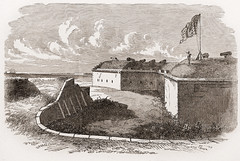
FORT MOULTRIE,   S. C., December 20, 1860.
(Received A. G. O., December 24.)

Col. S. COOPER,
Adjutant-General:

COLONEL: I had the honor to receive and to answer, at half past 1 o’clock this morning, a telegram from the honorable Secretary of War, dated the 19th instant. Captain Foster has, I presume, reported to the Department his compliance with his order.

The ordinance of secession passed the South Carolina Convention to-day.

We are making good progress in our defensive works on the ramparts. Captain Foster finished to-day mounting the guns in the caponiere (or bastionettes), and [will] commence the other caponiere to-morrow. In my letter (No. 6) of December 6, I had the honor of stating my objections to commencing that work, and suggested that I thought it ought to be replaced by some work which could be built in a shorter time. No reply has been made to that suggestion, and Captain Foster says that as the project was approved by the Engineer Department and by the Secretary of War he does not feel authorized to make a change of the plan.

I regret this very much, for if an attack is made whilst that work is going on, our fort can be very easily carried. As I have stated before, I do not feel authorized to interfere with the operations of the Engineer Department.

Captain Foster informs me that Lieutenant Snyder is mounting guns at Fort Sumter as rapidly as possible. I have already given my reasons why I thought that ought not to be done, and have seen no reason for changing that opinion.

Hoping that events may take such a turn as soon to relieve me from the dangerous position my little command is now in,

I have the honor to be, very respectfully, your obedient servant,

ROBERT ANDERSON,

Major, First Artillery, Commanding.

0 comments