The Importance of Artillery

Miscellaneous document sources

Charles F. M. Garnett to Howell Cobb.

Lynchburg, Va., Dec. 28th, 1860.

Dear Sir: I have thought much of the subject of defence in view of the present position of the South. Everybody knows the importance of artillery in modern warfare. Unfortunately the Southern States are entirely unprovided. Now I think Virginia can supply cannon, shot and shell, perhaps to the full extent of our wants.

F. B. Deane Jr. of this place has, in time past, furnished large numbers of shot and shell to the U. S. Government.

He is now prepared to furnish 1,000 per day. These could be conveyed by rail road to any point in Georgia. I think also through him and another establishment, arrangements could be made to furnish a large number of cannon.

My leading idea for coast defence is in cannon of long range, mounted on carriages of broad wheels, which could be easily moved from point to point.

If you write to me on this subject, my P. O. is “Junction, Hanover County Va.”


From Annual Report of the American Historical Association for the Year 1911.

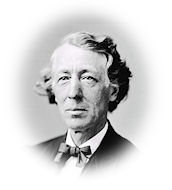
Charles Fenton Mercer Garnett, born October 7, 1810, was a prominent railroad civil engineer and would play a prominent role managing and distributing iron for the railroads  in the confederacy.

Howell Cobb was an American political figure. A southern Democrat, Cobb was a five-term member of the United States House of Representatives and Speaker of the House from 1849 to 1851. He also served as the 40th Governor of Georgia and as a Secretary of the Treasury under President James Buchanan. Cobb is, however, probably best known as one of the founders of the Confederacy, having served as the President of the Provisional Congress of the Confederate States.


0 comments

Forts Sumter and Moultrie

Miscellaneous document sources

The Charleston Daily Courier, December 28, 1860

In order to ascertain truthful statements of the actual damage done to the forts, of the causes of the movement, and of the state of affairs generally, reporters were despatched to the scene during the forenoon. On the way across the harbor, the hoisting of the American flag from the staff of Fort Sumter, at precisely 12 o’clock, gave certain indication that the stronghold was occupied by the troops of the United States. On a nearer approach the fortress was discovered to be occupied, the guns appeared to be mounted, and sentinels were discovered on duty, and the place to give every sign of occupancy and military discipline. The grim fortress frowned defiance on every side; the busy notes of preparation resounded through its forbidding recesses, and everything seemed to indicate the utmost alacrity in the work on hand.

Turning towards Fort Moultrie, a dense cloud of smoke was seen to pour from the end facing the sea. Tlie flagstaff was down, and the whole place had an air of desolation and abandonment quite the reverse of its busy look one week ago, when scores of laborers were engaged in adding to its strength all the works skill and experience could suggest.

In the immediate vicinity of the rear or landside entrance, however, greater activity was noticeable. At the time of our visit, a large force of hands had been summoned to deliver up their implements for transportation to Fort Sumter. Around on every side were the evidences of labor in the fortification of the work. In many places, a portion of the defences were strengthened by every appliance that art could suggest or ingenuity devise; while, in others, the uncompleted works gave evidences of the utmost confusion. On all hands the process of removing goods, furniture, and munitions was yet going on. The heavy guns upon the ramparts of the fort were thrown down from their carriages and spiked. Every ounce of powder and every cartridge had been removed from the magazines; and, in fact, everything like small arms, clothing, provisions, accoutrements, and other munitions of war had been removed off and deposited — nothing but heavy balls and useless cannon remained.

The entire place was, to all appearances, littered up with the odds, ends, and fragments of war’s desolation. Confusion could not have been more complete had the late occupants retired in the face of a besieging foe. Fragments of gun carriages, &c., broken to pieces, bestrewed the ramparts. Sand bags, and barrels filled with earth, crowned the walls, and [continue reading…]

0 comments

Dismantled

Harper’s Weekly

Group of Guns and Gun Carriages Dismantled by Major Anderson at Fort Moultrie—Drawn by an Officer of His CommandGroup of Guns and Gun Carriages Dismantled by Major Anderson at Fort Moultrie—
Drawn by an Officer of His Command

Image published in Harper’s Weekly, January 26, 1861

Description from Fort Moultrie 1809-1930—A Chronological List of Maps & Photos:

Crude woodcut depicting the guns lining Moultrie’s Southwest Angle — those which could most easily be fired at Fort Sumter — lying dismounted amid the charred remnants of their burnt barbette-carriages, after these had been torched by a detachment of the departing Federal garrison under Capt. John G. Foster. This particular engraving was based upon an eyewitness sketch “drawn by an officer” of Major Anderson’s command — possibly the surgeon Capt. Samuel Wylie Crawford, who himself participated in this act of sabotage.

Note: the few loose cannonballs strewn about on Moultrie’s overgrown terreplein, as well as the antebellum sentry-box standing at right, with a shovel propped up against it.

Source: Original woodcut engraving printed atop page 53 of the January 26, 1861 edition of “Harper’s Weekly” (Volume V, Number 213), available in many university and public libraries, as well as in private collections.

______________________
Mike’s notes:

Note – This image has been digitally adjusted for one or more of the following:
– fade correction,
– color, contrast, and/or saturation enhancement
– selected spot and/or scratch removal
– cropped for composition and/or to accentuate subject

0 comments

To President Buchanan:— “… a copy of the full powers from the Convention of the People of South Carolina…,”— Operations in Charleston Harbor

War of the Rebellion: from the Official Records of the Union and Confederate Armies and Navies

WASHINGTON, December 28, 1860.

The PRESIDENT OF THE UNITED STATES:

SIR: We have the honor to transmit to you a copy of the full powers from the Convention of the People of South Carolina, under which we are “authorized and empowered to treat with the Government of the United States for the delivery of the forts, magazines, light-houses, and other real estate, with their appurtenances, within the limits of South Carolina; and also for an apportionment of the public debt and a division of all other property held by the Government of the United States as agent of the confederated States, of which South Carolina was recently a member; and, generally, to negotiate as to all other measures and arrangements proper to be made and adopted in the existing relations of the parties, and for the continuance of peace and amity between this Commonwealth and the Government at Washington.”

In the execution of this trust it is our duty to furnish you; as we now do, with an official copy of the ordinance of secession, by which the State of South Carolina has resumed the powers she delegated to the Government of the United States, and has declared her perfect sovereignty and independence.

It would also have been our duty to have informed you that we were ready to negotiate with you upon all such questions as are necessarily raised by the adoption of this ordinance, and that we were prepared to enter upon this negotiation with the earnest desire to avoid all unnecessary and hostile collision, and so to inaugurate our new relations as to secure mutual respect, general advantage, and a future of good will and harmony, beneficial to all the parties concerned. But the events of the last twenty-four hours render such an assurance impossible. [continue reading…]

0 comments

A New England teacher expresses her views in the South—and reaps the consequences.—Through Some Eventful Years.

Through Some Eventful Years by Susan Bradford Eppes
Susa Bradford Eppes

December 28th, 1860.—We had a fine Christmas. I cannot see that our black folks ever think of John Brown’s raid and if they do it evidently does not interest them much. We are trying to forget it and perhaps the clouds may pass away.

There is trouble at Live Oak. Miss Lottie Church, from somewhere in New England, came in October to teach Lucy and Horton Branch and Uncle William and Aunt Mary liked her very much, the children did, too. She said it was the easiest work she ever had to do, for the children are small and must not be closely confined and Miss Church had a carriage and horses and a good driver to take them out riding every plesant day. She could take them riding in the country or she could go in town and she laughed and said it was the first time she had ever had a carriage at her commnd. She was pretty and vivacious and she was often asked out in the evenings and there was a way provided for her to go when she wished, for it is in the country and she must have an escort, though she thought that entirely superfluous. Yesterday Mr. R. Barnwell Rhett, the editor of the Charleston Mercury, and Mr. Colcock, both of them from South Carolina and both aunt Mary’s brothers-in-law came on a flying visit to Live Oak. At the dinner table politics naturally was the sole topic of conversation and these gentlemen expressed their views as plainly as the King’s English would allow. Miss Church was furious. She forgot that these gentlemen knew nothing of her political faith nor of the land of her nativity and she burst forth in such a wild tirade of invective and abuse that everybody was astonished—to say the least of it. The carriage in which she had taken so many pleasant rides was ordered to be at the door in time to catch the first train out of Tallahassee and that was the last we knew of Miss Lottie Church. I am so glad we have Southern teachers in this neighborhood. Hattie Lester came home on a visit for Christmas; I am going to miss her dreadfully when she goes.

0 comments

On the Verge

Turning on the Light: A Dispassionate Survey of President Buchanan’s Administration, From 1860 to its Close, by Horatio King

(Confidential.)

P. O. Dept., Dec. 28, 1860.

My Dear Sir,—I feel as though we were on the verge of civil war, and I should not be surprised if this city is under the military control of the disunionists in less than one month! There can be no doubt that the Cabinet is divided, and rumor has it that the sympathies of the President, as well as of Mr. Toucey, are with the disunionists in reference to the question of sustaining Major Anderson!   Holt, Black, and Stanton are firm for the Union, there can be no doubt.

Is there no way to bring a healthful influence to bear on the President and Governor Toucey? Northern men all seem to be dumb and paralyzed!

In haste, yours truly,

Horatio King.

Nahum Capen, Esq.

0 comments

The "Old Citadel" that wasn’t seized in Charleston

Miscellaneous document sources
The 'Old Citidel' that wasn't seized in Charleston

This is an artist’s imagined rendering of an actual event that wasn’t much of an event.

From the c1875 engraved print:

United States Arsenal at Charleston, S.C. Seized by the State Authorities, December 28th, 1860

“At the time this picture was drawn the handsome arsenal of the government at Charleston was an object of great interest. An immense amount of ammunition was stored there, and raids upon it were expected at any moment. It was watched and guarded with great care by detachments of the Washington Light Infantry. It was afterward seized by the State authorities.”

The image was originally published as “The Government Arsenal in Charleston, S. C., Guarded by Detachments of the Washington Light Infantry. – From a Sketch by our Special Artist” in the December 1, 1860 issue of Frank Leslie’s Illustrated Newspaper.

The building in this image is a representation of the “old Arsenal.” At the end of 1860, the building was part of The Citadel, a military college. Now an Embassy Suites, the old Citadel was built in 1829 to operate as the State Arsenal. After some disagreement between the state and the Federal Government, a proposal was made to use the facilities as a military academy and the Citadel Academy opened in March of 1843.

A “new” federal arsenal was built less than a mile away. This is the facility that South Carolina troops “seized,” though seizure is a bit of an exaggeration since the facility had been jointly guarded by U.S. troops and S.C. militia. since at least November 20, when Brevet-Colonel Benjamin Hugar arrived to take command.

U.S. Arsenal, Foundry Building, 167 Ashley Avenue, Charleston, Charleston County, SC

In her diary, Mary Boykin Chesnut wrote on December 27, “A letter from Susan Rutledge: ‘Captain Humphrey folded the United States Army flag just before dinnertime. Ours was run up in its place. You know the Arsenal is in sight. What is the next move?’

F. C. Humphreys was the commanding officer of military storekeeper ordinance at the arsenal before the arrival of Hugar.

According to the Medical College of South Carolina which purchased the site of the arsenal in 1963:

On November 7, 1860, Charleston militia seized the Federal Arsenal making it one of the first Federal properties taken by the Confederacy during the Civil War.

South Carolina Governor Francis Wilkinson Pickens ordered the State militia to surround the federal arsenal.

“On the 7th instant I received an order from Colonel Gardner, commanding troops in the harbor, to issue to him all of the fixed ammunition for small-arms (percussion caps, primers, &c) at this arsenal, such a step being advisable, in his estimation, for the better protection of the property in view of the excitement now existing in this city and State. Being allowed no discretion in the matter, his order being peremptory, I proceed to obey it on the afternoon of the 8th.”

Frederick C. Humphrey, Military Storekeeper Ordnance, Commanding, to C.H.K. Craig, Chief of Ordnance, U.S.A., Washington, D.C., November 10, 1860″

The arsenal remained under guard by both Federal and South Carolina troops until December 30, 1860, at which time the South Carolina militia surrounded the arsenal and demanded its immediate surrender.

“Charleston, December 30, 1860 – 10½ o’clock a.m.”

“Sir: I herewith demand an immediate surrender of the U.S. Arsenal at this place and under your charge, and a delivery to me of the keys and contents of the arsenals, magazines, &c. I am already proceeding to occupy it with a strong armed detachment of troops. I make the demand in the name of the State of South Carolina, and by virtue of an order from its governor, a copy of which is inclosed.

” Very respectfully,
” John Cunningham
” Colonel Seventeenth Reg. Inf., S.C.M.

————————————————–

“Sir: This arsenal has to-day been taken by force of arms. What disposition am I to make of my command?”

Frederick C. Humphreys to Capt. Maynadier, In charge of Ordnance Bureau, Charleston, S.C., December 30, 1860

Federal troops withdrew from the arsenal and relocated to Fort Sumter.

0 comments

“Anderson has opened the ball.”—A Diary From Dixie

Civil War Day-by-Day

December 27th.—Mrs. Gidiere came in quietly from her marketing to-day, and in her neat, incisive manner exploded this bombshell: “Major Anderson ¹ has moved into Fort Sumter, while Governor Pickens slept serenely.” The row is fast and furious now. State after State is taking its forts and fortresses. They say if we had been left out in the cold alone, we might have sulked a while, but back we would have had to go, and would merely have fretted and fumed and quarreled among ourselves. We needed a little wholesome neglect. Anderson has blocked that game, but now our sister States have joined us, and we are strong. I give the condensed essence of the table-talk: “Anderson has united the cotton States. Now for Virginia!” “Anderson has opened the ball.” Those who want a row are in high glee. Those who dread it are glum and thoughtful enough.

A letter from Susan Rutledge: “Captain Humphrey folded the United States Army flag just before dinnertime. Ours was run up in its place. You know the Arsenal is in sight. What is the next move? I pray God to guide us. We stand in need of wise counsel; something more   than courage. The talk is: ‘Fort Sumter must be taken; and it is one of the strongest forts.’ How in the name of sense are they to manage? I shudder to think of rash moves.”


¹ Robert Anderson, Major of the First Artillery, United States Army, who, on November 20,1860, was placed in command of the troops in Charleston harbor. On the night of December 26th, fearing an attack, he had moved his command to Fort Sumter. Anderson was a graduate of West Point and a veteran of the Black Hawk, Florida, and Mexican Wars.

0 comments

“Many things convinced me that the authorities of the State designed to proceed to a hostile act.”—Operations in Charleston Harbor

War of the Rebellion: from the Official Records of the Union and Confederate Armies and Navies

FORT SUMTER, S.C., December 27, 1860.
(Received A. G. O., December 31.)

COLONEL: I had the honor to reply this afternoon to the telegram of the honorable Secretary of War in reference to the abandonment of Fort Moultrie. In addition to the reasons given in my telegram and in my letter of last night, I will add as my opinion that many things convinced me that the authorities of the State designed to proceed to a hostile act. Under this impression I could not hesitate that it was my solemn duty to move my command from a fort which we could not probably have held longer than forty-eight or sixty hours, to this one, where my power of resistance is increased to a very great degree. The governor of this State sent down one of his aides to-day and demanded, “courteously, but peremptorily,” that I should return my command to Fort Moultrie. I replied that I could not and would not do so. He stated that when the governor came into office he found that there was an understanding between his predecessor and the President that no re-enforcements were to be sent to any of these forts, and particularly to this one, and that I had violated this agreement by having re-enforced this fort. I remarked that I had not re-enforced this command, but that I had merely transferred my garrison from one fort to another, and that, as the commander of this harbor, I had a right to move my men into any fort I deemed proper. I told him that the removal was made on my own responsibility, and that I did it because we were in a position that we could not defend, and also under the firm belief that it was the best means of preventing bloodshed. This afternoon an armed steamer, one of two which have been watching these two forts, between which they have been passing to and fro or anchored for the last ten nights, took possession by escalade of Castle Pinckney. Lieutenant Meade made no resistance. He is with us to-night. They also took possession to-night of Fort Moultrie, from which I withdrew the remainder of my men this afternoon, leaving the fort in charge of the overseer of the men employed by the Engineer Department. We have left about one month’s and a half of provisions in that fort; also some wood and coal and a small quantity of ammunition. We are engaged here to-day in mounting guns and in closing up some of the openings for the embrasures—temporarily closed by light boards, but which would offer but slight resistance to persons seeking entrance. If the workmen return to their work, which I doubt, we shall be enabled in three or four days to have a sufficient number of our guns mounted, and be ready for anything that may occur.

I am, colonel, very respectfully, your obedient servant,

ROBERT ANDERSON,
Major, First Artillery, Commanding.

Col. S. COOPER,

Adjutant-General.

0 comments

“Orders to spike the guns, cut down the flagstaff, and burn the carriages.”—Operations in Charleston Harbor.

War of the Rebellion: from the Official Records of the Union and Confederate Armies and Navies

FORT SUMTER, S.C., December 27, 1860.

Col. R. E. DE RUSSY,
Commanding Corps of Engineers, U. S. Army, Washington, D.C.:

COLONEL: I have the honor to report that yesterday evening Major Anderson removed his command from Fort Moultrie to Fort Sumter, leaving a guard with me, with orders to spike the guns, cut down the flagstaff, and burn the carriages of those guns that point towards Fort Sumter. This was done. To-day I went to town to negotiate a draft on New York to pay off the men employed on Fort Moultrie. I saw that an attack was to be made somewhere to-night and also that it would not be safe for me to go to town again for some time.

Returning, I brought my family to Fort Sumter, as all guard was withdrawn. At about 4 o’clock a steamer landed an armed force at Castle Pinckney, and effecting an entrance by scaling the walls with ladders, took forcible possession of the work. Lieutenant Meade was suffered to withdraw to this fort.

Soon after dark two steamers landed an armed force at Fort Moultrie, and took forcible possession of that work. While in town the Palmetto flag was hoisted on the custom-house and saluted. Two companies were ordered to surround the arsenal. The movement of Major Anderson was made upon a firm conviction that an attack would be made, and that Fort Sumter would be seized first. In haste.

Very respectfully, your obedient servant,

J. G. FOSTER,

Captain of Engineers.

[Indorsement. ]

DECEMBER 31,1860.

Read the within to Lieutenant-General Scott this morning.

H. G. W.

0 comments

Evacuation of Fort Moultrie

News of the Day

The Charleston Daily News, Dec. 27, 1860

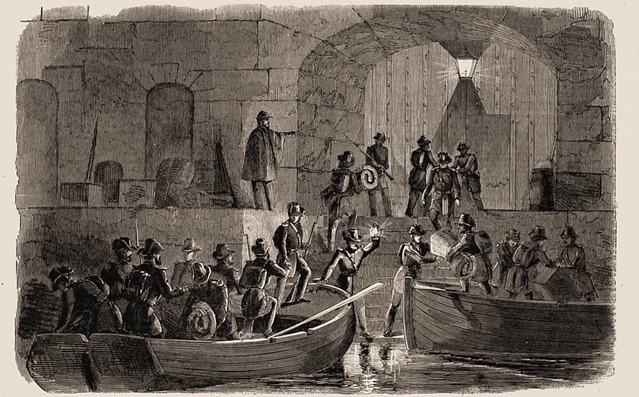
It was given out yesterday at Fort Moultrie, on Sullivan’s Island, that an attack was expected to be made upon it by the people of this city, and that therefore it would be necessary to remove the wives and children of the men to a more secure place. Accordingly three schooners were engaged, which hauled up to the Fort wharf and loaded with what was supposed by the few persons resident on the island, to be the bedding and furniture of the men’s families. It was given out that these vessels were to land their passengers and their goods at Fort Johnson, on James Island; and they hoisted sail and apparently steered for that point.

On last night, at about half-past 9 o’clock, the entire force, with the exception of about six or eight men, embarked on board of their own row boats, and proceeded to Fort Sumter, which they garrisoned at once, and where they met the persons who had left in the schooners, with many munitions of war which they had surreptitiously taken from Fort Moultrie. The few men left at the fortification last night, under the command of Captain Foster, as soon as the evacuation had taken place, at once commenced the spiking of the guns, the cutting down of the flag-staff, and the burning of the gun carriages, the smoke of which could be seen this morning from our wharves.

Fort Moultrie in a mutilated state, with useless guns, and flames rising in different portions of it, will stand to show the cowardly conduct of the officers who had charge of it, and who in times of peace basely deserted their post and attempted to destroy a fortification which is surrounded with so many historical reminiscences that the arm of the base scoundrel who would have ruined it should have dropped from its socket.

The schooners, we are informed, although pretending to sail for Fort Johnson, stood off and on until nightfall when they put into the wharf at Fort Sumter. We feel an anxiety to know the names of these vessels and their captains, and shall endeavor to find them out.

About half-past 7 o’clock last evening two heavy discharges from Fort Moultrie, were heard in the city, and was the object of considerable talk, and the news of this morning satisfied us that it must have been the signal of the debarkation of the troops.

0 comments

Cutting Moultie’s Flagpole Down

Frank Leslie’s Illustrated Newspaper


“Cutting Down the U.S. Flagstaff, Under the Direction of Major Anderson, At For Moultrie, Charleston Harbor, S.C. on Christmas Night, 1860”1,2,3

This is an artist’s imagined rendering of an actual event.

Fort Moultrie 1809-19304

(An) imagined scene, this one representing the “Cutting down [of] the U.S. flagstaff, under the direction of Major Anderson at Fort Moultrie, Charleston Harbor, S.C., on Christmas Night, 1860.” Although the Major himself is depicted as the officer wearing a kepi, sheathed sword, and epaulettes at the lower right-hand corner of this engraving, Moultrie’s flagpole was in reality not cut down until the day after he had evacuated the fort with its main garrison. Instead, this work was done by the engineer Capt. John G. Foster early on the morning of December 27, 1860 — who moreover felled the flagstaff in the opposite direction to that shown here, toppling it outward over the southern parapet so as to crack or “spring” its length of wood, thus rendering it unusable for reinstallation by the South Carolinian forces.

Note: also that while the fort’s West Barracks behind the toiling artillerymen are accurately rendered, the flagstaff itself stood atop the terreplein above Moultrie’s main flight of stairs — not lower down at its Parade-Ground level, as depicted here.


  1. “Cutting Down the U.S. Flagstaff.” Frank Leslie’s Illustrated Newspaper. January 19, 1861.
    Note: I have not been able to find this issue of the paper anywhere online, which is pretty remarkable, since many of the images from the issue are widely available.
  2. Special handed-tinted off-prints were also sold separately. Numerous originals held today by public institutions and in private collections.
  3. This image has been digitally adjusted for one or more of the following:
    – fade correction,
    – color, contrast, and/or saturation enhancement
    – selected spot and/or scratch removal
    – cropped for composition and/or to accentuate subject
  4. Battlefields in Motion – Fort Moultrie 1809-1930 – A Chronological List of Maps & Photos. Accessed December 25, 2020. http://moultrie.battlefieldsinmotion.com/Old-Photos-and-Maps.html.
0 comments

Major Anderson Abandons Fort Moultrie and Moves His Forces to Fort Sumter

Harper’s Weekly

Entry of Major Anderson's Command into Fort Sumter on Christmas Night, 1860
Entry of Major Anderson’s Command into Fort Sumter on December 26, 1860

Image from Harper’s Weekly

0 comments

Sketches of Moultrie

Harper’s Weekly


Sketches of Fort Moultrie by an Officer of Major Anderson’s Command

Description from Fort Moultrie 1809-1930—A Chronological List of Maps & Photos:

“Sketches of Fort Moultrie by an officer of Major Anderson’s Command,” published in the January 12, 1861 edition of Harper’s Weekly. These five illustrations constitute the only visual representation of the defensive measures which were adopted by Moultrie’s besieged Federal garrison, prior to their stealthy evacuation in favor of the greater safety afforded by Fort Sumter on the night of December 26, 1860, in order to avoid any possible take-over by South Carolinian forces. Charleston Harbor 1861 [b&w]

Note: the gun pent-covers being used as sentry-boxes in the upper left-hand corner of this multi-panel print, as well as an additional defensive screen atop the Guardhouse curtain at upper-right; plus the sheer size of the dig needed to produce the wet ditch and glacis around the eastern and southern faces of the fort, as can be seen in the lower-left and lower-right panels; etc.

Source: Copies of this print can be found on Page 24 of the January 12, 1861 edition of Harper’s Weekly (Volume V, Number 211), available through numerous university and municipal libraries. Special hand-tinted off-prints were also produced and sold separately in 1861, which today can be found in both public and private collections.

Image retrieved from:

“Sketches of Fort Moultrie in Harper’s Weekly, 1861.” Open Parks Network. Accessed December 26, 2020. openparksnetwork.org/single-item-view/?oid=OPN_NS%3AFF8EE….

Descriptive Information
Clockwise. Gun Cover used as a shelter for Guard. Entrance or Sally Port. Interior of an embrasure. Sea front constructing bastions. Wall and Ditch – East side.

Fort Moultrie, Charleston County, South Carolina, United States(32.75907,-79.85786)

Medium: illustrations (layout features)
Item Location: Fort Sumter NM/Charles Pinckney NHS Curatorial Storage Facility, located at Charles Pinckney National Historic Site
Box Box 2 of 3 Fosu 19th-c Illustrations Frank Leslie Harpers Weekly London Times, Etc.

Held By Fort Sumter and Fort Moultrie National Historical Park

Permanent Link purl.clemson.edu/1E48BF484DDEB87E6DEB9B2DA72951B6

______________________
Mike’s notes:
Special handed-tinted off-prints were also sold separately from newspapers. Numerous originals held today by public institutions and in private collections.

Note – This image has been digitally adjusted for one or more of the following:
– fade correction,
– color, contrast, and/or saturation enhancement
– selected spot and/or scratch removal
– cropped for composition and/or to accentuate subject

0 comments

Removal of Garrison to Fort Sumter.—Operations in Charleston Harbor.

War of the Rebellion: from the Official Records of the Union and Confederate Armies and Navies

FORT SUMTER S. C.,
December
26, 1860—8 p.m.
(Received A. G. O., December 29.)

COLONEL: I have the honor to report that I have just completed, by the blessing of God, the removal to this fort of all of my garrison, except the surgeon, four non-commissioned officers, and seven men. We have one year’s supply of hospital stores and about four months’ supply of provisions for my command. I left orders to have all the guns at Fort Moultrie spiked, and the carriages of the 32-pounders, which are old, destroyed. I have sent orders to Captain Foster, who remains at Fort Moultrie, to destroy all the ammunition which he cannot send over. The step which I have taken was, in my opinion, necessary to prevent the effusion of blood.

Respectfully, your obedient servant,

ROBERT ANDERSON,
Major, First Artillery, Commanding.

Col. S. COOPER,
Adjutant-General.

[Telegram. ]

WAR DEPARTMENT,
Adjutant-General’s Office, December 27, 1860.

Major ANDERSON, Fort Moultrie:

Intelligence has reached here this morning that you have abandoned Fort Moultrie, spiked your guns, burned the carriages, and gone to Fort Sumter. It is not believed, because there is no order for any such movement. Explain the meaning of this report.

J. B. FLOYD,
Secretary of War.

[ Telegram. ]


CHARLESTON, December 27, 1860.

Hon. J. B. FLOYD, Secretary of War:

The telegram is correct. I abandoned Fort Moultrie because I was certain that if attacked my men must have been sacrificed, and the command of the harbor lost. I spiked the guns and destroyed the carriages to keep the guns from being used against us.

If attacked, the garrison would never have surrendered without a fight.

ROBERT ANDERSON,
Major, First Artillery.

0 comments

A Letter to Stephen A. Douglas from DNC Chairman August Belmont.

Civil War Day-by-Day

To The Hon. S. A. DOUGLAS,

Washington, D.C.

New York, December 26, 1860

My Dear Sir,—I have not written to you during all the troubles which have overtaken us since the unfortunate result of the election.

You, whose patriotic heart beats warmly for our beloved Union, must feel deeply the terrible situation into which we have been thrown by fanatical sectionalism.

I did not like to add to your anguish by any expressions of the dark forebodings with which I look to the future. I cannot, however, refrain from expressing to you my warm and heartfelt admiration for the able and patriotic position which you have taken on Mr. Crittenden’s propositions.

In giving to them your support, and in voting for the restoration of the Missouri compromise line to be carried out to the Pacific, you have given an example of heroic and patriotic self-denial which entitles you to the gratitude of the whole American people. [continue reading…]

0 comments

“I am afraid that no human power can stay the evil.”—DNC Chairman August Belmont

Civil War Day-by-Day

To the Hon. J. J. CRITTENDEN

United States Senate, Washington, D.C.

New York, December 26, 1860

My Dear Sir,—Please accept my respectful thanks for the copy of your compromise propositions, which you were kind enough to send me under your frank.

I have yet to meet the first conservative Union-loving man, in or out of politics, who does not approve of them, and consider them as a most efficacious, if not the only remedy, which can save this great country from ruin and destruction.

Your patriotic course is warmly commended by the good men of all parties, and though your noble efforts may prove of no avail against the sectional fanaticism conjured up by designing politicians, the lasting gratitude of every American citizen, who has the greatness of his country at heart, is due to your statesmanlike stand in defense of the Union and the Constitution.

I am afraid that no human power can stay the evil, since the Republican leaders, by their vote in the committee of thirteen, have proved that they are determined to remain deaf to the dictates of justice and patriotism.

Will the American people permit their country [continue reading…]

0 comments

Militia Occupies Castle Pinckney

Harper’s Weekly

Occupation of Castle Pinkney by the Charleston Militia, December 26, 1860

Image from Harper’s Weekly

0 comments

Civil War Day-by-Day

Civil War Day-by-Day
Spiking the guns at Fort Moultrie

December 26, 1860

  • Major Robert Anderson transfers his small command from Fort Moultrie to Fort Sumter on his own initiative. He felt it was impossible to hold Fort Moultrie against the South Carolina militia and believes the former location will soon be attacked and that the change of location is necessary to “prevent the effusion of blood.” South Carolinians view the troop transfer as a violation of their agreement with Buchanan to maintain the status quo.

(The image is of Anderson’s troops spiking the guns at Fort Moultrie; from Frank Leslie’s Illustrated Newspaper, January 5, 1861)

0 comments

Evacuation of Fort Moultrie, As Envisioned by Will Waud

Frank Leslie’s Illustrated Newspaper

Evacuation of Fort Moultrie by Major Anderson and the United States Troops on Christmas Night, 1860 —The Troops Conveying Powder and other Stores in Sloops to Fort Sumpter (sic)
“Evacuation of Fort Moultrie by Major Anderson and the United States Troops on Christmas Night, 1860 —The Troops Conveying Powder and other Stores in Sloops to Fort Sumpter”1,2,3

This is an artist’s imagined rendering of an actual event.

William Waud’s imagined scene of the evacuation4

Imagined scene of the evacuation of Fort Moultrie by Anderson’s two U.S. Artillery companies on the evening of December 26, 1860, as depicted more than three weeks later in Leslie’s Illustrated Newspaper — from a sketch forwarded by the “special artist” which its publisher had subsequently dispatched to report from Charleston, William Waud.

However, Waud’s English colleague Thomas Butler Gunn would note on Page 28 of Volume 14 of his personal Diaries, how Waud did not actually reach Charleston until ten days after this particular event, so of course did not personally witness the evacuation. And in fact, all historical accounts coincide on that Moultrie’s Federal garrison had not exited their fort by descending the peacetime staircase on its western rampart — as illustrated here by Waud — but rather had simply marched out of its main Guardhouse gates on the north side, which were then shut behind them by the small sapper-party which was to remain inside overnight to complete various acts of sabotage. Capt. Abner Doubleday, for example, would record fifteen years later on Pages 64-65 of his 1876 Reminiscences how:

Everything being in readiness, we passed out of the main gates, and silently made our way for about a quarter of a mile to a spot where the boats were hidden behind an irregular pile of rocks, which originally formed part of the sea-wall. There was not a single human being in sight as we marched to the rendezvous, and we had the extraordinary good luck to be wholly unobserved.

Note: that the peacetime staircase pictured by Waud had in all likelihood been removed during the outnumbered Federal garrison’s efforts to strengthen their defenses, and only restored to the fort’s western rampart once South Carolinian forces had occupied Moultrie — which is how Waud saw and recorded its appearance in January 1861.


  1. “Evacuation of Fort Moultrie.” Frank Leslie’s Illustrated Newspaper. January 19, 1891.
  2. Special handed-tinted off-prints were also sold separately from the weekly newspapers. Numerous originals are held today by public institutions and in private collections.
  3. This image has been digitally adjusted for one or more of the following:
    – fade correction,
    – color, contrast, and/or saturation enhancement
    – selected spot and/or scratch removal
    – cropped for composition and/or to accentuate subject
  4. Battlefields in Motion – Fort Moultrie 1809-1930 – A Chronological List of Maps & Photos. Accessed December 25, 2020. http://moultrie.battlefieldsinmotion.com/Old-Photos-and-Maps.html.
0 comments

Fort Moultrie — December 26, 1860

Diary of US patent clerk Horatio Nelson Taft.

The first two images are imaginings by artists of actual events after they have occurred.

Spiking the Guns in Fort Moultrie, Charleston, S. C., Previous to the Evacuation of the Fort by Col. Anderson and the U. S. Troops

Evacuation of Fort Moultrie, and Burning of the Gun Carriages, On Sullivan's Island, Charleston Harbor, S. C.
Evacuation of Fort Moultrie, and Burning of the Gun Carriages, On Sullivan’s Island, Charleston Harbor, S. C.

Exterior View of Fort Moultrie, On Sullivan's Island, in the Harbor of Charleston, S.C. as it Appeared Previuos to the Evacuation. - from a Photograph by _ Luce, Esq.
Exterior View of Fort Moultrie, On Sullivan’s Island, in the Harbor of Charleston, S.C.
as it Appeared Previous to the Evacuation. – from a Photograph by _ Luce, Esq.

View of the Ramparts of Fort Moultrie, Charleston Harbor, S. C. - from a Photograph by _ Luce, Esq.
View of the Ramparts of Fort Moultrie, Charleston Harbor, S. C. – from a Photograph by _ Luce, Esq.

Plan of the Harbor of Charleston, S. C., Showing the Relative Position of the Several Fortresses


Note:  Where possible, images of or related to  civil war events are being published on the anniversary of the events.  Articles that are associated with images will be published on the anniversary of the original article and will also include the image(s).  For example, the article from  Frank Leslie’s Illustrated Newspaper, January 5, 1861 issue will be published here on January 5, 2021, and will include the above images.

0 comments

Ramparts of Fort Moultrie

Frank Leslie’s Illustrated Newspaper

View of the Ramparts of Fort Moultrie, Charleston Harbor, S. C—from a Photograph by __ Luce, Esq.
View of the Ramparts of Fort Moultrie, Charleston Harbor, S. C
from a Photograph by _____ Luce, Esq.1,2,3

Wood engraving of Moultrie’s rampart and the nearby harbor-beacon. Although originally published in the January 5, 1861 issue of Frank Leslie’s Illustrated Newspaper in New York City — by which date Fort Moultrie had already undergone significant alterations, and been strengthened through erection of additional defenses by its beleaguered Federal garrison, before being abandoned to South Carolinian forces — this peaceful scene depicts the antebellum fort as it had appeared prior to the Secession Crisis and threat of war.4


  1. “Fort Moultrie Rampart.” Frank Leslie’s Illustrated Newspaper. January 5, 1891.
  2. Special handed-tinted off-prints were also sold separately from the weekly newspapers. Numerous originals are held today by public institutions and in private collections.
  3. This image has been digitally adjusted for one or more of the following:
    – fade correction,
    – color, contrast, and/or saturation enhancement
    – selected spot and/or scratch removal
    – cropped for composition and/or to accentuate subject
  4. Battlefields in Motion – Fort Moultrie 1809-1930 – A Chronological List of Maps & Photos. Accessed December 25, 2020. http://moultrie.battlefieldsinmotion.com/Old-Photos-and-Maps.html.
0 comments

Exterior View of Fort Moultrie

Frank Leslie’s Illustrated Newspaper

Exterior View of Fort Moultrie, On Sullivan's Island, in the Harbor of Charleston, S.C. as it Appeared Previuos to the Evacuation.—from a Photograph by __Luce, Esq.
Exterior View of Fort Moultrie, On Sullivan’s Island, in the Harbor of Charleston, S.C. as it Appeared Previous to the Evacuation.—from a Photograph by __Luce, Esq.1,2,3

This is an artist’s imagined rendering of an actual event.

Fort Moultrie 1809-19304

Wood engraving of Moultrie’s southern rampart, barracks, and inner parade-ground as seen from atop the nearby harbor-beacon, with the City of Charleston hazily visible in the far distance. Although originally published in the January 5, 1861 issue of Frank Leslie’s Illustrated Newspaper in New York City — by which date Fort Moultrie had already undergone significant alterations, and been strengthened through erection of additional defenses by its beleaguered Federal garrison, before being abandoned to South Carolinian forces — this peaceful scene depicts the antebellum fort as it had appeared prior to the Secession Crisis and threat of war.

Note: the civilian gentleman strolling Moultrie’s rampart unconcernedly under a parasol, while two women gaze out to sea in the company of a waiting officer — one of these ladies seated comfortably atop the muzzle of a cannon-barrel. All the fort’s artillery have their tompions inserted, and only a half-dozen or so of these pieces are not further encased in wooden gun-covers, as protection against the elements. The large sand-dune so prominently featured in Harper’s Weekly contemporaneous engraving [see preceding entry], is not shown here at all. Instead, two fishermen can be discerned on the beach at left, returning from the Grillage — the rocky shore-side breakwater erected twenty years previously by the U.S. military engineer, Captain Alexander H. Bowman, a spot still well-known today as abounding in flounder, sheephead, and feeding porpoises.


  1. “Exterior View of Fort Moultrie.” Frank Leslie’s Illustrated Newspaper. January 5, 1891.
  2. Special handed-tinted off-prints were also sold separately. Numerous originals held today by public institutions and in private collections.
  3. This image has been digitally adjusted for one or more of the following:
    – fade correction,
    – color, contrast, and/or saturation enhancement
    – selected spot and/or scratch removal
    – cropped for composition and/or to accentuate subject
  4. Battlefields in Motion – Fort Moultrie 1809-1930 – A Chronological List of Maps & Photos. Accessed December 25, 2020. http://moultrie.battlefieldsinmotion.com/Old-Photos-and-Maps.html.
0 comments

George Mifflin Dallas, United States Minister to England: “a most melancholy picture of the condition of the country, politically and financially.”

Diary of George Mifflin Dallas, United States Minister to England 1856 to 1861

1860. December 25. – Christmas. Fahrenheit stood this morning eighteen degrees below freezing point. A rare degree of cold in England, exceeding any we have felt during our residence in London.

Mr. Cobb resigned the Treasury on the 10th instant. He will greatly strengthen the secession movement in Georgia. A dissolution of the Union seems imminent, and, should it occur, will attest and perhaps permanently establish the supremacy of abolitionism; for it will be seen that by the withdrawal of South Carolina, Georgia, Alabama, Mississippi, and Louisiana, let alone the other slave-holding States, Lincoln and the Republican party will at once be placed in an overwhelming Congressional majority, and have a clear field to push their principles to extreme practice. Markoe and Hutchinson, writing on the same day, agree in drawing a most melancholy picture of the condition of the country, politically and financially.

0 comments

Intent to retake S. C. Forts if surrendered

Uncollected Letters of Abraham Lincoln—1917

To Lyman Trumbull

SPRINGFIELD, ILLS. Dec. 24, 1860

Hon. Lyman Trumbull–

My dear Sir. I expect to be able to offer Mr. Blair a place in the cabinet; but I can not, as yet, be committed on the matter, to any extent whatever.

Despatches have come here two days in succession, that the Forts in South Carolina will be surrendered by the order, or consent at least, of the President.

I can scarcely believe this; but if it prove true, I will, if our friends at Washington concur, announce publicly at once that they are to be retaken after the inauguration. This will give the Union Men a rallying cry, and preparation will proceed somewhat on their side, as well as on the other.

Yours as ever

A. LINCOLN.

0 comments