The News

Civil War Day-by-Day

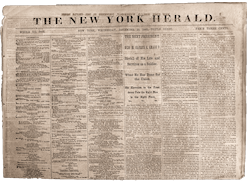
March 9, 1861; The New York Herald

According to our Washington despatches, the reinforcement of Forts Sumter and Pickens has been decided on by the administration of President Lincoln, and the arrangements for carrying out that object are now in active progress. General Scott and the Cabinet secretaries are said to be busy with the plans.

We are informed by one of our Washington correspondents of very important movements in the army and navy ordered by the government. All the naval vessels in the Pacific and the Mediterranean are ordered home to return to Northern ports, and the troops lately under command of Gen. Twiggs, in Texas, numbering twenty five hundred, and those in New Mexico are called to the North.

No movement has yet been made by the Commissioners in Washington from the confederate States towards the negotiations with which they are charged. Mr. Roman, one of the members of the Commission, who was erroneously stated yesterday to have arrived, was still wanting, at a late hour last night, to complete the delegation, and his colleagues will do nothing till he joins them.

We publish this morning the roll of a formidable army of patriots who are anxious to serve their country under the auspices of the Lincoln regime. To those who may have supposed that patriotism was on the wane, this list will be a refreshing surprise. To the names of those gentlemen as aspiring to the New York appointments we have appended brief historical sketches.

From Texas we have nothing of a positive nature later than what we published yesterday morning; but by way of New Orleans, there is a rumor to the effect that Fort Brown, in command of Capt. Hill, of the United States Army, had been surrendered to the Texans.

Intelligence was received in Washington last night to the effect that, after a full and careful canvass in the Virginia [continue reading…]
0 comments

Iron and Wooden Ships

Civil War Day-by-Day

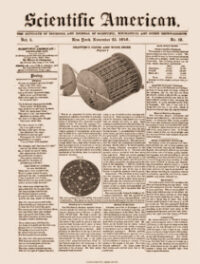
March 9, 1861, The Scientific American

In a letter to the Times, referring to the absence of all provisions for the construction of iron-coated ships in the new year’s programme for the American navy, Mr. J. Scott Russell writes as follows:–”The explanation is the simplest possible. The entire mercantile steam navy of Great Britain, with the exception only of some old vessels, is of iron. The entire mercantile steam navy of America. without any exception known to me, is of wood. The reason is obvious. Timber is one of the staples of America, and we are obliged to import large quantities of it from America into England. Iron is the staple of England, and America is obliged to import large quantities of it from us. Hence, America builds timber vessels far cheaper than we can. We build iron vessels far cheaper than America can. With these facts before us we can readily infer –1. That there are no establishments, manufactories, or skilled artificers in America prepared for the business of iron shipbuilding. 2. That the introduction of iron in substitution for wood gives to England (the country of iron) the means of attaining and maintaining an ascendency over any other country in the matter of iron fleets. 3. We see why in wooden ships America had the advantage over us, and she had the wit to use it. 4. She now sees clearly that we have in future the advantage over her, and she waits to see if we have the wit to work it.”

0 comments

Mrs. Lucy P. Pickens

Civil War Day-by-Day

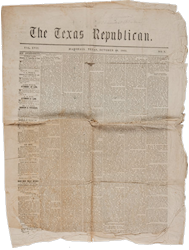
March 9, 1861, Texas Republican (Marshall)

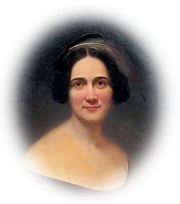
On Friday evening last, there was a general and, we might say, a spontaneous call upon Mrs. Gov. Pickens by her Marshall friends, as it was generally understood she would leave in a few days thereafter for South Carolina. The residence of Col. B. L. Holcomb, noted as it ever has been for its genial hospitality, sociability, and attractiveness, never contained a more pleasant and agreeable party of ladies and gentlemen than were congregated in its drawing rooms that evening. We should have called it, perhaps, a levee, but the word carries with it, in our mind, an idea of cold formality; the deference paid to rank or position. No one went to see Mrs. Pickens, as Mrs. Gov. Pickens, as much as they may admire the talent and heroism of her husband; but as “LUCY,” whose loveliness, accomplishments, and fascinating manners, imparted a charm to the society in which she mingled, and gave her an individuality of character, for which she was so much admired. Her friends were agreeably surprised to find her the same as of yore; time and absence had worked no perceptible change in her appearance or manners. The evening passed off very pleasantly with conversation, music, and a superb supper. We regret that Mrs. Pickens makes so short a stay at her old home; that she is to enjoy for so brief a period the society of her early, and we are fain to believe, her best friends. She will have the satisfaction of bearing with her to Carolina the kindest wishes of these Texas friends.

0 comments

Independence Proclaimed

Civil War Day-by-Day

March 9, 1861, Austin State Gazette

On Monday last, a large majority of the delegates to the Convention answered to their names. The Secession Ordinance had been sustained by a vast majority of the people of Texas. In accordance with their decision, the Lone Star banner which had been presented to the Convention by the ladies of Texas, was planted upon the dome of the Capitol, and was saluted by a discharge of artillery. Another handsome Lone Star flag was hoisted upon the roof of the Avenue Hotel. The Gazette buildings were decorated with the same dear symbol of our independence. It was presented to us by our friend General John J. Good, in behalf of the ladies of Dallas. But high above all floated from the summit of the lofty staff the magnificent banner above the site of the old Capitol.

0 comments

The Lincoln Cabinet

Civil War Day-by-Day

March 9, 1861; The Charleston Mercury

We give below brief sketches of those members of the Cabinet of LINCOLN, with whose history many of our readers may not be familiar:

SECRETARY OF THE TREASURY.

Hon. Salmon P. Chase is a native of New Hampshire, born in 1808, and at an early age emigrated to Ohio, but living there after a year’s residence, graduated at Dartmouth College, N. H. and studied law in Washington city under the celebrated William Wirt. He sustained himself during the years of his professional studies by imparting instruction to a select school for boys. He was admitted to the bar at Washington in 1829, and in the following year returned to Cincinnati and entered upon the practice of his profession, in which he soon rose to eminence. He was subsequently elected a member of the United States Senate, and upon the expiration of his Senatorial terms, he was put in nomination for Governor of Ohio and elected. He was again put in nomination for Governor, and was again elected to that position. Recently he was a second time elected to the United States Senate, and took his seat at the called session on Monday.

SECRETARY OF WAR.

Hon. Simon Cameron served an apprenticeship to the printing business at Harrisburg, and subsequently worked as a journeyman in Washington city. In 1821, when a young man, he declined the offer of a nomination for Congress; in 1828 was Adjutant General of Pennsylvania; in 1831 he was appointed by General Jackson a Visitor to West Point; and in 1838 he again declined a nomination for Congress. For many years he has been prominently identified with the works of internal improvement in Pennsylvania, and for twenty seven years was Cashier of the Middletown Bank in that State. He was also formerly President of the Lebanon Valley Railroad company; and President of the Commonwealth Insurance Company.

SECRETARY OF THE NAVY.

Hon. Gideon G. Welles, is a native of Connecticut, and a well known contributor to the partisan press. He formerly held the office of Postmaster of Hartford, under Mr. Van Buren Administration, and left the office soon after the election of [continue reading…]

0 comments

The Confederate States

Civil War Day-by-Day

March 9, 1861; The Charleston Mercury

Our Montgomery Correspondence.

MONTGOMERY, March 6, 1861.

Last week a rumor prevailed that the Congress would take a recess. Tomorrow, the Georgia State Convention meets. The Alabama Convention is in session, having assembled on Monday last. But, although members of the Congress are also members of these Conventions, the work on hand has been too important, and the inconvenience of a recess to many who live at a distance, too great, to admit of that policy. The adoption of a Permanent Constitution, to be referred to the States, together with the probability of an absurd attempt by the Northern Government to coerce the Confederate States, and other matters of immediate practical importance, have kept the body actively employed. Perhaps no set of men ever applied themselves more diligently to the task before them. The results of their labors the future alone will determine; for the interminable secret sessions are an effectual extinguisher to outside interest and comment. Occasionally the drift of events is sufficiently divulged to afford opportunity for criticism, but this is not very frequent, and your readers must be content with meager and unsatisfactory letters touching mere externals.

On account of the small size of the future House of Representatives of the Confederate States under the old apportionment, it is not unlikely that it will be altered so as to afford a larger and more efficient body. It is hoped that a full representation will be given to negroes as persons, which would partially remedy the evil of two small a house.

The constitution newspaper at Washington; the recent organ of President BUCHANAN, with its good will and subscription list, will be merged in the Advertiser of this city. The preliminary arrangements between Mr. BROWNE, its editor, and the editors of the Advertiser, have been agreed upon, and will be authoritatively announced in a few days. Mr. BROWNE, however, will not become one of the editors of the paper as he has accepted the position of Assistant Secretary of State, and entered upon the discharge of the duties of that responsible position. The Advertiser, from its past service and rigid adherence to the principles which have triumphed in the formation of a glorious Southern [continue reading…]

0 comments

A Barber’s Shop at Richmond, Virginia—an Engraving from a painting by Eyre Crowe

Civil War Day-by-Day

March 9, 1861, The Illustrated London News

‘A Barber’s Shop at Richmond, Virginia’

An Engraving from a painting by Eyre Crowe, in the Exhibition of the British Institution

London Illustrated News, March 9, 1861

Painting 1853

“This engraving, based on an oil painting by the English artist Eyre Crowe, is titled A Barber’s Shop at Richmond, Virginia. This image of an African American barber in the American South was published on the cover of the March 9, 1861, edition of the Illustrated London News. By that date, seven Southern states had seceded from the Union, and in the following month the Civil War would commence.” Encyclopedia Virginia

‘A Barber’s Shop at Richmond, Virginia,’ By Eyre Crowe, in the Exhibition of the British Institution (hand-colored off-print)

While online researching the black and which engraving from London Illustrated News, this hand-colored off-print was discovered at Granger Historical Picture Archive

0 comments

Mr. Jefferson Davis

Civil War Day-by-Day

March 9, 1861, The Illustrated London News

UNITED STATES.

Mr. Jefferson Davis, President of the Southern Confederacy, entitled the Confederate States of America, was formally inaugurated at Montgomery, Alabama, on the 18th ult. The spectacle is described as the grandest ever witnessed in the South. Mr. Davis, in his address on the occasion said:—”The judgment and the will of the people are that union with the Northern States is neither practicable nor desirable. If necessary, we must maintain by final arbitrament of the sword the position we have assumed.” Unless, therefore, the peace convention can hit upon an acceptable compromise this final arbitrament seems inevitable. The Congress of the seceding Southern States has declared the navigation of the Mississippi free. The appointment of Toombs as Secretary of State, Memminger as Secretary of Treasury, and L. Walker as Secretary of War, have been confirmed by Congress.

A bill was passed in the Florida Legislature, on Feb. 16, authorising the issue of Treasury notes to the amount of 500,000 dollars.

But while the seceding States are consolidating their new union, the secession movement appears to have received a check in several of the slaveholding States which have not yet formally quitted the Confederation founded by Washington. In Arkansas and Tennessee, majorities of anti-secession delegates have been returned, and in Missouri the attempt to convoke a convention has altogether failed.

The difficulties between the States of New York and Georgia are not yet arranged, the governor of the former refusing to deliver up the arms and ammunition destined for the seceders, and the authorities of the latter retaining the Northern ships seized at Savannah in retaliation.

The committee of the Washington Peace Conference had reported a plan of pacification, understood to be compounded [continue reading…]

0 comments

Civil War Day-by-Day

Civil War Day-by-Day

March 9, 1861

  • The Coinage Bill is passed by the Confederate Congress, authorizing up to 50 million dollars in Confederate currency to be printed

0 comments

“This Evening was the first Levee of Mr Lincoln at the ‘White House.’ Myself, Brother C R, and Julia went.”—Horatio Nelson Taft

Diary of US patent clerk Horatio Nelson Taft.

FRIDAY, MARCH 8, 1861.

Rather a cool day but cloudy with indications of rain at night. Shepherd Patrick of Norwalk Ohio called upon me today. I showed him round the office. This Evening was the first Levee of Mr Lincoln at the “White House.” Myself, Brother C R, and Julia went. The crowd was so great in the House that hundreds left without seeing the Prest. It was a perfect jam. Elegant Ladies dresses and Elegant Officers uniforms fared bad in the crowd. Got home about 10 and staid there quite as long as was desirable to us.


The three diary manuscript volumes, Washington during the Civil War: The Diary of Horatio Nelson Taft, 1861-1865, are available online at The Library of   Congress.

0 comments

“We are abusing one another as fiercely as ever we have abused Yankees. It is disheartening.”—A Diary From Dixie

Civil War Day-by-Day

March 8th.–Judge Campbell,¹ of the United States Supreme Court, has resigned. Lord! how he must have hated to do it. How other men who are resigning high positions must hate to do it.

Now we may be sure the bridge is broken. And yet in the Alabama Convention they say Reconstructionists abound and are busy.

Met a distinguished gentleman that I knew when he was in more affluent circumstances. I was willing enough to speak to him, but when he saw me advancing for that purpose, to avoid me, he suddenly dodged around a corner –William, Mrs. de Saussure’s former coachman. I remember him on his box, driving a handsome pair of bays, dressed sumptuously in blue broadcloth and brass buttons; a stout, respectable, fine-looking, middle-aged mulatto. He was very high and mighty.

Night after night we used to meet him as fiddler-in-chief of all our parties. He sat in solemn dignity, making faces over his bow, and patting his foot with an emphasis that shook the floor. We gave him five dollars a night; that was his price. His mistress never refused to let him play for any party. He had stable-boys in abundance. He was far above any physical fear for his sleek and well-fed person. How majestically he scraped his foot as a sign that he was tuned up and ready to begin!

Now he is a shabby creature indeed. He must have felt his fallen fortunes when he met me–one who knew him in his prosperity. He ran away, this stately yellow gentleman, from wife and children, home and comfort. My Molly asked him “Why? Miss Liza was good to you, I know.” I wonder who owns him now; he looked forlorn.

Governor Moore brought in, to be presented to me, the President of the Alabama Convention. It seems I had known him before; he had danced with me at a dancing-school ball when I was in short frocks, with sash, flounces, and a wreath of roses. He was one of those clever boys of our neighborhood, in whom my father saw promise of better things, and so helped him in every way to rise, with books, counsel, sympathy. I was enjoying his conversation immensely, for he was praising my father² without stint, when the Judge came in, breathing fire and fury. Congress has incurred his displeasure. We are abusing one another as fiercely as ever we have abused Yankees. It is disheartening.


¹ John Archibald Campbell, who had settled in Montgomery and was appointed Associate Justice of the United States Supreme Court by President Pierce in 1853. Before he resigned, he exerted all his influence to prevent Civil War and opposed secession, although he believed that States had a right to secede.

² Mrs. Chesnut’s father was Stephen Decatur Miller, who was born in South Carolina in 1787, and died in Mississippi in 1838. He was elected to Congress in 1816, as an Anti-Calhoun Democrat, and from 1828 to 1830 was Governor of South Carolina. He favored Nullification, and in 1830 was elected United States Senator from South Carolina, but resigned three years afterward in consequence of ill health. In 1835 he removed to Mississippi and engaged in cotton growing.

0 comments

Blockade of the Southern Ports

Civil War Day-by-Day

March 8, 1861; The Charleston Mercury

Important Notification of the English and French Governments.

WASHINGTON, March 4. – I learn that Lord LYONS, the British Minister, has officially notified the American Government that Great Britain will not recognize a blockade of the Southern ports, unless it is thorough and effectual, and that the mere announcement of a blockade, in accordance with the Treaty of Paris, will not be recognized.

In order to make the blockade of the Southern ports thus complete, the American Government must have vessels enough to blockade every port, otherwise the British Government will feel themselves compelled in accordance with their engagements with other powers, to disregard the restriction, and carry on their commerce with the Southern port as if no such blockade had been announced.

It is understood that it is also the intention of M. MORCIER, the French Minister, to give the same notification to the Government in regard to France, and that all the European Powers, in consequence of the peculiar relations they have with the commerce of the world, will likewise take advantage of the Treaty of Paris, and act in accordance with the policy adopted by the French and English Governments.– N. Y. Herald.

0 comments

Judge Jno. W. Brockenbrough

Civil War Day-by-Day
1860s newsprint

March 8, 1861, The Staunton Vindicator

Judge Jno. Brockenbrough, one of the Commissioners from Virginia to the Peace Congress, passed through Staunton on the 4th, on his way to his home in Lexington. In a brief conversation with the Judge, he expressed it as his opinion that there was very little hope of an adjustment of our national difficulties. He regards the amendment to the Constitution proposed by Mr. Corwin, and the report of the Peace Commissioners, as mere patch work, and falling immeasurably short of a remedy, or a just and fair basis of settlement. The Judge seemed to feel exceedingly despondent for the country, and loath to contemplate the sad disasters which loom up in the future for the only truly free government in the world.

0 comments

“…the first work in order is to endeavor to keep re-enforcements from getting into Fort Sumter…” — Confederate Records

War of the Rebellion: from the Official Records of the Union and Confederate Armies and Navies

“Every one here seems to be gradually becoming aware, through my cautious representations, that we are not yet prepared for the contest, and that the first work in order is to endeavor to keep re-enforcements from getting into Fort Sumter by increasing our channel defenses.”

HEADQUARTERS CONFEDERATE STATES ARMY,
Charleston, S. C., March 8, 1861.

Hon. L. P. WALKER, Secretary of War, Montgomery, Ala.:
SIR: The Department letter of the 2d instant has been received, but could not be answered sooner. Governor Pickens, who obligingly affords me all the assistance in his power, as well as all his officers, suggests that the State of South Carolina should continue to defray all the present current expenses incurred within its limits, so as not to complicate the present moneyed difficulties of the Confederate States Government. This would probably be a very proper arrangement.

With regard to the supposed temporary dissatisfaction of the State troops, alluded to by you, upon consultation with the governor, he advises that the brigade of State Regulars should remain as at present organized, until required to enter the Federal service, but in the mean time to be under my orders. Its commanding general and staff have readily assented to this arrangement, and by the order of the governor (already communicated to the War Department), it must have been seen that all the troops (State, Regulars, and Volunteers) in or about Charleston have already been put under my orders, and I can perceive among them no spirit of opposition or dissatisfaction. On the contrary, they appear to be animated with the most kindly feelings towards me, and seem highly pleased at the order assigning me to their command.

I have already given the information here that cavalry would not, at present, be called into the service of the Confederate States.

Every one here seems to be gradually becoming aware, through my cautious representations, that we are not yet prepared for the contest, and that the first work in order is to endeavor to keep re-enforcements from getting into Fort Sumter by increasing our channel defenses, which I hope to be able to accomplish in about a week or ten days. In the mean time I will go on organizing everything around me.

Respectfully, your obedient servant,

G. T. BEAUREGARD,

Brigadier-General, Commanding.

0 comments

The News

Civil War Day-by-Day

March 8, 1861; The New York Herald

An early attack on Fort Sumter seems to be generally anticipated. Whether the administration will reinforce Major Anderson is not known. It was stated in Washington last night that Major Anderson had sent word to the government that it was useless to send to his assistance less than twenty thousand men. Gen. Beauregard, the officer despatched by the government of the Confederate States to take command at Charleston, has arrived at his post, and expresses perfect confidence that Sumter can be reduced.

The Louisiana State Convention yesterday in secret session passed an ordinance transferring to the government of the confederate States the sum of five hundred and thirty six thousand dollars, the amount of customs received and moneys seized by the State.

We have highly important news from Texas, which renders it probable that a conflict has already taken place in that State between the United States forces and those of the State of Texas. Galveston dates of the 26th ult. state that Capt. Nichols, commander of the State troops, had demanded of Capt. Hill, of the United States Army, the surrender of Fort Brown. Capt. Hill refused to entertain the proposition, called Capt. Nichols and his men traitors, and expressed his determination to defend the fort to the last extremity. Capt. Hill refused to obey any order of Gen. Twiggs, and had sent to Fort Ringgold for two hundred men. Troops were on the way from Galveston to reinforce the Texan army. Details of the matter will be found in another column of this paper.

We have received intelligence that Governor Brown, of Georgia, has released the bark Adjuster, of this city, which vessel was reprised for certain illegal seizures of property in this city by Police Superintendent Kennedy, in consequence of [continue reading…]

0 comments

Important From Washington

Civil War Day-by-Day

March 8, 1861; The New York Herald

AFFAIRS AT FORT SUMTER.

WASHINGTON, March 7, 1861.

A despatch was received here today stating that an attack on Sumter was shortly anticipated. This change of policy, it is understood, is not caused so much by the inaugural as from the fact that Chase and Blair are members of President Lincoln’s Cabinet. The Inaugural, taken in connection with the construction of the Cabinet, is regarded as a declaration of war. So says the intelligence just received from Charleston.

I am informed by an officer of the army that information has been received from Major Anderson to the effect that it is useless to send less than twenty thousand soldiers to Charleston. Less than that number cannot enter the harbor and destroy the batteries on either side. This information, it is said, is also in possession of the government.

The Charleston Courier of the 5th inst. states that Brigadier General Beauregard has expressed perfect confidence, after viewing the fortifications in Charleston harbor, that Fort Sumter can be reduced. He says that it is only a question of time.

WASHINGTON, March 7, 1861.

The War Department today received letters from Major Anderson dated the 4th but they contain nothing of especial importance. The most friendly feelings exist between him and the South Carolina authorities. Postal facilities are still open to him, and privileges of marketing, to a limited extent, continue.

0 comments

The Inaugural Ball

Civil War Day-by-Day

March 8, 1861; The Charleston Mercury

This ball, which took place in Washington on Monday night, is said to have been well attended. One of the ladies is represented to have been attired in two thousand dollars worth of laces and twenty thousand dollars’ worth of diamonds. A letter says:

At 10 3/4 o’clock the Presidential party came in. Senator Anthony and Vice President Hamlin supported the President. Senator Douglas escorted Mrs. Lincoln; Senator Baker, Mrs. Hamlin; Gov. Yates, Mrs. Baker, and Dr. Baloche, Miss Edwards. The band struck up “Hail Columbia,” and the party marched from one end of the hall to the other, amid inspiring strains of the national air, causing an era of tremendous good feeling. After a brief promenade, the President, with Mrs. Hamlin, took stations at the upper end of the room, and a large number of person availed themselves of the opportunity of being presented to Mr. Lincoln, who shook hands with everybody. At 11 1/2 o’clock, the President and suite went into the supper room, in the same order as they entered the hall. At 12 1/4 o’clock, the quadrille of the evening was danced–Douglas and Mrs. Lincoln, Hamlin and Miss Edwards, Mayor Berret and Mrs. Bergman, Mr. Harrerd and Mrs. Baker composing the set. Miss Edwards, niece of Mrs. Lincoln, was acknowledged to be the belle of the evening. The ladies of the Presidential party were dressed exquisitely, and in perfect taste.

The ball was a bad failure in a financial point of view. Hundreds of salaried men of the Republican party kept away. Such a fact in ominous concerning the future business prosperity of Washington.

0 comments

The Confederate States

Civil War Day-by-Day

March 8, 1861; The Charleston Mercury

Our Montgomery Correspondence.

MONTGOMERY, March 5.

The confirmation of the appointment of the Hon. S.R. MALLORY, of Fla., as Secretary of the Navy, is the chief subject of comment relative to the actions of Congress on yesterday. The confirmation took place in secret session, and I am not prepared to speak positively but a strong, uncontradicted rumor prevails to the effect that vigorous opposition was made to his appointment. The objections are understood to have arisen out of the views entertained by the honorable gentleman, and that he was not rejected, is perhaps due more to the vague and uncertain character of the charges, coupled with the deference felt by Congress for the nomination of the President, than to any other cause.

He is said to have carried these views so far as to look forward to and contemplate future persona advances based on his attitude as a pacificator and conciliator at the time of the secession of his State. In a matter of some negotiations at Washington he is charged with bad faith towards Florida, besides surrounding all his acts, in connection with the two separate powers, with equivocation and uncertainty. While laboring under these embarrassments, be they true or false, his appointment to a seat in the Cabinet was justly obnoxious, and we are told, to none more so than to the Deputies from Florida. His probable resignation is mooted, and certainly such a course, on his part, would tend greatly to allay feeling and at once place him in a position to vindicate himself – if, indeed, he desires vindication – at the same time dispelling the mist and gloom of uncertainty and doubt which at present envelopes the rectitude of his conduct.

Just here allow me to remark that the deportment of South Carolina, through her Deputies in Congress, is one of singular propriety. Without disparaging others, it can be safely said that, for elevated bearing, dignity of discussion, and perfect parliamentary courtesy (if I may use the expression), South Carolina, as here represented, stands unsurpassed.

The new Confederate banner, reported by the Committee and agreed upon by Congress, was raised on the Capitol on yesterday. The flag consists of three stripes or bars, red, white and red. Next to the staff, on the left hand corner of the flag, to the depth of two stripes, is a blue square field, on which is a circlet of seven white stars, the lower stripe extending the full length of the flag underneath the blue field. The design is simple, and will doubtless give satisfaction. It is distinguishable a great way, and whether in a natural or reversed position, is at one detected.

LINCOLN’s Inaugural was published in the city papers this morning (5th), and though not characterized by all the weakness and silliness of his travelling speeches, is not received as a statesmanlike paper. The Republican demagogue literally glares on the reader as he notices his artful attempt to screen the coercive policy of his incoming administration, behind the power and the will of the people. The arch Republican of the radical school is plainly visible, notwithstanding the adroit wording of the document. It can only now be regretted as a great public misfortune and calamity that every Federal department, of all descriptions, was not placed in the hands of the States authorities as fast as they seceded, at any then, possible sacrifice – blood and treasure would have been saved, and important advantages secured to the new government.

PENROSE PINCKNEY.

0 comments

Gunpowder Plots

Civil War Day-by-Day

March 8, 1861; The Charleston Mercury

Since the days of TITUS OATES, the great model plot maker, there never has been shown so industrious an effort to find a plot, as the Black Republicans display, in the hope, by a plot invention, to excuse the pussilanimous and skulking process by which LINCOLN made his way to the Federal city. We are now told that even at his first starting, there were plots to blow him up, or haul him down. Railway plots, powder plots, assassination plots, by stage, car and steamboat! But the inventions come too late! They will not relieve the tall person, in his slouched hat and military Scotch cloak, of the imputation of the most wretched cowardice. It appears, also, that he left his family to follow him in the very train in which he himself was to be blown up, or blown over! Young BOB, and young BOB’s mother, took the chances–and escaped; which, as the plotters could not have known that the venerable ABRAHAM was not in the train–and, there was no explosion–would seem to show, very conclusively, that there was no plot at all. But, in truth, the Southern people are no plotters. They rarely attempt plotting, or they bungle when they do. Witness the efforts of the Peace Congress, and the laborious plottings, against the safety and prosperity of their people, of the ancient politicians of the Border States! It is only in the land of Abolition and the Puritans that we hear of these plottings and infernal machines. They seem, from the first, to have been born to stratagem, and spoils. It is only in the North that we hear of fights, designed for murder, sent to the innocent and suspecting. A box, from unknown quarters, is received, and while the simple family crowds about it, with blessing on the unknown benevolent, it explodes, and sends its missiles through the flock. We practice none of these horrid plots at the South. We neither Scott nor Plot.

0 comments

Administrivia

Civil War Day-by-Day

March 7, 2021

American Civil War Chronicles current status:

There are 22,960 total posts.  Of these, 1,814 have been published, 9,289 are scheduled, and 11,840 are in draft

I’ve just finished scheduling War Diary of a Union Woman in the South, which has 84 total entries. It’s by Dora Richards Miller (image on right)— Born in St. Thomas in the Danish Virgin Islands and raised in the Frederiksted, St. Crois home of a grandmother who had freed all her late husband’s slaves, Dora Richards started her diary as a single, pro-Union, 25-year-old woman in New Orleans, Louisiana.  She also wrote A West Indian Slave Insurrection, a narrative about her experience during the slave revolt while in St. Croix.

I am currently scheduling Diary of Belle Edmondson. So far there are over 225 new entries, all from1864 and scheduled to be published in 2024.  I may publish selected earlier material from a book published in 2004.

The book is a compilation of previously unpublished material from the 1860s.  The copyright term for unpublished material is 70 years after the death of the author, so the individual letters and diary entries are not copyrightable.  However, the selection and arrangement of those letters and diary entries into a compilation is protected by copyright.  Use of selected material from that compilation would not be an infringement of copyright and would be covered under fair use provisions and limitation on copyright.

0 comments

At the Court of St. James

Diary of George Mifflin Dallas, United States Minister to England 1856 to 1861

1861. March 7.–Dined with Lampson, for the time being a resident in a capital house at the farthest end of Eaton Square. Went at eleven to Lord Chelmsford’s for fifteen minutes. A youthful dance.

The news from home a shade more promising. A word of meditated coercion in the inaugural of the 4th instant may be the last nail in the Union’s coffin.

0 comments

Operations in Florida – Braxton Bragg assigned to Confederate troops at Pensacola

War of the Rebellion: from the Official Records of the Union and Confederate Armies and Navies

WAR DEPARTMENT, Montgomery, March 7, 1861.

Brig. Gen. BRAXTON BRAGG,
Provisional Army, C. S. A., Comdg. Troops near Pensacola, Fla.:

SIR: By the inclosed order you will perceive that you have been assigned to the command of the troops at and near Pensacola, Fla. It is of the greatest importance that the Government here should be accurately informed of the state of affairs in that quarter. The Secretary of War, therefore, desires that you will as soon as possible forward to this office a comprehensive report of whatever may come under your observation, especially in regard to affairs immediately connected with Fort Pickens. You will also be pleased to make reports to this Department as often as it may be convenient for you to do so. Very little information in respect to the nature of the service and its requirements at the station to which you have been assigned to command has reached this Government. The Department is anxious to know accurately the condition of things there and the necessities of the service, so that it can act with full intelligence, which is so much wanting at present. A return of your command is required.

I have the honor to be, very respectfully, your obedient servant,

GEO. DEAS,

Acting Adjutant-General.


[Inclosure. ]

SPECIAL ORDERS,
NO. 1

WAR DEPARTMENT, ADJUTANT-GENERAL’S OFFICE,
Montgomery, Ala., March 7, 1861.

1. Brig. Gen. Braxton Bragg, of the Provisional Army, Confederate States of America, is assigned to the command of the troops in and near Pensacola, Fla., to which station he will proceed without delay.

*……….*……….*……….*……….*……….*

By command of the Secretary of War:

GEO. DEAS,

Acting Adjutant-General.

0 comments

Horatio Nelson Taft

Diary of US patent clerk Horatio Nelson Taft.

THURSDAY 7

Somewhat frosty this morning, but a bright day. In the office all day. W VanMaster of Lyons called again. Went with him to the seed room and procured a variety of garden seeds, grape cutting, tea plants &c for him. Bro C R and also Julia were at the office today. Went with Bro after three o’clock to [“Klomans“?] and got some oysters and ale. Intending to go to the Navy Yard, but concluded that it was too late. Came home and dined at 4, did not go out this evening. Bro & I staid in parlor.


The three diary manuscript volumes, Washington during the Civil War: The Diary of Horatio Nelson Taft, 1861-1865, are available online at The Library of   Congress.

0 comments

The Democratic party is neither dead or sleeping.

Miscellaneous document sources

E. B. Hart to Howell Cobb.

(Private.)

Custom House, New York,
Surveyor’s Office, 27 and 29 Pine St.,
March 7, 1861.

My Dear Govr., I have desired greatly to write you for some time; but in the bustle of matters financial and political I have not been able to get a quiet moment until now. To you who I think know I am not of a changeable disposition in everything that relates to yourself as ever and if there be anything I can be of service to you in here you have only to mention it and it will be attended to. For political news and intimations of what we may expect we have to wait and watch our political opponents. The Democratic party is neither dead or sleeping. My judgment, based upon careful study of the elements from the beginning of the present unhappy complications of public affairs, is that in common with all really conservative influences it will in case of hostile action on Lincoln’s part take an immediate and decided position as a peace party. The governing sentiment of the Republican party on the contrary is clearly warlike. The ultras of that party are fiercely belligerent. The irrepressible conflict is lively in their ranks everywhere. How it works may be seen from the action of the Republican Club here night before last. Raymond (Daily Times newspaper) C. S. Spencer, ex-member of Assembly, and other Repubn. guns of all calibres fired away for hours. Spencer and others desiring to pass a resolution instructing Mr. Lincoln to let slip the dogs of war at once ; and Raymond and the quietists urging a mere vote of confidence in the Administration. Finally the Club passed both. If straws shew which way the wind blows these would seem to shew that whilst the temperate Repubns. may get their milder wishes put into words and used as preambles, the intemperate ones will be too likely to shape the action of their party. All we can do here is to be ready to take advantage of the inevitable revulsion of the popular mind and turn it to peace, reconstruction and justice to the South. We mean to do it.


From Annual Report of the American Historical Association for the Year 1911.

Emanuel Bernard Hart (October 27, 1809 – August 29, 1897) was a U.S. Representative from New York, elected as a Democrat to the Thirty-second Congress (March 4, 1851 – March 3, 1853). He was appointed by President Buchanan surveyor of the port of New York and served from 1857 to 1861.

Howell Cobb was an American political figure. A southern Democrat, Cobb was a five-term member of the United States House of Representatives and Speaker of the House from 1849 to 1851. He also served as the 40th Governor of Georgia and as a Secretary of the Treasury under President James Buchanan. Cobb is, however, probably best known as one of the founders of the Confederacy, having served as the President of the Provisional Congress of the Confederate States.

0 comments

Our Washington Correspondence

Civil War Day-by-Day

March 7, 1861; The Charleston Mercury

WASHINGTON, March 4, 1861.

I have just returned from looking at the inaugural procession. From an upper window of BROWN’S Hotel I had a perfect view of the whole affair, from the Chief Marshall, with his Aids, at the head of the column, down to the ragamuffins, on foot, or in dilapidated wagons, at the tail. Truth compels me to say it was a poor show. LINCOLN sat in an open carriage, with BUCHANAN by his side, and PEARCE of Maryland, and some one else facing him. It was my first glimpse of the mighty Rail Splitter. Looking down upon him through a lorgnette, he did not seem as homely and vulgar as the prints and the press represent him. But all sides agree that he is a low flung, weak minded man. Even the Republicans laugh at him.

The most noticeable part of the procession was a large car, draped and festooned, and filled with little children, representing the thirty four States, and waving miniature flags. Only one company of Federal soldiers turned out–a troop of dragoons. The rest of the military consisted of volunteers, and among them CARRINGTON’S squad of hod carriers was conspicuous for the dingy, dirty hue of their uniforms, and the uneveness of their marching. The procession was a half or three quarters of a mile long, and was closed appropriately by a rickety Jersey wagon, filled with butchers, and drawn by a pair of spavined gray ponies. This concern, horses and all, was much adorned with flags, and I observed that one of them was torn, so that all the stars remained while some of the stripes were missing. Very few decorations were visible except on the hotels, and from the time the pageant, if it deserve that name, left WILLARD’S until the carriage containing LINCOLN was out of my sight, there was not a particle of enthusiasm, not a single hurrah, not a solitary cheer. This is ominous. More than that it is marvellous–considering the readiness of Washington people to takes sides with whatever party happens to be in power.

Happening this morning to be at WILLARD’S, I saw HORACE GREELEY when he came down, as I suppose, from his last interview with Old ABE. His broad-brimmed hat was set back on his head, his cravat twisted one side and above his collar, and his bosom exposed. As he slouched along in his ungainly rhinoceros way, a half drunken New Yorker stopped [continue reading…]

0 comments