“Office seekers are hanging on here in great numbers.”—Horatio Nelson Taft

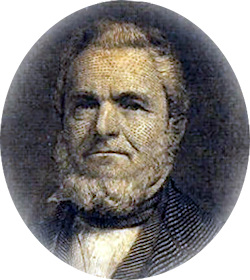
Diary of US patent clerk Horatio Nelson Taft.

MONDAY, MARCH 11, 1861.

It has been a pleasant cool day, comfortable out door with an overcoat on. A great many people in the office today. Office seekers are hanging on here in great numbers. Went after 3 o’clck with Bro C R & Maj [Bulkley?] to the Navy Yard through the shops and on board the US War Steamer Pensacola. Maj B came home and dined with us. We then went down to Willards. Bro & myself called at Cramers, and then went back to Willards. Senator Wigfall was there with a crowd round him but not boisterous.


The three diary manuscript volumes, Washington during the Civil War: The Diary of Horatio Nelson Taft, 1861-1865, are available online at The Library of   Congress.

0 comments

Operations in Charleston Harbor — Confederate Records

War of the Rebellion: from the Official Records of the Union and Confederate Armies and Navies

“I desire to state that should my application to be appointed in the Regular service, instead of the Provisional one, occasion any embarrassment to the President, I desire it to remain unnoticed; and, moreover, should he at any time consider it necessary for the good of the service or safety of the country to send here an officer of more experience than myself, I hope he will do so without hesitation, as I care more for the success of our arms and of our cause than for the honor of being in command here, and I would serve under the orders of such a commanding officer with the same zeal and activity as at present.”

HDQRS.
PROVISIONAL ARMY
CONFEDERATE STATES,
Charleston, S.C.,
March
11, 1861.

Hon. L. P. WALKER, Secretary of War, Montgomery, Ala. :

SIR: I have taken the earliest opportunity my present duties would permit (yesterday) to make a thorough reconnaissance of the country south of this city to the Stono River and its mouth, to determine what works are required to prevent an enemy from approaching in that direction, either to throw re-enforcements during the night into Fort Sumter, through the Stono River, Folly River, or Light-house Inlet, and their numerous and intricate branches (see Bache’s maps of Charleston Harbor and adjacent coast and country), or to attack Charleston. I have selected the sites and ordered the construction of some field works that will, I think, effectually guard those channels of approach; but we must have time and means to complete them. With good assistants (chiefs of Engineers and Ordnance) this could probably be done in about eight or ten days; but Major Whiting and Captain Boggs (two most reliable and efficient officers) have been recalled to Savannah by the governor of Georgia, and I am again left to my own resources. Their absence fills me with care and grief, for other very important matters demand my attention; in fact, a great deal in the way of organization remains still to be attended to. I find a great deal of zeal and energy around me, but little professional knowledge and experience. I earnestly request the immediate return of the two officers just named, or that two others, of equal ability, if they can be procured, be sent me. Probably Capt. G. W. Smith, of New York, and Captain Gorgas might be induced to come, if a positive rank could be offered to them. Should an enemy succeed in effecting a landing on the Stono River (a very navigable stream), or anywhere else in that direction, I will take a position with all my disposable forces in a very advantageous location I have selected,   a little in advance of the Savannah road bridge, leading into Charleston, covering, at the same time, the bridge with a tete-de-pont. From thence I will oppose to the last his direct attack, or take him in flank and rear, to cut off his communication, if practicable.

With regard to my letter of the 12th, referring to my present commission in the Confederate service, I desire to state that should my application to be appointed in the Regular service, instead of the Provisional one, occasion any embarrassment to the President, I desire it to remain unnoticed; and, moreover, should he at any time consider it necessary for the good of the service or safety of the country to send here an officer of more experience than myself, I hope he will do so without hesitation, as I care more for the success of our arms and of our cause than for the honor of being in command here, and I would serve under the orders of such a commanding officer with the same zeal and activity as at present.

I remain, sir, very respectfully, your obedient servant,

G. T. BEAUREGARD,

Brigadier-General, Commanding.

P. S.–Your letter of the 9th instant has just been received. Its remarks are answered in the above letter.

G. T. B.

0 comments

Brragg assumes command – Confederate Correspondence

War of the Rebellion: from the Official Records of the Union and Confederate Armies and Navies

ORDERS,

No. 1

PENSACOLA, FLA.,
March 11, 1861.

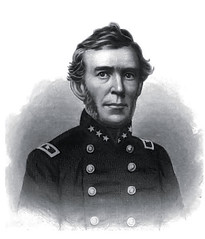
I. In compliance with Special Orders No. 1 from the War Department, Confederate States of America, dated at Montgomery, Ala., March 7, 1861, Brigadier-General Bragg assumes the command of all troops in the service of said States in the vicinity of Pensacola. His headquarters will be at Fort Barrancas.

BRAXTON BRAGG,

Brigadier-General, Commanding.

0 comments

Message to Beuregard. — Sumter to be evacuated in 5 days.

War of the Rebellion: from the Official Records of the Union and Confederate Armies and Navies

WASHINGTON, March 11, 1861.

General BEAUREGARD,
Commanding Army Confederate States, Charleston, S.C.:

Believed here that Anderson will be ordered to evacuate Sumter in five days. Was certainly informally agreed on in Cabinet Saturday night. May have been done as ruse to throw you off your guard and enable them to re-enforce.

LOUIS T. WIGFALL.

0 comments

Message to Jeff Davis. — Sumter to be evacuated in 5 days.

War of the Rebellion: from the Official Records of the Union and Confederate Armies and Navies

WASHINGTON, March 11, 1861.

His Excellency JEFFERSON DAVIS,
Montgomery, Ala.:

It is believed here in Black Republican circles that Anderson will be ordered to vacate Fort Sumter in five days. An informal conclusion to this effect was arrived at Saturday night in Cabinet. Anderson telegraphed, it is said, that he had no fuel and but fifteen days’ provisions.

LOUIS T. WIGFALL.

0 comments

Winfield Scott to Abraham Lincoln

Civil War Day-by-Day

General Scott’s reply to Lincoln’s letter of March 9 . March 11, 1861

Fort Sumter.

The President has done me the honor to address to me certain professional questions, to which he desires answers. I proceed with them categorically.

“1. To what point of time can Major Anderson maintain his position, at Fort Sumter, without fresh supplies or reinforcements?”

Answer. In respect to subsistence, for the garrison, he has hard bread, flour & rice for about 26 days, & salt meat (pork) for about 48 days; but how long he could hold out against the whole means of attack which the South Carolinians have in, & about the city of Charleston & its Harbour, is a question that cannot be answered with absolute accuracy. Reckoning the batteries troops at 3,500 (now somewhat disciplined) & the batteries at 4 powerful land, & at least one floating – all mounting guns & mortars of large calibre, & of the best patterns; – & supposing those means to be skillfully & vigorously employed – Fort Sumter with its less than 100 men – including common laborers & musicians – ought to be taken by a single assault, & easily; if harrassed perseveringly for several previous days & nights by threats & false attacks, with the [continue reading…]

0 comments

The Southern Flag in Virginia

Civil War Day-by-Day

March 11, 1861; The Charleston Mercury

A large crowd assembled on Friday evening, in 17th street, opposite the old Market, headed by SMITH’S band. They pulled down stars and stripes” and run up in place of it the secession flag to the music of the Marseilles Hymn. Speeches were made and great enthusiasm manifested. On the same evening a large and beautiful Southern rights flag was hoisted in the streets of Petersburg. It is adorned with seven large blue stars, leaving a blank in the centre for Virginia, which, it is expected, will soon take her place in the Southern Confederacy.

0 comments

Interesting from Washington

Civil War Day-by-Day

March 11, 1861; The New York Herald

WASHINGTON, March 10, 1861.

Political circles were feverishly excited today by a report that the evacuation of Forts Sumter and Pickens had been determined upon in the Cabinet meeting last night. Although nobody could give any positive authority for this exciting fever of news it yet obtained general currency and was eagerly discussed at all the hotels. At the Washington House a sort of informal indignation meeting of Western politicians was held this afternoon, and the presumed backing down of the republican administration commented upon in anything but complimentary terms. I am able, however, to state positively that no such conclusion has been arrived at by the new regime. It is certain that the subject of reinforcing the forts has largely occupied the attention of the President and his constitutional advisers, and that in the face of the opinion of General Scott and other authorities that, in the present status of the military forces of the government a reinforcement is impracticable, the question of abandonment has been raised; but the President and the Cabinet know that in the eyes of their party they are in honor and duty bound to hold the posts, and that any other line of policy would raise an overwhelming storm of indignation among their supporters – hence, even if they favored an evacuation, which the President and the majority of the Cabinet do not at present, they could not act accordingly, owing to the desires and expectations of their party.

0 comments

The Abolition Regime

Civil War Day-by-Day

March 11, 1861; The Charleston Mercury

Our Washington Correspondence.

WASHINGTON, March 7.

Every tongue is busy commenting on the inaugural. The papers are filled with quotations giving the opinions of the press in all directions. There is little agreement except in this–that all coincide as to the fact that it either means war or it does not mean war. The inference is that it was intended to mean both–the one and the other, according to circumstances. Mr. DOUGLAS, in the Senate yesterday, expressed his belief, after a careful study of the mysterious document, that it was friendly and conciliatory. Now, it is known that DOUGLAS was at first puzzled by it. He is still puzzled, his friend say, and had an object in putting a peaceful interpretation upon it, viz: to draw out a Republican translation.

This may or may not be so. DOUGLAS’s wish is father to his thought. He wants peace. His chances for the next Presidency rest on the preservation of the Union as it now is–that is, with the Border States in. The breaking out of war drives off these States, and away goes the Little Giant’s prospects. Another motive, in all likelihood, prompts him to commend the inaugural. It has roused the ire of the slave provinces and strengthened the hands of the secessionists. Unless something is done to quell the resentment thus aroused, the Border State secessionists, in Virginia more particularly, may get the upper hand of the submissionists, and do something .” Hence DOUGLAS’s alacrity in placing a mild construction on what was intended to be a declaration of war. His opinions have great weight in the Border States. He is a dangerous man. What harm he has already done! What harm he is now doing, and will continue to do, as long as there is breath in his body!

According to Dame Rumor, and the general conviction of all parties, CRITTENDEN is to take a seat on the Supreme [continue reading…]

0 comments

The News

Civil War Day-by-Day

March 11, 1861; The New York Herald

Great excitement was created in Washington city yesterday by a report generally circulated that at a Cabinet council on Saturday night it had been determined to remove the troops from the Southern forts, as to reinforce them would cause an immense loss of life, and greatly aggravate the existing difficulties. It is now certain the stock of provisions at Fort Sumter is almost entirely exhausted, and that fort must be quickly reinforced or the troops at present there withdrawn.

From Washington we learn that the appointments from the leading federal offices in this city have been finally decided on. Hiram Barney is to be Collector; Wakeman, Surveyor; Webb, Naval Officer; Hoxie, Postmaster, and Nye, Marshal. Delafield Smith, it is said stands a fair chance to be appointed District Attorney.

Advices from the South inform us that the confederacy is making rapid strides toward forming a substantial and permanent government. A letter from a member of President Davis’s cabinet to a friend in Washington says that in less than a month they will be in the full tide of success; that they have inaugurated an elaborate war policy, and before the first of April will have an army of fifty thousand troops in the field, commanded by experienced officers. As to the question of money, he says that a plan has already been matured which will produce sample revenue to carry on the government even in time of war. Mr. Lincoln’s inaugural was regarded as a declaration of war, and every preparation was being made to meet the emergency.

From Texas we learn that on the 4th inst. the Convention declared that State out of the Union, and Governor Houston issued a proclamation to that effect. Vessels sent by the federal government to Texas are not to be seized. Governor Houston, it is stated, will neither take the oath of allegiance to the State nor resign. The returns of the election were still incomplete, but as far as ascertained show a heavy majority in favor of secession. Despatches from San Antonio and Fort Brown state that Colonel Waite, the commander of the United States forces, had endeavored to reorganize the troops, but, owing to their demoralization by the conduct of General Twiggs, found it impossible to do so. Captain Hill, the commander at Fort Brown, was in expectation of a collision between the State authorities and his troops.

The Alabama Convention has adopted an ordinance transferring all operations to the Provisional government at Montgomery, with the arms and munitions acquired from the United States, and vesting in that government authority over the forts and arsenals.

0 comments

The Confederate States

Civil War Day-by-Day

March 11, 1861; The Charleston Mercury

Our Montgomery Correspondence.

MONTGOMERY, March 7, 1861.

The developments for the last several days are of an unimportant character in political circles, the Administration appointments at Washington being about such as were very generally anticipated, and for which the public mind was prepared. Congress is busily engaged on the Permanent Constitution of the “Confederate States,” holding generally an extra session every evening. The secret character if these proceedings render them of little interest to gossiping letter writers, and we are about as ignorant of details in Montgomery as you are in Charleston.

The export duty of one eighth of one per cent per pound on cotton has promptly furnished a basis for the loan of fifteen millions authorized by Congress, and we are assured today that the entire amount will be bid for in New Orleans at five per cent.; in fact, and intelligent gentleman from Mobile told me today that he was reliably informed that the negotiation could be effected in New Orleans in one hour, so anxious were capitalists in that city to secure the bonds. This will be perhaps the most astounding blow to the North that has yet struck upon the sensitive nerves of that great moneyed monopoly on Wall street. I cannot, however, readily subscribe to the policy of any export duty, or other taxation which bears at once on the producer, or tends in anywise to disturb a uniform, incentive to industry and labor among an agricultural people. It is true that this new tariff, so novel among us, is light even now under the pressing exigencies of our infancy in governmental operations, but the predicate is laid, and it is at present impossible to contemplate the extent of the abuses to which such a policy may lead. No disposition to complain is anywhere manifested, but this is owing to the selling patriotism of a people who have been so long oppressed by unjust discriminations against them in every [continue reading…]

0 comments

Civil War Day-by-Day

Civil War Day-by-Day

March 11, 1861

  • The Constitution of the Confederate States of America is adopted unanimously.
  • Braxton Bragg assumes command of Florida forces
0 comments

A Diary From Dixie.—”Wonderful! Some of these great statesmen always tell me the same thing—and have been telling me the same thing ever since we came here.”

Civil War Day-by-Day

March 10th.–Mrs. Childs was here to-night (Mary Anderson, from Statesburg), with several children. She is lovely. Her hair is piled up on the top of her head oddly. Fashions from France still creep into Texas across Mexican borders. Mrs. Childs is fresh from Texas. Her husband is an artillery officer, or was. They will be glad to promote him here. Mrs. Childs had the sweetest Southern voice, absolute music. But then, she has all of the high spirit of those sweet-voiced Carolina women, too.

Then Mr. Browne came in with his fine English accent, so pleasant to the ear. He tells us that Washington society is not reconciled to the Yankee régime. Mrs. Lincoln means to economize. She at once informed the major-domo that they were poor and hoped to save twelve thousand dollars every year from their salary of twenty thousand. Mr. Browne said Mr. Buchanan’s farewell was far more imposing than Lincoln’s inauguration.

The people were so amusing, so full of Western stories.

Dr. Boykin behaved strangely. All day he had been gaily driving about with us, and never was man in finer spirits. To-night, in this brilliant company, he sat dead still as if in a trance. Once, he waked somewhat–when a high public functionary came in with a present for me, a miniature gondola, “A perfect Venetian specimen,” he assured me again and again. In an undertone Dr. Boykin muttered: “That fellow has been drinking.” “Why do you think so?” “Because he has told you exactly the same thing four times.” Wonderful! Some of these great statesmen always tell me the same thing–and have been telling me the same thing ever since we came here.

A man came in and some one said in an undertone, “The age of chivalry is not past, O ye Americans!” “What do you mean?” “That man was once nominated by President Buchanan for a foreign mission, but some Senator stood up and read a paper printed by this man abusive of a woman, and signed by his name in full. After that the Senate would have none of him; his chance was gone forever.”

0 comments

Horatio Nelson Taft

Diary of US patent clerk Horatio Nelson Taft.

SUNDAY 10

Rather a cold day but no frost, a cold wind. Went to Trinity Ch (Dr Butlers.) this morning with my old friend S Patrick. Bro C R, Maj Sol [Bulkley?] & Juliet also there. In afternoon, all went to Dr Smiths ch, heard a Mr Fish from Paris (France). He is trying to raise funds for the Protestant cause in France. He did not speak very good English but was still very interesting and could be easily understood by close attention. Was in at Willards with Bro in the Evening. Wife has been writing to Hariet Brownson. C R & self talking of Wmstown Characters.


The three diary manuscript volumes, Washington during the Civil War: The Diary of Horatio Nelson Taft, 1861-1865, are available online at The Library of   Congress.

0 comments

“There is one great comfort; this war fever has banished small talk.”— War Diary of a Union Woman in the South

War Diary of a Union Woman in the South

March 10, 1861.—The excitement in this house has risen to fever heat during the past week. The four gentlemen have each a different plan for saving the country, and now that the bridal bouquets have faded, the three ladies have again turned to public affairs; Lincoln’s inauguration and the story of the disguise in which he traveled to Washington is a never-ending source of gossip. The family board being the common forum, each gentleman as he appears first unloads his pockets of papers from all the Southern States, and then his overflowing heart to his eager female listeners, who in turn relate, inquire, sympathize, or cheer. If I dare express a doubt that the path to victory will be a flowery one, eyes flash, cheeks burn, and tongues clatter, till all are checked up suddenly by a warning rap for “Order, order!” from the amiable lady presiding. Thus we swallow politics with every meal. We take a mouthful and read a telegram, one eye on table, the other on the paper. One must be made of cool stuff to keep calm and collected. I say but little. There is one great comfort; this war fever has banished small talk. The black servants move about quietly, never seeming to notice that this is all about them.

“How can you speak so plainly before them?” I say.

“Why, what matter? They know that we shall keep the whip-handle.”


Note: To protect Mrs. Miller’s job as a teacher in post-civil war New Orleans, her diary was published anonymously, edited by G. W. Cable, names were changed and initials were generally used instead of full names—and even the initials differed from the real person’s initials. (Read Dora Richards Miller’s biographical sketch.)

0 comments

Coal and Water cut off at Pensacola

Civil War Day-by-Day
1860s newsprint

March 10, 1861, Atlanta Constitution

Pensacola, Fla.–

The U.S. man-o-war Brooklyn and other U.S. vessels will no longer be able to obtain coal and water at the former U.S. Navy base in Pensacola harbor, the Brooklyn’s commander has been informed. Boats still visit the U.S. ships (which bear supplies and men for Ft. Pickens but have not been permitted by U.S. authorities to land them). There is much trafficking with those aboard. (In the meantime a clash looms: The Confederate War Department yesterday issued a call for 5,000 more men to defend Pensacola and Pres. Lincoln on Tuesday directed the Union War Department to dispatch troops to Ft. Pickens.) As for the Brooklyn’s water supply, the Pensacola Observer said: “We advise the fleet to run down to Vera Cruz (in Mexico) for a supply and give their sails an airing.” Gen. Braxton Bragg has arrived to take charge of the secession forces.

0 comments

The News

Civil War Day-by-Day

March 10, 1861; The New York Herald

The government have received despatches from San Antonio and Fort Brown, Texas. Col. Waite, the commander of the United States forces in Texas, had endeavored to reorganize the troops, but found it impossible to do so, owing to their complete demoralization through the conduct of Gen. Twiggs. The troops were in a destitute condition, having scarcely supplies sufficient to enable them to reach the coast. Capt. Hill, the commander at Fort Brown, was in expectation of a collision between his command and the State authorities.

The steamship Empire City, bound for Texas, with troops and ordnance stores, anchored at Quarantine last night.

The Hon. John Cochrane was last evening serenaded at his residence by Dodworth’s brass band, at the instance of a large number of his political friends. The object of the serenade was to welcome him on his return home from his congressional duties, and was intended to show for the satisfaction his conduct has given then during the four years he had been a member of Congress, and from which duties he was not about to retire.

In another column we publish an account of the twenty sixth day’s proceedings of the Southern Congress, embracing a report of the special committee appointed to devise a flag for the new republic, together with a correct representation of the flag selected by the committee and subsequently adopted by the congress. The design is striking, and the flag has the merit of originality as well as durability. The upper and lower sections, composing the part, are red, the middle section white, while a blue union, containing seven stars in a circle, reaches from the top to the lower red. This flag possesses an heraldic significance probably not comprehended by the uninitiated. The blue union signifies firmness, constancy, faithfulness; the white, purity and peace; and red is emblematic of war. With the seven stars in the blue, this flag can be read as follows: – Blue – Seven States have entered into a covenant of Good Faith. White – To promote the general welfare in time of Peace. Red – to provide a common defence in times of war. To assist the reader to interpret the flag more fully, we would state that in engraving heraldic devices it is ruleable to make the portions delineating blue in horizontal lines, and red in perpendicular ones.

0 comments

Gov. Houston Against Joining C.S.A.

Civil War Day-by-Day
1860s newsprint

March 10, 1861, Atlanta Constitution

Austin Tex.–

Gov. Sam Houston opposes the union of his now-seceded state with the Confederacy, preferring that Texas become an independent republic again. Mr. Houston also has refused to recognize the state convention which voted for secession. It’s job is at an end, he says, and he and the state legislature will take care of any public questions now arising. The legislature will convene March 18. But the convention in reply, has claimed full power to act for the state and has promised to act as speedily as possible to place Texas in the Confederacy. The convention will require all state officials to take an oath of allegiance to the new government, or else be replaced. Presumably, this includes Gov. Houston.

0 comments

Andrew C. L. Gatewood to his parents

Civil War Day-by-Day

Virginia Military Institute

Lexington, March 10th

My Dear Ma & Pa

I received your letter a few days ago & was very glad indeed to hear from you & to hear that you were all well. I have no news to tell you only that I am well and [hearty] & am getting along very well in my studies. I have no news whatever to tell you. Lexington is very dull indeed at present. Well old Abe has taken his seat. I wonder what will be done now. I suppose Virginia will either have to go North or South now, there is no choice to save the Union so she might as well secede now as any other time. The convention in Richmond is not doing anything at all now but they will have to do something now & that pretty soon. I hope Va will secede.

Well we will all go to squad drill tomorrow. There are over two hundred cadets here now. We have four Companies, A.D.B.C. There are one orderly sergeant, & 3 company Sgts. in each company. They divide each company up in 4 squads, the orderly Sgt. has first pick & he always picks the best soldiers. My orderly Sgt. picked in his squad. The Orderly Sgt. & Captains always make the Corporals out of this squad. I think I stand as good a chance for one as anybody else.

I have got father letter to write yet tonight and a long lesson for tomorrow therefore I have not got time to write any longer. I have written this letter very carelessly & fast you will have excuse me this time, & I will take more pains the next time. I am very much obliged to you both for the money you sent me. Cousin Ellen & family send their love to you all. Write [to] me something about your overseer—where he is from & how he does & where does he live, at home or up the Creek. Give me a general description of him. I must write to Capt. tonight. I cannot get either of my sisters to write to me. It makes me feel very badly, I suppose they have both forgotten me & forgotten that there is any such person living. I write to both of them but they won’t write me. I suppose I will have to stop writing. Give my love to both of them when you write to them. Give my love [to] the Capt.ain & Orderly Sergt Coffee. My respects to all the neighbors. If Va secedes they will send us all over the state to drill recruits. Write soon. Excuse all mistakes as I have written this letter in five minutes.

Good Bye

From you Son

A.C.L. Gatewood.


Image from Facebook, National Park Service, Manassas National Battlefield Park

0 comments

Flight of the President to Washington

Harper’s Weekly, News of the Day

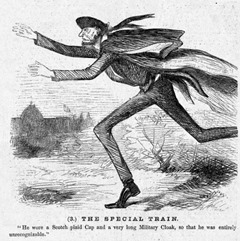
One of severl cartoons in the March 9, 1861 Harper's Weekly issue on Lincoln's furtive entry into WashingtonThe city was startled on Saturday by the intelligence that the President-elect, instead of proceeding on his journey to Washington from Harrisburg, in accordance with the published programme, on Saturday morning, had left the latter city secretly, on a special train, on Friday night, and returning to Philadelphia, had passed thence, unrecognized, through Baltimore, and was already in the Federal Capital. This step, it appears, was induced by the desire to avoid threatened trouble in Baltimore, and was taken at the earnest solicitation of his friends and leading Republicans in Washington, who had received authentic information that an organized demonstration would be made against him in Baltimore–if, indeed, he were allowed to reach there alive, for it was also feared that an attempt would be made to throw the Presidential train from the track on the Northern Central Railroad. This information, it appears, was imparted to Mr. Lincoln on Thursday night at Philadelphia, and he consented, after considerable hesitation, to the private arrangement which was subsequently carried into effect. He reached Washington early on Saturday morning, and proceeded quietly to his hotel, his arrival being known to but few. He soon afterward, in company with Senator Seward, paid a visit to President Buchanan, and interchanged civilities with him and with other gentlemen of distinction.

One Version of the Plot.

The Herald correspondent says: It appears that the plot was concocted in Baltimore, and, being discovered by a detective officer, was by him communicated to two or three leading Republicans, including Mr. Seward and Thurlow Weed. Afterward it was made known to Mr. Judd, of the Presidential party.

“On Thursday last, the intelligence having been privately forwarded to New York, several detectives were at once sent from that city to confer and cooperate with those who had the matter originally in charge. Mr. General Superintendent Kennedy and Commissioner Acton were also on hand. Together they succeeded in ferreting out the details of the conspiracy, and enough has been made known to give it, in the minds of these men, a rank by the side of the most infamous attempts ever made upon human life.

“The exact mode in which the conspirators intended to consummate their designs has not yet transpired; but enough is known to be satisfactory that either an infernal machine was to be placed under the cars or railway, like the Orsini attempt upon Napoleon, or some obstruction placed upon the track whereby the train would be thrown down an embankment at some convenient spot; and that if these failed, then, on the arrival at Baltimore, during the rush and crush of the crowd, as at Buffalo, by knife or pistol, the assassination was to be effected.

“It has also been ascertained that two or three of the conspirators were in New York on Wednesday, the 20th inst., watching the course of events while the President-elect was there.”

Another Version.

The Times correspondent says: On Thursday night after he had retired, Mr. Lincoln was aroused and informed that a stranger desired to see him on a matter of life or death. He declined to admit him unless he gave his name, which he at once did. Of such prestige did the name carry that while Mr. Lincoln was yet disrobed he granted an interview to the caller.

“A prolonged conversation elicited the fact that an organized body of men had determined that Mr. Lincoln should not be inaugurated, and that he should never leave the city of Baltimore alive, if, indeed, he ever entered it.

“The list of the names of the conspirators presented a most astonishing array of persons high in Southern confidence, and some whose fame is not to this country alone.

“Statesmen laid the plan, bankers indorsed it, and adventurers were to carry it into effect. As they understood Mr. Lincoln was to leave Harrisburg at nine o’clock this morning by special train, and the idea was, if possible, to throw the cars from the road at some point where they would rush down a steep embankment and destroy in a moment the lives of all on board. In case of the failure of this project, their plan was to surround the carriage on the way from depot to depot in Baltimore, and assassinate him with dagger or pistol-shot.

“So authentic was the source from which the information was obtained that Mr. Lincoln, after counseling his friends, was compelled to make arrangements which would enable him to subvert the plans of his enemies.

“Greatly to the annoyance of the thousands who desired to call on him last night, he declined giving a reception. The final council was held at eight o’clock.

“Mr. Lincoln did not want to yield, and Colonel Sumner actually cried with indignation; but Mrs. Lincoln, seconded by Mr. Judd and Mr. Lincoln’s original informant, insisted upon it, and at nine o’clock Mr. Lincoln left on a special train. He wore a Scotch plaid cap and a very long military cloak, so that he was entirely unrecognizable. Accompanied by Superintendent Lewis and one friend, he started, while all the town, with the exception of Mrs. Lincoln, Colonel Sumner, Mr. Judd, and two reporters, who were sworn to secrecy, supposed him to be asleep.

“The telegraph wires were put beyond the reach of any one who might desire to use them.”

Yet a Third

The Tribune says : “The facts, as given by Superintendent Kennedy are substantially as follows–The police authorities of Baltimore had come to the conclusion that there would be little demonstration of any kind during Mr. Lincoln’s passage through the city. Indeed, as firmly had they become convinced of this, and that there would be no riotous proceedings, that they had determined to employ a force of only twenty men for the special duty of attending to the route of the Presidential cortege through Baltimore. The reason alleged for this course was, that they wished to demonstrate to the country and to the world the law-and-order character of the city.

“This coming to the ears of General Scott, he at once declared that one of two things must be done: either a military escort must be provided for Mr. Lincoln at Baltimore, or there must be a coup de main by which he should be brought through the city unknown to the populace. Under the circumstances, it was thought that the employment or a military escort might create undue excitement, and the cause of its being brought into requisition misinterpreted. The alternative of employing stratagem was therefore determined upon. A messenger–a civilian, and not a military man–carrying three or four letters from men high in position, and one from General Scott, was therefore immediately dispatched to Philadelphia. He had an interview, and delivered his letters sometime toward midnight of last Thursday. It is not known that the fact was communicated to any other person than Mr. Lincoln on that night. Mr. Lincoln, therefore, was apprised of the deviation from the published plan of his journey before he left Philadelphia. The messenger then went on to make arrangements for the special train which conveyed Mr. Lincoln from Harrisburg the next morning.”

0 comments

Gazaway B. Lamar to Howell Cobb

Miscellaneous document sources

Bank of the Republic,
New York, March 9, 1861.

My Dear Sir: I have yours 5th inst. I had a letter from Mr. Memminger on the subject of the Loan[i] but I could give him no encouragement here at present.

You know that all loans are founded on or have reference to London. At this time money is worth 8 and 10 pct. in London, and Europe has to buy a large amount of bread-stuff as well as to pay for the usual amount of cotton, and to pay in gold; for we are furnishing both the provisions and the cotton and are taking no goods, comparatively. In addition to which they are sending out American stocks of all kinds for sale here, as well to raise money as to secure their investments, which in the disturbed state of the country are in jeopardy. These, with the trouble in the currency at the West, based upon State stocks, which are falling and as they decline are requoted by the Bank Department to be increased in quantity or to be sold to make good the currency. I do not believe Virginia, Missouri or Tennessee will pay their July interest, and perhaps N. Carolina may falter too. These apprehensions no doubt prevent these more cautious men from encountering the expense of Secession.

As you are engaged in revising and making a permanent Constitution I trust that it will be done strictly with the warnings of past experience before you, and that free trade will be prominently set forth. It is your sheet anchor, your best bower, your main stay. It can be made to operate as a two-edged sword in winning Europe to your support and distracting the course of the Northern elements of abolition. [continue reading…]

0 comments

“Fort Sumter is silent now only because of the weakness of the garrison.” — Confederate Records

War of the Rebellion: from the Official Records of the Union and Confederate Armies and Navies

WAR DEPARTMENT, C. S. A.,
Montgomery, March 9, 1861.

Brig. Gen. P. G. T. BEAUREGARD, Charleston:

GENERAL: Your report of the 6th instant has been received at this Department. What you have done and what you propose to do is approved. Push forward your contemplated works with all possible expedition, especially with the view to prevent the re-enforcement of Fort Sumter. This must be prevented at all hazards, and by the use of every conceivable agency. Fort Sumter is silent now only because of the weakness of the garrison. Should re-enforcements get in, her guns would open fire upon you.

There is information at this Department–not official, it is true, but believed to be reliable–that five or six United States ships are in New York Harbor all ready to start.

The United States steamer Pawnee has left Philadelphia suddenly for Washington, fully provisioned and ready to go to sea, and it is probable that the effort to re-enforce Sumter may be made by sending in men in whale-boats by night. Should this plan succeed and the garrison be re-enforced sufficiently to stand an assault the attempt may be made to fight their way up by five or six war vessels.

In his report to this Department Major Whiting suggested the possibility of re-enforcements by land. Upon examining the map it occurs to me that this possibility might be accomplished in two ways: First, at the south of Morris Island there is an inlet which connects with Schooner Creek, and affords a water communication in the rear of all our works directly up to Fort Sumter. The creeks are, however, very winding, and probably if taken in hand at once could easily be obstructed by sinking flats or boats. Second, Stono River affords, I should think, an entrance to vessels of from eight to twelve feet draught, which may land troops on James Island, or go through a cut known as James Island Cut. Neither method, I take it, would be practicable if any troops were on James Island; but in the absence of them a sudden rush might possibly avail.

These suggestions are made without special knowledge, and are submitted for your consideration.

I have the honor to be, very respectfully, your obedient servant,

L. P. WALKER,

Secretary of War.

0 comments

Horatio Nelson Taft

Diary of US patent clerk Horatio Nelson Taft.

SATURDAY 9

A rainy morning but most of the day was rather pleasant. No particular news stirring. Spent an hour after dinner with Bro. at the office of Dr John W [Bulkley?] and his father Solomon [Bulkley?] talking of Williamstown people &c. Went down to Willards with Bro. and from there to the “National” to see Philip Dorsheimer. He had left on the 3.10 train. We got the evening NY papers. Called at “Kirkwoods” and came home about 9 o’clock and read the news till 11 o’clock and then went to bed.


The three diary manuscript volumes, Washington during the Civil War: The Diary of Horatio Nelson Taft, 1861-1865, are available online at The Library of   Congress.

0 comments

Shot Fired at Fort Sumter — Confederate Records

War of the Rebellion: from the Official Records of the Union and Confederate Armies and Navies

HDQRS. PROV. ARMY
CONFEDERATE STATES
OF AMERICA
Charleston, S.C., March 9, 1861.

‘

Hon. L. P. WALKER, Secretary of War, Montgomery, Ala.:

SIR: I inclose you herewith the report of Col. M. Gregg, First Regiment South Carolina Volunteers, commanding on Morris Island, at the entrance of this harbor, reporting the circumstances connected with the accidental shooting of a loaded gun towards Fort Sumter on the 8th instant. From the inquiries thus far made, it would appear to have been entirely accidental; but I have ordered a thorough investigation of the affair to be made at once, and in order to prevent the recurrence of an event which might be attended with such disastrous consequences, I have ordered that hereafter no gun should be practiced with without first ascertaining whether it be loaded or not.

The channel batteries are progressing regularly, and the other works are being corrected and consolidated. Nothing new otherwise.

I remain, sir, very respectfully, your obedient servant,

G. T. BEAUREGARD,

Brigadier-General, Commanding.

[Inclosure. 1]

HEADQUARTERS MORRIS ISLAND, S.C.,
March 8, 1861.

To the CHIEF OF STAFF OF BRIGADIER-GENERAL BEAUREGARD:

SIR: I am informed by Major Stevens that a shot was accidentally fired from the iron battery this morning, which struck Fort Sumter. Major Stevens was practicing with blank cartridges, and does not know how a shot got in. He does not suspect that it was put in by any man intentionally. Major Stevens is about to go with a flag to Fort Sumter to explain the accident.

I have to request that General Beauregard will forward this note for the information of the commander-in-chief.

I have the honor to be, your obedient servant,

MAXCY GREGG,

Colonel First Regiment South Carolina Volunteers,
Commanding on Morris Island.

0 comments

Lincoln’s Inaugural—Opinions of the Abolition Press

Civil War Day-by-Day

March 9, 1861; The Charleston Mercury

(From the New York Tribune.)

The address cannot fail to exercise a happy influence upon the country. The tone of almost tenderness with which the South is called upon to return to her allegiance cannot fail to convince even those who differ from Mr. Lincoln that he earnestly and seriously desires to avoid all difficulty and disturbance, while the firmness with which he avows his determination to obey the simple letter of his duty must command the respect of the whole country, while it carries conviction of his earnestness of purpose, and of his courage to enforce it.

(From the World.)

Mr. Lincoln has been long enough in Washington to show that he has a firm, independent judgment of his own, and that he well knows how to blend determination with prudence. We look for a vigorous yet discreet management of our national difficulties–just the policy best calculated to avert bloodshed, and yet maintain the Federal authority in all its rightful strength. With time passion will subside, misapprehension disappear; and with time, too, the stupendous practical difficulties in the ways of keeping up the Government of the so styled, “Confederate States” will develop themselves and will cause a revulsion of popular feeling that will give traitors a lesson for all time to come. In spite of the treachery of the old pilot, the ship has weathered the worst of the storm and doubled the cape. Under the new guidance we hope soon to be in smoother waters.

(From the Times.)

The characteristic feature of the address is its profound sincerity–the earnest determination which it evinces to render equal and exact justice to every States, to every section, to every interest of the Republic–and to administer the [continue reading…]

0 comments