The News

Civil War Day-by-Day

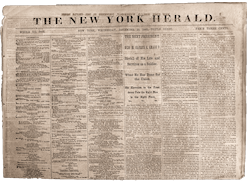
March 20, 1861; The New York Herald

The news from Washington is important. An armistice has been agreed upon between the Commissioners of the Confederate States and the administration, and for a short time at least no disturbances need be feared. Affairs at Fort Pickens have assumed a peaceful aspect, and the commanders of the vessels off Pensacola have been instructed to await further orders. The idea of a peaceful separation seems now to prevail even in republican counsels, as infinitely preferable to the assertion and maintenance of federal laws among a people who are determined to resist them.

The evacuation of Fort Sumter will take place on Saturday, and Major Anderson and troops leave on the steamer Columbia for this city. Yesterday fifty of the soldiers received their pay from the government. It is stated that the Confederate States will be generally recognized by the European Powers. The leading men at Charleston are anxious for speedy settlement of affairs, but the prevailing opinion is that it can only be accomplished outside of the Union, and that even the extinction of the republican party would not restore them to the Union as it was before secession.

The arms seized by the New York police have at last all been restored, and sent on to Savannah. The fact having been telegraphed to responsible parties in Georgia, an answer has been received over the wires announcing the release of the vessels detained by the authorities of that State in reprisal for that seizure. Full particulars will be found elsewhere.

The resolution of Mr. Douglas, in reference to the forts, arsenals, navy yards, and other public property in the seceded States, was taken up in the Senate yesterday. A debate, in which several Senators participated, ensued, but without taking any definitive action on the resolution the Senate went into executive session.

0 comments

Enfield Rifles

Civil War Day-by-Day

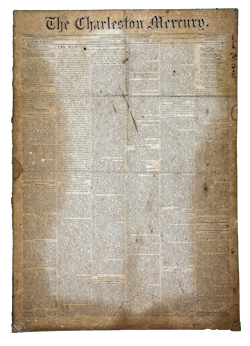
March 20, 1861; The Charleston Mercury

FORTY OF THE ABOVE CELEBRATED RIFLES, WITH BAYONETS. ALSO, MAYNARD’S RIFLES, COLT’S REVOLVERS, INFANTRY SWORDS, &c. For sale by

GRAVELEY & PRINGLE,

No. 44 East Bay, South of the Postoffice

0 comments

An Extra Session of Congress—The Ultimatum of the South

Civil War Day-by-Day

March 20, 1861; The New York Herald

From our Washington intelligence, as well as from the necessities of the administration, it is probable an extra session of Congress will be called by the President. We are in favor of calling an extra session, not to pass a Force bill, but to devise some plan by which the Union may be reconstructed, or harmonious relations between the North and South established. The best thing the new Congress when assembled can do is to adopt the permanent constitution of the Confederate States, and submit it to the other States for adoption by the constitutional number of three-fourths of the whole. This would settle the question and restore peace and harmony to a troubled nation, while at the same time every statesman and every man of common sense must admit that the new constitution is a decided improvement on the old, and there is nothing in it to prohibit the admission of free States, as South Carolina desired–the annexation only requiring a two-thirds vote of Congress.

The convention which Mr. Lincoln proposes is now too late. The seven States which have seceded could not be represented, and the action of a convention in which they would have no voice would not be binding on them. There is no other alternative, therefore, left than to take the constitution as amended by the Confederate States and adopt their amendments. Most of these amendments were proposed in the Convention which adopted the old constitution, and experience has proved that they ought to have been then agreed to. The old constitution, without the eleven amendments subsequently adopted, would have been very imperfect. The Bill of Rights embodied in those amendments, and suggested chiefly by Jefferson, is more important than any provisions in the original constitution. The amendments now adopted by the Confederate States are of great practical value, and seem absolutely necessary for the proper working of our complicated system of government. Whatever is new will be admitted by the most violent abolitionists to be an improvement upon our present constitution, and what relates to slavery is not new, but the old defined, explained and made practical. [continue reading…]

0 comments

Transit of Merchandize Through the Confederate States

Civil War Day-by-Day

March 20, 1861; The Charleston Mercury

By an Act of the Congress, wares and merchandize, imported from any foreign country into the Confederate States, destined for any foreign country, may be entered and have transit through the Confederate States free of duty, subject to the such regulations as the Secretary of the Treasury from time to time shall make. Power is also given to the Secretary of the Treasury to make regulations as he may deem expedient for the safety of the revenue and for the public convenience, which regulations may be enforce in the manner prescribed by law as to other regulations in relation to the revenue. These are provisions of no little importance to our citizens.

0 comments

Flags and Foraging

Civil War Day-by-Day

March 20, 1861, Tri-Weekly Alamo Express , San Antonio, TX

The brave men who went to take charge of Forts Clark and Duncan found it convenient to take advantage of the war times to forage upon the poor people along the route, by killing their hogs, &c.

On Tuesday last a salute of seven guns were fired and the flag of the Southern Confederacy was hoisted over the Alamo. We advise these brave flag-raisers to look sharp or the ghosts of Crocket and Travis will haunt them.

0 comments

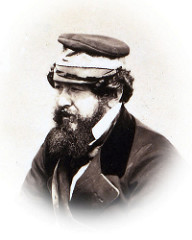
“If the British or any foreign power were threatening the fort, our Government would find means of relieving it fast enough.”—Diary of William Howard Russell

My Diary North and South – William Howard Russell

March 19. The morning newspapers contain reports of last night’s speeches which are amusing in one respect, at all events, as affording specimens of the different versions which may be given of the same matter. A “citizen” who was kind enough to come in to shave me, paid me some easy compliments, in the manner of the “Barber of Seville,” on what he termed the “oration” of the night before, and then proceeded to give his notions of the merits and defects of the American Constitution. “He did not care much about the Franchise–it was given to too many he thought. A man must be five years resident in New York before he is admitted to the privileges of voting. When an emigrant arrived, a paper was delivered to him to certify the fact, which he produced after a lapse of five years, when he might be registered as a voter; if he omitted the process of registration, he could however vote if identified by two householders, and a low lot,” observed the barber, “they are–Irish and such like. I don’t want any of their votes.”

In the afternoon a number of gentlemen called, and made the kindest offers of service; letters of introduction to all parts of the States; facilities of every description–all tendered with frankness.

I was astonished to find little sympathy and no respect for the newly installed Government. They were regarded as obscure or undistinguished men. I alluded to the circumstance that one of the journals continued to speak of “The President” in the most contemptuous manner, and to designate him as the great “Rail Splitter.” “Oh yes,” said the gentleman with whom I was conversing, “that must strike you as a strange way of mentioning the Chief Magistrate of our great Republic, but the fact is, no one minds what the man writes of any one, his game is to abuse every respectable man in the country in order to take his revenge on them for his social exclusion, and at the same time to please the ignorant masses who delight in vituperation and scandal.”

In the evening, dining again with my friend the banker, I had a favourable opportunity of hearing more of the special pleading which is brought to bear on the solution of the gravest political questions. It would seem as if a council of physicians were wrangling with each other over abstract dogmas respecting life and health, whilst their patient was struggling in the agonies of death before them! In the comfortable and well-appointed house wherein I met several men of position, acquirements, and natural sagacity, there was not the smallest evidence of uneasiness on account of circumstances which, to the eye of a stranger, betokened an awful crisis, if not the impending dissolution of society itself. Stranger still, the acts which are bringing about such a calamity are not regarded with disfavour, or, at least, are not considered unjustifiable.

Among the guests were the Hon. Horatio Seymour, a former Governor of the State of New York; Mr. Tylden, an acute lawyer; and Mr. Bancroft; the result left on my mind by their conversation and arguments was that, according to the Constitution, the Government could not employ force to prevent secession, or to compel States which had seceded by the will of the people to acknowledge the Federal power. In fact, according to them, the Federal Government was the mere machine put forward by a Society of Sovereign States, as a common instrument for certain ministerial acts, more particularly those which affected the external relations of the Confederation. I do not think that any of the guests sought to turn the channel of talk upon politics, but the occasion offered itself to Mr. Horatio Seymour to give me his views of the Constitution of the United States, and by degrees the theme spread over the table. I had bought the “Constitution” for three cents in Broadway in the forenoon, and had read it carefully, but I could not find that it was self-expounding; it referred itself to the Supreme Court, but what was to support the Supreme Court in a contest with armed power, either of Government or people? There was not a man who maintained the Government had any power to coerce the people of a State, or to force a State to remain in the Union, or under the action of the Federal Government; in other words, the symbol of power at Washington is not at all analogous to that which represents an established Government in other countries. Quid prosunt leges sine armis? Although they admitted the Southern leaders had meditated “the treason against the Union ” years ago, they could not bring themselves to allow their old opponents, the Republicans now in power, to dispose of the armed force of the Union against their brother democrats in the Southern States.

Mr. Seymour is a man of compromise, but his views go farther than those which were entertained by his party ten years ago. Although secession would produce revolution, it was, nevertheless, “a right,” founded on abstract principles, which could scarcely be abrogated consistently with due regard to the original compact. One of the company made a remark which was true enough, I dare say. We were talking of the difficulty of relieving Fort Sumter–an infallible topic just now. “If the British or any foreign power were threatening the fort,” said he, “our Government would find means of relieving it fast enough.” In fact, the Federal Government is groping in the dark–and whilst its friends are telling it to advance boldly, there are myriad voices shrieking out in its ears, “If you put out a foot you are lost.” There is neither army nor navy available, and the ministers have no machinery of rewards, and means of intrigue, or modes of gaining adherents known to European administrations. The democrats behold with silent satisfaction the troubles into which the republican triumph has plunged the country, and are not at all disposed to extricate them. The most notable way of impeding their efforts is to knock them down with the “Constitution” every time they rise to the surface and begin to swim out.

New York society, however, is easy in its mind just now, and the upper world of millionaire merchants, bankers, contractors, and great traders are glad that the vulgar republicans are suffering for their success. Not a man there but resented the influence given by universal suffrage to the mob of the city, and complained of the intolerable effects of their ascendancy– of the corruption of the municipal bodies, the venality of electors and elected, and the abuse, waste, and profligate outlay of the public funds. Of these there were many illustrations given to me, garnished with historiettes of some of the civic dignitaries, and of their coadjutors in the press; but it did not require proof that universal suffrage in a city of which perhaps three fourths of the voters were born abroad or of foreign parents, and of whom many were the scum swept off the seethings of European populations, must work most injuriously on property and capital. I confess it is to be much wondered at that the consequences are not more evil; but no doubt the time is coming when the mischief can no longer be borne, and a social reform and revolution must be inevitable.

Within only a very few hundreds of yards from the house and picture-gallery of Mons. B––, the representative of European millions, are the hovels and lodgings of his equals in political power. This evening I visited the house of Mons. B––, where his wife had a reception, to which nearly the whole of the party went. When a man looks at a suit of armour made to order by the first blacksmith in Europe, he observes that the finish of the joints and hinges is much higher than in the old iron clothes of the former time. Possibly the metal is better, and the chasings and garniture as good as the work of Milan, but the observer is not for a moment led to imagine that the fabric has stood proof of blows, or that it smacks of ancient watch-fire. If he were asked why it is so, he could not tell; any more perhaps than he could define exactly the difference between the lustrous, highly-jewelled, well-greaved Achaian of New York and the very less effective and showy creature who will in every society over the world pass muster as a gentleman. Here was an elegant house– I use the word in its real meaning–with pretty statues, rich carpets, handsome furniture, and a gallery of charming Meissoniers and genre pieces; the saloons admirably lighted–a fair fine large suite, filled with the prettiest women in the most delightful toilettes, with a proper fringe of young men, orderly, neat, and well turned-out, fretting against the usual advanced posts of turbaned and jewelled dowagers, and provided with every accessory to make the whole good society ; for there was wit, sense, intelligence, vivacity; and yet there was something wanting–not in host or hostess, or company, or house–where was it ?–which was conspicuous by its absence. Mr. Bancroft was kind enough to introduce me to the most lovely faces and figures, and so far enabled me to judge that nothing could be more beautiful, easy, or natural than the womanhood or girlhood of New York. It is prettiness rather than fineness; regular, intelligent, wax-like faces, graceful little figures; none of the grandiose Roman type which Von Raumer recognised in London, as in the Holy City, a quarter of a century ago. Natheless, the young men of New York ought to be thankful and grateful, and try to be worthy of it. Late in the evening I saw these same young men, Novi Eboracenses, at their club, dicing for drinks and oathing for nothing, and all very friendly and hospitable.

The club-house is remarkable as the mansion of a happy man who invented or patented a waterproof hat-lining, whereby he built a sort of Sallustian villa, with a central court-yard, à l’Alhambra, with fountains and flowers, now passed away to the New York Club. Here was Pratt’s, or the defunct Fielding, or the old C. C. C.’s in disregard of time and regard of drinks– and nothing more.

0 comments

“The Cabinet does not seem to be a unit upon all questions and it may not hold together long.”—Horatio Nelson Taft

Diary of US patent clerk Horatio Nelson Taft.

TUESDAY 19

Another cold day. M. 19 early this morning, but the sun took the snow off before night. There does not seem to be any news in particular afloat but Warlike rumors are in the secession papers. The Cabinet does not seem to be a unit upon all questions and it may not hold together long. Sent packages of seeds from the Agriclt Room to both the Editors at Lyons, Tinsley & Van Camp. Went down to the Ave with Juliet. Called upon Miss Douglas on H Street. She commences school with Miss D. tomorrow. 11 o’clock.


The three diary manuscript volumes, Washington during the Civil War: The Diary of Horatio Nelson Taft, 1861-1865, are available online at The Library of   Congress.

0 comments

Winfield Scott to G. V. Fox

War of the Rebellion: from the Official Records of the Union and Confederate Armies and Navies

Headquarters Of The Army,

Washington, March 19, 1861.

Dear Sir: In accordance with the request contained in a note from the Secretary of War to me, of which I annex a copy, I request that you will have the goodness to proceed to Charleston, S. C, and obtain permission, if necessary, to visit Fort Sumter, in order to enable you to comply with the wish expressed in the Secretary’s note.

Please, on your return, to report accordingly.

I remain, with high consideration, your most obedient servant,

Winfield Scott.

G. V. Fox, Esq.

0 comments

Work from home in 1861

Miscellaneous document sources

Thomas R. R. Cobb to Howell. Cobb.

Savannah [Ga.], Tuesday Mar. 19, 1861.

Dear Brother, Your letter together with three from my wife and some forty others have been lying in the P. O. here for several days while I was in blissful ignorance.

I am perfectly willing to labor for the Confederate States. I will gratuitously give my time and talent to revising the laws; but I cannot abandon my family now to spend two months more in Montgomery. If this is necessary I decline. If I can work at home and report to my associates at M[ontgomery] when I return there in May then I will accept. Let me know at once, as I will correspond with them and arrange parts.

Understand that I appreciate your willingness to appoint me but I have no anxiety or wish for the place. Nothing but an honest desire to do something for the country induces me to consider the proposition. [continue reading…]

0 comments

Volunteers in Florida – Confederate Correspondence

War of the Rebellion: from the Official Records of the Union and Confederate Armies and Navies

WAR DEPARTMENT, March 19, 1861.

Lieut. Gen. WINFIELD SCOTT:

DEAR SIR: The President requires accurate information in regard to the command of Major Anderson in Fort Sumter, and wishes a competent person sent for that purpose. You will therefore direct some suitable person to proceed there immediately, and report the result of the information obtained by him.

I am, sir, very respectfully,

SIMON CAMERON.

Secretary of War.

[Indorsements.]

The within may do good and can do no harm. It commits no one.

WINFIELD SCOTT.

The order of which this is a copy was presented to the President March 19, 1861.

G. V. Fox, formerly of the Navy, was selected by General Scott as the messenger, and approved by the President.

S.C.

0 comments

The Secession of North Carolina

War of the Rebellion: from the Official Records of the Union and Confederate Armies and Navies

EXECUTIVE DEPARTMENT,
Montgomery, Ala., March 19, 1861.

Hon. L. P. WALKER, Secretary of War, Montgomery, Ala.:

SIR: From the most reliable information I have reasons to apprehend that difficulty will occur in regard to the transfer of the State troops now at Pensacola to the Government of the Confederate States unless some steps are taken to avoid it. The troops express fears that they are to be transferred without the privilege of electing their colonel and majors, and that they will be continued in service for twelve months, even if pending difficulties should be amicably arranged in a shorter time.

I have said to Captains Baker and Clark, who are here for the purpose of getting information on the subject, that I did not consider there were any reasonable grounds for such apprehension; that the ordinance under which they volunteered authorized the volunteers “when organized into regiments or battalions to elect their regimental field officers,” and that I presumed this provision of the ordinance would not be disturbed. I further stated to them that said ordinance provided that “volunteers shall not be accepted for a less term of service than one year, unless sooner discharged by the governor,” and that it had been my intention so soon as the three-years’ recruits should be raised, organized, and stationed at the forts to relieve the volunteers, unless there was a necessity for their services. Captains Baker and Clark seem to have no doubt that if the Secretary of War concurs in the views above expressed by me all difficulties will be removed.

I regard it as a matter of the utmost importance that this question should be so understood that the troops will not hesitate to be transferred at once. Should they decline, I fear the effect upon other troops and the public service.

In a few days companies enough will be at Pensacola to constitute a regiment, and officers can be elected. Nine companies will be there to-morrow. Will you say to me in reply to this whether or not this will be acceptable to the Confederate Government?

I take it as granted that the volunteers will be discharged so soon as by the establishment of peace the necessity for their services ceases. Let me assure you that the object of this letter is to secure the consent of the troops to their immediate transfer. Any doubt upon the subject of their consent gives me pain and trouble.

Very respectfully, your obedient servant,

A. B. MOORE.

0 comments

Volunteers from Georgia

War of the Rebellion: from the Official Records of the Union and Confederate Armies and Navies

[WASHINGTON, March 19, 1861.]

Governor JOHN W. ELLIS, Raleigh, N. C.:

It is believed that the North Carolina forts will immediately be garrisoned by Lincoln.

T. L. CLINGMAN.

0 comments

Fort Pickens: “…nothing has happened to disturb the peaceable relations existing between the United States forces and those opposing us.”

War of the Rebellion: from the Official Records of the Union and Confederate Armies and Navies

WAR DEPARTMENT,
Montgomery, March 19, 1861.

Brig. Gen. BRAXTON BRAGG,
Commanding Troops near Pensacola, Fla.:

SIR: Capt. G. W. Lee, of Atlanta, who will present you this letter, is in command of a company of volunteers from Georgia. This company, consisting of one hundred men, chiefly artisans, is exclusive of the quota which has been required from that State, and the Secretary of War desires you will cause the officers and men to be mustered into service and assigned to duty.

The requisition for the 5,000 troops for your command, mentioned in the communication from this office of the 14th instant, is now being rapidly filled. The several commands will be pushed forward with the least practicable delay, and may be shortly expected to report to you.

Very respectfully, your obedient servant,

S. COOPER,

Adjutant-General.

P. S.–I take occasion to inform you that the Government has accepted the services of a battalion of Louisiana Zouaves, to consist of not less than four hundred or more than five hundred men, with a proper proportion of commissioned and non-commissioned officers, to serve in the Provisional Army of the Confederate States for a period of twelve months or during the war, unless sooner discharged. One hundred and fifty men of this battalion will be immediately sent to your command, and the remainder of this battalion will follow a few days after.

0 comments

Views of Vice President Stephens

Civil War Day-by-Day

March 19, 1861; Richmond Enquirer

Mr. A.H. Stephens, Vice President of the Southern Confederacy, reached Atlanta from Montgomery on Monday last, and was received with every demonstration of respect, admiration and confidence on the part of the people of Fulton and the adjoining counties. The Atlanta “Confederacy” says: “Expectation was on the tip-toe and the whole population were out to meet their favorite. We do not remember ever before to have seen so large an assemblage of our citizens brought together. The numerous military companies in full dress, and the fire departments with gay uniforms and brilliant torches were out in full force.”

We publish a synopsis of Mr. Stephens’ speech on the occasion, as given in the “Confederacy,” knowing that it will be perused with interest and satisfaction by our readers.

Mr. Stephens, let it be borne in mind, occupies the second place officially in the new Confederacy; a position to which he was called by the Congress thereof, and by their constituents of all parties. The people of Georgia, and other people who know him, acknowledge the fidelity of the picture of A. H. Stephens as drawn in his memorable Congressional canvass of 1855, by an enthusiastic friend and admirer–thus:

“Stephens is small in stature, weighing only 100 pounds, sometimes more, sometimes less; but he is the best illustration of multum in parvo to be found anywhere. There is much contained beneath his diminutive exterior–an intellectual and moral treasure which you will rarely find in a clay-tenement either large or small. He unites the eloquence of a Randolph with the simplicity and purity of a Macon.”

Such, we say, is the estimation in which Mr. Stephens is held by his Southern neighbors and friends. Thus introduced and endorsed, his statement of the present and his opinion of the future of the Southern Confederacy, cannot fail to have its [continue reading…]

0 comments

The Ultimatum of the South—What Ought the Administration to do

Civil War Day-by-Day

March 19, 1861; The New York Herald

Mr. Lincoln and his advisers have, at length, an opportunity of throwing off the selfishness, fanaticism, and suicidal imbecility, which have, so far, characterized the course of the present administration, and of taking measures which cannot fail to secure a reconstruction of the Union, within a limited period. The adoption by the Montgomery Congress of a constitution, is equivalent to a manifesto to the rest of the country, of the precise wants of the people of the seceding States. It may be regarded as the ultimatum of the South to the North, and as the only basis upon which the former will consent to negotiate with those whose yoke they have recently thrown off. It affords an opening for such a fair and peaceful interchange of sentiment, between the rival sections of the country, as a Madison, Washington, and Jefferson–nay, a Clay, Webster or Cass–would have availed themselves of with avidity, to pacify conflicting interests. It should cause the Cabinet of Mr. Lincoln to reconsider the determination, not to receive Messrs. Roman, Forsyth and Crawford, and incline them to listen with respect to the representations of the legitimate delegates of five millions of citizens. Granted that the Southern confederacy is revolutionary, it is, nevertheless, the successful revolt of seven States, whose numbers may possibly be increased to fifteen; and, unless the President is bent upon civil war, and irretrievable disaster to the republic, he will cease to screen himself, behind pettifogging technicalities, from the grave responsibility which the exigency of the times imposes upon him.

There is no point of difference between the constitution of the United States, and that which has been adopted by the Southern confederacy, in which the provisions of the latter are not an improvement upon the former. No amendment is made to protect slavery, beyond such an explanation of the old constitution, as shall restore those privileges to slaveholders, of which exceptionable, local legislation, in the Northern States, has robbed them. The Presidential term of office is increased to six years; protective tariffs are prohibited; subordinate officials are rendered irremovable, excepting for cause; Cabinet officers may be given seats in the Senate, or House, at the pleasure of Congress; the Post Office is required to pay its own expenses; appropriations from the Treasury can only be made by a two-thirds vote; Senators [continue reading…]

0 comments

The Two Tariffs North and South

Civil War Day-by-Day

March 19, 1861; The New York Herald

We publish today the tariff recently adopted by the Northern Congress at Washington and the one virtually agreed upon by the Southern Congress at Montgomery, both in estenso, and they present, we think, a fair contrast between the legislative capacity of these two bodies. It is impossible to deny to the Southern tariff an exemplification of statesmanship, enlightenment, wisdom and a knowledge of governing a great and enterprising people, which are wholly wanting in the other document.

The two measures, in fact, differ as much in spirit as the eighteenth and the nineteenth centuries; they are as widely different as the legislation of the Mountain in revolutionary France, or the Puritan legislation of the old Commonwealth of England, and the legislation of these two countries at the present day, as any commercial man who understands the subject may see by comparing the one with the other.

The tariff of the Washington Congress is the most ignorant, useless, blundering and pernicious enactment that ever was concocted for the avowed purpose of bettering the interests of the country. On the contrary, the tariff of the Montgomery Congress is a sound, practical and intelligible measure, and as such it will command the admiration of the statesmen of England and France, and all the commercial nations of Europe. They will discover, from the comparison, that the art of government is with the South, and not with the North, and they will be guided by that conviction in their policy as regards the two sections.

For the last forty years a set of stockjobbers and speculators in the North, and especially in New York, New England and Pennsylvania, have been using Congress on this question of tariff and revenue for their own benefit, and for purely stockjobbing purposes, just precisely as they operate in the corner gatherings in Wall street; and they have readily found [continue reading…]

0 comments

The News

Civil War Day-by-Day

March 19, 1861; The New York Herald

The public will find in the HERALD of this morning the two new tariffs which are destined to play an important part in the settlement of the troubles which now surround the United States. The Southern tariff is very simple and easily understood, but the Northern tariff is full of incongruities, and we have therefore endeavored to make it clear by throwing it alphabetically in tabular form. This tariff, so arranged, is thus ready for immediate reference. It will be perceived that spirits of turpentine, Peruvian bark, and other manufactures of flax, are liable to different rates of duty, without a distinct specification. Several interpolations also appear in different parts of the official document, whether clerical errors or legal alterations, is not stated. They will lead to litigations and trouble, annoyance and expense.

One of the effects of this Morrill tariff, however, will be to settle the question of the navigation of the Mississippi river–the only one which looked threatening to the South. The Southern tariff being lower than the Northern, all goods destined for Memphis, St. Louis, Cincinnati and other ports of entry in the West, will be landed at New Orleans, giving employment to the boats and railroads on and near the Mississippi river, and reviving the old business as it flourished before the East opened its artificial connections with the West.

A despatch from Savannah intimates that goods in transit through the Confederate States for such States as are without their jurisdiction can proceed to their destination without payment of duties.

Advices from Charleston state that a despatch had been received in that city from Havre, intimating that ships from the Confederate States would be admitted into that port on the same footing as those carrying the federal flag.

The administration having come to a decision upon the claims of applicants, the following gentlemen have been appointed to represent the nation abroad:

Charles Francis Adams–Minister to England

William L. Layton–Minister to France

N. P. Judd–Minister to Prussia

George P. Marsh–Minister to Sardinia

James Watson Webb–Minister to Turkey

Jacob T. Halderman–Minister to Sweden

W. S. Thayer–Consul General to Alexandria.

Nothing of importance transpired in the Senate of the United States yesterday beyond the confirmation of appointments and the delivery of a speech by Mr. Breckinbridge on the resolution of Mr. Douglas.

Advices from Fort Brown intimate the surrender of the Ringgold Barracks at Brazos Santiago to the Texan troops, and that its evacuation would take place on the 20th inst. Col. Ben McCulloch is now on his way to Richmond to purchase arms for the State of Texas. He will also endeavor to induce President Davis to form a regiment of mounted riflemen for the protection of the Texan frontier.

The tenor of advices from Washington indicate no change in the policy of the administration relative to the reception of the Southern Commissioners. Preparations for the evacuation of Fort Sumter will probably be inaugurated in a few days, but the mode in which it will take place has not yet been decided upon. The rush of place hunters still continues.

The attendance of members in both branches of our State Legislature yesterday was rather slim, and the proceedings were not in the main of great importance. In the Senate but little business was transacted. Among the few bills introduced was one to amend the Revised Statutes in relation to the assessment and collection of taxes. The bill amendatory of the act establishing regulations for the port of New York was ordered to a third reading. In the Assembly a number of petitions in favor of a railroad in Broadway were presented. Progress was reported on the Metropolitan Health bill, and also on the bill to amend the city charter. Various other reports were made, and different bills otherwise acted upon, but none of them of general interest.

0 comments

St. Patty’s 1861.—William Howard Russell

My Diary North and South – William Howard Russell

Monday, 18th.–”St. Patrick’s day in the morning” being on the 17th, was kept by the Irish to-day. In the early morning the sounds of drumming, fifing, and bugling came with the hot water and my Irish attendant into the room. He told me: “We’ll have a pretty nice day for it. The weather’s often agin us on St. Patrick’s day.” At the angle of the square outside I saw a company of volunteers assembling. They wore bear-skin caps, some turned brown, and rusty green coatees, with white facings and crossbelts, a good deal of gold-lace and heavy worsted epaulettes, and were armed with ordinary muskets, some of them with flintlocks. Over their heads floated a green and gold flag with mystic emblems, and a harp and sunbeams. A gentleman, with an imperfect seat on horseback, which justified a suspicion that he was not to the manner born of Squire or Squireen, with much difficulty was getting them into line, and endangering his personal safety by a large infantry-sword, the hilt of which was complicated with the bridle of his charger in some inexplicable manner. This gentleman was the officer in command of the martial body, who were gathering to do honour to the festival of the old country, and the din and clamour in the streets, the strains of music, and the tramp of feet outside announced that similar associations were on their way to the rendezvous. The waiters in the hotel, all of whom were Irish, had on their best, and wore an air of pleased importance. Many of their countrymen outside on the pavement exhibited very large decorations, plates of metal, and badges attached to broad ribbons over their left breasts.

After breakfast I struggled with a friend through the crowd which thronged Union Square. Bless them! They were all Irish, judging from speech, and gesture, and look; for the most part decently dressed, and comfortable, evidently bent on enjoying the day in spite of the cold, and proud of the privilege of interrupting all the trade of the principal streets, in which the Yankees most do congregate, for the day. They were on the door-steps, and on the pavement men, women, and children, admiring the big policemen–many of them compatriots–and they swarmed at the corners, cheering popular town-councillors or local celebrities. Broadway was equally full. Flags were flying from the windows and steeples – and on the cold breeze came the hammering of drums, and the blasts of many wind instruments. The display, such as it was, partook of a military character, though not much more formidable in that sense than the march of the Trades Unions, or of Temperance Societies. Imagine Broadway lined for the long miles of its course by spectators mostly Hibernian, and the great gaudy stars and stripes, or as one of the Secession journals I see styles it, the “Sanguinary United States Gridiron”–waving in all directions, whilst up its centre in the mud march the children of Erin.

First came the acting Brigadier-General and his staff, escorted by 40 lancers, very ill-dressed, and worse mounted; horses dirty, accoutrements in the same condition, bits, bridles, and buttons rusty and tarnished; uniforms ill-fitting, and badly put on. But the red flags and the show pleased the crowd, and they cheered “bould Nugent” right loudly. A band followed, some members of which had been evidently “smiling” with each other; and next marched a body of drummers in military uniform, rattling away in the French fashion. Here comes the 69th N. Y. State Militia Regiment–the battalion which would not turn out when the Prince of Wales was in New York, and whose Colonel, Corcoran, is still under court martial for his refusal. Well, the Prince had no loss, and the Colonel may have had other besides political reasons for his dislike to parade his men.

The regiment turned out, I should think, only 200 or 220 men, fine fellows enough, but not in the least like soldiers or militia. The United States uniform which most of the military bodies wore, consists of a blue tunic and trousers, and a kepi-like cap, with “U. S.” in front for undress. In full dress the officers wear large gold epaulettes, and officers and men a bandit-sort of felt hat looped up at one side, and decorated with a plume of black-ostrich feathers and silk cords. The absence of facings, and the want of something to finish off the collar and cuffs, render the tunic very bald and unsightly. Another band closed the rear of the 69th, and to eke out the military show, which in all was less than 1,200 men, some companies were borrowed from another regiment of State Militia, and a troop of very poor cavalry cleared the way for the Napper-Tandy Artillery, which actually had three whole guns with them! It was strange to dwell on some of the names of the societies which followed. For instance, there were the “Dungannon Volunteers of ’82” prepared of course to vindicate the famous declaration that none should make laws for Ireland, but the Queen, Lords, and Commons of Ireland! Every honest Catholic among them ignorant of the fact that the Volunteers of ’82 were all Protestants. Then there was the “Sarsfield Guard!” One cannot conceive anything more hateful to the fiery high-spirited cavalier, than the republican form of Government, which these poor Irishmen are, they think, so fond of. A good deal of what passes for national sentiment, is in reality dislike to England and religious animosity.

It was much more interesting to see the long string of Benevolent, Friendly and Provident Societies, with bands, numbering many thousands, all decently clad, and marching in order with banners, insignia, badges and ribbons, and the Irish flag flying along side the “stars and stripes.” I cannot congratulate them on the taste or good effect of their accessories –on their symbolical standards, and ridiculous old harpers, carried on stages in “bardic costume,” very like artificial white wigs and white cotton dressing-gowns, but the actual good done by these societies, is, I am told, very great, and their charity would cover far greater sins than incorrectness of dress, and a proneness to “piper’s playing on the national bagpipes.” The various societies mustered upwards of 10,000 men, some of them uniformed and armed, others dressed in quaint garments, and all as noisy as music and talking could make them. The Americans appeared to regard the whole thing very much as an ancient Roman might have looked on the Saturnalia; but Paddy was in the ascendant, and could not be openly trifled with.

The crowds remained in the streets long after the procession had passed, and I saw various pickpockets captured by the big policemen, and conveyed to appropriate receptacles. “Was there any man of eminence in that procession,” I asked. “No; a few small local politicians, some wealthy store-keepers, and beer-saloon owners perhaps; but the mass were of the small bourgeoisie. Such a man as Mr. O’Conor, who may be considered at the head of the New York bar for instance, would not take part in it.”

In the evening I went, according to invitation, to the Astor House–a large hotel, with a front like a railway terminus, in the Americo-Classical style, with great Doric columns and portico, and found, to my surprise, that the friendly party was to be a great public dinner. The halls were filled with the company, few or none in evening dress; and in a few minutes I was presented to at least twenty-four gentlemen, whose names I did not even hear. The use of badges, medals, and ribbons, might, at first, lead a stranger to believe he was in very distinguished military society; but he would soon learn that these insignia were the decorations of benevolent or convivial associations. There is a latent taste for these things in spite of pure republicanism. At the dinner there were Americans of Dutch and English descent, some “Yankees,” one or two Englishmen, Scotchmen, and Welch men. The chairman, Judge Daly, was indeed a true son of the soil, and his speeches were full of good humour, fluency, and wit; but his greatest effect was produced by the exhibition of a tuft of shamrocks in a flower pot, which had been sent from Ireland for the occasion. This is done annually, but, like the miracle of St. Januarius, it never loses its effect, and always touches the heart.

I confess it was to some extent curiosity to observe the sentiment of the meeting, and a desire to see how Irishmen were affected by the change in their climate, which led me to the room. I came away regretting deeply that so many natives of the British Isles should be animated with a hostile feeling towards England, and that no statesman has yet arisen who can devise a panacea for the evils of these passionate and unmeaning differences between races and religions. Their strong antipathy is not diminished by the impossibility of gratifying it. They live in hope, and certainly the existence of these feelings is not only troublesome to American statesmen, but mischievous to the Irish themselves, inasmuch as they are rendered with unusual readiness the victims of agitators or political intriguers. The Irish element, as it is called, is much regarded in voting times, by suffraging bishops and others; at other times, it is left to its work and its toil–Mr. Seward and Bishop Hughes are supposed to be its present masters. Undoubtedly the mass of those I saw to-day were better clad than they would have been if they remained at home. As I said in the speech which I was forced to make much against my will, by the gentle violence of my companions, never had I seen so many good hats and coats in an assemblage of Irishmen in any other part of the world.
0 comments

“The office seekers are leaving, some satisfied and others growling.”—Horatio Nelson Taft

Diary of US patent clerk Horatio Nelson Taft.

MONDAY 18

Mercury down to 20 this morning with quite a cold wind, the day closeing with a snowstorm. It has been about as cold and wintry a day as we have had. Brother C R started for home on the the [sic] 3.10 train this afternoon. We have had a good pleasant visit from him, and he is very agreeable company. I went to the Depot with him and saw him off. He is to be Post Master at Williamstown. The office seekers are leaving, some satisfied and others growling. Holly is nearly well today. I did not sleep much last night, to bed early tonight.


The three diary manuscript volumes, Washington during the Civil War: The Diary of Horatio Nelson Taft, 1861-1865, are available online at The Library of   Congress.

0 comments

Traffic of supplies strictly forbidden

War of the Rebellion: from the Official Records of the Union and Confederate Armies and Navies

FORT PICKENS, FLA., March 18, 1861.

Lieut. Col. L. THOMAS,   Assistant Adjutant-General, U. S. Army:

SIR: I have the honor to report that since my last report nothing has happened to disturb the peaceable relations existing between the United States forces and those opposing us. I have placed the fort in condition for defense as well as the means in my power would permit. The contractor has refused to furnish fresh beef, alleging that he is   without funds for purchasing cattle. The United States is indebted to him for three months’ supply.

If the intention of the Department is to place re-enforcements in the fort, I would recommend that subsistence stores be sent immediately.

On the morning of the 12th instant four negroes (runaways) came to the fort, entertaining the idea that we were placed here to protect them and grant them their freedom. I did what I could to teach them the contrary. In the afternoon I took them to Pensacola and delivered them to the city marshal, to be returned to their owners. That same night four more made their appearance. They were also turned over to the authorities next morning.

On the evening of the 12th I received this communication:

HEADQUARTERS TROOPS OF CONFEDERATE STATES,
Near Pensacola, Fla., March 13, 1861.

To the U. S. Officer commanding Fort Pickens, Fla.:

SIR: The bearer of this communication, Capt. R. C. Wood, Army of the Confederate States, waits upon you in my behalf with the purpose of obtaining information necessary to enable me to understand our relative positions. He will communicate to you my views, and receive such reply as you may be pleased to make.

I have the honor to be your obedient servant,

BRAXTON BRAGG,
Brigadier-General, Commanding.

As I was absent at Pensacola delivering up the negroes, I did not see Captain Wood. I made the following answer, accompanying it with copies of the agreement entered into by Colonel Chase and the War Department, with copies of such other papers as would enable the general to understand our positions:

FORT PICKENS, FLA., March 13, 1861.

General BRAXTON BRAGG, Comdg. the forces, &c., near Pensacola, Fla.:

SIR: Your communication of this date reached this post during my absence. I have the honor to send you a copy of the agreement entered into between Colonel Chase, Senator Mallory, and the War and Navy Departments, with such other communications as may enable you to understand our relative positions. Please let me know as soon as convenient whether you will consider the agreement binding on your part or not.

I am, sir, very respectfully, your obedient servant,

A. J. SLEMMER,
First Lieutenant, First Artillery, Commanding.

To which I received the following reply:

HEADQUARTERS TROOPS OF CONFEDERATE STATES,
Near Pensacola, Fla., March 13, 1861.

Lieut. A. J. SLEMMER, Commanding Fort Pickens:

SIR: I have the honor to acknowledge your communication of this date with its inclosures. In announcing to you my intention to conform strictly to the spirit of the agreement entered into by Colonel Chase, I beg to suggest to you that the erection of a battery on Santa Rosa Island bearing directly on our navy-yard is, in my view, directly in conflict with the spirit of the agreement. The erection of the works on this side bearing on the channel cannot, I conceive be taken as a menace against Fort Pickens, and the act seems to me fully justified as a means of defense, and especially so under the threats of the new administration.

I am, sir, very respectfully, your obedient servant,

BRAXTON BRAGG,
Brigadier-General, Commanding.

The battery which the general mentions has no reality, and I so requested his aid, Lieutenant Gaines, to inform him.

On the 15th I made the following answer:

Fort PICKENS, FLA., March 15, 1861.

Brig. Gen. BRAXTON BRAGG,

Comdg. Forces C.S., near Pensacola, Fla.:

SIR: I placed yesterday your communication of the 13th instant before the commander of the squadron off the harbor. This will account for the delay in announcing   to you that the assurances given are perfectly satisfactory. Of the erection of the batteries on either side, I have only to say that our views on that point are directly opposite.

I am, sir, very respectfully, your most obedient servant,

A. J. SLEMMER,
First Lieutenant, First Artillery, Commanding.

I sent yesterday by mail (via New Orleans) my monthly returns and muster rolls for February. I hope they will arrive safely. I was then not aware that Commander Adams would send a special messenger.

I would most respectfully call the attention of the commanding general to the fact that there is mention of a notification being given as to the termination of the agreement on either side.

I am, sir, very respectfully, your obedient servant,

A. J. SLEMMER,
First Lieutenant, First Artillery, Commanding.

0 comments

Recruiting in Baltimore — Confederate Records

War of the Rebellion: from the Official Records of the Union and Confederate Armies and Navies
HDQRS. TROOPS
CONFEDERATE STATES,
Near Pensacola, Fla., March 18, 1861.

GENERAL ORDERS
NO. 4.

The commanding general learns with surprise and regret that some of our citizens are engaged in the business of furnishing supplies of fuel, water, and provisions to the armed vessels of the United States now occupying a threatening position off this harbor.

That no misunderstanding may exist on this subject, it is announced to all concerned that this traffic is strictly forbidden, and all such supplies which may be captured in transit to such vessels, or to Fort Pickens, will be confiscated. The more effectually to enforce this prohibition, no boat or vessel will be allowed to visit Fort Pickens, or any United States naval vessel, without special sanction.

Col. John H. Forney, acting inspector-general, will organize an efficient harbor police for the enforcement of this order.

By command of Brig. Gen. Braxton Bragg:

ROBERT C. WOOD, JR.,

Assistant Adjutant-General.

0 comments

Operations in Charleston Harbor

War of the Rebellion: from the Official Records of the Union and Confederate Armies and Navies

MONTGOMERY, March 18, 1861.

General G. T. BEAUREGARD, Charleston:

Order Lieutenant Haskell to Baltimore. Inquire for W. T. Walters and Hon. L. T. Wigfall. His duty, superintend shipment of men to Charleston, where they will be enlisted, and see if they are fit. Must conceal his mission except from those in secret. Wigfall has the money. Must go at once.

L. P. WALKER.

0 comments

The News

Civil War Day-by-Day

March 18, 1861; The New York Herald

From Washington we learn that the question of evacuating Fort Sumter still continues to occupy the attention of Mr. Lincoln and his Cabinet. There seems to be no doubt that the administration has determined to withdraw Major Anderson and his troops, but how to do it appears not yet to have been settled. Numerous plans have been submitted to the President and his advisers, but none that appear to be practicable. The report of a collision between the State and federal troops in Florida meet with no credit in Washington. The appointment of Commissioners by the Southern confederacy to visit England and France seems to have startled the administration and it is said that a secret agent will be immediately despatched to inform those governments of the policy intended to be pursed in regard to the seceded States.

From Charleston we learn that everything was quiet, but a change in affairs was hourly anticipated. The appointment of Judge Magath by the Confederate Congress as District Judge for South Carolina, seemed to meet with universal favor. The floating battery is to be removed from its moorings today, but with no intention of attacking Fort Sumter.

It is understood in Washington that the answer of the administration to the communication of the Commissioners from the Confederate States will be communicated to them today. It is said that the general government will decline holding any official intercourse with them.

The Southern Congress on Saturday confirmed the following persons as District Judges for the Confederate States: – A. G. Magrath for South Carolina; H. R. Jackson, Georgia; W. Lanier Harris, Mississippi; Thos. G. Semmes, Louisiana; John Hemphill, Texas, and Jesse J. Finley, Florida. On Saturday night the Congress adjourned to meet in Montgomery on the second Monday in May next.

Yesterday being the anniversary of the birthday of St. Patrick, a solemn high mass was celebrated at St. Patrick cathedral, and an eloquent panegyric pronounced on the Apostle. In the evening Archbishop Hughes lectured at Irving Hall on the subject of Irish devotion to Catholicism to a large and attentive audience. Today the military and civic societies will unite in a grand parade, and in the evening the Friendly Sons of St. Patrick will celebrate their seventy seventh anniversary by a sumptuous dinner at the Astor House.

Archbishop Hughes lectured last evening at Irving Hall upon the subject of Irish devotion to Catholicism. Bishop Lynch, of Charleston, was previously announced to deliver the lecture, but owing to the non-arrival of the steamship James Adger at the appointed hour, he was evidently unable to do so. In order not to disappoint the large audience which had assembled, the Archbishop took this place, and at the conclusion of his remarks made some interesting allusions to the duty of Catholics respecting the present condition of our national affairs. A report will be found in another column.

0 comments

The Military Organization of the Confederate States

Civil War Day-by-Day

March 18, 1861; The Charleston Mercury

Three military bills have passed Congress. The first authorize the raising of one hundred thousand volunteers when deemed necessary by the President. The second provides for the Provisional Army of the Confederate States, and is formed from the regular and volunteer forces of the different States, to serve for terms of enlistments, with same officers, except those above the rank of Colonel. The commissions of the officers expire with the enlistment of the men. The third organization is the regular army of the Confederate States, and is a permanent establishment, the officers to be commissioned by the President, and confirmed by the Congress. Officers who desire to make the army their profession, must apply directly and distinctly for the Army of the Confederate States, and make their application to the Hon. L. P. WALKER, Secretary of War.

0 comments

Blowing up Fort Sumter

Civil War Day-by-Day

March 18, 1861; The Charleston Mercury

We see it suggested in Northern papers that, if compelled to evacuate, the military authorities of the Black Republican Government should at least make a ruin of Fort Sumter. We respectfully suggest that, situated as Major ANDERSON is, it would be both difficult and dangerous in him to execute such a manoeuvre. How he could arrange to effect such a hostile purpose and escape with his command, is easier to speak of than to plan and perform. Our Northern friends may be very sure that before he is provided with the means of transportation from the post with his command, the condition of the fort will be properly looked after. We would not suspect a brave officer of foul play; but if his Northern advisers were in his place, to practice the treachery they suggest and advocate, they would bitterly rue the deed.

0 comments