The Crescent City

Civil War Day-by-Day

March 30, 1861, Harper’s Weekly

The Crescent City
The Crescent City

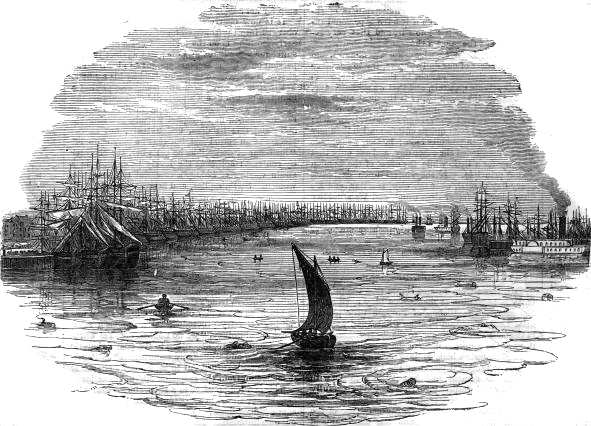
WE present characteristic sketches of the Crescent City. The traveler who approaches by the Pontchartrain Railway sees the domes, spires, and chimney-tops of the city peering over tufts of grass and shrubbery, looking as though a town had been sown there and was just coming up. Upon entering, one passes first through the French quarter, built up mainly of [continue reading…]

0 comments

The News

Civil War Day-by-Day

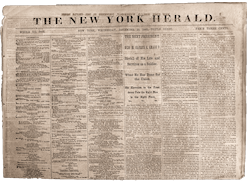
March 30, 1861; The New York Herald

From our Washington despatches, it appears that Col. Lamon, the President’s envoy to Charleston, declined to exercise the discretionary power with which he was clothed, and issue the order to Major Anderson for the evacuation of Fort Sumter. He returned to Washington and reported the facts respecting the straitened condition of the garrison to the President, who yesterday at an early hour summoned the Cabinet to hold a consultation on the subject. Their deliberations led to a confirmation of the determination of the government to abandon the fort. The order will be communicated to Major Anderson, and the garrison will evacuate Fort Sumter as soon as the vessel to convey them away arrives in Charleston harbor. At last accounts the garrison had supplies sufficient for a few days only.

Contradictory reports as to the designs of the government with reference to Fort Pickens have been circulated for some days past. The republican journals assert that the fort is to be reinforced–indeed it is announced that both troops and supplies have already be landed. Our correspondents from Washington, however, state that the Southern commissioners, and also conservative men of the border States, have been assured that no attempt would be made to relieve the fort–that the military status of that post would not be disturbed. It is further more stated that the reports in the republican journals are put in circulation solely for the purpose of influencing the coming election in New England.

Orders have been received at the Brooklyn Navy Yard from the Department at Washington to get the storeship Release ready for sea immediately. Accordingly yesterday provisions and stores of all descriptions were being put on board with all despatch, and her rigging was undergoing the necessary overhauling. It is not yet known who are to be her commander and officers. The same secresy is observed in regard to her destination; but it is believed she is being sent to convey supplies to the Gulf squadron.

The steamships Star of the West and Coatzacoalcos, from New York, were seen on the 23d inst., within a day’s sail of Indianola, Texas, for which port they were bound.

0 comments

Aristocracy North and South

Civil War Day-by-Day

March 30, 1861; The New York Herald

The republican papers are continually representing that the slave owners of the South are all aristocrats, and comprise an odious oligarchy, while all the democracy of the country is to be found at the North. If the possession of wealth constitutes an aristocracy in the owners thereof we think that there is far more of it to be found in the Northern than in the Southern States. All the bankers and financiers, the rich merchants and ship owners, and more especially the mill owners and manufacturers, according to this rule, form a vastly more numerous body of aristocrats and oligarchs, and a more mischievous one, too, as far as the interest of the masses are concerned, than the Southern slaveholders. The truth is that there does exist a kind of pretentious aristocracy in the country, whose rank is based on wealth; but is scattered all over the country, in every quarter, and is peculiar to no particular section. It comprises, for the most part, persons who have come into the possession of large fortunes, but who have very little intellect–whose breeches pockets vastly outweigh their brains–but all this will be equitably settled in about the third generation. It is absurd to locate this class at the South, while the fact is notorious that there is hardly a more potent oligarchy existing anywhere than in the manufacturing districts of New England–a body which controls almost the souls and destinies of the operatives as completely as the cotton lords of Manchester.

0 comments

The Flag of the Confederate States

Civil War Day-by-Day

March 30, 1861; Standard (Clarksville Texas)

Mr. Howard, of the firm of Howard & Buchardt, showed us this morning a neat silken model of the Flag of the Confederate States of America; originated by the Congressional Committee, and adopted unanimously. It is as follows:

Blue union, with seven white stars; three horizontal stripes, red, white and red. The first red and white extending from the union to the end of the flag, and the lower red stripe extending the whole length of the flag, occupying the whole space below the union. The stripes are all of equal width.

The new flag was hoisted on the Capitol at Montgomery, on the 4th inst.–Galveston News.

0 comments

America

Civil War Day-by-Day

March 30, 1861; The Illustrated London News

No decided action had, according to the latest accounts from America, been taken by either the Northern or Southern States, but both seemed drifting towards a collision. President Lincoln has declined to hold any intercourse with the Southern commissioners. According to the New York Herald it has been decided by Mr. Lincoln’s Cabinet to evacuate Fort Sumter, as being untenable. The Missouri and Virginia State Conventions have come to no decision.

The permanent Constitution of the Confederate States had been published. The following are its principal features:—”No person who is a foreigner, and not a citizen of the Confederate States, is allowed to vote for any officer, civil or political, state or federal. Under the first census, South Carolina is entitled to five representatives in Congress; Georgia, ten; Alabama, nine; Florida, two; Mississippi, seven; Louisiana, six; Texas, six; and each State to two senators. The State Legislature may impeach judicial or federal officers, resident and active in said State, by a two-thirds vote. Representation on the basis of three fifths for slaves is continued. Congress is not allowed, through duties, to foster any branch of industry. The foreign slave trade is prohibited. The President and Vice-President are to hold to office for six years. The principal officers of departments and the diplomatic service are removable at the pleasure of the President. Other civil officers are removable when their services are unnecessary, or for other good causes or reasons. Other States are to be admitted by a vote of two-thirds of both Houses. The Confederacy may acquire territory, and slavery shall be acknowledged and protected by Congress and the territorial Government. When five States shall ratify the permanent Constitution, it shall be established for said States. Until ratified, the provisional Constitution shall continue in force not extending beyond one year.”

0 comments

General Sam Houston

Civil War Day-by-Day

March 30, 1861, Harper’s Weekly

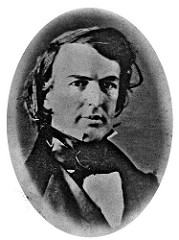
THE accompanying portrait of General SAM HOUSTON, Governor of Texas, will be recognized by all who know the old hero. Even those who remember him as he was two years ago, when he wore a heavy mustache, will readily recall the noble brow and the fierce eye.

Probably no man in this country has led so adventurous a life as Sam Houston. Born, sixty—eight years ago, in Rockbridge County, Virginia, he lost his father when very young, and removed with his mother to the confines of the forest in Tennessee. Here he grew up as best he could, associating much with Indians and imbibing a fondness for their rude mode of life. As he reached manhood he tried to earn a living as a school-master, and then as a clerk in a country store. But neither pursuit pleased his fancy, and in 1813, when General Jackson called for volunteers to fight the Creeks, Sam Houston responded to the call. He won credit during the campaign ; when it ended, he had risen to the rank of lieutenant. But as there was no more fighting to be done then, he laid down the sword, studied law at Nashville, and soon rose to be a prominent lawyer and politician. In 1823, he went to Congress from his district in Tennessee; in 1827, he was elected Governor. In 1829, a fit of restlessness seized him. He resigned his post as Governor; tried life a while in Arkansas, where the frauds practiced by the Government Agents upon the Indians disgusted him; went to Washington, to endeavor to have his red friends righted, and found himself involved in no end of lawsuits with the rogues whom he sought to expose; became a good deal disgusted with every thing and every body, and finally migrated to Texas.

Texas was then about to be admitted as a State of the Mexican Union. It was in a miserable condition. Its people comprised among them the worst vagabonds and scoundrels in the world. When a man was so infamous and hopeless that he could not ship on board a whaler, he went to Texas. There was no money in the country, no trade, no industry, very little judicious agriculture. The whole State was overrun by wild bands of Indians, Comanches, Apaches, etc., who regarded the white man as an invader and robber, and shot him whenever they could. This was the condition of Texas when the people met, adopted a Constitution, and asked admission to the Mexican Confederacy–the American Sam Houston being elected as their first Governor. [continue reading…]

0 comments

“An Englishman had nothing to do with a Virginian and New Yorkist, or a South Carolinian—he scarcely knew anything of a Texan, or of an Arkansian; we only were conversant with the United States as an entity; and all our dealings were with citizens of the United States of North America.”—William Howard Russell

My Diary North and South – William Howard Russell
Note: This particular diary entry–a document written in 1861–includes a term that is very offensive to many today.   No attempt will be made to censor or edit 19th century material to today’s standards.

March 29th, Good Friday.–The religious observance of the day was not quite as strict as it would be in England. The Puritan aversion to ceremonials and formulary observances has apparently affected the American world, even as far south as this. The people of color were in the streets dressed in their best. The first impression produced by fine bonnets, gay shawls, brightly-colored dresses, and silk brodequins, on black faces, flat figures, and feet to match, is singular; but, in justice to the backs of many of the gaudily-dressed women, who, in little groups, were going to church or chapel, it must be admitted that this surprise only came upon one when he got a front view. The men generally affected black coats, silk or satin waistcoats, and parti-colored pantaloons. They carried Missal or Prayer-book, pocket-handkerchief, cane or parasol, with infinite affectation of correctness. As I was looking out of the window, a very fine, tall young negro, dressed irreproachably, save as to hat and boots, passed by. “I wonder what he is?” I exclaimed inquiringly to a gentleman who stood beside me.” Well,” he said, “that fellow is not a free nigger; he looks too respectable. I daresay you could get him for 1500 dollars, without his clothes. You know,” continued he, “what our Minister said when he saw a nigger at some Court in Europe, and was asked what he thought of him: ‘Well, I guess,’ said he, ‘if you take off his fixings, he may be worth 1000 dollars down.’ In the course of the day, Mr. Banks, a corpulent, energetic young Virginian, of strong Southern views, again called on me. As the friend of the Southern Commissioners he complained vehemently of the refusal of Mr. Seward to hold intercourse with him. “These fellows, mean treachery, but we will baulk them.” In answer to a remark of mine, that the English Minister would certainly refuse to receive Commissioners from any part of the Queen’s dominions which had seized upon the forts and arsenals of the empire and menaced war, he replied: “The case is quite different. The Crown claims a right to govern the whole of your empire; but the Austrian Government could not refuse to receive a deputation from Hungary for an adjustment of grievances; nor could any State belonging to the German Diet attempt to claim sovereignty over another, because they were members of the same Confederation.” I remarked “that his views of the obligations of each State of the Union were perfectly new to me, as a stranger ignorant of the controversies which distracted them. An Englishman had nothing to do with a Virginian and New Yorkist, or a South Carolinian–he scarcely knew anything of a Texan, or of an Arkansian; we only were conversant with the United States as an entity; and all our dealings were with citizens of the United States of North America.” This, however, only provoked logically diffuse dissertations on the Articles of the Constitution, and on the spirit of the Federal Compact.

Later in the day, I had the advantage of a conversation with Mr. Truman Smith, an old and respected representative in former days, who gave me a very different account of the matter; and who maintained that by the Federal Compact each State had delegated irrevocably the essence of its sovereignty to a Government to be established in perpetuity for the benefit of the whole body. The Slave States, seeing that the progress of free ideas, and the material power of the North, were obtaining an influence which must be subversive of the supremacy they had so long exercised in the Federal Government for their own advantage, had developed this doctrine of States’ Rights as a cloak to treason, preferring the material advantages to be gained by the extension of their system to the grand moral position which they would occupy as a portion of the United States in the face of all the world.

It is on such radical differences of ideas as these, that the whole of the quarrel, which is widening every day, is founded. The Federal Compact, at the very outset, was written on a torn sheet of paper, and time has worn away the artificial cement by which it was kept together. The corner stone of the Constitution had a crack in it, which the heat and fury of faction have widened into a fissure from top to bottom, never to be closed again.

In the evening I had the pleasure of dining with an American gentleman who has seen much of the world, travelled far and wide, who has read much and beheld more, a scholar, a politician, after his way, a poet, and an ologist – one of those modern GrÅ“culi, who is unlike his prototype in Juvenal only in this, that he is not hungry, and that he will not go to heaven if you order him.

Such men never do or can succeed in the United States; they are far too refined, philosophical, and cosmopolitan. From what I see, success here may be obtained by refined men, if they are dishonest, never by philosophical men, unless they be corrupt–not by cosmopolitan men under any circumstances whatever; for to have sympathies with any people, or with any nation in the world, except his own, is to doom a statesman with the American public, unless it be in the form of an affectation of pity or good will, intended really as an offence to some allied people. At dinner there was the very largest naval officer I have ever seen in company, although I must own that our own service is not destitute of some good specimens, and I have seen an Austrian admiral at Pola, and the superintendent of the Arsenal at Tophaneh, who were not unfit to be marshals of France. This Lieutenant, named Nelson, was certainly greater in one sense than his British namesake, for he weighed 260 pounds.

It may be here remarked, passim and obiter, that the Americans are much more precise than ourselves in the enumeration of weights and matters of this kind. They speak of pieces of artillery, for example, as being of so many pounds weight, and of so many inches long, where we would use cwts. and feet. With a people addicted to vertical rather than lateral extension in everything but politics and morals, precision is a matter of importance. I was amused by a description of some popular personage I saw in one of the papers the other day, which after an enumeration of many high mental and physical attributes, ended thus, “In fact he is a remarkably fine high-toned gentleman, and weighs 210 pounds.”

The Lieutenant was a strong Union man, and he inveighed fiercely, and even coarsely, against the members of his profession who had thrown up their commissions. The superintendent of the Washington Navy Yard is supposed to be very little disposed in favor of this present Government; in fact, Capt. Buchanan may be called a Secessionist, nevertheless, I am invited to the wedding of his daughter, in order to see the President give away the bride. Mr. Nelson says, Sumter and Pickens are to be reinforced. Charleston is to be reduced to order, and all traitors hanged, or he will know the reason why; and, says he, “I have some weight in the country.” In the evening, as we were going home, notwithstanding the cold, we saw a number of ladies sitting out on the door steps, in white dresses. The streets were remarkably quiet and deserted; all the colored population had been sent to bed long ago. The fire bell, as usual, made an alarm or two about midnight.

0 comments

Horatio Nelson Taft

Diary of US patent clerk Horatio Nelson Taft.

FRIDAY, MARCH 29, 1861.

A pleasant warm day, which has passed off much as others do when nothing in particular occurs. The office is thronged with expectants for office, and it puzzles the “heads” to find places for even a small portion of the applicants. Went down to the Express office this evening, Julia went with me for a walk. We called no where else except for the NY Papers. We are all very well. My own health never was better. We read the papers till I was left alone & I went to bed at 11 o’ck.


The three diary manuscript volumes, Washington during the Civil War: The Diary of Horatio Nelson Taft, 1861-1865, are available online at The Library of   Congress.

0 comments

“I am trying to so behave as to go out respectably.”—Rutherford B. Hayes

Diary and Letters of Rutherford Birchard Hayes
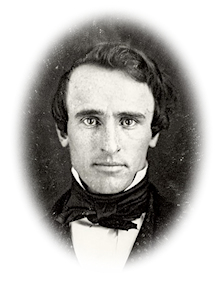
Rutherford B. Hayes (young)

CINCINNATI, March 29, 1861.

DEAR UNCLE:–I have received your favor, and suspect you are more anxious that I should be re-elected than the occasion calls for. I philosophize in this way: I have got out of the office pretty much all the good there is in it–reputation and experience. If I quit it now, I shall be referred to as the best, or one of the best solicitors, the city has had. If I serve two years more, I can add nothing to this. I may possibly lose. I shall be out of clients and business a little while, but this difficulty will perhaps be greater two years hence. So you see it is no great matter. Still, I should prefer to beat, and with half a chance, I should do it.

I am not wasting much time looking after the election–none in mere personal electioneering. I am trying to so behave as to go out respectably.

Sincerely,

R.B. HAYES.

S. BIRCHARD.

0 comments

Operations in Charleston Harbor — Confederate Records

War of the Rebellion: from the Official Records of the Union and Confederate Armies and Navies

WAR DEPARTMENT, A. AND I. G. O.,
Montgomery, March 29, 1861.

Brig. Gen. G. T. BEAUREGARD,
Commanding, &c., Charleston, S.C.:

SIR: The Secretary of War directs that you will allow no further communications between the Government of the United States and Fort Sumter, unless the written instructions of the intermediary are first submitted to your inspection, with satisfactory assurances that there are no verbal instructions inconsistent with those which are written.

I am, very respectfully, your obedient servant,

S. COOPER,

Adjutant and Inspector General.

0 comments

Preliminary Orders — Operations in Charleston Harbor

War of the Rebellion: from the Official Records of the Union and Confederate Armies and Navies

EXECUTIVE MANSION, March 29, 1861.

Honorable SECRETARY OF WAR:

SIR: I desire that an expedition, to move by sea, be got ready to sail as early as the 6th of April next, the whole according to memorandum attached, and that you co-operate with the Secretary of the Navy for that object.

Your obedient servant,

A. LINCOLN.


[Inclosure No. 1.]

NAVY DEPARTMENT. Preliminary orders.–Steamers Pocahontas at Norfolk, Pawnee at Washington, Harriet Lane at New York (Treasury Department), to be under sailing orders for sea with stores, &c., for one month. Three hundred men to be kept ready for departure from on board the receiving ships at New York.


[Inclosure No. 2.]

WAR DEPARTMENT. Preliminary.–Two hundred men to be ready to leave Governor’s Island in New York. Supplies for twelve months for one hundred men to be put in portable shape, ready for instant shipping. A large steamer and three tugs conditionally engaged.

MARCH 28, 1861.

0 comments

Things are just the same in regard to the Fort, Anderson is now to be starved out.

Journal of Meta Morris Grimball
Meta Morris Grimball

29 March

       We found that the list of Navy Officers published did not include John, and went to the City to have it rectified, or to find out why John was left out.—John says they have not come down to him yet, and he is acting Lieutenant, and receiving 15 hundred dollars, is in active service.—

       I had a very pleasant visit, the boys were affectionate and attentive, and I had a good shopping, the children are pleased with what I got.—Mrs Wilkins was suffering from her eyes and Eliza was not feeling well.—

       Papa does his business very loosely and is now engaged in a law suit with Simons about a canal. All the people who can testify in his favor are dead, with but one or two exceptions, and he has no papers to show. William has the case, and Nelson Mitchel has been since engaged in it.—Mrs Wayne has a Northern woman to visit her just now, rather a second rate sort of a person.—Mrs Mitchel.

       Things are just the same in regard to the Fort, Anderson is now to be starved out.—All this time he has been allowed to furnish himself from the Market with fresh Provisions,—which is carrying out Scripture “feeding our enemy, and doing good to those who do evil to us.”

       Charlotte has Mrs Bulow & Mrs Gummage on a visit to her. C. did not altogether like them as visitors but she asked them last Spring & felt herself obliged to confirm it this April. They are much talked about and therefore not desirable friends, Mrs B. a pretty, clever, coarse woman, with a little dog & a riding horse, Mrs G. a middle aged[,] uneducated[,] coarse, woman, with a little grandaughter , very delicate and worm afflicted, in her looks.—

       We have stopped the early teas.

       Mrs Wayne & Mr Mitchel came to see us by invitation & take tea, they evidently expected a party and were dressed, we had no one and with the aid of Music, passed the time.

0 comments

I don’t believe Jeff Davis will allow them to trifle with him much longer…,

Louise Wigfall Wright — A Southern Girl in ’61

(excerpts from letter by Louise Wigfall’s mother, Charlotte)

“Richmond, March 29, 1861. We got here Tuesday . . . and are staying at the Spotswood House. Mr. McCulloch is here to buy arms for Texas, and your father is assisting him in making the arrangements necessary. . . . I see by to-day’s paper that the Senate has adjourned and what is more is that Sumter has not yet been evacuated. I don’t believe Jeff Davis will allow them to trifle with him much longer, and should not be surprised at any time to hear that he was preparing to take it. . . . I attended the Convention yesterday. . . . The friends of secession seem confident that Virginia will join the South, but differ about the time. We went to an elegant dinner yesterday given to us by Mr. & Mrs. Lyons. The party was composed of twenty, and among them were Mr. Tyler, Mr. McCulloch, etc. Mrs. Lyons is one of the loveliest people I have seen in a long time. Mr. Lyons told me that the people here would never allow the removal of the guns that have been ordered to be sent to Fortress Monroe. He said there were about fifty of them, and it was fully determined that the order should not be executed. I think they are some miles from this city and would have to pass through here to get to Old Point. This is a fine looking old place, and reminds me of Charleston.”

0 comments

The News

Civil War Day-by-Day

March 29, 1861; The New York Herald

In the United States Senate yesterday Mr. Trumbull offered a resolution declaring that in the opinion of the Senate the true way to preserve the Union is to enforce the laws of the Union; that resistance to their enforcement, whether under the name of anti-coercion or any other name, is disunion; and that it is the duty of the President to sue all the means in his power to hold and protect the public property of the United States, and enforce the laws thereof, as well in the other States of South Carolina, Georgia, Florida, Mississippi, Alabama, Louisiana and Texas, as within the other States of the Union. Mr. Trumbull desired to have a vote on the resolution, and the democratic members expressed themselves in favor of an immediate expression of opinion on the subject. The republicans, however, would not come up to the mark, but preferred an executive session for the apportionment of the offices. A motion to that effect was carried, and the Senate confirmed a large number of nominations. Subsequently, the President having no further communication to make, the Senate adjourned sine die.

A list of nominations confirmed by the Senate yesterday may be found in another column. The only New York city appointments confirmed are those of Hiram Barney, for Collector, and Thomas McElrath, for Appraiser.

The English papers continue to denounce the Morrill tariff, and declare that if the law goes into operation the blunders of the statesmen will be rectified by the hardihood of the smuggler. We reproduce this morning an important article upon this subject from the London Times of the 12th inst. We also publish an article from the London News, the organ of Lord John Russell, upon the policy of the British government relative to the recognition of the Southern confederacy.

This being Good Friday, the law courts will not hold their sessions.

0 comments

Another Stirring Incident

Civil War Day-by-Day

March 29, 2004; Tri-Weekly Alamo Express, San Antonio, TX

On Thursday morning two more companies of regulars passed through our city. One company under command of Maj. Shepherd, halted on the Main Plaza, where a crowd of people had spontaneously gathered, and played “auld lang syne” with fife and drum, receiving the enthusiastic cheers of people; from the Plaza they marched down Main street to that good old tune Americans delight in, “yankee doodle” which will do to whistle, play and sing, and just the thing for fighting. The people carrying an American flag accompanied the troops to the edge of town, presenting them with the flag. This is a pleasant surprise to the troops and an evidence that patriotism still swells among us in spite of tyranny and usurpation.–God speed the day that will bring back the army to us.

0 comments

Civil War Day-by-Day

Civil War Day-by-Day

March 29, 1861

  • After days of deliberation and careful consultation with his cabinet, Lincoln decides to re-supply Forts Sumter and Pickens.
  • In an 89 to 45 vote, the Virginia State Convention rejects an ordinance of secession.
  • Mississippi ratifies the Confederate Constitution
0 comments

White House State Dinner–William Howard Russell

My Diary North and South – William Howard Russell

March 28th.–I was honored to-day by visits from a great number of Members of Congress, journalists, and others. Judging from the expressions of most of the Washington people, they would gladly see a Southern Cabinet installed in their city. The cold shoulder is given to Mr. Lincoln, and all kinds of stories and jokes are circulated at his expense. People take particular pleasure in telling how he came towards the seat of his Government disguised in a Scotch cap and cloak, whatever that may mean.

In the evening I repaired to the White House. The servant who took my hat and coat was particularly inquisitive as to my name and condition in life; and when he heard I was not a minister, he seemed inclined to question my right to be there at all: “for,” said he, “there are none but members of the cabinet, and their wives and daughters, dining here to-day.” Eventually he relaxed–instructed me how to place my hat so that it would be exposed to no indignity, and informed me that I was about to participate in a prandial enjoyment of no ordinary character. There was no parade or display, no announcement–no gilded staircase, with its liveried heralds, transmitting and translating one’s name from landing to landing. From the unpretending ante-chamber, a walk across the lofty hall led us to the reception-room, which was the same as that in which the President held his interview yesterday.

Mrs. Lincoln was already seated to receive her guests. She is of the middle age and height, of a plumpness degenerating to the embonpoint natural to her years; her features are plain, her nose and mouth of an ordinary type, and her manners and appearance homely, stiffened, however, by the consciousness that her position requires her to be something more than plain Mrs. Lincoln, the wife of the Illinois lawyer; she is profuse in the introduction of the word “sir” in every sentence, which is now almost an Americanism confined to certain classes, although it was once as common in England. Her dress I shall not attempt to describe, though it was very gorgeous and highly colored. She handled a fan with much energy, displaying a round, well-proportioned arm, and was adorned with some simple jewelry. Mrs. Lincoln struck me as being desirous of making herself agreeable; and I own I was agreeably disappointed, as the Secessionist ladies at Washington had been amusing themselves by anecdotes which could scarcely have been founded on fact.

Several of the Ministers had already arrived; by and by all had come, and the party only waited for General Scott, who seemed to be the representative man in Washington of the monarchical idea, and to absorb some of the feeling which is lavished on the pictures and memory, if not on the monument, of Washington. Whilst we were waiting, Mr. Seward took me round, and introduced me to the Ministers, and to their wives and daughters, among the latter, Miss Chase, who is very attractive, agreeable, and sprightly. Her father, the Finance Minister, struck me as one of the y most intelligent and distinguished persons in the whole assemblage; tall, of a good presence, with a well-formed head, fine forehead, and a face indicating energy and power. There is a peculiar droop and motion of the lid of one eye, which seems to have suffered from some injury, that detracts from the agreeable effect of his face; but, on the whole, he is one who would not pass quite unnoticed in a European crowd of the same description.

In the whole assemblage there was not a scrap of lace or a piece of ribbon, except the gorgeous epaulettes of an old naval officer who had served against us in the last war, and who represented some branch of the naval department. Nor were the Ministers by any means remarkable for their personal appearance.

Mr. Cameron, the Secretary for War, a slight man, above the middle height, with grey hair, deep-set keen grey eyes, and a thin mouth, gave me the idea of a person of ability and adroitness. His colleague, the Secretary of the Navy, a small man, with a great long grey beard and spectacles, did not look like one of much originality or ability; but people who know Mr. Welles declare that he is possessed of administrative power, although they admit that he does not know the stem from the stern of a ship, and are in doubt whether he ever saw the sea in his life. Mr. Smith, the Minister of the Interior, is a bright-eyed, smart (I use the word in the English sense) gentleman, with the reputation of being one of the most conservative members of the cabinet. Mr. Blair, the Postmaster-General, is a person of much greater influence than his position would indicate. He has the reputation of being one of the most determined republicans in the Ministry; but he held peculiar notions with reference to the black and the white races, which, if carried out, would not by any means conduce to the comfort or happiness of free negroes in the United States. He is a tall, lean man, with a hard, Scotch, practical-looking head–an anvil for ideas to be hammered on. His eyes are small and deeply set, and have a rat-like expression; and he speaks with caution, as though he weighed every word before he uttered it. The last of the Ministers is Mr. Bates, a stout, thick-set, common-looking man, with a large beard, who fills the office of Attorney-General. Some of the gentlemen were in evening dress; others wore black frock coats, which it seems, as in Turkey, are considered to be en regle at a Republican Ministerial dinner.

In the conversation which occurred before dinner, I was amused to observe the manner in which Mr. Lincoln used the anecdotes for which he is famous. Where men bred in courts, accustomed to the world, or versed in diplomacy, would use some subterfuge, or would make a polite speech, or give a shrug of the shoulders as the means of getting out of an embarrassing position, Mr. Lincoln raises a laugh by some bold west-country anecdote, and moves off in the cloud of merriment produced by his joke. Thus, when Mr. Bates was remonstrating apparently against the appointment of some indifferent lawyer to a place of judicial importance, the President interposed with, “Come now, Bates, he’s not half as bad as you think. Besides that, I must tell you, he did me a good turn long ago. When I took to the law, I was going to court one morning, with some ten or twelve miles of bad road before me, and I had no horse. The judge overtook me in his waggon. ‘Hollo, Lincoln! Are you not going to the courthouse? Come in and I’ll give you a seat.’ Well, I got in, and the judge went on reading his papers. Presently the waggon struck a stump on one side of the road; then it hopped off to the other. I looked out, and I saw the driver was jerking from side to side in his seat; so says I, ‘Judge, I think your coachman has been taking a little drop too much this morning.’ ‘Well I declare, Lincoln,’ said he, ‘I should not much wonder if you are right, for he has nearly upset me half-a-dozen of times since starting.’ So, putting his head out of the window, he shouted, ‘Why, you infernal scoundrel, you are drunk!’ Upon which, pulling up his horses, and turning round with great gravity, the coachman said, ‘By gorra! that’s the first rightful decision you have given for the last twelvemonth.'” Whilst the company were laughing, the President beat a quiet retreat from the neighborhood of the Attorney-General.

It was at last announced that General Scott was unable to he present, and that, although actually in the house, he had been compelled to retire from indisposition, and we moved in to the banqueting-hall. The first “state dinner,” as it is called, of the President was not remarkable for ostentation. No liveried servants, no Persic splendor of ancient plate, or chefs d’Å“uvre of art glittered round the board. Vases of flowers decorated the table, combined with dishes in what may be called the “Gallo-American” style, with wines which owed their parentage to France, and their rearing and education to the United States, which abound in cunning nurses for such productions. The conversation was suited to the state dinner of a cabinet at which women and strangers were present. I was seated next Mr. Bates and the very agreeable and lively Secretary of the President, Mr. Hay, and except when there was an attentive silence caused by one of the President’s stories, there was a Babel of small talk round the table, in which I was surprised to find a diversity of accent almost as great as if a number of foreigners had been speaking English. I omitted the name of Mr. Hamlin, the Vice-President, as well as those of less remarkable people who were present; but it would not be becoming to pass over a man distinguished for nothing so much as his persistent and unvarying adhesion to one political doctrine, which has made him, in combination with the belief in his honesty, the occupant of a post which leads to the Presidency, in event of any occurrence which may remove Mr. Lincoln.

After dinner the ladies and gentlemen retired to the drawing-room, and the circle was increased by the addition of several politicians. I had an opportunity of conversing with some of the Ministers, if not with all, from time to time, and I was struck by the uniform tendency of their remarks in reference to the policy of Great Britain. They seemed to think that England was bound by her anti-slavery antecedents to discourage to the utmost any attempts of the South to establish its independence on a basis of slavery, and to assume that they were the representatives of an active war of emancipation. As the veteran Commodore Stewart passed the chair of the young lady to whom I was speaking, she said, “I suppose, Mr. Russell, you do not admire that officer?” “On the contrary,” I said, “I think he is a very fine-looking old man.” “I don’t mean that,” she replied; “but you know he can’t be very much liked by you, because he fought so gallantly against you in the last war, as you must know.” I had not the courage to confess ignorance of the Captain’s antecedents. There is a delusion among more than the fair American who spoke to me, that we entertain in England the sort of feeling, morbid or wholesome as it may be, in reference to our reverses at New Orleans and elsewhere, that is attributed to Frenchmen respecting Waterloo.

On returning to Willard’s Hotel, I was accosted by a gentleman who came out from the crowd in front of the office. “Sir,” he said, “you have been dining with our President to-night.” I bowed. “Was it an agreeable party?” said he. “What do you think of Mr. Lincoln?” “May I ask to whom I have the pleasure of speaking?” “My name is Mr. ––, and I am the correspondent of the New York ––.” “Then, sir,” I replied, “it gives me satisfaction to tell you that I think a great deal of Mr. Lincoln, and that I am equally pleased with my dinner. I have the honor to bid you good evening.” The same gentleman informed me afterwards that he had created the office of Washington Correspondent to the New York papers. “At first,” said he, “I merely wrote news, and no one cared much; then I spiced it up, squibbed a little, and let off stories of my own. Congress men contradicted me –issued cards–said they were not facts. The public attention was attracted, and I was told to go on; and so the Washington correspondence became a feature in all the New York papers by degrees.” The hum and bustle in the hotel to-night were wonderful. All the office seekers were in the passages, hungering after senators and representatives, and the ladies in any way related to influential people, had an entourage of courtiers sedulously paying their respects. Miss Chase, indeed, laughingly told me that she was pestered by applicants for her father’s good offices, and by persons seeking introduction to her as a means of making demands on “Uncle Sam.”

As I was visiting a book-shop to-day, a pert, smiling young fellow, of slight figure and boyish appearance came up and introduced himself to me as an artist who had contributed to an illustrated London paper during the Prince of Wales’s tour, and who had become acquainted with some of my friends; and he requested permission to call on me, which I gave without difficulty or hesitation. He visited me this evening, poor lad! and told me a sad story of his struggles, and of the dependence of his family on his efforts, as a prelude to a request that I would allow him to go South when I was making the tour there, of which he had heard. He was under an engagement with the London paper, and had no doubt that if he was with me his sketches would all be received as illustrations of the places to which my letters were attracting public interest in England at the time. There was no reason why I should be averse to his travelling with me in the same train. He could certainly go if he pleased. At the same time I intimated that I was in no way to be connected with or responsible for him.
0 comments

“The Pat office seems to be running into the ground under raw leaders.”—Horatio Nelson Taft

Diary of US patent clerk Horatio Nelson Taft.

THURSDAY 28

A nice spring day, bright & pleasant. We had a Comr in the office today, and a “green” Board of Appeal. The Pat office seems to be running into the ground under raw leaders. Took walk after dinner with wife and on our return found Chas & Miss Woodward who staid till 9 o’ck. Maj Davidson called and staid an hour or two. US. Senate Adjourned today. The Flying Artillery were practicing or rather exercising near us on Franklin Square. Julia & the boys went to see them. 1/2 past 10.


The three diary manuscript volumes, Washington during the Civil War: The Diary of Horatio Nelson Taft, 1861-1865, are available online at The Library of   Congress.

0 comments

Corresdpondence from John Beuchamp Jones to Jefferson Davis

Miscellaneous document sources
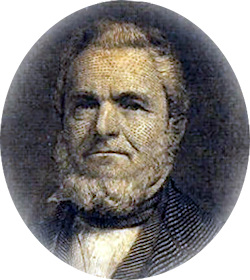
A likeness of Jones when he was editor and majority owner of the Daily Madisonian during President John Tyler’s administration.
Burlington, N. Jersey
March 28, 1861
          Sir,
In despair of immediate action in Maryland, my native state, and in Virginia, the birthplace of my wife (she was Miss Custis) I am solicitous to enter the civil service of the Confederate States. And in this behalf I beg to enclose herewith a note from the Hon. A. Dudley Mann, who has some knowledge of my labors and sacrifices in the great cause, of which you are now, and I hope may long continue to be, the worthy and honored Chief.
                    I did not suppose, even before the reception of Mr. Mann’s letter, that the Provisional salaries could be otherwise than low; nevertheless I should be very happy to labor in a cause in which the sympathies of my heart have so long been centred, without other compensation than merely the means of support, until the Govt. is placed upon a permanent footing. After that event, my family – all enthusiastic advocates of Southern Independence – would join me.
                    Having for more than twenty years studied the merits of the matters in controversy between the sections – and partly under the personal instructions of Calhoun2, Upshur3 (etc.?) — I would be much rejoiced to be assigned a position, however humble it might be, which would admit of my being, occasionally, a contributor to the press.
May I ask the favor of a reply at your Excellency’s earliest convenience?
Very respectfully,
Your obt. Svt.
J.B. Jones
His Excellency
Jefferson Davis
Provisional President
Confederate States of America

1. Source: Samuel W. Richey Collection of the Southern Confederacy, Correspondence from John Beauchamp Jones to Jefferson Davis, dated March 28, 1861, Miami University Libraries digital collections, Oxford, Ohio
2. John C. Calhoun, Secretary of State in the later part of John Tyler Administration
3. Abel P. Upshur, Secretary of the Navy and Secretary of State in the John Tyler Administration

0 comments

Gazaway B. Lamar to Howell Cobb

Miscellaneous document sources

Bank of the Republic,
New York, March 28th, 1861.

Dr. Sir: If Cotton is King, the King must command peace; for peace is essential to your prosperity. And Cotton is King—he commands not only all, all the mills and manufactures of Old and New England, France and Europe, but the allegiance of your own citizens, the interest and sinking fund for your Loan, and all the shipping, large and small, of the states.

If the North make war on the Confederacy their ships could not go South for freights—and that important arm, paying this year 20 and 30 pct. profit, not less than 60 million dollars this year, will be hors du profit, for excluded from cotton, rice, sugar and tobacco freights, their competition for the breadstuffs and provisions would so reduce their freights that they could not pay seamen’s wages. But though cotton is so very great it must not forget that its power is confined to Southern soil and under Southern control. Once exported to any other location, it is as Samson’s locks shorn of its power. Therefore wise legislation will look forward and provide all the means to give force and effect to its action.

Would you command peace with N. England and New York? Make a law that no ship belonging to any citizen of those regions shall be allowed to enter a Southern port on pain of forfeiture if the States in which they are owned contribute in any way directly or indirectly to sustain hostilities in any way against the Southern Confederacy; and to prevent changing the ownership, as they would gladly do, make the law have reference to the ownership of 1st Nov. 1860, enrolment and register, no matter by whom owned. Let it apply to the votes of their Representatives in Congress, and not one of them will vote for war. They are as sensitive as to money as Great Britain is, and would cut the throats of all the negroes rather than leave a ship in jeopardy.

[continue reading…]

0 comments

Admission of Northern States into the Southern Confederation

Civil War Day-by-Day

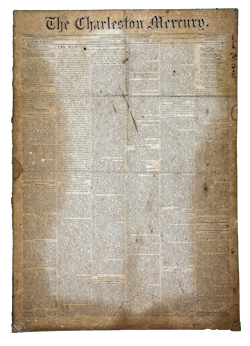
March 28, 1861, The Charleston Mercury

In striving to arouse the South to the fatuity of the policy, which may be perpetrated under the Confederate States Constitution, by a two-thirds vote of future Congresses, we have already noticed the gross ignorance of the people of the North in regard to the true principles of republican government. Having no adequate conception of those wise and needful restrictions upon absolute power, whether vested in one man or many, by which alone the rights and liberty of all are protected, they substitute for free government a many headed tyranny, shifting, irresponsible and limitless, and hence are utterly unfit for political connection under a common government with those who would avoid mobocracy, agrarianism and anarchy.

In addition to their false and low views of republican government, we have spoken of the error of their idea of a general government for a confederation of republics. They mistake the creature for the creator–the agent for the supreme ultimate authority, and would make a consolidate nation, with unlimited power, out of a union of States, under a compact of powers, carefully delegated. They are, therefore, most dangerous confederates for those who would avoid a central despotism and escape the troubles and difficulties of another moral struggle with such anti-States rights tendencies.

Besides their mobocratic and consolidate political heresies, we have alluded to the radical hostility of the Northern people to the South and her institutions, in the great, vital question of slavery. Anti-slavery is a sentiment and a doctrine so thoroughly embedded in their moral, religious and political nature, that its eradication within many generations is a hopeless expectation. Hence they cannot but be domestic foes, aliens, and unsafe confederates for those in this section who would live in peace, beyond the reach of such inimical influences.

There is however, sill another potent reason for repudiating all future connection with Northern States, under a common government. The whole history of their past union with the South is stamped with rapacity, selfishness and bad faith. [continue reading…]

0 comments

The News

Civil War Day-by-Day

March 28, 1861; The New York Herald

Col. Lamon, President Lincoln’s special envoy to Fort Sumter, returned to Washington yesterday afternoon. The particulars of the result of his mission have not been made public, but it is known that Fort Sumter will be evacuated as soon as the vessel detailed to convey away the garrison shall reach Charleston harbor, and arrangements for their removal have been completed.

Our correspondent at Charleston states that President Davis has made a requisition upon the Governors of South Carolina, Florida and Georgia for troops, but upon what service they are to be despatched had not transpired.

In the United States Senate yesterday a message was received from the President declining to communicate the despatches received from Major Anderson, the commander at Fort Sumter, as their publication would at this time be inexpedient. A long debate then ensued upon the question of taking up Senator Breckinridge’s resolution advising the withdrawal of the federal troops from the seceded States. Upon taking the question the vote stood 19 to 10. As there was not a quorum, the subject was dropped, and the Senate went into executive session, and in the course of a couple of hours confirmed a large number of appointments. A list of the names is given among our telegraphic despatches.

Among the confirmations by the Senate yesterday was that of Hiram Barney, as Collector of the Port of New York.

0 comments

The Troubles of the Nation

Civil War Day-by-Day

March 28, 1861; The New York Herald

WASHINGTON, March 27, 1861.

Colonel Ward H. Lamon, bearer of despatches from President Lincoln to Fort Sumter, returned this afternoon, and reported himself to the President while the Cabinet was present. The Colonel brought with him a large palmetto tree which was presented to him at Charleston.

Colonel Lamon had no opportunity to state to the President the results of his mission to Fort Sumter this afternoon. An interview was had this evening, but the precise information Colonel Lamon brings, or the effect it has had upon the President’s mind, is not known outside of the Cabinet, except as since indicated in a conversation the President had with a gentleman, to whom he said that Major Anderson was ordered to report with his command at another place, and would embark with his troops as soon as the facilities for doing so reached him, which would be in a few days.

Colonel Lamon does not hesitate to state his experience at Charleston in regard to the modus operandi of reaching Fort Sumter. He reached Charleston on Sunday morning, and book himself as ‘Ward H. Lamon, of Virginia.’ He did this because he ascertained that he could not reach Fort Sumter without a permit from Governor Pickens, and could not see the Governor until Monday morning, and in order not to make himself a target for the curious for twenty four hours, as he would have done had he announced himself from any other State. He was not annoyed until Monday morning, when a delegation of Charlestonians called upon him, and inquired if his name was Lamon? He replied, ‘Yes, my name is Ward H. Lamon.’ They asked him if he was a friend of President Lincoln? He replied that he was. He was then asked if he had any objection to tell them the object of his mission? He said he had objection, and added that he had important business with [continue reading…]

0 comments

Our Montgomery Correspondence

Civil War Day-by-Day

March 28, 1861; The Charleston Mercury

MONTGOMERY, March 25.

It is a matter of some pride her, at the capitol, to know that the new government loan of five million dollars has been taken, or at least the money has already been tendered, and is now waiting the time when the bonds can be issued from the Treasury Department. Although Congress authorized a loan of $15,000,000, if that sum was needed, early in the session, it was only last week that proposals were advertised for, to raise one third that amount, enough for present wants. The advertisement asked for $5,000,000; giving, as security, the bonds of the Confederates States, bearing interest at ten per cent. and payable in ten years; and, at the same time, briefly stated the means of obtaining the money for the ultimate payment of this debt. Notwithstanding the loan has been only a few days before the public, more than double the required sum has been tendered to the Secretary of the Treasury, and offers are continually coming in from all sections. Hardly a day passes but letters are received by editors and others, asking for information on the subject; the writer stating invariably that he has a few thousand dollars which he wishes to place at the disposal of the Confederate States. I have a case in memory now which illustrates the popular feeling in regard to this matter. When the announcement was first made that Congress had authorised a loan, and before proposals were solicited, a Mississippian placed $5000 in the hands of his bankers, made subject to the draft of the Treasurer of the Confederacy. This gentleman was not alone in his patriotic tender of money at the time it was supposed the Government was in need of it; for similar offers came from other States. I learn today that one man has offered $200,000 and another $80,000, to Mr. MEMMINGER, for which sum no interest is required. It is well known here that offers of money have been received from New York, Philadelphia, New Orleans, and other cities in the United States and in the Confederate States, to an amount that would cover the entire authorized loan. Mr. MEMMINGER has concluded–and very wisely too–that the citizens of the Confederates States are entitled to the preference in this investment, and the bonds will be scattered among the, as equally as possible. When it is remembered that the bonds of the old United States have been for some [continue reading…]

0 comments

William Howard Russell introduced to Abraham Lincoln at the White House.

My Diary North and South – William Howard Russell

March 27th.–This morning, after breakfast, Mr. Sanford called, according to promise, and took me to the State department. It is a very humble–in fact, dingy–mansion, two stories high, and situated at the end of the magnificent line of colonnade in white marble, called the Treasury, which is hereafter to do duty as the head-quarters of nearly all the public departments. People familiar with Downing Street, however, cannot object to the dinginess of the bureaux in which the foreign and state affairs of the American Republic are transacted. A flight of steps leads to the hall-door, on which an announcement in writing is affixed, to indicate the days of reception for the various classes of persons who have business with the Secretary of State; in the hall, on the right and left, are small rooms, with the names of the different officers on the doors–most of them persons of importance; halfway in the hall a flight of stairs conducts us to a similar corridor, rather dark, with doors on each side opening into the bureaux of the chief clerks. All the appointments were very quiet, and one would see much more bustle in the passages of a Poor Law Board or a parish vestry.

In a moderately sized, but very comfortable, apartment, surrounded with book-shelves, and ornamented with a few engravings, we found the Secretary of State seated at his table, and enjoying a cigar; he received me with great courtesy and kindness, and after a time said he would take occasion to present me to the President, who was to give audience that day to the minister of the new kingdom of Italy, who had hitherto only represented the kingdom of Sardinia.

I have already described Mr. Seward’s personal appearance; his son, to whom he introduced me, is the Assistant-Secretary of State, and is editor or proprietor of a journal in the State of New York, which has a reputation for ability and fairness. Mr. Frederick Seward is a slight delicate-looking man, with a high forehead, thoughtful brow, dark eyes, and amiable expression; his manner is very placid and modest, and, if not reserved, he is by no means loquacious. As we were speaking, a carriage drove up to the door, and Mr. Seward exclaimed to his father, with something like dismay in his voice, “Here comes the Chevalier in full uniform!”–and in a few seconds in effect the Chevalier Bertinatti made his appearance, in cocked hat, white gloves, diplomatic suit of blue and silver lace, sword, sash, and riband of the cross of Savoy. I thought there was a quiet smile on Mr. Seward’s face as he saw his brilliant companion, who contrasted so strongly with the more than republican simplicity of his own attire. “Fred, do you take Mr. Russell round to the President’s, whilst I go with the Chevalier. We will meet at the White House.” We accordingly set out through a private door leading to the grounds, and within a few seconds entered the hall of the moderate mansion, White House, which has very much the air of a portion of a bank or public office, being provided with glass doors and plain heavy chairs and forms. The domestic who was in attendance was dressed like any ordinary citizen, and seemed perfectly indifferent to the high position of the great personage with whom he conversed, when Mr. Seward asked him, “Where is the President?” Passing through one of the doors on the left, we entered a handsome spacious room, richly and rather gorgeously furnished, and rejoicing in a kind of “demi-jour” which gave increased effect to the gilt chairs and ormolu ornaments. Mr. Seward and the Chevalier stood in the centre of the room, whilst his son and I remained a little on one side : ” For,” said Mr. Seward, “you are not to be supposed to be here.” Soon afterwards there entered, with a shambling, loose, irregular, almost unsteady gait, a tall, lank, lean man, considerably over six feet in height, with stooping shoulders, long pendulous arms, terminating in hands of extraordinary dimensions, which, however, were far exceeded in proportion by his feet. He was dressed in an ill-fitting, wrinkled suit of black, which put one in mind of an undertaker’s uniform at a funeral; round his neck a rope of black silk was knotted in a large bulb, with flying ends projecting beyond the collar of his coat; his turned-down shirt-collar disclosed a sinewy muscular yellow neck, and above that, nestling in a great black mass of hair, bristling and compact like a ruff of mourning pins, rose the strange quaint face and head, covered with its thatch of wild republican hair, of President Lincoln. The impression produced by the size of his extremities, and by his flapping and wide projecting ears, may be removed by the appearance of kindliness, sagacity, and the awkward bonhommie of his face; the mouth is absolutely prodigious; the lips, straggling and extending almost from one line of black beard to tbe other, are only kept in order by two deep furrows from the nostril to the chin; the nose itself–a prominent organ–stands out from the face, with an inquiring, anxious air, as though it were sniffing for some good thing in the wind; the eyes dark, full, and deeply set, are penetrating, but full of an expression which almost amounts to tenderness; and above them projects the shaggy brow, running into the small hard frontal space, the development of which can scarcely be estimated accurately, owing to the irregular flocks of thick hair carelessly brushed across it. One would say that, although the mouth was made to enjoy a joke, it could also utter the severest sentence which the head could dictate, but that Mr. Lincoln would be ever more willing to temper justice with mercy, and to enjoy what he considers the amenities of life, than to take a harsh view of men’s nature and of the world, and to estimate things in an ascetic or puritan spirit. A person who met Mr. Lincoln in the street would not take him to be what–according to the usages of European society – is called a “gentleman;” and, indeed, since I came to the United States, I have heard more disparaging allusions made by Americans to him on that account than I could have expected among simple republicans, where all should be equals; but, at the same time, it would not be possible for the most indifferent observer to pass him in the street without notice. As he advanced through the room, he evidently controlled a desire to shake hands all round with everybody, and smiled good-humouredly till he was suddenly brought up by the staid deportment of Mr. Seward, and by the profound diplomatic bows of the Chevalier Bertinatti. Then, indeed, he suddenly jerked himself back, and stood in front of the two ministers, with his body slightly drooped forward, and his hands behind his back, his knees touching, and his feet apart. Mr. Seward formally presented the minister, whereupon the President made a prodigiously violent demonstration of his body in a bow which had almost the effect of a smack in its rapidity and abruptness, and, recovering himself, proceeded to give his utmost attention, whilst the Chevalier, with another bow, read from a paper a long address in presenting the royal letter accrediting him as “minister resident;” and when he said that “the king desired to give, under your enlightened administration, all possible strength and extent to those sentiments of frank sympathy which do not cease to be exhibited every moment between the two peoples, and whose origin dates back as far as the exertions which have presided over their common destiny as self-governing and free nations,” the President gave another bow still more violent, as much as to accept the allusion.

The minister forthwith handed his letter to the President, who gave it into the custody of Mr. Seward, and then, dipping his hand into his coat-pocket, Mr. Lincoln drew out a sheet of paper, from which he read his reply, the most remarkable part of which was his doctrine “that the United States were bound by duty not to interfere with the differences of foreign governments and countries.” After some words of compliment, the President shook hands with the minister, who soon afterwards retired. Mr. Seward then took me by the hand and said–”Mr. President, allow me to present to you Mr. Russell, of the London ‘Times.'” On which Mr. Lincoln put out his hand in a very friendly manner, and said, “Mr. Russell, I am very glad to make your acquaintance, and to see you in this country. The London ‘Times’ is one of the greatest powers in the world,–in fact, I don’t know anything which has much more power,–except perhaps the Mississippi. I am glad to know you as its minister.” Conversation ensued for some minutes, which the President enlivened by two or three peculiar little sallies, and I left agreeably impressed with his shrewdness, humor, and natural sagacity.

In the evening I dined with Mr. Seward, in company with his son, Mr. Seward, junior, Mr. Sanford, and a quaint, natural specimen of an American rustic lawyer, who was going to Brussels as Secretary of Legation. His chief, Mr. Sanford, did not appear altogether happy when introduced to his secretary, for he found that he had a very limited knowledge (if any) of French, and of other things which it is generally considered desirable that secretaries should know.

Very naturally, conversation turned on politics. Although no man can foresee the nature of the crisis which is coming, nor the mode in which it is to be encountered, the faith of men like Mr. Sanford and Mr. Seward in the ultimate success of their principles, and in the integrity of the Republic, is very remarkable; and the boldness of their language in reference to foreign powers almost amounts to arrogance and menace, if not to temerity. Mr. Seward asserted that the Ministers of England or of France had no right to make any allusion to the civil war which appeared imminent; and that the Southern Commissioners who had been sent abroad could not be received by the Government of any foreign power, officially or otherwise, even to hand in a document or to make a representation, without incurring the risk of breaking off relations with the Government of the United States. As regards the great object of public curiosity, the relief of Fort Sumter, Mr. Seward maintains a profound silence, beyond the mere declaration, made with a pleasant twinkle of the eye, that “the whole policy of the Government, on that and other questions, is put forth in the President’s inaugural, from which there will be no deviation.” Turning to the inaugural message, however, there is no such very certain indication, as Mr. Seward pretends to discover, of the course to be pursued by Mr. Lincoln and the cabinet. To an outside observer, like myself, it seems as if they were waiting for events to develop themselves, and rested their policy rather upon acts that had occurred, than upon any definite principle designed to control or direct the future.

I should here add that Mr. Seward spoke in high terms of the ability, dexterity, and personal qualities of Mr. Jefferson Davis, and declared his belief that but for him the Secession movement never could have succeeded as far as it has gone, and would, in all probability, indeed, have never taken place at all. After dinner cigars were introduced, and a quiet little rubber of whist followed. The Secretary is given to expatiate at large, and told us many anecdotes of foreign travel;–if I am not doing him injustice, I would say further, that he remembers his visit to England, and the attention he received there, with peculiar satisfaction. He cannot be found fault with because he has formed a most exalted notion of the superior intelligence, virtue, happiness, and prosperity of his own people. He said that it would not be proper for him to hold any communication with the Southern Commissioners then in Washington; which rather surprised me, after what I had heard from their friend, Mr. Banks. On returning to my hotel, I found a card from the President, inviting me to dinner the following day.

0 comments