Departure of the Augusta Volunteers

Civil War Day-by-Day

April 3, 1861; The Charleston Mercury

The readers of THE MERCURY have already learned that the President has made a requisition upon Georgia for one thousand men, to serve in Florida. Already the note of preparation is sounding in many parts of that gallant State, but so far as our observation goes, the Augusta Volunteers are the first who have actually taken the field. This is not surprising, however, when it is recollected that the citizens of Augusta have always displayed an ardent patriotism. They were among the first, if not the first, to volunteer for the Florida war, and more recently the Mexican war. On Monday last the Ogelthorpe Infantry, Capt. J. O. CLARKE, and the Walker Light Infantry, Capt. S. H. CRUMP, left Augusta for Macon, the place of rendezvous for the troops ordered on this campaign. Their combined force numbers 130 men. They were escorted to the depot by the celebrated Clinch Rifles, and other military organizations, together with a number of citizens, so large that the Chronicle and Sentinel feels diffident about furnishing an estimate. Of the volunteers themselves, that journal is not so sparing, for it says that if the day comes when they shall be obliged to meet a hostile army, will not be found wanting in all that constitutes brave and efficient soldiers. We wish these volunteers all that brave soldiers ever fought, died or hoped for.
0 comments

The Confederate Flag

Civil War Day-by-Day
1860s newsprint

April 3, 1861; Daily Advocate (Baton Rouge, LA)

 Yesterday, the 2nd of April, the flag of the Confederate States of America was for the first time run up to the top of the flag staff at the Barracks at Baton Rouge. When it unfolded its gay colors to the soft April breeze, seven loud reports from the cannon’s throat announced the intelligence to the surrounding neighborhood. It is a thing of beauty and of life. Long may it wave over the homes of the brave and noble people whose rights and whose honor it was intended to protect and preserve.

0 comments

Fashionable Patriotism.

Civil War Day-by-Day

April 3, 1861; Tri-Weekly Alamo Express (San Antonio)

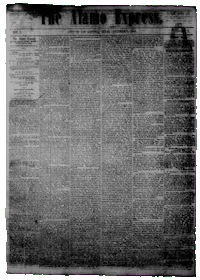
The fashionable patriotism among secessionists is to claim the State in which they were born as their country. The great pity is, that this doctrine is only demonstrated by natives of the revolting States. By a review of the names of the conventionites or “Evergreens,” we see that a large portion of them were born in conservative portions of the country, to wit: Virgina, North Carolina, Tennessee, Kentucky, and we even see Massachusetts, the British Provinces and Germany represented. This kind of patriotism is too small, too contracted, to be held by any true American. When love of country becomes sectional, then farewell to national greatness. From a love of one particular section and dislike of another it will narrow down to the smallest limit possible to contain a mean selfish spirit.

0 comments

Union activity reported to the Confederacy

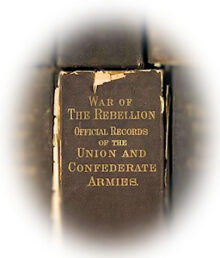
War of the Rebellion: from the Official Records of the Union and Confederate Armies and Navies

WASHINGTON, April 3, 1861.

Hon. ROBERT TOOMBS, &c., Montgomery, Ala.:

Much activity to-day in the War and Navy Departments. It is said the Minnesota, at Boston, has been ordered to the mouth of the Mississippi. Powhatan suddenly put in commission to sail next week. Four companies now here—three artillery, one sappers and miners—ordered to New York. Report says these movements have reference to the San Domingo question. Pawnee will not be ready for sea until Saturday.

Our intermediary says they dare not deceive him, as they know we do not rely upon them but upon HIM.

CRAWFORD.

ROMAN.

FORSYTH.

0 comments

Civil War Day-by-Day

Civil War Day-by-Day

April 3, 1861

  • A “test vote” in the Virginia convention shows a 2-1 margin against secession
  • (Union) Long cabinet meeting on the Fort Sumter business–great activity in the navy department.1
  • Rebel battery on Morris Island, Charleston Harbor, fired into a schooner.1

  1. A Chronological History of the Civil War in America by Richard Swainson Fisher, New York, Johnson and Ward, 1863
0 comments

William Howard Russell travels to Mount Vernon

My Diary North and South – William Howard Russell

April 2nd.–The following day I started early, and performed my pilgrimage to “the shrine of St. Washington,” at Mount Vernon, as a foreigner on board called the place. Mr. Bancroft has in his possession a letter of the General’s mother, in which she expresses her gratification at his leaving the British army in a manner which implies that he had been either extravagant in his expenses or wild in his manner of living. But if he had any human frailties in after life, they neither offended the morality of his age, or shocked the susceptibility of his countrymen; and from the time that the much maligned and unfortunate Braddock gave scope to his ability, down to his retirement into private life, after a career of singular trials and extraordinary successes, his character acquired each day greater altitude, strength, and lustre. Had his work failed, had the Republic broken up into small anarchical states, we should hear now little of Washington. But the principles of liberty founded in the original Constitution of the colonies themselves, and in no degree derived from or dependent on the revolution, combined with the sufferings of the Old and the bounty of nature in the New World to carry to an unprecedented degree the material prosperity, which Americans have mistaken for good government, and the physical comforts which have made some States in the Union the nearest approach to Utopia. The Federal Government hitherto “let the people alone” and they went on their way singing and praising their Washington as the author of so much greatness and happiness. To doubt his superiority to any man of woman born, is to insult the American people. They are not content with his being great–or even greater than the great: he must be greatest of all;–”first in peace, and first in war.”‘ The rest of the world cannot find fault with the assertion, that he is “first in the hearts of his countrymen.” But he was not possessed of the highest military qualities, if we are to judge from most of the regular actions, in which the British had the best of it; and the final blow, when Cornwallis surrendered at York Town, was struck by the arm of France, by Rochambeau and the French fleet, rather than by Washington and his Americans. He had all the qualities for the work for which he was designed, and is fairly entitled to the position his countrymen have given him as the immortal czar of the United States. His pictures are visible everywhere–in the humblest inn, in the Minister’s bureau, in the millionaire’s gallery. There are far more engravings of Washington in America than there are of Napoleon in France, and that is saying a good deal. [continue reading…]

0 comments

Gloom in Washington, Cheer in Charleston—Mary Boykin Miller Chesnut.

Civil War Day-by-Day

April 2d.—Governor Manning came to breakfast at our table. The others had breakfasted hours before. I looked at him in amazement, as he was in full dress, ready for a ball, swallow-tail and all, and at that hour. “What is the matter with you?” “Nothing, I am not mad, most noble madam. I am only going to the photographer. My wife wants me taken thus.” He insisted on my going, too, and we captured Mr. Chesnut and Governor Means.¹ The latter presented me with a book, a photo-book, in which I am to pillory all the celebrities.

Doctor Gibbes says the Convention is in a snarl. It was called as a Secession Convention. A secession of places seems to be what it calls for first of all. It has not stretched its eyes out to the Yankees yet; it has them turned inward; introspection is its occupation still.

Last night, as I turned down the gas, I said to myself: “Certainly this has been one of the pleasantest days of my life.” I can only give the skeleton of it, so many pleasant people, so much good talk, for, after all, it was talk, talk, talk à la Caroline du Sud. And yet the day began rather dismally. Mrs. Capers and Mrs. Tom Middleton came for me and we drove to Magnolia Cemetery. I saw William Taber’s broken column. It was hard to shake off the blues after this graveyard business.

The others were off at a dinner party. I dined tête-à –tête with Langdon Cheves, so quiet, so intelligent, so very sensible withal. There never was a pleasanter person, or a better man than he. While we were at table, Judge Whitner, Tom Frost, and Isaac Hayne came. They broke up our deeply interesting conversation, for I was hearing what an honest and brave man feared for his country, and then the Rutledges dislodged the newcomers and bore me off to drive on the Battery. On the staircase met Mrs. Izard, who came for the same purpose. On the Battery Governor Adams ² stopped us. He had heard of my saying he looked like Marshal Pelissier, and he came to say that at last I had made a personal remark which pleased him, for once in my life. When we came home Mrs. Isaac Hayne and Chancellor Carroll called to ask us to join their excursion to the Island Forts to-morrow. With them was William Haskell. Last summer at the White Sulphur he was a pale, slim student from the university. To-day he is a soldier, stout and robust. A few months in camp, with soldiering in the open air, has worked this wonder. Camping out proves a wholesome life after all. Then came those nice, sweet, fresh, pure-looking Pringle girls. We had a charming topic in common–their clever brother Edward. [continue reading…]

0 comments

Secretary Walker replies to Beauregard

War of the Rebellion: from the Official Records of the Union and Confederate Armies and Navies

MONTGOMERY, April 2, 1861.

General BEAUREGARD, Charleston:

No portion of the garrison must be permitted to leave unless all go.

L. P. WALKER.

0 comments

“One of the principal Examiners, A B Little was removed today..,”—Horatio Nelson Taft

Diary of US patent clerk Horatio Nelson Taft.

TUESDAY 2

A fine day but a little cool, had a fire in the office nearly all day. One of the principal Examiners, A B Little was removed today, other removals are expected this week. Went after dinner with Mr John Vansantvoord to see [Preston?] King. We also called upon Gov Seward at his home and upon Mssrs Beach and Wales at the “National.” The crowd at the Hotels is getting rather less in numbers but apparently more anxious. The time of their waiting has grown long while their purses have grown short and they look impatient.


The three diary manuscript volumes, Washington during the Civil War: The Diary of Horatio Nelson Taft, 1861-1865, are available online at The Library of   Congress.

0 comments

Having lost reelection for Cincinnati city solicitor, Rutherford Hayes ponders, “what to do next and how to begin?”

Diary and Letters of Rutherford Birchard Hayes
Rutherford B. Hayes (young)

CINCINNATI, April 2, 1861.

DEAR UNCLE:–Before this reaches you, you will no doubt learn that the Union-saving avalanche has overtaken us, and that my little potato patch went down with the rest. To prevent a general break-up of the Fusion, both wings agreed as far as possible, to vote an open ticket without scratching. By the aid of oceans of money and a good deal of sincere patriotism in behalf of Union, the plan was carried out with perfect success. It did not in the least disappoint me.

Now, what to do next and how to begin? My term expires next Monday. I shall keep my eyes open, and meditate making you a short visit before finally settling. I have enough cash on hand, or available, to support me for a year, even if I should fail to get business enough to do it, which I do not anticipate. Nothing unpleasant has occurred in the whole course of the canvass. I am quite as well content as one who has drawn a blank ever is, or can be.

Sincerely,

R. B. HAYES.

S. BIRCHARD.

0 comments

A short note from Beauregard to Walker

War of the Rebellion: from the Official Records of the Union and Confederate Armies and Navies

CHARLESTON, April 2, 1861.

Hon. L. P. WALKER

Captain Foster asks permission to send his mechanics and laborers from Sumter. Shall it be allowed? I am inclined to object.

G. T. BEAUREGARD,

Brigadier-General, Commanding.

0 comments

The war wing presses on the (Union) President

War of the Rebellion: from the Official Records of the Union and Confederate Armies and Navies

WASHINGTON, April 2, 1861.

Hon. ROBERT TOOMBS, Montgomery, Ala.:

The war wing presses on the President; he vibrates to that side. He has conferred with several officers, and naval engineer, supposed to be in regard to Sumter; perhaps to collecting revenue at New Orleans.

Commodore Pendergrast is not at Key West but at Norfolk; could not therefore land troops. Senator Dixon conversed fully with Chase on Saturday; found him much moderated and strongly inclined to peace policy.

Their form of notice to us may be that of the coward, who gives it when he strikes. Watch at all points. It is said the Pawnee sailed from this place this evening with three companies of artillery.

MARTIN J. CRAWFORD.

A. B. ROMAN.

0 comments

…courtesies such as have been accorded to Major Anderson and his command, in supplies from the city, must cease…,

War of the Rebellion: from the Official Records of the Union and Confederate Armies and Navies

WAR DEPARTMENT, C. S. A.,
Montgomery, April 2, 1861.

Brig. Gen. G. T. BEAUREGARD,
Commanding Charleston Harbor, Charleston, S. C.:

SIR: The Government has at no time placed any reliance on assurances by the Government at Washington in respect to the evacuation of Fort Sumter, or entertained any confidence in the disposition of the latter to make any concession or yield any point to which it is not driven by absolute necessity, and I desire that you will govern yourself generally with strict reference to this as the key to the policy of the Government of the Confederate States.

You are specially instructed to remit in no degree your efforts to prevent the re-enforcement of Fort Sumter, and to keep yourself in a state of the amplest preparation and most perfect readiness to repel invasion, acting in all respects—save only in commencing an assault or attack, except to repel an invading or re-enforcing force—precisely as if you were in the presence of an enemy contemplating to surprise you.

The delays and apparent vacillations of the Washington Government make it imperative that the further concession of courtesies such as have been accorded to Major Anderson and his command, in supplies from the city, must cease; and, in general terms, the status which you must at once re-establish and rigidly enforce is that of hostile forces in the presence of each other, and who may at any moment be in actual conflict; but as past conditions have allowed this Government to continue thus far courtesies of personal convenience to Major Anderson and his officers, it is proper now, as these courtesies are required to be determined by the necessities of your position, that you signify in respectful terms to Major Anderson that all communication with the city from the fort and with the fort from the city, for any purpose of supply is absolutely inhibited; and after having so notified that gentleman at the very earliest moment practicable you will make your surveillance of the harbor and the enforcement of the rule of instruction indicated in the notice to the commander of Fort Sumter as rigid as all the means at your command and the most watchful vigilance can secure.

Until the withdrawal of the Commissioners of this Government from Washington—an event which may occur at any moment—no operations beyond what is indicated in the foregoing would be admissible. Promptly, however, on the receipt by this Government of the intelligence of such withdrawal the Department will transmit to you specific instructions for your guidance.

Respectfully, your obedient servant,

L. P. WALKER,

Secretary of War.

0 comments

The News

Civil War Day-by-Day

April 2, 1861; The New York Herald

The election for State officers and members of Congress in Connecticut took place yesterday. From the returns published in another column it is pretty evident that the republicans have carried the State, and by an increased majority over the last election. Like several of his predecessors, President Lincoln has been unable to withstand the wear and tear upon his physical and mental powers consequent upon his official duties. He is reported as being quite ill–so much so as to debar him from all intercourse with visitors. Even the most pressing official business was postponed yesterday on account of his indisposition. The three Confederate States envoys to the European courts are now en route. Mr. Dudley Mann sailed from this port on Saturday, on board the Arago, while Messrs. Yancey and Rost sailed from New Orleans yesterday for Havana, where they will embark on board the British West India mail steamer for Europe. The United States Ambassadors will be despatched abroad with as little delay as possible. An outline of the instructions of the State Department to the last mentioned functionaries is given among our Washington despatches this morning. The Morrill tariff went into operation yesterday, and created trouble, confusion and annoyance among the merchants, brokers, clerks &c. A graphic account of the scenes at the Custom House will be found in another column, and will repay perusal.

0 comments

Colors for the First Regiment of Infantry

Civil War Day-by-Day

April 2, 1861; The Charleston Mercury

In passing by the jewelry store of Messrs. HAYDEN & WHILDEN yesterday evening, our attention was attracted by a splendid flag which has been made for the First Regiment of Infantry, Col. MAXCY GREGG, commanding. The ground is of blue silk, six and a half feet fly, and six feet on the pike. There is a white silk embroidered Palmetto tree in the centre, with an embroidered wreath of oak and olive around it, and a white silk crescent in the centre. There is also a heavy white silk fringe and tassels all around the flag. The pike is surmounted by a silver spear. There are also two guidons, or markers, of white silk, trimmed with gold fringe, bearing on each side the inscription, ‘First Regiment, S.C.V.’ Messrs. HAYDEN & WHILDEN have gotten up no less than twelve different banners, or flags, during the last three months. The one of which we now make mention, will be on exhibition at their store during the day, and will amply repay a visit.

0 comments

The State of Florida, or the Confederate States, will probably soon take formal possession of Fort Clinch.

War of the Rebellion: from the Official Records of the Union and Confederate Armies and Navies

WILMINGTON, N. C., April 2, 1861.

General Jos. G. TOTTEN, Chief Engineer, Washington, D.C.:

GENERAL: I have the honor to report my return from Fort Clinch, and my performance of the duty assigned to me by your order of the 18th ultimo, so far as I have been able to perform it.

I have paid off all the employes mentioned in Captain Whiting’s letter of the 8th ultimo, and discharged all not before discharged except the fort keeper, Mr. J. A. Walker, and two laborers. I thought it best to retain the services of these two laborers, partly because the sand embankments inside the fort require constant attention, and partly because I was not able to sell any of the public property.

After I had paid off the accounts, Colonel Butler, commanding the Florida militia at Fernandina, very politely informed me that the authorities of that State had virtually taken possession of Fort Clinch, and that any sale of its property by the United States would be regarded as illegal and that he thought it his duty to resist such sale if necessary. After some conversation, finding myself unable to change his resolution, I was, of course, compelled to yield.

The State of Florida, or the Confederate States, will probably soon take formal possession of Fort Clinch.

I have told Mr. Walker that while things remain as they are he may regard himself and his two assistants as in the service of the United States, at least until he shall be officially informed to the contrary, but that whenever the property or the fort shall be actually seized the United States will be no longer responsible for services.

There are some small accounts for supplies and for services still unpaid. As soon as I receive them I will forward them to the Department for your decision.

Respectfully,

D. P. WOODBURY,
Captain, Engineers.

[Indorsements.]

ENGINEER DEPARTMENT, April 8, 1861.

Respectfully referred to the honorable Secretary of War for his instructions as to the course to be pursued in regard to the care of the Government property at Fort Clinch.

It will be perceived from the within report that while this property is nominally in the possession of the United States, it is actually under the control of the Florida authorities, as is shown by their refusal to permit the sale of the same.

Should the United States, therefore, continue its expenditures for the care of the fort and the property thereat? Unless the Government designs   taking actual possession of and holding this work and property, I would recommend their being at once abandoned.

J. G. TOTTEN, ………..
Brevet Brigadier-General, and Colonel Engineers.

APRIL 10, 1861.

Let the work cease for the present.

SIMON CAMERON,

Secretary of War.

0 comments

Policy of the Border States

Civil War Day-by-Day

April 2, 1861; The Spectator (Staunton, Virginia)

Having steadfastly adhered to the doctrine that civil war, or danger of constant collision between the Border, Free and Slave States, could only be averted by a peaceful settlement in the Union of our present troubles, and that it was really the interest of the Border Slave States to maintain their present relations with the Free States on our border, and with the whole Union if possible, we have deduced therefrom a difference between our condition and that of the Gulf States. Nothing that has occurred, therefore, has served to change or even shake the conviction, that we have interests in the Union that are paramount—interests that the Cotton States have not; and that therefore we should not rashly imperil them through any fancied identity of interest with the States that have left us for weal or for woe, to work out our own destiny as best we may. We have maintained that it is neither our interest to go with them, nor really essential to our interest that we should. We are glad, therefore, to find so respectable a journal in one of the seceded States, as the Milledgeville (Geo.) Recorder, supporting the views we have advocated. In the issue of that journal of the 12th inst., we find the case thus strongly stated, as follows: “If the line of the Southern Confederacy touched that of the Free States, there being to law or treaty for the rendition of fugitives from labor between foreign Powers, the mischief would be such, practically, that a collision of arms would be unavoidable, unless the Slave States receded altogether from the claims on which they insisted while in the Union, of having their property returned to them under the plain behest of the Constitution and the acts of Congress to carry it into effect. In the simple matter of convenience and expediency, therefore, we believe that the Border States will be of more advantage in their present position to the Southern Confederacy, a wall of defence against Northern aggression, than if they were to become members of it, with all their frontier exposed to fanatical hatred and pillage. We should then have to try an experiment which otherwise we might be under the necessity of making with the Free States, and which no amount of wisdom or valor may contemplate with indifference. If slaves from the Border States are stolen or enticed away by the abolitionists, the game would become vastly interesting in the absence of any stipulations recognizing slaves as property, which we have reason to believe could never be obtained. Outrage would follow outrage in rapid succession, and on a scale of such magnitude that war would be the only mode of redress.” Ought not this candid avowal, from a source entitled to credit, induce the people of the Border Slave States to make every effort compatible with their honor (and we would not have them do more) to avert the catastrophe, before they rush into the vortex of secession? This word, with us, has a deeper signification than it can have in the Gulf States. We trust our people will do nothing rashly.

0 comments

The Crisis

Civil War Day-by-Day
1860s newsprint

April 2, 1861; The Harrisburg Telegraph, Pennsylvania

“There is scarcely an individual or an interest in any community throughout what is left of the Union and that portion which has placed itself in belligerent attitude to the prestige and power of the government, but what feels and is affected by the awful crisis which has prostrated the energies and divided the sympathies of the American people. As well feel it now, and as we are now arrested in our development and progress, the whole civilised world must sooner or later come within the influences of the raid which now seeks to plunge this hemisphere into civil war of the most unrelenting and bloody consequences. Those who have provoked the strife are those who seek to transfer its responsibility to the people, because they have, in the exercise of their rights and judgments, elevated to power men of tried moral worth and patriotic incentives. The triumph of the Republican party is made the excuse for the treason at the South by the men at the North who have lost an ally in every Southern traitor – while the leaders of the revolution themselves boldly declare that the election of Abraham Lincoln has nothing to do with their usurpation or their felonies. They claim the right of revolution and they have exercised such a right. On this claim they rest the justification of their acts, and by their success they illustrate either their own promises and power, or the instability and inefficiency of the Constitution and laws of the land. Since 1833 the secession movement of the South has been gaining strength with every successive triumph of the Democratic Party, until it has culminated in the success of its leaders so far as they have been able to entrench themselves behind their defiance of the legitimate government of the country. The idea that the treason of Jeff Davis was induced by present causes is as foolish as the assertion that South Carolina went out of the Union to vindicate a right or redress any real wrong. The actual motive of both was revenge. The true cause of the secession movements, the disappointment of those who have instigated it, in maintaining their positions in power, and covering up the corruptions which have disgraced their rule from the hour they gained possession of the government. The enormity of these corruptions has to often startled the nation to be repeated by us – and as there is a God to punish the crimes and the excesses of nations as well as men, we need to be surprised that he has suffered the American people to go astray in their pursuits of peace and prosperity. The corruption of our government has indeed become unparalleled in history or [continue reading…]

0 comments

Our Washington Correspondence

Civil War Day-by-Day

April 2, 1861; The Charleston Mercury

WASHINGTON, March 28, 1861. It is fair to assume that Mr. LINCOLN has no inclination to be separated from his party. His first act as President was to reiterate his adherence to the Chicago platform, and from then till now he has in everything paid homage to the Black Republican idols. In the absence of explicit avowals on his part, then, he may–and, indeed, must–be judged in the light reflected by his friends and adherents in the Senate; for though he has been silent, Republican Senators have spoken; though he has studiously concealed his policy, Senators have done much toward an exposition of its nature. Negatively, at any rate, the closing days of the Senate have taught an instructive lesson. We are at least permitted to know what shall not be done. We have been enabled to take measure of the sincerity of the peace professions current in certain Republican quarters, and to estimate the worth of the overtures with which the Submissionists in the Border States would fain be satisfied. How and with what result? Three notable points compose the answer: First, the Republican Senators, being a majority, have refused to affirm the adoption of any change in the purposes of their party. They have refused to declare the slightest modification of their views and plans in relation to the exclusion of slavery from the Territories, virtually admitting, therefore, that the non-insertion of WILMOT Proviso in the territorial acts of the recent session, resulted from confidence in the power of the Executive to adapt the territorial institutions to the abolition standard, and not from any disposition to meet the issue presented by the Southern movement. Second, they have stubbornly resisted every attempt to elicit an authoritative explanation of the course marked out by Mr. LINCOLN in reference to the Southern Confederacy. Third, without having manliness enough to avow their partiality for coercive measures, they have crushed successive efforts to throw the weight of the Senate’s counsel into the scale of peace. To some extent, perhaps, the Republican Senators are entitled to credit. They have at least abstained from hypocrisy. They have not mocked the South with conciliatory pretences, nor insulted it by gratuitous lying. If they declined to proclaim themselves enemies, it was not, because they were eager to affect the air of friends. HALE and FESSENDEN, and TRUMHULL and SUMNER, were granted free scope, and were glorified. There was no rebuke for Abolition ;’no patting on the back for oily .’The DOUGLASES and JOHNSONS of the body were [continue reading…]

0 comments

A Quarrel of Our Own

Civil War Day-by-Day

April 2, 1861; The Charleston Mercury

The military authorities about Charleston harbor have persistently refused facilities to the press of the city, always urging the importance of silence in reference to the state of the military preparations and defences. Although these are matters of great desire to our readers, and completely within our reach, yet we have readily acquiesced in the policy, sacrificing interest from a regard to the public weal. But we had a right to expect, and did expect, that care would be taken to exclude the reporters of other papers, and particularly of Northern papers. The Floating Battery was a great secret, and yet its accurate description was heralded all over the country by a hundred different correspondents.

We had occasion to notice, a short time ago, the excellent engravings of sundry Morris Island batteries, taken by their artist, and forwarded with descriptions to Frank Leslie Paper, in which they appeared. Today we publish a full description of all the various batteries, with names, numbers of guns, &c., &c., written, as we understand, by Dr. SALTER, the self proclaimed correspondent of that virulent Abolition sheet, the New York Times. Another description of the same is published in the New York Herald. So that our people apparently have to go to New York papers to learn facts about our own affairs. Is this just; is it right? Have not the press of Charleston good reason to complain? We know our readers will think, as we do, it is a crying shame and injustice. If this be the result of our compliance, we make an end on it for the future.

0 comments

Our Montgomery Correspondence

Civil War Day-by-Day

April 2, 1861; The Charleston Mercury

MONTGOMERY, March 29, 1861. Despatches from Washington to the State Department have been received today, containing an announcement that the Senate had adjourned. As they have come to no definite conclusion in regard to existing troubles between the two governments, it is supposed that the course pursued for the time, at least, will be a peaceable one. Our Commissioners telegraph that they are of opinion that the Cabinet will decide upon peace and a speedy recognition of the Confederate States. There is no probability of an extra session of Congress, as that would limit the power of the Secretary of State somewhat, and curb his ambition to be the leading spirit in the affairs of Government. SEWARD is a far seeing man, knows that sooner or later the Southern confederacy must be recognized, and is now playing his hand to get every thing his own way. It is an easy matter seemingly for him to control the Senate and Cabinet, but with the turbulent House of Representatives he can have but little influence. Probably the most difficult person to manage is CHASE, who is a man of both physical and moral courage, and is withal a man of education, ability and decision. Both these men are represented as in favor of peace, and are willing, since no better terms can be made, to recognize the Government under its present policy, which is , equality and reciprocity. The report that our Commissioners had hired a house in Washington is true. They are now comfortably situated, and are prepared to enter into negotiations with the Federal Government as soon as it is ready to receive them. They are wise not to hurry matters, for day by day the longer settlements are delayed the better for us, as the Confederacy has been growing in favor and importance both at home and abroad. Two of our European Commissioners are now on their way to England. Mr. YANCEY leaves New Orleans on the 31st in the Havana steamer. It is a matter of some surprise here that the apparent treachery on the part of the Federal Government in sending messengers from Washington to Major ANDERSON in Fort Sumter, should be tolerated by the commander of the forces there, or even by the authorities of South Carolina. It was but a few days since that Col. LAMON, LINCOLN’S bosom friend, and Surgeon Fox, were admitted inside the fort, with no purpose except the avowed one of examining the state of the garrison in order to report to Republican headquarters. Unless coming with positive orders to Major ANDERSON to give up the fort to its rightful owners, they certainly can have no business there, [continue reading…]

0 comments

Estimates for the Postoffice Contracts of the Confederate States

Civil War Day-by-Day

April 2, 1861; The Charleston Mercury

We would call attention to the advertisement for proposals to supply the Postoffice Department with ‘Mail Bags,’ ‘Wrapping Paper,’ ‘Twine,’ ‘Wax,’ ‘Stamps,’ ‘Stamped Envelopes,’ ‘Printing Blanks,’ etc. Contractors will do well to look into the matter, as the time for receiving the offers is the 1st of May.

0 comments

Obituary—Uncle Sam

Civil War Day-by-Day

April 2, 1861; Memphis Daily Appeal (Memphis, TN),

Died, on the 4th of March, 1861, UNCLE SAM, in the 85th year of his age. In chronicling the demise of Uncle Sam, we do so with a mixed emotion of sorrow and joy. His death was anticipated for some years, having fallen a victim to an “irrepressible conflict” disease, which combated successfully and rendered ineffectual the expert skill of the most learned Sewardite and prominent physicians of the day, and after a long, protracted suffering, lingering in its progress with a slow, certain and unavoidable end, he departed this life on the day and year named above, leaving behind many to mourn this sad bereavement and others experiencing gratification who desired the agonizing and excruciating pains he endured to cease and be no more. As he lived, he died, beloved and respected by all nations. We shall, perhaps, never look upon his like again. As a model for example, no copy is now extant and none ordered. His life was frought with many eventful scenes, and the multitudinous vicissitudes through which he struggled and rendered glorious, characterized his indomitable will, honesty and bravery. Born on the 4th of July, 1776, the last century was signalized by his unprecedented advent, and as the legitimate offspring of the independence of America, his birth was hailed by freedom as a wonderful epoch in the history of the world. His terrestrial career advancing, it became evidently important that a generalisimo was required, and should be employed to superintend and guard his household affairs. George, of revolutionary fame, having established a good character, and being strongly recommended by letters of an innumerable number of brave hearts, was the chosen one. Tradition says he made an excellent and very trustworthy functionary, gained the admiration and confidence of his employer and the respect of all of his obedient servants. Then when George’s term expired, John, Tom, James, Quincy, James the second, Andrew, Martin, William, Henry, John the Second, James the third, Zachariah, Millard and Frank, were employed successively in rotation, and are said to have given partial satisfaction in ruling moderately well over the servants, and conducting the affairs of the White House with a discretion remarkable and peculiar in the times and circumstances. During the latter part of these Administrations however, Uncle Sam, laboring under the debilitating influences of the “irrepressible” contagion prevalent, was confined to his department, private, and being unable, therefore, to give an undivided attention to the things of his Government, [continue reading…]

0 comments

The people are all strongly in hopes that Fort Sumter will be evacuated very soon.

Louise Wigfall Wright — A Southern Girl in ’61

(excerpt from letter by Louise Wigfall’s mother, Charlotte)

“CHARLESTON, April 2nd, 1861. “

We arrived here yesterday morning and I find very little change in the appearance of things since we were here eighteen months ago. You meet a good many soldiers, but that is about the only difference. The people are all strongly in hopes that Fort Sumter will be evacuated very soon. Some think to-day, and that the reason why it has been put off so long was on account of the New England elections. Your father has gone down to-day to visit the fortifications and has had the Lady Davis put at his command.”

0 comments

“Many in the office are fearing the “ax” but I am quite indifferent about being removed.”—Horatio Nelson Taft

Diary of US patent clerk Horatio Nelson Taft.
The following material contains wording that is offensive to many in the world of today. However, the work is provided unedited for its historical content and context.

MONDAY, APRIL 1, 1861.

This has been rather a wet drizzling day. Nothing new seems to be afloat. If all “Niggerdom” “Secedes” the great North and West will be United and still a great Nation. If a compromise is effected at last, it will be many long years before the North can have faith or confidence in States which have furnished so many Robbers and Traitors. Many in the office are fearing the “ax” but I am quite indifferent about being removed. Am tempted to resign if my salary is not increased to $2500 & think I shall.


The three diary manuscript volumes, Washington during the Civil War: The Diary of Horatio Nelson Taft, 1861-1865, are available online at The Library of   Congress.

0 comments