April 5, 1861
- South Carolina State Convention ratified the Constitution of the Confederate States (146 v. 16, 10 absent).
A Chronological History of the Civil War in America by Richard Swainson Fisher, New York, Johnson and Ward, 1863
April 5, 1861
A Chronological History of the Civil War in America by Richard Swainson Fisher, New York, Johnson and Ward, 1863

THURSDAY, APRIL 4, 1861.
This has been a cool pleasant day, just comfortable with a fire all day. My health and spirits are good. I feel better than usual at this time of year. I take a little cherry whiskey every morning, about half a wine glass full. Took a walk after dinner with Mr Peale of the Patent office. Was an hour at the National. Called at “Browns” upon Mr Henry Howson of Phila., droped into Willards, got the NY papers and came home and read them. No particular News. 1/2 past 11 o’clock.
The three diary manuscript volumes, Washington during the Civil War: The Diary of Horatio Nelson Taft, 1861-1865, are available online at The Library of Congress.
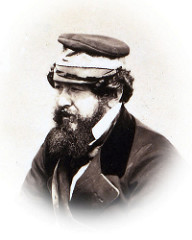
April 4th.–I had a long interview with Mr. Seward to-day at the State Department. He set forth at great length the helpless condition in which the President and the cabinet found themselves when they began the conduct of public affairs at Washington. The last cabinet had tampered with treason, and had contained traitors; a miserable imbecility had encouraged the leaders of the South to mature their plans, and had furnished them with the means of carrying out their design. One Minister had purposely sent away the navy of the United States to distant and scattered stations; another had purposely placed the arms, ordnance, and munitions of war in undue proportions in the Southern States, and had weakened the Federal Government so that they might easily fall into the hands of the traitors and enable them to secure the war materiel of the Union; a Minister had stolen the public funds for traitorous purposes–in every port, in every department of the State, at home and abroad, on sea and by land, men were placed who were engaged in this deep conspiracy – and when the voice of the people declared Mr. Lincoln President of the United States, they set to work as one man to destroy the Union under the most flimsy pretexts. The President’s duty was clearly defined by the Constitution. He had to guard what he had, and to regain, if possible, what he had lost. He would not consent to any dismemberment of the Union nor to the abandonment of one iota of Federal property–nor could he do so if he desired.
These and many more topics were presented to me to show that the Cabinet was not accountable for the temporising policy of inaction, which was forced upon them by circumstances, and that they would deal vigorously with the Secession movement–as vigorously as Jackson did with nullification in South Carolina, if they had the means. But what could they do when such men as Twiggs surrendered his trust and sacrificed the troops to a crowd of Texans; or when naval and military officers resigned en masse, that they might accept service in the rebel forces? All this excitement would come right in a very short time–it was a brief madness, which would pass away when the people had opportunity for reflection. Meantime the danger was that foreign powers would be led to imagine the Federal Government was too weak to defend its rights, and. that the attempt to destroy the Union and to set up a Southern Confederacy was successful. In other words, again, Mr. Seward fears that, in this transition state between their forced inaction and the coup by which they intend to strike down Secession, Great Britain may recognize the Government established at Montgomery, and is ready, if needs be, to threaten Great Britain with war as the consequence of such recognition. But he certainly assumed the existence of strong Union sentiments in many of the seceded States, as a basis for his remarks, and admitted that it would not become the spirit of the American Government, or of the Federal system, to use armed force in subjugating the Southern States against the will of the majority of the people. Therefore if the majority desire Secession, Mr. Seward would let them have it–but, he cannot believe in anything so monstrous, for to him the Federal Government and Constitution, as interpreted by his party, are divine, heaven-born. He is fond of repeating that the Federal Government never yet sacrificed any man’s life on account of his political opinions, but if this struggle goes on it will sacrifice thousands–tens of thousands, to the idea of a Federal Union. “Any attempt against us,” he said, “would revolt the good men of the South, and arm all men in the North to defend their Government.”
But I had seen that day an assemblage of men doing a goose-step march forth dressed in blue tunics and grey trousers, shakoes and cross-belts, armed with musket and bayonet, cheering and hurrahing in the square before the War Department, who were, I am told, the District of Columbia volunteers and militia. They had indeed been visible in various forms parading, marching, and trumpeting about the town with a poor imitation of French pas and élan, but they did not, to the eye of a soldier, give any appearance of military efficiency, or to the eye of the anxious statesman any indication of the animus pugnandi. Starved, washed-out creatures most of them, interpolated with Irish and flat-footed, stumpy Germans. It was matter for wonderment that the Foreign Minister of .a nation which was in such imminent danger in its very capital, and which, with its chief and his cabinet, was almost at the mercy of the enemy, should hold the language I was aware he had transmitted to the most powerful nations of Europe. Was it consciousness of the strength of a great people, who would be united by the first apprehension of foreign interference, or was it the peculiar emptiness of a bombast which is called Buncombe? In all sincerity I think Mr. Seward meant it as it was written.
When I arrived at the hotel, I found our young artist waiting for me, to entreat I would permit him to accompany me to the South. I had been annoyed by a paragraph which had appeared in several papers, to the effect that “The talented young artist, our gifted countryman, Mr. Deodore F. Moses, was about to accompany Mr. &c. &c., in his tour through the South.” I had informed the young gentleman that I could not sanction such an announcement, whereupon he assured me he had not in any way authorized it, but having mentioned incidentally to a person connected with the press that he was going to travel southwards with me, the injudicious zeal of his friend had led him to think he would do a service to the youth by making the most of the very trifling circumstance.
I dined with Senator Douglas, where there was a large party, among whom were Mr. Chase, Secretary of the Treasury; Mr. Smith, Secretary of the Interior; Mr. Forsyth, Southern Commissioner; and several members of the Senate and Congress. Mrs. Douglas did the honors of her house with grace and charming good-nature. I observe a great tendency to abstract speculation and theorizing among Americans, and their after-dinner conversation is apt to become didactic and sententious. Few men speak better than Senator Douglas: his words are well chosen, the flow of his ideas even and constant, his intellect vigorous, and thoughts well cut, precise, and vigorous –he seems a man of great ambition, and he told me he is engaged in preparing a sort of Zollverein scheme for the North American continent, including Canada, which will fix public attention everywhere, and may lead to a settlement of the Northern and Southern controversies. For his mind, as for that of many Americans, the aristocratic idea embodied in Russia is very seductive; and he dwelt with pleasure on the courtesies he had received at the court of the Czar, implying that he had been treated differently in England, and perhaps France. And yet, had Mr. Douglas become President of the United States, his goodwill towards Great Britain might have been invaluable, and surely it had been cheaply purchased by a little civility and attention to a distinguished citizen and statesman of the Republic. Our Galleos very often care for none of these things.
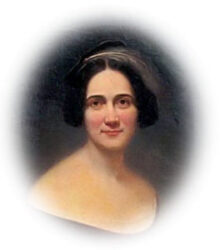
April 4th.—Mr. Hayne said his wife moaned over the hardness of the chaperones’ seats at St. Andrew’s Hall at a Cecilia Ball.¹ She was hopelessly deposited on one for hours. “And the walls are harder, my dear. What are your feelings to those of the poor old fellows leaning there, with their beautiful young wives waltzing as if they could never tire and in the arms of every man in the room. Watch their haggard, weary faces, the old boys, you know. At church I had to move my pew. The lovely Laura was too much for my boys. They all made eyes at her, and nudged each other and quarreled so, for she gave them glance for glance. Wink, blink, and snicker as they would, she liked it. I say, my dear, the old husbands have not exactly a bed of roses; their wives twirling in the arms of young men, they hugging the wall.”
While we were at supper at the Haynes’s, Wigfall was sent for to address a crowd before the Mills House piazza. Like James Fitz James when he visits Glen Alpin again, it is to be in the saddle, etc. So let Washington beware. We were sad that we could not hear the speaking. But the supper was a consolation–pâté de foie gras salad, biscuil glacé and champagne frappé.
A ship was fired into yesterday, and went back to sea. Is that the first shot? How can one settle down to anything; one’s heart is in one’s mouth all the time. Any moment the cannon may open on us, the fleet come in.
¹ The annual balls of the St. Cecilia Society in Charleston are still the social events of the season. To become a member of the St. Cecilia Society is a sort of presentation at court in the sense of giving social recognition to one who was without the pale.

WAR DEPARTMENT,
Washington, D.C., April 4, 1861.
Major ROBERT ANDERSON, U. S. Army:
SIR: Your letter of the 1st instant occasions some anxiety to the President.
On the information of Captain Fox he had supposed you could hold out till the 15th instant without any great inconvenience; and had prepared an expedition to relieve you before that period.
Hoping still that you will be able to sustain yourself till the 11th or 12th instant, the expedition will go forward; and, finding your flag flying, will attempt to provision you, and, in case the effort is resisted, will endeavor also to re-enforce you.
You will therefore hold out, if possible, till the arrival of the expedition.
It is not, however, the intention of the President to subject your command to any danger or hardship beyond what, in your judgment, would be usual in military life; and he has entire confidence that you will act as becomes a patriot and soldier, under all circumstances.
Whenever, if at all, in your judgment, to save yourself and command, a capitulation becomes a necessity, you are authorized to make it.
Respectfully,
SIMON CAMERON,
Secretary of War.
This was sent by Capt. Talbot, on April 6, 1861, to be delivered
to Maj. Anderson, if permitted. On reaching Charleston, he was
refused permission to deliver it to Major Anderson.
WAR DEPARTMENT,
Washington, April 4, 1861.
Capt. G. V. Fox, Washington, D.C.:
SIR: It having been decided to succor Fort Sumter you have been selected for this important duty. Accordingly you will take charge of the transports in New York having the troops and supplies on board to the entrance of Charleston Harbor, and endeavor, in the first instance, to deliver the subsistence. If you are opposed in this you are directed to report the fact to the senior naval officer of the harbor, who will be instructed by the Secretary of the Navy to use his entire force to open a passage, when you will, if possible, effect an entrance and place both troops and supplies in Fort Sumter.
I am, sir, very respectfully, your obedient servant,
SIMON CAMERON,
Secretary of War.
—–
WAR DEPARTMENT, ADJUTANT-GENERAL’S OFFICE,
Washington, April 4, 1861.
Col. D. D. TOMPKINS, A. Q. M. G., No. 6 State street, New York:
SIR: By direction of the Secretary of War you will charter such vessels as Capt. G. V. Fox, the bearer of this, may designate; for such time and with such supplies as he may indicate.
I am, sir, &c.,
L. THOMAS,
Adjutant-General.
—–
HEADQUARTERS OF THE ARMY,
Washington, D.C., April 4, 1861.
Lieut. Col. HENRY L. SCOTT, A.D.C., New York:
SIR: This letter will be handed to you by Capt. G. V. Fox, ex-officer of the Navy, and a gentleman of high standing, as well as possessed of extraordinary nautical ability. He is charged by high authority here with the command of an expedition, under cover of certain ships of war, whose object is to re-enforce Fort Sumter.
To embark with Captain Fox you will cause a detachment of recruits, say about two hundred, to be immediately organized at Fort Columbus, with a competent number of officers, arms, ammunition, and subsistence. A large surplus of the latter–indeed, as great as the vessels of the expedition can take–with other necessaries, will be needed for the augmented garrison of Fort Sumter.
The subsistence and other supplies should be assorted like those which were provided by you and Captain Ward of the Navy for a former expedition. Consult Captain Fox and Major Eaton on the subject, and give all necessary orders in my name to fit out the expedition, except that the hiring of vessels will be left to others.
Some fuel must be shipped. Oil, artillery implements, fuses, cordage, slow-match, mechanical levers, and gins, &c.; should also be put on board.
Consult, also, if necessary, confidentially, Colonel Tompkins and Major Thornton.
Respectfully, yours,
WINFIELD SCOTT.
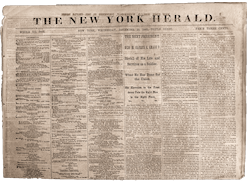
April 4, 1861; The New York Herald
The accounts from Washington this morning are of an important character. The Cabinet were in session yesterday, and Gen. Scott participated in their deliberations. The War and Navy Departments were unusually active, and Secretary Cameron and the President held frequent private consultations. It seems clear that the administration have resolved upon some extraordinary step, but in what direction, and for what end, are as yet involved in mystery.
The Corps of sappers and miners have been ordered from Washington to New York, and it is said their ultimate destination is Fort Pickens. It is stated, however, that Fort Pickens is not in want of men.
It will be seen by our Washington despatches that a blockade of the Mississippi is threatened. The President, however, cannot order a blockade, or attempt to collect the revenue on shipboard, without the authority of Congress. Nevertheless, the steam frigate Minnesota, the steam sloop Powhatan and the brig Perry have been ordered to the Belize, while sealed orders have been sent to the Cumberland, Pocahontas and Dolphin. The Minnesota is a steam frigate of 3,200 tons, carrying 40 guns. She was built in 1855, and has been lying in ordinary in Boston. The Perry is a brig, carrying 6 guns and 280 tons burthen; she is fitting out at the Brooklyn Navy Yard. The Powhatan is a first class steam sloop, of 2,415 tons; she carries 11 guns, and is at present attached to the Home squadron. She is also preparing for sea at the Brooklyn Navy Yard. The sloop-of-war Cumberland is the flagship of the Home squadron, and has been doing duty at Vera Cruz. She is 1,726 tons burthen, and carries 24 guns. The Pocahontas is a second class steam sloop. She was purchased by the government in 1855, and has been attached to the Home squadron. She carries 5 guns, and is 694 burthen. She is at Norfolk. The brig Dolphin is also at Norfolk, where she is lying in ordinary. Like the Perry, she is of light draught, being but 224 tons; she carries 4 guns.
April 4, 1861; The Charleston Mercury
An invasion, a campaign, or war, by land or sea, of the North on the South, is, in our opinion, gammon. Coercion is manifestly so nonsensical and absurd, that if it were practicable, it would not be attempted. And it is utterly impracticable for Mr. LINCOLN and his Rump Government to make effective war upon us. The North, to be sure, is besotted, and LINCOLN has threatened. He may hold Forts Sumter and Pickens–until obliged to yield them; he may, and probably will, keep Key West and Tortugas–because we have no naval resources–until a treaty of amity is made, or until the Confederate States have naval appliances for ousting him; but as to anything like real war, or anything beyond a few collisions concerning the forts, proving our temper and capacity in this revolution of government, we are altogether and entirely skeptical. LINCOLN’s secrecy and activity, which trouble the correspondents, go to this extent–no more: he is nonplussed and fidgetty. He desires to hold the remaining forts, if he can; and will give them up, when he must. In the meantime, and until some decided and positive course is adopted by the Confederate States’ authorities, he is audacious and vicious enough to intrigue, trifle and experiment about reinforcing and provisioning the strongholds in his possession. Fighting immediately and obviously destroys the Union party in the Border Slaveholding States, and brings them into the Southern Confederacy; it destroys, likewise, all hopes of re-establishing the broken Union which the Black Republicans all are loth to give up, and expect yet to mend; and it will raise a powerful anti-coercion party in every Northern State, who will clog and cripple the Government; it will immediately bring the Government into hostile collision with the fleets of England and France; and it will make their commerce a prey to privateers; whatever the event, it must prostrate the commercial and manufacturing interests of the North; and, lastly, it will manifestly fail either to conquer and hold the fifteen Slaveholding States as provinces, or to persuade them back into the Union as friends and equal confederates. Every dictate of reason and common sense, therefore, leads to the same conclusion. Men and peoples are controlled by circumstances and events; and the circumstances and events, in this instance, are all to the effect that the LINCOLN Government will not and cannot make war upon the Confederate States. That they will trifle and trick at the risk of bloodshed at the forts, is not out of character. But for invasion, or a campaign, or a war on sea, we confidently predict there will be none.
April 4, 1861; Memphis Daily Appeal (Memphis, Tennessee)
A friend connected with one of the Mississippi regiments of volunteers, writes to us from Mobile under date of the 31st ult., as follows:
“Two regiments of Mississippi troops are now assembled in Mobile under the command of Maj. Gen. Clark, and quartered, some in cotton sheds, others in cotton tents. Our destination is Pensacola, to which place we will proceed by the land route, starting on Wednesday next. Inasmuch as there are five United States vessels of war lying off Fort Pickens, it is deemed imprudent to attempt to reach Pensacola by water.
The election of field officers for the two regiments is postponed until our arrival at Pensacola. The candidates are numerous, and the contest perhaps will be very exciting.
It fills one with singular and pleasant reflections upon the effects of patriotism, to walk around our camps and see the old and young men, wealthy planters, lawyers, doctors, men of all professions, in the red or blue flannel shirts of privates, gathered around the camp fires, and cooking their own meals with an alacrity and earnestness equal only to the use of their muskets. Dangerous fellows these, for abolition hordes to meet!
Brigadier-Generals Motte and Barksdale, army of Mississippi, are in the city. Brigadier-General Griffiths, with his aid, Capt. Brown, passed through this city Monday, bound for Montgomery.”
F. E. W.
April 4, 1861; The Charleston Mercury
It has been suggested that the signers of the Secession Ordinance should have their likenesses painted by some competent artist, either in one large piece, as an historical picture, or as separate individual portraits. It has been suggested, too, that, if possible, a native artist should be engaged in the work. Without intending to disparage others, we would say that there is one native artist in Charleston who is able to undertake and perform such a work to the satisfaction of a discriminating public. Mr. JOHN B. IRVING, jr., has painted much admired historical works, as the people of Charleston all know. And, as a portrait painter of rare skill in taking likenesses that are real likenesses, and also good paintings, we believe he has never had his equal in the city – and we speak from some experience. If it be impracticable to take so many heads in one painting, we doubt not an arrangement might be made for Mr. IRVING to go round the State and paint the portraits of each and all the members, at a moderate figure. Any how, we suggest it.
April 4, 1861; The Charleston Mercury
MONTGOMERY, April 1, 1861.
As you have been apprised by telegraph, the War Department is vigorously concentrating men and munitions of war at the most important points, for the purpose of being prepared for a systematic defence of the Indian frontier. Several competent officers and influential agents have been already appointed at different places upon the border, who are working diligently to make preparations for the troops which will be sent out in a short time to guard the frontier. I am informed that advices have been received today in the State Department that Fort Pickens will not be reinforced, and that it will be given up to the Confederate States within a short time. This was considered positive, and as I make the statement upon the highest authority, it may be believed as true. Without trusting too fully upon the execution of this promise, the work of preparing the siege will go on at Pensacola, and the troops will concentrate at that point. If not given up within one month, or some definite arrangements made between the two governments, Col. BRAGG will commence an attack, which cannot fail to be a successful one.
More troops from this State and from Georgia are on their way to Warrington and the forts. The Cherokee Grays, Capt. CLARE’S Company, consisting of ninety-two men, passed through here today. Another Company of about fifty men left on Friday last. Four hundred of the Alabama troops are at Mount Vernon Arsenal, where a rendezvous has been established.
There is considerable anxiety in this city in regard to South Carolina and the action of her Convention. It is well known here that there are two or three very objectionable clauses in the Constitution, which, considering the general ability of the instrument, were passed lightly by when the States adopted it as the permanent Constitution–the le supremis under which they were to live. In two instances, at least, it has clauses which will seriously cripple the Government in the [continue reading…]
April 4, 1861; The Charleston Mercury
Another suspicious vessel was fired into yesterday. We furnish the following statements, from reliable parties, for the information of our readers:
FIRST STATEMENT.
Yesterday morning, General BEAUREGARD, with his Aids, Captains FERGUSON and CHISOLM, and Governor PICKENS, with his Aid Colonel LUCAS, visited Sullivan’s Island and the batteries there. About half past 2 o’clock, whilst they were standing in the porch of the Moultrie House, a schooner was discovered coming in, with the United States flag flying. They saw the battery fire at the vessel, upon which they think she turned back. The battery, however, continued firing. Major ANDERSON sent a boat with a white flag to the vessel, but what the message was had not at this writing transpired at Headquarters.
SECOND STATEMENT.
About three o’clock yesterday afternoon an unknown schooner was seen entering the harbor, with no colors flying. When she came within range of the ‘Star of the West’ battery, it was deemed expedient to fire across her bows in order to force her to show her colors. Two shots were accordingly fired, when she ran up the flag of the United States, but continued to stand in, in defiance of the admonition which she had received. Three more shots were fired, making five in all, when the vessel altered her course and anchored near the bar. It was pretty generally believed she was struck, but some doubts were entertained. Before I left the Island I learned that Major ANDERSON had sent his messenger over there with a message to the effect, that if the vessel had been struck, or if any damage had been done to her, he would feel himself compelled to open his batteries upon us. After that his boats went out to this vessel, and up to the time I left, they were [continue reading…]
April 4, 1861; The Charleston Mercury
WASHINGTON, April 1, 1861.
Northern politicians, not bound hand and foot to the Abolition Juggernaut, begin to decry the indecisive policy of the LINCOLN Administration. It takes strong ground neither on one side nor the other. Cabinet councils are held, and the duration of their sittings is proclaimed with a loud flourish of trumpets; but when you come to the hard, practical question–what has been done, what is to be done, to meet the demands of the country?–you hear only the hollow, unsatisfactory sound which has been heard daily since the 4th March last. Therefore, all men not interested directly or indirectly in official plunder, experience difficulty in restraining their indignation. It is too bad, they say, that the vital interests of the people are to be made subordinate to the vile, sinister intrigues of a faction.
The only explanation yet vouchsafed upon the subject serves to deepen the shade of infamy in which it is enshrouded. What is it? That to accomplish party purposes in Connecticut and Rhode Island, the solution of the Sumter and Pickens difficulty shall be deferred until the elections have taken place. The fact that the alternative, peace or war, appears to hang by a thread over the country, matters not to these miserable leaders of a miserable party. Intent upon calculating only their own chances, they leave the great issue to drift before the wind and tide of a tempestuous sea. They have the wish, but the folly and failure of the attempt are too manifest to warrant it.
Thus, though each day furnishes a full proportion of rumors, you speedily discover that all proceed from the same tainted, unreliable source. The coinage of lies has not even the merit of novelty to recommend. And those whose business it is to visit the departments in search of intelligence, and to make a salaam before the great men of the government, shake their heads sorrowfully when the task of sifting the true from the new is ended.
The common belief that this do nothing system results from Executive incapacity, is, however, repudiated by some [continue reading…]
April 4, 1861; The New York Herald
WASHINGTON, April 3, 1861.
At last the ball has opened. The corps of Sappers and Miners left here this morning, and today three of the batteries now in this city received orders to leave forthwith, all being required to report at Fort Hamilton, New York. That these troops are destined for Fort Pickens there can be no doubt. In less than a week the country will learn whether we have a government or not. The Home squadron is to be increased and ordered South, and Pensacola and other Southern ports will be blockaded. Fort Pickens is not in need of additional men, but will soon be in want of supplies, which will be furnished forthwith.
It is believed that General Sumner has been ordered to New York, and perhaps South, to direct the movement of the troops, as he left here very suddenly.
General Scott’s private secretary also left yesterday on short notice for New York.
Several interviews have been had today between the President and Secretary of War, and the latter with General Scott.
Orders have been issued today in the Navy Department to the several bureaus to an extent that almost precluded everything else. Every available naval ship will be called home. Those on the Coast of Africa, it is said, cannot be recalled without violating the treaty with England requiring the United States to keep at least eighty guns there.
The Cabinet were in session today for several hours, and Gen. Scott was present. Among the important questions discussed was the recent affair in St. Domingo. The foreign Ministers here express the opinion that the Spanish government will not countenance the course of the Governor General of Cuba in sending troops from Havana to St. [continue reading…]
April 4, 1861
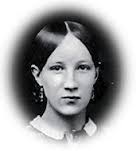
April.–We seem to have come to a sad, sad time. The Bible says, “A man’s worst foes are those of his own household.” The whole United States has been like one great household for many years. “United we stand, divided we fall! ” has been our watchword, but some who should have been its best friends have proven false and broken the bond. Men are taking sides, some for the North, some for the South. Hot words and fierce looks have followed, and there has been a storm in the air for a long time.
WEDNESDAY 3
Another pleasant cool day, fire in office during the forenoon. The work is pretty well “up” in our room altho we have no 2nd assistant yet. I am now performing the clerical duties in addition to my usual routine of work. Walked with Juliet this evening, got her pr Boots on 7th Street, and then we went through the upper part of the City. I did not go to the Ave and of course did not get the NY papers. Read “Williams on Heat” till 11, and am off to bed.
The three diary manuscript volumes, Washington during the Civil War: The Diary of Horatio Nelson Taft, 1861-1865, are available online at The Library of Congress.
April 3rd.–I had an interview with the Southern Commissioners to-day, at their hotel. For more than an hour I heard, from men of position and of different sections in the South, expressions which satisfied me the Union could never be restored, if they truly represented the feelings and opinions of their fellow-citizens. They have the idea they are ministers of a foreign power treating with Yankeedom, and their indignation is moved by the refusal of Government to negotiate with them, armed as they are with full authority to arrange all questions arising out of an amicable separation–such as the adjustment of Federal claims for property, forts, stores, public works, debts, land purchases, and the like. One of the Judges of the Supreme Court of the United States, Mr. Campbell, is their intermediary, and of course it is not known what hopes Mr. Seward has held out to him; but there is some imputation of Punic faith against the Government on account of recent acts, and there is no doubt the Commissioners hear, as I do, that there are preparations at the Navy Yard and at New York to relieve Sumter, at any rate, with provisions, and that Pickens has actually been reinforced by sea. In the evening I dined at the British Legation, and went over to the house of the Russian Minister, M. de Stoeckl, in the evening. The diplomatic body in Washington constitute a small and very agreeable society of their own, in which few Americans mingle except at the receptions and large evening assemblies. As the people now in power are novi homines, the wives and daughters of ministers and attaches are deprived of their friends who belonged to the old society in Washington, and who have either gone off to Secession, or sympathize so deeply with the Southern States that it is scarcely becoming to hold very intimate relations with them in the face of Government. From the house of M. de Stoeckl I went to a party at the residence of M. Tassara, the Spanish Minister, where there was a crowd of diplomats, young and old. Diplomatists seldom or never talk politics, and so Pickens and Sumter were unheard of; but it is stated nevertheless that Virginia is on the eve of secession, and will certainly go if the President attempts to use force in relieving and strengthening the Federal forts.
April 3d,—Met the lovely Lucy Holcombe, now Mrs. Governor Pickens, last night at Isaac Hayne’s. I saw Miles now begging in dumb show for three violets she had in her breastpin. She is a consummate actress and he well up in the part of male flirt. So it was well done.
“And you, who are laughing in your sleeves at the scene, where did you get that huge bunch?” “Oh, there is no sentiment when there is a pile like that of anything!” “Oh, oh!”
To-day at the breakfast table there was a tragic bestowal of heartsease on the well-known inquirer who, once more says in austere tones: “Who is the flirt now?” And so we fool on into the black cloud ahead of us. And after heartsease cometh rue.
FORT SUMTER, April 3, 1861.
Maj. ROBERT ANDERSON, First Artillery, U. S. Army,
Commanding Fort Sumter, Charleston Harbor:
MAJOR: In obedience to your directions, we visited Cummings Point and the schooner, bearing the United States flag, which was fired into by the batteries on Morris Island, and respectfully present the following statement concerning the affair:
The commanding officer on Morris Island, Lieut. Col. W. G. De Saussure, stated that a schooner with the United States flag at her peak endeavored to enter the harbor this afternoon about 3 o’clock; that in accordance with his orders to prevent any vessel under that flag from entering the harbor, he had fired three shots across her bows, and this not causing her to heave to, he had fired at her, and had driven her out of the harbor; that he thought one or two shots had taken effect, and that if he had a boat that could live to get out to her he would send and see if she were disabled, and inform Major Anderson at once, but that he had no proper boat, as the schooner was at anchor in a very rough place; that the revenue cutter had gone out to examine her condition. We ascertained the schooner to be the Rhoda H. Shannon, Joseph Marts, master, of Dorchester, N.J., bound from Boston to Savannah with a cargo of ice, having left the former place on March 26. On account of unfavorable weather, the master had obtained but one observation, and that was an imperfect one on yesterday. On his arrival off Charleston Bar, supposing himself to be off Tybee and seeing a pilot-boat, he directed one of his men to hold the United States flag in the fore rigging as a signal for a pilot. As none came, the flag was taken down in a few minutes, and the master undertook to bring his vessel into the harbor without a pilot. He did not discover that he was not in Savannah Harbor until he had crossed the bar and had advanced some distance in the harbor. As he was passing Morris Island, displaying no flag, a shot was fired from a battery on shore across the bows of the schooner. The master states that he thought they wished him to show his colors, and that he displayed the United States flag at his peak. One or two shots were then fired across the schooner’s bows, but he did not know what to do or what the people on shore wished him to do; that he kept the vessel on her course until they fired at her, and one shot had gone through the mainsail, about two feet above the boom, when he put her about and stood out to sea, anchoring his vessel in the Swash Channel, just inside of the bar; that the batteries kept on firing at his vessel for some time after he had turned to go out to sea.
The master of the schooner stated that before leaving Boston, he had learned how affairs stood in Charleston Harbor, and that Fort Sumter was to be given up in a few days; that they had established a new confederacy down South.
After satisfying ourselves that the vessel was uninjured, and as she was lying in a very rough place, we advised the master to move his vessel–either to stand out to sea and go on to Savannah, or to come into the harbor and anchor.
On our return we stopped at Cummings Point, and stated the facts to Lieutenant-Colonel De Saussure. He said that the vessel would not be molested if she came into the harbor.
The schooner weighed anchor a short time after we left, and stood in towards Morris Island for some distance, but finally turned about and went to sea.
Respectfully submitted.
T. SEYMOUR,
Captain, First Artillery.
G. W. SNYDER,
Lieutenant of Engineers.

Firing at the Schooner Shannon, Laden with Ice, From the
Battery on Morris Island, S.C., April 3, 1861
Frank Leslie’s Illustrated Newspaper, April 20, 1861
In the words of an eye-witness:
“The city was startled late in the afternoon of the 3d by firing from Fort Morris. It was supposed at first to be mere practice shots; but those who had the best glasses could see that a schooner was the object, and and what that schooner meant and where she came from remained a mystery until late yesterday afternoon. I enlisted a Charleston pilot in my service , and finally he brought me the following. It seems that about four P. M. a schooner was seen beating up the channel. She had no pilot aboard, as was evident from the fact that she failed to give the usual signal to the guard boat. As she still kept on her way, apparently shaping her course for Fort Sumter, she was fired into by the Fort Morris Battery, they sending a shot across her bows. Still she kept on, but throwing out the Stars and Stripes. When she came abreast of the Mortar battery they sent some very heavy shot, not pointed at her hull, but which nevertheless hit her. As she still persisted, they sent a shell which burst close to her rudder. My informant said in his rough, sailor parlance, ‘Why in h—ll don’t you heave to? The captain of the schooner was evidently bewildered and didn’t know what to do. When the shell was fired he hove to in desperate haste.

Boat from Fort Sumter arriving at Cummings’ Point with a flag of Truce, Conveying Capt. Seymour and Lieut. Snyder, to ask Permission to run down the Schooner Shannon , to ascertain if any Damage had been done by the Firing from Morris Island, Apr 3, 1861
“Major Anderson, who had been carefully scanning the whole thing with his glass, immediately sent the fort boat and detailed Captain Seymore and Lieutenant Snyder to row over at once to Morris Island, to ask an explanation of the firing, and to obtain permission to visit the schooner. This was granted, and they immediately went on board. After tarrying awhile they returned to the fort, and the schooner put at once to sea. It has been blowing a gale for several days, and on Wednesday evening the entire bay was white with foam. To this may be ascribed the fact that although a coast steamer was sent in pursuit of the unknown vessel, she returned at midnight, stating that she was unable to find her. The fact of the visit of the officers from Fort Sumter has led all Charleston to believe the schooner had provisions and men for the fort, and that she was the avant courrier of a fleet on the way, and that the raising of the United States flag was well understood by Major Anderson. As I know she had a cargo of ice on board, I look upon this surmise as amounting to nothing, but the Charlestonians persist in thinking there was something immense intended, which they happily upset. The Captain of the Shannon evidently thought that ice was in demand here, notwithstanding the two dollars duty per ton. He certainly did his best to come in, but I fancy he will not care to repeat the experiment.”
MONTGOMERY, ALA., April 3, 1861—10 p.m.
General BEAUREGARD:
Minnesota ordered to sea, supposed to be for mouth of Mississippi; Powhatan to sail next week; Pawnee ordered to sea on Saturday. Three companies artillery (one of sappers and miners) ordered to New York; probably for the South. Be on lookout.
L. P. WALKER.
April 3, 1861; Tri-Weekly Alamo Express (San Antonio)
We wish our neighbor of the Herald to understand that ‘our flag’ is that glorious old banner invented by Washington, and raised in 1776 and confirmed by congress in 1777; that was carried triumphantly through three glorious wars and will continue to wave while a true American lives. We claim no new fangled banner no bastard imitation of the banner of Washington.
April 3, 1861; The New York Herald
The struggle for supremacy, commercial and political, between the two confederacies, North and South, may be said to have fairly commenced, and we recognize the opening of the battle in three or four events which have come to pass within the last few days. First, in the inauguration of the Morrill tariff on Monday last; second, in the tone of the English press upon that measure, as demonstrated by the papers which arrived here yesterday by the Borussia and New York; third, in the instructions said to have been imparted to our representatives going abroad by Mr. Seward; and fourth, in the circular addressed by Mr. Chase to the Collectors of Customs at the North, prohibiting entries of goods in bond about to be shipped to the ports of the seceded States.
Let us treat these incidents seriatim, and endeavor to arrive at the inevitable result to the future of both confederacies.
The operation of the Morrill tariff, as manifested in the New York Custom House of the past two days, and as we have described it in our columns, verifies all that has been predicted of the ruinous complication and confusion with which it was certain to surround the importing interests of this city; and, as regards its effect upon the revenue, there can be no doubt, from the present proceedings, that although for a month or so the receipts of the Custom House may increase–that is to say, while the merchants are taking out of bond those articles upon which the duties are lowered–after that time the revenue will fall off immensely, in proportion to the decrease of importations. On the first day of the operation of the new tariff $50,000 worth of sugar and molasses was withdrawn, and so with other goods upon which the duty is lessened, and which were rushed into bond in large quantities since the tariff was passed. When this spasmodic influx of money to the treasury declines, as it soon will, the government at Washington will find an alarming decrease in the revenue to be the consequence of the Morrill tariff. Many importations yet to arrive will be subject to much confusion. Of the steamers which arrived here from Europe yesterday, two of them bring cargoes, a portion of which must be levied upon under the old tariff, and a portion under the new. For instance, it is provided that all [continue reading…]
April 3, 1861; The Charleston Mercury
We understand the liberal supplies heretofore permitted to Major ANDERSON, will shortly be cut off. Yesterday a despatch was received from the Commissioners to Washington, advising a change of policy. In their opinion, no more roast beef–no more barrels of potatoes–in short, no more supplies of any description, should be suffered to reach Fort Sumter. A decision has been reached here. Fort Sumter must shortly provision itself. Tomorrow the garrison must fall back upon its own stores. Its licensed intercourse with the city must cease. But there is something more to be mentioned. A despatch has been sent to President DAVIS, in which immediate action is not indirectly hinted at. No reply has yet been received, but a telegraphic reply is hardly to be looked for. The mail will undoubtedly bring an answer. Our citizens, we are aware, are excited in regard to these matters. Patience with them, however, has become a cardinal virtue. Let them exercise it.