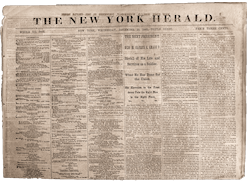
The Mysterious and Threatening Aspect of the Revolution

Civil War Day-by-Day

April 8, 1861; The New York Herald

Secresy is only the defence of the weak, and is always calculated to arouse suspicion. It is, therefore, a bad sign when we find the administration of this country hiding its designs, as the ostrich hides his head, in the face of proceedings that are the theme of universal comment and anxious speculation from Florida to Maine. We find the government chartering and despatching transports laden with troops and stores, and equipping the entire naval force at its command with the utmost haste, and without letting the public know the purpose or destination for which they are intended. Meanwhile rumor is busy on the wing, and we are left to conjecture. Some say the vessels are bound for Pensacola, which is probable; others that they are for Texas, in order to carry on the war against the Indians that are making hostile demonstrations on the borders; while many surmise any and everything, probable and improbable, from active interference with Spain at San Domingo to the reinforcement of Fort Sumter.

To the ominous and painful uncertainly occasioned by these warlike movements, we have added an increased distrust of the administration, consequent on the surmise that there is trouble, almost amounting to a split, in the Cabinet. It is evident that the war section of that august body has triumphed over the peace section. What, therefore, are we to expect? The administration, by working only in the dark, has evidently no definite policy to proclaim, and is weak and uncertain in its movements. Now, let us ask in what good can all this secresy result, and what necessity is there for maintaining it? There is no necessity for or utility in it whatever. It is only blinding the people, while the country is drifting to ruin, and while civil war with all its attendant horrors is being wilfully inaugurated. Look at the immense harm the condition of things is producing in financial and commercial circles; for, of course, according to the acts of the administration, direct or mysterious, stocks in Wall street rise or fall, and just now, as a consequence, we find the heart of the money market very irregular indeed in its pulsations.

From present appearances we know what we may expect in the future. We see that all the professions of peace uttered by Mr. Lincoln and others were mere idle talk, or else made to lull the country into a state of false security till the administration concluded its loans and was ready to strike a blow. Fort Pickens, on its lonely sandbar, may, in its ruins in years hereafter, tell of the bloody battle of Pensacola which commenced the civil war that desolated the United States in the year of our Lord 1861. Our fervent prayer is that it may not, and that those enemies of their country who cry for blood may be disappointed. But of this there seems now to be little hope.
0 comments

Major Anderson’s Supplies and Provisions

Civil War Day-by-Day

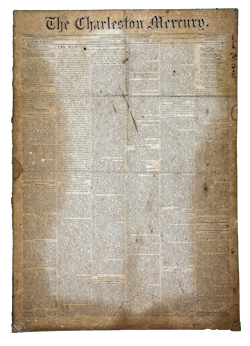
April 8, 1861; The Charleston Mercury

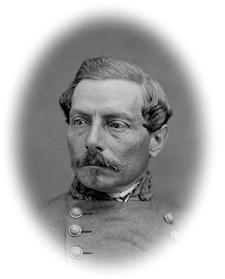
We understand that Gen. BEAUREGARD, yesterday morning, sent a messenger to notify Maj. ANDERSON that all supplies of provisions would be stopped forthwith.

The New York Tribune, alluding to the letter from a soldier in the fort, of which we published an extract on Saturday, says: ‘The Buffalo Commercial Advertiser printed yesterday a letter which we copy in another column purporting to be from a soldier in Fort Sumter, who states that the garrison have supplies for four months. The letter is probably a forgery, but, if it be genuine, the writer was either drunk or jesting.’

0 comments

Politics in Tennessee

Civil War Day-by-Day

April 8, 1861; The Charleston Mercury

Our Nashville Correspondence.

NASHVILLE, March 26, 1861.

That the Submissionists of Tennessee would finally yield a perfect obedience to the coercive doctrines of the Black republican party was foretold weeks ago, by those who were well acquainted with the character and temper of their leader, ANDY JOHNSON. Many of us would not then believe it, but now there can be no doubt of the fact that there is a party in our State who entertain the most hostile feelings, and use bitterest language, towards the South, and many of them openly proclaim the hope that LINCOLN will never recognize the Government of the Confederate States, but proceed in the attempt to collect the revenue, even if it should produce a bloody war. I am glad to believe that this class is small. The unfortunate vote of the State by which the Convention was defeated did much to encourage this temper. But that vote was no real test of the wishes or sense of the people upon the question. The notice was so short that there was no time to lay the facts before the public, and there are thousands now who voted ‘No Convention’ because they then believed that the troubles would all be adjusted upon a basis so fair and honorable to the South that the seceded States would return to the Union. Such was the impression very generally prevailing, and very many of the true friends of the South were misled by this opinion, who, today, are openly proclaiming their determination to do all in their power to place our State where she rightfully belongs. It is nevertheless true, however, that there is a large Union party here who are for staying with the North without conditions. They regard the election of LINCOLN as a triumph to themselves, and are now clamoring at him for not appointing a Postmaster here who represents their peculiar views. The appointee, Mr. McNISH, is a very worthy young gentleman, but these ‘Spread Eagles’ scream and yell it around town that, at the election, he voted for the Convention and for the Southern Rights candidates. I do not know how it was, but as he was appointed by the influence of Senator JOHNSON, the presumption is very safe that he agreed with the politics of that [continue reading…]

0 comments

Public Meeting

Civil War Day-by-Day

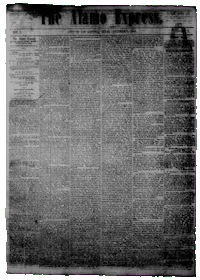
April 8, 1861, Tri-Weekly Alamo Express (San Antonio)

A public meeting of all those in favor of preserving our government from total destruction, and restoring harmony and prosperity to our distracted country, will be held on the Main Plaza, Tuesday night the 9th inst., at 8 o’clock.

0 comments

The Naval Preparations at the North

Civil War Day-by-Day

April 8, 1861; The Charleston Mercury

Our telegraphic despatches inform us of the sailing of the steamship Atlantic, with 500 troops, a company of horse and several cannon; also, the departure of the U.S. steam frigate Powhatan, and sloop of war Pawnee, and that the steamship Illinois and brig of war Perry sail next. The Atlantic and Illinois are merchant steamers, drawing at least twenty feet water. The Pawnee and Perry draw from ten to twelve feet water.

We learn, also, that the screw frigates Minnesota and Colorado, and side wheel frigate Mississippi, are nearly ready for sea. These ships all draw over twenty feet water. If there is a fleet of smaller vessels, their names have not transpired, and it would require a very diligent search of the U.S. Navy list to find them just now. We take it the Gulf is the destination of Commodore STRINGHAM’S fleet.

0 comments

The News

Civil War Day-by-Day

April 8, 1861; The New York Herald

An official of the administration, as will be seen by our despatches, left Washington yesterday for Montgomery, Alabama. The object of the mission was not known.

From Charleston we learn that the people were fully advised as to the warlike preparations of the federal government, and in consequence the greatest excitement prevailed. On Saturday, when the supply of provisions was sent down to Fort Sumter, Major Anderson was notified by General Beauregard that no more supplies for the garrison could be obtained in Charleston, which was regarded as a declaration of hostilities on the part of the commander of the Confederate forces. Governor Pickens, with his Council and the senior officers of the army, were engaged during Saturday in inspecting the batteries in Charleston harbor, and everything was found in a state of efficiency. Troops had been ordered to rendezvous within supporting distance of Charleston to watch the movements of the enemy. The people of Charleston all appeared to be in fighting humor, and declared themselves prepared for any emergency.

Despatches from Montgomery, Alabama, state that no attack will be made by the troops of the Confederate States on either Fort Sumter or Fort Pickens. To do so, President Davis argues, would be to place the new government in a false position before the world, and he is determined that if civil war must ensue, the first blow shall be struck by the administration at Washington.

Washington City was yesterday filled with all sorts of reports, rumors and speculations in regard to the present naval and military preparations of the administration. The President, it is said, in conversation does not hesitate to express his determination to possess the government property where it is practicable, and, as far as possible, to carry out the views expressed in his inaugural address. A plan for the peaceable evacuation of Fort Sumter is said to have been agreed upon, and that the order to Major Anderson will be issued today.

The Roanoke was taken out of the dry dock at the Brooklyn Navy Yard on Saturday evening, and her place will be occupied by the Savannah today.

The outfitting of the steam transports recently chartered by the government is being rapidly pushed forward. The Illinois was hauled round yesterday to the dock recently occupied by the Atlantic, where a cargo of arms and provisions was taken on board. She sails today, and will receive her troops in the bay from a steamtug. The Baltic is also being rapidly got in readiness for sea, and will follow in a day or two.

0 comments

Confederate communications on the Sumter resupply mission

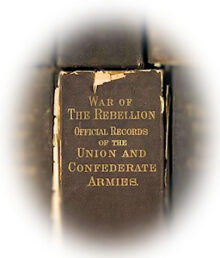
War of the Rebellion: from the Official Records of the Union and Confederate Armies and Navies

WASHINGTON, April 8, 1861.

General G. T. BEAUREGARD:

Accounts are uncertain, because of the constant vacillation of this Government. We were reassured yesterday that the status of Sumter would not be changed without previous notice to Governor Pickens, but we have no faith in them. The war policy prevails in the Cabinet at this hour.

M. J. CRAWFORD.

—–

CHARLESTON, April 8, 1861.

L. P. WALKER:

Authorized messenger from Lincoln just informed Governor Pickens and myself that provisions would be sent to Sumter peaceably, otherwise by force.

G. T. BEAUREGARD.

—–

MONTGOMERY, April 8, 1861.

General BEAUREGARD, Charleston:

Under no circumstances are you to allow provisions to be sent to Fort Sumter.

L. P. WALKER.

—–

CHARLESTON, April 8, 1861.

Hon. L. P. WALKER:

Anderson’s provisions stopped yesterday. No answer from him. Am calling out balance of contingent troops.

G. T. BEAUREGARD.

—–

HEADQUARTERS, STATE OF SOUTH CAROLINA,
April 8, 1861.

[General BEAUREGARD :]

DEAR GENERAL: I inclose the within copy of Major Anderson’s note. Please say to the Secretary of War that we thought detaching an officer from the garrison was weakening its efficiency and not taking much from the consumption of food. Tell him that you as well as myself saw the foolish firing, and both regretted it, and that you immediately issued orders as to the future firing, &c., and that the captain in charge of the watch-vessel) the Petrel, was discharged for his neglect of duty, &c.

In great haste, but most sincerely,

F. W. PICKENS.

—–

HDQRS. PROVISIONAL ARMY CONFEDERATE STATES,
Charleston, S.C., April 8, 1861.

General L. P. WALKER, Secretary of War, Montgomery, Ala.:

SIR: The War Department letter of the 6th instant has been received. I send herewith a copy of the letter addressed yesterday to Major Robert Anderson, stopping his provisions from this city, in obedience to the instructions of the Department. He has not yet answered it, probably on account of the prevailing bad weather, or perhaps he wishes to await the orders of the United States Government.

Lieutenant Talbot was allowed to go to Washington in order to diminish as much as practicable the number of Major Anderson’s officers, and in the hope that he would communicate to the Government at Washington their true condition in Fort Sumter, which Governor Pickens and myself have reasons to believe is not satisfactory to them.

On account of the unfortunate publication this morning of the proceedings of the State Convention of South Carolina, containing a detailed report of the State secretary of war, giving the exact condition, strength, and number of batteries and troops collected for the defense of this harbor, I have called out the balance of the five thousand men to which I have been limited by my instructions of the 1st ultimo–a measure rendered still more necessary on account of the warlike preparations at present being made by the United States Government with so much mystery.

I remain, sir, very respectfully, your obedient servant,

G. T. BEAUREGARD,

Brigadier-General, Commanding.

—–

WAR DEPARTMENT, C. S. A.,
Montgomery, April 8, 1861.

His Excellency F. W. PICKENS, Charleston S.C.:

SIR: The discontinuance by the United States of negotiations with the Commissioners representing this Government, of which doubtless you have before this been made aware, leaves no doubt as to the policy we should pursue.

A large force will probably, and if at all, almost immediately, be needed to resist the coercive measures of the Washington administration. To meet this condition of affairs, this Department, acting with reference to the power vested in the Executive by the act of the Congress entitled “An act to provide for the public defense,” suggests to your excellency the necessity of calling at once for three thousand volunteers, to be drilled, equipped, and held in instant readiness to meet any requisition from this Department. These troops will, of course, not be receiving pay until they shall be mustered into service, but the emergency is so pressing that your excellency will fully appreciate the great importance of thorough preparation, especially in regard to instant capacity to move. A similar   request has been addressed to the Executive of each of the Confederate States. Asking an early reply to the suggestions above made,

I am, very respectfully, your obedient servant,

P. WALKER.

(Similar letters to the governor of Florida, Tallahassee; the governor of Georgia; governor of Louisiana, Baton Rouge; governor of Texas, Austin; governor of Alabama, Montgomery; governor of Mississippi.)

—–

APRIL 8,1861.

“I am directed by the President of the United States to notify you to expect an attempt will be made to supply Fort Sumter with provisions only, and that if such attempt be not resisted no effort to throw in men, arms, or ammunition will be made without further notice, or in case of an attack upon the fort.”

—–

The above was communicated to us on the evening of April 8 by Robert S. Chew, esq., of the State Department in Washington, and Captain Talbot stated that it was from the President of the United States, as did Mr. Chew, and was delivered to him on the 6th instant at Washington, and this was read in their presence and admitted.

F. W. PICKENS.

G. T. BEAUREGARD.

0 comments

South Carolina transfers the use of all forts, arsenals, navy-yards, custom-houses, and other public sites in the state, including Sumter, to the CSA.

War of the Rebellion: from the Official Records of the Union and Confederate Armies and Navies

[APRIL 8, 1861.]

AN ORDINANCE to transfer to the Government of the Confederate States of America, the use and occupancy of the forts, arsenals, navy-yards, custom-houses, and other public sites within the limits of this State.

We, the people of South Carolina, in convention assembled, do ordain and declare, and it is hereby ordained and declared by the authority of the same, that the Government of the Confederate States of America is  hereby authorized to occupy, use, and hold possession of all forts, navy-yards, arsenals, custom-houses, and other public sites within the limits of this State, and their appurtenances, lately in the possession of the United States of America, together with Fort Sumter, and to repair, rebuild, and control the same at its discretion, until this ordinance be repealed by a convention of the people of this State.

Done at Charleston, the 8th day of April, in the year of our Lord one thousand eight hundred and sixty-one.

D. F. JAMISON,
President.

Attest:
…………B. F. ARTHUR, Clerk.

0 comments

The Destination is Fort Sumter.

War of the Rebellion: from the Official Records of the Union and Confederate Armies and Navies

HEADQUARTERS OF THE ARMY,
New York, April 8, 1861.

First Lieut. EDWARD McK. HUDSON,
Fourth Artillery, Comdg. U. S. troops on the steamer Baltic:

SIR: I am instructed by the General-in-Chief to say to you that the destination of the two hundred recruits embarked on the steamer Baltic is Fort Sumter, and that “Capt. G. V. Fox, ex-officer of the Navy, and a gentleman of high standing, as well as possessed of extraordinary nautical ability, has been charged by high authority in Washington with the command of the expedition, under cover of certain ships of war.”

You will accordingly be governed by the instructions of Captain Fox.

I am, sir, very respectfully, your obedient servant,

H. L. SCOTT,
Lieutenant-Colonel and A.D.C., Act. Adjt. Gen.

0 comments

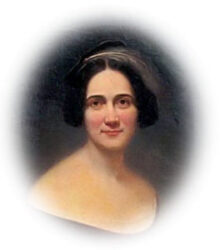
Mrs. Wigfall came in and we had it out on the subject of civil war.—Mary Boykin Miller Chesnut.

Civil War Day-by-Day

April 8th.—Yesterday Mrs. Wigfall and I made a few visits. At the first house they wanted Mrs. Wigfall to settle a dispute. “Was she, indeed, fifty-five?” Fancy her face, more than ten years bestowed upon her so freely. Then Mrs. Gibbes asked me if I had ever been in Charleston before. Says Charlotte Wigfall (to pay me for my snigger when that false fifty was flung in her teeth), “and she thinks this is her native heath and her name is McGregor.” She said it all came upon us for breaking the Sabbath, for indeed it was Sunday.

Allen Green came up to speak to me at dinner, in all his soldier’s toggery. It sent a shiver through me. Tried to read Margaret Fuller Ossoli, but could not. The air is too full of war news, and we are all so restless.

Went to see Miss Pinckney, one of the last of the oldworld Pinckneys. She inquired particularly about a portrait of her father, Charles Cotesworth Pinckney, ¹ which she said had been sent by him to my husband’s grandfather. I gave a good account of it. It hangs in the place of honor in the drawing-room at Mulberry. She wanted to see my husband, for “his grandfather, my father’s friend, was one of the handsomest men of his day.” We came home, and soon Mr. Robert Gourdin and Mr. Miles called. Governor Manning walked in, bowed gravely, and seated himself by me. Again he bowed low in mock heroic style, and with a grand wave of his hand, said: “Madame, your country is invaded.” When I had breath to speak, I asked, “What does he mean?” He meant this: there are six men-of-war outside the bar. Talbot and Chew have come to say that hostilities are to begin. Governor Pickens and Beauregard are holding a council of war. Mr. Chesnut then came in and confirmed the story. Wigfall next entered in boisterous spirits, and said: “There was a sound of revelry by night.” In any stir or confusion my heart is apt to beat so painfully. Now the agony was so stifling I could hardly see or hear. The men went off almost immediately. And I crept silently to my room, where I sat down to a good cry.

Mrs. Wigfall came in and we had it out on the subject of civil war. We solaced ourselves with dwelling on all its known horrors, and then we added what we had a right to expect with Yankees in front and negroes in the rear. “The slave-owners must expect a servile insurrection, of course,” said Mrs. Wigfall, to make sure that we were unhappy enough.

Suddenly loud shouting was heard. We ran out. Cannon after cannon roared. We met Mrs. Allen Green in the passageway with blanched cheeks and streaming eyes. Governor Means rushed out of his room in his dressinggown and begged us to be calm. “Governor Pickens,” said he, “has ordered in the plenitude of his wisdom, seven cannon to be fired as a signal to the Seventh Regiment. Anderson will hear as well as the Seventh Regiment. Now you go back and be quiet; fighting in the streets has not begun yet.”

So we retired. Dr. Gibbes calls Mrs. Allen Green Dame Placid. There was no placidity to-day, with cannon bursting and Allen on the Island. No sleep for anybody last night. The streets were alive with soldiers, men shouting, marching, singing. Wigfall, the “stormy petrel,” is in his glory, the only thoroughly happy person I see. To-day things seem to have settled down a little. One can but hope still. Lincoln, or Seward, has made such silly advances and then far sillier drawings back. There may be a chance for peace after all. Things are happening so fast. My husband has been made an aide-de-camp to General Beauregard.

Three hours ago we were quickly packing to go home. The Convention has adjourned. Now he tells me the attack on Fort Sumter may begin to-night; depends upon Anderson and the fleet outside. The Herald says that this show of war outside of the bar is intended for Texas. John Manning came in with his sword and red sash, pleased as a boy to be on Beauregard’s staff, while the row goes on. He has gone with Wigfall to Captain Hartstein with instructions. Mr. Chesnut is finishing a report he had to make to the Convention.

Mrs. Hayne called. She had, she said, but one feeling; pity for those who are not here. Jack Preston, Willie Alston, “the take-life-easys,” as they are called, with John Green, “the big brave,” have gone down to the islands– volunteered as privates. Seven hundred men were sent over. Ammunition wagons were rumbling along the streets all night. Anderson is burning blue lights, signs, and signals for the fleet outside, I suppose.

To-day at dinner there was no allusion to things as they stand in Charleston Harbor. There was an undercurrent of intense excitement. There could not have been a more brilliant circle. In addition to our usual quartette (Judge Withers, Langdon Cheves, and Trescott), our two ex-Governors dined with us, Means and Manning. These men all talked so delightfully. For once in my life I listened. That over, business began in earnest. Governor Means had rummaged a sword and red sash from somewhere and brought it for Colonel Chesnut, who had gone to demand the surrender of Fort Sumter. And now patience–we must wait.

Why did that green goose Anderson go into Fort Sumter? Then everything began to go wrong. Now they have intercepted a letter from him urging them to let him surrender. He paints the horrors likely to ensue if they will not. He ought to have thought of all that before he put his head in the hole.

____

¹ Charles Cotesworth Pinckney was a brigadier-general in the Revolution and a member of the Convention that framed the Constitution of the United States. He was an ardent Federalist and twice declined to enter a National Cabinet, but in 1796 accepted the office of United States Minister to France. He was the Federalist candidate for VicePresident in 1800 and for President in 1804 and 1808. Other distinguished men in this family were Thomas, Charles, Henry Laurens, and Charles Cotesworth Pinckney, the second.

0 comments

How can the United States Government be guilty of “treachery” towards subjects of States which are preparing to assert their independence?

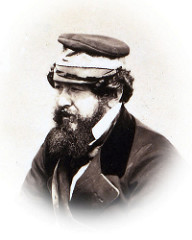
My Diary North and South – William Howard Russell

April 8th.–How it does rain! Last night there were torrents of water in the streets literally a foot deep. It still runs in muddy whirling streams through the channels, and the rain is falling incessantly from a dull leaden sky. The air is warm and clammy. There are all kind of rumors abroad, and the barbers’ shops shook with “shaves” this morning. Sumter, of course, was the main topic. Some reported that the President had promised the Southern Commissioners, through their friend Mr. Campbell, Judge of the Supreme Court, not to use force in respect to Pickens or Sumter. I wrote to Mr. Seward, to ask him if he could enable me to make any definite statement on these important matters. The Southerners are alarmed at the accounts they have received of great activity and preparations in the Brooklyn and Boston navy yards, and declare that “treachery” is meant. I find myself quite incapable of comprehending their position. How can the United States Government be guilty of “treachery” towards subjects of States which are preparing to assert their independence, unless that Government has been guilty of falsehood or admitted the justice of the decision to which the States had arrived?

As soon as I had finished my letters, I drove over to the Smithsonian Institute, and was most kindly received by Professor Henry, who took me through the library and museum, and introduced me to Professor Baird, who is great in natural history, and more particularly in ornithology. I promised the professors some skins of Himalayan pheasants, as an addition to the collection. In the library we were presented to two very fine and lively rock snakes, or pythons, I believe, some six feet long or more, which moved about with much grace and agility, putting out their forked. tongues and hissing sharply when seized by the hand or menaced with a stick. I was told that some persons doubted if serpents hissed; I can answer for it that rock snakes do most audibly. They are not venomous, but their teeth are sharp and needle like. The eye is bright and glistening; the red forked tongue, when protruded, has a rapid vibratory motion, as if it were moved by the muscles which produce the quivering hissing noise. I was much interested by Professor Henry’s remarks on the large map of the continent of North America in his study: he pointed out the climatic conditions which determined the use, profits, and necessity of slave labor, and argued that the vast increase of population anticipated in the valley of the Mississippi, and the prophecies of imperial greatness attached to it, were fallacious. He seems to be of opinion that most of the good land of America is already cultivated, and that the crops which it produces tend to exhaust it, so as to compel the cultivators eventually to let it go fallow or to use manure. The fact is, that the influence of the great mountain-chain in the west, which intercepts all the rain on the Pacific side, causes an immense extent of country between the eastern slope of the chain and the Mississippi, as well as the district west of Minnesota, to be perfectly dry and uninhabitable; and, as far as we know, it is as worthless as a moor, except for the pasturage of wild cattle and the like.

On returning to my hotel, I found a note from Mr. Seward, asking me to visit him at nine o’clock. On going to his house, I was shown to the drawing-room, and found there only the Secretary of State, his son, and Mrs. Seward. I made a parti carré for a friendly rubber of whist, and Mr. Seward, who was my partner, talked as he played, so that the score of the game was not favorable. But his talk was very interesting. “All the preparations of which you hear mean this only. The Government, finding the property of the State and Federal forts neglected and left without protection, are determined to take steps to relieve them from that neglect, and to protect them. But we are determined in doing so to make no aggression. The President’s inaugural clearly shadows out our policy. We will not go beyond it– we have no intention of doing so–nor will we withdraw from it.” After a time Mr. Seward put down his cards, and told his son to go for a portfolio which he would find in a drawer of his table. Mrs. Seward lighted the drop light of the gas, and on her husband’s return with the paper left the room. The Secretary then lit his cigar, gave one to me, and proceeded to read slowly and with marked emphasis, a very long, strong, and able dispatch, which he told me was to be read by Mr. Adams, the American Minister in London, to Lord John Russell. It struck me that the tone of the paper was hostile, that there was an undercurrent of menace through it, and that it contained insinuations that Great Britain would interfere to split up the Republic, if she could, and was pleased at the prospect of the dangers which threatened it.

At all the stronger passages Mr. Seward raised his voice, and made a pause at their conclusion as if to challenge remark or approval. At length I could not help saying, that the despatch would, no doubt, have an excellent effect when it came to light in Congress, and that the Americans would think highly of the writer; but I ventured to express an opinion that it would not be quite so acceptable to the Government and people of Great Britain. This Mr. Seward, as an American statesman, had a right to make but a secondary consideration. By affecting to regard Secession as a mere political heresy which can be easily confuted, and by forbidding foreign countries alluding to it, Mr. Seward thinks he can establish the supremacy of his own Government, and at the same time gratify the vanity of the people. Even war with us may not be out of the list of those means which would be available for re-fusing the broken union into a mass once more. However, the Secretary is quite confident in what he calls “reaction.” “When the Southern States,” he says, “see that we mean them no wrong–that we intend no violence to persons, rights, or things–that the Federal Government seeks only to fulfil obligations imposed on it in respect to the national property, they will see their mistake, and one after another they will come back into the union.” Mr. Seward anticipates this process will at once begin, and that Secession will all be done and over in three months–at least, so he says. It was after midnight ere our conversation was over, much of which of course I cannot mention in these pages.

0 comments

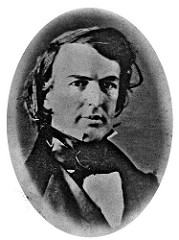
Rebel War Clerk John Beauchamp Jones.— “And I must depart immediately; for I well know that the first gun fired at Fort Sumter will be the signal for an outburst of ungovernable fury, and I should be seized and thrown into prison.”

Civil War Day-by-Day
A likeness of Jones when he was editor and majority owner of the Daily Madisonian during President John Tyler’s administration.

April 8th, 1861. Burlington, New Jersey.–The expedition sails to-day from New York. Its purpose is to reduce Fort Moultrie, Charleston harbor, and relieve Fort Sumter, invested by the Confederate forces. Southern born, and editor of the Southern Monitor, there seems to be no alternative but to depart immediately. For years the Southern Monitor, Philadelphia, whose motto was “The Union as it was, the Constitution as it is,” has foreseen and foretold the resistance of the Southern States, in the event of the success of a sectional party inimical to the institution of African slavery, upon which the welfare and existence of the Southern people seem to depend. And I must depart immediately; for I well know that the first gun fired at Fort Sumter will be the signal for an outburst of ungovernable fury, and I should be seized and thrown into prison.

I must leave my family–my property–everything. My family cannot go with me–but they may follow. The storm will not break in its fury for a month or so. Only the most obnoxious persons, deemed dangerous, will be molested immediately.

0 comments

Civil War Day-by-Day

Civil War Day-by-Day

April 8, 1861

  • Official notification given that supplies would be sent to Fort Sumter by force if necessary.
  • State department declined to recognize the C. S. commissioners.

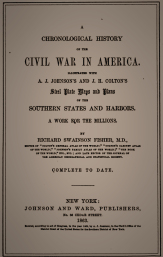
A Chronological History of the Civil War in America by Richard Swainson Fisher, New York, Johnson and Ward, 1863

0 comments

“When we know where the troops have gone from NY, the anxiety will be lessened.”—Horatio Nelson Taft

Diary of US patent clerk Horatio Nelson Taft.

SUNDAY, APRIL 7, 1861.

It has been a wet drizzly day, but I went to church with the boys in the morning. Chas was up to dinner. The papers are full of war news and there is now much excitement in the country, as much as there has been any time. When we know where the troops have gone from NY, the anxiety will be lessened. It is past 9. Wife is at the table reading. The boys have gone to bed. Julia is playing on the Piano. Larney (the black chattel) is crouched behind the stove keeping comfortable, a basket of young chickens is in the corner by her.


The three diary manuscript volumes, Washington during the Civil War: The Diary of Horatio Nelson Taft, 1861-1865, are available online at The Library of   Congress.

0 comments

The Approaching Civil War

Civil War Day-by-Day

April 7, 1861; The New York Herald

The excitement which has sprung up within the last few days consequent upon the unwonted movement of United States troops, the commissioning of United States vessels, the chartering of steamers for military service, the extensive preparations made to fit out the same with the deadly material of war, and, above all, the mystery which shrouds the object of this extraordinary belligerent demonstration, seemed to reach its culminating point yesterday. On whatever side the attentive or curious observer turned the all absorbing topic of conversation was the military preparations and the warlike attitude so suddenly assumed by the government at Washington. But while the facts laid before the public yesterday morning by the HERALD furnished an interesting subject for discussion, it was evident that the precise cause of all this unusual hubbub greatly exercised the lieges of Uncle Sam.

The Battery, if its uses conveyed the significancy of its name, might be appropriately considered a fitting spot for assemblages to meet and discuss the tidings of coming war. But though this is not so, yet was the Battery the chosen ground yesterday whereon to treat of those events, whose coming have cast their shadows before, and which have so startled the mind of the community. A great diversity of opinion prevailed as to the object of the armaments in process of embarkation on the Powhatan, the Atlantic and other steamers, and the destination of the troops daily concentrated at the different stations in the harbor.

But as little information could be acquired from the surmises of the assemblages, and as it is the duty of the reporters to collect facts and to lay the same before the public, it was necessary to visit the different forts, and, if possible, to learn from authentic sources what was going on.

The great bustle and activity observable in the Navy Yard for some days denotes that much is to be done before the orders of the War Department can be fully complied with. Within each of the forts the same quiet, orderly bustle and active preparation is going on that has marked the conduct of the military for the last few days. Arms are burnished, kits got ready, inspections are made, parades are incessant, orderlies are in perpetual motion, and all this under the strictest rules of discipline. The bearing of every man in garrison is characterized with that soldierly gravity which seems [continue reading…]

0 comments

The War Question—Fort Pickens the Game of the Administration

Civil War Day-by-Day

April 7, 1861; The New York Herald

The recent inactivity of our new administration has ceased to be a mystery. It is at length understood. Professions and appearances of peace, conciliation and forbearance in regard to the seceded States were all well enough in view of Mr. Secretary Chase’s call upon Wall street for eight millions in the way of a loan, and in view of certain elections in Connecticut and Rhode Island. But those elections being over, and Mr. Chase’s loan having been sufficiently successful to delude him with the idea that, come what may, he has only to ask in order to receive any amount of money from our Wall street financiers, we find that all these late professions and pretences of peace and conciliation were only disguises, which, having served their objects, are now thrown aside. The people of Connecticut and Rhode Island have been deceived, and the sharp and knowing money changers of Wall street have been egregiously humbugged. War, and not peace, it is now manifest, has been all along the fixed policy and purpose of Mr. Lincoln’s administration.

Our new President has some reputation as a joker, and the practical jokes, in the game of hide and seek, which he has been playing with Fort Sumter for several weeks, have certainly been very amusing. Astonished one day by authentic advices from Washington of a Cabinet decision for the immediate evacuation of said fort, and taken somewhat aback the next day by reliable information that there has been no Cabinet decision on the subject, we have been positively assured on the third day that if Major Anderson cannot be relieved he will be left himself to choose between starvation, evacuation or capitulation. Fourthly, all the Washington correspondents concur in the report that though Fort Sumter may be abandoned, Fort Pickens will be held by our government all hazards and to the last extremity.

Now here we have some stratagems of war, the credit of which does not belong to the President or any member of his Cabinet. The finger of General Scott is in this pie. Fort Pickens is invested, on the land side, by a besieging force of three or four thousand men. But the fort, out in the water on a sandbar, is hard to get at, and well prepared for defensive purposes. The besiegers are awaiting more men and heavier artillery; the besieged are expecting supplies and [continue reading…]

0 comments

Another view of the military preparations.

Civil War Day-by-Day

April 7, 1861; The New York Herald

WASHINGTON, April 6, 1861.

Notwithstanding the many rumors of war with which Washington has abounded for many days, and still abounds, I am able to assure you, in the most positive manner, that neither Fort Pickens nor Sumter is to be reinforced, and that no attack is feared upon those places by Generals Beauregard and Bragg. Every effort is being made to concentrate United States troops, a part of which are cavalry, and munitions of war are being collected on board of government vessels, but their destination is Texas, where the most alarming state of affairs exists.

It is understood that despatches have been received from Gen. Houston, of the most urgent character, representing the danger of attack by Mexicans and Indians as so imminent that nothing can prevent the most serious disasters upon the frontier if assistance is not received immediately. The Cabinet are, therefore, agreed that, whatever course may have been taken in favor of secession by the Texan people, it would be equivalent to a recognition of their independence, under the most cowardly auspices, to abandon them to their own resources at the present time. The invasion of Texas is an act of aggression against the whole Union, which it is the more the duty of the federal government to repel, as the authorities at Mexico are utterly powerless, as yet, against the bands of brigands with which that country abounds.

There is a complete and thorough understanding, although it is tacit, and to a certain extent unofficial, between the Southern Commissioners and the Lincoln administration, that the status quo shall not be disturbed, either by the United States authorities or by the southern confederacy. One of the Commissioners from Montgomery has stated in the most emphatic manner, within the last twenty-four hours, that no reinforcement could be sent to Fort Pickens or to Fort Sumter, and that no attempt to blockade the mouth of the Mississippi, or any Southern port or harbor, for the purpose of collecting revenue, could be made, without such a violation of good faith and such wanton treachery on the part of the President and his advisors, as would be without a parallel in the history of any civilized nation. When asked how he [continue reading…]

0 comments

The News

Civil War Day-by-Day

April 7, 1861; The New York Herald

The reports from Charleston this morning are highly important. Our correspondent states that the secessionists are advised of the warlike movements of the federal government, and are fully prepared for any emergency. With the supplies sent down to Fort Sumter yesterday was also sent a notification from General Beauregard to Major Anderson that no more provisions could be obtained at Charleston for the garrison. This is regarded as a virtual declaration of hostilities by the commander of the confederate forces. Five thousand troops have been ordered to rendezvous at various points within easy reach of Charleston, in anticipation of a collision.

Lieutenant Talbot arrived at Washington from Fort Sumter yesterday morning, with despatches for the War Department, and subsequently had an interview with the President, General Scott and the Secretary of War. His mission, it is said, had reference to the evacuation of the fort. It is reported that the federal and South Carolina authorities cannot agree upon a plan of evacuation. It is understood that the President wanted to leave a small force in the fort to take charge of the public property, but that General Beauregard and Governor Pickens demanded an unconditional surrender. It is further understood that the President, upon learning the views of the secessionists, at once decided that unless they accepted the terms of the government the fort should not be abandoned, thus obliging them to attack it. Therefore it is not improbable that, unless a speedy arrangement is made by the belligerents, a conflict will ensue in Charleston harbor at an early day. Lieut. Talbot left Washington last evening for Fort Sumter, with despatches for Major Anderson. Their purport has not, of course, been allowed to be made public.

It is supposed in some quarters that the extensive military arrangements now in progress have been set on foot in expectation of an immediate catastrophe at Fort Sumter, and that as soon as an attack is made upon that post every port on the Southern coast will be blockaded by the ships-of-war. [continue reading…]

0 comments

Sailing of the Powhatan

Civil War Day-by-Day

April 7, 1861; The New York Herald

The steam sloop of war Powhatan did not haul out into the stream on Friday night, as was rumored, but remaining alongside the dock at the Navy Yard throughout the night. Yesterday there was another large influx of visitors to the yard, but as everything had been taken on board, there was not the same bustle that prevailed on the previous day. Much anxiety was manifested by the visitors to ascertain whither the Powhatan was bound, and whether she was going to take troops on board. One man was observed to buttonhole a watchman, and ask him it was true that ‘sogers were to be embarked?’ to which the watchman replied that he did not know, which in turn was followed by a rejoinder from the querist that was ‘no use denying it, no how the watchman could fix it, for if troops were not to be taken on board what the –– was the use of all that fuss?’To which cogent, but rather profane reasoning, the watchman vouchsafed no reply. This incident serves to illustrate the curiosity that prevailed among the spectators as they watched the progress of the preparations for departure.

It would seem that the Powhatan was merely awaiting orders, for during the day two sealed packets were received by the commanding officer, and immediately upon the receipt steam was got up. At two o’clock the moorings were unfastened, and, aided by the steamtug Ceres, the Powhatan moved slowly out, and reaching a point of the stream from free obstruction, sailed down the river. There was no cheering or other outward demonstration by the spectators, as would undoubtedly have been the case had she been bound on a cruise to sustain the honor of the American flag against any foreign foe.

The steamtug parted from her in the East river, and the Powhatan, rounding the Battery, where her movements were observed by a number of spectators, who, however, exhibited no further interest apparently than that conveyed by a gloomy look, passed out into the bay, but no salute greeted her from the forts in the harbor, nor was there any demonstration by the surrounding shipping. She steamed seawards, and after anchoring at quarantine for a short time, [continue reading…]

0 comments

I shall fire upon any re-enforcements to Pickens unless ordered not.

War of the Rebellion: from the Official Records of the Union and Confederate Armies and Navies

PENSACOLA, April 7, 1861.

Hon. L. P. WALKER:

Your dispatch of 5th answered by telegraph and letter. I shall fire upon any re-enforcements to Pickens unless ordered not. Need supplies called for in my ordnance requisition. Have but few cartridge bags and no flannel. I shall send to Mobile for some to-day, but have no money to pay. Not a cent has been received since I arrived. Dispatches for Fort Pickens and the fleet can be received from Washington through the post-office here. The blow is over, and the vessels stood it out. Twelve hundred men expected on to-day from Mississippi and Georgia.

BRAXTON BRAGG,

Brigadier-General.

4 comments

Beauregard informs Anderson that supplies to Fort Sumter are no longer allowed.

War of the Rebellion: from the Official Records of the Union and Confederate Armies and Navies

HEADQUARTERS OF THE
PROVISIONAL ARMY, C.S.,
Charleston, S.C., April 7, 1861.

Maj. Robert ANDERSON,
Commanding at Fort Sumter, Charleston Harbor, S.C.:

SIR: In compliance with orders from the Confederate Government at Montgomery, I have the honor to inform you that, in consequence of the delays and apparent vacillations of the United States Government at Washington relative to the evacuation of Fort Sumter, no further communications for the purposes of supply with this city from the fort and with the fort from this city will be permitted from and after this day. The mails, however, will continue to be transmitted as heretofore, until further instructions from the Confederate Government.

I remain, sir, very respectfully, your obedient servant,

G. T. BEAUREGARD.

Brigadier-General, Commanding.

0 comments

I am tired and weary of this perpetual jabber about Fort Sumter.

My Diary North and South – William Howard Russell

April 7th.–Raining all day, cold and wet. I am tired and weary of this perpetual jabber about Fort Sumter. Men here who know nothing at all of what is passing send letters to the New York papers, which are eagerly read by the people in Washington as soon as the journals reach the city, and then all these vague surmises are taken as gospel, and argued upon as if they were facts. The “Herald” keeps up the courage and spirit of its Southern friends by giving the most florid accounts of their prospects, and making continual attacks on Mr. Lincoln and his Government; but the majority of the New York papers are inclined to resist Secession and aid the Government. I dined with Lord Lyons in the evening, and met Mr. Sumner, Mr. Blackwell, the manager of the Grand Trunk Railway of Canada, his wife, and the members of the Legation. After dinner I visited M. de Stoeckl, the Russian Minister, and M. Tassara, the Minister of Spain, who had small receptions. There were few Americans present. As a rule, the diplomatic circle, which has, by-the-by, no particular centre, radii, or circumference, keeps its members pretty much within itself. The great people here are mostly the representatives of the South American powers, who are on more intimate relations with the native families in Washington than are the transatlantic ministers.

0 comments

Howell Cobb to his Wife

Miscellaneous document sources

New Orleans, 7 April, 1861.

My Dear Wife, This is Sunday in New Orleans. I have just strolled “solitary and alone” through some of the streets and found here and there a French store open, but most generally the store doors were closed and things bore the appearance of Sunday in a well regulated Christian town.

This morning however my ears were saluted at an early hour with martial music and the volunteer companies soon appeared in full dress parade, and for some time the streets wore the appearance of a gala day. At the Catholic cathedral there was a most imposing and affecting ceremony. The church was filled with the volunteer companies, who had gone there to have their flags (the flag of the Confederate States) blessed by the Archbishop. The fathers, mothers and daughters of the soldiers were gathered around and there were few dry eyes during the solemn ceremony. Every heart seem[ed] to beat responsive to the patriotism of the occasion, as the solemn ceremony bound the hearts of all in iron bonds to the cause of our new Confederacy. It was a day not soon to be forgotten in this city.

I hear that the races are continued today but I have not become sufficiently acclimated to New Orleans morality to attend. . . . My Masonic business is closed, and after devoting a day to my female friends here I shall commence my homeward march. My present programme is to go with Slidell and a party of friends to visit a friend on Red Eiver, where I shall remain only a day, and then I propose to go to Oxford, Miss, and thence on the most direct route to Macon. . . .

This morning I met our old friend Maj. McCulloch of Texas who is here busily engaged in forwarding arms to Texas. I think the Major is anxious for a fight and would regret to see our present difficulties settled in a peaceable way.

I have been gratified to find a universal feeling here against reconstruction. Without exception every one I meet responds most cordially to the sentiment that our separation from the North is “perfect, complete and perpetual.”

We had our dinner yesterday at the Lake, and it was a most delightful retreat for a day from the dust and turmoil of the city. I enclose you an envelop with some letter stamps of our Confederate flag. I think they are beautiful. . . .


From Annual Report of the American Historical Association for the Year 1911.

Howell Cobb was an American political figure. A southern Democrat, Cobb was a five-term member of the United States House of Representatives and Speaker of the House from 1849 to 1851. He also served as the 40th Governor of Georgia and as a Secretary of the Treasury under President James Buchanan. Cobb is, however, probably best known as one of the founders of the Confederacy, having served as the President of the Provisional Congress of the Confederate States.

0 comments

Civil War Day-by-Day

Civil War Day-by-Day

April 7, 1861

  • P. G. T. Beauregard orders all transports to Fort Sumter cut off. This ended the fort’s supply of fresh food
  • Gen. Beauregard notified Major Anderson that intercourse between Fort Sumter and Charleston city would no longer be permitted.1
  • Steam transport “Atlantic” sailed from New York with troops and supplies.1

  1. A Chronological History of the Civil War in America
    by Richard Swainson Fisher, New York, Johnson and Ward, 1863
0 comments

“As matters look very threatening, I must go South and see with my own eyes how affairs stand there…”—William Howard Russell

My Diary North and South – William Howard Russell

April 6th.—To-day I paid a second visit to General Scott, who received me very kindly, and made many inquiries respecting the events in the Crimea and the Indian mutiny and rebellion. He professed to have no apprehension for the safety of the capital; but in reality there are only some 700 or 800 regulars to protect it and the Navy Yard, and two field-batteries, commanded by an officer of very doubtful attachment to the Union. The head of the Navy Yard is openly accused of treasonable sympathies.

Mr. Seward has definitively refused to hold any intercourse whatever with the Southern Commissioners, and they will retire almost immediately from the capital. As matters look very threatening, I must go South and see with my own eyes how affairs stand there, before the two sections come to open rupture. Mr. Seward, the other day, in talking of the South, described them as being in every respect behind the age, with fashions, habits, level of thought, and modes of life, belonging to the worst part of the last century. But still he never has been there himself! The Southern men come up to the Northern cities and springs, but the Northerner rarely travels southwards. Indeed, I am informed, that if he were a well-known Abolitionist, it would not be safe for him to appear in a Southern city. I quite agree with my thoughtful and earnest friend, Olmsted, that the United States can never be considered as a free country till a man can speak as freely in Charleston as he can in New York or Boston.

I dined with Mr. Riggs, the banker, who had an agreeable party to meet me. Mr. Corcoran, his former partner, who was present, erected at his own cost, and presented to the city, a fine building, to be used as an art gallery and museum; but as yet the arts which are to be found in Washington are political and feminine only. Mr. Corcoran has a private gallery of pictures, and a collection, in which is the much-praised Greek Slave of Hiram Powers. The gentry of Columbia are thoroughly Virginian in sentiment, and look rather south than north of the Potomac for political results. The President, I hear this evening, is alarmed lest Virginia should become hostile, and his policy, if he has any, is temporizing and timid. It is perfectly wonderful to hear people using the word “Government” at all, as applied to the President and his cabinet– a body which has no power “according to the constitution” to save the country governed or itself from destruction. In fact, from the circumstances under which the constitution was framed, it was natural that the principle point kept in view should be the exhibition of a strong front to foreign powers, combined with the least possible amount of constriction on the internal relations of the different States.

In the hotel the roar of office-seekers is unabated. Train after train adds to their numbers. They cumber the passages. The hall is crowded to such a degree that suffocation might describe the degree to which the pressure reaches, were it not that tobacco-smoke invigorates and sustains the constitution. As to the condition of the floor it is beyond description.

0 comments