The News

Civil War Day-by-Day

April 11, 1861; The New York Herald

Our despatches from Charleston this morning, though interesting, reveal but little of positive importance. The federal fleet had not made its appearance, but was hourly expected off Stono. The floating battery had been moored between Sullivan’s Island and Fort Sumter, ready for action. Troops continued to arrive from the interior.
The latest reports from Montgomery state that President Davis was deliberating upon the question of proceeding to Charleston, so as to be near at hand when the conflict begins.
The federal capital yesterday resounded with the din of arms. The militia of the District were ordered out for inspection. At the parade it was announced that the government required seven companies of volunteers, whereupon several hundred men immediately offered themselves, and were mustered into the service of the United States for an indefinite period. It is stated that the administration are in possession of positive information of the existence of a plot, between the secessionists and the disunionists of Virginia and Maryland, to seize upon the national capital whenever, in their opinion, their plans render such a step advisable. As a precautionary measure, and to protect the government property and archives, the government have taken the militia into service, and will further strengthen the force by the addition of a company of artillery and two of cavalry of the regular army. It is understood, also, that Governor Curtin will have a body of Pennsylvania militia ready to proceed to Washington upon the first intimation of danger.
0 comments

The Note of Preparation

Civil War Day-by-Day

April 11, 1861; The Charleston Mercury

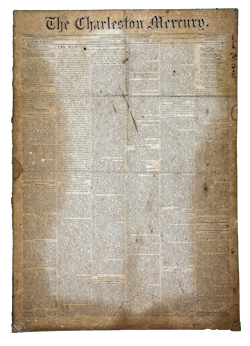
Yesterday was another day with our military men. From daybreak until sunset, and far into the night, steamers were constantly plying to and fro between the city and the batteries, transporting men, provisions and munitions of war. As for the probability of a fight, and that right soon, most people have come to regard it as a fixed fact, and we may add that it is regarded as equally certain that our brave boys at the batteries will not unbeseem their ancestry, and that the hireling invaders sent by LINCOLN will have cause to rue the day they set foot upon the soil of South Carolina. [continue reading…]

0 comments

A Sinking Fund for the Confederate States Loan

Civil War Day-by-Day

April 11, 1861; The Charleston Mercury

We publish this morning a notice from the Secretary of the Treasury of the plan by which he proposes to insure the prompt payment of the Bonds issued to raise the Confederate States Loan. The export duty of one-eighth of a cent per pound upon Cotton, imposed to meet the annually accruing interest, will exceed this requirement by a million of dollars each year, at the minimum estimate of its proceeds. This surplus the Secretary appropriates to the purchase of the Bonds from holders. By this process two objects will be secured: First, all doubt about the promptness and certainty of payment will be removed, as a fund will be always ready to redeem the Bonds in full before they mature. Second, the Government will enter and remain in the market as a bidder for the purchase of its own securities. Competition will be thereby enhanced, and the marketable price of the Bonds augmented. Thus, whether they are intended as bona fide and profitable investments for capital, or bought only for speculation, their value will be greatly enhanced by the establishment of this Sinking Fund. Never was a loan fortified by as many advantages, intrinsic and accidental. The rate of interest, the promptness of payment, and the certainty of a large demand for them, unite to make these Bonds the most desirable investment ever offered by individuals, corporations, or government authority.

0 comments

Latest by Telegraph

Civil War Day-by-Day
April 11, 1861; The Charleston Mercury
WASHINGTON, April 10.—The alarm of the Abolitionists at the bare idea of a demonstration by the Southrons against Washington begins to be perfectly ludicrous.
General orders have this day been issued by the War Department, forming a new military regiment out of the District of Columbia and the State of Maryland.
Colonel CHARLES FERGUSON SMITH, of Pennsylvania, is appointed Commandant, and Brevet Captain THEODORE TALBOT (late of Fort Sumter), whose family reside here, has been made Adjutant of the new Department.
The large force of regulars now quartered here is to be increased, instead of diminished. Captain SHERMAN’S company of Light Artillery and two companies of Federal Cavalry are expected here tomorrow. The Cavalry will purchase their horses here.
It is evident that a standing army is to overawe Maryland and Virginia, while the attempt is being made to subjugate the confederate States. Nor are the precautions confined to the concentration of regular troops.
All the volunteer companies were to-day called from their homes and mustered into service. They are at their respective armories; but, at the earliest moment they will be provided with quarters and rations by the Government.
Everything is unsettled here, and the citizens look very blue.
0 comments

The Preparations for the Defence of the National Capital

Civil War Day-by-Day
April 11, 1861; The New York Herald

The News from Washington.

WASHINGTON, April 10, 1861.
This city has been the scene of the wildest excitement throughout the entire day, troops marching, drums beating, and flags flying the entire length of Pennsylvania avenue.
Ten companies, or about one fourth of the volunteer militia of the District of Columbia, are mustering today for inspection, the order having been issued from the government headquarters last night. Several days ago the company officers were directed to immediately report the number of effective men. This unexpected movement has given rise to many surmises, especially as reports prevail, believed to be correct, that these ten companies are to be drafted into immediate service.
There is no doubt that the military movements here in progress are connected with precautionary measurers for the defence of the capital from [continue reading…]
0 comments

Our position

Civil War Day-by-Day

April 11, 1861; The Charleston Mercury

Impending, momently expected battle, is the culmination of years of steadily increasing encroachment of the North upon the South–of compromising, sentimental generosity, and weak acquiescence on the part of the South. Strengthened and aggrandized by the partial action of the Central Government, the North is swollen with pride and drunk with insolence. Overrating her power and resources, she undervalues and despises the patient, long suffering, much abused hated South. Clothed with authority, Northern sectionalism exults in the idea of humiliating and subduing those who would legitimately escape the consequence of its enthronement. The South, in armed and organized resistance, stands ready to make good her independence at the cost of blood and treasure. The two sections confront each other in positive, palpable hostility. By the gradual process of unchecked, unsettled disagreement between the sections, the respect of the North for the South has given place to disesteem, commendation to disparagement, kindly actions to outrages and murders, and amity to the interchange of the cannon and rifleball. There is now no common interest, sympathy, or hope. Direct antagonism has sprung up and is now so developed, as must lead, we trust, to an eternal separation of our destinies. Fundamental differences exist. No political conjunction can ever repress them. No Lethean waters can ever obliterate from memory the deeds which they are about to inaugurate here. Coercion — invasion–subjugation, are the issues forced upon us. And ‘Resistance to tyranny is obedience to God!’ The North needs proof of the earnestness of our intentions and our manhood. Experience shall be their teacher. Let them learn.

0 comments

If refused, hostilities will commence tonight

War of the Rebellion: from the Official Records of the Union and Confederate Armies and Navies

HDQRS. PROV. ARMY CONFEDERATE STATES OF AMERICA,
Charleston, S.C., April 11, 1861.

Hon. L. P. WALKER,

Secretary of War, Montgomery, Ala.:

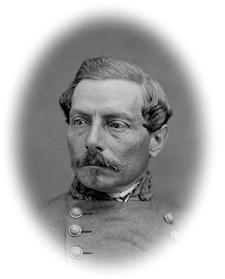
SIR: I transmit herewith, for the information of the Department, a copy of my note of this morning to Major Anderson, commanding at Fort Sumter, demanding the surrender of that fort to the Confederate Government, together with a copy of his reply thereto. As soon as his answer was received a telegraphic dispatch (a copy of which is inclosed) was sent to you, communicating its purport, and asking for your instructions. I regret to add here that the new levies at Morris Island are not in as complete a state of organization as I desire; but I hope, in the event of an attempt to land by the enemy, that I will be able to give you a satisfactory account of them.

I remain, sir, very respectfully, your obedient servant,

G. T. BEAUREGARD,

Brigadier-General, Commanding.

[Inclosure.]

CHARLESTON, April 11, 1861.

Hon. L. P. WALKER, Secretary of War:

Major Anderson replies: “I have the honor to acknowledge the receipt of your communication demanding the evacuation of this fort, and to say in reply thereto that it is a demand with which I regret that my sense of honor and of my obligations to my Government prevent my compliance.” He says verbally: “I will await the first shot, and if you do not batter us to pieces we will be starved out in a few days.”

Answer.

G. T. BEAUREGARD.

—–

MONTGOMERY, April 11, 1861.

General BEAUREGARD, Charleston:

Do not desire needlessly to bombard Fort Sumter. If Major Anderson will state the time at which, as indicated by him, he will evacuate, and agree that in the mean time he will not use his guns against us unless ours should be employed against Fort Sumter, you are authorized thus to avoid the effusion of blood. If this or its equivalent be refused, reduce the fort as your judgment decides to be most practicable.

L. P. WALKER.

—–

WASHINGTON, April 11, 1861.

General G. T. BEAUREGARD: [continue reading…]

0 comments

John W. H. Underwood to Howell Cobb

Miscellaneous document sources

(Private.)

Rome, Ga., April 11, 1861.

Dear Sir: You will have seen no doubt a few favourable notices of myself for next Governor. My inclination is to write a letter declining to have any such use made of my name. I have been restrained by the consideration, first, that it might possibly be of some use to our friends in the final struggle, even if my strength should be small. I am satisfied that Mr. Stephens intends to press Linton Stephens for that office. Failing in that he will press Mr. Crawford . . . or Benj. H. Hill. … I was very favourly inclined to Mr. Crawford but recent events have induced the belief that Mr. S. again has control of him. I do not know how Mr. Colquitt stands nor what are his prospects. I think James Jackson is the man upon whom we should concentrate our strength.

My own inclination is to retire entirely from all contests involving office. I do not want any, and unless something should be voluntarily tendered in the line of my profession I would not take any; therefore the only interest I feel is to see our ancient foe in his true position. Gov. Brown’s friends are pressing him for President, Senator, and Governor. … I desire you to understand my opinion of Brown has not changed, and from a conversation he had in Savannah with some gentleman in the presence of Mr. Bartow as I learn he is watching the contests in Geo. with great interest and is delighted at the prospect of a collision between Stephens, Hill and Mr. Toombs on one side and you and your friends on the other, expecting to benefit by it himself. He has a certain strength and I think we had best let him alone, not advance him. I cannot understand the power by which Mr. S. controls and manages Mr. Toombs. It is to me the greatest mystery of the age. [continue reading…]

0 comments

Captain J. G. Foster’s Journal of the Bombardment of Fort Sumter

Civil War Day-by-Day

April 11.–At early dawn I detected the presence of the floating battery on the upper end of Sullivan’s Island. It is situated between the end of the jetty and the steamboat wharf, where, evidently distrusting her qualities as a floating battery intended to breach the gorge wall at short range, she has been run on shore at high water, and, being left by the receding tide, has become a fixed battery. Her position gives her the advantage of sweeping with her guns the whole of the left flank of the fort, and thus rendering it impossible for any vessel with supplies to lie anywhere along this flank, while the breakwater in front protects her from our ricochet shots.

The stone traverse at the gorge has been raised to-day high enough to protect the main gate, and the traverse on the top of the parapet has been strengthened by the addition of sand bags on the top and sides, and braced in the rear by extra gun carriages. The communications cut through the walls of the quarters are finished, and all the water pipes and faucets prepared for use in case of fire. The third splinter-proof shelter on the right flank, barbette tier, is finished. These shelters are formed of the timbers of extra gun carriages inclined against the interior slope, and covered with 2 inch embrasure irons, securely spiked down. Shot and shells have been distributed to the guns, and about 700 cartridges reported ready. The work of making cartridge bags is slow, owing to there being only six needles in the fort.

The enemy’s steamers are very active carrying supplies and hospital stores to the batteries on Cummings Point.

At 4 p.m. three aides of General Beauregard (Colonel Chesnut, Colonel Chisolm, and Captain Lee)came as bearers of a demand for the surrender of the fort. The unanimous decision of the officers council was in the negative, and a written answer, in accordance, was returned by Major Anderson.

0 comments

Civil War Day-by-Day

Civil War Day-by-Day

April 11, 1861

  • Beauregard demands, by order of the Secretary of War, the unconditional surrender of Fort Sumter. The demand is refused by Major Anderson, his own sense of honor and his obligations to the U. S. Government not permitting compliance.1
  •  A final request would come in the early morning hours of April 12, shortly before the bombardment of the fortress began.
  • Confederate commissioners left Washington satisfied that no recognition of their government would be acceded to.1
  • The safety of Washington provided for.1

  1. A Chronological History of the Civil War in America by Richard Swainson Fisher, New York, Johnson and Ward, 1863
0 comments

Attempt at Enterference

Civil War Day-by-Day

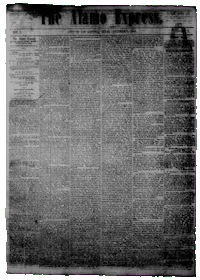
April 10, 1861, Tri-Weekly Alamo Express (San Antonio)

We learn that an attempt was made to get Capt. Tobin’s company of rangers, (now encamped at the head of the San Pedro Springs) to enterfere and break up the meeting on Tuesday night, but that the proposition was not countenanced by the company. Happening to be personally acquainted with some members of this company, and taking them as a criterion for the ballance, we believe that it is composed of gentlemen, who would be above all such dirty work, however much they might differ with the objects of the meeting, and would not interfere with a freeman’s privilage, even at the instigation of the court-house clique.

0 comments

The News

Civil War Day-by-Day

April 10, 1861; The New York Herald

The accounts this morning from Charleston corroborate the information relative to the designs of the administration, which was published in yesterday’s paper. Seven United States vessels are reported off Charleston, but it is said the supply vessels had not arrived yesterday, and until they reach there no demonstration will be made. The Confederate States forces are fully prepared for the conflict. Captain Talbot arrived at Charleston on Monday night with despatches for Major Anderson, but he was not permitted to proceed to Fort Sumter, and therefore left on his return to Washington the same night. Mail communication with the fort is, however, still uninterrupted, and Major Anderson is doubtless apprised of the designs of the administration, and prepared to cooperate with the fleet. We may expect news of the commencement of hostilities at any moment.

The warlike operations of the government continue to be vigorously prosecuted. The steamer transports Baltic and Illinois cleared the bar at this port early yesterday morning, bound southward. Orders were issued yesterday by the Navy Department to have the Wabash, Vincennes and Savannah, at Brooklyn, and the Jamestown, at Philadelphia, fitted for active service with despatch. It is stated that the administration hope, by the appearance of an immense naval force off the Southern coast, to overawe the authorities of the seceded States and bring them to terms.

0 comments

Commencement Exercises

Civil War Day-by-Day

April 10, 1861; The Charleston Mercury

The commencement exercises of the Cadets of the Citadel Academy, previously announced as about to take place a Hibernian Hall today, will, on account of the immediate prospect of a collision in our harbor, be dispensed with for the present year. The ceremony of conferring degrees upon the First Class took place privately yesterday morning.

0 comments

The Latest News

Civil War Day-by-Day

April 10, 1861; The New York Herald

Highly Important Reports from Charleston. Active Military Movements of the Secessionists. Six Thousand Troops on Duty at the Batteries. Three Thousand Alabamians, Ordered Into Service, &c., &c., &c.

CHARLESTON, April 9, 1861.

At last the ball has opened.

The State authorities last night received official notification that supplies would be furnished to Anderson at any hazard–peaceably if possible, by force if necessary.

Immense preparations immediately were commenced suitable to the emergency.

Orders were issued to the entire military force of the city, held in reserve, to proceed to their stations without delay.

Four regiments of a thousand men each have been telegraphed for from the country. One of these, from Kershaw district, under command of Col. Rion, is formed with the understanding not to be called out until the fight was positively at hand.

Dr. Gibbes, Surgeon General, was ordered to prepare ambulances, and make every provision for the wounded; and in all departments were observable the admirable system and discipline with which the State is prepared for this exigency.

The community has been thrown into a fever of excitement by the discharge of seven guns from Citadel square, the signal for the assembling of all the reserves ten minutes afterwards. [continue reading…]

0 comments

Enthusiastic Meeting

Civil War Day-by-Day

April 10, 1861, Tri-Weekly Alamo Express (San Antonio)

The People Moving!
Col. Robt. Taylor’s Speech.

The following modest notice was posted about our city on Tuesday morning:

Public Meeting.

public meeting of all those in favor of preserving our government from total destruction, and restoring harmony and prosperity to our distracted country, will be held on the Main Plaza, Tuesday night the 9th inst., at 8 o’clock.

All say there was evident excitement and much talk upon the corners and about the streets. The court-house clique were busy caucusing among the people and prominent citizens, attempting to persuade them that it would not do to have a meeting,–that there would be excitement and trouble. But there was no use talking, night came, and the people poured into the Main Plaza from all parts of the city, and long before the time appointed there were at least a thousand upon the ground. They came as a free people, as they had been wont to do in time past, to meet together to talk over their affairs and listen to what had to be said–they came as a people who were not to be bullied or frightened from assembling in public meeting–they came not to the attractions of a sumptuous feast or a long list of prominent names, but as THE PEOPLE responding spontaneously to a call, which embraced in its terms something dearer than life–liberty, and their country’s welfare–they came as a people who have been reviled and misrepresented abroad and at home by a miserable clique and who had become somewhat uneasy about the liberty of speech.

A brilliant bonfire lighted up the plaza and a brass band kept the impatient people entertained until the time of speaking arrived by discoursing national airs. The balconies of the Plaza House and the buildings around the square were crowded [continue reading…]

0 comments

The dispatch and the secrecy with which this expedition has been fitted out will strike terror into the ranks of rebellion.

War of the Rebellion: from the Official Records of the Union and Confederate Armies and Navies

U. S. TROOP-SHIP ATLANTIC,
Lat. 32 deg. 13‘, Long. 74 ° 49‘ 15“
April 10, 1861.

Hon. WM. H. SEWARD, Secretary of State:

DEAR SIR: We expect to touch at Key West, and will be able to set things in order there and give the first check to the secession movement by firmly establishing the authority of the United States in that most ungrateful island and city. Thence we propose to send dispatches under cover to you. The officers will write to their friends,  understanding that the package will not be broken until after the public has notice through the newspapers of our success or defeat. Our object is yet unknown on board, and if I read the papers of the eve of our departure aright our secret is still a secret in New York. No communication with the shore, however, will be allowed.

Your dispatch arrived as I was on my way to the Atlantic, just before the hour at which she was to sail, and two or three hours after that appointed for the Powhatan. When the arrow has sped from the bow it may glance aside, but who shall reclaim it before its flight is finished?

A violent gale compelled us to lay head to wind for twenty-four hours. We ran one hundred miles out of our course. The Powhatan having taken this gale earlier may have got through it with less delay, so that it is not now likely that we will overtake her. She had orders to call off Key West, and by boat or signal ascertain whether we had passed. It is important that she should reach the port before us.

Permit me to urge the importance of the purchase of these Collins steamers. Britain has already token the first, the Adriatic. Jeff. Davis or the United States may take them. They were built under contract subject to be taken at a valuation if needed for war. This ship, the Atlantic, cost $750,000. We have chartered her at $2,000 per day for thirty days, with the privilege, at the end of thirty days, of retaining her at that price, giving her up, or purchasing by the United States at $350,000, one-half her cost. During the height of the gale she showed no signs of weakness, rode easily, without labor, and the very line of cabin-lights reflected from a mirror, which doubles all distortions, was straight and true. This too with forty tons of horses in place of port-guns on her bow, and thirty tons of hay and stores on her after-hurricane deck. The weight of 10-inch pivot guns would not therefore hurt her. Thus far we have lost but one horse, exhausted by struggling after failing during the gale.

The Baltic I hope is chartered on terms like those of the Atlantic. Both should belong to the United States. British agents, if not Southern envoys, are after them. Had we been on board a vessel less staunch and seaworthy not a horse would have been seen oh deck and the ship might have shared the fate of the San Francisco.

[continue reading…]

0 comments

Demand Sumter’s Evacuation and, if Refused, Reduce it

War of the Rebellion: from the Official Records of the Union and Confederate Armies and Navies

MONTGOMERY, April 10, 1861.

General BEAUREGARD, Charleston:

If you have no doubt of the authorized character of the agent who communicated to you the intention of the Washington Government to supply Fort Sumter by force you will at once demand its evacuation, and if this is refused proceed, in such manner as you may determine, to reduce it. Answer.

L. P. WALKER.

—–

CHARLESTON, April 10, 1861.

L. P. WALKER:

The demand will be made to-morrow at 12 o’clock.

G. T. BEAUREGARD,

Brigadier-General.

—–

MONTGOMERY, April 10, 1861.

General BEAUREGARD, Charleston:

Unless there are special reasons connected with your own condition, it is considered proper that you should make the demand at an earlier hour.

L. P. WALKER.

—–

CHARLESTON, S.C., April 10, 1861.

Hon. L. P. WALKER:

The reasons are special for 12 o’clock.

G. T. BEAUREGARD.

—–

HEADQUARTERS PROVISIONAL FORCES,
Charleston, S.C., April 10, 1861.

Hon. L. P. WALKER, Secretary of War:

SIR: I have the honor to transmit copies of a set of complimentary resolutions, and of a resolution placing all the forces that may be called into service in this State under my orders, passed by the Convention of the State of South Carolina.

I am, sir, very respectfully, your obedient servant.

G. T. BEAUREGARD,

Brigadier-General, Commanding.

P.S.–I am doing all in my power to prevent re-enforcements by barges to Sumter to-night or to-morrow night.

G. T. B.

[Inclosure.]

Resolved, That this Convention approves of the action of the governor, in placing the forces for the military defense of Charleston under the command of General Beauregard, and that he be authorized to call into the field immediately such number of the volunteer regiments, raised under the act of assembly, as General Beauregard may require for the operations under his control; the whole force to be placed under the command of General Beauregard, or such other general officer as may be ordered to the same command by the authorities of the Confederate States of America.

[Adopted Monday, April 8, 1861.]

—–

Resolved, That this Convention, on behalf of the people of this State, repose entire confidence in the eminent professional skill, courage, and sound judgment of Brig. Gen. P. G. T. Beauregard, and in the intelligent and efficient co-operation of the various members of his staff, and other assistants, military and naval, and respectfully tender to them, and to the various forces in the service, and individuals designated, the thanks of the State for their successful efforts thus far, to protect the honor and interests of the State.

Resolved, That if Fort Sumter shall fall into the hands of our present Government, and the harbor of Charleston should be relieved from all hostile occupation or obstruction, although without any actual conflict of arms, such result will be not the less achieved by our forces aforesaid, and their wise and effective operations.

Resolved, That the foregoing resolutions be communicated to General Beauregard, with a request that he extend them to the various regiments, battalions, and separate companies, and to his staff and assistants, in such form and manner as he shall judge expedient.

[Adopted Monday, April 8, 1861.]

—–

MORRIS ISLAND, S.C., April 10, 1861.

Brigadier-General BEAUREGARD,
Commanding, Headquarters Provisional Forces, Charleston, S. C.:

MY DEAR GENERAL: There are two 4-pounder pieces here, with their limbers. There is a caisson in the city. There is also ammunition. These guns are very light, and belong to the Citadel Cadets, who are, I believe, instructed in their use. Put horses to it, and it will make a most excellent addition to our force against a landing. I regard this as very important, and the sooner it is carried out the better.

I learned this morning, with surprise, that the Dahlgren had been dismounted at Sullivan’s Island, my countermand of your orders not having been forwarded, as it seems. In this case it must either be sent over here or at once remounted in its former position; the latter is, of course, the quickest. I think Stevens’ iron battery and the two 42s a sufficient fire on the gorge. I send this up by Captain Jones, who returns immediately.

Very respectfully,

W. H. C. WHITING,

Major, Engineers.

—–

STEAMER GORDON,
Off Sumter, S.C., April 10, 1861.

General BEAUREGARD:

DEAR GENERAL: I have had under my charge during the night, in addition to my three steamers, the Charleston. The Seabrook came down about 8 o’clock and received orders, but I knew nothing of her during the night. She did not obey my orders. This morning I saw her anchored away to the southward. The Catawba has been all night in the offing. It is my opinion that Sumter can be relieved, by boats from vessels outside of the bars, on any night as dark as the last, or, if we have to take it, you had better be making a beginning. If a vessel of war is placed off each bar, when Sumter opens I will lose all my steamers, as there will be no escape for me. Therefore, before firing, these steamers should be called in. If the steamers are to guard the entrances, please send them down before dark, that they may be positioned. Yesterday I looked into Bull’s Bay, at Stono, and saw nothing.

Excuse my bad writing, my hands are so cold, and my light is so bad that I can scarcely see. I have ordered the Charleston up.

Respectfully,

H. J. HARTSTENE.

—–

HDQRS. PROVISIONAL ARMY CONFEDERATE STATES.
Charleston, S.C., April 10, 1861.

Maj. W. H. C. WHITING, Engineers, Morris Island, S. C. :

DEAR MAJOR: Your note of this day from the wharf has just been handed to me. I have just ordered Lieutenant-Colonel Ripley to put that Dahlgren gun in position between the wharf and extreme westerly point of Sullivan’s Island, to fire on the landing of the westerly face of Sumter and its postern. I have ordered those two additional 24-pounders to be sent forthwith to Cummings Point. Do the best with them, and caution Colonels Gregg and De Saussure to be on the lookout to-night. To-morrow morning’s sun must see us victorious.

Yours, truly,

G.T. BEAUREGARD,

Brigadier-General, Commanding.

—–

HDQRS. PROVISIONAL ARMY CONFEDERATE STATES,
Charleston, S.C., April 10, 1861.

General R. G. M. DUNOVANT,
Commanding Sullivan’s Island, S.C.:

MY DEAR GENERAL: Please tell Colonel Ripley I have received his letter of this day to Major Jones. I appreciate all the difficulties he refers to, but this is one of those moments when the word impossible must be ignored, for the fate of Anderson and Sumter depends upon the result of this night’s firing. Captain Hartstene and the naval officers are of opinion that the barges can pass our batteries in a dark night, hence we must be prepared to fire on their landing place, which will be the western face and postern of Sumter, not seen by any of our guns. Captain Hartstene is going to light up the entrance of the harbor with floating light-wood fires, and our Drummond lights must be set in active operation as soon as the alarm of “boats are coming” is given. Up to that time they must be kept ready for operations.

Respectfully, your obedient servant,

G. T. BEAUREGARD,

Brigadier-General, Commanding.

—–

HDQRS. PROVISIONAL ARMY CONFEDERATE STATES,
Charleston, S.C., April 10, 1861.

General R. G. M. DUNOVANT, Sullivan’s Island, S.C.:

DEAR GENERAL: From all the information we can receive it is probable that the attempt to relieve and provision Sumter will be made to-night in barges, through, probably, the Swash Channel. I have sent verbal orders to Ripley a moment ago to endeavor to put forthwith that dismounted Dahlgren gun (now on the Sullivan Wharf) in position near the extreme end of said island, and then to construct a hasty parapet in front of it. Its main object is to enfilade the landing of the western face of Sumter, and the postern in that angle, for that is where the disembarkation is going to take place. Will you see at once to the execution of these instructions? Then I wish Captain Hamilton to mark out the best position for his battery, just outside of said western point of Sullivan’s Island, for the same purpose as that already indicated by me for the Dahlgren gun, and to let me know when he will require a steamboat to report to him for that object. He must be careful to put his battery as near the point as practicable, so as to avoid the heavier fire of Sumter.

Respectfully, your obedient servant,

G. T. BEAUREGARD,

Brigadier-General, Commanding.
0 comments

A New Practice

Diary and Letters of Rutherford Birchard Hayes
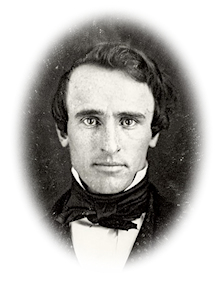
Rutherford B. Hayes (young)

CINCINNATI, April 10, 1861.

DEAR UNCLE:—You spoke too late. I am again settled in a respectable practice. I tried a case today and shall try another tomorrow. Mr. Hassaurek, the German who gets the highest office, viz., nine thousand feet above the sea at Quito, leaves a good German practice. I have taken it with his half- brother, a bright, gentlemanly, popular young German [Leopold Markbreit]. It will have both advantages and drawbacks, but it was the best that offered, and not getting a letter from you, I left the solicitor’s office yesterday and entered my new quarters at once. I enclose my card for the German side of the house. I feel free and jolly.

Sincerely,

R. B. HAYES.

S. BIRCHARD.

0 comments

General Scott.

My Diary North and South – William Howard Russell

April 10th.–To-day I devoted to packing up such things as I did not require, and sending them to New York. I received a characteristic note from General Scott, asking me to dine with him to-morrow, and apologizing for the shortness of his invitation, which arose from his only having just heard that I was about to leave so soon for the South. The General is much admired by his countrymen, though they do not spare some “amiable weaknesses;” but, in my mind, he can only be accused of a little vanity, which is often found in characters of the highest standard. He likes to display his reading, and is troubled with a desire to indulge in fine writing. Some time ago he wrote a long letter to the “National Intelligencer,” in which he quoted Shakespeare and Paley to prove that President Buchanan ought to have garrisoned the forts at Charleston and Pensacola, as he advised him to do; and he has been the victim of poetic aspirations. The General’s dinner hour was early; and when I arrived at his modest lodgings, which, however, were in the house of a famous French cook, I found a troop of mounted volunteers of the district, parading up and down the street. They were not bad of their class, and the horses, though light, were active, hardy, and spirited; but the men put on their uniforms badly, wore long hair, their coats and buttons and boots were unbrushed, and the horses’ coats and accoutrements bore evidence of neglect. The General, who wore an undress blue frock-coat, with eagle-covered brass buttons, and velvet collar and cuffs, was with Mr. Seward and Mr. Bates, the Attorney-General, and received me very courteously. He was interrupted by cheering from the soldiers in the street, and by clamors for “General Scott.” He moves with difficulty, owing to a fall from his horse, and from the pressure of increasing years; and he evidently would not have gone out if he could have avoided it. But there is no privacy for public men in America.

[continue reading…]

0 comments

The Brooklyn Navy Yard

Civil War Day-by-Day

April 10, 1861; The New York Herald

The sloop-of-war Savannah has been secured in her berth in the dry dock, which has been cleared of the water, and a large force of men have been set to work on her. Yesterday, a stream of Ridgewood water was directed at her bottom, to clear away the impurities which had collected there. The water tanks were being hoisted into the Wabash, and stowed away in their proper places, having first undergone a thorough scraping inside. The men who were engaged in this delightful occupation must have had a nice time of it, in their confined quarters.

The rigging of the brig Perry was progressing; topmasts were up, and topgallantmasts were being sent up and secured. A number of gun carriages were taken alongside and placed on board during the day.

0 comments

Missionaries of the Evacuation

Civil War Day-by-Day

April 10, 1861; The Charleston Mercury

It now appears that, under the peaceful pretext of ascertaining the precise condition of Major ANDERSON’S command in regard to provisions and with a view to a withdrawal, the Abolition Government has treacherously sought to arrange for the introduction of supplies and of men into the post. Agent after agent has been sent on, whether to consult Major ANDERSON, or to be guided by his approval of their military plans, is not manifest. But, it is plain that our authorities have been dealing with men whose perceptions of honor are vague and faint. They have been deceived, and their confidence has been grossly abused in at least one instance–that of Mr. Fox. It has since transpired in the Northern press that this quondam officer presented to the Government a scheme for reinforcing the fort, and, after a conference with the Washington authorities, was sent here to advise with Major ANDERSON on the subject. Under false pretences, his object here was accomplished. Our experience of the faith observed by our American enemies, while it shows their implacable malignity, and how unscrupulous they are in its gratification, will effectually teach us–and we trust once and for all–that in the settlement of difficulties, we must rely solely upon ourselves. In dealings with such a people generosity is thrown away, and magnanimity and chivalry are esteemed as weakness and folly.

0 comments

Important News from Washington

Civil War Day-by-Day

April 10, 1861; The New York Herald

WASHINGTON, April 9, 1861.

My despatch in today’s HERALD, disclosing, for the first time, the military and naval programme, created the most intense excitement in this city upon the arrival of the train tonight. The deep mystery which has veiled the active movements of the administration for more than a week was removed, and men seemed to realize the fact that they were in the awful presence of civil war.

The correspondents of the HERALD were immediately sought by all classes, old and young, male and female, to learn the news from Fort Sumter. ‘Have the supplies arrived?’ ‘Can the vessels get into the harbor?’ ‘How are they going to do it?’ ‘Will the secessionists fire upon the government vessels?’ were among the numerous questions propounded.

The greatest anxiety existed on the part of the government, during the early part of today, on account of the raging storm here; but despatches from Richmond gave assurances that it did not extend to the coast, hence the belief is that the fleet destined for Charleston and the Gulf is safe.

It is known that six or seven war steamers are laying off the harbor of Charleston, but the latest despatches do not announce the arrival of the supply vessels.

There does not seem to be any disposition to cut off the telegraphic communication between here and Charleston. The wires have been working all day. Merchants here received their business despatches as usual, but it is almost universally conceded in them that war in inevitable. [continue reading…]

0 comments

Noble Conduct of a Soldier

Civil War Day-by-Day

April 10, 1861; Daily Times (Leavenworth, KS)

The Missouri Democrat has a letter from a soldier at Fort Smith, Ark., bearing the date of March 5, in which the following passage occurs:

“Yesterday the citizens of Fort Smith raised a Palmetto flag in town, and one of the soldiers, private Bates, company E, First cavalry, went out and climbed up the tree upon which the flag was suspended, took it down and brought it into the garrison. Capt. Sturgiss ordered him to take it and put it back where he got it. He said he never would. The captain ordered him to the guard house, and in going he tore the flag in pieces. He was then ordered to be put in irons, and was sent to the blacksmith shop for that purpose, but the smith (a citizen) refused to put them on, and he was discharged in consequence. D company, First cavalry, farrier was then ordered to put them on, and he refused, and was sent to the guard house. E company, First cavalry, farrier then put them on. The soldiery then gave three cheers for Bates and the blacksmith who refused to put the irons on.”

We wonder if this is the same Capt. Sturgiss who was engaged in the burning of the settlers’ houses, on the Cherokee Neutral Lands? If so, the part he took in the affair above related is not to be wondered at.

0 comments

“Exciting rumors from the South & exciting news expected.”—Horatio Nelson Taft

Diary of US patent clerk Horatio Nelson Taft.

WEDNESDAY, APRIL 10, 1861.

Rain again until noon. It has rained all the time since Sunday morning, and the water in the Potomac is higher than it has been before in some years. The District Militia were all out on parade and eight Companies entered the service of the U.S. upon requisition of the Secy of War for the Protection of the City. The guards are doubled at all the Public Buildings, and Military companies were on duty all last night. Exciting rumors from the South & exciting news expected. Was on the Ave, at the Hotels, much excitement.


The three diary manuscript volumes, Washington during the Civil War: The Diary of Horatio Nelson Taft, 1861-1865, are available online at The Library of   Congress.

0 comments

“He had been ordered to proceed with the expedition against Charleston; but declined the honor of fighting against his native land.” –A Rebel War Clerk’s Diary

Civil War Day-by-Day
A likeness of Jones when he was editor and majority owner of the Daily Madisonian during President John Tyler’s administration.

April 10th.–Making an early start this morning, I once more arrived at Washington City. I saw no evidences of a military force in the city, and supposed the little army to be encamped at the west end of the Avenue, guarding the Executive Mansion.

We took an omnibus without delay and proceeded to the steamer. As soon as we left the shore, I fancied I saw many of the passengers breathing easier and more deeply. Certainly there was more vivacity, since we were relieved of the presence of Republicans. And at the breakfast table there was a freer flow of speech, and a very decided manifestation of secession proclivities.

Among the passengers was Major Holmes, who had just resigned his commission in the U. S. army. He had been ordered to proceed with the expedition against Charleston; but declined the honor of fighting against his native land. The major is a little deaf, but has an intellectual face, the predominant expression indicating the discretion and prudence so necessary for success in a large field of operations. In reply to a question concerning the military qualities of Beauregard and Bragg, he said they were the flower of the young officers of the U. S. army. The first had great genius, and was perhaps the most dashing and brilliant officer in the country; the other, more sedate, nevertheless possessed military capacities of a very high order. President Davis, in his opinion, had made most excellent selections in the appointment of his first generals. The major, however, was very sad at the prospect before us; and regarded the tenders of pecuniary aid to the U. S. by the Wall Street capitalists as ominous of a desperate, if not a prolonged struggle. At this time the major’s own State, North Carolina, like Virginia, Tennessee, Kentucky, Arkansas, and Missouri, yet remains in the Union.

We were delayed several hours at Aquia Creek, awaiting the arrival of the cars, which were detained in consequence of a great storm and flood that had occurred the night before.

0 comments