Arriving at Norfolk.

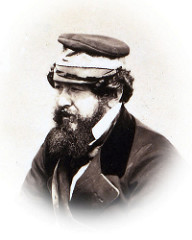
My Diary North and South – William Howard Russell
Note: This particular diary entry–a document written in 1861–includes terms that are offensive to many today.   No attempt will be made to censor or edit 19th-century material to today’s standards.

Sunday, April 14.–A night of disturbed sleep, owing to the ponderous thumping of the walking beam close to my head, the whizzing of steam, and the roaring of the steam-trumpet to warn vessels out of the way–mosquitoes, too, had a good deal to say to me in spite of my dirty gauze curtains. Soon after dawn the vessel ran alongside the jetty at Fortress Monroe, and I saw indistinctly the waterface of the work which is in some danger of being attacked, it is said, by the Virginians. There was no flag on the staff above the walls, and the place looked dreary and desolate. It has a fine bastioned profile, with moat and armed lunettes – the casemates were bricked up or occupied by glass windows, and all the guns I could make out were on the parapets. A few soldiers were lounging on the jetty, and after we had discharged a tipsy old officer, a few negroes, and some parcels, the steam-pipe brayed–it does not whistle–again, and we proceeded across the mouth of the channel and James’ River towards Elizabeth River, on which stand Portsmouth and Gosport.

Just as I was dressing, the door opened, and a all, neatly dressed negress came in and asked me for my ticket. She told me she was ticket-collector for the boat, and that she was a slave. The latter intelligence was given without any reluctance or hesitation. On my way to the upper deck I observed the bar was crowded by gentlemen engaged in consuming, or waiting for, cocktails or mint-juleps. The latter, however, could not be had just now in such perfection as usual, owing to the inferior condition of the mint. In the matter of drinks, how hospitable the Americans are! [continue reading…]

0 comments

Awful Times

Woolsey family letters during the War for the Union

Abby Howland Woolsey to Eliza Woolsey Howland.

April 14, 1861.
What awful times we have fallen upon! The sound last night of the newsboys crying till after midnight with hoarse voice, “Bombardment of Fort Sumter,” was appalling. Cousin William Aspinwall was seen at a late hour going into the Brevoort House – no doubt to give what little comfort he could to Mrs. Anderson. This storm, which has been raging a day or two at the South, and has just reached us, has scattered the fleet sent to reinforce and provision Fort Sumter, and the vessels can neither rendezvous nor co-operate with Major Anderson who is there without food, without help, and without instructions. Is Providence against us too?
0 comments

Re-enforcements in Fort Pickens—More CSA Troops Arriving

War of the Rebellion: from the Official Records of the Union and Confederate Armies and Navies

PENSACOLA, April 14, 1861.

Hon. L. P. WALKER:

Captain Adams, commanding the fleet, writes on 13th, just received. Subsequently to the date of your last letter, as you are probably aware,   re-enforcements have been placed in Fort Pickens, in obedience to orders from the United States Government. Lieutenant Worden must have given these orders in violation of his word. Captain Adams executed them in violation of our agreement.

BRAXTON BRAGG.

—–

PENSACOLA, April 14, 1861.

Hon. L. P. WALKER, Secretary of War:

Lieutenant Worden assured me he only had a verbal message of pacific nature. The re-enforcement of Pickens was preceded by signal guns from there. What caused it I cannot ascertain. Worden’s message may have had no connection with the move. He was in Pensacola when the move was made. Five thousand men here now, and two thousand more coming. Subsistence, forage, and transportation should be hurried. You can now spare the supplies from Sumter, which is ours.

BRAXTON BRAGG,

Brigadier-General.

—–

HEADQUARTERS TROOPS CONFEDERATE STATES,
Near Pensacola, Fla., April 14, 1861.

ADJUTANT-GENERAL C. S. ARMY,
Montgomery:

SIR: It is a matter of impossibility for me to keep you advised of the arrival of troops. They come under such various orders, and fail so often to report at all, that they are [here] for days sometimes before I hear of them. As near as I can ascertain this morning, by a visit of a staff officer to each camp, the inclosed statement of my present strength is very nearly accurate. I am obliged to receive them by order, and let the muster rolls be made afterwards.

I am, sir, very respectfully, your obedient servant,

BRAXTON BRAGG,

Brigadier-General, Commanding.

0 comments

I have possession of Sumter.

War of the Rebellion: from the Official Records of the Union and Confederate Armies and Navies

CHARLESTON, April 14, 1861.

Hon. L. P. WALKER:

I have possession of Sumter. Anderson and garrison on Isabel going in morning. None killed; two wounded. Quarters in ruins. Interior of fort damaged. Armament still effective against entrance to channel.

G. T. BEAUREGARD.

—–

CHARLESTON, April 14, 1861.

Hon. L. P. WALKER:

Fleet still outside. Can spare no guns yet, but hope to do so soon.

T. BEAUREGARD.

0 comments

“It is said that Martial law will be proclaimed tomorrow morning…,”—Horatio Nelson Taft

Diary of US patent clerk Horatio Nelson Taft.

SUNDAY 14

A fine cool day. Went to church in the morning with all the children, wife staid at home and went in the afternoon. The excitement in the City increases all the time now the war has begun. But the reports from Charleston are mostly “bogus.” Maj Anderson has probably not surrendered, but there is fighting there. I left Willards about 1/2 past 10 this evening, never saw a more excited crowd. It is said that Martial law will be proclaimed tomorrow morning, and that the Prest has made requisition upon the States for 75,000 men or Volunteers to defend the Government. Think of sending my family out of the City immediately.


The three diary manuscript volumes, Washington during the Civil War: The Diary of Horatio Nelson Taft, 1861-1865, are available online at The Library of   Congress.

0 comments

Your position is untenable.

Louise Wigfall Wright — A Southern Girl in ’61

The following letter, written from Charleston to the New York Times, gives a very fair account of the surrender of Fort Sumter and my father’s connection with the affair. A Southern newspaper says:

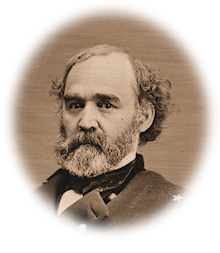
HON. LOUIS T. WIGFALL.

“The gallantry, chivalry, and heroism of this distinguished son of the South is even applauded by those from whom we least expected a word of commendation. The following is an extract of a letter written from Charleston to the New York Times, to which we invite the especial attention of our readers, both on account of its fairness, as well as of its correct representation of the interview which came off between Senator Wigfall and Major Anderson:

” ‘Mr. Wigfall’s exploit was as gallant and chivalrous as any deed of modern times.—Stationed on Morris Island, where he had been on foot or in the saddle since the commencement of the attack, he no sooner saw the second barracks in flames and the flag staff shot away, than he resolved to make his way to the Fort and persuade Major Anderson to desist from a resistance manifestly so unavailing.

” ‘Despite the remonstrances of those around him, he embarked in a skiff, and with three Negro oarsmen and a coxswain, pulled over to the Fort. He was scarce a hundred yards from shore when they hailed to him to return, “The Stars and Stripes were again flying.”—He literally turned a deaf ear to this call, and pushed on, [continue reading…]

0 comments

…news that Fort Sumpter is given up

Journal of Meta Morris Grimball
Meta Morris Grimball

14th [April]

       Lewis went down yesterday afternoon and returned today by an express train, he brings us news that Fort Sumpter is given up, after a gallant defence, when Major Anderson evacuated it, he requested to be allowed to salute his Flag, and Gen. Boregard said, that he had defended his command so bravely that he should be permitted to do so. He wrote to his wife a letter which was sent to Gen. B. to forward, he had to open it,—and it was said to contain these words, among others, “My Government have shamefully abandoned me” and I shall now fight and die like a man”.

       There were none killed on either side, the Fort has been destroyed inside,—Officer’s quarters burnt.—

       The men looked thin & smoked up with the shells which were most of them sent by Stephen’s Battery; Fort Moultry was uninjured, 5 men wounded in the evacuated Fort.—

       How thankful we are, not however as much so as we ought to be;

       Yesterday after Church I stopped to see Papa, this I always do on Sunday and these visits are very pleasant to me. He loves us all in his way & gives me some oysters which he buys from Mr La Roche’s man who brings them for sale to the Church, —and I hear family news. During this excitement and anxiety I do not think Charlotte has been very kind in her manners, she I have no doubt felt, but on such occasions people ought to express themselves to be understood, I find her an excellent, well principled woman, with a disagreeable temper, & no manners: but in this world we must be thankful for the good we find in those who belong to us, and not judge them too harshly.—Charlotte has on many occasions been kind to us all, and I thank her. Mr Grimball remained in Town until tomorrow.—Mrs Butler writes to Papa that the Overseer came to her & said he had a letter from Mr Pierce Butler saying he must send a boat to take his to W. Simon’s & send Eleck. She ordered him not to send the boat and that Eleck was waiting on her. She said she was there, in charge of the property, & would continue so, has written to Judge Law to confirm her action she says her case is a very hard one, and she deplores it. Richard seems to be very ill, spits blood, & coughs, and she writes very wofully of him, & says she certainly will not leave him in Georgia, he has an Overseer, and leaves things to him. Charles also has an Overseer, and being engaged in fixing guns in Fort Pulasky, and expecting to be in a steamer in coast guard all summer will be able to visit his Plantation, & see about his affairs, I don’t think Richard & Charles get on very nicely,—& I am sure it must be Richard’s fault, for Charles is a very kind, good tempered man, and Richard has always been very self willed & passionate.—

       Harry during the transaction of our business together wrote me a very nice letter, he expresses a kind interest in my boys and I love him for it; and he hopes still for a Reconstruction. That may be hoped for but can never, never, be.

       There have been too many bitter feelings between the two sections and it seems to me it would have been just as reasonable for us to be rearranged as British provinces soon after the Revolution broke out, as for us to go back to a Government with our taunting, Fanatic, Northern brothers.—

0 comments

Captain J. G. Foster’s Journal of the Bombardment of Fort Sumter

Civil War Day-by-Day

April 14.–The Isabel went over the bar and placed the whole command on board the steamer Baltic, which started for New York.

0 comments

Civil War Day-By-Day

Civil War Day-by-Day

April 14, 1861

  • During the formal surrender of Fort Sumter Private Daniel Hough dies when the cannon he was loading (for the Union’s 100-gun salute to the U.S. flag) discharges prematurely. He is the first man to die in the Civil War. A second man is mortally wounded.
  • Major Anderson and his men left Fort Sumter and sailed for New York.1

  1. A Chronological History of the Civil War in America by Richard Swainson Fisher, New York, Johnson and Ward, 1863
0 comments

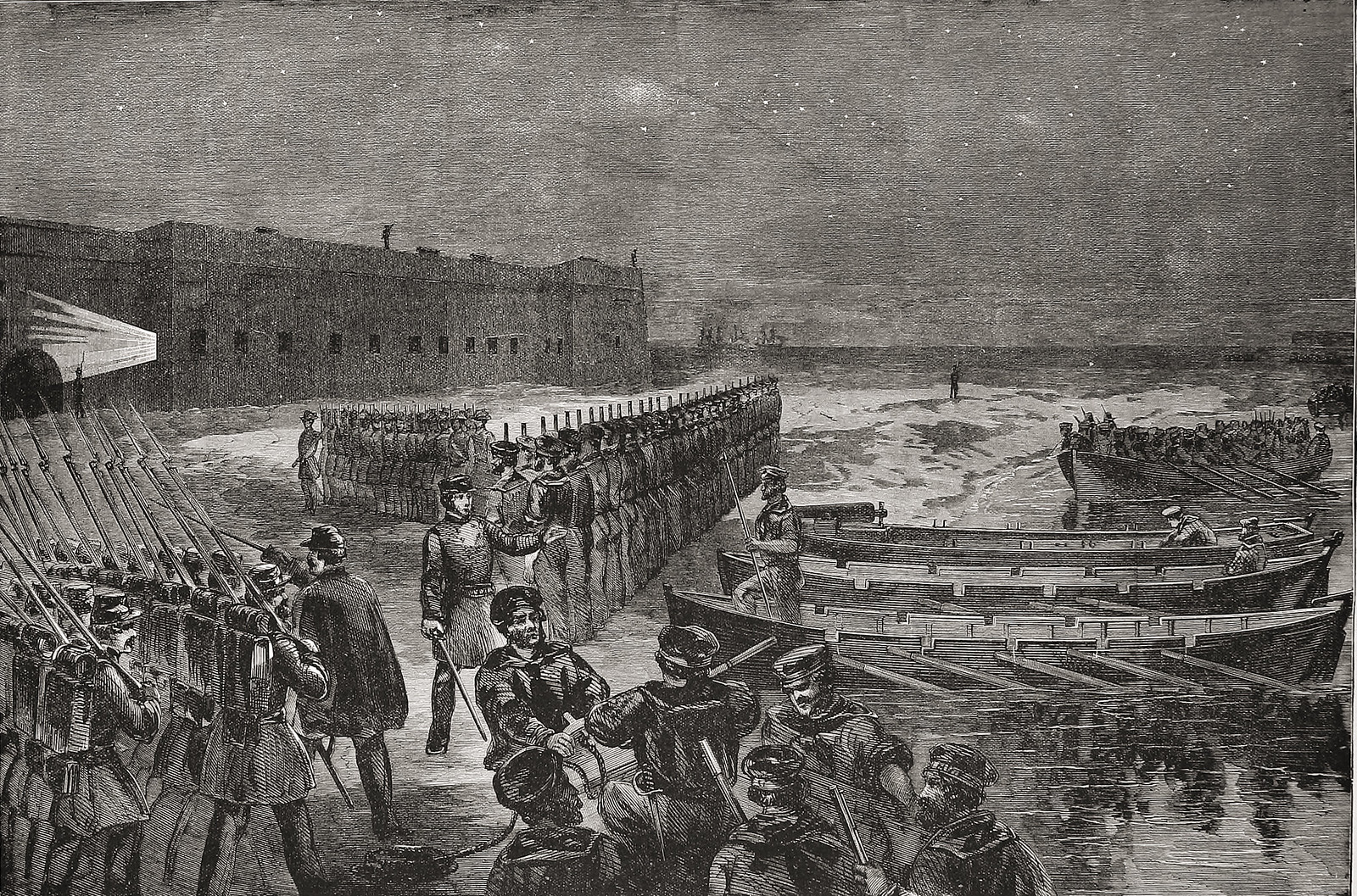
Re-Enforcements of Fort Pickens by Company A., First Artillery on Saturday Morning, April 13, 1861

Miscellaneous document sources

Re-Enforcements of Fort Pickens by Company A., First Artillery on Saturday Morning, April 13, 1861Fort Pickens on Santa Rosa Island, near Pensacola, Florida

Harper’s Pictorial History of the Civil War by Alfred H. Guernsey and Henry W. Alden; copyrighted 1866 by Harper and Brothers; 1894 by Alfred H. Guernsey and Henry W. Alden; 1894 by McDonnell Bros; pub. The Puritan Press Co.; Chicago, Illinois

0 comments

Status of Lt. Worden?

War of the Rebellion: from the Official Records of the Union and Confederate Armies and Navies

MONTGOMERY, April 13, 1861.

General BRAGG Pensacola:

When you arrested Lieutenant Worden what instructions, if any, did he show you? Did he communicate to you that he had verbal instructions, and, if so, what were they? He is here under arrest, and it is important for you to reply fully.

L. P. WALKER.

0 comments

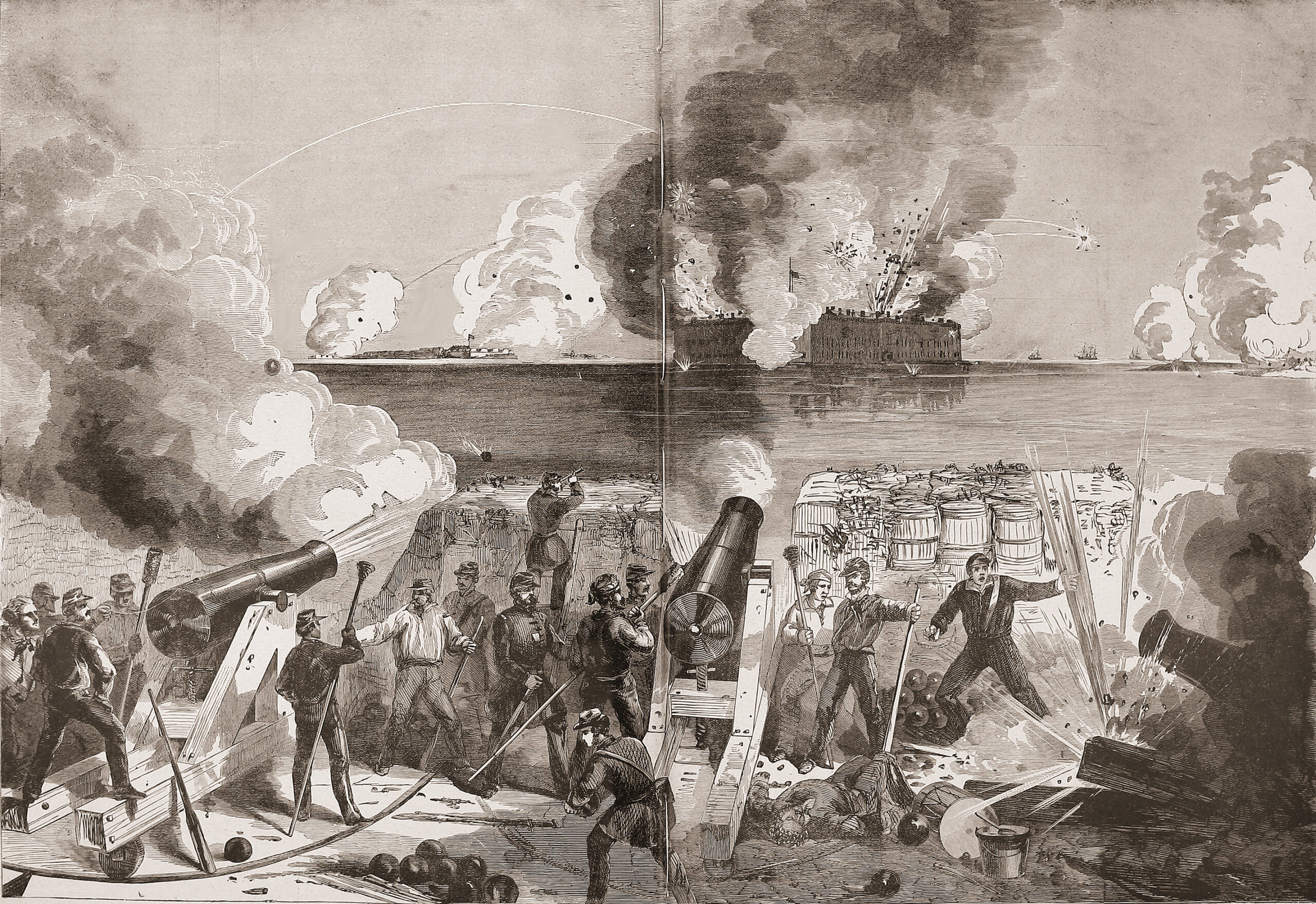
Bombardment of Fort Sumter by the Batteries of the Confederate States, April 13, 1861

Miscellaneous document sources
Bombardment of Fort Sumter by the Batteries of the Confederate States, April 13, 1861

Harper’s Pictorial History of the Civil War by Alfred H. Guernsey and Henry W. Alden; copyrighted 1866 by Harper and Brothers; 1894 by Alfred H. Guernsey and Henry W. Alden; 1894 by McDonnell Bros; pub. The Puritan Press Co.; Chicago, Illinois

0 comments

“…told as they were to go where there would certainly be fighting, he would prefer volunteers, the whole company stepped forward.”

War of the Rebellion: from the Official Records of the Union and Confederate Armies and Navies

U. S. STEAMER CRUSADER,
Off Key West, April 13, 1861.

Hon. WILLIAM H. SEWARD,
Secretary of State, Washington:

DEAR SIR: We arrived here and anchored some three miles below the fort to prevent communication. Going to the fort in a boat Colonel Brown sent notes to Judge Marvin; to Colonel Patterson, the newly appointed Navy agent; to Mr. Howe, the new collector; and to Mr. Tiler, the late Navy agent. Mr. Clapp, whose commission as marshal we brought with us, we found at the fort. To these gentlemen the general policy of the Government in regard to the fort and island of Key West was explained, and the assurance of support from their Government was received with great satisfaction. I found that Colonel Patterson has lately made himself quite conspicuous by his Union sentiments, and their open avowal. The best feeling prevails between the gentlemen now appointed and the officers of the garrison, and I have no doubt that all will work harmoniously together.

The anxiety to which Judge Marvin has been subjected has preyed upon his spirits and he looks depressed, but he is ready to do his duty and stand to his post, at least until the Government is ready to relieve him. His presence for a time, and his influence are, I think, of much importance in [continue reading…]

0 comments

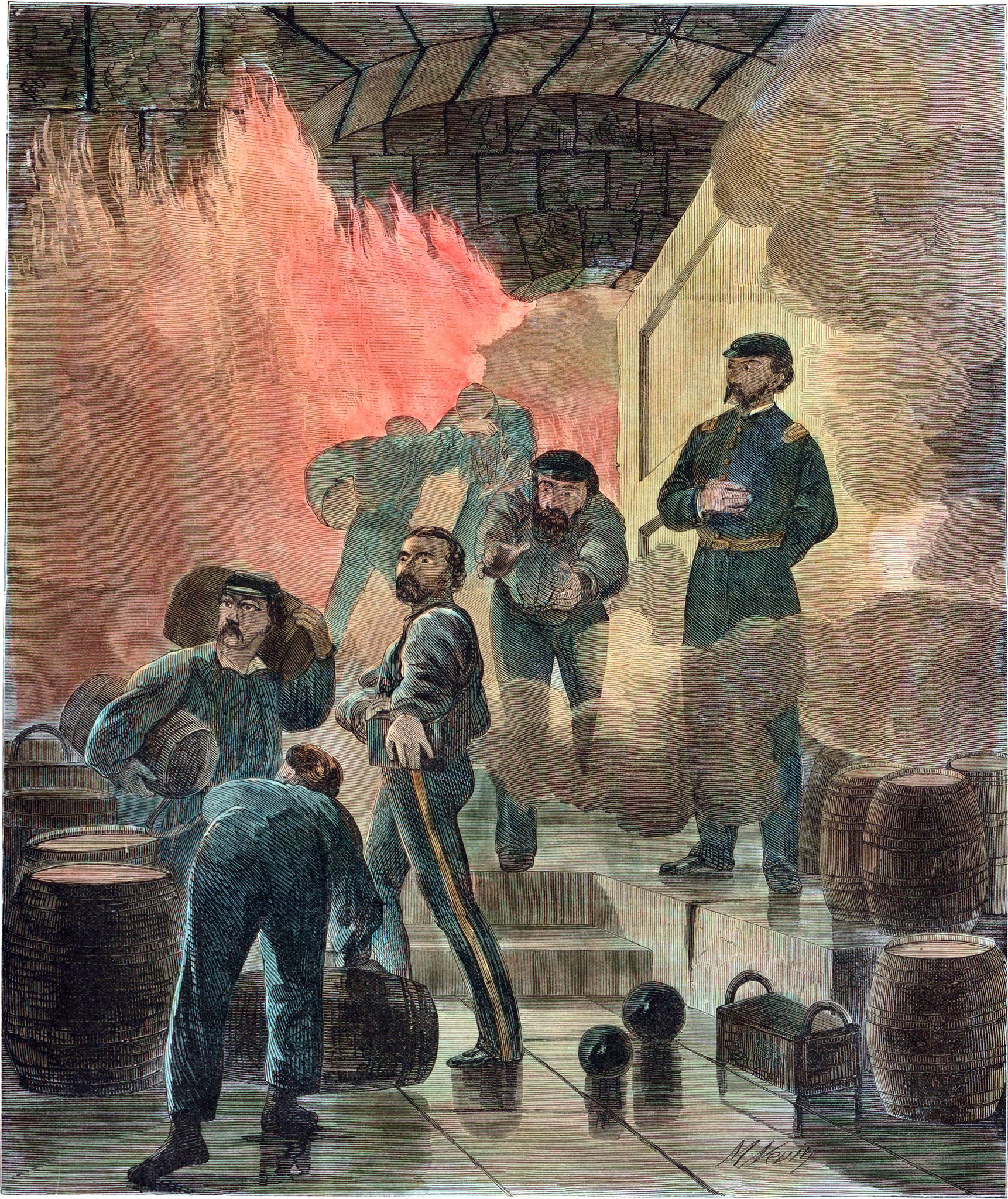
Removing Powder from the Magazine of Fort Sumter during the Bombardment

Miscellaneous document sources
Removing Powder from the Magazine of Fort Sumter during the Bombardment

Appeared in Harper’s Pictorial History of the Civil War

Hand-tinted off-print

Special handed-tinted off-prints were often sold separately from newspapers and other documents. Numerous originals held today by public institutions and in private collections.

0 comments

Harvey Brown Assumes Command of the Department of Florida

War of the Rebellion: from the Official Records of the Union and Confederate Armies and Navies

HEADQUARTERS DEPARTMENT OF FLORIDA,
Key West, April 13, 1861.

Lieut. Col. E. D. KEYES,
Secretary to the General-in-Chief, Washington, D. C.:

COLONEL: We arrived at this place this afternoon. Captain Meigs and I have had an interview with Judge Marvin which has been entirely satisfactory. He, though anxious to leave the place, will remain, having now the assurance of support from the military authority. I have found great industry, intelligence, and enterprise in putting forward the works at the fort, and consider it quite secure against any force that can at this time be brought against it. Brevet Major French, the commanding officer, has been untiring in his labors, assisted ably by Captain Hunt, of the Engineers, and the officers of the garrison. He and all his officers are, I am happy to say, entirely devoted to the Union and the country, under any and all contingencies. I have issued General Orders in relation to the posts, copies of which will be forwarded by the first opportunity. Finding here some 10-inch mortars, I have taken three of them with the necessary ammunition, and also, there being here two 6-pounder field batteries, I have directed one of them to be put on board the Atlantic.

We sail this evening for Fort Jefferson, where we go to get a flat, some boats, and other indispensable articles.

I am, sir, very respectfully, your obedient servant,

HARVEY BROWN,
Colonel, Commanding.

—–

HDQRS. DEPARTMENT OF FLORIDA,
Key West, April 13, 1861.

GENERAL ORDERS

NO. 1.

In obedience to the instructions of the General-in-Chief, approved by the President of the United States, creating the Department of Florida, and assigning it to the undersigned, he hereby assumes the command of the same.

The department comprises the State of Florida and the contiguous islands in the Gulf.

The headquarters of the department will hereafter be announced. The following-named officers compose the staff of the department, and will be obeyed and respected accordingly:

Bvt. Capt. G. L. Hartsuff, assistant adjutant-general. Capt. R. Ingalls, assistant quartermaster.

Capt. H. F. Clarke, assistant commissary of subsistence.

Dr. John Campbell, assistant surgeon. Capt. M. C. Meigs, chief engineer.

First Lieut. G. T. Balch, ordnance officer.

HARVEY BROWN,
Brevet Colonel, Commanding.

0 comments

Orders to Protect Key West.

War of the Rebellion: from the Official Records of the Union and Confederate Armies and Navies

HEADQUARTERS DEPARTMENT OF FLORIDA,
April 13, 1861.

Bvt. Maj. W. H.,
Commanding Fort Taylor, Key West:

SIR: You will use the forces of your command, if need be, for the protection of the officers and citizens of the United States on this island in the discharge of their public duties, and the pursuit of their legitimate private occupations. You will not permit on the island any person to exercise any office or authority inconsistent with the laws and Constitution of the United States, and will, if necessary, prevent any such exercise by force of arms. If unhappily rebellion or insurrection should actually exist at any time, you will then publish a proclamation, with which you will be furnished, suspending the writ of habeas corpus, and will immediately remove from the island all dangerous or suspected persons. You will before publishing this proclamation take the advice of the United States judge and attorney on its necessity and expediency (its legality has been determined by higher authority), and receive with deference their opinion, giving them that consideration and weight to which their patriotism and legal knowledge entitle them. In exercising the authority here vested in you the greatest conciliation and forbearance must be observed, that while the duty be rigidly performed it may always be done in a spirit of conciliation and kindness.

I am, sir, very respectfully, your obedient servant,

HARVEY BROWN,
Colonel, Commanding.

0 comments

Fort Sumter has Unconditionally Surrendered—and other Confederate Communications

War of the Rebellion: from the Official Records of the Union and Confederate Armies and Navies

CHARLESTON, April 13, 1861.

Hon. L. P. WALKER, Secretary of War;

Officers’ quarters in Sumter burning. Part of roof supposed to have fallen in. Sumter firing at long intervals. Ours regular and effective. Six vessels outside in signals with Sumter.

G. T. BEAUREGARD.

—–

CHARLESTON, April 13, 1861.

Hon. L. P. WALKER:

Anderson has hauled down the United States flag on Sumter and run up white flag. Fort has been burning for several hours from effect of shells. Two explosions have been produced by shells. He has ceased firing some time, and fire of all the batteries has been continuous till now–3 o’clock. Aides have been sent by Beauregard to Sumter.

R. B. RHETT, JR.

—–

CHARLESTON, S.C., April 13, 1861—2 p.m.

President JEFF. DAVIS, Montgomery, Ala.:

Quarters in Sumter all burned down. White flag up. Have sent a boat to receive surrender. But half an hour before had sent a boat to stop our firing and offer assistance.

G. T. BEAUREGARD.

—–

CHARLESTON, S.C., April 13, 1861.

Gov. F. W. PICKENS, Present:

DEAR GOVERNOR: I have sent Major Jones, Captain Hartstene, and Colonels Miles and Pryor to Major Anderson to tell him that I offer him the same terms that I did on the 11th, and that a vessel or steamer would be sent to him in the morning to take him to the steamer outside, and that he must be responsible in the mean time for the fort; otherwise, I would put four companies of artillery in there to-night. I also told Captain Hartstene to go out to the fleet and tell them that the fort was now ours, but under the safe-keeping of Major Anderson, and that no attack could be made upon it by them.

In the morning I will order two of Colonel Ripley’s companies and two of De Saussure’s to take possession of Fort Sumter.

Respectfully, your obedient servant,

G. T. BEAUREGARD.

—–

CHARLESTON, April 13, 1861.

Hon. L. P. WALKER:

Fort Sumter has unconditionally surrendered to the Confederate States, represented by General Beauregard, Colonel Wigfall, his aide, receiving the surrender. The same terms just offered will be granted. Engines are about to go down to put out the fire. Fight expected on Morris Island to-night.

R. B. RHETT, JR.

—–

CHARLESTON, April 13, 1861.

Hon. L. P. WALKER:

Anderson surrenders to the Confederate Government unconditionally, but I have granted him the same terms as on the 11th instant: “All proper facilities will be afforded for removal of yourself and command, together with company arms and property and all private property, to any post in the United States you may elect.”

G. T. BEAUREGARD.

—–

HEADQUARTERS MORRIS ISLAND, S.C.,
April 13, 1861—6 p.m.

General BEAUREGARD, Commanding.

GENERAL: Brigadier-General Simons directs me to say that a boat from the fleet, bearing a white flag, and commanded by a lieutenant of the U.S. Navy, has just communicated with him. He first inquired if Major Anderson had surrendered, to which (as informed by Colonel Wigfall, aide-de-camp) he was answered “Yes; unconditionally.” Second, if he could communicate with Fort Moultrie, to which he was answered “No.” (He evidently supposed the commanding general was at Moultrie, as he afterwards said.) Third, he asked if he could be permitted to come in, under a flag of truce, and take Major Anderson off. If not, whether he could come in with a merchantman and do the same. If not, that whether he could come in with his boats for the purpose. To these inquiries General Simons replied that transportation could be furnished for Major Anderson to the fleet, but that the commanding general was at hand, and could be communicated with at once, with the understanding that no hostile demonstration should be made during the night by the fleet. The lieutenant was informed that you would be furnished with his questions, and he might return for answers to-morrow morning, under a flag of truce. The lieutenant gave his personal guarantee that no hostilities would be attempted, and said he would return in the morning to hear your reply. He informed Major Whiting that their mission was not hostile, but one of peace.

Very respectfully,

W. H. C. WHITING,

Adjutant and Inspector General.

—–

CHARLESTON, April 13, 1861.

Hon. L. P. WALKER, Secretary of War:

We take possession of Fort Sumter to-morrow morning. I allow him the privilege of saluting his flag. No one killed on our side.

G. T. BEAUREGARD.

—–

MONTGOMERY, April 13, 1861.

General BEAUREGARD, Charleston:

Accept my congratulations. You have won your spurs. How many guns can you spare for Pensacola?

L. P. WALKER.

—–

HDQRS. FIRST BATTALION, THIRTY-THIRD REGIMENT,
SOUTH CAROLINA MILITIA,
April 13, 1861.

General D. F. JAMISON, Secretary of War:

SIR: Owing to the absence of Col. Charles Allston, jr., and being called on by the detachments stationed below this point to complete the chain of coast guard to the North Carolina line, in view of the emergency of the case (war having actually begun), I have taken upon myself to order out one hundred and forty-six men and twelve commissioned officers as follows: From Captain Daggett’s company, Waccamaw Light Artillery, twenty-six men and two officers, stationed as coast guard, from the redoubt at North Island to Murray’s Inlet; distance, twenty-five miles. From Captain Ward’s company, Watchesaw Riflemen, twenty men and two officers, stationed at the redoubt at Murray’s Inlet. From Captain Gillespie’s company, Carolina Greys, forty men and three officers, stationed as coast guard, from Murray’s Inlet to the redoubt at Little River, North Carolina line; distance, forty miles. From Captain Litchfield’s company, All Saints’ Riflemen, thirty men and three officers, stationed at the redoubt at Little River. I have also, by request, ordered a detachment of thirty men and two officers from Captain Johnson’s company, to take post at the redoubt at the entrance of Santee River, that post being unoccupied. Have also taken possession of thirty muskets for said detachment from a quantity here in store. Also, a quantity of army stores.

I have detailed Captain Daggett as bearer of this report, who will furnish any further information you may require as to the defense at this point.

All of which is respectfully submitted; and, hoping it may meet your approbation, I am, very respectfully, yours,

W. C. WHITE,

Major, Commanding.

—–

HEADQUARTERS ARTILLERY, S. I. AND M. P.,
Fort Moultrie, S.C., April 13, 1861.

Maj. D. R. JONES, Adjutant-General:

MAJOR: I have the honor to report that we have had only two personal casualties in the force under my command, both very slight, and are privates in Company A (Sullivan and Miller). The effect of the enemy’s fire upon this fort has been pretty effectually to demolish the quarters and to injure the hot-shot furnace to a certain extent. The effects of the Sumter, enfilade, Dahlgren, floating, and mortar batteries, has been to keep the enemy from his barbette guns. The direct fire has been quite accurate for the distance, several shots having passed through the arches of the second line of casemates, two or three into his lower embrasures, and many grazing the crest of his parapet and penetrating the roof of his quarters. Still, our direct fire is only annoying, and I have directed it to be economized, to look out and keep the men as fresh as possible for the channel fight, which, it is to be presumed, is impending. I note what has been said respecting the hot-shot furnace, and shall endeavor to attend to it, although it has three shot-holes in it, which has already rendered one bar inefficient. I have directed Captain Hamilton, and the floating battery especially, to be economical with their ammunition, and have to request that the latter be supplied with one hundred rounds of shell and one hundred cartridges, with appurtenances, by boat this evening from the city. All our 9-inch and 8-inch shells are defective, and Captain Hamilton has filled several with rice to use them as solid shot. It would be well to have the floating battery supplied also, if possible, with 42 and 32 pounder ammunition, as it will be especially effective in keeping out re-enforcements.

I also have to suggest that Captain Martin be supplied with one hundred and fifty shell and ammunition, with authority to practice as much as he pleases until he gets his shell in. All the mortar practice is wild, owing to the range and the effect of the wind. As I am sorely pressed for time, I have respectfully to request that such requisitions as are approved may be ordered from headquarters.

I am, very respectfully, your obedient servant,

R. S. RIPLEY,

Lieutenant-Colonel Artillery, Commanding.

P. S.–One of the rear transoms of Captain Hallonquist’s mortars, being made of pine, is split. I shall endeavor to have it repaired. The merlons stand very well, except the vertical palmetto logs, which collapse under our own fire. One 42-pounder shot entered the embrasure, but, being stuffed with a cotton bale, had no further effect than to take a splinter off a carriage. The new 8-inch columbiad carriages will not stand much.

Very respectfully,

R. S. RIPLEY.

—–

CHARLESTON, S.C., April 13, 1861.

Brig. Gen. JAMES SIMONS, Morris Island, S.C.:

MY DEAR GENERAL: The accumulation of troops on Morris Island requires that another general officer should be sent to the southern end of that island. General Bonham has consented to go there in command, until we can divide the forces into two brigades, when he will assume command of the whole as major-general, to act under my orders. In the mean time, should circumstances bring your commands together, he will necessarily assume the command; otherwise to attend only to his half (about) of the island, and you to yours, but to mutually assist and support each other, in case of need, and in the defense of our country and sacred cause.

Major Whiting will remain acting inspector-general of the whole island. He will communicate (as well as yourself) all the information in his possession to General Bonham. I will endeavor to be with you as soon as practicable, or whenever required.

Respectfully, your obedient servant,

G. T. BEAUREGARD,

Brigadier-General, Commanding.

—–

HDQRS. PROV. ARMY CONFEDERATE STATES OF AMERICA,
Charleston, S.C., April 13, 1861.

Brig. Gen. R. G. M. DUNOVANT,
Commanding Sullivan’s Island, S.C.:

GENERAL: Major Anderson will evacuate Fort Sumter to-morrow morning, when he will be sent to one of the United States vessels outside of the harbor. He will be allowed the privilege of saluting his flag on lowering it.

You will please direct that the ranking officers of Engineers and Artillery on the island accompany the detachment of one company already ordered out, as part of a garrison to Fort Sumter, who will make a report of the exact present condition of the fort and of its defenses.

You will also direct Capt. George S. James to hold his company at Fort Johnson in readiness to move for the same purpose, as soon as orders to this effect are extended to him.

I remain, general, very respectfully, your obedient servant,

G. T. BEAUREGARD,

Brigadier-General, Commanding.

—–

HDQRS. PROV. ARMY CONFEDERATE STATES OF AMERICA,
Charleston, S. C., April 13, 1861.

General JAMES SIMONS,
Morris Island, S. C.:

GENERAL: Major Anderson will evacuate Fort Sumter to-morrow morning, when he will be sent to one of the United States vessels outside of the harbor. He will be allowed the privilege of saluting his flag on lowering it.

You will please direct that the ranking officers of Engineers and Artillery on the island accompany the detachment of one company, already ordered out as a part of a garrison to Fort Sumter, who will make a report of the exact present condition of the fort and its defenses.

I remain, general, very respectfully, your obedient servant,

G. T. BEAUREGARD,

Brigadier-General, Commanding.

—–

FORT MOULTRIE, S.C.,
April 13, 1861.

General BEAUREGARD, Charleston, S.C.:

GENERAL: Fort Sumter has been set on fire, and as it is very important (with the vessels outside threatening to enter) to have all experience, I have determined to remain and avoid or prevent a re enforcement. I do not think that there are more than three vessels off. Colonel Ripley and myself will endeavor to prevent an entry here to-night. I will, as you said, make myself useful; more so, probably, than I could at any other point. I shall go out in a row-boat during the night, with signals arranged, and reconnoiter the entrance and give timely notice of any boats approaching. I think the fire-hulk inside of Sumter had better not be lighted, as it will probably dim our vision.

I have just made out the vessels off. They are the Pawnee, Harriet Lane, Nashville, Atlantic, and a merchant schooner. They cannot enter in their vessels. With a good lookout (for a lookout stationed here, and a boat off in the channel, together with their fire-hulks, which are still floating in a line around Fort Sumter), I think you need have no fear of an entrance here. They are all here, and in fine spirits. Ripley is a most valuable officer–cool: collected, and energetic. He keeps all in spirits and up to their work. I have all the batteries on this island, and give the best directions, as I think may be useful, particularly in regard to looking out for and firing at boats or shipping. The guns are all intact, and in fine working order.

Respectfully,

H. J. HARTSTENE.

—–

HEADQUARTERS MORRIS ISLAND, S.C.,
April 13, 1861.

General BEAUREGARD, Charleston, S. C.:

MY DEAR GENERAL: We require one thousand or twelve hundred men to re-enforce this position. Nothing should be left to chance. None have yet arrived, and this command will be worn out. The troops have been under arms all night. Six of the hostile ships are in the positions they occupied at dark last night. The two nearest are the Lane and the Pawnee. With these vessels so close to us, I cannot relax my vigilance   without such a force as would render a coup de main impossible. The men behaved very well and kept well on the alert. I visited the whole line last night (after midnight) and found everything quiet; but you are aware that this cannot last over such a long line of defenses, with an uncertainty as to the point of attack. Opinions differ as to whether anything got into Sumter last night. There may or may not. The night was dark, and occasionally stormy, and a heavy sea running. If anything did, it could not have been very extensive. Perhaps they desire to lay off, and send in one boat at a time or once a night. This is the most feasible plan, and that which I most fear. If it is in your power I beg you to come here for myself personally. I am nearly broken down for want of rest. The gentlemen you sent are very efficient. Quartermaster Hatch should send down tents for the general and his staff. We are without accommodations, and are temporarily in the hospital, which we may at any time be compelled to leave.

Very truly, yours,

W. H. C. WHITING.

[Indorsement.]

I hardly think the additional one thousand men could act on that island, and he ought to order the men to sleep in daylight and enforce it.

F. W. P.

—–

GENERAL ORDERS, NO. 3.

WAR DEPARTMENT,
ADJ’T AND INSPECTOR GENERAL’S OFFICE,
Montgomery, Ala., April 13, 1861.

In honor of the occasion, officially announced, that the United States colors have been hauled down at Fort Sumter and replaced by the white flag, a salute of fifteen guns will be fired in front of the Department this day at two o’clock.

By command of the Secretary of War:

S. COOPER,

Adjutant and Inspector General.
 

0 comments

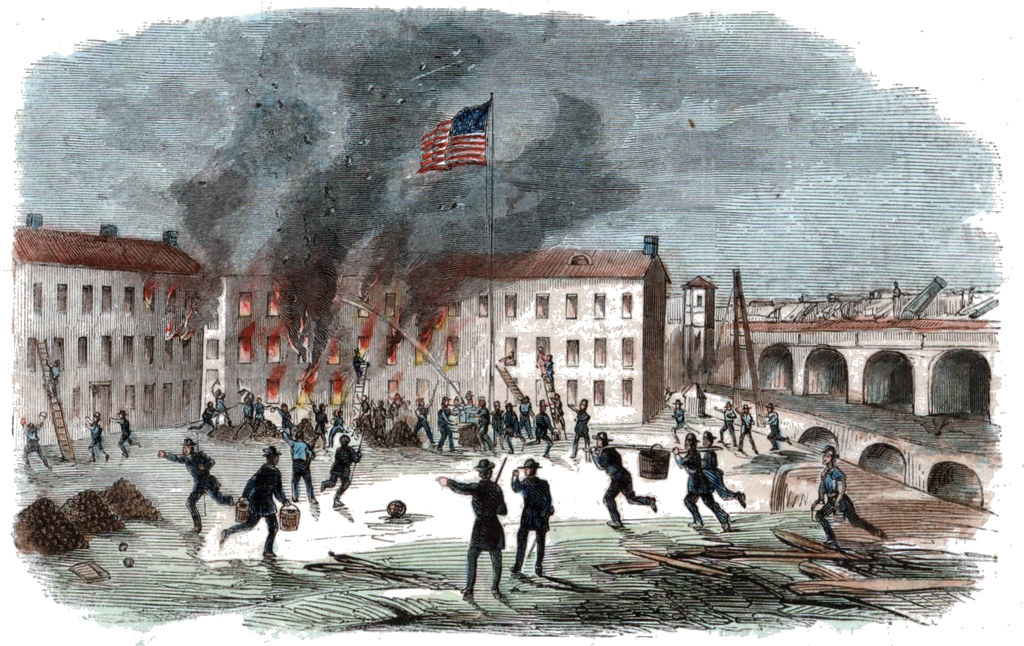
The United States Troops Endeavoring to Extinguish the Fires in Fort Sumter, During the Siege By the Troops of the Confederate States

Frank Leslie’s Illustrated Newspaper

Frank Leslie’s Illustrated Newspaper, April 30, 1861

  • purl.clemson.edu/94BC25783562B74D4F96CF3D4B9BB0BE
  • Medium: illustrations (layout features)
  • Item Location: Fort Sumter NM/Charles Pinckney NHS Curatorial Storage Facility, located at Charles Pinckney National Historic Site
  • Box: Box 3 of 3 FOSU 19th c Illustrations Frank Leslie Harper’s Weekly London Times etc Drawer 1.
  • Held By Fort Sumter and Fort Moultrie National Historical Park

Special handed-tinted off-prints were often sold separately from newspapers and other documents. Numerous originals held today by public institutions and in private collections.

0 comments

White Flag

War of the Rebellion: from the Official Records of the Union and Confederate Armies and Navies

HEADQUARTERS PROVISIONAL FORCES,
Charleston, S.C., April 13, 1861.

SIR: In obedience to orders from the commanding general, Beauregard, we left the wharf at 11.15 a.m., and proceeded in an open boat to deliver communications to Brigadier-General Simons, commanding on Morris Island, and passing under the batteries of Fort Johnson landed in the rear of Major Stevens’ battery. Our orders were specifically to ask information as to the condition of the batteries on the island, and any other facts necessary to be communicated from Brigadier-General Simons to the commanding general, and also to establish military communications by land from Morris Island to the city of Charleston. We were moreover instructed to learn the condition of Fort Sumter as far as practicable without unnecessary exposure, and if the bombardment and conflagration within had forced an evacuation by Major Anderson and his command.

At the period of passing Fort Sumter about 12 m. the firing from it had ceased, except occasional shots opposite Fort Moultrie, but was kept up with great precision and regularity by the batteries from Fort Johnson, Sullivan’s Island, and Morris Island. The conflagration of the officers’ quarters in the fortress appeared to be on the increase, and although the United States flag was still flying when we landed, there appeared no other evidence of the continuation of the contest.

After communicating with General Simons and establishing a land communication with the city, it was deemed advisable to send a flag to Fort Sumter and demand its evacuation, as at 1.10 p.m. precisely the United States flag had suddenly disappeared from its walls. While a white flag and the boat which bore us over was being made ready to take us, Colonel Wigfall, who had been detailed for special duties on Morris Island, thinking that no time was to be lost lest the garrison be destroyed, and accompanied by Private Young, of the Palmetto Guard, and two oarsmen, hastily entered a small skiff and pulled towards the fort with a white flag in his hand. Its size was too small to be distinctly seen by our batteries, and in consequence the discharge of neither shot or shell was discontinued by them, except those on Morris Island. His approach, therefore, to Sumter was one of imminent danger. We saw him after landing disappear into the fort through an embrasure. After the lapse of a short period of time he reappeared upon the pavement at the base of the fortification and re-embarked, directing his course to where we stood, at Major Stevens’s battery. Meantime the flag that had been erected after the flag-staff was cut away was taken down and a white flag run up in its stead. Before reaching the shore on his return Colonel Wigfall gave evidence that Major Anderson had consented to evacuate, which was soon after confirmed. He was received upon the beach by the troops, who for a moment rushed out to meet him, with strong evidences of admiration. We then took Colonel Wigfall with us in our boat, and returned to the city to report to the general commanding.

Brigadier-General Simons had no specific intelligence to communicate to the general commanding beyond the events narrated; but we take pride and pleasure in reporting the spirit, promptness, and energy which characterized the portion of his command inspected by us.

All of which is respectfully submitted for the information of the general commanding.

JAMES CHESNUT,   Jr.,

Aide-de-Camp.

A. R. CHISOLM,

Lieutenant-Colonel and Aide-de-Camp.

JOHN L. MANNING,

Aide-de-Camp.

Maj. D. R. JONES,

Adjutant-General Provisional Forces.

0 comments

Re-enforcements in Florida

Uncollected Letters of Abraham Lincoln—1917, War of the Rebellion: from the Official Records of the Union and Confederate Armies and Navies

PENSACOLA, April 13, 1861.

Hon. L. P. WALKER, Secretary of War:

Re-enforcements thrown into Fort Pickens last night by small boats from the outside. The movement could not even be seen from our side, but was discovered by a small reconnoitering boat.

BRAXTON BRAGG,
Brigadier General.

0 comments

1861 Bombardment of Fort Sumter

Miscellaneous document sources
Bombardment of Fort Sumter in 1861, Engraved in 1863 expressly for Abbotts Civil War

Perine, George Edward (1837-1885)

Bombardment of Fort Sumter in 1861, Engraved in 1863 expressly for Abbotts Civil War

Medium: illustrations (layout features)
Item Location: Fort Sumter NM/Charles Pinckney NHS Curatorial Storage Facility, located at Charles Pinckney National Historic Site
Box: Box 3 of 3 FOSU 19th c Illustrations Frank Leslie Harper’s Weekly London Times etc Drawer 1.
Held By Fort Sumter and Fort Moultrie National Historical Park
Permanent Link: purl.clemson.edu/39502DB180A73D24BD337E2E29CFC317

0 comments

“Not by one word or look can we detect any change in the demeanor of these negro servants.”—Charleston during the bombardment of Sumter, Mary Boykin Miller Chesnut.

Civil War Day-by-Day

April 13th.—Nobody has been hurt after all. How gay we were last night. Reaction after the dread of all the slaughter we thought those dreadful cannon were making. Not even a battery the worse for wear. Fort Sumter has been on fire. Anderson has not yet silenced any of our guns. So the aides, still with swords and red sashes by way of uniform, tell us. But the sound of those guns makes regular meals impossible. None of us go to table. Tea-trays pervade the corridors going everywhere. Some of the anxious hearts lie on their beds and moan in solitary misery. Mrs. Wigfall and I solace ourselves with tea in my room. These women have all a satisfying faith. “God is on our side,” they say. When we are shut in Mrs. Wigfall and I ask “Why?” “Of course, He hates the Yankees, we are told. You’ll think that well of Him.”

Not by one word or look can we detect any change in the demeanor of these negro servants. Lawrence sits at our door, sleepy and respectful, and profoundly indifferent. So are they all, but they carry it too far. You could not tell that they even heard the awful roar going on in the bay, though it has been dinning in their ears night and day. People talk before them as if they were chairs and tables. They make no sign. Are they stolidly stupid? or wiser than we are; silent and strong, biding their time ?

So tea and toast came; also came Colonel Manning, red sash and sword, to announce that he had been under fire, and didn’t mind it. He said gaily: “It is one of those things a fellow never knows how he will come out until he has been tried. Now I know I am a worthy descendant of my old Irish hero of an ancestor, who held the British officer before him as a shield in the Revolution, and backed out of danger gracefully.” We talked of St. Valentine’s eve, or the maid of Perth, and the drop of the white doe’s blood that sometimes spoiled all.

The war-steamers are still there, outside the bar. And there are people who thought the Charleston bar “no good” to Charleston. The bar is the silent partner, or sleeping partner, and in this fray it is doing us yeoman service.

0 comments

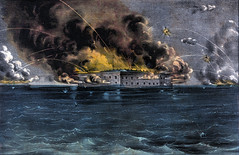
Bombardment of Fort Sumter, Charleston Harbor; 12th & 13th of April, 1861

Library of Congress
Bombardment of Fort Sumter, Charleston Harbor; 12th & 13th of April, 1861

Taking fire from Fort Moultrie on the left of the image and Cummings Point on the right.

  • Lithograph by Currier & Ives. (1861?)
  • Reproduction number: LC-DIG-ppmsca-19520 (digital file from original item)
  • Retrieved from the Library of Congress, www.loc.gov/item/90711987/. (Accessed August 02, 2016.)
0 comments

Eutaw House, Baltimore—William Howard Russell

My Diary North and South – William Howard Russell

April 14. (13th1)—The Eutaw House is not a very good specimen of an American hotel, but the landlord does his best to make his guests comfortable, when he likes them. The American landlord is a despot who regulates his dominions by ukases affixed to the walls, by certain state departments called “offices” and “bars,” and who generally is represented, whilst he is away on some military, political, or commercial undertaking, by a lieutenant; the deputy being, if possible, a greater man than the chief. It requires so much capital to establish a large hotel, that there is little fear of external competition in the towns. And Americans are so gregarious that they will not patronize small establishments.

I was the more complimented by the landlord’s attention this morning when he came to the room, and in much excitement informed me the news of Port Sumter being bombarded by the Charleston batteries was confirmed, “And now,” said he, “there’s no saying where it will all end.”

After breakfast I was visited by some gentlemen of Baltimore, who were highly delighted with the news, and I learned from them there was a probability of their State joining those which had seceded. The whole feeling of the landed and respectable classes is with the South. The dislike to the Federal Government at Washington is largely spiced with personal ridicule and contempt of Mr. Lincoln. Your Marylander is very tenacious about being a gentleman, and what he does not consider gentlemanly is simply unfit for anything, far less for place and authority.

The young draftsman, of whom I spoke, turned up this morning, having pursued me from Washington. He asked me whether I would still let him accompany me. I observed that I had no objection, but that I could not permit such paragraphs in the papers again, and suggested there would be no difficulty in his travelling by himself, if he pleased. He replied that his former connection with a Black Republican paper might lead to his detention or molestation in the South, but that if he was allowed to come with me, no one would doubt that he was employed by an illustrated London paper. The young gentleman will certainly never lose anything for the want of asking.

At the black barber’s I was meekly interrogated by my attendant as to my belief in the story of the bombardment. He was astonished to find a stranger could think the event was probable. “De gen’lmen of Baltimore will be quite glad ov it. But maybe it’l come bad after all.” I discovered my barber had strong ideas that the days of slavery were drawing to an end. “And what will take place then, do you think?” “Wall, sare, ‘spose coloured men will be good as white men.” That is it. They do not understand what a vast gulf flows between them and the equality of position with the white race which most of those who have aspirations imagine to be meant by emancipation. He said the town slave-owners were very severe and harsh in demanding larger sums than the slaves could earn. The slaves are sent out to do jobs, to stand for hire, to work on the quays and docks. Their earnings go to the master, who punishes them if they do not bring home enough. Sometimes the master is content with a fixed sum, and all over that amount which the slave can get may be retained for his private purposes.

Baltimore looks more ancient and respectable than the towns I have passed through, and the site on which it stands is undulating, so that the houses have not that flatness and uniformity of height which make the streets of New York and Philadelphia resemble those of a toy city magnified. Why Baltimore should be called the “Monumental City” could not be divined by a stranger. He would never think that a great town of 250,000 inhabitants could derive its name from an obelisk cased in white marble to George Washington, even though it be more than 200 feet high, nor from the grotesque column called “Battle Monument,” erected to the memory of those who fell in the skirmish outside the city in which the British were repulsed in 1814. I could not procure any guide to the city worth reading, and strolled about at discretion, after a visit to the Maryland Club, of which I was made an honorary member. At dark I started for Norfolk, in the steamer “Georgianna.”

1Note — There are two entries for the 14th and, comparing them to the previous entry, this one appears to be for the 13th.

0 comments

Effects of the News—The War Excitement in the City

Civil War Day-by-Day
April 13, 1861; The New York Herald
Intense excitement prevailed throughout the city last evening on the receipt of the news that an engagement had taken place at Charleston. In accordance with their usual astuteness, the evening papers had published telegraphic despatches of a quiet state of things at what may now be termed the seat of war. Those who read these papers of course had their fears for the time quieted, and went home with the calm satisfaction that blood had not as yet been shed. What then was their astonishment a few hours later to hear the newsboys vigorously shouting the “HERALD,” with the bombardment of Fort Sumter and the details of a terrible struggle? The city calmed into quiet by the peaceful reports of the afternoon, woke with a start when the hoarse voice of myriads of newsboys, resounding through our streets in the solemn stillness of night, proclaimed the news.
During the day the curious and anxious had sought the bulletin boards of the newspapers to post themselves in regard to the progress of events at the South, and around the various offices [continue reading…]
0 comments