All for war.

Diary and Letters of Rutherford Birchard Hayes
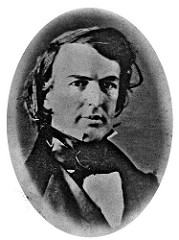
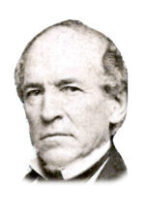
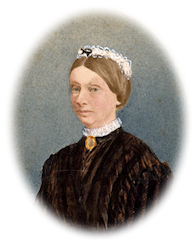
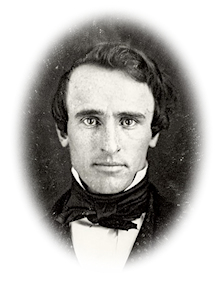
Rutherford B. Hayes (young)

CINCINNATI, April 15, 1861.

DEAR UNCLE:–. . . We are all for war. The few dissentients have to run like quarter-horses. A great change for two weeks to produce. As the Dutchman said, “What a beeples.” Poor Anderson! What a chance he threw away. The Government may overlook or even whitewash it, but the people and history will not let him off so easily. I like it. Anything is better than the state of things we have had the last few months. We shall have nothing but rub-a-dub and rumors for some time to come.

All pretty well. Mother thinks we are to be punished for our sinfulness, and reads the Old Testament vigorously. Mother Webb quietly grieves over it. Lucy enjoys it and wishes she had been in Fort Sumter with a garrison of women. Dr. Joe is for flames, slaughter, and a rising of the slaves. All the boys are soldiers.

Sincerely,

R. B. HAYES.

S. BIRCHARD.

0 comments

Gibraltar of America

War of the Rebellion: from the Official Records of the Union and Confederate Armies and Navies

HEADQUARTERS DEPARTMENT OF FLORIDA,
Transport Steamship Atlantic, April 15, 1861.

Bvt. Maj. L. G. ARNOLD,
Commanding Fort Jefferson, Fla.:

MAJOR: My short stay at your post and the hurry of business prevented my conversing with you so freely as I could have wished on the defense of the fort. The importance of Fort Jefferson can hardly be overestimated, nor can I too strongly impress on you the importance of the constant exercise of every precaution and of the most unceasing vigilance against surprise. Your post may not improperly be considered the Gibraltar of America, and you should guard it with the same jealous vigilance you would if we were at war with a strong maritime power. No vessel, Government or merchant, should be allowed to approach without being boarded, and, if necessary, required to heave to for the purpose. Your guns should habitually be kept loaded and ready at a moment’s notice to be fired; a sufficiency of ammunition always prepared for immediate service, and the officers and men assigned to their positions, so that by day or night each can at a moment’s notice be at his post. Your drawbridge should always be raised at night, the embrasures closed and fastened, and the guards by day and night required to the observance of the greatest possible vigilance. The troops must be impressed with the necessity of almost constant fatigue in mounting guns, erecting batteries, laying platforms, &c., and other necessary work, and encouraged to a cheerful compliance with the exigencies of the service.

I am aware, major, of your zeal and ability, and of the excellent discipline that has characterized your command, and I doubt not that you will have anticipated these suggestions. If so, no harm is done, and I wish, if any here made may have escaped you, that you will without delay give them your attention.

I am, sir, very respectfully, your obedient servant,

HARVEY BROWN,
Colonel, Commanding.

0 comments

Fort Jefferson, Tortugas

War of the Rebellion: from the Official Records of the Union and Confederate Armies and Navies

HEADQUARTERS DEPARTMENT OF FLORIDA,
Transport Steamship Atlantic, April 15, 1861.

Lieut. Col. E. D. KEYES,
Secretary to the General-in-Chief Washington, D.C.:

COLONEL: I wrote you at Key West, reporting our arrival there, and took from Fort Taylor some guns and stores necessary for our expedition, and detached from the companies of the fort and barracks thirty-three men to fill up in part the companies of the command to their maximum organization, intending to take the balance from Fort Jefferson. These men are required to fill vacancies caused by desertion or other absence at New York.

We left Key West at daybreak yesterday morning (the 14th), and arrived at Fort Jefferson at 1 p.m. I found this post in the good order to be expected from its vigilant commander. The present armament of the fort is thirteen 8-inch columbiads and a field battery, and 104 barrels gunpowder, 608 shells, 150 shot, and a vessel now at the wharf is unloading thirty 8-inch columbiads and twenty-four 24-pounder howitzers, with carriages, implements, &c. complete, with 250 barrels of powder, 2,400 8-inch shells, 600 round shot, and a proportioned quantity of fixed ammunition, so that this post may be considered secure from any force that the seceding States can bring against it. The whole lower tier of this work may with little labor be prepared for its armament. Some flagging and the traverse circles are the principal work to be done. On the recommendation of Captain Meigs, chief engineer, I have directed Major Arnold to have four water batteries, mounting three guns each, to be erected on the adjacent keys. This being done, with the support of one or two ships of war, the whole anchorage will be within command of our guns.

I would respectfully recommend that at Fort Jefferson for the 42-pounders ordered 8-inch unchambered columbiads be substituted, and that the wooden carriages of all three forts be replaced at the earliest possible day by iron ones. I took from Fort Jefferson twenty negro laborers for the Engineer Department, thirty-one privates to fill up the companies, so that they are now full, a field battery and four mountain howitzers, with implements and ammunition, some bricks, and a large flat. We got under way at 8 o’clock p.m., and very soon lost the flat. Her lashing-rigs and hooks, not being sufficiently strong, drew out and left her adrift. Lieutenants McFarland and Reese, of the Engineers, on the advice of the chief engineer, have been attached to this command.

I am, sir, very respectfully, your obedient servant,

HARVEY BROWN,
Colonel, Commanding.
0 comments

Confederate Reports Related to Fort Sumter Battle Aftermath

War of the Rebellion: from the Official Records of the Union and Confederate Armies and Navies

HEADQUARTERS PROVISIONAL FORCES, C.S. ARMY,
Charleston, S.C., April 15, 1861.

SIR: We have the honor to submit the following report of our visit to Fort Sumter on the 13th instant for the information of the brigadier-general commanding:

After reporting to the general the execution of the orders with which we were charged for Morris Island, and in company with Colonel Wigfall reporting the surrender of Fort Sumter, and also its dangerous condition from the fire occasioned by the hot shot from Fort Moultrie, we proceeded, by order of the brigadier-general commanding, immediately to Southern warf where we embarked on board the steamer Osiris for Fort Sumter, accompanied by the chief of the city fire department, Mr. Nathan, with a fire engine and its company. On our arrival at Fort Sumter we were met by Dr. Crawford, surgeon of the fort, who directed us to avoid the wharf, as it was in danger of blowing up at any moment from its mines. The doctor conducted us into the presence of Major Anderson, on the opposite side of the fort from the wharf, we entering the fort through an embrasure. We found the barracks totally destroyed by fire, occasioned by our shells and hot shot. We stated to Major Anderson that we had been sent to Fort Sumter by General Beauregard with a fire engine, to offer assistance to extinguish his fire and to render any other assistance he might require, and also Surgeon-General Gibbes, South Carolina, and assistants were present to administer to any wounded he might have. The major replied that he thanked the general for his kindness, but that his fire was almost burned out, and that he had but one man wounded, and he not seriously. We asked him if the magazine was safe. He replied he thought the lower magazine safe, though it was amid the burning ruins, and that he had thrown about one hundred barrels of powder into the water from the upper magazine during the action, for the safety of his command. We again asked him if he did not think it best to use the engine which accompanied us on the steamer, which lay out in the stream. He replied no—that he thought everything had been consumed that would burn. [continue reading…]

0 comments

The Evacuation of Fort Sumter, April 1861

Library of Congress

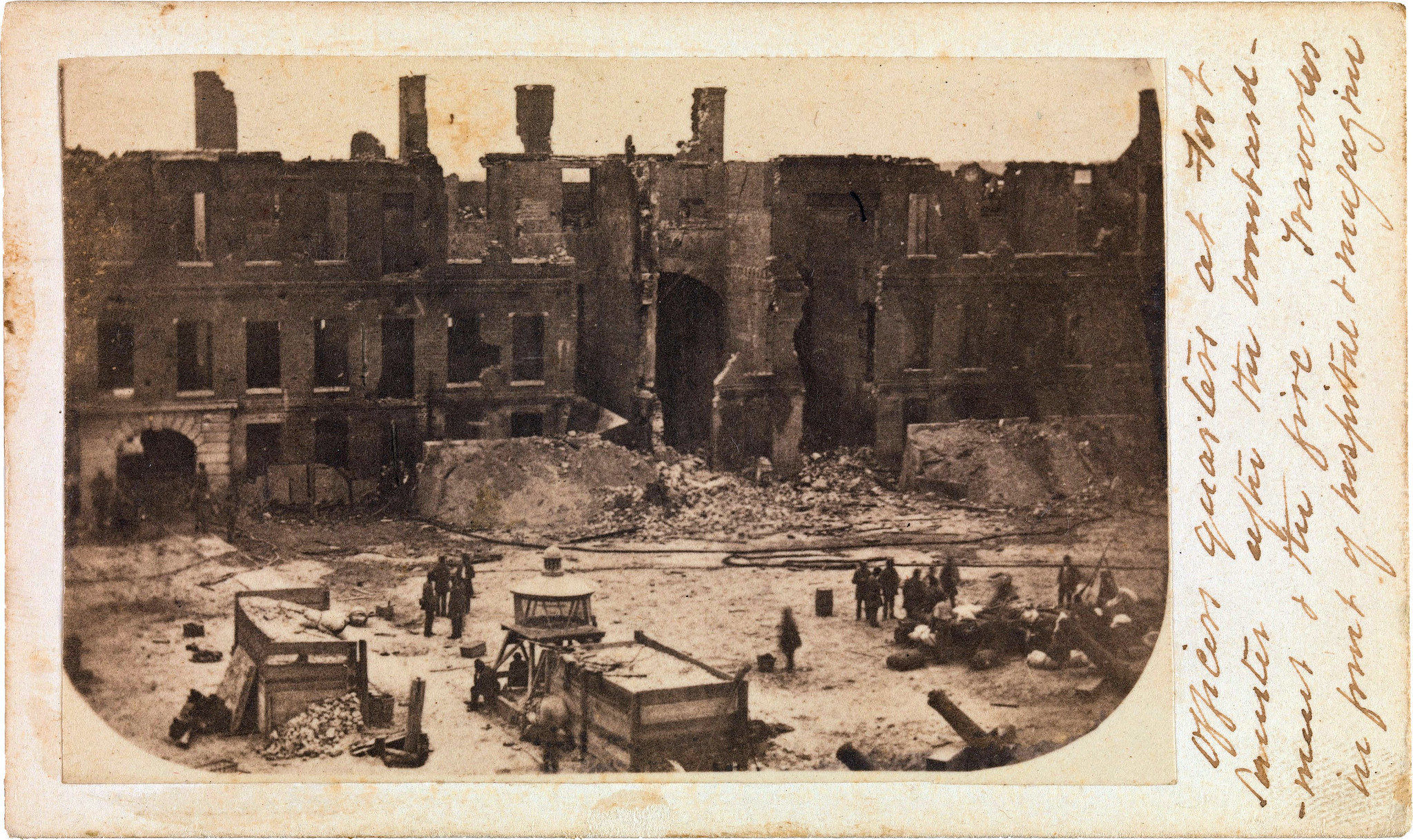
The Evacuation of Fort Sumter, April 1861 -- the interior of the fort after the battle
Title: The Evacuation of Fort Sumter, April 1861
Artist: Attributed to Alma A. Pelot (American, active Charleston, South Carolina, 1850s–1860s)
Artist: Attributed to Jesse H. Bolles (American, active Charleston, South Corlina, 1850s–1860s)
Publisher: Edward Anthony (American, 1818–1888)
Date: April 1861
Medium: Albumen silver print from glass negative
Dimensions:
Image: 1 15/16 × 3 1/8 in. (5 × 7.9 cm)
Mount: 3 3/8 in. × 4 3/4 in. (8.5 × 12 cm)
Classification: Photographs
Credit Line: Gilman Collection, Museum Purchase, 2005
Inscription: Inscribed in black ink on mount CR [sideways] and on album page, CL [sideways]: “Officers quarters at Fort Sumter after the // bombardment and the fire. [illegible] in front // of hospital and magazine”

Metropolitan Museum of Art image

___________
Mike’s notes:

Note – This image has been digitally adjusted for one or more of the following:
– fade correction,
– color, contrast, and/or saturation enhancement
– selected spot and/or scratch removal
– cropped for composition and/or to accentuate subject

0 comments

“I learned from the Northern exchange papers, which still came to hand, that my office in Philadelphia, “The Southern Monitor,” had been sacked by the mob. It was said ten thousand had visited my office, displaying a rope with which to hang me.”—A Rebel War Clerk’s Diary

Civil War Day-by-Day
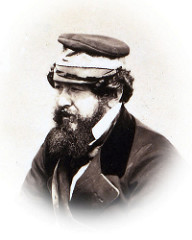
A likeness of Jones when he was editor and majority owner of the Daily Madisonian during President John Tyler’s administration.

April 15th.–Great demonstrations made throughout the day, and hundreds of secession flags are flying in all parts of the city. At night, while sitting with Captain O. Jennings Wise in the editorial room of the Enquirer, I learned from the Northern exchange papers, which still came to hand, that my office in Philadelphia, “The Southern Monitor,” had been sacked by the mob. It was said ten thousand had visited my office, displaying a rope with which to hang me. Finding their victim had escaped, they vented their fury in sacking the place. I have not ascertained the extent of the injury done; but if they injured the building, it belonged to H. B., a rich Republican. They tore down the signs (it was a corner house east of the Exchange), and split them up, putting the splinters in their hats, and wearing them as trophies. They next visited the mansion of Gen. P., who had made his fortune dealing in cotton, and had been a bold Northern champion of Southern rights. But the general flinched on this trying occasion. He displayed the stars and stripes, and pledged “the boys” to lead them in battle against the secessionists.

During the evening, a procession with banners and torch-lights came up the street and paused before the Enquirer office. They called for Captain Wise, and I accompanied him to the iron balcony, where he made them a soul-stirring speech. At its conclusion, he seized me by the arm and introduced me to the crowd. He informed them of the recent proceedings in Philadelphia, etc., and then ceased speaking, leaving me to tell my own story to the listening multitude. That was not my fault; I had never attempted to make a public speech in my life; and I felt that I was in a predicament. Wise knew it, and enjoyed my embarrassment. I contrived, however, to say to the people that the time for speaking had gone by, and there was no time left for listening. They proceeded up the street, growing like a snow-ball as they rolled onward. At every corner there were cheers uttered for Davis, and groans for Lincoln.

Upon returning to my boarding-house (the hotel being found too expensive), kept by Mrs. Samuels, and her sister, Miss Long, I found the ladies making secession flags. Indeed, the ladies everywhere seem imbued with the spirit of patriotism, and never fail to exert their influence in behalf of Southern independence.

To-day the secession fires assumed a whiter heat. In the Convention the Union men no longer utter denunciations against the disunionists. They merely resort to pretexts and quibbles to stave off the inevitable ordinance. They had sent a deputation to Washington to make a final appeal to Seward and Lincoln to vouchsafe them such guarantees as would enable them to keep Virginia to her moorings. But in vain. They could not obtain even a promise of concession. And now the Union members as they walk the streets, and even Gov. Letcher himself, hear the indignant mutterings of the impassioned storm which threatens every hour to sweep them from existence. Business is generally suspended, and men run together in great crowds to listen to the news from the North, where it is said many outrages are committed on Southern men and those who sympathize with them. Many arrests are made, and the victims thrown into Fort Lafayette. These crowds are addressed by the most inflamed members of the Convention, and never did I hear more hearty responses from the people.

0 comments

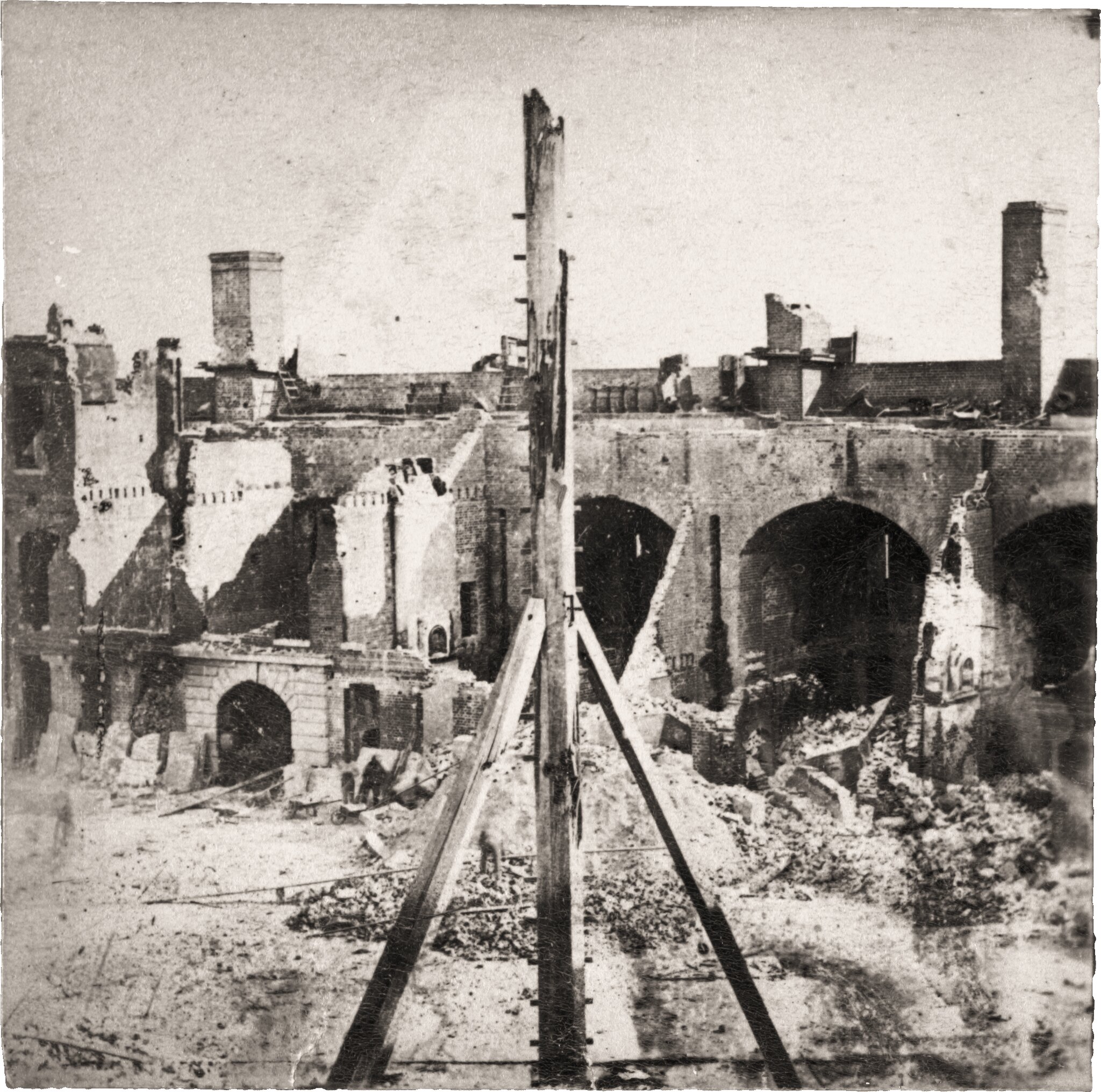
Ruins of Fort Sumter, Charleston Harbor, S.C.

Library of Congress

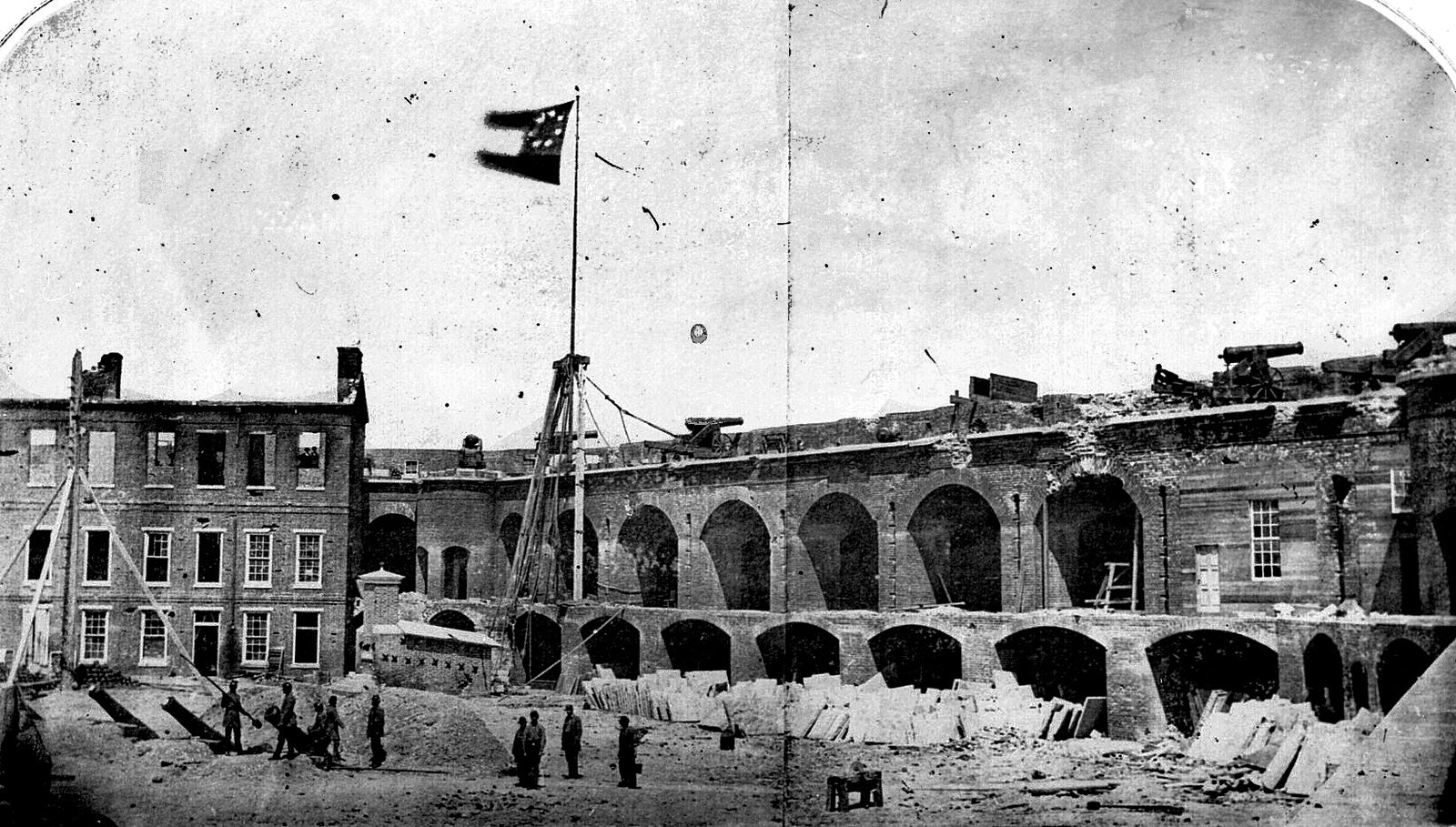
Ruins of Fort Sumter, Charleston Harbor, S.C.Title: [Ruins of Fort Sumter, Charleston Harbor, S.C.]
Creator(s): Osborn & Durbec, photographer
Date Created/Published: [1861 April]
Medium: 1 photographic print on stereo card : albumen ; 8 x 18 cm.
Summary: Stereograph showing a wall of casemates, a flagpole, and other debris inside of Fort Sumter.
Reproduction Number: LC-DIG-stereo-1s02596 (digital file from original stereograph, front) LC-DIG-stereo-2s02596 (digital file from original stereograph, back) LC-USZ62-55302 (b&w film copy neg. of half stereo) LC-USZ62-106831 (b&w film copy neg. of full stereo)
Rights Advisory: No known restrictions on publication.
Call Number: LOT 4166-C, no. 219 [P&P]
Repository: Library of Congress Prints and Photographs Division Washington, D.C. 20540 USA hdl.loc.gov/loc.pnp/pp.print
Notes:
….Title devised by Library staff.
….Manuscript note on back of stereo: Fort Sumter after Gen. Anderson[?] flag staff was shot away by shot from […].
….Original photograph by Osborn & Durbec reprinted by Quinby & Co. (Date and other information based on New-York Historical Society image and information from Anne Peterson and Bob Zeller).
….Forms part of: Civil War Photograph Collection (Library of Congress).

Library of Congress image

___________
Mike’s notes:

This is from the left side image from the stereograph card.

Note – This image has been digitally adjusted for one or more of the following:
– fade correction,
– color, contrast, and/or saturation enhancement
– selected spot and/or scratch removal
– cropped for composition and/or to accentuate subject

0 comments

“Washington will soon be a great Military Camp.”—Horatio Nelson Taft

Diary of US patent clerk Horatio Nelson Taft.

MONDAY 15

It seems pretty probable that “Sumpter” is taken but I think that we cannot rely entirely upon the news. There seems to be a great war spirit up throughout the Country. Washington will soon be a great Military Camp. My wife is not so much frightened today. I think we will not hurry in getting the family off. It has rained some today, and it [is] threatening a storm tonight. Applicants for office are less pertinacious than they were and many have left for their homes. I was down at Willards. The same crowd seems to be there still.


The three diary manuscript volumes, Washington during the Civil War: The Diary of Horatio Nelson Taft, 1861-1865, are available online at The Library of   Congress.

0 comments

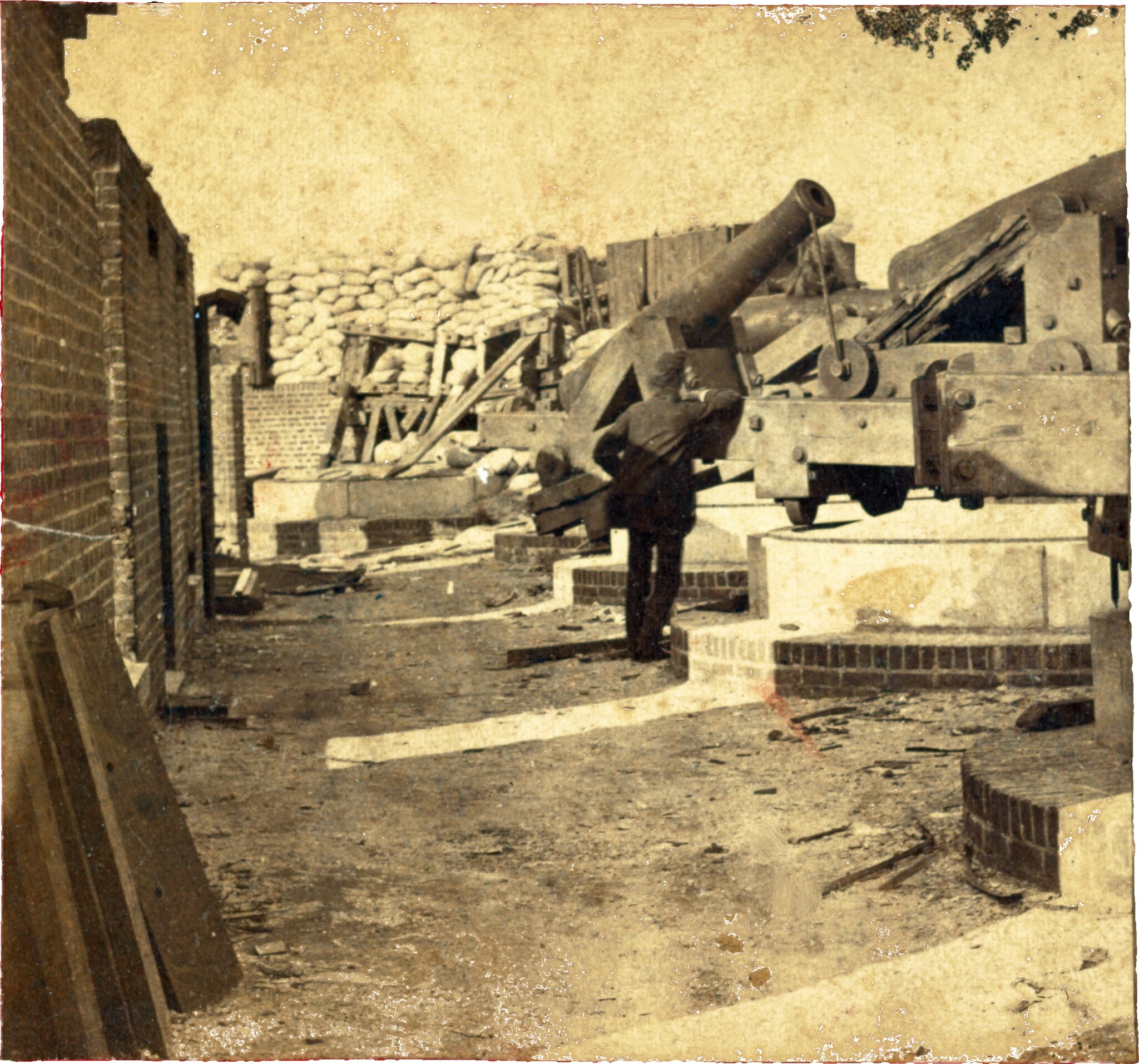
Fort Sumter interior with a soldier standing near the artillery

Library of Congress

Fort Sumter interior with a soldier standing near the artillery; Creator(s): Osborn & Durbec, photographer
Title: [Fort Sumter interior with a soldier standing near the artillery]
Creator(s): Osborn & Durbec, photographer
Date Created/Published: Charleston, S.C. : Osborn & Durbec’s Southern Stereoscopic & Photographic Depot, 223 King Street, [between 1860 and 1861]
Medium: 1 photograph : print on card mount ; sheet 8.5 x 17 cm (stereograph format)
Summary: Photograph shows a dismounted gun from the parapet at Fort Sumter after the bombardment.
Reproduction Number: LC-DIG-stereo-1s03912 (digital file from original item, front) LC-DIG-stereo-2s03912 (digital file from original item, back)
Rights Advisory: No known restrictions on publication.
Call Number: LOT 14110-1, no. 33 (H) [P&P] LOT 15015-1, no. 33 (former call number)
Repository: Library of Congress Prints and Photographs Division Washington, D.C. 20540 USA hdl.loc.gov/loc.pnp/pp.print
Notes:
….Purchase; Robin Stanford; 2015; (DLC/PP-2015:022).
….Title from inventory and item.
….Osborn & Durbec’s label on verso, inscribed no. “17”.
….Forms part of: The Robin G. Stanford Collection.
….Digitized 2015 Funding from Center for Civil War Photography.

Library of Congress image

___________
Mike’s notes:

This is from the left side image from the stereograph card.

Note – This image has been digitally adjusted for one or more of the following:
– fade correction,
– color, contrast, and/or saturation enhancement
– selected spot and/or scratch removal
– cropped for composition and/or to accentuate subject

0 comments

Village Life in America.

Village Life in America, 1852 – 1872, by Caroline Cowles Richards

April 15.—The storm has broken upon us. The Confederates fired on Fort Sumter, just off the coast of South Carolina, and forced her on April 14 to haul down the flag and surrender. President Lincoln has issued a call for 75,000 men and many are volunteering to go all around us. How strange and awful it seems.

0 comments

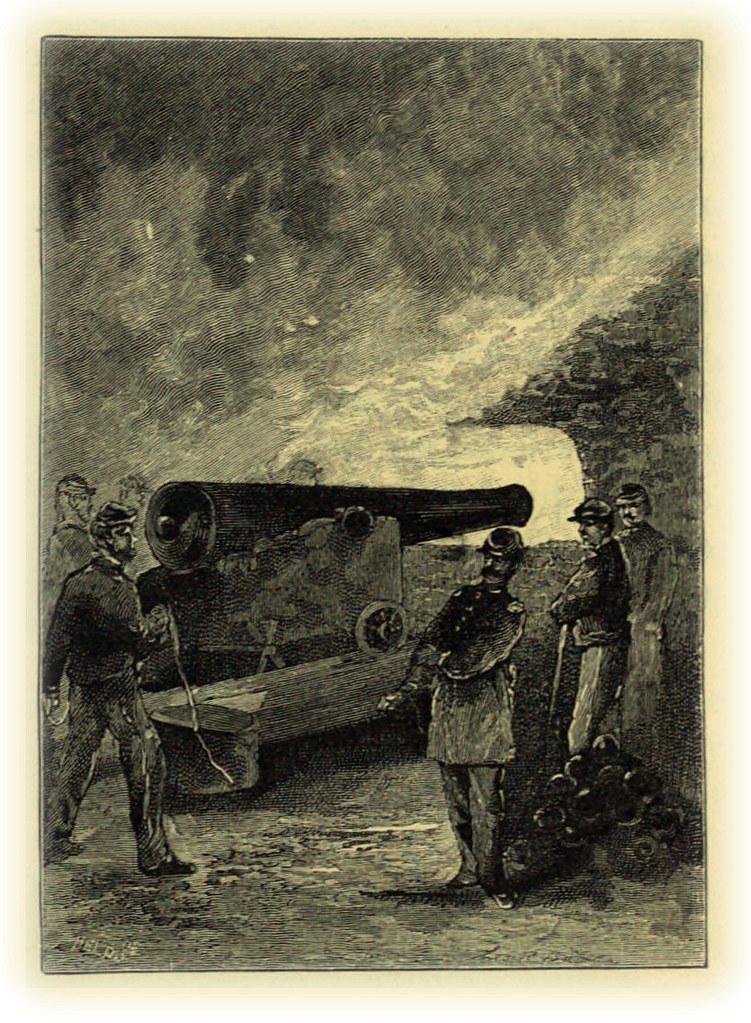
A casemate gun during the conflagration

Miscellaneous document sources

A casemate gun during the conflagration, Fort Sumter, April 13, 1861Page 71 Battles and Leaders of the Civil War

Chester, James. “Inside Sumter in ’61.” Essay in Battles and Leaders of the Civil War, edited by Clarence Clough Buel and Robert Underwood Johnson, Vol. 1. New York, NY: The Century Co., 1887.

0 comments

There seems to be a determination on the part of the Northern Government to war with us.

Journal of Meta Morris Grimball
Meta Morris Grimball

15 [April]

       This morning we received a very pleasant visit from Charlotte, she feels but does not know how to express herself. Mr Aiken also came over and paid a very pleasant visit. He told us of the early history of General Boregard, he was a graduate of West Point & the second honour man, he had become very much attached to Virginia Scott, the daughter of Gen. Scott, & was refused by both parents but accepted by the young lady, she wrote to him but his letters were repressed and hers ceased after a time. This preyed on her health, she went into the Catholic Convent at George Town, and there died, before her death she sent for Gen. Boregard and saw him, he explained to her that he had always written, the letters were kept from her. She died, but 6 Months after he married another. “Men have died and worms have eaten them but not for love”.—(And now has a second wife).

In this days paper there is an account of the evacuating of the Fort Sumpter. Anderson has gone to the Fleet, this is the first time the U.S. Flag has been lowered, and now to the Palmetoe Flag.—

There seems to be a determination on the part of the Northern Government to war with us. When Major Anderson fired the salute to his Flag, 5 of his men were wounded, & 1 of them died immediately, the other not expected to live. This is very strange. I think my State has behaved most entirely according to the dictates of humanity, & true courage, in the treatment of the people in this Fort, they were fed, and beaten, & honourably dismissed.—

We have done well, & I this morning read a commendation in the papers “the World”, an Abolition journal, of the conduct of South Carolina, “throughout this contest & since secession”. The unselfish bravery with which she had conducted herself”.— May God bless and keep us, is my prayer, and may peace be restored to these States, may we each, North, & South—Governed by those who best understand our rights & our wants, I mean ourselves, be good neighbors & help each other on in the road to prosperity.—

On Sunday the scene in St. Philips was very affecting. Our Bishop Davis, now very feeble and blind was led up to the pulpit and returned thanks to Almighty God for his protection & his mercies. He, too had a relative among the troops.—Mrs Wayne went down to the City on Saturday and the cars being very much crowded & late in getting down. Lewis had to charge himself with the getting these two Mrs W. & her Mitchel in a carriage. It was 12 o’clock at night before they all got at home. Lewis found no one but his father at home & he seems quite well, the war agrees with him.

0 comments

Interior of Fort Sumter, from the Parapet—Drawn by an Officer of Major Anderson’s Command (Before the Bombardment)

Harper’s Weekly

Interior of Fort Sumter, from the Parapet—Drawn by an Officer of Major Anderson's Command; Harper's Weekly, January 26, 1861
Harper’s Weekly, January 26, 1861

0 comments

Lincoln to Elmer E. Ellsworth

The Collected Works of Abraham Lincoln
Washington, April 15. 1861
Col. E. E. Ellsworth
My dear Sir:
Ever since the beginning of our acquaintance, I have valued you highly as a person[al] friend, and at the same time (without much capacity of judging) have had a very high estimate of your military talent. Accordingly I have been, and still am anxious for you to have the best position in the military which can be given you, consistently with justice and proper courtesy towards the older officers of the army. I can not incur the risk of doing them injustice, or a discourtesy; but I do say they would personally oblige me, if they could, and would place you in some position, or in some service, satisfactory to yourself.
Your Obt. Servt.
A. Lincoln
0 comments

Recruiting For Hawkins’s New York Zouaves

Miscellaneous document sources

Recruiting for the New York Zouaves attracted a large body of athletic men to its ranks, which in 1861 numbered eight hundred gallant fellows who were desirous of emulating in the service of the Stars and Stripes the glory of their French prototypes. They were nearly of one height, and all under thirty years of age.
April 15th & 16th, 1861: Rush Christopher Hawkins goes to Albany, New York, where he offers the services of the “New York Zouaves” to the Governor, which services are accepted, and at the same time the Governor grants authorization to Hawkins to raise a Regiment of Zouaves for service.

Recruiting for the New York Zouaves attracted a large body of athletic men to its ranks, which in 1861 numbered eight hundred gallant fellows who were desirous of emulating in the service of the Stars and Stripes the glory of their French prototypes. They were nearly of one height, and all under thirty years of age.

(from Frank Leslie’s Illustrated History of the Civil War…, edited by Louis Shepheard Moat, Published by Mrs. Frank Leslie, New York, 1895)

0 comments

Very unexpectedly I find myself a prisoner of war; Mail Steamer Galveston

War of the Rebellion: from the Official Records of the Union and Confederate Armies and Navies

MONTGOMERY, ALA., April 15, 1861.

Hon. L. P. WALKER, Secretary of War, Montgomery:

SIR: Very unexpectedly I find myself a prisoner of war at this place. May I be permitted to request that you will do me the kindness to inform me of the grounds upon which I am so detained?

Very respectfully, your obedient servant,

JOHN L. WORDEN,
Lieutenant, U. S. Navy.

—–

PENSACOLA, April 15, 1861.

L. P. WALKER:

Mail steamer Galveston from New Orleans this morning. I have taken possession of her. One United States ship arrived last night.

BRAXTON BRAGG,
Brigadier-General.

—–

MONTGOMERY, April 15, 1861.

General BRAGG, Pensacola:

Merchant vessels belonging to citizens of United States must be permitted to depart without interruption. Strict surveillance, however, regarding dispatches from fort and fleet to Washington Government. Caution your own men against writing, or sending, as to what you are doing.

L. P. WALKER.

0 comments

A gross usurpation of power

War of the Rebellion: from the Official Records of the Union and Confederate Armies and Navies

RALEIGH, N. C., April 15, 1861.

Hon. SIMON CAMERON, Secretary of War:

Your dispatch1 is received, and if genuine, which its extraordinary character leads me to doubt, I have to say in reply that I regard the levy of troops made by the administration for the purpose of subjugating the States of the South as in violation of the Constitution and a gross usurpation of power. I can be no party to this wicked violation of the laws of the country, and to this war upon the liberties of a free people. You can get no troops from North Carolina. I will reply more in detail when your call is received by mail.

JOHN W. ELLIS,
Governor of North Carolina.


  1. Lincoln’s proclamation calling out the militia.
0 comments

Proclamation Calling Militia and Convening Congress

Life and Public Services of Abraham Lincoln: Sixteenth President of the United States; and Commander-in-chief of the Army and Navy of the United States, The Collected Works of Abraham Lincoln

April 15, 1861

By the President of the United States

A Proclamation.1, 2

Whereas, The laws of the United States have been for some time past, and now are opposed, and the execution thereof obstructed, in the States of South Carolina, Georgia, Alabama, Florida, Mississippi, Louisiana, and Texas, by combinations too powerful to be suppressed by the ordinary course of judicial proceedings, or by the powers vested in the marshals by law; now, therefore, I, Abraham Lincoln, President of the United States, in virtue of the power in me vested by the Constitution and the laws, have thought fit to call forth, and hereby do call forth, the militia of the several States of the Union to the aggregate number of 75,000, in order to suppress said combinations and to cause the laws to be duly executed.

0 comments

Civil War Day-By-Day

Civil War Day-by-Day

April 15, 1861

  • President Abraham Lincoln calls for 75,000 volunteers to quell the insurrection that soon became the American Civil War.
  • Braxton Bragg places Lt. John Worden under arrest in Pensicola, Florida, making him the first prisoner-of-war in the American Civil War.
  • Rejecting Lincoln’s call for troops, Tennessee Governor Isham Harris orders a second session of the state legislature to consider the question of a secessionist convention.
  • President of the United States issued his proclamation calling for 75,000 volunteers, and commanding the rebels to return to peace within 20 days. An extra session of Congress called.1
  • The great uprising of the people of the loyal States commences. Legislatures vote men and money; banks offer loans to the Government; great public meetings are held, and proclamations, military orders, etc., become the order of the day. In the principal cities mobs visit newspaper offices and firms suspected of disloyalty and compel them to raise the stars and stripes. Union badges worn by every one.1
  • Legislature of New York voted 30,000 men and $3,000,000 for putting down the rebellion.1

  1. A Chronological History of the Civil War in America by Richard Swainson Fisher, New York, Johnson and Ward, 1863
0 comments

A House Divided

Miscellaneous document sources

Abraham Lincoln, June 16, 1858

Illinois Republican State Convention, Springfield, Illinois


Mr. President and Gentlemen of the Convention.

If we could first know where we are, and whither we are tending, we could then better judge what to do, and how to do it.
We are now far into the fifth year, since a policy was initiated, with the avowed object, and confident promise, of putting an end to slavery agitation.
Under the operation of that policy, that agitation has not only, not ceased, but has constantly augmented. In my opinion, it will not cease, until a crisis shall have been reached, and passed.
“A house divided against itself cannot stand.”

0 comments

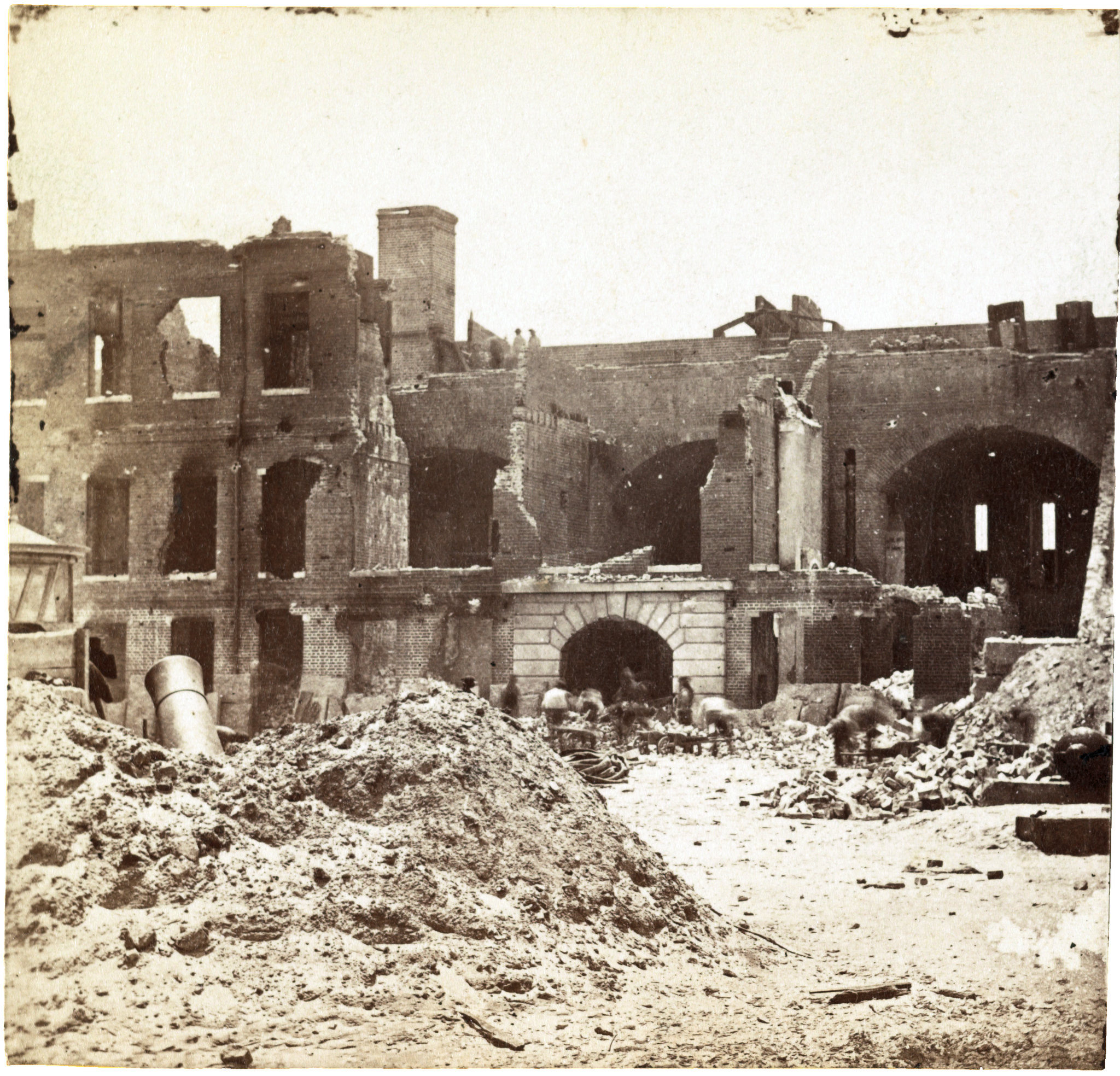
Interior Sumter the day after Gen. Anderson left, April 1861

Library of Congress

Interior Sumter the day after Gen. Anderson left, April 1861
Title: Interior Sumter the day after Gen. Anderson left, April 1861
Creator(s): Osborn & Durbec, photographer
Date Created/Published: [Charleston, S.C.] : [Osborn & Durbec’s Southern Stereoscopic & Photographic Depot?] [1861]
Medium: 1 photograph : print on card mount ; sheet 8 x 17 cm (stereograph format)
Summary: Photograph shows a crew clearing away debris in front of the sally-port after the battle at Fort Sumter.
Reproduction Number: LC-DIG-stereo-1s03903 (digital file from original item, front) LC-DIG-stereo-2s03903 (digital file from original item, back)
Rights Advisory: No known restrictions on publication.
Call Number: LOT 14110-1, no. 24 (H) [P&P] LOT 15015-1, no. 24 (former call number)
Repository: Library of Congress Prints and Photographs Division Washington, D.C. 20540 USA hdl.loc.gov/loc.pnp/pp.print
Notes:

….Purchase; Robin Stanford; 2015; (DLC/PP-2015:022).
….Photographers identified and photo reproduced in Shadows of the Storm, Vol. 1, The Image of War 1861-1865, William C. Davis, ed. Garden City, New York: Doubleday & Co., Inc. 1981, p. 111.
….Title from item.
….Forms part of: The Robin G. Stanford Collection.
….Digitized 2015 Funding from Center for Civil War Photography.

Library of Congress image

0 comments

Fort Sumter after the Surrender, 1861

Library of Congress

Fort Sumter in the Charleston Harbor in Charleston, South Carolina, April 14, 1861, under the first Confederate national flag (the 'Stars and Bars')Fort Sumter in the Charleston Harbor in Charleston, South Carolina, April 14, 1861, under the first Confederate national flag (the ‘Stars and Bars’)

U.S. National Archives image.

0 comments

Re-Enforcement of Fort Pickens

War of the Rebellion: from the Official Records of the Union and Confederate Armies and Navies

U. S. FRIGATE SABINE,
Off Pensacola, April 14, 1861.

Hon. GIDEON WELLES, Secretary of the Navy, Washington :

SIR: I have the honor to inform you that immediately on the receipt of your order by Lieutenant Worden, on the 12th instant, I prepared to re-enforce Fort Pickens. It was successfully performed, on the same night, by landing the troops under Captain Vogdes, and the marines of the squadron under Lieutenant [John C.] Cash. No opposition was made, nor do I believe the movement was known on shore until it was accomplished.

A strong party of officers and seamen were sent to assist in case of resistance, who afterwards returned to their ships. The marines remained in the fort, at the request of Captain Vogdes, a copy of which I inclose. The whole expedition was under the charge of Commander Charles H. Poor, assisted by Lieutenant [Albert N.] Smith, of the Brooklyn, Lieutenants [R. F. R.] Lewis and [L. H.] Newman, of the Sabine, and Lieutenant [G. E.] Belknap, of the St. Louis; and it is highly creditable to these officers that this service was performed without accident or disorder under unfavorable circumstances. The Brooklyn, Captain [W. S.] Walker, and the Wyandotte, Lieutenant Commanding [J. R. M.] Mullany, were very skillfully managed. They carried the landing party to the designated spot with accuracy in spite of the darkness of the night, and not having the light-house to guide them, the light having been extinguished early in the evening.

Very respectfully, your obedient servant,

H. A. ADAMS,
Captain, Senior Officer Present.

0 comments

Rebel War Clerk

Civil War Day-by-Day
A likeness of Jones when he was editor and majority owner of the Daily Madisonian during President John Tyler’s administration.

April 14th –Wrote all day for several journals.

0 comments

Arriving at Norfolk.

My Diary North and South – William Howard Russell
Note: This particular diary entry–a document written in 1861–includes terms that are offensive to many today.   No attempt will be made to censor or edit 19th-century material to today’s standards.

Sunday, April 14.–A night of disturbed sleep, owing to the ponderous thumping of the walking beam close to my head, the whizzing of steam, and the roaring of the steam-trumpet to warn vessels out of the way–mosquitoes, too, had a good deal to say to me in spite of my dirty gauze curtains. Soon after dawn the vessel ran alongside the jetty at Fortress Monroe, and I saw indistinctly the waterface of the work which is in some danger of being attacked, it is said, by the Virginians. There was no flag on the staff above the walls, and the place looked dreary and desolate. It has a fine bastioned profile, with moat and armed lunettes – the casemates were bricked up or occupied by glass windows, and all the guns I could make out were on the parapets. A few soldiers were lounging on the jetty, and after we had discharged a tipsy old officer, a few negroes, and some parcels, the steam-pipe brayed–it does not whistle–again, and we proceeded across the mouth of the channel and James’ River towards Elizabeth River, on which stand Portsmouth and Gosport.

Just as I was dressing, the door opened, and a all, neatly dressed negress came in and asked me for my ticket. She told me she was ticket-collector for the boat, and that she was a slave. The latter intelligence was given without any reluctance or hesitation. On my way to the upper deck I observed the bar was crowded by gentlemen engaged in consuming, or waiting for, cocktails or mint-juleps. The latter, however, could not be had just now in such perfection as usual, owing to the inferior condition of the mint. In the matter of drinks, how hospitable the Americans are! [continue reading…]

0 comments