What has the South done to the North!

Civil War Day-by-Day

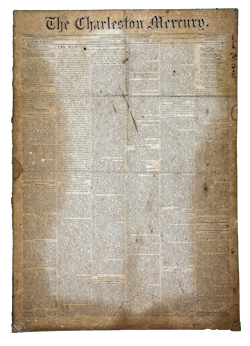
The Charleston Mercury,
April 25, 1861

Since the foundation of the world, we do not suppose there has been a more wicked and causeless war than that proposed by the Northern upon the Southern States.

The Southern States, in common, with the Northern States, won, by a seven years’ war, their independence of the British Crown. In the treaty of peace extorted from Great Britain, they were each of them acknowledged to be free, sovereign and independent States. On account of their weakness amongst the nations of the earth, the union of the States, begun in the war, was continued after the war ended, and was afterwards modified by the present Constitution of the United States. From the commencement of the Government, the Northern States used the Constitution of the United States, and the common Government it established, for their enrichment at the expense of the South. They obtained bounties to make their fisheries profitable. They established a monopoly of the whole coasting navigation, to encourage their shipping interests. No foreign vessel could take a cargo from one portion of a State to another, or from one State to another. They used the power given to Congress to lay duties on foreign importations—designed only to raise revenue—to prohibit importations by the heavy duties imposed;—and thus to force the people of the South to consume their substituted productions, thereby virtually exacting enormous tribute from the people of the South. They seized the money in the Treasury thus unconstitutionally and iniquitously levied, to promote their interests in various ways—by pensions; by internal improvements; by profligate contracts; enriching their cities, and aggrandizing their section of the Union, by the expenditures of the Government.—They used the funds of the common Government to establish centres of credit at the North. By these means they made their section of the Union the great region of commerce and manufactures. The South, in all its sources of trade, became tributary to them. Our cities ceased to grow, or lingered in their prosperity mere suburbs to the cities of the North. The Southern States, to all intents and purposes, became colonies to the Northern States. With this state of things, one would suppose the Northern States would have been satisfied. But they were not satisfied. Our submission only fostered their impertinence and intermeddling arrogance. We became not only the subjects of [continue reading…]
0 comments

Startling News—Washington in Danger.

Civil War Day-by-Day

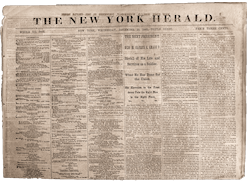
New York Herald,
April 25, 1861

By the important telegraphic intelligence which we publish in our columns this morning, we are placed in possession of the startling fact that the federal capital on Tuesday afternoon was in peril of capture, owing to the fact that the expected reinforcements had not arrived from the North in consequence of the interruption of the passage through Maryland, and there is an earnest urgent appeal from Washington for more troops and for field pieces. The Seventh regiment of New York and the Eighth of Massachusetts had arrived after some fighting and much suffering; but as many troops as can be sent forward are needed immediately, and they ought to take their provisions with them. There is not a moment to be lost. It appears that in addition to the Virginia troops in the vicinity of Washington, Jefferson Davis and Beauregard are at Richmond with twenty seven thousand men, and for all we know to the contrary, may now be in possession of the federal capital.

The motive of the obstruction of the Northern troops at Baltimore and other points in Maryland is now fully developed. It is evident that the design was to cause such delay as would enable the invaders to be present in force at Washington before the federal troops could reach the scene of action from the North. It is all a question of time. The city has no natural or artificial strength to enable it to hold out against superior odds and it has so many approaches that a small body of troops cannot effectually protect it long. We learn that the long bridge is well secured by General Scott, and that he has broken down the bridge at Georgetown; but by means of boats, or rafts, it is possible for troops to cross the Potomac higher up, and, perhaps, even below Washington. [continue reading…]

0 comments

If War is to be inaugurated… it shall be met…

Richmond Enquirer

Richmond Enquirer,
April 25, 1861

BY THE GOVERNOR OF VIRGINIA. A PROCLAMATION.

WHEREAS, in the emergency which was supposed to exist during the past week, arising from information that an invasion of the rivers of the State was about to be made, and the movements of the vessels of the United States with troops into the waters of this Commonwealth and the usual destruction of public property by the agents of that Government, both at Harper’s Ferry and at the Gosport Navy Yard, gave ample reason for such beliefs and whereas, under such circumstances, sundry vessels in the waters of the James River, the Rappahannock, York and Potomac Rivers, and their tributaries, have been seized and detained by the authorities of the State, or officers acting under patriotic motives without authority, and it is proper that such vessels and property should be promptly restored to the masters in command or to the owners there of; therefore I, JOHN LETCHER, Governor of the Commonwealth, do hereby proclaim that all private vessels and property so seized or detained, with the exception of the steamers Jamestown and Yorktown, shall be released and delivered up to the said masters or owners. Proper officers of the State Navy have been assigned to each of the rivers herein mentioned, with orders to release such vessels and property, and give certificates for damages incurred by the seizure and detention.

I feel it my duty further more, to advise the people of the Commonwealth, (not in the Military service of the State,) to return to their usual avocations, in connection with the trade and commerce of the country, assuring them protection and defence. If War is to be inaugurated by an attempt to invade this Commonwealth, or to use Coercion against the Southern Confederated States, a contingency dependent on the action of the Government of the United States, it shall be met, and conducted by this Commonwealth upon principles worthy of civilized nations and of this enlightened age. I appeal to all our people not to interfere with peaceable, unoffending citizens or others who preserve the peace and conform to our laws, and I do hereby especially discountenance all acts of seizure of private property without authority of law, and require that order shall be restored, and that all the laws be administered and executed by the tribunals especially assigned for the purpose.

Given under my hand as Governor and under the seal of the

{L. S.} Commonwealth at Richmond, 24th April, 1861, and in the 85th

year of the Commonwealth.JOHN LETCHER.

By the Governor:

GEORGE W. MUNFORD,

Secretary of the Commonwealth.

The following officers of the State Navy are assigned to the duties required by this proclamation:

For James River—Captain Cocke and Commander Tucker.

For Potomac River—Captain Forrest and Lieutenant Semmes.

For Rappanannock River—Lieutenant Lewis.

For York River—Commander J. L. Henderson and Lieut. J. S. Maury.


0 comments

The Ladies of Germantown.

Civil War Day-by-Day

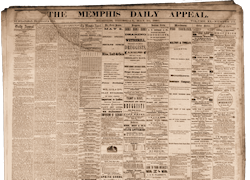
Memphis Daily Appeal,
April 25, 1861

Editors Appeal: We, the ladies of Germantown and vicinity, in consideration of the troubles that are brooding over our native land, have resolved to aid to the best of our ability our relatives and friends who shall engage in the approaching conflict. We, therefore, offer to the soldiers of Germantown all the assistance in our power with our needles, and promise also to aid in the care and sustenance of their families during their absence. And should the war approach our own homes, we will watch over the sick and wounded (though strangers) as our own brothers or fathers.

Mrs. Maria L. Pettit, Mrs. E. B. Cornelius, Mrs. Mills, Mrs. Moliter, Mrs. Morgan, Mrs. Rhodes, Mrs. Harris, Mrs. Hicks, Mrs. Boardman, Mrs. Burnley, Mrs. Goode, and many others.

0 comments

General Beauregard is apprehensive of an attack by the Northern “fanatics” before the South is prepared—William Howard Russell

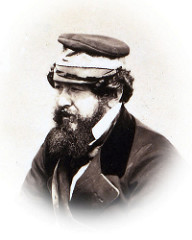
My Diary North and South – William Howard Russell

April 25th.—Sent off my letters by an English gentleman, who was taking despatches from Mr. Bunch to Lord Lyons, as the post-office is becoming a dangerous institution. We hear of letters being tampered with on both sides. Adams’s Express Company, which acts as a sort of express post under certain conditions, is more trustworthy; but it is doubtful how long communications will be permitted to exist between the two hostile nations, as they may now be considered.

Dined with Mr. Petigru, who had most kindly postponed his dinner party till my return from the plantations, and met there General Beauregard, Judge King, and others, among whom, distinguished for their esprit and accomplishments, were Mrs. King and Mrs. Carson, daughters of my host. The dislike, which seems innate, to New England is universal, and varies only in the form of its expression. It is quite true Mr. Petigru is a decided Unionist, but he is the sole specimen of the genus in Charleston, and he is tolerated on account of his rarity. As the witty, pleasant old man trots down the street, utterly unconscious of the world around him, he is pointed out proudly by the Carolinians as an instance of forbearance on their part, and as a proof at the same time of popular unanimity of sentiment.

There are also people who regret the dissolution of the Union–such as Mr. Huger, who shed tears in talking of it the other night; but they regard the fact very much as they would the demolition of some article which never can be restored and reunited, which was valued for the uses it rendered and its antiquity.

General Beauregard is apprehensive of an attack by the Northern “fanatics” before the South is prepared, and he considers they will carry out coercive measures most rigorously. He dreads the cutting of the levees, or high artificial works, raised along the whole course of the Mississippi, for many hundreds of miles above New Orleans, which the Federals may resort to in order to drown the plantations and ruin the planters.

We had a good-humored argument in the evening about the ethics of burning the Norfolk navy yard. The Southerners consider the appropriation of the arms, moneys, and stores of the United States as rightful acts, inasmuch as they represent, according to them, their contribution, or a portion of it, to the national stock in trade. When a State goes out of the Union she should be permitted to carry her forts, armaments, arsenals, &c., along with her, and it was a burning shame for the Yankees to destroy the property of Virginia at Norfolk. These ideas, and many like them, have the merit of novelty to English people, who were accustomed to think there were such things as the Union and the people of the United States.

0 comments

If a secession measure is passed we shall expect lively times here immediately afterwards.—Rutherford B. Hayes

Diary and Letters of Rutherford Birchard Hayes
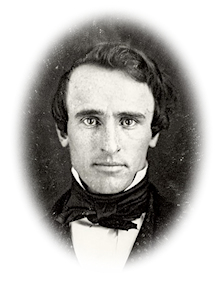
Rutherford B. Hayes (young)

CINCINNATI, April 25, 1861.

DEAR UNCLE: We are glad to hear from you often. I have written almost daily, and am surprised you do not hear from me more regularly. Your letters reach me in good time.

The point of interest here now is as to Kentucky. Her Legislature meets on the 6th of May. If a secession measure is passed we shall expect lively times here immediately afterwards. The chances are about equal in my opinion. If they were armed and ready they would go beyond all question; but their helpless condition will possibly hold them. Our people generally are quite willing to see them go. They prefer open enmity to a deceptive armed neutrality.

Sincerely,

R. B. HAYES.

P.S.–My company drills at 10 A. M. today–Sunday! I have two clergymen and the sons of two others in the ranks. I suspect they will not answer at roll-call.

S. BIRCHARD.

0 comments

They have much to learn before they can be relied on for efficiency.—Elisha Franklin Paxton

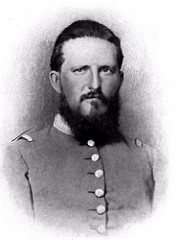
Elisha Franklin Paxton – Letters from camp and field while an officer in the Confederate Army

Harper’s Ferry, April 25,1861.

We reached this place on Tuesday morning. Instead of being fatigued, I was rather improved by the trip. Here we have all the comforts which we could expect, good food and comfortable quarters, better than generally falls to a soldier’s lot. I have enough to occupy every moment of my time in preparing the company for the service which we may expect to see before long. They have much to learn before they can be relied on for efficiency. I regret that my eyes are no better as it is necessary for me to read much for my own preparation. Try, Love, to make yourself contented and happy. I would not like to think that I was forgotten by dear wife and little ones at home, but it would give me a lighter heart to think that they appreciated the necessity of my absence, and the high importance of a faithful discharge of my present duties. My eyes will not enable me to write more without risk of injury to them.

0 comments

Am much obliged for the muskets, and request that you send them to Richmond, Va., to my address as Secretary of War of the Confederate States.

War of the Rebellion: from the Official Records of the Union and Confederate Armies and Navies

MONTGOMERY, April 25, 1861.

Gov. J. W. ELLIS, Raleigh, N. C.:

Major Whiting writes from Wilmington that he needs one thousand muskets and accouterments and one hundred rounds ammunition from Fayetteville Arsenal.

L. P. WALKER.

__________

MONTGOMERY, April 25, 1861.

Gov. J. W. ELLIS, Raleigh, N. C.

I shall have to supply with arms three regiments from Tennessee and one from Arkansas that rendezvous at Lynchburg, Va. Can you send this Government two thousand percussion muskets to be sent to Lynchburg?

L. P. WALKER

________

RALEIGH, April 25, 1861.

L. P. WALKER:

Arms at Fayetteville off the railroad. Two thousand percussion muskets are at your service soon as can be procured. Where will you have them sent?

JOHN W. ELLIS.

__________

MONTGOMERY, April 25, 1861.

Gov. J. W. ELLIS, Raleigh, N. C.:

Am much obliged for the muskets, and request that you send them to Richmond, Va., to my address as Secretary of War of the Confederate States. The troops to be supplied by North Carolina will rendezvous at Richmond. Transportation provided by the Government. Let me know when they will be ready.

L. P. WALKER.

0 comments

Report on Expedition to Fort Pickens—Montgomery Meigs

War of the Rebellion: from the Official Records of the Union and Confederate Armies and Navies

U. S. TROOP-SHIP ATLANTIC,
Havana, April 25, 1861.

Brig. Gen. J. G. TOTTEN,
Chief of Engineers, Washington:

GENERAL: In obedience to orders from the President of the United States, I accompanied as engineer the expedition of Colonel Brown, fitted out in New York, and sailing under secret and confidential orders to attempt to re-enforce Fort Pickens.

I left Washington on the afternoon of the 3d April, having been engaged from the 31st March in preparation for the expedition.

The Secretary of State having assured me that any arrangement I might make for the preservation and control of the public works under my charge in Washington during my absence would be approved by the Executive, I appointed Capt. J. N. Macomb, Topographical Engineers and my brother-in-law, my attorney to sign checks, draw requisitions, and do all other acts necessary for the control of these public works until my return.

Arrived in New York, I devoted myself, in concert with the commander of the expedition, Col. Harvey Brown, Colonel Keyes, military secretary, and others, to the fitting out of the vessels necessary to convey the troops, horses, artillery, ordnance, and stores to Santa Rosa.

By the request of the President I sailed in the first transport ready, the Atlantic steamer, formerly of the Collins line, with instructions to remain with Colonel Brown until he was established in Fort Pickens, and then to return to my duties in Washington.

We had on board five companies of artillery and infantry, two of which were light artillery, Barry’s and Hunt’s. Captain Barry’s company carried their horses with them, 73 in number. Captain Hunt’s company, having lost their horses by the treachery of General Twiggs in Texas, were dismounted.

Such artillery as could be hastily collected, such part of the stores and supplies for six months for 1,000 men, purchased in New York, as could be embarked by the evening of the 6th April, were placed on board and the vessel hauled into the stream after sunset on that date. [continue reading…]

0 comments

Rebel War Clerk

Civil War Day-by-Day
A likeness of Jones when he was editor and majority owner of the Daily Madisonian during President John Tyler’s administration.

April 25th – Ex-President Tyler and Vice-President Stephens are negotiating a treaty which is to ally Virginia to the Confederate States.

0 comments

John… is now a Midshipman again.

Journal of Meta Morris Grimball
Meta Morris Grimball

25 [April]

       Mr Grimball returned and brought up John, who is now a Midshipman again, with the prospect of being made Master, like the rest of his date, as he resigned when his State did, 2 weeks before his examination, had excellent letters from the Officers who were on board the Macedonian with him 1 of course from the Captain, and an unusual honor, one signed by the other Officers,—he seems to have through all the stirring events of this winter, conducted himself well, & Gov. Pickens who gave him a Lieuts. commission. always behaved well to him.—

       He sent his letters to the Secretary of the Navy, at Montgomery, and the reply from Malory was that owing to all the circumstances of the case, it should be presented to the President for consideration, and Gov. Pickens endorsed a letter from John to the same effect.—So the matter stands.

       Papa has been arranging a plan for Mrs Butler to reside for the summer at Grass Knowl , a healthy place & belonging to Georgia: Charles having a home there suited to his Plantation. She wrote that she was very much disgusted with her situation, and the annoyance of contending with Mr Butler, who had arrived in Darien to take posession as soon as she left. We hear that she has gone North so suddenly that she had not time to write; if she can live there without any annoyance from owning Southern Property, or rather being supported by it, I think she has done best for herself. For 34 years, ever since her marriage, she had enjoyed a degree of affluence and fashion, there, which must have made her identify herself with the people & with the place. She is now a very stout old woman; & these comforts which she has there must be very dear to her. She has been much separated from her own family, and is accustomed to her luxury, & her loneliness.—I hope she may enjoy the former, all her days, & have the other remedied by the society of her daughter & grandchildren.

0 comments

The News

Civil War Day-by-Day

New York Herald,
April 24, 1861

We have important news from Washington. Our own gallant Seventh regiment and the Massachusetts Eighth regiment are at last safely arrived in the national capital. Despatches to that effect were received in this city last night. Government has sent special messengers on here, urging the forwarding of troops as fast as possible, and as many field pieces as can be sent. It will be necessary to have the national capital reinforced as rapidly as may be, it being believed that the secessionists have a strong force in the neighborhood, and that there are preparing for an early attack. It is supposed that Gen. Beauregard and Jeff. Davis are both in Virginia, ready to lead the assault. There is great scarcity of food in Washington. In our columns this morning we supply copious details with regard to the state of affairs there. An officer of the Seventh regiment passed through Northeast, Maryland, on his way to this city, last night. It is said he is the bearer of despatches from the government of the utmost importance.

Further accounts continue to reach us of the terrorism reigning in Baltimore and vicinity. No steamers are allowed to leave the city, and railroad travel being cut off, passengers for the North can only proceed by private conveyance. The greatest excitement is said to prevail in the city, and all Northerners are closely watched. We give this morning narratives of different individuals who have arrived North through that city within the past few days.

A member of the New York Seventh regiment, in charge of four sick comrades, arrived in Philadelphia last evening. The men suffered greatly at Annapolis for want of food and water. [continue reading…]

0 comments

…counteract, even, if necessary, to the bombardment of their cities…,

The Collected Works of Abraham Lincoln
To Winfield Scott1
Lieutenant General Scott
Washington, April 25— 1861.
My dear Sir: The Maryland Legislature assembles to-morrow at Anapolis; and, not improbably, will take action to arm the people of that State against the United States. The question has been submitted to, and considered by me, whether it would not be justifiable, upon the ground of necessary defence, for you, as commander in Chief of the United States Army, to arrest, or disperse the members of that body. I think it would not be justifiable; nor, efficient for the desired object.
First, they have a clearly legal right to assemble; and, we can not know in advance, that their action will not be lawful, and peaceful. And if we wait until they shall have acted, their arrest, or dispersion, will not lessen the effect of their action.
Secondly, we can not permanently prevent their action. If we arrest them, we can not long hold them as prisoners; and when liberated, they will immediately re-assemble, and take their action. And, precisely the same if we simply disperse them. They will immediately re-assemble in some other place.
I therefore conclude that it is only left to the commanding General to watch, and await their action, which, if it shall be to arm their people against the United States, he is to adopt the most prompt, and efficient means to counteract, even, if necessary, to the bombardment of their cities—and in the extremest necessity, the suspension of the writ of habeas corpus. Your Obedient Servant
A. Lincoln

  1. Endorsed by Lincoln on envelope “”Copy of letter to Genl. Scott.”
    Upon assembling, the Maryland legislature appointed a committee to confer with the president.
0 comments

Civil War Day-By-Day

Civil War Day-by-Day

April 25, 1861

  • New York’s 7th Regiment arrives in Washington, having gone around Baltimore by boat.
  • In a daring nighttime operation Illinois troops steam from Alton to St. Louis and remove 10,000 muskets with the help of federal troops in the armory.
  • General Edwin Vose Sumner relieves Albert Sidney Johnston as Commander, Department of the Pacific.

A Chronological History of the Civil War in America1

  • Saluria, Tex., surrendered to rebel forces.
  • Legislature of Vermont voted $1,000,000 to equip volunteers.
  • New York 7th Regiment reached Washington.
  • Virginia proclaimed by Governor Letcher to be a member of the Confederate States.

  1. A Chronological History of the Civil War in America by Richard Swainson Fisher, New York, Johnson and Ward, 1863
0 comments

“Such senseless sacrifices seem a sin.”—War Diary of a Union Woman in the South by Dora Richards Miller.

War Diary of a Union Woman in the South

April 25, 1861.—Yesterday I went with Cousin E. to have her picture taken. The picture-galleries are doing a thriving business. Many companies are ordered off to take possession of Fort Pickens (Florida), and all seem to be leaving sweethearts behind them. The crowd was in high spirits; they don’t dream that any destinies will be spoiled. When I got home Edith was reading from the daily paper of the dismissal of Miss G. from her place as teacher for expressing abolition sentiments, and that she would be ordered to leave the city. Soon a lady came with a paper setting forth that she has established a “company”—we are nothing if not military—for making lint and getting stores of linen to supply the hospitals.

My name went down. If it hadn’t, my spirit would have been wounded as with sharp spears before night. Next came a little girl with a subscription paper to get a flag for a certain company. The little girls, especially the pretty ones, are kept busy trotting around with subscription lists. A gentleman leaving for Richmond called to bid me good-bye. We had a serious talk on the chances of his coming home maimed. He handed me a rose and went off gaily, while a vision came before me of the crowd of cripples that will be hobbling around when the war is over. It stayed with me all the afternoon while I shook hands with one after another in their shining gray and gold uniforms. Latest of all came little Guy, Mr. F.’s youngest clerk, the pet of the firm as well as of his home, a mere boy of sixteen. Such senseless sacrifices seem a sin. He chattered brightly, but lingered about, saying good-bye. He got through it bravely until Edith’s husband incautiously said, “You didn’t kiss your little sweetheart,” as he always called Ellie, who had been allowed to sit up. He turned suddenly, broke into agonizing sobs and ran down the steps. I went right up to my room.

Suddenly the midnight stillness was broken by the sound of trumpets and flutes. It was a serenade, by her lover, to the young lady across the street. She leaves to-morrow for her home in Boston, he joins the Confederate army in Virginia. Among the callers yesterday she came and astonished us all by the change in her looks. She is the only person I have yet seen who seems to realize the horror that is coming. Was this pallid, stern-faced creature, the gentle, glowing Nellie whom we had welcomed and admired when she came early last fall with her parents to enjoy a Southern winter?


Note: To protect Mrs. Miller’s job as a teacher in post-civil war New Orleans, her diary was published anonymously, edited by G. W. Cable, names were changed and initials were generally used instead of full names—and even the initials differed from the real person’s initials. (Read Dora Richards Miller’s biographical sketch.)

0 comments

To the Slaveholders of the South.

Civil War Day-by-Day

The New York Herald
April 24, 1861

It is fully time for President Lincoln to issue a proclamation to the country, explanatory of the principles upon which the war that has commenced will be carried on. Such a document is needed, in order to tranquilize the minds of Union loving citizens in the South, and to carry terror into the hearts of revels, who may persevere in resisting the laws. A very large portion of the slaveholders, in the seceding, as well as in the Border States have been from the beginning, totally opposed to the conspiracy to dissever the republic. Their hearts are true and loyal, and they will, doubtless, rally to the support of the government, as soon as its intentions are properly understood. The leaders of the ultra Southern party, have deluded themselves, and their followers, with the belief that the North was divided while the slaveholding members of the confederacy, were united. Party lines, have, however, been swept away, in the free States, since the bombardment of Fort Sumter, and they are now a unit, while below Mason and Dixon’s line, discontent and disaffection prevail everywhere, and a small effort, on the part of the administration, will create a general reaction, and an immense rally to its support.

Southern conspirators should be notified that no aggressive war has been inaugurated against the slave States, and that there is no intention to invade any of the rights that are guaranteed to them by the constitution. It is the determination of the administration, however, to retake all places and properties belonging to the federal government, and to employ any amount of force that may be requisite for that purpose. Every fortification, arsenal, navy yard, custom house and post office, of which possession has been usurped, must be arrested from the possession of the revolted States, at the cost, if need be of hundreds of millions of money, and of five hundred thousand men. From Baltimore to New Orleans, therefore, no choice will be left to the Southern people, excepting between resistance and unconditional submission to the laws and it is the duty of the President to proclaim that while those who are true to their allegiance to the American flag, and give it aid and support, may rely upon present and future protection, the utmost penalties due to treason will be [continue reading…]

0 comments

More than her quota of gallant men

Civil War Day-by-Day
1860s newsprint

 Daily Advocate
(Baton Rouge, LA)
April 24, 1861

East Baton Rouge, from present appearances, will furnish more than her quota of gallant men to defend the South from the Northern foe. There will be at least three full companies raised in the city of Baton Rouge alone, in addition to those that will be raised in the parish outside the city limits, and the squad of fifteen or twenty who have joined the Delta Rifles.

Let it be remembered that many who are now enrolled are poor men, and some will leave their families unprepared, in a manner, to meet the wants of the coming summer, when deprived of their natural supporters. It has been suggested by planter friends, that the City council take measures to open the lists for subscriptions in money and provisions. Times are hard and many of our most liberal men are not overburdened with cash, but if the opportunity be given them, they will gladly avail themselves of it to display their liberality in some substantial manner. Let the Mayor be authorized to appoint some one, say the Commissary of the Market, to receive donations of provisions, cattle, meal, wood, etc., and our word for it the families of our gallant men will not need to appeal to the charity of any one for support.

0 comments

The Custom House and the War.

Civil War Day-by-Day

The New York Herald
April 24, 1861

The United States steamer Corwin, under the command of Lieutenant F. M. Brasher, has been stationed in the Narrows; the Vixen, Lieutenant Phelps, at Throgg’s Neck, and the Bibb at the Kills, under the orders of the Surveyor, for the purpose of intercepting any suspicious vessels that may attempt to leave the harbor. The guns of these vessels will command the channel at all times, therefore the commanders of the various craft in the harbor had better not try to skulk out after dark, or they will be sure to get caught.

VESSELS SEARCHED.

The steamer John R. Thompson and the schooner Alice Gibson, both bound for Baltimore, were boarded by Inspectors Isaac and Archer before they left, and a strict inspection made of their cargo. Nothing was found on board contraband of war. The schooner Anna Morton was [continue reading…]

0 comments

Independent Corps in New Orleans.

Civil War Day-by-Day
1860s newsprint

Semi-Weekly Raleigh Register
North Carolina
April 24, 1861

Two peculiar military companies are being organized at New Orleans—one, composed wholly of friends of the late General William Walker, is under the command of Major Thomas Dolan, of the Nicaraguan army. The other, made up of sportsmen and hunters, is termed the “Louisiana Guerillas.” The uniform will be a velvet hunting jacket, mi tasses, or leggins, similar to those worn by Indians, cotton pantaloons and an otter skin cap. The “Guerillas Louisianais” would fight as skirmishers, and for that purpose be armed with a double barrelled gun or a rifle, and a short sabre.

0 comments

From Fort Washita.:—Murders And Arrests—Lieut. Iverson, of Georgia, Resigned—Choctaws and Chickasaws Preparing to Secede!—Fort Washita Reinforced—More Disunion Deserters and Thieves.

Civil War Day-by-Day

 Daily Times
(Leavenworth, KS)
April 24, 1861

Fort Washita, C. N.,}
March 31, 1861. }

Editor Times: Since my last, I have not had an opportunity to inform you of the doings here, until to-day.

Deputy Marshal Whiteside, and an escort of six U. S. troops from Fort Arbuckle, arrived here after an absence of six days, having in charge of Bill Hall, the murderer, and departed the following day with an escort of five men from this place for Van Buren, Arkansas. The troops from Arbuckle returned to that place. The escort from this place accompanied the Marshal to Johnson’s Station, on the California Overland Route, and then returned.

Two weeks ago the overland coaches made the trip from Fort Smith, Arkansas, to Nail’s Bridge, C. N., a distance of one hundred and seventy miles in twenty hours.

First Lieut. Alfred Iverson, of the 1st Cavalry, and son of Ex-Senator Iverson, of Georgia, has tendered his resignation to the Presidenthaving received the appointment of 3d Captain in the Georgia army.

Dixon Ouchaubby, a Chickasaw Indian, convicted of murder, was executed at Tishomingo City, on the 20th inst. Levi Colbert, another Chickasaw, confined in the jail at Tishomingo city, awaits the same fate, for murdering an Indian on Blue river, sometime since. A few days since a Choctaw Indian was brought to this place and confined in the Guard House, being charged with murdering two white men, near Red river.—The prisoner acknowledges killing one man, but denies killing the second. There is, however, sufficient proof that he committed both crimes.

Grass is growing finely. It will soon be sufficiently large to afford good grazing.—Peach trees have been in blossom for nearly a month, but late heavy frosts have destroyed this fruit for this season. The trees of the forest are putting on their summer costume.

The first number of the National Register made its appearance on the 16th inst. In politics it is an uncompromising secession sheet, beneath the contempt of honorable men.

The object of the Choctaw and Chickasaw National Convention, which met at Boggy Depot, C. N. was the sectionalizing and individualizing of their country. Resolutions to that effect, after a discussion of several days, were adopted by a vote of fifteen yeas to eight nays, and are to be submitted to the people, on the 6th of August, 1861, for ratification or rejection.

The General Council of the Choctaw Nation, in general assembly, passed, among a number of resolutions, expressing their feelings and sentiments in reference to the political disagreement existing between the Northern and Southern States of the Union, the following resolution:

“Resolved, further, That in the event a permanent dissolution of the American Union takes place, our many relations with the General Government must cease, and we shall be left to follow the natural affections, the educations, institutions and interests of our property, which indissolubly bind us in every way to the destiny of our neighbors and brethren of the Southern States, upon whom we are confident we can rely for the preservation of our rights, of life, liberty and property, and the continuance of many acts of friendship, generous counsel and fraternal support.”

The garrison of this post was yesterday reinforced by the arrival of Company E., (Capt. Prince’s,) 1st Infantry, from Fort Arbuckle, which has been ordered to take post here.—Capt. Prince assumes the command of this fort.

The fort has not yet been taken by the Secessionists, as the Eastern papers have it. Some even go as far as to give an account of the surrender of the government property to the traitors by Capt. Carr. These and similar paragraphs going the rounds in the Eastern papers concerning this fort, are infamously false, and do great injustice to the brave and gallant commanding officer.

A few sympathizers with the Southern rabble, have deserted, taking with them horses, pistols, carbines, and everything they could lay hands upon; but as this was only following the example set by Floyd, Cobb and others, it will have no effect upon the morality of the community at large in the Rhett-led Confederacy.

Rover.

0 comments

Our Pensacola Correspondence.

Civil War Day-by-Day

The Charleston Mercury
April 24, 1861

HEADQUARTERS FOR PROVISIONAL ARMY, WARRINGTON, (Fla.) April 20, 1861.

In my last letter I reported to you that the mails were stopped to and from this place. I received my information from the Warrington Postmaster, who ought to be authority upon the subject. The information was partly true. The civil mails are stopped, the civil postmasters are displaced, and the mails are put under exclusive charge of the chief Quartermaster of the army. With this difference, I suppose that the mails will go on as heretofore. They will thus be under the surveillance of a military officer. The Postmaster here was suspected of being a traitor and spy. This may have been the immediate reason of the change, though there were other sufficient reasons. Last night, the Postmaster, who is also a leading merchant, was arrested, upon some proof of his guilt. He is still a prisoner. This place swarms with spies and traitors. General BRAGG has given them their choice—to join the ranks as soldiers, to work, or to leave. There has been for two days past a hurrying to and fro, a hasty packing of household goods, and a confused and motley exodus. There is a great deal of distress and poverty among the inhabitants of Warrrington and Woolsey. The latter is the name of the village on the north side of the navy yard; Warrington that on the south side. These people are laborers or mechanics, who have lived entirely on employment from the old Government. They have been thrown out of employment with arrears of pay due them. Like poor people the world over, they have numerous children. I have passed few houses at which I was not appealed to most piteously to buy furniture, or some of the odds and ends of housekeeping supplies. Disloyal as most of them are, their distress excited my sympathy.

It is strange that people are so incredulous of coming catastrophes. I have known only one person, except myself, since the dissolution of the Union, who believed that we should have war. For weeks past I have been telling these people here to get their houses in order to leave, or to die, and they have stared at me with wild eyed incredulity. [continue reading…]

0 comments

The Yachtsmen Moving.

Civil War Day-by-Day

The New York Herald
April 24, 1861

We see that the members of the New York Yacht Club are to hold a meeting today for the purpose of considering what action they can take in conjunction with all the other classes of patriotic citizens to aid the government in this present crisis. It strikes us that the Yacht Club can be of infinite service by tendering their first class craft to act as despatch boats off the coast. Out of the fifty or sixty boats belonging to the club there are perhaps half a dozen fast sailing schooners which are just the thing for this work. In sailing this craft cannot be outdone by anything afloat, and are able for any weather; they can run into shallow waters, where our vessels of war cannot enter, and in case of a blockade of the Southern ports would be of great value in conveying information and instructions from point to point. They are capable of carrying an armament sufficient for their own defence, and in every respect are precisely the kind of vessel which the government needs at this moment. The Yacht Club, then, cannot do better than offer this class of yachts and their crews to the Secretary of the Navy for service as despatch boats.

0 comments

The Blockade.

Civil War Day-by-Day

The Charleston Mercury
April 24, 1861

Wrong is always prolific. One usurpation produces another. When the President of the United States, under the authority of a mere Riot Act, usurped the power to call out seventy five thousand men to make war upon, and to conquer the people of seven sovereign States, it was clear that he intended to be controlled by no constitutional restraints, in the prosecution of his flagitious policy. He now follows up this usurpation with another. He undertakes, without any law of Congress authorizing it, to blockade all the Southern ports. We publish his Proclamation below. To blockade the ports of a country is an expedient of war. It is used to embarrass or to subdue an enemy. Thus the Abolition Government in Washington, in defiance of the Constitution, inaugurates war, raises an army to carry it on, and establishes it at sea. Of course, the Congress of the Confederate States will be compelled, as soon as it assembles, to authorize the issuing of Letters of Marque and Reprisal. If the Constitution of the United States was not long since dead and buried, on the meeting of Congress this truculent usurper would be impeached and executed. But there is no Constitution in the United States. There is nothing but a fierce, unscrupulous and bloody despotism enthroned at Washington. The Capitol and the President’s mansion are filled with soldiery. The miserable miscreant and fanatic who is at the head of the Government, is determined to signalize his administration by the ruin and miseries he may produce. By the blessing of God, we have escaped from his bloody tyranny. We have him at arms length—opibusque parati. The worse anticipations of those of our public men who warned the South of her danger in the ascendancy of Black Republicanism, have been fully realized. All honor to their wisdom, patriotism and energy.

ALL THE SOUTHERN PORTS TO BE BLOCKADED!

The National Intelligencer of Saturday, publishes the following:

Whereas an insurrection against the Government of the United States has broken out in the States of South Carolina, Georgia, Alabama, Florida, Mississippi, Louisiana and Texas, and the laws of the United States for the collection of the revenue cannot be effectually executed therein conformably to that provision of the Constitution which requires duties to be uniform throughout the United States:

And whereas a combination of persons, engaged in such insurrection, have threatened to grant pretended letters of marque to authorize the bearers thereof to commit assaults on the lives, vessels and property of good citizens of the country lawfully engaged in commerce on the high seas, and in waters of the United States:

And whereas an Executive Proclamation has been already issued, requiring the persons engaged in these disorderly proceedings to desist therefrom, calling out a militia force for the purpose of repressing the same, and convening Congress in extraordinary session to deliberate and determine thereon:

Now, therefore, I, Abraham Lincoln, President of the United States, with a view to the same purposes before mentioned, and to the protection of the public peace, and the lives and property of quiet and orderly citizens pursuing their lawful occupations, until Congress shall have assembled and deliberated on the said unlawful proceedings, or until the same shall have ceased, have further deemed it advisable to set on foot a blockade of the ports within the States aforesaid, in pursuance of the laws of the United States and of the law of nations in such case provided. For this purpose a competent force will be posed so as to prevent entrance and exit of vessels from the ports aforesaid. If, therefore, with a view to violate such blockade, a vessel shall approach, or shall attempt to leave any of the said ports, she will be duly warned by the commander of one of the blockading vessels, who will endorse on her register the fact and date of such warning, and if the same vessel shall again attempt to enter or leave the blockaded port, she will be captured and sent to the nearest convenient port, for such proceedings against her and her cargo as prize as may be deemed advisable.

And I hereby proclaim and declare that if any person, under the pretended authority of the said States, or under any other pretence, shall molest a vessel of the United States, or the persons or cargo on board her, such persons will be held amenable to the laws of the United States for the prevention and punishment of piracy.

In witness whereof, I have hereunto set my hand, and cause the seal of the United States to be affixed.

Done at the City of Washington, this nineteenth day of April, in the year of our Lord, one thousand eight hundred and sixty one, and of the independence of the United States the eighty fifth.

ABRAHAM LINCOLN.

WILLIAM H. SEWARD, Secretary of State.

[continue reading…]

0 comments

The Steuben Guard

Civil War Day-by-Day

 Daily Times
(Leavenworth, KS)
April 24, 1861

The German company originally organized as the “Citizens’ Guard,” have changed their title to “The Steuben Guard,” in remembrance of the revolutionary patriot of that name. The adopted citizens are zealous and earnest in their support of the government. And it is natural that they should be. If our republic is not preserved, with it will perish the hopes of the brave defenders of free institutions, throughout the world. Hence, sympathy with the land of his nativity, as well as the land of his adoption, lends the foreign born citizen to be loyal and faithful to the Union.

0 comments

Thickening Cloud of War—Maryland and Virginia Doomed.

Civil War Day-by-Day

The New York Herald
April 24, 1861

The Union Governor of Maryland, who has withstood the appeals and threats of the secessionists since last December, has been coerced by a crazy mob of conspirators into calling an extra session of the State Legislature on the 26th inst., and has been warned of the consequences should he fail to deliver a secession message. We had hoped for better things: that Maryland would stand fast by the Union and be saved; but as her Legislature is overwhelmingly for revolution, she may be already considered as on the broad highly to swift destruction.

The burning of Norfolk (Gosport) Navy Yard, with a powerful squadron of our largest and some of our finest ships of war, is confirmed. This destruction of millions of property it appears, was the only alternative to prevent its falling into the hands of the rebels; but that it was impossible to save the splendid new steamer Merrimac, costing over a million dollars, is a mystery which, with the information before us, we cannot solve. One thing is perfectly clear. We can understand from this conflagration, which reduces thousands of her working people to beggary, that Virginia is fully committed to the secession league for the destruction of our government; and so, then let it be accepted. It is perhaps well that Maryland and Virginia have elected to bear the brunt of this conflict; for thus it is brought to the very field of operations where the crushing power of the North, military, naval and financially, can be brought to bear most promptly and decisively. And we must be prompt. Not only is the army protecting our federal capital denied provisions from Virginia and Maryland, but the seventy thousand inhabitants of that city and Georgetown are in danger of starvation, inasmuch as the scanty supplies which find their way to the District markets are almost monopolized at famine prices by the army. This is worse than Fort Sumter, and in the eyes of the world we are disgraced if we permit this state of things a week longer, with all power to put an end to it. [continue reading…]

0 comments