Habeas Corpus

The Collected Works of Abraham Lincoln
To Winfield Scott
April 27, 1861
To the Commanding General of the Army of the United States:
You are engaged in repressing an insurrection against the laws of the United States. If at any point on or in the vicinity of the military line, which is now used between the City of Philadelphia and the City of Washington, via Perryville, Annapolis City, and Annapolis Junction, you find resistance which renders it necessary to suspend the writ of Habeas Corpus for the public safety, you, personally or through the officer in command at the point where the resistance occurs, are authorized to suspend that writ.
Abraham Lincoln
0 comments

Civil War Day-By-Day

Civil War Day-by-Day

April 27, 1861

  • President Lincoln suspends the writ of habeas corpus between Washington, D.C., and Philadelphia to give military authorities the necessary power to silence dissenters and rebels.
  • Lincoln extends the blockade to include Virginia and North Carolina
  • Virginia offers Richmond as the Confederate capital.

A Chronological History of the Civil War in America1

  • President’s proclamation ordering the ports of Virginia and North Carolina to be blockaded.

  1. A Chronological History of the Civil War in America by Richard Swainson Fisher, New York, Johnson and Ward, 1863
0 comments

Pensacola Correspondence.

Civil War Day-by-Day

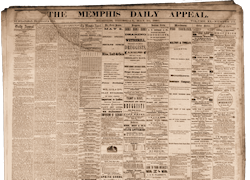
Memphis Daily Appeal
April 26, 1861

Camp Davis, near Pensacola, Florida,

April 19, 1861.

Editors Appeal: Nothing of great importance has transpired since my last letter, and the reception of this epistle will assure you that I am still alive and kicking. . . .

For several days past we have had some mess beef that was not very appetizing, and to-day a large funeral procession was seen to move off from the camp of the tenth regiment, and we all went over to see who was dead, of course. We found a large lot of pickled beef and a grave newly dug. When we came up we found many mourners. The Episcopal service was read, and pine tops strewn over the grave. All the black cravats and black coats that could be procured were used on the occasion, and with drums muffled, and arms reversed, the ill-fated beef was consigned to mother earth. A large ship cracker marks the spot, while a board monument is all that remains, with the inscription, “Strong in life, and in death still stronger.”

We received the beautiful banner sent us by Messrs. Speed, Donoho & Strange, and appreciate it very highly indeed, and a guard has been selected to defend it, in whose hands they may rest assured that it will be borne bravely forward, “A signal of conquest, or a shroud for the brave.” Our mothers, our sisters, our sweet-hearts, and all, shall hail it triumphant or weep o’er our fall.

Martial law has been proclaimed here for the present. More anon,

Wm. L. Lundy.

0 comments

A patriotic suggestion.

Civil War Day-by-Day
1860s newsprint

Natchez Daily Courier
April 26, 1861

The suggestion thrown out in the following communication of Dr. Schuppert will commend itself to the patriotism of every woman, young and old, in the State:

To the Editors of the True Delta:

Dear Sirs: War seeming to be inevitable, I would suggest an appeal to the well-known patriotism of the ladies of this city and the country at large, to furnish the military stores with an implement of great importance to the active surgeons of the army–we mean “charple,” or picked lint, of which there are not fifty pounds to be found, even if you would buy out all the drug stores of the city of New Orleans. The lint, which is commonly used as a surrogate for dressing wounds, does not come up at all to the purpose it is required for in actual warfare; besides, it is a costly article. The charple, as used in the French and German armies, is prepared out of old worn-out shirts and sheets, which are commonly thrown away. We would, therefore, say: “Save the pieces;” cut them in squares of 4 or 5 inches, pick them, and the required article is prepared. If it is sweet to bleed for the country, it is not less sweet to know that the wounds will be dressed properly; moreover, by the handwork of our mothers and sisters.

Respectfully,

M. Schuppert, M.D.

0 comments

The Vindicator

Civil War Day-by-Day
1860s newsprint

April 26, 1861, Staunton, Va.

A Solemn Duty.

The remarkable course of the last Spectator in endeavoring at this time to interweave party with the terrible civil war that is now convulsing the country, and attempting to establish that it proves the correctness of the policy of the “Union” party cannot fail to attract the attention of the public. At a time when the people should be warned to prepare to defend their households from the aggressive steps of a perfidious foe, the majesty and sacredness of the occasion is insulted by covertly directing its efforts to the resurrection of its old party. The brief, yet significant allusion to “taxes” etc., shows that the wiry genius who wrote that remarkable letter on the subject of “taxes,” during the Convention canvass, is still cherishing the hope of rescuing himself from the consuming wrath of a deceived people and being restored to their forfeited confidence.

Indeed, throughout the columns of the last Spectator, there pervades a persistent purpose to give vitality to party irrespective of the momentous events that are startling the hearts of the people. While the leaders and file of the Democracy are daring the canon’s mouth, or giving efficiency to the energies of the State in her grand and glorious efforts to defend her honor, it would seem that some of the Union men have no higher sins than to grovel in the ignoble work of county politics. Instead of casting bullets for the defense of their firesides, they are more intensely engaged in ascertaining for whom the votes of the people may be cast. We will not give expression to our feelings at such conduct. We pray that the people will turn away from such considerations to the solemn and terrible thought that their homes may be invaded by a ruthless enemy, and to prepare for any emergency. Be true to thyself, and then it will follow as the night the day, thou canst not be untrue to another.

Virginia One of the Confederate States

Very Latest by Telegraph.

A telegram was received last (Thursday) night, bringing us the glorious tidings that Virginia had formed an alliance with the Southern Confederacy.

Home Guard.

We attended the drill of the Home Guard, Capt. W.P. Tate, on Tuesday night last. We were impressed with the character of the men of which it is composed. Numbering two hundred, who constitute the substantial manhood of the community, some of them the oldest, we could not but think that if such men were ready to shoulder the musket in the cause of the State, that we, as a people, were truly invincible. Could Old Abe, in his mind’s eye, have taken a glance into Armory Hall last Tuesday night, he might have learned a lesson, and that if somebody was not yet hurt, somebody might be in a very short time.

The officers of the Guard are

Wm. P. Tate, Captain,
John N. Hendren, 1st Lt.
David S. Young, 2d.
Nicho. K. Trout, 3d.
Benj. F. Points, 4th.
E.M. Cushing, Orderly Sergeant.

Augusta Riflemen.

Capt. Asher W. Harman has now nearly equipped his fine company of Mounted Riflemen, numbering about 100 men. This will be one of the finest in the State, and if opportunity presents, laurels will be won, for the dashing, intrepid, fearless character of the captain will always lead to where the conflict is fiercest.

Since the above was written, Capt. Harman’s company has appeared in full dress parade, presenting an attractive and truly soldierly appearance. The soldiers themselves are not only Augusta men, but the cloth from which their uniforms were made was manufactured at the Wollen Factory of Messrs. Crawford & Co. at this place. The County Court made an appropriation of $3,000 to equip the company, but the actual cost will not amount to more than from $300 to $500. Such an example of economy is worthy of imitation. Augusta can well trust such with her credit and her honor.

0 comments

The Capital to be Blown Up.

Civil War Day-by-Day

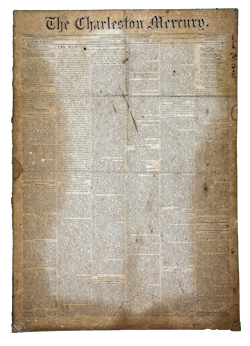
The Charleston Mercury
April 26, 1861

LATEST by TELEGRAPH.—THE WAR NEWS. GREAT EXCITEMENT IN WASHINGTON.—LINCOLN AND HIS CABINET IN A FRIGHT.

ALEXANDRIA, April 25.—The Government at Washington has taken possession of the telegraph office, and no despatch for a Southern point is allowed to be sent off, unless it meets their approval. It was proposed to your correspondent that he send despatches to THE MERCURY as they might prepare, which was of course respectfully declined on my part, and so at much risk I have run over here, where LINCOLN has no control, to send you the news.

The Administration is most actively engaged in fortifying the city of Washington. The whole force congregated there is six thousand, including a large number of volunteers. The volunteers are strongly suspected of Southern affinities, and already much dissatisfaction exists.

A mutiny was threatened yesterday among those two thousand quartered at the Capitol, which caused Secretary CAMERON to be sent for in great haste.

Batteries are being erected on all the surrounding hills for the protection of the city.

It is anticipated that martial law will be proclaimed tomorrow. [continue reading…]

0 comments

The News

Civil War Day-by-Day

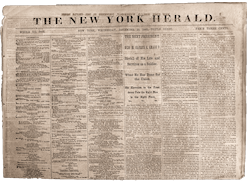
The New York Herald
April 27, 1861

Our advices yesterday with regard to affairs in Washington and vicinity were very conflicting. At one time it was stated that the Seventh regiment of this city and the Massachusetts Eighth regiment, from Annapolis, had arrived in the federal capital, as well as the New York regiments which left here on Sunday, together with other State troops. Later in the day this was contradicted, and it was stated that the Seventh New York and Eighth Massachusetts regiments were encamped eight miles from Annapolis. There is reason to believe, however, that at least a portion, if not all, of these troops we have named, are now at Washington. That the Seventh has arrived we have positive intelligence. Our latest despatches advise us of a terrible state of excitement and apprehension in the capital. An early attack is anticipated, and all business is suspended. From Philadelphia it is stated that the President will soon call for one hundred thousand more men, if he has not done so already.

In contradiction of the report which has prevailed for some days past, that General Beauregard is in the neighborhood of Washington, preparing for the contemplated attack on that place, we have a despatch from Philadelphia stating that a gentleman has arrived in that city who left Charleston on Thursday of last week, who says that General Beauregard was then in Charleston, superintending the repair of Fort Sumter, in anticipation of an immediate attack by the government. This gentleman is reported as representing that there had, up to the time he left Charleston, been no movements of troops northward from there, and that none were likely soon to be despatched. The people there were still unaware of the unanimous Union feeling which now pervades the North.

No reliable intelligence with regard to the reported taking of Fort Pickens by the secessionists is yet received. One account from the South states that it had been taken with a loss on the part of the Southerners of 2,500. The latest advices, though, discredit this.

We have a despatch from Fort Smith, Arkansas, stating that on Wednesday night, that post was taken possession of by the State forces, under command of ex-Senator Borland. The garrison of the fort at the time it surrendered number three hundred men. [continue reading…]

0 comments

Sending money North, even if it be used against us.

Civil War Day-by-Day
A likeness of Jones when he was editor and majority owner of the Daily Madisonian during President John Tyler’s administration.

April 26th – To-day I recognize Northern merchants and Jews in the streets, busy in collecting the debts due them. The Convention has thrown some impediments in the way; but I hear on every hand that Southern merchants, in the absence of legal obligations, recognize the demands of honor, and are sending money North, even if it be used against us. This will not last long.

0 comments

“Saw the first trophy of the war — a Secession flag taken over at Arlington in V.a.”—Horatio Nelson Taft

Diary of US patent clerk Horatio Nelson Taft.

FRIDAY 26

This has been a fine day and one of much excitement in the City. I was at the Pat office as usual when I heard Martial Music and immediately the Rhode Island Regiment with Gov Sprague at their head marched in at the East Wing and up into the large Hall as their quarters. About 2000 have arrived today, and a large number are expected tomorrow. Was at “Willards” tonight, a great crowd. Saw the first trophy of the war—a Secession flag taken over at Arlington in V.a. without any opposition. It is now near 11 o’clock.


The three diary manuscript volumes, Washington during the Civil War: The Diary of Horatio Nelson Taft, 1861-1865, are available online at The Library of   Congress.

0 comments

Good-by Charleston!—Travel to Barnwell Island, Home of William Henry Trescot—William Howard Russell

My Diary North and South – William Howard Russell

Note: This particular diary entry–a document written in 1861–includes a term that is offensive to many today.   No attempt will be made to censor or edit 19th-century material to today’s standards.

April 26th.—Bade good-by to Charleston at 9:45 A.M. this day, and proceeded by railway, in company with Mr. Ward, to visit Mr. Trescot’s Sea Island Plantation. Crossed the river to the terminus in a ferry steamer. No blockading vessels in sight yet. The water alive with small silvery fish, like mullet, which sprang up and leaped along the surface incessantly. An old gentleman, who was fishing on the pier, combined the pursuit of sport with instruction very ingeniously by means of a fork of bamboo in his rod, just above the reel, into which he stuck his inevitable newspaper, and read gravely in his cane-bottomed chair till he had a bite, when the fork was unhitched and the fish was landed. The negroes are very much addicted to the contemplative man’s recreation, and they were fishing in all directions.

On the move again. Took our places in the Charleston and Savannah Railway for Pocotaligo, which is the station for Barnwell Island. Our fellow-passengers were all full of politics–the pretty women being the fiercest of all–no! the least good-looking were the most bitterly patriotic, as if they hoped to talk themselves into husbands by the most unfeminine expressions towards the Yankees.

The country is a dead flat, perforated by rivers and watercourses, over which the rail is carried on long and lofty trestle-work. But for the fine trees, the magnolias and live oak, the landscape would be unbearably hideous, for there are none of the quaint, cleanly, delightful villages of Holland to relieve the monotonous level of rice swamps and wastes of land and water and mud. At the humble little stations there were invariably groups of horsemen waiting under the trees, and ladies with their black nurses and servants who had driven over in the odd-looking old-fashioned vehicles, which were drawn up in the shade. Those who were going on a long journey, aware of the utter barrenness of the land, took with them a viaticum and bottles of milk. The nurses and slaves squatted down by their side in the train, on perfectly well-understood terms. No one objected to their presence–on the contrary, the passengers treated them with a certain sort of special consideration, and they were on the happiest terms with their charges, some of which were in the absorbent condition of life, and dived their little white faces against the tawny bosom of their nurses with anything but reluctance.

The train stopped, at 12:20, at Pocotaligo; and there we found Mr. Trescot and a couple of neighbouring planters, famous as fishers for “drum,” of which more by-and-by. I had met old Mr. Elliot in Charleston, and his account of this sport, and of the pursuit of an enormous sea monster called the devil-fish, which he was one of the first to kill in these waters, excited my curiosity very much. Mr. Elliot has written a most agreeable account of the sports of South Carolina, and I had hoped he would have been well enough to have been my guide, philosopher, and friend in drum fishing in Port Royal; but he sent over his son to say that he was too unwell to come, and had therefore dispatched most excellent representatives in two members of his family. It was arranged that they should row down from their place and meet us to-morrow morning at Trescot’s Island, which lies above Beaufort, in Port Royal Sound and river.

Got into Trescot’s gig, and plunged into a shady lane with wood on each side, through which we drove for some distance. The country, on each side and beyond, perfectly flat–all rice lands–few houses visible– scarcely a human being on the road–drove six or seven miles without meeting a soul. After a couple of hours or so, I should think, the gig turned up by an open gateway on a path or road made through a waste of rich black mud, “glorious for rice,” and landed us at the door of a planter, Mr. Heyward, who came out and gave us a most hearty welcome, in the true Southern style. His house is charming, surrounded with trees, and covered with roses and creepers, through which birds and butterflies are flying. Mr. Heyward took it as a matter of course that we stopped to dinner, which we were by no means disinclined to do, as the day was hot, the road was dusty, and his reception frank and kindly. A fine specimen of the planter man; and, minus his broad-brimmed straw hat and loose clothing, not a bad representative of an English squire at home.

Whilst we were sitting in the porch, a strange sort of booming noise attracted my attention in one of the trees. “It is a rain-crow,” said Mr. Heyward; “a bird which we believe to foretell rain. I’ll shoot it for you.” And, going into the hall, he took down a double-barreled fowling-piece, walked out, and fired into the tree; whence the rain-crow, poor creature, fell fluttering to the ground and died. It seemed to me a kind of cuckoo–the same size, but of darker plumage. I could gather no facts to account for the impression that its call is a token of rain.

My attention was also called to a curious kind of snake-killing hawk, or falcon, which makes an extraordinary noise by putting its wings point upwards, close together, above its back, so as to offer no resistance to the air, and then, beginning to descend from a great height, with fast-increasing rapidity, makes, by its rushing through the air, a strange loud hum, till it is near the ground, when the bird stops its downward swoop and flies in a curve over the meadow. This I saw two of these birds doing repeatedly to-night.

After dinner, at which Mr. Heyward expressed some alarm lest Secession would deprive the Southern States of “ice,” we continued our journey towards the river. There is still a remarkable absence of population or life along the road, and even the houses are either hidden or lie too far off to be seen. The trees are much admired by the people, though they would not be thought much of in England.

At length, towards sundown, having taken to a track by a forest, part of which was burning, we came to a broad muddy river, with steep clay banks. A canoe was lying in a little harbor formed by a slope in the bank, and four stout negroes, who were seated round a burning log, engaged in smoking and eating oysters, rose as we approached, and helped the party into the “dug-out,” or canoe, a narrow, long, and heavy boat, with wall sides and a flat floor. A row of one hour, the latter part of it in darkness, took us to the verge of Mr. Trescot’s estate, Barnwell Island; and the oarsmen, as they bent to their task, beguiled the way by singing in unison a real negro melody, which was as unlike the works of the Ethiopian Serenaders as anything in song could be unlike another. It was a barbaric sort of madrigal, in which one singer beginning was followed by the others in unison, repeating the refrain in chorus, and full of quaint expression and melancholy:–

“Oh, your soul! oh, my soul! I’m going to the churchyard to lay
this body down;
Oh, my soul! oh, your soul I we’re going to the churchyard to lay
this nigger down.”

And then some appeal to the difficulty of passing “the Jawdam,” constituted the whole of the song, which continued with unabated energy through the whole of the little voyage. To me it was a strange scene. The stream, dark as Lethe, flowing between the silent, houseless, rugged banks, lighted up near the landing by the fire in the woods, which reddened the sky–the wild strain, and the unearthly adjurations to the singers’ souls, as though they were palpable, put me in mind of the fancied voyage across the Styx.

“Here we are at last.” All I could see was a dark shadow of trees and the tops of rushes by the river side. “Mind where you step, and follow me close.” And so, groping along through a thick shrubbery for a short space, I came out on a garden and enclosure, in the midst of which the white outlines of a house were visible. Lights in the drawing-room–a lady to receive and welcome us–a snug library–tea, and to bed: but not without more talk about the Southern Confederacy, in which Mrs. Trescot explained how easily she could feed an army, from her experience in feeding her negroes.
0 comments

North Carolina Coast Defenses

War of the Rebellion: from the Official Records of the Union and Confederate Armies and Navies

RALEIGH, April 26, 1861

L. P. WALKER:

I have sent Colonel Holmes to take command of coast defenses, with full instructions. I regard the Cape Fear as perfectly secure. He can judge of that, however.

JOHN W. ELLIS.

0 comments

Anticipating an attempt by Bragg to land forces on Santa Rosa Island.

War of the Rebellion: from the Official Records of the Union and Confederate Armies and Navies

U. S. FRIGATE SABINE,
Off Pensacola, April 26, 1861.

ORDER:

Colonel Brown thinks it probable that an attempt may be made by General Bragg to land forces on Santa Rosa Island with a view of making approaches by land against Fort Pickens, in which case he asks the co-operation of the squadron to prevent it. You will therefore have as many men ready to land as can be spared with safety to your ship. The signal of danger will be two rockets thrown up from the fort, which are to be answered by the ships. On seeing this signal you will immediately have your boats manned and armed for service. A detachment of soldiers will leave the fort at the same time, and march along the beach on the sea side toward the ships, displaying two red lights. They will form near the beach, opposite the ships, to cover the landing of the seamen. Their position being known by the red lights, the boats will land as near them as possible, and the men formed to unite with the soldiers in executing whatever orders are given by the commanding officer.

H. A. ADAMS,
Captain, U. S. Navy, Senior Officer Present.

0 comments

No one doubts our success.—Charlotte Wigfall

Louise Wigfall Wright — A Southern Girl in ’61

(excerpts)

“MONTGOMERY, April 26.

        “The people here are all in fine spirits, and the streets are so lively and every one looks so happy, that you can scarcely realize the cause of the excitement. No one doubts our success. . . . I suppose the chief fighting will be in Maryland and Virginia. . . . This is a beautiful town and much larger than I expected to see it. There are a great many gardens, and as beautiful flowers as I ever saw anywhere. Several bouquets of the most superb flowers were presented to your father the night he spoke here and, of course, I had the benefit of them. The streets are very wide, and five of them unite, and diverge on the square opposite us. Something like Washington.”

0 comments

“…no power on earth can arrest or prevent a most bloody conflict.”

Miscellaneous document sources

Alexander H. Stephens to R. Schleiden.[i]

Richmond, Va., 26th April, ’61.

My Dear Sir: Your very polite and kind note of this day is before me. The feelings and motives by which it was prompted I can readily understand and fully appreciate. For this reason as well as for the deep interest I can but feel in the questions myself, I gave your verbal remarks the considerate hearing mentioned.

In reply to the matter of your note I can but reaffirm to you what I said in conversation upon the same points. No one can more deeply regret the threatening prospect of a general war between the United States and the Confederate States than I do. Such an unfortunate result, if it should occur, cannot be charged to the seeking or desire of the Confederate States government. On the contrary I feel assured in saying that every honourable means has been resorted to by the government to avoid it. Peace not only with the United States, but with all other Powers, is eminently the policy of the Confederate States. But they will have no peace with any which depends on a sacrifice of either their honor or right. Their independence with absolute jurisdiction over their own soil they will maintain at any and every hazzard.

The bombardment of Fort Sumter was not resorted to until every effort at a peaceful adjustment of all matters of controversy with the United States had failed. This the correspondence between their Commissioners and the Secretary of State at Washington as well as the correspondence between General Beauregard and Mr. Secretary Walker—with which you are fully acquainted—will abundantly and clearly show.

[continue reading…]

0 comments

I will not say that all hope is yet gone.

The Collected Works of Abraham Lincoln
Reply to the Frontier Guard1
April 26, 1861

I have desired as sincerely as any man—I sometimes think more than any other man—that our present difficulties might be settled without the shedding of blood. I will not say that all hope is yet gone. But if the alternative is presented, whether the Union is to be broken in fragments and the liberties of the people lost, or blood be shed, you will probably make the choice, with which I shall not be dissatisfied.


  1. New York Tribune, May 1, 1861. “The Frontier Guard, under the command of Senator Lane of Kansas, numbering 150, and composed mostly of Kansas men, called on Mr. Lincoln on Friday. . . . Mr. Lincoln responded briefly, concluding as follows:” (ibid).
0 comments

On Stephen A Douglas’s Speech to the Illinois Legislature

Miscellaneous document sources

The Senate, 1789-1989: Addresses on the History of the United States Senate1

In late April 1861, as the nation moved ever closer to civil war, Stephen A. Douglas delivered a powerful speech in support of the Union to his Illinois constituents.

Earlier that month, the Union garrison at Fort Sumter had surrendered after two days of bombardment by southern guns, and President Abraham Lincoln proclaimed that military force would be used to put down the rebellion.

Stephen Douglas, who had spent the past decade seeking compromises to allow the North and South to coexist peacefully, faced the inevitability of war. Although he was a northern Democrat who had long been a political opponent of President Lincoln in Illinois, as well as an unsuccessful presidential candidate in 1860, Douglas offered the president his approval for military action if necessary to hold the Union together. Douglas was concerned that considerable sympathy for the South existed in the southern portion of Illinois and therefore sought to build support in the state for the president’s handling of the national crisis. Encouraged by his friends to visit Springfield during a special session of the state legislature, the senator left heavily fortified Washington after Congress adjourned, stopping to speak at several towns on the way to Illinois. When Douglas arrived in the state capital on April 25, the Republican dominated legislature formally invited him to address it that evening. During the day, he also spoke encouragingly to two companies of volunteer soldiers and met with Republican officials, seeking to build a bipartisan united front in support of state legislation needed by the president.

Douglas received a warm welcome from the legislators when he arrived at the statehouse for his speech2 that night. To loud applause, he declared that, in the face of hostile action by the South, Democrats and Republicans needed to join together to protect the Union. He pointed out that in 1861 the South had less to fear from the North than in the past: there were no congressional limitations on slavery, and the fugitive slave law was strictly enforced. The secessionists’ only complaint, he contended, was that the Republican party had won the presidential election. Politically, he declared, he was equally opposed to the Republicans and the secessionists, but he believed that “the first duty of an American citizen … is obedience to the constitution and laws of his country.” Urging “the spirit of moderation and of justice,” he asserted that a war against the seceding states would be a war of self defense, defense of rights and of government institutions. When he concluded sadly, “it is a duty . . . to protect this government and that flag from every assailant, be he who he may,” the legislators gave him a standing ovation.

The speech probably changed few minds, since his Republican audience already supported the president’s actions. Yet, as it was reprinted in newspapers across the country, the speech represented a spirited call for cooperation throughout the North to meet the national crisis. Some Illinois Democrats suspected from his remarks that Douglas had defected to the Republican party, but the senator reassured them that he was “neither the supporter of the partisan policy nor the apologist for the errors of the Administration,” but with the Union under attack, “a man cannot be a true Democrat unless he is a loyal patriot.”

Tired from his exertions on behalf of the Union earlier in the year, and depressed by the coming of war, Douglas went home to Chicago to recuperate. He gave one final speech there on May 1 before becoming ill. Although Douglas himself described it as “a severe attack of rheumatism,” his doctors seemed powerless either to help or provide a more detailed diagnosis as new complications continued to develop. Weakening steadily, Stephen Douglas died on June 3, 1861, at the age of forty-eight.


  1. Byrd, R. C., & Hall, M. S. (1988). The Senate, 1789-1989: Addresses on the History of the United States Senate (Vol. 3). U.S. Government Printing Office.
  2. Speech of Senator Stephen Douglas before the Legislature of Illinois, April 25, 1861
0 comments

Civil War Day-By-Day

Civil War Day-by-Day

April 26, 1861

  • Gov. Brown, of Georgia, issued a proclamation prohibiting the payment of debts due to Northern men.

A Chronological History of the Civil War in America by Richard Swainson Fisher, New York, Johnson and Ward, 1863

0 comments

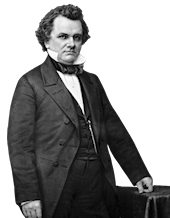
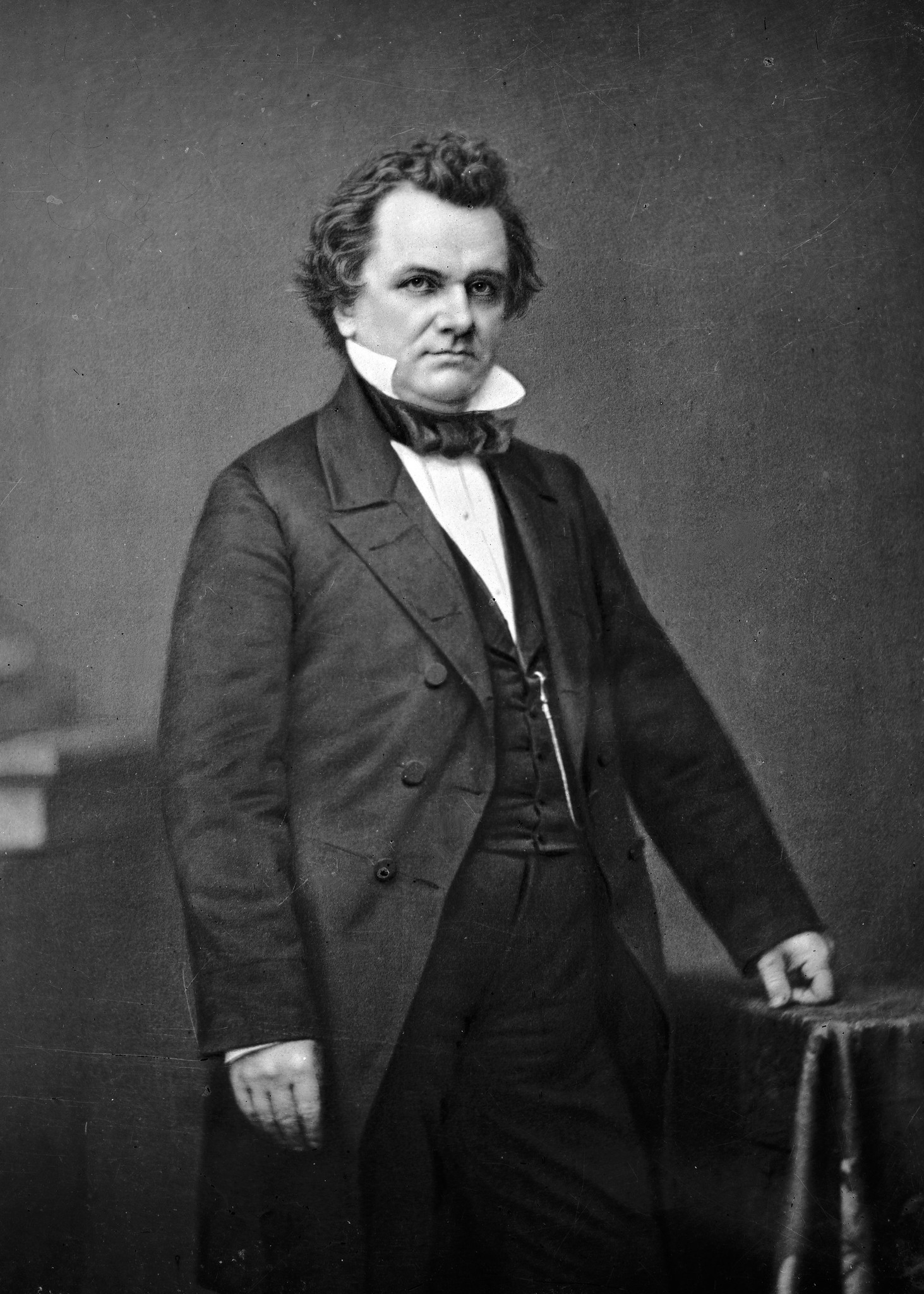
Stephen Douglas

Civil War Day-by-Day

Civil War Portraits—Leaders, Influencers, and the Incidentally Important #008

“When all propositions of peace fail, and a war of aggression is proclaimed, there is but one course left for the patriot, and that is to rally under that flag which has waved over the Capitol from the days of Washington, and around the government established by Washington, Hamilton, and their compeers.” (April 25, 1861)

Stephen Arnold Douglas, the "Little Giant"

Stephen Arnold Douglas (April 23, 1813 – June 3, 1861) was an American politician and lawyer from Illinois. He was one of two Democratic Party nominees for president in the 1860 presidential election, which was won by Republican Abraham Lincoln. Douglas had previously defeated Lincoln in the 1858 United States Senate election in Illinois, known for the Lincoln–Douglas debates. During the 1850s, Douglas was one of the foremost advocates of popular sovereignty, which held that each territory should be allowed to determine whether to permit slavery within its borders. Douglas was nicknamed the “Little Giant” because he was short in physical stature but a forceful and dominant figure in politics.

After the 1860 presidential election, Douglas returned to the Senate, where he sought to prevent a break-up of the United States. He joined a special committee of thirteen senators, led by John J. Crittenden, which sought a legislative solution to the growing sectional tensions between the North and South. He supported the Crittenden Compromise, which called for a series of constitutional amendments that would enshrine the Missouri Compromise line in the constitution, but the Crittenden Compromise was defeated in committee by a combination of Republicans and Southern extremists. As late as Christmas 1860, Douglas wrote to Alexander H. Stephens and offered to support the annexation of Mexico as slave territory to avert secession.

Douglas unsuccessfully sought President-elect Lincoln’s support for the Peace Conference of 1861, another attempt to head off secession. Lincoln was unwilling to support the conference, but Douglas described his meeting with Lincoln as “peculiarly pleasant.”  Douglas praised Lincoln’s first inaugural address, describing it as “a peace offering rather than a war message” to the South.

After the Confederate attack on Fort Sumter in April 1861, Lincoln decided to proclaim a state of rebellion and call for 75,000 troops to suppress it. Douglas met privately with Lincoln, looked over the proclamation before it was issued and endorsed it. He suggested only one change: Lincoln should call for 200,000 troops, not just 75,000. “You do not know the dishonest purposes of those men as well as I do,” he said. To a friend, he stated, “I’ve known Mr. Lincoln a longer time than you have, or than the country has. He’ll come out all right, and we will all stand by him.” In late April, Douglas departed Washington for the Midwest, where he rallied support for the Union cause.

Douglas was struck by illness in May 1861 and was confined to his bed. Though his supporters initially expected a quick recovery, Douglas contracted typhoid fever and suffered from several other afflictions. He died on June 3, coincidentally on the same day as the Battle of Philippi, the first skirmish of the American Civil War. On June 4, Secretary of War Simon Cameron issued a circular to Union armies, announcing “the death of a great statesman … a man who nobly discarded party for his country”. (Read more at Wikipedia)

Library of Congress Prints & Photographs

Title: Stephen A. Douglas
Date Created/Published: [between 1855 and 1865]
Medium: 1 negative : glass, wet collodion.
Reproduction Number: LC-DIG-cwpbh-00880 (digital file from original neg.)
Rights Advisory: No known restrictions on publication.
Call Number: LC-BH82- 2460 A [P&P]
Repository: Library of Congress Prints and Photographs Division Washington, D.C. 20540 USA
Notes:
…..Title from unverified information on negative sleeve.
…..Credit line: Brady-Handy photograph collection, Library of Congress, Prints and Photographs Division.
…..Purchase; Alice H. Cox and Mary H. Evans; 1954.
…..General information about the Brady-Handy photograph collection is available at https://hdl.loc.gov/loc.pnp/pp.brhc
…..Forms part of: Brady-Handy photograph collection (Library of Congress).

https://www.loc.gov/pictures/item/2017895894/
___________
Mike’s notes:

Note – This image has been digitally adjusted for one or more of the following:
– fade correction,
– color, contrast, and/or saturation enhancement
– selected spot and/or scratch removal
– cropped for composition and/or to accentuate subject

0 comments

“On our return we saw the whole 7th Regt drawn up on the Ave near the National.”—Horatio Nelson Taft

Diary of US patent clerk Horatio Nelson Taft.

THURSDAY, APRIL 25, 1861.

The 7th Regt is at last here, came at 12 o’clock and created much enthusiasm. We breathe a little free now. Self and wife attended the funeral of Mr Danl Douglass at 4 o’clock and then went to the Ave and took an Onibus and went to the Capitol. The Mass Regt were drilling in the East grounds. There were many spectators on foot and in carriages. The Prests Carriage with Mrs Lincoln and Mr Seward with himself, wife & son. On our return we saw the whole 7th Regt drawn up on the Ave near the National. We stoped at Gautiers and took tea. Got home at 9 c.


The three diary manuscript volumes, Washington during the Civil War: The Diary of Horatio Nelson Taft, 1861-1865, are available online at The Library of   Congress.

0 comments

Arrival of Troops from South Carolina.

Richmond Enquirer

Richmond Enquirer,
April 25, 1861

Brigadier General M.D. Bonham, at the head of five hundred troops from South Carolina arrived here last evening by the Southern train. A large crowd of citizens and an escort of Virginia troops awaited them at the depot. Cheer after cheer greeted the representatives of the gallant Palmetto State. As we looked along their ranks, we were struck with their bold and manly appearance. Every man of them looked a hero; dark and sunburnt from exposure, their fine countenances lighted up with martial ardor, their fine physique, their perfect equipments, all denoted an invincible and heroic race of men. The Virginians cheered South Carolina, and the South Carolininans, in return , heartily cheered for the Old Dominion.

Gen. Bonham and staff have taken up their quarters at the Exchange Hotel. Their troops, we understand, are provided with comfortable accommodations at the new alms House, but recently erected.

0 comments

Military—A Suggestion.

Civil War Day-by-Day
1860s newsprint

 Daily Advocate
(Baton Rouge, LA),
April 25, 1861

The war spirit manifested in our noble little parish is highly creditable to its patriotism. Recruiting goes on rapidly. The Pelican Rifles now overnumber the quota required to fill a company. And the Creole Guards will complete its ranks in a few days. Capt. Rauhman’s (German) company of National Guards are drilling regularly and receiving accessions to their numbers. This company is composed entirely of our adopted citizens, and in a short time will be ready to prove, on the tented field, their devotion to the land of their adoption. In the next battle the Baton Rouge boys will give the Yankees a taste of their valor which they will remember for many a long day.

Notwithstanding this cheering display of eagerness to aid their country’s cause, manifested among our citizens of all classes, a more fervid impulse would be infused in the military movement if some reliable arrangements could be made to support the families of poor men during their engagement in the service of their country. We have heard of quite a number of this class, ardent to partake of the patriotic duties of a campaign, but restrained, on account of the daily necessities of their families, to enlist. Their daily labor is the only support of their wives and children. They cannot go to the wars and leave those they love best to starve or subsist upon uncertain charities. While anxious to serve their country, the dearest ties known to the human heart bind them to the ministries of household needs. Now, in order to allow such a participancy in the labors of patriotism, to the same extent enjoyed by their wealthier fellow-citizens, let some special, certain and reliable fund be set aside for the support of their families. And the best and quickest way of raising such a fund is for our Police Jury to assemble as soon as possible and appropriate a suitable account, say $20,000 out of the general treasury of the parish. The fund might be raised by private subscription, but that method would be very slow, uncertain and unequal. If the parish assumed guardianship over poor soldiers’ families, its charities would be sure, punctual and ennobling; if from private hands unreliable and probably vexatious to all concerned. Besides, the public source of relief would be replenished by a fair and impartial assessment. In fact, it would be derived from a general taxation, which is the surest and most equitable mode of creating a fund for a purpose so purely public and necessary as this.

0 comments

From Johnson County.

Civil War Day-by-Day

Arkansas True Democrat,
April 25, 1861

Clarksville, Ark., April 20, 1861.

Messrs. Editors: This has been a glorious day for Johnson county. By appointment the people from the country flocked into town in large numbers; the ladies were all out, the business houses were closed; in short, every body and his family were out to see the presentating of a large and handsome southern flag by Miss Sallie Robinson, who represented the ladies, to Dr. J. P Mitchell, the representative of the people of Johnson county. After the presentation of the flag of the Confederate States of America was hoisted to the masthead of a pole one hundred and two feet high, and was greeted with the enthusiastic cheers of the people—the salutes of the military and the firing of anvil artillery.—Patriotic speeches were delivered by our legislators, Ward, Robinson and Cravens, and by our delegates, Batson and Floyd, amidst the waving of handkerchiefs and hats, three hearty huzzas were given for the Southern Confederacy. Soon afterwards dispatches were received announcing that Virginia had seceded, and that Kentucky, North Carolina, Virginia, Tennessee and Missouri had emphatically refused to furnish a single man, or any number of men, to fight under the black flag of abolitionism. I never have seen people so deeply excited—cheers loud and long rent the air, the artillery was again brought out and round after round was fired until the sky was almost darkened with the smoke.—One more star was added to the flag and it was again sent home, where it waves over people who are determined to “do or die.”

0 comments

The Military.

Richmond Enquirer

Richmond Enquirer,
April 25, 1861

All day yesterday, and up to a late hour last night, the streets were thronged with the gallant volunteers of Virginia who are pouring into the camp at the Fair Grounds near this city, in great numbers. Everywhere the gallant sons of Virginia are responding to the call of the Governor. As troop after troop, company after company, filed by our office, we were struck with the full ranks, the fine appearance, and the soldierly bearing of the men. We cannot particularize any company, where all appeared so well. The volunteer companies, as they arrive, are being mustered into regiments; and, from present appearances, before the week is out, we shall have an imposing army in camp before the city. Who can doubt that the glorious Old Dominion will put herself in the front rank of States in this second struggle for liberty, as she did in that which secured our independence of the Mother country!

All honor to the true men who rush to arms at their country’s call.

0 comments

Correspondence of the Richmond Dispatch.

Civil War Day-by-Day

Richmond Dispatch,
April 25, 1861

Town more quiet — Making tents — New Company — Drilling every night — Suspension of papers — Messenger from Harper’s Ferry — Arrest of a suspicious character, &c.
Staunton, April 21.
Our mountain town is more quiet since the leaving of the various volunteer companies of which I wrote you. But the enthusiasm among the people is on the increase. Another volunteer company, making the fourth volunteer company of the place, is now being raised by Col. John L. Peyton, who will drill them a la Zouave. Our armory is used every night now for drilling purposes, and our militia seem determined to have whatever benefit there may be in good training. These drills are really pleasant re-unions, and an amount of good fellowship prevails that is unusual any where in times of ‘”piping peace.”’ Set that down as one of the benefits of war,
One of our town papers (the Vindicator) is suspended, the hands being ‘”off to the war.”’ I learn that the Spectator is likely to suspend from a similar cause.
I wrote you of the young ladies making bandages and lint. The ladies at large are now about engaging in the manufacture of tents and clothing for the new companies.—Our two regular volunteer companies were well provided by the ladies with tents some months ago. How to make a tent was the question. After some inquiries, a Prussian was found who had been in the European wars all his life, and was perfectly as fait.—The model made by him will be erected on the Court green to-morrow, that being County Court day, and an effort will be made to get a handsome appropriation from the Court. Citizens have already subscribed liberally.—R. H. Phillips, Esq., is a leading man in all these matters.
It is reported that one or more of our ministers will go as Chaplains, or otherwise. But to-day our churches were open as usual, and crowds improved the beautiful day to attend. Where I worshiped, the people seemed unusually solemn and tender in view of the state of things, and especially of the places made vacant by those off at Harper’s Ferry, or perhaps engaged in deadly conflict at Washington or Baltimore. During the hour of service, Mr. Points, of this town, a special messenger from Harper’s Ferry, arrived in town with sealed orders, and bringing letters from our soldiers. It looked like war times indeed, to see these letters delivered during sermon. Answers had to be ready by 2 o’clock, when the messenger would start back. He left Winchester at 4 o’clock yesterday afternoon, drove all night, pressed three horses en route, also a buggy, his own breaking down. By-the-way, pressing a horse has now become common in this region. Mr. Points says they have two thousand of the best arms, and that some twenty thousand were burnt by the Federal troops. He says the country between this and Winchester is alive with soldiers.
As I came from church this morning, I witnessed the arrest of a suspicious character, who had been tampering with negroes, and said he was going to Lincoln. He is in jail. All such persons, their guilt being established, should be unceremoniously swung up as examples.
Notice was given in all the churches to-day, requesting each family to observe from 6 to 7 A. M., as a season of special prayer. This was adopted as preferable to a daily union prayer meeting, which was first proposed. Our people at large will be ready to fight. O, let them not forget to pray. How precious and appropriate are some of the Psalms now!
I met yesterday a prominent citizen of Richmond who had brought his family to this town as to a place of safety. He said many ladies were coming here soon from lower Virginia. This may be a peculiarly safe place. I believe it is as safe as any. But Gen. Kenton Harper, of this county, months ago expressed the opinion that from Winchester to Staunton would be one of the battle-grounds. However this may be, when I go, I shall leave my family here.
It has been suggested to move the works at Harper’s Ferry and the Virginia workmen there, to some safe place beyond this — say Clifton Forge — and go right on manufacturing arms. I commend this to his Excellency, who knows all about it. Arms will now be a great want. By-the-way, we are all proud of our Governor now.

Subscriber.

P. S.—Since the above was written, another messenger has arrived from Harper’s Ferry. The troops are expecting an attack from Ohio men. These men tried to take the cars at Wheeling, but were not allowed to do so. They then went to Pittsburgh. Our men at Harper’s Ferry are ready for them.

0 comments

Public Meeting in Pope County.

Civil War Day-by-Day

Arkansas True Democrat,
April 25, 1861

Norristown, Ark., April 16, 1861.

The citizens of this and surrounding vicinity on hearing of the commencement of the contemplated and attempted reinforcement of Fort Sumter, and at the same time of its bombardment and fall into the hands of the Confederate States, met in mass meeting to give vent and expression to their feelings, which was done in the following manner: First, the erection of a pole with a large flag of the Confederate States floating proudly to the breeze. This was done in the public square amidst the roar of platoons and thunders of applause. This being done, a large company of ladies and gentlemen repairing to a suitable house decorated for the occasion by mottoes and emblems indicative of our feelings and sympathies for the southern confederacy.

0 comments