Campaigning Axioms.

News of the Day
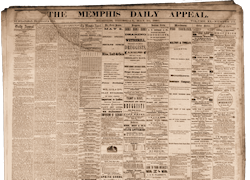
Memphis Daily Appeal
Tennessee
May 8, 1861
 
1. One well fed, well equipped, well appointed brigade is worth two that are ill provided.
2. In active service, three men die of undue exposure, bad food, and their own imprudences, where one is killed by shot or stab.
3. An easy, rational, nicely fitting uniform, with warm, substantial blanket, broad soled boots or shoes and good woolen socks, will more conduce to efficiency in service than superiority in weapons.
4. The lightest possible head covering, with a good look out for ventilation, will add a tenth to the distance a regiment can march in a day, while insuring increased comfort.
5. A small cotton handkerchief, or half a yard of the commonest sheeting, moistened with water in the morning and again at noon, and worn between the hat and the head, will protect the soldier from sun-stroke, and greatly diminish the discomfort and fatigue of a hot day’s march.
6. A flat bottle, covered with woolen cloth, the cloth being moistened and the bottle filled with water, in the morning, will keep reasonably cool throughout a long, hot day.
7. Of all villainous concoctions, the liquors sold by camp-followers are the most detestable and dangerous. They are more deadly than rifled cannon, and are sure to be taken just when they should not be. Every soldier who means to do his duty to his country should insist that all venders of these poisons be drummed out of camp.
8. A good cook to each company, who knows how to make salt meat juicy and tender, and to make it ready whenever and wherever it may be wanted, is equal to two doctors and four extra combatants.
9. Officers who love and care for their men while in repose, never have to complain of their conduct when in action.
10. A soldier whose heart is in the cause he fights for, is worth two who fight for their pay.
0 comments

“Troops marching and parading all over the City every night. Music heard all over.”—Horatio Nelson Taft

Diary of US patent clerk Horatio Nelson Taft.

WEDNESDAY 8

Another fine bright day. Have been bothered some with ladies at the Pat office calling upon me. I might perhaps better say interupted. They all want to see Gov Sprague of R.I. I took in five and introduced them. Then into the quarters upstairs, then into the Surgeon Genls quarters, then into the Hospital. Juliet renewed the Govs Boquet of flowers. Went after dinner to the Presidents grounds with wife, Juliet & H N Jr. Went from there to the Pat office to see the RI Regt parade. Avee full of people, mostly soldiers. Troops marching and parading all over the City every night. Music heard all over.


The three diary manuscript volumes, Washington during the Civil War: The Diary of Horatio Nelson Taft, 1861-1865, are available online at The Library of   Congress.

0 comments

Confederate Flag Envelopes.

News of the Day

Memphis Daily Appeal
Tennessee
May 8, 1861

We have received from our friend R. C. Hite, a pack of the “latest style” envelopes. They contain a beautiful colored engraving of the Confederate flag, with nine stars in a circle, and one in the center, crossed with the letter T, to represent Tennessee.

Mr. Hite has also on hand ribbon badges with a similar device on them—inscribed with the following mottoes—”FOR OUR RIGHTS WE FIGHT!” and “DEATH TO THE INVADER!”

0 comments

The war is arranging its self in and about Washington.

Journal of Meta Morris Grimball
Meta Morris Grimball

8 May

       The boat has gone off to Town, and carried our numerous things and some of the servants and Elizabeth, Ella, & Lotty go off on Thursday and we the next day, Lewis takes them down and returns the next day to remain up here until Monday. He is now to be ordered on Coast duty. Bing Smith hopes to be Col. of the Regiment, and Lewis to be Captain, these young men have been all the winter in a state of great expectation and generally disappointed.—I wish they may get something to do, and feel more quiet. The war is arranging its self in and about Washington.

       Virginia has Gen. Lee in charge of her forces. There is not a great desire to fly to her aid, in fact we are all to be subjugated and must first secure our honors. Every thing progresses slowly, but after the success of Sumpter, I hope successfully. The points now to be attacked are all in Virginia except Fort Pickens, in Florida.—

       This is the 3 winter we have passed in this very comfortable establishment and I am I hope sensible of the very great advantage of this for we formerly lived in a rickity old house; still there was a great deal of happiness there, shewing that being all together & loving each other, secures happiness, independent of wealth.—

       We are to dine at Papa’s to day , a last meeting for this season. Papa’s case seems to progress in the most uncomfortable manner. He had a conversation with Simons at the Agricultural dinner, which he wished Lewis to witness about, and as L. is friendly with Simonds it was not very pleasant. In this talk Papa spoke in a very irritated way to Simons and in consequence of it he had forbidden any negro to pass through the canal, if they do so, he will punish them.—I think if he had been kept at the North his case would have progressed much better, he does not understand about business, and in not conciliating in his manners.—

0 comments

Rebel War Clerk

Civil War Day-by-Day
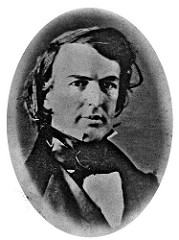
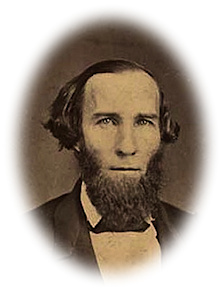
A likeness of Jones when he was editor and majority owner of the Daily Madisonian during President John Tyler’s administration.

MAY 8th.– The Convention has appointed five members of Congress to go to Montgomery: Messrs. Hunter, Rives, Brockenborough, Staples, and ——. I have not yet seen Mr. Hunter; he has made no speeches, but no doubt he has done all in his power to secure the passage of the ordinance, in his quiet but effective way. To-day President Tyler remarked that the politicians in the Convention had appointed a majority of the members from the old opposition party. The President would certainly have been appointed, if it had not been understood he did not desire it. Debilitated from a protracted participation in the exciting scenes of the Convention, he could not bear the fatigue of so long a journey at this season of the year.

0 comments

The New Batteries Erected on Morris Island for the Defense of Charleston Harbor and the Reduction of Fort Sumter

Frank Leslie’s Illustrated Newspaper

The New Batteries Erected on Morris Island for the Defense of Charleston Harbor and the Reduction of Fort Sumter
Frank Leslie’s Illustrated Newspaper, March 30, 1861

0 comments

Begging.

News of the Day

Memphis Daily Appeal
Tennessee
May 8, 1861

Another begger was arrested in the streets yesterday. She was a stout, hearty woman, and was seen by the police to enter many places, and accost many persons asking for charity to a distressed woman. In the evening she became so much intoxicated that it became necessary to arrest her; a search revealed a nice whisky bottle stowed away in her pocket.

0 comments

Chaplaincy, etc.

War of the Rebellion: from the Official Records of the Union and Confederate Armies and Navies
Lynchburg, Va., May 8, 1861.
Hon. L. P. Walker,
Montgomery, Ala.:
My Dear General: The Reverend Mr. Chadick, a member of Captain Tracy’s company, now encamped here, requests me to mention his name favorably to you for the chaplaincy of the Fourth Regiment of Alabama Volunteers. He is under the impression provision for such appointments has been made by a late act of Congress. I recommend him willingly because he is actuated in coming hither by patriotic feeling and for the further reason that his appointment, it is believed, is desired by a large number of the regiment. I am working very hard mustering in troops as fast as possible after their arrival. I find some of them very deficient in arms and accouterments and in tents. They are raw, wild, undisciplined Democrats, on a frolic, as many of them think, and commanded in many instances by inefficient and inexperienced officers. I must do our Third Alabama Regiment the justice to except them from such a charge. It is composed of the very best material, and there are eight out of the ten companies well disciplined and well officered. I understand there is great dissatisfaction in Virginia because of the military condition of the State. No one seems to have control, and consequently there are conflicting commands. It is thought Lee is too slow and fearful of responsibility, and I know from the orders sent from Richmond to State officers here that there is required some man who will bring order out of confusion. I wrote you a line a few days since which I trust has been received. Will you bear in mind the request then made as to my official connection when the special duty assigned me at this place shall have ended?
Asking to be presented respectfully and kindly to Mrs. Walker, although she would not say farewell to me,
I am, respectfully and truly, your friend,
H. L. CLAY.
0 comments

Civil War Day-By-Day

Civil War Day-by-Day

May 8, 1861

A Chronological History of the Civil War in America1

  • Governor of Ohio made a call for 100,000 men, to be held as a force of reserved militia.

  1. A Chronological History of the Civil War in America by Richard Swainson Fisher, New York, Johnson and Ward, 1863
0 comments

View of Terre-Plein and parapet of Eastern Flank of Fort Sumter also showing traverse constructed to counteract enfilading fire. Charleston Harbor, S.C.

War of the Rebellion: from the Official Records of the Union and Confederate Armies and Navies

View of Terre-Plein and parapet of Eastern Flank of Fort Sumter also showing traverse constructed to counteract enfilading fire. Charleston Harbor, S.C.
Pl. CXXI (121): Views of forts in Charelston Harbor (SC) Atlas

Title
The War of the Rebellion: a compilation of the official records of the Union and Confederate armies.
Other Title
Official records of the Union and Confederate armies
Atlas to Accompany the Official Records (Image 146 of 203)

___________
Mike’s notes:

Note – This image has been digitally adjusted for one or more of the following:
– fade correction,
– color, contrast, and/or saturation enhancement
– selected spot and/or scratch removal
– cropped for composition and/or to accentuate subject

0 comments

North-Western angle of Fort Moultrie April 16th, 1861, Charleston Harbor, S.C.

War of the Rebellion: from the Official Records of the Union and Confederate Armies and Navies

North-Western angle of Fort Moultrie April 16th, 1861, Charleston Harbor, S.C.
Pl. CXXI (121): Views of forts in Charelston Harbor (SC) Atlas

Title
The War of the Rebellion: a compilation of the official records of the Union and Confederate armies.
Other Title
Official records of the Union and Confederate armies
Atlas to Accompany the Official Records (Image 146 of 203)

___________
Mike’s notes:

Note – This image has been digitally adjusted for one or more of the following:
– fade correction,
– color, contrast, and/or saturation enhancement
– selected spot and/or scratch removal
– cropped for composition and/or to accentuate subject

0 comments

Channel Face and South-Western angle of the Ramparts of Fort Moultrie, April 16th, 1861, Charleston Harbor, S.C.

War of the Rebellion: from the Official Records of the Union and Confederate Armies and Navies

Channel Face and South-Western angle of the Ramparts of Fort Moultrie, April 16th, 1861, Charleston Harbor, S.C.
Pl. CXXI (121): Views of forts in Charelston Harbor (SC) Atlas

Title
The War of the Rebellion: a compilation of the official records of the Union and Confederate armies.
Other Title
Official records of the Union and Confederate armies
Atlas to Accompany the Official Records (Image 146 of 203)

___________
Mike’s notes:

Note – This image has been digitally adjusted for one or more of the following:
– fade correction,
– color, contrast, and/or saturation enhancement
– selected spot and/or scratch removal
– cropped for composition and/or to accentuate subject

0 comments

Parade of Fort Moultrie showing south-western portion of Soldiers barracks &c April 16th, 1861, Charleston Harbor, S.C.

War of the Rebellion: from the Official Records of the Union and Confederate Armies and Navies

Parade of Fort Moultrie showing south-western portion of Soldiers barracks &c April 16th, 1861, Charleston Harbor, S.C.
Pl. CXXI (121): Views of forts in Charelston Harbor (SC) Atlas

Title
The War of the Rebellion: a compilation of the official records of the Union and Confederate armies.
Other Title
Official records of the Union and Confederate armies
Atlas to Accompany the Official Records (Image 146 of 203)

___________
Mike’s notes:

Note – This image has been digitally adjusted for one or more of the following:
– fade correction,
– color, contrast, and/or saturation enhancement
– selected spot and/or scratch removal
– cropped for composition and/or to accentuate subject

0 comments

Western Barracks Fort Moultrie, seen from parapets showing the back of the buildings, April 16th, 1861, Charleston Harbor, S.C.

War of the Rebellion: from the Official Records of the Union and Confederate Armies and Navies

Western Barracks Fort Moultrie, seen from parapets showing the back of the buildings, April 16th, 1861, Charleston Harbor, S.C.
Pl. CXXI (121): Views of forts in Charelston Harbor (SC) Atlas

Title
The War of the Rebellion: a compilation of the official records of the Union and Confederate armies.
Other Title
Official records of the Union and Confederate armies
Atlas to Accompany the Official Records (Image 146 of 203)

___________
Mike’s notes:

Note – This image has been digitally adjusted for one or more of the following:
– fade correction,
– color, contrast, and/or saturation enhancement
– selected spot and/or scratch removal
– cropped for composition and/or to accentuate subject

0 comments

View of Terre-Plein of the Gorge of Fort Sumter showing the guns on Barbette, April 15th, 1861, Charleston Harbor, S.C.

War of the Rebellion: from the Official Records of the Union and Confederate Armies and Navies

View of Terre-Plein of the Gorge of Fort Sumter showing the guns on Barbette, April 15th, 1861, Charleston Harbor, S.C.
Pl. CXXI (121): Views of forts in Charelston Harbor (SC) Atlas

Title
The War of the Rebellion: a compilation of the official records of the Union and Confederate armies.
Other Title
Official records of the Union and Confederate armies
Atlas to Accompany the Official Records (Image 146 of 203)

___________
Mike’s notes:

Note – This image has been digitally adjusted for one or more of the following:
– fade correction,
– color, contrast, and/or saturation enhancement
– selected spot and/or scratch removal
– cropped for composition and/or to accentuate subject

0 comments

Officers Quarters, Eastern Portion of Parade, Fort Moultrie, April 16th, 1861, Charleston Harbor, S.C.

War of the Rebellion: from the Official Records of the Union and Confederate Armies and Navies

Officers Quarters, Eastern Portion of Parade, Fort Moultrie, April 16th, 1861, Charleston Harbor, S.C.
Pl. CXXI (121): Views of forts in Charelston Harbor (SC) Atlas

Title
The War of the Rebellion: a compilation of the official records of the Union and Confederate armies.
Other Title
Official records of the Union and Confederate armies
Atlas to Accompany the Official Records (Image 146 of 203)

Mike’s notes:

Note – This image has been digitally adjusted for one or more of the following:
– fade correction,
– color, contrast, and/or saturation enhancement
– selected spot and/or scratch removal
– cropped for composition and/or to accentuate subject

0 comments

Virginia admitted to CSA

War of the Rebellion: from the Official Records of the Union and Confederate Armies and Navies

AN ACT to admit the Commonwealth of Virginia as a member of the Confederate States of America.

The Commonwealth of Virginia having, in a convention of her people, ratified and adopted the Constitution for the Provisional Government of the Confederate States of America: Therefore,
The Congress of the Confederate States of America do enact, That the Commonwealth of Virginia be, and is hereby, admitted as a member of the said Confederate States, upon an equal footing with the other Confederate States, under the Constitution for the Provisional Government of the same.
Approved May 7, 1861.
0 comments

Barracks on North Face of Parade, Fort Moultrie, April 16th, 1861, Charleston Harbor, S.C.

War of the Rebellion: from the Official Records of the Union and Confederate Armies and Navies

Barracks on North Face of Parade, Fort Moultrie, April 16th, 1861, Charleston Harbor, S.C.
Pl. CXXI (121): Views of forts in Charelston Harbor (SC) Atlas

Title
The War of the Rebellion: a compilation of the official records of the Union and Confederate armies.
Other Title
Official records of the Union and Confederate armies
Atlas to Accompany the Official Records (Image 146 of 203)

___________
Mike’s notes:

Note – This image has been digitally adjusted for one or more of the following:
– fade correction,
– color, contrast, and/or saturation enhancement
– selected spot and/or scratch removal
– cropped for composition and/or to accentuate subject

0 comments

Make them enlist for the war.

War of the Rebellion: from the Official Records of the Union and Confederate Armies and Navies
New Orleans, May 7, 1861.
L. P. Walker:
You called upon me to raise 8,000 twelve-months’ volunteers, to be drilled, equipped, and held in readiness the most perfect, and that the emergency was so pressing that my attention was particularly directed to the thorough preparation of these men, especially in regard to instant capacity to move. Four thousand have been in camp, 1,000 have gone to Virginia, 1,000 will leave in a day or two, and 2,000 remain in camp. Now you ask me to change the terms of enlistment of the remaining two regiments, if possible, and make them enlist for the war. This I will not do unless you positively refuse them for twelve months. When you so refuse, I will make your proposition to them, and if declined, I will immediately disband them, to the great detriment of the service, and the responsibility will not rest on me.
THO. O. MOORE,
Governor.
___________
Montgomery, May 7, 1861.
Governor Thomas O. Moore,
New Orleans:
I think you are making an objection for the troops which they will not make for themselves. They will be as willing to muster in for the war as for twelve months. Try them and see.
L. P. WALKER.
0 comments

South-Western angle and face of Fort Moultrie April 16th, 1861, Charleston Harbor, S.C.

News of the Day

South-Western angle and face of Fort Moultrie April 16th, 1861, Charleston Harbor, S.C.
Pl. CXXI (121): Views of forts in Charelston Harbor (SC) Atlas

Title
The War of the Rebellion: a compilation of the official records of the Union and Confederate armies.
Other Title
Official records of the Union and Confederate armies
Atlas to Accompany the Official Records (Image 146 of 203)

___________
Mike’s notes:

Note – This image has been digitally adjusted for one or more of the following:
– fade correction,
– color, contrast, and/or saturation enhancement
– selected spot and/or scratch removal
– cropped for composition and/or to accentuate subject

0 comments

Manufactures of arms and of powder

War of the Rebellion: from the Official Records of the Union and Confederate Armies and Navies
Confederate States of America, War Department,
Montgomery, Ala., May 7, 1861.
Hon. Howell Cobb,
President of the Congress:
Sir: In answer to the inquiry contained in the resolution adopted by the Congress May 4, asking whether “any measures have been taken to promote and induce manufactures of arms and of powder within the States of this Confederacy or elsewhere, ” I have to state that until recently reliance was naturally placed on extensive orders to Northern factories of powder for a supply of that material. As soon, however, as it became evident that this resource could no longer be relied on, the attention of the Department was turned toward obtaining supplies of saltpeter, the only mineral constituent of powder which could be obtained from the soil of this country. Information having reached me that deposits of nitrous earth existed in certain localities in North Alabama, an agent, Mr. Riddle, has been dispatched to examine several caves on Little Bear Creek, in Franklin County, and another in Blount County. There is good reason to believe that his researches will be successful. Ample inducements have been offered to Mr. Riddle, and will be held out to others, to engage in the production of niter in these localities should the deposits warrant it.
It was not known to the Department that powder-works existed anywhere within the limits of the Confederate States until recently. A firm of powder manufacturers, whose mill is situated twenty-three miles from Nashville, on the south bank of the Cumberland River, have within a few days past offered their services. They state that their mill can, in thirty or forty days, be arranged so as to enable them to produce 1,000 pounds of powder per day. They have a small stock of brimstone on hand, but no saltpeter. As soon as the saltpeter and sulphur now understood to be in possession of the State of Georgia shall be turned over to the Confederate States, it is proposed to employ this mill at once. The proprietors of these mills, Messrs. Cheatham , Watson & Co., state that, from examinations made by themselves during the Crimean war, they are satisfied that an abundant supply of saltpeter can be obtained from the caves of Middle Tennessee bordering on the Cumberland Mountains. I have requested them to send an agent at once to examine these localities at the expense, if need be, of this Government.

[continue reading…]

0 comments

More troops needed

War of the Rebellion: from the Official Records of the Union and Confederate Armies and Navies
Confederate States of America, War Department,
Montgomery, May 7, 1861.
His Excellency A. B. Moore,
Governor of Alabama, & c .:
Sir: I have the honor to inform you that two additional regiments of infantry are required, one of which shall be a rifle regiment; both, after being mustered into the Confederate service for the war, to be placed in a camp of instruction to be designated by this Department.
Very respectfully, your obedient servant,
L. P. WALKER,
Secretary of War.
0 comments

Meeting of Ladies.

Civil War Day-by-Day

Memphis Daily Appeal
Tennessee
May 7, 1861

A large quantity of clothing for the military companies is on hand, and the number of ladies having it in charge is inadequate to the work. All ladies who can assist, are requested to call at the residence of Mrs. Owen, corner of Madison and Second streets, and procure work to take to their homes, or to assist there.
Mrs. S. A. Law.
0 comments

Letter from Camp Walker.

Civil War Day-by-Day
1860s newsprint

Daily Advocate
Baton Rouge
May 7, 1861

Mr. Editor—Here we are all safe and sound, becoming rapidly initiated into the regular routine of camp life. We all find it a somewhat different matter from the holiday soldiering at home, but the duties imposed are cheerfully and bravely met. It is a somewhat strange spectacle to see young men reared amid the comforts and luxuries of home-life, doing soldiers duty, bending over the camp fire, preparing meals or boiling coffee; tears streaming from their eyes caused by villainous smoke from these same camp-fires; carrying wood and water; and when the day’s duties are ended, lying down upon a board or the bare ground, with a knapsack or stick of wood for a pillow and single blanket for a covering. These are but a portion of the hardships undergone, yet the very fact that all these are endured cheerfully by those unaccostomed to such duties, shows the unmistakable spirit aroused among the Southern people by the aggressive policy of Old Abe.
Since our departure we have been enthusiastically welcomed and cheered on our way, especially by the ladies, who, God bless them, seem most enthusiastic in our glorious cause, although with aching hearts and streaming eyes, they part, perhaps forever, from brothers, fathers and dear friends.
There are upwards of 3000 troops encamped here, and each day sees the number augmented. I counted 425 tents pitched upon these grounds, while every building is full. It is a fine spectacle when night has thrown its dark mantle over the earth, to see the numerous campfires, surrounded by groups of men or the regular rows of this city of tents, all lighted up from within, while the laugh and song and jest mingled with strains of instrumental music, and the roll of the drum are borne away on the evening breeze.
Among all the companies on the ground, the Pelican Rifles are best equipped, and thanks to the untiring preserverance and efficiency of our officers, (I say it with all due deference to our companions in arms,) the best drilled.
During our short stay in New Orleans, our marching was highly commended. Whenever we were out, the pavement, balconies and houses were thronged with stout-hearted men and fair women, who gave us many parting tokens and a heart-felt God speed.
Concerning our future movements, I can say nothing, but wherever we go, or whenever, I shall strive to drop you a line.
Yesterday, the Davis guards, a gallant body of men from Louisville, left en route for Richmond, Va. Be assured Mr. Editor, that the Pelican’s wills  never give Baton Rouge cause to be ashamed of her young first volunteer company. With many kind remembrances for dear friends at home, I remain, respectfully, etc.
W. H. T.
0 comments

A Visit with Jefferson Davis (and others)—William Howard Russell

My Diary North and South – William Howard Russell

May 9th. [7th1]—To-day the papers contain a proclamation by the President of the Confederate States of America, declaring a state of war between the Confederacy and the United States, and notifying the issue of letters of marque and reprisal. I went out with Mr. Wigfall in the forenoon to pay my respects to Mr. Jefferson Davis at the State Department. Mr. Seward told me that but for Jefferson Davis the Secession plot could never have been carried out. No other man of the party had the brain, or the courage and dexterity, to bring it to a successful issue. All the persons in the Southern States spoke of him with admiration, though their forms of speech and thought generally forbid them to be respectful to any one.

There before me was “Jeff Davis’ State Department”—a large brick building, at the corner of a street, with a Confederate flag floating above it. The door stood open, and “gave” on a large hall whitewashed, with doors plainly painted belonging to small rooms, in which was transacted most important business, judging by the names written on sheets of paper and applied outside, denoting bureaux of the highest functions. A few clerks were passing in and out, and one or two gentlemen were on the stairs, but there was no appearance of any bustle in the building.

We walked straight up-stairs to the first-floor, which was surrounded by doors opening from a quadrangular platform. On one of these was written simply, “The President.” Mr. Wigfall went in, and after a moment returned and said, “The President will be glad to see you; walk in, sir.” When I entered, the President was engaged with four gentlemen, who were making some offer of aid to him. He was thanking them “in the name of the Government.” Shaking hands with each, he saw them to the door, bowed them and Mr. Wigfall out, and turning to me said, “Mr. Russell, I am glad to welcome you here, though I fear your appearance is a symptom that our affairs are not quite prosperous,” or words to that effect. He then requested me to sit down close to his own chair at his office-table, and proceeded to speak on general matters, adverting to the Crimean War and the Indian Mutiny, and asking questions about Sebastopol, the Redan, and the Siege of Lucknow.

I had an opportunity of observing the President very closely: he did not impress me as favorably as I had expected, though he is certainly a very different looking man from Mr. Lincoln. He is like a gentleman—has a slight, light figure, little exceeding middle height, and holds himself erect and straight. He was dressed in a rustic suit of slate-colored stuff, with a black silk handkerchief round his neck; his manner is plain, and rather reserved and drastic; his head is well formed, with a fine full forehead, square and high, covered with innumerable fine lines and wrinkles, features regular, though the cheek-bones are too high, and the jaws too hollow to be handsome; the lips are thin, flexible, and curved, the chin square, well defined; the nose very regular, with wide nostrils; and the eyes deep set, large and full—one seems nearly blind, and is partly covered with a film, owing to excruciating attacks of neuralgia and tic. Wonderful to relate, he does not chew, and is neat and clean-looking, with hair trimmed, and boots brushed. The expression of his face is anxious, he has a very haggard, care-worn, and pain-drawn look, though no trace of anything but the utmost confidence and the greatest decision could be detected in his conversation. He asked me some general questions respecting the route I had taken in the States.

I mentioned that I had seen great military preparations through the South, and was astonished at the alacrity with which the people sprang to arms. “Yes, sir,” he remarked, and his tone of voice and manner of speech are rather remarkable for what are considered Yankee peculiarities, “In Eu-rope” (Mr. Seward also indulges in that pronunciation) “they laugh at us because of our fondness for military titles and displays. All your travellers in this country have commented on the number of generals, and colonels, and majors all over the States. But the fact is, we are a military people, and these signs of the fact were ignored. We are not less military because we have had no great standing armies. But perhaps we are the only people in the world where gentlemen go to a military academy who do not intend to follow the profession of arms.”

In the course of our conversation, I asked him to have the goodness to direct that a sort of passport or protection should be given to me, as I might possibly fall in with some guerilla leader on my way northwards, in whose eyes I might not be entitled to safe conduct. Mr. Davis said, “I shall give such instructions to the Secretary of War as shall be necessary. But, sir, you are among civilized, intelligent people who understand your position, and appreciate your character. We do not seek the sympathy of England by unworthy means, for we respect ourselves, and we are glad to invite the scrutiny of men into our acts; as for our motives, we meet the eye of Heaven.” I thought I could judge from his words that he had the highest idea of the French as soldiers, but that his feelings and associations were more identified with England, although he was quite aware of the difficulty of conquering the repugnance which exists to slavery.

Mr. Davis made no allusion to the authorities at Washington, but he asked me if I thought it was supposed in England there would be war between the two States? I answered, that I was under the impression the public thought there would be no actual hostilities. “And yet you see we are driven to take up arms for the defence of our rights and liberties.”

As I saw an immense mass of papers on his table, I rose and made my bow, and Mr. Davis, seeing me to the door, gave me his hand and said, “As long as you may stay among us you shall receive every facility it is in our power to afford to you, and I shall always be glad to see you.” Colonel Wigfall was outside, and took me to the room of the Secretary of War, Mr. Walker, whom we found closeted with General Beauregard and two other officers in a room full of maps and plans. He is the kind of man generally represented in our types of a “Yankee“—tall, lean, straight-haired, angular, with fiery, impulsive eyes and manner—a ruminator of tobacco and a profuse spitter—a lawyer, I believe, certainly not a soldier; ardent, devoted to the cause, and confident to the last degree of its speedy success.

The news that two more States had joined the Confederacy, making ten in all, was enough to put them in good humor. “Is it not too bad these Yankees will not let us go our own way, and keep their cursed Union to themselves? If they force us to it, we may be obliged to drive them beyond the Susquehanna.” Beauregard was in excellent spirits, busy measuring off miles of country with his compass, as if he were dividing empires.

From this room I proceeded to the office of Mr. Benjamin, the Attorney-General of the Confederate States, the most brilliant perhaps of the whole of the famous Southern orators. He is a short, stout man, with a full face, olive-coloured, and most decidedly Jewish features, with the brightest large black eyes, one of which is somewhat diverse from the other, and a brisk, lively, agreeable manner, combined with much vivacity of speech and quickness of utterance. He is one of the first lawyers or advocates in the United States, and had a large practice at Washington, where his annual receipts from his profession were not less than £8000 to £10,000 a year. But his love of the card-table rendered him a prey to older and cooler hands, who waited till the sponge was full at the end of the session, and then squeezed it to the last drop.

Mr. Benjamin is the most open, frank, and cordial of the Confederates whom I have yet met. In a few seconds he was telling me all about the course of Government with respect to privateers and letters of marque and reprisal, in order probably to ascertain what were our views in England on the subject. I observed it was likely the North would not respect their flag, and would treat their privateers as pirates. “We have an easy remedy for that. For any man under our flag whom the authorities of the United States dare to execute, we shall hang two of their people. ” “Suppose, Mr. Attorney-General, England, or any of the great powers which decreed the abolition of privateering, refuses to recognize your flag?” “We intend to claim, and do claim, the exercise of all the rights and privileges of an independent sovereign State, and any attempt to refuse us the full measure of those rights would be an act of hostility to our country.” “But if England, for example, declared your privateers were pirates?” “As the United States never admitted the principle laid down at the Congress of Paris, neither have the Confederate States. If England thinks fit to declare privateers under our flag pirates, it would be nothing more or less than a declaration of war against us, and we must meet it as best we can.” In fact, Mr. Benjamin did not appear afraid of anything; but his confidence respecting Great Britain was based a good deal, no doubt, on his firm faith in cotton, and in England’s utter subjection to her cotton interest and manufactures. “All this coyness about acknowledging a slave power will come right at last. We hear our commissioners have gone on to Paris, which looks as if they had met with no encouragement at London; but we are quite easy in our minds on this point at present.”

So Great Britain is in a pleasant condition. Mr. Seward is threatening us with war if we recognize the South, and the South declares that if we don’t recognize their flag, they will take it as an act of hostility. Lord Lyons is pressed to give an assurance to the Government at Washington, that under no circumstances will Great Britain recognize the Southern rebels; but, at the same time, Mr. Seward refuses to give any assurance whatever, that the right of neutrals will be respected in the impending struggle.

As I was going down stairs, Mr. Browne called me into his room. He said that the Attorney-General and himself were in a state of perplexity as to the form in which letters of marque and reprisal should be made out. They had consulted all the books they could get, but found no examples to suit their case, and he wished to know, as I was a barrister, whether I could aid him. I told him it was not so much my regard to my own position as a neutral, as the vafri inscilia juris which prevented me throwing any light on the subject. There are not only Yankee ship-owners but English firms ready with sailors and steamers for the Confederate Government, and the owner of the Camilla might be tempted to part with his yacht by the offers made to him.

Being invited to attend a levée or reception held by Mrs. Davis, the President’s wife, I returned to the hotel to prepare for the occasion. On my way I passed a company of volunteers, one hundred and twenty artillerymen, and three field-pieces, on their way to the station for Virginia, followed by a crowd of “citizens” and negroes of both sexes, cheering vociferously. The band was playing that excellent quick-step “Dixie.” The men were stout, fine fellows, dressed in coarse grey tunics with yellow facings, and French caps. They were armed with smooth-bore muskets, and their knapsacks were unfit for marching, being waterproof bags slung from the shoulders. The guns had no caissons, and the shoeing of the troops was certainly deficient in soling. The Zouave mania is quite as rampant here as it is in New York, and the smallest children are thrust into baggy red breeches, which the learned Lipsius might have appreciated, and are sent out with flags and tin swords to impede the highways.

The modest villa in which the President lives is painted white—another “White House”—and stands in a small garden. The door was open. A colored servant took in our names, and Mr. Browne presented me to Mrs. Davis, whom I could just make out in the demi-jour of a moderately-sized parlour, surrounded by a few ladies and gentlemen, the former in bonnets, the latter in morning dress à la midi. There was no affectation of state or ceremony in the reception. Mrs. Davis, whom some of her friends call “Queen Varina,” is a comely, sprightly woman, verging on matronhood, of good figure and manners, well-dressed, ladylike, and clever, and she seemed a great favorite with those around her, though I did hear one of them say “It must be very nice to be the President’s wife, and be the first lady in the Confederate States.” Mrs. Davis, whom the President C. S. married en secondes noces, exercised considerable social influence in Washington, where I met many of her friends. She was just now inclined to be angry, because the papers contained a report that a reward was offered in the North for the head of the arch rebel Jeff Davis. “They are quite capable, I believe,” she said, “of such acts.” There were not more than eighteen or twenty persons present, as each party came in and staid only for a few moments, and, after a time, I made my bow and retired, receiving from Mrs. Davis an invitation to come in the evening, when I would find the President at home.

At sundown, amid great cheering, the guns in front of the State Department, fired ten rounds to announce that Tennessee and Arkansas had joined the Confederacy.

In the evening I dined with Mr. Benjamin and brother-in-law, a gentleman of New Orleans, Colonel Wigfall coming in at the end of dinner. The New Orleans people of French descent, or “Creoles,” as they call themselves, speak French in preference to English, and Mr. Benjamin’s brother-in-law labored considerably in trying to make himself understood in our vernacular. The conversation, Franco-English, very pleasant, for Mr. Benjamin is agreeable and lively. He is certain that the English law authorities must advise the Government that the blockade of the Southern ports is illegal so long as the President claims them to be ports of the United States. “At present,” he said, “their paper blockade does no harm; the season for shipping cotton is over; but in October next, when the Mississippi is floating cotton by the thousands of bales, and all our wharfs are full, it is inevitable that the Yankees must come to trouble with this attempt to coerce us.” Mr. Benjamin walked back to the hotel with me, and we found our room full of tobacco-smoke, filibusters, and conversation, in which, as sleep was impossible, we were obliged to join. I resisted a vigorous attempt of Mr. G. N. Sanders and a friend of his to take me to visit a planter who had a beaver-dam some miles outside Montgomery. They succeeded in capturing Mr. Deasy.

1 Note: In the book, this entry is placed between the 6th and 8th, though it is recorded as the 9th.   Also, the declaration of war, made in secret session of the Confederate Congress, had been made public on the 6th and appeared in the papers on the 7th.
0 comments