Clarksville, Texas
May 11, 1861
Harper’s Pictorial History of the Civil War by Alfred H. Guernsey and Henry W. Alden; copyrighted 1866 by Harper and Brothers; 1894 by Alfred H. Guernsey and Henry W. Alden; 1894 by McDonnell Bros; pub. The Puritan Press Co.; Chicago, Illinois
The Standard
Clarksville, Texas
May 11, 1861
May 11th.—At early dawn the steamer went its way through a broad bay of snags bordered with driftwood, and with steam-trumpet and calliope announced its arrival at the quay of Mobile, which presented a fringe of tall warehouses, and shops alongside, over which were names indicating Scotch, Irish, English, many Spanish, German, Italian, and French owners, Captain Maher at once set off to his plantation, and we descended the stories of the walled castle to the beach, and walked on towards the “Battle House,” so called from the name of its proprietor, for Mobile has not yet had its fight like New Orleans. The quays which usually, as we were told, are lined with stately hulls and a forest of masts, were deserted; although the port was not actually blockaded, there were squadrons of the United States ships at Pensacola on the east, and at New Orleans on the west.
The hotel, a fine building of the American stamp, was the seat of a Vigilance Committee, and as we put down our names in the book they were minutely inspected by some gentlemen who came out of the parlor. It was fortunate they did not find traces of Lincolnism about us, as it appeared by the papers that they were busy deporting “Abolitionists” after certain preliminary processes supposed to—
The citizens were busy in drilling, marching, and drum-beating, and the Confederate flag flew from every spire and steeple. The day was so hot that it was little more inviting to go out in the sun than it would be in the dog days at Malaga, to which, by-the-bye, Mobile bears some “kinder-sorter” resemblance, but, nevertheless, I sallied forth, and had a drive on a shell road by the head of the bay, where there were pretty villarettes in charming groves of magnolia, orange-trees, and lime oaks. “Wide streets of similar houses spring out to meet the country through sandy roads; some worthy of Streatham or Balham, and all surrounded in such vegetation as Kew might envy.
Many Mobilians called, and among them the mayor, Mr. Forsyth, in whom I recognized the most remarkable of the Southern Commissioners I had met at Washington. [continue reading…]
The Ranchero
Corpus Christi, Texas
May 11, 1861
May 11th, 1861.—The wanderers got home last night, the direct route was so closely guarded that they had to come across country to Vicksburg, on the Mississippi and, taking a flat-boat there, come south until they reached a landing at one of the large Louisiana plantations, where they got off. Cousin Johnnie explined the situation and tried to hire a conveyance of some kind to travel to the next town, but the planter was the soul of hospitality and entertained them until the next morning and then sent them on in his carriage to a place where a livery stable was kept. Here they purchased a horse and buggy and thus they reached home. Cousin Bettie has been at school in the North for four years, with just a short visit at Christmas.
Susan Bradford is 15 years old when this entry was made.
The Standard
Clarksville, Texas
May 11, 1861
New York Public Library Digital Collections
Sketches for Frank Leslie’s Illustrated Newspaper: 138 original drawings of the Civil War by staff artists, 1861-1864.
Lumley, Arthur (ca. 1837-1912) (Artist)
Statement of responsibility: by Arthur Lumley.
Extent: 1 drawing : pencil and ink wash ; 16.7 x 24.3 cm.
Note – This image has been digitally adjusted for one or more of the following:
– fade correction,
– color, contrast, and/or saturation enhancement
– selected spot and/or scratch removal
– cropped for composition and/or to accentuate subject matter
– straighten image
May 11, 1861
A Chronological History of the Civil War in America1
United States Lighter Conveying Troops and Stores to the Steamer Baltic Lying at Collins’ Dock, Canal Street, New York
Frank Leslie’s Illustrated Newspaper, April 20, 1861
Carrying Away the Dead and Wounded after the Fight Between the Massachusetts Regiment and the People of Baltimore
Frank Leslie’s Illustrated Newspaper, April 30, 1861.
May 10, 1861.—Great events the last month. April 12 and 13, Fort Sumter [was] attacked and taken by the South Carolina troops by order of the Government of the Confederate States at Montgomery. Sunday evening, April 14, news of Lincoln’s call for 75,000 men [was] received here with unbounded enthusiasm. How relieved we were to have a Government again! I shall never forget the strong emotions, the wild and joyous excitement of that Sunday evening. Staid and sober church members thronged the newspaper offices, full of the general joy and enthusiasm. Great meetings were held. I wrote the resolutions of the main one,—to be seen in the Intelligencer of the next week. Then the rally of troops, the flags floating from every house, the liberality, harmony, forgetfulness of party and self—all good. Let what evils may follow, I shall not soon cease to rejoice over this event.
The resolutions referred to were published in the Gazette of the 16th [of] April and in the Intelligencer of the 18th.
[The resolutions were as follows:
“Resolved, That the people of Cincinnati, assembled without distinction of party, are unanimously of opinion that the authority of the United States, as against the rebellious citizens of the seceding and disloyal States, ought to be asserted and maintained, and that whatever men or means may be necessary to accomplish that object the patriotic people of the loyal States will promptly and cheerfully furnish.
“Resolved, That the citizens of Cincinnati will, to the utmost of their ability, sustain the general Government in maintaining its authority, in enforcing the laws, and in upholding the flag of the Union.”]
FRIDAY, MAY 10, 1861.
A bright morning, but rain all day after 12 o’clock. Troops continue to arrive, 30,000 here now. They are now mostly going into camp in the suburbs of the City. Reports of large bodies of troops in Virginia indicate work near here before long. I should not be much surprised to see them on Arlington heights any morning. I hope an army will not attempt to march to Richmond. Should one do so, I believe it would be destroyed if less than fifty thousand. Went down to “Camp Anderson” Franklin Square after dinner. There was no parade on account of the wet. Filled the Aquarium again tonight.
The three diary manuscript volumes, Washington during the Civil War: The Diary of Horatio Nelson Taft, 1861-1865, are available online at The Library of Congress.
MAY 10th. – The ladies are postponing all engagements until their lovers have fought the Yankees. Their influence is great. Day after day they go in crowds to the Fair ground where the 1st S. C. Vols. are encamped, showering upon them their smiles, and all the delicacies the city affords. They wine them and cake them – and they deserve it. They are just from taking Fort Sumter, and have won historic distinction. I was introduced to several of the privates by their captain, who told me they were worth from $100,000 to half a million dollars each. The Tribune thought all these men would want to be captains! But that is not the only hallucination the North labors under, judging from present appearances; by closing our ports it is thought we can be subdued by the want of accustomed luxuries. These rich young men were dressed in coarse gray homespun! We have the best horsemen and the best marksmen in the world, and these are the qualities that will tell before the end of the war. We fight for existence – the enemy for Union and the freedom of the slave. Well, let the Yankees see if this “new thing” will pay.
8 Brevoort Place, Friday, May 10, 1861.
I am sure you will like to hear what we are all about in these times of terrible excitement, though it seems almost impertinent to write just now. Everything is either too big or too little to put in a letter. Then one can’t help remembering sometimes that you are that august being, a “Tribune’s Own,” and as unapproachable on your professional pinnacle as the ornament of the Calendar whom Georgy will persist in calling Saint Simeon Stalactites. But the dampest damper to enthusiastic correspondents on this side is the reflection that what they write as radiant truth today may be “unaccountably turned into a lie” by the time it crosses the “big water.” So it will be best perhaps not to try to give you any of my own “views” except, indeed, such views of war as one may get out of a parlor window. Not, in passing, that I haven’t any! We all have views now, men, women and little boys,![]()
from the modestly patriotic citizen who wears a postage stamp on his hat to the woman who walks in Broadway in that fearful object of contemplation, a “Union bonnet,” composed of alternate layers of red, white and blue, with streaming ribbons “of the first.” We all have our views of the war question and our plans of the coming campaign. [continue reading…]
The Sixth Regiment of Massachusetts Troops Firing into the People at the Kensington Depot, While Taking the Cars for Washington, D. C.
Frank Leslie’s Illustrated Newspaper, April 30, 1861.
While looking for more information on a Currier and Ives depiction of the bombardment of Fort Sumter that I just posted (below), I came across another version that was the same as the one just posted but
with some significant differences: Fort Sumter is shifted from the center to the right and the guns are shifted to aim accordingly. There are a number of other differences, but the rest of the layout, including the people portrayed, are very similar.
Image info:
Bombardment of Fort Sumter, Charleston Harbor, From Fort Moultrie, 12th & 13th of April, 1861
1861
Currier and Ives
Lithograph
10 x 14 in.
Chicago History Museum, Gift of Charles B. Pike
ICHi-22041
Daily Advocate
Baton Rouge
May 10, 1861
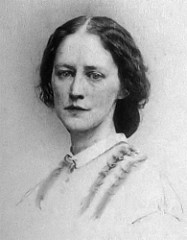
Letter from Grace Hopper.
The Eastern Clarion,
Paulding, Mississippi
May 10, 1861
A reliable gentleman, a resident of the neighborhood, informs us that when Mrs. Maria Ellington, widow lady residing near Dover, Russell county, Alabama, received and read Lincoln’s proclamation, she immediately walked across a field to where her two sons, her sole props and support, were ploughing, and urged them to start forthwith for Columbus and enlist in a military company for a campaign or the war, if necessary, for the defence and establishment of our independence. They came accordingly and enlisted, as there was then no prospect of a company being formed soon in their own county. Learning afterwards that Capt. Baker was organizing a company in Russell, for active service, they obtained an honorable discharge for the purpose of returning to join that.
The fires of patriotism which animated the women of ’76 yet burn brightly in the South; and while it continues we may be annihilated, but can never be conquered. When the history of the struggle in which we are engaged is written, such incidents will form its most pleasing episodes and illumine its brightest pages.—Columbus Sun.
Note: This particular diary entry–a document written in 1861–includes terms and topics that may be offensive to many today. No attempt will be made to censor or edit 19th-century material to today’s standards.
May 10th.—The cabin of one of these steamers, in the month of May, is not favorable to sleep. The wooden beams of the engines creek and scream “consumedly,” and the great engines themselves throb as if they would break through their thin, pulse covers of pine,—and the whistle sounds, and the calliope shrieks out “Dixie” incessantly. So, when I was up and dressed, breakfast was over, and I had an opportunity of seeing the slaves on board, male and female, acting as stewards and stewardesses, at their morning meal, which they took with much good spirits and decorum. They were nicely dressed—clean and neat. I was forced to admit to myself that their Ashantee grandsires and grandmothers, or their Kroo and Dahomey progenitors were certainly less comfortable and well clad, and that these slaves had other social advantages, though I could not recognize the force of the Bishop of Georgia’s assertion, that from slavery must come the sole hope of, and machinery for, the evangelization of Africa. I confess I would not give much for the influence of the stewards and stewardesses in Christianizing the blacks.
The river, the scenery, and the scenes were just the same as yesterday’s—high banks, cotton-slides, wooding stations, cane-brakes—and a very miserable negro population, if the specimens of women and children at the landings fairly represented the mass of the slaves. They were in strong contrast to the comfortable, well-dressed domestic slaves on board, and it can well be imagined there is a wide difference between the classes, and that those condemned to work in the open fields must suffer exceedingly.
A passenger told us the captain’s story. A number of planters, the narrator among them, subscribed a thousand dollars each to get up a vessel for the purpose of running a cargo of slaves, with the understanding they were to pay so much for the vessel, and so much per head if she succeeded, and so much if she was taken or lost. The vessel made her voyage to the coast, was laden with native Africans, and in due time made her appearance off Mobile. The collector heard of her, but, oddly enough, the sheriff was not about at the time, the United States’ Marshal was away, and as the vessel could not be seen next morning, it was fair to suppose she had gone up the river, or somewhere or another. But it so happened that Captain Maher, then commanding a river steamer called the Czar (a name once very appropriate for the work, but since the serf emancipation rather out of place), found himself in the neighborhood of the brig about nightfall; next morning, indeed, the Czar was at her moorings in the river; but Captain Maher, began to grow rich, he had fine negroes fresh run on his land, and bought fresh acres, and finally built the “Southern Republic.” The planters asked him for their share of the slaves. Captain Maher laughed pleasantly; he did not understand what they meant. If he had done anything wrong, they had their legal remedy. They were completely beaten; for they could not have recourse to the tribunals in a case which rendered them liable to capital punishment. And so Captain Maher, as an act of grace, gave them a few old niggers, and kept the rest of the cargo.
It was worth while to see the leer with which he listened to this story about himself, “Wall now! You think them niggers I’ve abord came from Africa! I’ll show you. Jist come up here, Bully!” A boy of some twelve years of age, stout, fat, nearly naked, came up to us; his color was jet black, his wool close as felt, his cheeks were marked with regular parallel scars, and his teeth very white, looked as if they had been filed to a point, his belly was slightly protuberant, and his chest was marked with tracings of tattoo marks.
“What’s your name, sir?”
“My name Bully.”
“Where were you born?”
“Me born Sout Karliner, sar!”
“There, you see he wasn’t taken from Africa,” exclaimed the Captain, knowingly. “I’ve a lot of these black South Caroliny niggers abord, haven’t I, Bully?”
“Yas, sar.”
“Are you happy, Bully?”
“Yas, sar.”
“Show how you’re happy.”
Here the boy rubbed his stomach, and grinning with delight, said, “Yummy! yummy! plenty belly full.”
“That’s what I call a real happy feelosophical chap,” quoth the Captain. “I guess you’ve got a lot in your country can’t pat their stomachs and say, ‘yummy, yummy, plenty belly full?'”
“Where did he get those marks on his face?”
“Oh, them? Wall, it’s a way them nigger women has of marking their children to know them; isn’t it, Bully?”
“Yas, sar! me ‘spose so!”
“And on his chest!”
“Wall, r’ally I do b’l’eve them’s marks agin the smallpox.”
“Why are his teeth filed ? ”
“Ah, there now! You’d never have guessed it; Bully done that himself, for the greater ease of biting his vittels.”
In fact, the lad, and a good many of the hands, were the results of Captain Maher’s little sail in the Czar.
“We’re obleeged to let ’em in some times to keep up the balance agin the niggers you run into Canaydy.”
From 1848 to 1852 there were no slaves run; but since the migrations to Canada and the personal liberty laws, it has been found profitable to run them. There is a bucolic ferocity about these Southern people which will stand them good stead in the shock of battle. How the Spartans would have fought against any barbarians who came to emancipate their slaves, or the Romans have smitten those who would manumit slave and creditor together!
To-night, on the lower deck, amid wood faggots, and barrels, a dance of negroes was arranged by an enthusiast, who desired to show how “happy they were.” That is the favorite theme of the Southerners; the gallant Captain Maher becomes quite eloquent when he points to Bully’s prominent “yummy,” and descants on the misery of his condition if he had been left to the precarious chances of obtaining such developments in his native land; then turns a quid, and, as if uttering some sacred refrain to the universal hymn of the South, says, “Yes, sir, they’re the happiest people on the face of the airth!”
There was a fiddler, and also a banjo-player, who played uncouth music to the clumsiest of dances, which it would be insulting to compare to the worst Irish jig, and the men with immense gravity and great effusion of sudor, shuffled, and cut, and heeled and buckled to each other with an overwhelming solemnity, till the rum-bottle warmed them up to the lighter graces of the dance, when they became quite overpowering. “Yes, sir, jist look at them how they’re enjoying it; they’re the happiest people on the face of the airth.” When “wooding” and firing up they don’t seem to be in the possession of the same exquisite felicity.
Daily Constitutionalist
Augusta, Georgia,
May 10, 1861
By an order of Gen. Bickly we learn that he has been laboring in Kentucky since the first of February last, principally in Louisville and has added to the order one thousand four hundred and forty-three members, five hundred and thirty four of whom have been sent to the army of the Confederate States. Two regiments are now being formed in the State to be held subject to the orders of the Governor. The order has now seventeen thousand six hundred and forty-three men in the field, and the president has no hesitation in saying that the number can be duplicated if necessity requires.
Memphis Daily Appeal
Tennessee
May 10, 1861
From the New Orleans Crescent.
Pensacola, May 4.–. . . To-day has been a day for reviewing all companies stationed at Pensacola by General Bragg; we were formed and ready for inspection at 11 o’clock, A.M., and as our music began the flag of the Crescent Rifles was fluttering in the breeze (as it is the flag of the regiment.) Every eye was riveted upon its inscription, semper peraum (always ready.) As soon as the music was through, General Bragg was presented to the different companies; he is a fine looking General. . . .
Camp Wilkins, Pittsburgh, Penn.,
Friday, May 10, 1861.
Dear Sister L.:—
I hardly know where to begin or what to write. My mind is, perhaps, in the same condition as yours–a good deal confused. It is a damp, rainy morning, so rainy that no companies will be out for drill until the weather is more favorable, so I have leisure to write. My health is tolerably good. I have been sick with a severe cold one day so I could not drill, but a wet towel cured that and I have had a turn of sick headache; beyond that I have been very well. I feel very well this morning. I had a good breakfast, had milk in my coffee, and last night we had butter.
The day I had the sick headache, I got nothing for breakfast but a piece of dry bread, and at noon we had a rice soup that was burnt so as to be nauseous. I ate a good quantity, however, and, consequently, unate it and ate no more till the next night.
We have fixed up our quarters first-rate. Four of us occupy a shed about ten feet by five feet. Plenty of lumber was furnished and we partitioned off a cabin, about half our room, and covered it all over except a little hole to crawl into. Inside we have a berth or bunk for one, and straw in the bottom for the rest, a first-rate camp. The front room we use for sitting room, parlor, reception room, reading room, writing room, etc., a place about five feet square.
We have lots of papers–New York, Philadelphia, Cincinnati, Cleveland and Pittsburgh dailies, four or five every day. I have sent some home. In the Dispatch you can see an account of our proceedings last Sunday.
I got a pass and went out into the city yesterday. I took the morning’s mail down to the office. We had about one hundred papers and forty-eight letters. Our company has more letters and papers sent and received than any other three companies in the regiment. Our company has been selected to bear the regimental flag, as ours is the best flag in the regiment. In fact, I haven’t seen a nicer flag anywhere than ours. Being about medium height, my place is very near the flag.
But I am digressing–I was going to tell you what I saw in the city. I walked through a good share of the trading part of the city, seeing the lions and big black buildings, then I went down to the river and followed that up some distance. I then jumped on one of the cars of the horse railroad and went up to the United States arsenal. I had full liberty to walk about the grounds, but I could not enter any building. It is the most beautiful I have seen this long time. The grass is about six inches high and beautiful gravel walks run through it in all directions. Shade trees in full leaf are set all around, and lilacs, which are in full bloom, are set round in tasty places. I was just picking some of them to send to you when a couple of sentinels charged bayonets on me and I let ’em alone. They said no one was allowed to pick flowers or go on the grass. All well enough, I suppose, but I wanted some. I counted two hundred and forty-four cannon lying round in the yard, about sixty ten-inch Columbiads, and the rest from twelve to sixty-four-pounders, and I should think twenty-five or thirty cords of cannon balls and bomb shells. I saw eight guns and a lot of balls that were taken in the Revolution. One of the guns was marked W. Bowen, fecit, 1747, two others ditto 1755, one 1776 and two made in Paris. I should think as many as two hundred cannon are set round about the grounds as posts. The small arms I could not see, as they are all in the buildings. They are making a gun nineteen feet long and four feet across the muzzle, to carry a fifteen-inch ball.
One of the boys who went down to old Ft. Duquesne brought up a piece of bark from a log in the old fort built more than one hundred years ago. I got a piece, which just for a curiosity I send to you.
H. B.’s enlisting is just about what I expected to hear. D. T. too, is in. Well, success to them! I have seen C. R.’s father two or three times; had an introduction. He came to my door yesterday. He said our quarters looked about as comfortable as any.
I heard yesterday that we were ordered to march on Harper’s Ferry within ten days, but as nothing has been said about it publicly in camp, I don’t much believe it. So many false rumors are about that no one knows what to believe. I think, however, that we shall leave for somewhere soon. Government is making active preparations for war. One piece of news that we received from Girard caused a good laugh in our company, viz.: that the young ladies of Girard had presented ex-Lieutenant S. with a wooden sword.
May 10.—Since writing last, I have been busy, very busy, arranging and rearranging. We are now hoping that Alexandria will not be a landing-place for the enemy, but that the forts will be attacked. In that case, they would certainly be repulsed, and we could stay quietly at home. To view the progress of events from any point will be sad enough, but it would be more bearable at our own home, and surrounded by our family and friends. With the supposition that we may remain, and that the ladies of the family at least may return to us, I am having the grounds put in order, and they are now so beautiful! Lilacs, crocuses, the lily of the valley, and other spring flowers, are in luxuriant bloom, and the roses in full bud. The greenhouse plants have been removed and grouped on the lawn, verbenas in bright bloom have been transplanted from the pit to the borders, and the grass seems unusually green after the late rains; the trees are in full leaf; every thing is so fresh and lovely. “All, save the spirit of man, is divine.”
War seems inevitable, and while I am trying to employ the passing hour, a cloud still hangs over us and all that surrounds us. For a long time before our society was so completely broken up, the ladies of Alexandria and all the surrounding country were busily employed sewing for our soldiers. Shirts, pants, jackets, and beds, of the heaviest material, have been made by the most delicate fingers. All ages, all conditions, meet now on one common platform. We must all work for our country. Our soldiers must be equipped. Our parlor was the rendezvous for our neighborhood, and our sewing-machine was in requisition for weeks. Scissors and needles were plied by all. The daily scene was most animated. The fires of our enthusiasm and patriotism were burning all the while to a degree which might have been consuming, but that our tongues served as safety valves. Oh, how we worked and talked, and excited each other! One common sentiment animated us all; no doubts, no fears were felt. We all have such entire reliance in the justice of our cause and the valor of our men, and, above all, on the blessing of Heaven! These meetings have necessarily ceased with us, as so few of any age or degree remain at home; but in Alexandria they are still kept up with great interest. We who are left here are trying to give the soldiers who are quartered in town comfort, by carrying them milk, butter, pies, cakes, etc. I went in yesterday to the barracks, with the carriage well filled with such things, and found many young friends quartered there. All are taking up arms; the first young men in the country are the most zealous. Alexandria is doing her duty nobly; so is Fairfax; and so, I hope, is the whole South. We are very weak in resources, but strong in stout hearts, zeal for the cause, and enthusiastic devotion to our beloved South; and while men are making a free-will offering of their life’s blood on the altar of their country, women must not be idle. We must do what we can for the comfort of our brave men. We must sew for them, knit for them, nurse the sick, keep up the faint-hearted, give them a word of encouragement in season and out of season. There is much for us to do, and we must do it. The embattled hosts of the North will have the whole world from which to draw their supplies; but if, as it seems but too probable, our ports are blockaded, we shall indeed be dependent on our own exertions, and great must those exertions be.
The Confederate flag waves from several points in Alexandria: from the Marshall House, the Market-house, and the several barracks. The peaceful, quiet old town looks quite warlike. I feel sometimes, when walking on King’s street, meeting men in uniform, passing companies of cavalry, hearing martial music, etc., that I must be in a dream. Oh that it were a dream, and that the last ten years of our country’s history were blotted out! Some of our old men are a little nervous, look doubtful, and talk of the impotency of the South. Oh, I feel utter scorn for such remarks. We must not admit weakness. Our soldiers do not think of [continue reading…]