MAY 21st. – Being in the same room with the Secretary, and seen by all his visitors, I am necessarily making many new acquaintances; and quite a number recognize me by my books which they have read. Among this class is Mr. Benjamin, the Minister of Justice, who, to-day, informed me that he and Senator Bayard had been interested, at Washington, in my “Story of Disunion.” Mr. Benjamin is of course a Jew, of French lineage, born I believe in Louisiana, a lawyer and politician. His age may be sixty, and yet one might suppose him to be less than forty. His hair and eyes are black, his forehead capacious, his face round and as intellectual as one of that shape can be; and Mr. B. is certainly a man of intellect, education, and extensive reading, combined with natural abilities of a tolerably high order. Upon his lip there seems to bask an eternal smile; but if it be studied, it is not a smile – yet it bears no unpleasing aspect.
American Civil War Chronicles
Armaments for the CSA—Caleb Huse, agent for purchase of foreign supplies of ordnance.
May 21, 2021
(By the end of the war, Caleb Huse would have spent £10,000,0001 on arms for the Confederacy.)
Horatio Nelson Taft
May 21, 2021
TUESDAY 21
Today the weather has been fine, quite still times in the office. Matters and business there are now assuming their usual channels, but applications for Patents have much fallen off of late. Went with Juliet up to the camp of the 7th NY Regt (“Camp Cameron”), a great crowd of spectators there. We went all round among the tents. After the Parade the soldiers had gymnastic exercises equal to a circus performance. Came back at dark, did not go down town.
The three diary manuscript volumes, Washington during the Civil War: The Diary of Horatio Nelson Taft, 1861-1865, are available online at The Library of Congress.
“Everyone expresses the greatest interest in you and your movements.”
May 21, 2021
E. fancying at first that she ought to stay behind to care for “the stuff” when J. went to the war, sent cheerful bulletins to him of home matters.
Eliza Woolsey Howland to Joseph Howland at Albany.Fishkill, May 21, 1861.
Everything goes on nicely. I have made the rounds this morning and the report is all satisfactory. Thomson has bought a very nice bay mare to take Dick’s place for $130, and a third pig, as there was too much food for the others. The men are all at work, the potatoes in and the corn will be finished tonight. Then the sodding and grading will be resumed. Mechie has bought dahlia poles and is now finishing the flower beds outside the greenhouse, which looks finely. A superb box of flowers came up this morning. . . . Everyone expresses the greatest interest in you and your movements. Moritz says the country wasn’t as “lonesome” all winter as it was the first few days of your absence. . . . I don’t doubt James will go with you, but I wouldn’t let him decide hastily. Thomson would go with you himself in a minute but for his family. . . . I have had a very busy morning and haven’t had a chance to miss you.
Important from Maryland.; Secession Troops on the Potomac
May 21, 2021
The New York Times
May 21, 1861
Louisa May Alcott
May 21, 2021
May.—Spent our May-day working for our men,— three hundred women all sewing together at the hall for two days. May will not return to S. after her vacation in July; and being a lucky puss, just as she wants something to do, F. B. S. needs a drawing teacher in his school and offers her the place.
Nan found that I was wearing all the old clothes she and May left; so the two dear souls clubbed together and got me some new ones; and the great parcel, with a loving letter, came to me as a beautiful surprise.
Nan and John walked up from Cambridge for a day, and we all walked back. Took a sail to the forts, and saw our men on guard there. Felt very martial and Joan-of-Arc-y as I stood on the walls with the flag flying over me and cannon all about.
“I tremble lest they should make a direct attack upon Richmond.”
May 21, 2021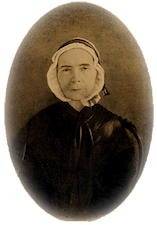
21st.—Mr. _____ has returned. Yesterday evening we rode to the parade-ground in Alexandria; it was a beautiful but sad sight. How many of those young, brave boys may be cut off, or maimed for life! I shudder to think of what a single battle may bring forth. The Federal vessel Pawnee now lies before the old town, with its guns pointing towards it. It is aggravating enough to see it; but the inhabitants move on as calmly as though it were a messenger of peace. It is said that an undefended, indefensible town like Alexandria will hardly be attacked. It seems to me strange that they do not go immediately to the Rappahannock, the York, or the James, and land at once in the heart of the State. Should they go at once to City Point, and march thence to the city, I am afraid it could hardly be defended. Our people are busy in their preparations for defence; but time is necessary—every day is precious to us. Our President and military chiefs are doing all that men can do to forward preparations. My ear is constantly pained with the sound of cannon from the Navy-Yard at Washington, and to-day the drum has been beating furiously in our once loved metropolis. Dr. S. says there was a grand dress parade—brothers gleefully preparing to draw their brothers’ blood!
Day after to-morrow the vote of Virginia on secession will be taken, and I, who so dearly loved this Union, who from my cradle was taught to revere it, now most earnestly hope that the voice of Virginia may give no uncertain sound; that she may leave it with a shout. I am thankful that she did not take so important a step hastily, but that she set an example of patience and long-suffering, and made an earnest effort to maintain peace; but as all her efforts have been rejected with scorn, and she has been required to give her quota of men to fight and destroy her brethren of the South, I trust that she may now speak decidedly.
Civil War Day-By-Day
May 21, 2021
May 21, 1861
- Missouri declares its neutrality in the Civil War
- Confederate Congress votes to move its capital from Montgomery to Richmond.
- Sterling Price signs an agreement with William Harney, essentially handing Missouri over to federal forces.
- Confederate Congress votes to move its capital from Montgomery to Richmond.
A Chronological History of the Civil War in America1
- C. S. Congress at Montgomery, Alas, adjourned to meet at Richmond, Va., on the 20th July.
- Rebels establish the blockade of the Mississippi at Memphis, Tenn.
- A Chronological History of the Civil War in America by Richard Swainson Fisher, New York, Johnson and Ward, 1863
McClellan’s Command
May 20, 2021
Miss Dix’s Authority
May 20, 2021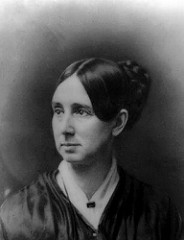
Dorothea Dix
May 20, 2021
Savannah Republican
Georgia
May 20, 1861
The Service of Miss Dorothea L. Dix
Accepted by the U.S. War Department.
Steamer to New Orleans—William Howard Russell
May 20, 2021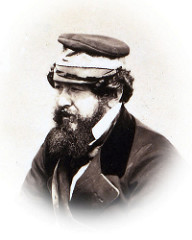
May 20.—I left Mobile in the steamer Florida for New Orleans this morning at eight o’clock. She was crowded with passengers, in uniform. In my cabin was a notice of the rules and regulations of the steamer. No. 6 was as follows: “All slave servants must be cleared at the Custom House. Passengers having slaves will please report as soon as they come on board.”
A few miles from Mobile the steamer, turning to the right, entered one of the narrow channels which perforate the whole of the coast, called “Grant’s Pass.” An ingenious person has rendered it navigable by an artificial cut; but as he was not a universal philanthropist, and possibly may have come from north of the Tweed, he further erected a series of barriers, which can only be cleared by means of a little pepper-castor iron lighthouse; and he charges toll on all passing vessels. A small island at the pass, just above water-level, about twenty yards broad and one hundred and fifty yards long, was being fortified. Some of our military friends landed here; and it required a good deal of patriotism to look cheerfully at the prospect of remaining cooped up among the mosquitoes in a box, on this miserable sand-bank, which a shell would suffice to blow into atoms.
Having passed this channel, our steamer proceeded up a kind of internal sea, formed by the shore, on the right hand and on the left by a chain almost uninterrupted of reefs covered with sand, and exceedingly narrow, so that the surf of the ocean rollers at the other side could be seen through the foliage of the pine trees which line them. On our right the endless pines closed up the land view of the horizon; the beach was pierced by creeks without number, called bayous; and it was curious to watch the white sails of the little schooners gliding in and out among the trees along the green meadows that seemed to stretch as an impassable barrier to their exit. Immense troops of pelicans flapped over the sea, dropping incessantly on the fish which abounded in the inner water; and long rows of the same birds stood digesting their plentiful meals on the white beach by the ocean foam.
There was some anxiety in the passengers’ minds, as it was reported that the United States’ cruisers had been seen inside, and that they had even burned the batteries on Ship Island. We saw nothing of a character more formidable than coasting craft and a return steamer from New Orleans till we approached the entrance to Pontchartrain, when a large schooner, which sailed like a witch and was crammed with men, attracted our attention. Through the glass I could make out two guns on her deck, and quite reason enough for any well-filled merchantman sailing under the Stars and Stripes to avoid her close companionship.
The approach to New Orleans is indicated by large hamlets and scattered towns along the sea-shore, hid in the piney woods, which offer a retreat to the merchants and their families from the fervid heat of the unwholesome city in summer time. As seen from the sea, these sanitary settlements have a picturesque effect, and an air of charming freshness and lightness. There are detached villas of every variety of architecture in which timber can be constructed, painted in the brightest hues—greens, and blues, and rose tints—each embowered in magnolias and rhododendrons. From every garden a very long and slender pier, terminated by a bathing-box, stretches into the shallow sea; and the general aspect of these houses, with the light domes and spires of churches rising above the lines of white railings set in the dark green of the pines, is light and novel. To each of these cities there is a jetty, at two of which we touched, and landed newspapers, received or discharged a few bales of goods, and were off again.
Of the little crowd assembled on each, the majority were blacks—the whites, almost without exception, in uniform, and armed. A nearer approach did not induce me to think that any agencies less powerful than epidemics and summer-heats could render Pascagoula, Passchristian, Mississippi City, and the rest of these settlements very eligible residences for people of an active turn of mind.
The livelong day my fellow-passengers never ceased talking politics, except when they were eating and drinking, because the horrible chewing and spitting are not at all incompatible with the maintenance of active discussion. The fiercest of them all was a thin, fiery-eyed little woman, who at dinner expressed a fervid desire for bits of “Old Abe”—his ear, his hair; but whether for the purpose of eating or as curious relics, she did not enlighten the company.
After dinner there was some slight difficulty among the military gentlemen, though whether of a political or personal character, I could not determine; but it was much aggravated by the appearance of a six-shooter on the scene, which, to my no small perturbation, was presented in a right line with my berth, out of the window of which I was looking at the combatants. I am happy to say the immediate delivery of the fire was averted by an amicable arrangement that the disputants should meet at the St. Charles Hotel at 12 o’clock on the second day after their arrival, in order to fix time, place, and conditions of a more orthodox and regular encounter.
At night the steamer entered a dismal canal, through a swamp which is infamous as the most mosquito haunted place along the infested shore; the mouths of the Mississippi themselves being quite innocent, compared to the entrance of Lake Pontchartrain.
Protection of the California steamers.
May 20, 2021
Letter from Messrs. D. R. King & Co., Philadelphia, to Secretary of the Nary, requesting naval convoy or armament for California steamers.
Hon. Gideon Welles.
Funding for Vessels and Arms Abroad
May 20, 2021
Estimate of the amount requiring to send an agent abroad to purchase vessels and arms per act approved May 10, 1861.
For the purchase of six steam propellers1, with armaments, small arms, ordnance stores, and other munitions of war, per act approved May 10, 1861. ……………………………………..$1,000,000
One million of dollars.
Estimate of the amount required for the purchase or construction of one or two war steamers in England or France fully armed and equipped per act approved May 1o, 1861.
Two million of dollars.
- In this usage, propeller means propeller driven steamship.
Village Life in America.
May 20, 2021
May 20.–I recited “Scott and the Veteran” to-day at school, and Mary Field recited, “To Drum Beat and Heart Beat a Soldier Marches By;” Anna recited “The Virginia Mother.” Everyone learns war poems now-a-days. There was a patriotic rally in Bemis Hall last night and a quartette sang, “The Sword of a Bunker Hill” and “Dixie” and “John Brown’s Body lies a Mouldering in the Grave,” and many other patriotic songs. We have one West Point cadet, Albert M. Murray, who is in the thick of the fight, and Charles S. Coy represents Canandaigua in the navy.
An Opportunistic Liverpool Merchant’s Schemes Sent to CSA Secretary of State
May 20, 2021
Vicomte A. de Lassus; now with his knowledge I beg to inform you of some of my plans.
prisoners of war only and New York half burnt would he a fair compensation for the loss of a steamer, if she were lost. If I had been a Russian I would have so undertaken to have destroyed Liverpool in the Crimean war, but it may be you are better prepared at your ports than we were here.
Mr. Walker, the Confederate Secretary of War.—Rebel War Clerk
May 20, 2021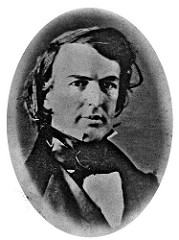
MAY 20th. –Mr. Walker, the Secretary of War, is some forty seven or eight years of age, tall, thin, and a little bent; not by age, but by study and bad health. He was a successful lawyer, and having never been in governmental employment, is fast working himself down. He has not yet learned how to avoid unnecessary labor; being a man of the finest sensibilities, and exacting with the utmost nicety all due deference to the dignity of his official position. He stands somewhat on ceremony with his brother officials, and accords and exacts the etiquette natural to a sensitive gentleman who has never been broken on the wheel of office. I predict for him a short career. The only hope for his continuance in office is unconditional submission to the President, who, being once Secretary of War of the United States, is familiar with all the wheels of the department. But soon, if I err not, the President will be too much absorbed in the fluctuations of momentous campaigns, to give much of his attention to any one of the departments. Nevertheless Mr. Walker, if he be an apt scholar, may learn much before that day; and Congress may simplify his duties by enacting a uniform mode of filling the offices in the field. The applications now give the greatest trouble; and the disappointed class give rise to many vexations.
Everybody has manias—up North, too, by the papers.—Mary Boykin Miller Chesnut.
May 20, 2021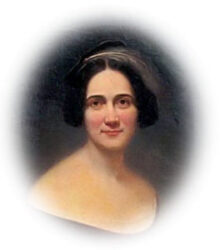
May 20th.—Lunched at Mrs. Davis’s; everything nice to eat, and I was ravenous. For a fortnight I have not even gone to the dinner table. Yesterday I was forced to dine on cold asparagus and blackberries, so repulsive in aspect was the other food they sent me. Mrs. Davis was as nice as the luncheon. When she is in the mood, I do not know so pleasant a person. She is awfully clever, always.
We talked of this move from Montgomery. Mr. Chesnut opposes it violently, because this is so central a position for our government. He wants our troops sent into Maryland in order to make our fight on the border, and so to encompass Washington. I see that the uncomfortable hotels here will at last move the Congress. Our statesmen love their ease, and it will be hot here in summer. “I do hope they will go,” Mrs. Davis said. “The Yankees will make it hot for us, go where we will, and truly so if war comes.” “And it has come,” said I. “Yes, I fancy these dainty folks may live to regret losing even the fare of the Montgomery hotels.” “Never.”
Mr. Chesnut has three distinct manias. The Maryland scheme is one, and he rushes off to Jeff Davis, who, I dare say, has fifty men every day come to him with infallible plans to save the country. If only he can keep his temper. Mrs. Davis says he answers all advisers in softly modulated, dulcet accents.
What a rough menagerie we have here. And if nice people come to see you, up walks an irate Judge, who engrosses the conversation and abuses the friends of the company generally; that is, abuses everybody and prophesies every possible evil to the country, provided he finds that denouncing your friends does not sufficiently depress you. Everybody has manias—up North, too, by the papers.
But of Mr. Chesnut’s three crazes: Maryland is to be made the seat of war, old Morrow’s idea of buying up steamers abroad for our coast defenses should be adopted, and, last of all, but far from the least, we must make much cotton and send it to England as a bank to draw on. The very cotton we have now, if sent across the water, would be a gold mine to us.
Contraband of War.
May 20, 2021
Savannah Republican
Georgia
May 20, 1861
The following articles have been officially declared as coming under the head of “contraband of war” by the Federal Administration:
Gold and silver coin, checks or bills of exchange for money, articles of food, clothing, and materials for the manufacture of clothing; rifle pistol, musket and cannon balls and shells; gunpowder, and all materials used in its manufacture, ammunition and munitions and implements of war of every description, books of military education; saddles, harness and trappings, for flying artillery, field and staff officers and cavalry troops; horses, gun carriages, timber for ship building, all kinds of naval stores, engines, boilers and machinery for boats, locomotive engines and cars for railroads, and goods and commodities which might be useful to the enemy in war.
North Carolina ratifies CSA Provisional Constitution
May 20, 2021
AN ORDINANCE to ratify the Constitution of the Provisional Government of the Confederate States of America.
Confederate Congress admits Arkansas to the Confederacy
May 20, 2021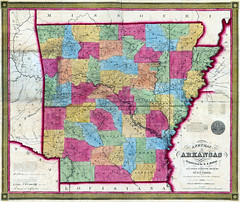
AN ACT to admit the State of Arkansas into the Confederacy.
Gen. Boregard objects to people going there as the Island is under Martial law
May 20, 2021
Charleston, May 1861.
We came down on the 10 the Girls & Lewis the day before. All got down comfortably & found them well in Town.—Since that time the servants have been sick one after another, & I have been quite ailing, the house had to be rearranged to accomodate the family. Papa has the front room on the street, a very comfortable one which he seems to enjoy greatly, his servant, Charles, is with him and he looks better than he did in the country but he is an odd person in his manners. He quite ignores William in the Law case and seems rather vexed with him one can’t exactly tell for what. I expect the secret of the whole thing is that my Papa is not very sensible, which he can’t help, we are born with an unequal share of mental gifts.—
The boys are all up stairs in 2 rooms 5 of them, a sort of Barack, but they seem comfortable. Lewis is off on an electioneering effort at Whippy Swamp, to get Bing Smith made Col. that he may be Captain, & so go to war.—Heard from Mrs Butler, she had arrived at her comfortable home and seemed very thankful, gave the girls some pretty worked handkerchiefs, & me a lovely wooden butter tub, the top of which got broken in the Packing.—Elizabeth wrote to her, I think she will get along very comfortably there, her affairs seem very much involved. She wishes Papa to let her Mortgage the Money he has given her, 19 thousand dollars, & 10 thousand dollars, to Papa Lewis & James what she owes them. There was a very good crop harvested, & sold, and one never can understand this business.—We have seen Luise North, Marianna Petigru, Mrs C. Manigault, Harriet, Margaret Barnwell, & Ann, Dr Porcher, the Wilkinses, all of them, and are getting into the usual rutine of the summer.
We have not been able to get a pew in St. Michael’s Church this summer as yet and may as well give it up. The old lady we generally hire from goes down to the Island and Gen. Boregard objects to people going there as the Island is under Martial law.—
North Carolina’s Ordinance of Secession
May 20, 2021An Ordinance
 To dissolve the union between the State of North Carolina and the other States united with her, under the compact of government entitled “The Constitution of the United States.”

North Carolina Ordinance of Secession
May 20, 2021
Title: North Carolina Secession Ordinance, May 20, 1861
Creator: North Carolina. General Assembly
Date: 1861-05-20
Description:
The North Carolina delegates of a special convention, called to address the secession question, passed this ordinance to dissolve the ties of North Carolina to the United States. This document is part of the records for the state constitutional convention of 1861-1862 which proposed a dozen amendments. This item was scanned as part of the American Civil War Sesquicentennial commemoration at the North Carolina State Archives. It was part of the monthly documents on the North Carolina Civil War 150 website (http://civilwar150nc.wordpress.com).
Agency: North Carolina Department of the Secretary of State
Physical Characteristics: Letter book copy; 2 pages
Collection: Secretary of State Records. State Archives of North Carolina
___________
Mike’s notes:
Note – This image has been digitally adjusted for one or more of the following:
– fade correction,
– color, contrast, and/or saturation enhancement
– selected spot and/or scratch removal
– cropped for composition and/or to accentuate subject
“People are expecting great events will take place soon. A Battle at or near Norfolk probably.”—Horatio Nelson Taft
May 20, 2021
MONDAY 20
Another cool day, a fire comfortable to sit by all day. It has rained most of the day. Troops a[re] mostly gone from the Pat office. Went down to the Parade of the 12th with wife this evening. Afterwards went on to the Ave. Was at the “National” an hour or so. People are expecting great events will take place soon. A Battle at or near Norfolk probably. Got the NY papers and came home early and read till near 11 o’clock. Accidents among the soldiers occur frequently, three or four have been shot.
The three diary manuscript volumes, Washington during the Civil War: The Diary of Horatio Nelson Taft, 1861-1865, are available online at The Library of Congress.