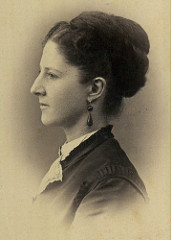
Deeper and deeper we go in.—Mary Boykin Miller Chesnut.

Civil War Day-by-Day

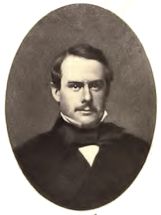
May 27th.—They look for a fight at Norfolk. Beauregard is there. I think if I were a man I’d be there, too. Also Harper’s Ferry is to be attacked. The Confederate flag has been cut down at Alexandria by a man named Ellsworth,¹ who was in command of Zouaves. Jackson was the name of the person who shot Ellsworth in the act. Sixty of our cavalry have been taken by Sherman’s brigade. Deeper and deeper we go in.

Thirty of Tom Boykin’s company have come home from Richmond. They went as a rifle company, armed with muskets. They were sandhill tackeys—those fastidious ones, not very anxious to fight with anything, or in any way, I fancy. Richmond ladies had come for them in carriages, feted them, waved handkerchiefs to them, brought them dainties with their own hands, in the faith that every Carolinian was a gentleman, and every man south of Mason and Dixon’s line a hero. But these are not exactly descendants of the Scotch Hay, who fought the Danes with his plowshare, or the oxen’s yoke, or something that could hit hard and that came handy.

Johnny has gone as a private in Gregg’s regiment. He could not stand it at home any longer. Mr. Chesnut was willing for him to go, because those sandhill men said “this was a rich man’s war,” and the rich men would be the officers and have an easy time and the poor ones would be privates. So he said: “Let the gentlemen set the example; let them go in the ranks.” So John Chesnut is a gentleman private. He took his servant with him all the same. [continue reading…]

0 comments

“The professions of loyalty to the Union by the State authorities of Missouri are not to be relied upon.”

Civil War Day-by-Day

“…whenever it is apparent that a movement, whether by color of State authority or not, is hostile, you will not hesitate to put it down.”

May 27, 1861.—Letter from the Adjutant-General to General Harney.

Washington, D. C., May 27, 1861.
Brigadier-General W. S. Harney,
Commanding Department of the West, St. Louis, Mo.
Sir: The President observes with concern that, notwithstanding the pledge of the State authorities to coöperate in preserving peace in Missouri, loyal citizens in great numbers continue to be driven from their homes. It is immaterial whether these outrages continue from inability or indisposition on the part of the State authorities to prevent them. It is enough that they continue to devolve on you the duty of putting a stop to them summarily by the force under your command, to be aided by such troops as you may require from Kansas, Iowa, and Illinois. The professions of loyalty to the Union by the State authorities of Missouri are not to be relied upon. They have already falsified their professions too often, and are too far committed to secession to be entitled to your confidence, and you can only be sure of their desisting from their wicked purposes when it is out of their power to prosecute them. You will therefore be unceasingly watchful of their movements, and not permit the clamors of their partizans and opponents of the wise measures already taken to prevent you from checking every movement against the government, however disguised under the pretended State authority. The authority of the United States is paramount, and whenever it is apparent that a movement, whether by color of State authority or not, is hostile, you will not hesitate to put it down.
I am, sir, very respectfully your obedient servant,
L. Thomas, Adjutant-General.
0 comments

Lorenzo Thomas

Civil War Day-by-Day
Civil War Portraits—Leaders, Influencers, and the Incidentally Important # 013

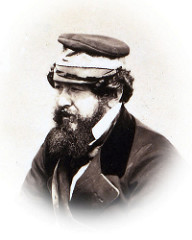
Lorenzo Thomas (October 26, 1804 – March 2, 1875) was a career United States Army officer who was Adjutant General of the Army at the beginning of the American Civil War.Lorenzo Thomas (October 26, 1804 – March 2, 1875) was a career United States Army officer who was Adjutant General of the Army at the beginning of the American Civil War. After the war, he was appointed temporary Secretary of War by U.S. President Andrew Johnson, precipitating Johnson’s impeachment.

Just before the start of the Civil War, Thomas was promoted to colonel and adjutant general of the U.S. Army on March 7, 1861. On August 10, 1861, U.S. President Abraham Lincoln appointed Thomas a brigadier general in the regular army, to rank from August 3, 1861, the date Lincoln sent the nomination to the U.S. Senate for confirmation.[1] The Senate confirmed the appointment on August 5, 1861. Camp Thomas, a Regular Army training base in Columbus, Ohio, was named in his honor in July 1861. He held the position of adjutant general until he retired in 1869, except for a special assignment to recruit African-American troops in the Military Division of the Mississippi from 1863 to 1865.

Thomas did not get along well with Secretary of War Edwin M. Stanton and this assignment outside of Washington, D.C., was considered a form of banishment. Many historians have claimed Thomas was banished in disgrace after conspiring to defame Union General William T. Sherman as insane. Thomas was replaced by Maj. Gen. Edward D. Townsend as Adjutant General, who would serve until 1880. (Read more at Wikipedia)

Image information at Library of Congress:

Title: Gen. Lorenzo Thomas
Date Created/Published: [between 1860 and 1870]
Medium: 1 negative: glass, wet collodion.
Reproduction Number: LC-DIG-cwpb-07207 (digital file from original neg.)
Rights Advisory: No known restrictions on publication.
Call Number: LC-B813- 6484 A [P&P]
Repository: Library of Congress Prints and Photographs Division Washington, D.C. 20540 USA https://hdl.loc.gov/loc.pnp/pp.print
Notes:
….Credit line: Civil war photographs, 1861-1865, Library of Congress, Prints and Photographs Division.
….General information about Civil war photographs is available at https://hdl.loc.gov/loc.pnp/pp.cwp
….Forms part of: Civil war photographs, 1861-1865 (Library of Congress).
….Title from Civil War caption books.

Image at Library of Congress

Blog post
___________
Mike’s notes:

Note – This image has been digitally adjusted for one or more of the following:
– fade correction,
– color, contrast, and/or saturation enhancement
– selected spot and/or scratch removal
– cropped for composition and/or to accentuate subject

0 comments

Packing up the war office.—Rebel War Clerk

Civil War Day-by-Day
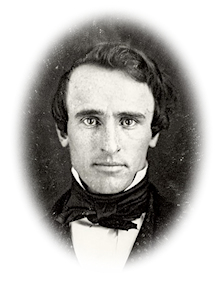
A likeness of Jones when he was editor and majority owner of the Daily Madisonian during President John Tyler’s administration.

MAY 27TH. –We leave Montgomery day after to-morrow. The President goes to-day–but quietly–no one, not connected with the Government, to have information of the fact until his arrival in Richmond. It is understood that the Minister of Justice (Attorney-General) accompanies him. There are a great number of spies and emissaries in the country—sufficient, if it were known when the train would pass, to throw it off the track. This precaution is taken by the friends of the President.

The day is pretty much occupied in the packing of boxes. It is astonishing how vast a volume of papers accumulates in a short space of time—but when we consider the number of applications for office, the wonder ceases.

0 comments

Extracts from the journal of Commander Semmes, C.S. Navy, commanding C.S.S. Sumter

War of the Rebellion: from the Official Records of the Union and Confederate Armies and Navies
Monday, May 27.—News received this morning of the appearance at Pass à l’Outre yesterday of the U. S. S. Brooklyn, and of the establishment of the blockade. Work is progressing satisfactorily upon the Sumter and I expect to be ready for sea by Sunday next. News of skirmishing in Virginia and of fresh arrivals of the Northern hordes at Washington en route for that State.
0 comments

Contraband

News of the Day

The New York Times
May 27, 1861

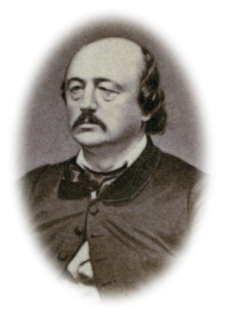
Slaves Contraband of War.—Gen. Butler appears to be turning his legal education, to good account, in the construction of the law in reference to articles that are contraband of war. Three negroes, having escaped into Fort Monroe, he set them at work on the fortifications, and when demanded by an F. F. V., he replied that they were contraband of war, for the reason that they might be employed by the enemy, for the service to which he had assigned them. We believe the General did so far modify his refusal, as to offer to give up the negroes, providing their owner would take the oath to support the Constitution of the United states! All this, upon the Sacred Soil of Virginia! We think the people of the State will find the General a match for them in more ways than one.
0 comments

General Butler: “As a military question it would seem to be a measure of necessity to deprive their masters of their services.”

War of the Rebellion: from the Official Records of the Union and Confederate Armies and Navies
Headquarters Department Of Virginia,
Fort Monroe, May 27, 1861.
Lieutenant-General Scott.
Sir : * * *Since I wrote my last dispatch (May 24) the question in regard to slave property is becoming one of very serious magnitude. The inhabitants of Virginia are using their negroes in the batteries and are preparing to send the women and children south. The escapes from them are very numerous and a squad has come in this morning to my pickets bringing their women and children. Of course these cannot be dealt with upon the theory on which I designed to treat the services of able-bodied men and women who might come within my lines, and of which I gave you a detailed account in my last dispatch. I am in the utmost doubt what to do with this species of property. Up to this time I have had come within my lines men and women with their children, entire families, each family belonging to the same owner. I have therefore determined to employ as I can do very profitably the able-bodied persons in the party, issuing proper food for the support of all and charging against their services the expense of care and sustenance of the non- laborers, keeping a strict and accurate account as well of the services as of the expenditure, having the worth of the services and the cost of the expenditure determined by a board of survey to be hereafter detailed. I know of no other manner in which to dispose of this subject and the questions connected therewith. As a matter of property to the insurgents it will be of very great moment, the number that I now have amounting as I am informed to what is good times would be of the value of $60,000. Twelve of these negroes I am informed have escaped from the batteries on Sewall’s Point which this morning fired upon my expedition as it passed by out of range. As a means of offense therefore in the enemy’s hands these negroes when able-bodied are of the last importance. Without them the batteries could not have been erected, at least for many weeks. As a military question it would seem to be a measure of necessity to deprive their masters of their services. How can this be done? As a political question and a question of humanity can I receive the services of a father and mother and not take the children? Of the humanitarian aspect I have no doubt; of the political one I have no right to judge.
*  *  *  *  *  *  *
Very respectfully, your obedient servant,
B. F. BUTLER.
0 comments

Govr Kirkwood has directed me to take temperary command.

The Letters of Samuel Ryan Curtis

Head quarters Iowa Volunteers
Keokuk May 27. 1861

Genl. L. Thomas
Adt Genl U.S.A.

I wrote you from Des Moines last week saying I had Commenced to muster the 2nd Iowa Regiment. I have now the honor to report that the 1st and 2nd Regiments are here mustered in, and the 3d will be here all of this week.1

Your orders to Lieut Chambers2 having arrived authorizing him to muster the second call, to avoid confusion, I at once relinquished to him the remainder of that duty ; but he very ungraciously as I think, declines to recognize my mustering, and in the face of my order from the Secretary of war, persists in mustering over what I have mustered. Of course I have protested against this.

Before his order came to muster the 3 year regiments, I had procured books and blanks of you, 2000 muskets and 80 rounds of Cartridges for two reigments, ordered the cartridge boxes for two regiments at Pittsburg, and rallied the whole force required at this place, where Govr Kirkwood has directed me to take temperary command.

I transmit a request made by the Governor and staff, and that my authority may be enlarged &c recognized at headquarters. If my proceedings be approved, a telgraphic order through me to Lieut Chambers directing his recognition of my acts, would seem necessary to carry forward the complete and early equipment of these troops, and avoid petty conflict of a rightful exercise of discretion. A point so remote as this, must apply to the source of military power, in order to avoid shameful delay. I therefore respectfully request you to direct all the requisite supplies for three regiments (inclusive of what has been sent) to be forwarded as the guns were, without the delay of circuitous requisitions. Send Books and blanks from your office. [continue reading…]

0 comments

We are going into this war too heavily to have it last long—Charles Francis Adams, Jr.

Civil War Day-by-Day

Charles Francis Adams, Jr., To His Father

Quincy, May 27, 1861.—I got out here last Saturday evening, having that day been relieved at Fort Independence by the 4th Battalion of rifles. We would like to have stayed there longer, and were certainly arriving at a state of very considerable proficiency in drill, but our being kept there was beginning to create some hard feeling and the Governor was obliged to yield to the pressure. What will be done with us now, if any thing, no one seems to know. I hardly think they will leave such an efficient body of men alone just now, and yet I do not see how we can be profitably employed. That we shall not be sent out of the State is certain; but the rumors seem to tend towards our being sent to the State camp to serve as a model and to furnish instructors, and ultimately to be used as a supply of officers. Meanwhile I find that I have not returned a day too early, and that my presence is necessary in Boston for some time to come. To me things look pretty bad. Money is plenty, but lenders are very timid. Business is wholly dead and the business community seems to be calculating as to whether they can live out the war or had better go down now. For myself, I see little to change the views I have entertained all along. We are going into this war too heavily to have it last long, but it will be an awful drag while it does last, and all who are not under short sail must go down. I do not believe in getting alarmed or in the eternal ruin of the country; but a great deal of money has got to be lost and all who have, have got to lose some, be it more or less. . . .

Of course all this does not at all add to the pleasure of a reluctant return. I have become fond of military life and I feel ashamed that I am here at home when so many of my friends have already gone, and gone in such a way. I do not wish to boast of what I should do under other circumstances, but I feel, as I look at these tedious and repulsive details [of business], that I should tonight sleep perfectly happy if tomorrow I could hand them all over to anyone who would take them, and for myself go and join my friends in camp. I could get a commission and a good one, for only today Dana evidently wanted to advise me to go and told me I ought to have a majority if I wished it. . . .

0 comments

Civil War Day-By-Day

Civil War Day-by-Day

May 27, 1861

A Chronological History of the Civil War in America1

  • About 100 slaves escaped from their masters and took refuge in Fortress Monroe. General Butler declared them contraband of war and legitimate
    prizes.
  • Mobile blockaded.
  • Brigadier-General McDowell took command at Washington.
  • Border States Convention assembled at Frankfort, Ky. Kentucky and Missouri only were represented.

  1. A Chronological History of the Civil War in America by Richard Swainson Fisher, New York, Johnson and Ward, 1863
0 comments

Letter from Alfred Penny to his father; May 26, 1861

News of the Day
Camp Draper Near Washington DC
Head Quarters Company E 2nd Regt
May 26th, 1861
E Penny
I wrote to you last week and have not received any answer yet, we are now encamped about 2 miles from Washinton and we receive our meals three times a day We left Washington city last Friday, we are on a branch of the Potamac River and about 40 Rods from Maryland, the camp was in a great excitement last night and we were called to arms, it was caused by the U.S. Troops nearing our camp on the way to Guard a bridge about 1/2 mile before our camp, nearly all of the soldiers are well we live on Smoked Bacon and crackers with coffee twice a day, I was never healthier or felt better than I do now we have to turn out of bed at 4 1/2 OC and turn in at 10 OC. I wrote to archy the same day that I worte to you and have received as good an answer as you sent me if you do not answer this I shall not write again.
Yours Alfred C. Penny
Comp E 2nd Regt. NYSM
Near Washington DC
0 comments

“The excitement of yesterday has passed off but troops are passing over the River today and the large Govt Wagons are taking over stores, tents, implements, &c…,”—Horatio Nelson Taft

Diary of US patent clerk Horatio Nelson Taft.

SUNDAY 26

Warm today, went to church with family. Chas and young Saml Androus are both with us, came up last night. Saml is somewhat sick, is geting better. His Regt is at Alexandria. The excitement of yesterday has passed off but troops are passing over the River today and the large Govt Wagons are taking over stores, tents, implements, &c., and the soldiers there are busy throwing up breastworks at “Arlington.” The rebels had the stakes all stuck for the entrenchment and would have had possession in a day or two more.


The three diary manuscript volumes, Washington during the Civil War: The Diary of Horatio Nelson Taft, 1861-1865, are available online at The Library of   Congress.

0 comments

General Lee on arms (or lack of) of Georgia troops.

News of the Day
Headquarters Virginia Forces,
Richmond, Va ., May 26, 1861.
His Excellency Governor Brown,
Of Georgia:
Sir: I deem it proper to call your attention to the fact that many of the volunteer companies from your State have arrived at Richmond without arms. The demand upon Virginia has been so great that all arms have been exhausted, except the old flint-lock muskets. It is apprehended that the troops thus provided will not do themselves justice, opposed to an enemy whose arms are so much superior. I thought it probable that you would like to provide the men of your State with such better arms as may be at your disposal, and therefore take the liberty of bringing this matter to your notice. The proximity of Virginia to the scene of action has induced the organization of a large force of cavalry, in consequence of which all the cavalry arms and equipments have been exhausted. If, then, you have to spare any pistols, carbines, or equipments for that arm, you would greatly further the common cause by sending them to Richmond. Allow me to express the hope that you will give these matters your early attention.
I am, &c. ,
R. E. LEE,
Major-General, Commanding.
0 comments

It was bad policy for Mr. Jefferson Davis to menace Washington before he could seriously carry out his threats.—William Howard Russell7

My Diary North and South – William Howard Russell

May 26th.—The heat to-day was so great, that I felt a return of my old Indian experiences, and was unable to go, as I intended, to hear a very eminent preacher discourse on the war at one of the principal chapels.

All disposable regiments are on the march to Virginia. It was bad policy for Mr. Jefferson Davis to menace Washington before he could seriously carry out his threats, because the North was excited by the speech of his Secretary at War to take extraordinary measures for the defence of their capital; and General Scott was enabled by their enthusiasm not only to provide for its defence, but to effect a lodgment at Alexandria, as a base of operations against the enemy.

When the Congress at Montgomery adjourned, the other day, they resolved to meet on the 20th of July at Richmond, which thus becomes the capital of the Confederacy. The city is not much more than one hundred miles south of Washington, with which it was in communication by rail and river; and the selection must cause a collision between the two armies in front of the rival capitals. The seizure of the Norfolk navy yard by the Confederates rendered it necessary to reinforce Fortress Monroe; and for the present the Potomac and the Chesapeake are out of danger. [continue reading…]

0 comments

Until the news of the advance into Virginia arrived, and the death of Colonel Ellsworth, there was a good deal of hesitation in the various camps.—Rutherford B. Hayes

Diary and Letters of Rutherford Birchard Hayes
Rutherford B. Hayes (young)

CINCINNATI, May 26, 1861.

DEAR UNCLE:—. . . I have been watching the enlistments for the war during the last week with much interest, as the chance of our enterprise for the present depends on it. If twenty regiments enlist out of the twenty-six now on foot in the State, there will be no room for ours. If less than twenty go in for three years, we are safe. Until the news of the advance into Virginia arrived, and the death of Colonel Ellsworth, there was a good deal of hesitation in the various camps. The natural dissatisfaction and disgust which many felt, some with and some without adequate cause, were likely to prevent the quota from being filled out of the three-months men. But now all is enthusiasm again. Of course I like to see it, but for the present it probably cuts us out. Well, we shall be ready for next time. If all immediate interest in this quarter is gone, I shall likely enough come up and spend next Sunday with you.

Sincerely,

R. B. HAYES.

S. BIRCHARD.

0 comments

Camp Jackson Men

News of the Day

Memphis Daily Appeal,
Tennessee,
May 26, 1861

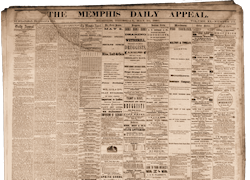
We were called upon last evening by Mr. Ed. A. Withers, a Virginian, who has for many years resided in St. Louis, who informed us that the was one of a party of thirty-eight persons, all among the prisoners lately seized at Camp Jackson, St. Louis. We learn from him that there are two thousand men who are panting to reach the South, that they may have an opportunity of avenging the indignity to which they have been subjected. This party of thirty-eight is the first instalment of the coming crowd. They came to Columbus on the Dickey. Capt. Abel treated them well, and gave them a free passage. At the Welbourne house, Columbus, Mr. Welbourne made them welcome, fed them sumptuously, and declined to present a bill. The ladies of Columbus assembled and made a handsome flag, which they presented to the company. At Humboldt, for the first time since their captivity, the escaped men, for they felt themselves to be such, indulged in hearty cheers for Jeff Davis. At that place the landlord of the hotel treated them liberally to the best in his house and charged them nothing. The officers of the railroad treated them kindly and gave them a free passage; to all these kind persons Mr. Withers was desired by the company to present their warm and grateful thanks through the Appeal. To the ladies of Columbus, they offer especial acknowledgements. Mr. Withers was at Jefferson City a few days ago. A large number of troops were there who were to be disbanded under the operation of the agreement between Gen. Harney and Gen. Price. They declared if they could not fight for Secession in Missouri, they would march in Arkansas and take service in the Southern army. From all that he saw, Mr. Withers is confident that if the repressive measures now inaugurated in Missouri are carried out, the South will receive large accessions of men from that State, if means can be found to enable them to reach the spot where they are wanted.

0 comments

Rebel War Clerk.—”We have an agent in Europe purchasing arms.”

Civil War Day-by-Day
A likeness of Jones when he was editor and majority owner of the Daily Madisonian during President John Tyler’s administration.

MAY 26TH.—The President is sick to-day—having a chill, I believe. Adjutant-General Cooper was in, comparing notes with the Secretary as to the number of regiments in the field. The Secretary has a most astonishing memory, and could easily number the forces without referring to his notes. The amount is not large, it is true; but, from the eagerness to volunteer, I believe if we had the arms there might soon be organized an army of three or four hundred thousand men. And yet it would seem that no one dreams of armies of such magnitude. Wait till we sleep a little longer! A great many separate companies are accepted; all indeed that offer for three years or the war, provided they have arms—even double-barreled shot-guns and hunting rifles. What a deal of annoyance and labor it will be to organize these into battalions, regiments, brigades, and divisions! And then comes the appointment of staff and field officers. This will be labor for the President. But he works incessantly, sick or well.

We have an agent in Europe purchasing arms. This was well thought on. And Capt. Huse is thought to be a good selection. It will be impossible for Lincoln to keep all our ports hermetically sealed. Hitherto improvident, it is to be hoped the South will now go to work upon her own resources. We have plunged into the sea of revolution, and must, unaided, sink or swim. The Yankees say they are going to subdue us in six months. What fools!

I tasted green corn to-day, and, although very fond of it, I touched it lightly, because it seemed so much out of season. The country around is beautiful, and the birds are singing as merrily as if we were about to enter upon a perennial Sabbath-day, instead of a desolating war. But the gunpowder will be used to destroy the destroyer, man, and why should not the birds sing? The china-trees are beautiful, and abundant about the dwellings.

0 comments

The rumor by telegraph this morning was that Washington was on fire.

Civil War Day-by-Day

Eliza Woolsey Howland to Joseph Howland at Albany.

Sunday (between churches), May 26.

I am going over to the Dutch Church at the Corners more, I confess, to hear the news from Washington than for the sermon’s sake. The rumor by telegraph this morning was that Washington was on fire. I am restless and anxious. There must be important movements on one side or the other before long, now that we have advanced beyond the Potomac.

In yesterday’s papers the great camp preparing on Staten Island is described—10,000 acres on the southeast slope of the island, with room for the tents and evolutions of an army of 60,000 men. Is it likely that you will be ordered there?

Mr. Masters told me this morning to tell you you were not forgotten in the village, for the boys have organized a company and are drilling under the name of the “Howland Guard.” Mother thinks it should be called Mrs. Howland’s Guard. . . . .

May 27. This morning I deposited Mother with the papers at the old chestnut tree seat and helped Thomson and Mechie get a good line for the turf on the carriage road. It is not right yet, but shall be made so. Thomson says: “We’ll na gie it up, ma’am, till you say it’s right.” The sodding round the door and kitchen end[1] is a great improvement and gives quite a finished look. We all took a turn in the wagon after dinner, stopping for me to get some cut-out work from the Women’s Army Association, which is fairly under way now, with Mrs. David Davis as President, Mrs. James Kent Secretary and Miss Rankin Treasurer. Five or six dozen shirts were given out today. . . . I have a note this morning from L. H. H. asking me to make them a visit at Newport and saying Mr. H. would come on for me and bring me back. It is very kind, but I shall stand by my post here this summer. . . .

Mr. Masters told us an anecdote of old R_______ who was in a tavern barroom the other day with a party of rough fellows discussing the war, when one of them declared that “any man who would refuse to go now that Mr. Howland had gone ought to be drummed out of the community.”


[1] Where the rhododendrons are now twelve to fifteen feet high.


0 comments

Rebel War Clerk.—”Congress has again passed the resolution to remove the seat of government to Richmond, and it is said the President will not veto it this time.”

Civil War Day-by-Day
A likeness of Jones when he was editor and majority owner of the Daily Madisonian during President John Tyler’s administration.

MAY 26TH.–Was called on by the Episcopal minister to-day, Dr. Sawyer having informed him that I was a member of the church–the doctor being one also. He is an enthusiastic young man, and though a native of the North, seems to sympathize with us very heartily. He prays for the President of the Confederate States. The President himself attends very regularly, and some intimate that he intends to become a candidate for membership.

I have not learned whether he has been baptized. Gen. Cooper, the first on our list of generals in the regular army, is a member of the church. The general was, I think, adjutant-general at Washington. He is Northern born. Major Gorgas is likewise a native of the North. He is Chief of the Bureau of Ordnance. The Quartermaster-General, Major Myers, is said to be a Jew; while the Commissary-General is almost a Jesuit, so zealous is he in the advocacy of the Pope.

Mr. Mallory, the Secretary of the Navy, I have seen but once; but I have heard him soundly abused for not accepting some propositions and plans from Mobile and elsewhere, to build iron-clad steam rams to sink the enemy’s navy. Some say Mr. M. is an Irishman born. He was in the United States Senate, and embraced secession with the rest of the “conspirators” at Washington.

I saw the Vice-President to-day. I first saw Mr. Stephens at Washington in 1843. I was behind him as he sat in the House of Representatives, and thought him a boy, for he was sitting beside large members. But when I got in front of him, it was apparent he was a man–every inch a man.

There is some excitement in official circles here against Mr. Browne, the Assistant Secretary of State, on the ground that he interfered in behalf of a Mr. Hurlbut, a Northern man (probably arrested), a writer in the English Reviews against slavery in the South, and a correspondent for the New York Tribune. Mr. B. is an Englishman, who came from Washington on the invitation of Mr. Toombs, and through his influence was appointed Assistant Secretary of State, and the Southern gorge rises at it. I doubt whether he will be molested.

I saw Major Tochman to-day, also a foreigner. He is authorized to enlist a regiment or two of Polanders in New Orleans, where I am told there are none.

And there are several Northern men here wanting to be generals. This does not look much like Southern homogeneity. God save us, if we are not to save ourselves!

How hot it is! But I like hot weather better than cold, and would soon become accustomed to this climate. This morning Mr. Hunter really seemed distressed; but he has four inches on his ribs, and I not the eighth of an inch.

Since writing the foregoing, I have seen Mr. Hunter again, and although there is no diminution of heat, he is quite cheerful. Congress has again passed the resolution to remove the seat of government to Richmond, and it is said the President will not veto it this time. The President himself came into our office to-day and sat some time conversing with Secretary Walker. He did not appear vexed at the determination of Congress, which he must have been apprised of.
0 comments

Civil War Day-By-Day

Civil War Day-by-Day

May 26, 1861

A Chronological History of the Civil War in America1

  • New Orleans blockaded by the sloop of war “Brooklyn.”
  • Alexandria placed under martial law.

  1. A Chronological History of the Civil War in America by Richard Swainson Fisher, New York, Johnson and Ward, 1863
0 comments

“…he (Butler) has taken three of Colonel Mallory’s negroes which he has refused to give up on application.”

War of the Rebellion: from the Official Records of the Union and Confederate Armies and Navies
May 24, 1861—7.15 p. m.
[Col. J. B. Magruder.]
Sir: I regret to inform you that Lieutenant-Colonel Ewell was taken prisoner at Fort Monroe; under what plea I have not been able to understand. I had requested an interview with Major-General Butler (now in command ) this morning which was granted at 3.30 p.m. My main object was to ascertain how far he intended to take possession of Virginia soil in order that I might act in such a manner as to avoid collision between our scouts. I could only gather from him that it was “a military necessity” for him to occupy our land for an encampment and that he could only say that if he was not interfered with by bodies of armed troops he would molest no one. He indicated his determination to take possession of anything which he might deem necessary for his use. In accordance with these principles he has taken three of Colonel Mallory’s negroes which he has refused to give up on application. I dispatched to Colonel Ewell a detailed account of a reconnaissance which they made on yesterday to this place.
* * * * * * * * * * * *
I have the honor to remain , very respectfully, your obedient servant,
J. B. CARY,
Major Artillery, Virginia Volunteers.
0 comments

John went off this morning… to join the Lady Davis at Beaufort

Journal of Meta Morris Grimball
Meta Morris Grimball

25 [May]

       John went off this morning in the Cecile to join the Lady Davis at Beaufort, he packed up his things in my room, and seemed very much pleased with his position. He got a new trunk, and placed his clothes in good order. When I advised some particular course of conduct he informed me he was 21, and felt quite able to take care of himself. Papa and himself act like red rags on one another.

       Lewis has not succeeded in getting his commission, Bing Smith is still Captain, and Lewis Lieutenant, he is in Town and seems desirous of improving himself in his profession.—Arthur is the only one we feel very anxious about just now, the whole family life must greatly surprise Papa. So much ease of intercourse between Parents and children.—

0 comments

Indianola Guards.

News of the Day

The Indianola Courier
Texas
May 25, 1861

This company continues to improve by constant exercise in their school of instruction; but we are sorry to see that the daily drills are not as largely attended as they should be. We would remind those who seem to be growing indifferent that they have engaged in no holiday sport. The cause of our country needs the support of every arm, and it is the duty of every individual to make his support efficient. This is best accomplished by practicing the use of means prescribed for the purpose. Even in time of peace every Southerner ought to be a soldier. Practice makes perfect, and constant drilling, throughout the South, will make it invincible against a world in arms.

D. G. Beaumont has been elected Third Lieutenant of the company, and its list of officers is now complete.

The guns recently stolen from the armory have all been recovered and the supposed thief is in jail. The arms were traced to Saluria and Lamar, at which places they had been sold by the party arrested. The company and the public owe to the perseverance and energy of Capt. Sam McBride, the recovery of this property.

0 comments

Coast Defence

News of the Day

The Indianola Courier
Texas
May 25, 1861

We are pleased to meet with Capt. Dan Shea, who arrived yesterday from San Antonio, where he had gone to participate in the expedition which resulted in the capture of the last body of Federal troops in our State. Capt. Shea comes with authority to enroll a company of one hundred men for the term of twelve months. We learn, that he is authorized and directed to take position at Pass Cavallo, and proceed to the erection of such fortifications as may be practicable and necessary. His company will be stationed there. Capt. Shea brings information that four 24 pounder guns are on the way from Fort Clark and will be put in battery at the Pass as soon as they arrive. Capt. Good of the Dallas Flying Artillery, with a full company and complete battery, has also been ordered by Col. Van Dorn to this part of the coast, and may be expected within a few days. The force thus provided with the assistance that can be obtained at short call, will be ample to keep off or whip out any force the Abolitionists can spare in this direction.

0 comments

Arrival of the New York 71st regiment at the Railroad Depot, Washington, D.C. May 25, 1861

Miscellaneous document sources

Arrival of the New York 71st regiment at the Railroad Depot, Washington, D.C. May 25, 1861New York Public Library Digital Collections

Sketches for Frank Leslie’s Illustrated Newspaper: 138 original drawings of the Civil War by staff artists, 1861-1864.

Extent: 1 drawing : pencil and ink wash ; 15.8 x 24.2 cm.

Note – This image has been digitally adjusted for one or more of the following:
– fade correction,
– color, contrast, and/or saturation enhancement
– selected spot and/or scratch removal
– cropped for composition and/or to accentuate subject matter
– straighten image

0 comments