Packing up the war office.—Rebel War Clerk

Civil War Day-by-Day
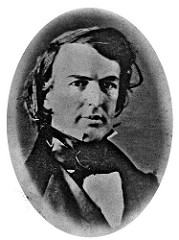
A likeness of Jones when he was editor and majority owner of the Daily Madisonian during President John Tyler’s administration.

MAY 28TH.—Little or no business was done this day. The Secretary announced that no more communications would be considered by him in Montgomery. He placed in my charge a great many unopened letters, and a special list of candidates for of?ce, with annotations. These I packed in my trunk.

As I was to precede the Secretary, and having some knowledge of the capacity of the public buildings in Richmond, I was charged with the duty of securing, if possible, suitable of?ces for the Department of War. I made hasty preparations for departure.

Before starting, something prompted me to call once more at the post-of?ce, where, to my surprise and delight, I found a letter from my wife. She was in Richmond, with all the children, Tabby and the parrot. She had left Burlington about the same time I had left Richmond. At Havre-de-Grace, on the Susquehanna, which they crossed in the night, my youngest daughter was compelled with dif?culty to stride over the sleeping bodies of Yankee soldiers. She writes that she deposited, very carefully, our plate in the bank! The idea that all might have been brought off if she had only known it, is the source of her wretchedness. She writes that she had been materially assisted by Mr. Grubb and his lady, prompted by personal friendship, by humanity, and by those generous instincts of the true nobility of heart imparted by the Creator. ‘Mr. G. is true to the Constitution and the Government under which he lives—and would doubtless never consent to a rupture of the Union under any circumstances. He has a son in the army against us. And Col. Wall, another personal friend, boldly shook hands with my family at parting, while the Wide-Awake ?le leaders stood scowling by. I hope he may not suffer for his temerity.

These things occupied my thoughts during a sleepless night in the cars. My abode in New Jersey had been a pleasant one. I had a ?ne yard and garden, and many agreeable neighbors. I loved my garden, and cultivated my own grapes, pears, peaches, apples, raspberries, currants, and strawberries. I had fruits and vegetables in the greatest profusion. And the thrushes and other migratory birds had come to know me well, and sang me to sleep at night, and awakened me with their strains in the morning. They built their nests near the windows, for the house was embowered in trees, and half covered with ivy. Even my cats, for every living thing was a pet to some one of the family,—when I think of them now, wandering about unprotected, give rise to painful emotions. But even my youngest child was willing to make any sacri?ce for the sake of her country. The South is our only home—we have been only temporary sojourners elsewhere.

0 comments

Word from the Insurgents

New York Times, News of the Day

The New York Times
May 28, 1861

Our Washington advices contain information showing how extremely unprepared are the rebels for active hostilities. For the occupation of the important junction of the Manassas Gap with the Orange and Alexandria Railroad, whereat communications with Harper’s Ferry may be kept open and an advance on Richmond opposed, only 5,000 men had been detailed, and these imperfectly armed and equipped, and with no disposition to assume the offensive. They were busy, when last observed, entrenching their position, as if it were merely a defensive one. It is quite time to inquire into the whereabouts of that great patriotic army, with which Gov. Letcher engaged to sweep the first invader of the sacred soil into the Potomac. Its opportunity for a speedy redemption of the pledge is swiftly disappearing. Had the blow been struck last week, it might have succeeded. This week, with the reinforcements thrown in from Washington, it has become doubtful. Next week it will be impossible. Aux armes, Letcher! or your head may do penance for its weakness in vulgar hemp.
0 comments

Sunday and the Sabbath.

News of the Day

Memphis Daily Appeal
Tennessee
May 28, 1861

Moses Levy, an Israelite, was arrested on Sunday for having open his place of business and offering goods for sale on that day. Under our constitutional
obligations to allow entire freedom in religious matters, have we no right to compel a man to keep our sacred day as well as his own? If so, he has the same right to make us keep his day as well as ours if he had the power.

0 comments

Fort Washita Abandoned.

News of the Day
The Leavenworth Daily Times
Leavenworth, Kansas
May 28, 1861
Correspondence of the Times.
Editor of Times: Since my last, affairs have assumed quite a different aspect. About a week since, Lieut. Col. Emory and staff arrived here, with the purpose of establishing the Head Quarters of the 1st Cavalry at this post. Fort Smith has since been evacuated, and the troops are on the road for this place. Companies A and B arrived here from Fort Arbuckle yesterday.
Company A returned to Arbuckle this morning. Everything at this port  is being packed up to leave as soon as Capt. Sturgis and command arrive, if not driven out of here before that time. The orders from the War Department are, I believe, not to fire on the rebels unless they follow
us. Our horses have, for the last four nights, been tied to a picket rope fastened around the quarters. There is great reluctance on the part of the troops, that they are to abandon the Fort without making the traitors smell powder. Ox wagons, and teams of all kinds, have been employed to carry provisions, ordnance, Quartermaster’s property, and stores of all kinds. The families of the soldiers were all sent off yesterday. They are to proceed to Fort Arbuckle, and there await our coming.
I can’t see into the policy of the Administration. The evacuation of the forts will certainly give the traitors more territory, as well as increase the numbers of adherents to Davis’ creed. If the Government does not put a stop to these rebellious scoundrels, they will soon have the upper hand.
Yours in haste,
Rover.
0 comments

The Habeas Corpus Case of Merriman

News of the Day

The New York Times
May 28, 1861

Baltimore, Monday, May 27.
The writ of habeas corpus issued by Chief Justice Taney, for the body of John Merriman, was returnable at noon to-day. Gen. Cadwallader, in his reply, says the prisoner is charged with treason, and that he is authorized by President Lincoln to suspend the writ of habeas corpus in his case. He requests Judge Taney to postpone action in the case till instructions from the President are received.
Chief Justice—Have you brought with you the body of John Merryman?
Col. Lee—I have no instructions except to deliver this response to the Court.
Chief Justice—The commanding officers declines to obey the writ.
Col. Lee—After making that communication my duty is ended, and my power is ended, (riling and retiring)
Chief Justice—The Court orders an attachment to issue against George Cadwallader, for disobedience to the high writ of the Court.
The writ against Gen. Cadwallader is returnable to-morrow at noon. The case is exciting profound sensation in the city.
0 comments

Extracts from the journal of Commander Semmes, C.S. Navy, commanding C.S.S. Sumter

War of the Rebellion: from the Official Records of the Union and Confederate Armies and Navies
Friday, June 28.—Clear and sultry, with little or no wind. The blockaders sticking close to their anchors as usual. Sent a guard boat down the Southwest Pass again yesterday evening.
0 comments

The United States steam frigates Brooklyn and Niagara have been for some days past blockading Pass á l’outre.—William Howard Russell

My Diary North and South – William Howard Russell

May 28th.—On dropping in at the Consulate to-day, I found the skippers of several English vessels who are anxious to clear out, lest they be detained by the Federal cruisers. The United States steam frigates Brooklyn and Niagara have been for some days past blockading Pass á l’outre. One citizen made a remarkable proposition to Mr. Mure. He came in to borrow an ensign of the Royal Yacht Squadron for the purpose, he said, of hoisting it on board his yacht, and running down to have a look at the Yankee ships. Mr. Mure had no flag to lend; whereupon he asked for a description by which he could get one made. On being applied to, I asked “whether the gentleman was a member of the Squadron?” “Oh, no,” said he, “but my yacht was built in England, and I wrote over some time ago to say I would join the squadron.” I ventured to tell him that it by no means followed he was a member, and that if he went out with the flag and could not show by his papers he had a right to carry it, the yacht would be seized. However, he was quite satisfied that he had an English yacht, and a right to hoist an English flag, and went off to an outfitter’s to order a facsimile of the Squadron ensign, and subsequently cruised among the blockading vessels.

We hear Mr. Ewell was attacked by an Union mob in Tennessee, his luggage was broken open and plundered, and he narrowly escaped personal injury. Per contra, “charges of abolitionism” continue to multiply here, and are almost as numerous as the coroner’s inquests, not to speak of the difficulties which sometimes attain the magnitude of murder.

I dined with a large party at the Lake, who had invited me as their guest, among whom were Mr. Slidell, Governor Hebert, Mr. Hunt, Mr. Norton, Mr. Fellows, and others. I observed in New York that every man had his own solution of the cause of the present difficulty, and contradicted plumply his neighbor the moment he attempted to propound his own theory. Here I found every one agreed as to the righteousness of the quarrel, but all differed as to the best mode of action for the South to pursue. Nor was there any approach to unanimity as the evening waxed older. Incidentally we had wild tales of Southern life, some good songs, curiously intermingled with political discussions, and what the Northerns call hyphileutin talk.

When I was in the Consulate to-day, a tall and well-dressed, but not very prepossessing-looking man, entered to speak to Mr. Mure on business, and was introduced to me at his own request. His name was mentioned incidentally to-night, and I heard a passage in his life not of an agreeable character, to say the least of it. A good many years ago there was a ball at New Orleans, at which this gentleman was present; he paid particular attention to a lady who, however, preferred the society of one of the company, and in the course of the evening an altercation occurred respecting an engagement to dance, in which violent language was exchanged, and a push or blow given by the favored partner to his rival, who left the room, and, as it is stated, proceeded to a cutler’s shop, where he procured a powerful dagger-knife. Armed with this, he returned, and sent in a message to the gentleman with whom he had quarreled. Suspecting nothing, the latter came into the antechamber, the assassin rushed upon him, stabbed him to the heart, and left him weltering in his blood. Another version of the story was, that he waited for his victim till he came into the cloak-room, and struck him as he was in the act of putting on his overcoat. After a long delay, the criminal was tried. The defence put forward on his behalf was that he had seized a knife in the heat of the moment when the quarrel took place, and had slain his adversary in a moment of passion; but evidence, as I understand, went strongly to prove that a considerable interval elapsed between the time of the dispute and the commission of the murder. The prisoner had the assistance of able and ingenious counsel; he was acquitted. His acquittal was mainly due to the judicious disposition of a large sum of money; each juror, when he retired to dinner previous to consulting over the verdict, was enabled to find the sum of 1000 dollars under his plate; nor was it clear that the judge and sheriff had not participated in the bounty; in fact, I heard a dispute as to the exact amount which it is supposed the murderer had to pay. He now occupies, under the Confederate Government, the post at New Orleans which he lately held as representative of the Government of the United States.

After dinner I went in company of some of my hosts to the Boston Club, which has, I need not say, no connection with the city of that name. More fires, the tocsin sounding, and so to bed.

0 comments

Vulcanized

News of the Day
The Leavenworth Daily Times
Leavenworth, Kansas
May 28, 1861
Caution to Soldiers.—We are reliably informed that large quantities of rubber goods, particularly rubber blankets, which are utterly worthless, are being sold to our brave volunteer soldiers. They are made of India rubber and lamp-black only, and being sun-dried in warm weather, consequently become soft and sticky, and in cold weather rigid, and in neither case will unfold, and therefore are worse than useless.
The only rubber goods of any value are vulcanized. They only will stand changes of climate, and a blanket of this quality is indispensable. No one, we are informed, but an expert can detect the difference between the good article and the worthless, when both are new, and soldiers and buyers should see they are not deceived. It is a shame that any American should for the sake of the profit, which we are told is very large on the spurious goods, palm off stuff he knows to be worthless upon our patriot soldiers, and thus defraud them of the very comfort which they need the most—a well made water proof blanket.
We trust the proper officers will see they are not supplied with such trash, and conclude by repeating that rubber goods, Unless Vulcanized, are worthless.—[New York World]
0 comments

Reports from Baltimore.

News of the Day

The New York Times
May 28, 1861

Baltimore, Monday, May 27.
In the case of John Merryman, a writ of habeas corpus has been issued by Judge Taney, made returnable this morning in the United States District Court. Gen. Cadwallader declined surrendering the prisoner till he heard from Washington. An attachment has been issued for Gen. Cadwallader, returnable to-morrow morning. Merryman is still at Fort McHenry.
No steamer from Fortress Monroe will arrive here till Wednesday morning.
A gentleman who arrived from Alexandria this morning says all is quiet there. The town, to a great extent, is deserted by the inhabitants. The most of those who remain wear an air of sullen gloom, and all seem pervaded with apprehensions of fearful events. The troops are rapidly erecting fortifications commanding all the approaches to the city.
The Western trains are still detained by the Harper’s Ferry authorities. No coal trains are arriving. Some officers of the trains detained have come down to the city.
0 comments

Enlistments.

News of the Day

The Leavenworth Daily Times
Leavenworth, Kansas
May 28, 1861

A chance is now offered to persons wishing to enlist for three years or during the war, to join the “Union Guards,” now encamped at Camp Robinson. Capt. Cozzens is one of the finest drilled officers in the camp, having been schooled in the famous New York 7th, and all the other officers are men of ability and experience. The company is almost filled, and no doubt will be mustered into U. S. service in a day or two at the farthest. See notice.

First in the Field.—The Steuben Guards, Capt. Zesch, were yesterday mustered into the service of the United States for three years. This is the only company yet received from Leavenworth, several others that made application, not having full ranks.

As the Guards passed our office, on their way to camp, they favored us with a salute, for which we return our thanks. They are a fine looking body of men, and will be faithful and effective defenders of the stars and stripes.

The Leavenworth Fencibles were not received into the service yesterday, as they lacked five men of the number requisite for a full company. They will be “mustered in” to-day, at 10 o’clock, A. M., at their camp, near the Catholic Church. In the meantime, a few more recruits will be received.

0 comments

General Cadwallader ordered to decline writs of habeas corpus

War of the Rebellion: from the Official Records of the Union and Confederate Armies and Navies
Headquarters of the Army,
Washington, May 28, 1861.
Bvt. Maj. Gen. G. Cadwalader, U. S. Army,
Comdg. Department of Annapolis, Baltimore, Md.
General: Your letter of the 27th instant with inclosures reporting the arrest of John Merryman and the issue by Chief Justice Taney of a writ of habeas corpus in his case has been received.
The general-in-chief directs me to say under authority conferred upon him by the President of the United States and fully transferred to you that you will hold in secure confinement all persons implicated in treasonable practices unless you should become satisfied that the arrest in any particular case was made without sufficient evidence of guilt.
In returns to writs of habeas corpus by whomsoever issued you will most respectfully decline for the time to produce the prisoners but will say that when the present unhappy difficulties are at an end you will duly respond to the writs in question.
I am, sir, very respectfully, your obedient servant,
E. D. TOWNSEND ,
Assistant Adjutant-General.
0 comments

“More are going over every day, and more are coming from the North.”—Horatio Nelson Taft

Diary of US patent clerk Horatio Nelson Taft.

TUESDAY, MAY 28, 1861.

The weather Continues very cool, a fire in the house to sit by is necessary mornings. The Heights opposite here in Virginia are now thoroughly occupied by some 15000 soldiers. More are going over every day, and more are coming from the North. 3000 came today, 1000 from N.H. and 2000 from Ohio. Walked up to see the NY 7th parade after dinner and at 9 o’ck went to the Prests Levee with Juliet and Saml Androus. Not much of a crowd there and quite pleasant. The officers of the military were out in force. Mr Seward was there and some other notables. Got Home at 10 1/2 .


The three diary manuscript volumes, Washington during the Civil War: The Diary of Horatio Nelson Taft, 1861-1865, are available online at The Library of   Congress.

0 comments

Civil War Day-By-Day

Civil War Day-by-Day

May 28, 1861

  • Robert Anderson assumes command of the Department of Kentucky.
  • Confederates seize the Baltimore and Ohio Railroad from Point of Rocks to Cumberland

A Chronological History of the Civil War in America1

  • Gen. Butler advanced his forces to Newport News.
  • Savannah blockaded.

  1. A Chronological History of the Civil War in America by Richard Swainson Fisher, New York, Johnson and Ward, 1863
0 comments

“I have not a single horseman, and cannot get one.”

War of the Rebellion: from the Official Records of the Union and Confederate Armies and Navies
Headquarters,
Yorktown, Va ., May 27, 1861.
Colonel Garnett, Adjutant-General:
Sir: I have just received, by a special messenger from Major Cary the following dispatch: “The enemy are landing at Newport News. Five steamers are up James River. Destination unknown. Please send down cavalry immediately .” I have not a single horseman, and cannot get one. A large force of cavalry, as I have stated before, seems to me to be absolutely necessary, to learn of the movements of the enemy. Major Cary is falling back with only thirty-five men, the rest of the roops being engaged in removing their families. The five steamers are reported by the express as being filled with troops. I am of the impression that this is intended to be an attack on our flanks.
I am, sir, very respectfully, your obedient servant,
J. BANKHEAD MAGRUDER,
Colonel, Commanding
0 comments

General Lee on Troops Landing at Newport News and Possible Threat to Yorktown

War of the Rebellion: from the Official Records of the Union and Confederate Armies and Navies
Headquarters Virginia Forces,
Richmond, Va., May 27, 1861.
Col. J. B. Magruder, Commanding, &c. , Yorktown, Va.:
Sir: I have received information, by telegraph, to-day from Norfolk that the Federal troops are landing at Newport News. I deem it proper to inform you of this, as it may be their intention to move on to Warwick Court-House, and thence, by the road, to Yorktown. Captains Cosby and Hood, of the Confederate Army, have been ordered to report to you for the purpose of instructing the cavalry troop.
I am, general, with respect, your obedient servant,
R. E. LEE,
General, Commanding.
0 comments

General Lee on Troops Landing at Newport News

War of the Rebellion: from the Official Records of the Union and Confederate Armies and Navies
Headquarters Virginia Forces,
Richmond, Va., May 27, 1861.
Brigadier-General Huger, Commanding, & c., Norfolk, Va .:
Sir: From the facts stated in your telegram received to-day I think it not improbable that the object of the troops which are landing at Newport News may be either to ascend Nansemond River to the town of Suffolk, or, if that river be too well protected for this, to cross James River to Burwell’s Bay, and thence, by land, to Suffolk, or some point, of the railroad. The effect of either of these movements will be to cut off your communication with Richmond, and I take the liberty of calling your attention to this, as I know the pressure of the duties now. upon you. I would recommend that you telegraph the governor, of North Carolina to hasten the movements of those troops which are destined for Norfolk, Va., if they have not already arrived, and to recommend that he dispatch a sufficient force to Suffolk.
I am, general, with respect, your obedient servant,
R. E. LEE,
General, Commanding.
0 comments

Expedition to Newport News… and Contrabands

War of the Rebellion: from the Official Records of the Union and Confederate Armies and Navies
Headquarters Department Of Virginia,
May 27, 1861.
Sir: The expedition (of which I gave you information in my former dispatch) to Newport News got off in fine style this morning about 7 o’clock. I have added to the expedition the Eighth New York Regiment, 780 strong, which came here on board the Empire City on Sunday afternoon, and they proceeded without debarking. I also added two 6 -pounder and two 12-pounder guns, with a detachment of twenty-five men from Colonel Dimick’s command, who are intended to act as drill-masters to the volunteers in the exercise of the guns. My purpose is to intrench and hold that point, and ultimately to mount a few heavy guns, which will command that channel of approach to James River.
Since I wrote my last dispatch the question in regard to slave property is becoming one of very serious magnitude. The inhabitants of Virginia are using their negroes in the batteries, and are preparing to send their women and children South. The escapes from them are very numerous, and a squad has come in this morning to my pickets, bringing with them their women and children. Of course these cannot be dealt with upon the theory on which I designed to treat the services of able-bodied men and women who might come within my lines, and of which I gave you a detailed account in my last dispatch. I am in the utmost doubt what to do with this species of property. Up to this time I have had come within my lines men and women with their children—entire families—each family belonging to the same owner. I have therefore determined [continue reading…]
0 comments

“All are anxiously waiting for news, and surmising what it will be.”—Horatio Nelson Taft

Diary of US patent clerk Horatio Nelson Taft.

MONDAY 27

Another hot morning but a terrible tempest of wind and rain came on before noon and raged for an hour or two after which it was cool and pleasant. Went down to the “National” after dinner with Saml and called upon Judge Grey & Lady from Coldwater Mich. Went down to Willards again in the evening, quite a crowd there but not many officers. All are anxiously waiting for news, and surmising what it will be. Came home at 9, read the papers, bed at 11.


The three diary manuscript volumes, Washington during the Civil War: The Diary of Horatio Nelson Taft, 1861-1865, are available online at The Library of   Congress.

0 comments

“Besides, it is giving to the Navy a jurisdiction that I think clearly belongs to the Army…”

War of the Rebellion: from the Official Records of the Union and Confederate Armies and Navies

Letter from J. K.Moorhead, esq., to the Secretary of War, objecting to the conferring of authority upon Captain Rodgers, U.S. Navy, for the purchase of vessels.1

Pittsburg, May 27, 1861.
Dear Sir: I was surprised to learn this evening that Captain John Rodgers, of the Navy Department, is now at Cincinnati buying and arranging for steamboats, that he has an agent here and is expected here in a few days himself to purchase several boats.
I am greatly surprised at this for several reasons: First, because the Navy Department, in my opinion, has no jurisdiction on the Ohio and Mississippi rivers; and secondly, because an old sea captain, however well he may understand the sea and seagoing vessels, can, of course, know nothing of rivers and river steamboats; and thirdly, because I supposed the Western command had been given to General McClellan (by the War Department), a very competent man, who had made arrangements to secure the best skill amongst our river men for the purpose of purchasing boats and transporting men and munitions of war.
I learned from Captain Fox, Chief Clerk of the Navy Department, a few days ago that Captain Rodgers had been sent out here, but I understood it was for the purpose of arranging about placing cannon on steamboats. I am now astonished to find that he claims to have charge of the entire movements on the water.
Excuse me for saying I believe this to be a grand mistake; that if not corrected will cost the Government some hundreds of thousands of dollars, and may jeopardize or greatly injure the efficiency of the service.
Besides, it is giving to the Navy a jurisdiction that I think clearly belongs to the Army, and I am proud to be able to add that the public have much the greater confidence in the latter.
Captain Rodgers was, I presume, appointed upon his own suggestion, as I could hear of no person having made such a recommendation.
General McClellan had consulted with Captain Kountz, one of our best and most efficient river men, and notified him that he would require his services in this branch, and when about to give him an order to purchase and prepare boats for transportation, to the chagrin of both, Captain Rodgers steps in with his commission or authority from the Navy.
Please give this your early attention, and inform me of the result.
Respectfully, yours,
J. K.Moorhead.
Hon. Simon Cameron,
Secretary of War.

…


  1. Despite any opposition, Rogers organized the Western Flotilla and supervised construction of the City-class gunboats, the first ironclad gunboats on the western rivers. He was relieved by Captain Andrew Hull Foote, a more senior officer being required by the Navy to deal with the prickly Major General John C. Fremont. (Wikipedia)
0 comments

“All the Southern people are determined to resist Mr. Lincoln’s invasion as long as they have a man or a dollar.—William Howard Russell

My Diary North and South – William Howard Russell

May 27th.—I visited several of the local companies, their drill-grounds and parades; but few of the men were present, as nearly all are under orders to proceed to the Camp at Tangipao or to march to Richmond. Privates and officers are busy in the sweltering streets purchasing necessaries for their journey. As one looks at the resolute, quick, angry faces around him, and hears but the single theme, he must feel the South will never yield to the North, unless as a nation which is beaten beneath the feet of a victorious enemy.

In every state there is only one voice audible. Hereafter, indeed, state jealousies may work their own way; but if words mean anything, all the Southern people are determined to resist Mr. Lincoln’s invasion as long as they have a man or a dollar. Still, there are certain hard facts which militate against the truth of their own assertions, “that they are united to a man, and prepared to fight to a man.” Only 15,000 are under arms out of the 50,000 men in the state of Louisiana liable to military service.

“Charges of abolitionism” appear in the reports of police cases in the papers every morning; and persons found guilty not of expressing opinions against slavery, but of stating their belief that the Northerners will be successful, are sent to prison for six months. The accused are generally [continue reading…]

0 comments

I shall stand by my post here this summer

Woolsey family letters during the War for the Union

Eliza Woolsey Howland to Joseph Howland at Albany.

May 27. This morning I deposited Mother with the papers at the old chestnut tree seat and helped Thomson and Mechie get a good line for the turf on the carriage road. It is not right yet, but shall be made so. Thomson says: “We’ll na gie it up, ma’am, till you say it’s right.” The sodding round the door and kitchen end[1] is a great improvement and gives quite a finished look. We all took a turn in the wagon after dinner, stopping for me to get some cut-out work from the Women’s Army Association, which is fairly under way now, with Mrs. David Davis as President, Mrs. James Kent Secretary and Miss Rankin Treasurer. Five or six dozen shirts were given out today. . . . I have a note this morning from L. H. H. asking me to make them a visit at Newport and saying Mr. H. would come on for me and bring me back. It is very kind, but I shall stand by my post here this summer. . . .

Mr. Masters told us an anecdote of old R_______ who was in a tavern barroom the other day with a party of rough fellows discussing the war, when one of them declared that “any man who would refuse to go now that Mr. Howland had gone ought to be drummed out of the community.”


[1] Where the rhododendrons are now twelve to fifteen feet high.


0 comments

War Diary of a Union Woman in the South

War Diary of a Union Woman in the South

May 27, 1861.—This has been a scenic Sabbath. Various companies about to depart for Virginia occupied the prominent churches to have their flags consecrated. The streets were resonant with the clangor of drums and trumpets. E. and myself went to Christ Church because the Washington Artillery were to be there.


Note: To protect Mrs. Miller’s job as a teacher in post-civil war New Orleans, her diary was published anonymously, edited by G. W. Cable, names were changed and initials were generally used instead of full names—and even the initials differed from the real person’s initials. (Read Dora Richards Miller’s biographical sketch.)

0 comments

Writ of Habeas Corpus Issued by Justice Taney… and a federal case ensues….

War of the Rebellion: from the Official Records of the Union and Confederate Armies and Navies
Headquarters Department of Annapolis,
Baltimore, May 27, 1861,
Lieut. Col. E. D. Townsend,
Asst. Adjt. Gen., Hdqrs. of the Army, Washington, D. C.
Colonel: On the 25th instant Mr. John Merryman was arrested near Cockeysville, to the northward of the city of Baltimore, by the order of Colonel Yohe acting under instructions from Maj. Gen. William H. Keim. I inclose a copy of the instructions given by Colonel Yohe to Captain Heckman under which the arrest was made and also a copy of the written statement made by Adjt. James Miltimore and Lieut. William H. Abel of the circumstances attending the arrest which was made on their arrival at Fort McHenry with the prisoner. You are aware that neither Colonel Yohe nor General Keim are within the limits of the department under my command. I do not know the address of Colonel Yohe. General Keim is I think in the neighborhood of Harrisburg.
I directed the officers named who brought the prisoner here to have more specific charges and specifications furnished against the accused with the names of witnesses by which it was expected to prove them and the nature of their testimony, which then it was my intention to forward to you for the instruction of the general-in-chief. [continue reading…]
0 comments

Harper’s Ferry Munitions Machinery to be Loaned to North Carolina

News of the Day
Richmond, May 27, 1861.
President Davis:
In reply to your letter of the 23d instant, received this morning, I send the advice of the council. It has been communicated to Governor Ellis by me :
The council advise that so much of the Harper’s Ferry machinery adapted to the manufacture of rifles as can, in the opinion of the ordnance department, be spared without inconvenience to the service of the State, and as can be promptly and advantageously employed at Fayetteville, be loaned to the State of North Carolina for the purpose of immediately commencing the manufacture of small arms at that point, and that the Governor of that State be invited to send suitable machinists to Virginia to take charge of so much of said machinery as it may be desirable and expedient to transfer to Fayetteville for the above -named purpose.
Approved May 22, 1861.
JOHN LETCHER .
0 comments

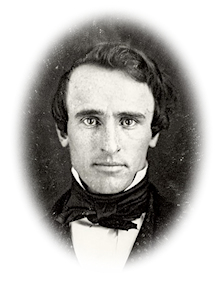
The tents leak and the ground is low and flat.—Rutherford B. Hayes

Diary and Letters of Rutherford Birchard Hayes
Rutherford B. Hayes (young)

CINCINNATI, [May 27, 1861.]

DEAR UNCLE:–I have nothing in particular you to write. I heard a good war sermon today on the subject, “The Horrors of Peace”!

The weather is very unfavorable for troops in camp–wet and chilly. The tents leak and the ground is low and flat. These things will gradually mend themselves. We shall have precious little business this summer, judging by present appearances. Come down when you feel like it.

Sincerely,

R. B. HAYES.

S. BIRCHARD.

0 comments