Important from Cairo.

New York Times, News of the Day

The New York Times
May 30, 1861

Cairo, Wednesday, May 29.
A full regiment of St. Louis volunteers, under command of Col. Schutiner, arrived this afternoon, and proceeded at once to Bird’s Point, which they will permanently hold. They are supplied with Minie rifles, camp equipage, and provisions for thirty days.
Two batteries will be sent from here to-morrow.
Gentlemen from the South report that that of all the troops under the command of Gen. Pillow only 5,1000 are well armed, and these are principally at Union City and Randolph. Arms, however, are daily arriving for others.
Three 32-pounders, one 8 inch howitzer, and one 13-inch mortar are now being mounted, and will be finished to-morrow.
The news that troops have been sent into Virginia from Ohio, strengthens the belief of an early movement from here.
0 comments

Horatio Nelson Taft

Diary of US patent clerk Horatio Nelson Taft.

THURSDAY 30

Did not feel much worse for “wear” today for my long walk yesterday. Attended to business in the office as usual, got my months salary $150. Came home about 1/2 past 2 o’clock and with wife and Juliet went to the Prests to see some troops reviewed by the Prest and Genl Scott. The 14th & 9th the German Regt and the Garabaldy Guards, 4000 in all. Went on to the Av’e, after was at the National. Saml Androus joined his Regt. Came home before dark, little boys sick.


The three diary manuscript volumes, Washington during the Civil War: The Diary of Horatio Nelson Taft, 1861-1865, are available online at The Library of   Congress.

0 comments

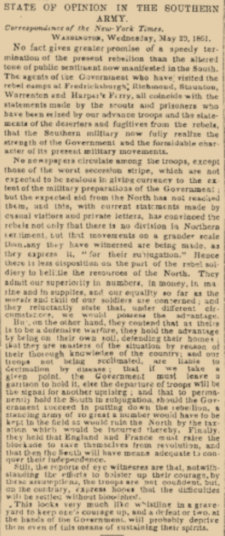
State of Opinion in the Southern Army

New York Times, News of the Day

The New York Times
May 30, 1861

Correspondence of the New-York Times.
Washington, Wednesday, May 29, 1861.
No fact gives greater promise of a speedy termination of the present rebellion than the altered tone of public sentiment now manifested in the South. The agents of the Government who have visited the rebel camps at Fredricksburgh, Richmond, Staunton, Warrenton and Harper’s Ferry, all coincide with the statements made by the scouts and prisoners who have been seized by our advance troops and the statements of the deserters and fugitives from the rebels, that the Southern military now fully realize the strength of the Government and the formidable character of its present military movements.
No newspapers circulate among the troops, except those of the worst secession stripe, which are not expected to be zealous in giving currency to the extent of the military preparations of the Government; but the expected aid from the North has not reached them, and this, with current statements made by casual visitors and private letters, has convinced the rebels not only that there is no division in Northern sentiment, but that movements on a grander scale than any they have witnessed are being made, as they express it, “for their subjugation.” Hence there is less disposition on the part of the rebel soldiery to belittle the resources of the North. They admit our superiority in numbers, in money, in marine and in supplies, and our equality so far as the morale and skill of our soldiers are concerned; and they reluctantly state that, under different circumstances, we would possess the advantage.
But, on the other hand, [continue reading…]
0 comments

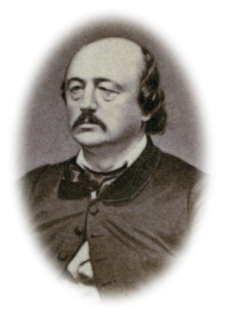
Cameron affirms Butler’s contraband action: “…refrain from surrendering to alleged masters any persons who may come within your lines.”

War of the Rebellion: from the Official Records of the Union and Confederate Armies and Navies
Washington, May 30, 1861.
Major-General Butler.
Sir: Your action in respect to the negroes who came in your lines from the service of the rebels is approved.
The Department is sensible of the embarrassment which must surround officers conducting military operations in a State by the laws in which slavery is sanctioned. The Government cannot recognize the rejection by any State of its federal obligations nor can it refuse the performance of the federal obligations resting upon itself. Among these federal obligations, however, none can be more important than that of suppressing and dispersing armed combinations formed for the purpose of overthrowing its whole constitutional authority. While therefore you will permit no interference by the persons under your command with the relations of persons held to service under the laws of any State, you will on the other hand so long as any State within which your military operations are conducted is under the control of such armed combinations refrain from surrendering to alleged masters any persons who may come within your lines. You will employ such persons in the service to which they may be best adapted, keeping an account of the labor by them performed, of the value of it and of the expense of their maintenance. The question of their final disposition will be reserved for future determination.
SIMON CAMERON,
Secretary of War.
0 comments

Extracts from the journal of Commander Semmes, C.S. Navy, commanding C.S.S. Sumter

War of the Rebellion: from the Official Records of the Union and Confederate Armies and Navies
Thursday, May 30.—My patience is sorely tried by the New Orleans mechanics. The water tanks for the Sumter are not yet completed. The carriage for the 8-inch gun was finished to-day, and we are laying down the circles and cutting the holes for the fighting bolts. The carriages for the 32-pounders are promised by Saturday next, and also the copper tanks for the magazine. Our ammunition and small arms arrived yesterday from Baton Rouge. Besides the Brooklyn at the passes, the Niagara and Minnesota are in the gulf watching for the arrival of some ships bound to this port laden with arms and ammunition.
0 comments

A letter from Claude Legrand—”…and have only time to say that General Jackson has driven the enemy back to Harper’s Ferry, and that our brigade, regiment and company have done their share.

The Journal of Julia LeGrand

Thursday, May 30th, 1861.

Dearest Sisters:

If this reaches you be satisfied of my continued health and safety. I wish I could get such an assurance of yours. A man leaves today who will try and get through. I am happy now in my profession, and do not wish to come back except to see you all. God grant the rascals will not molest you, if you are still in the city. We have had no mails from the army for a long while, which is the reason I have not written. Some few letters have come to the camp by indirect means. I trust you are still with Mrs. Chilton, in Madison. I write in haste and have only time to say that General Jackson has driven the enemy back to Harper’s Ferry, and that our brigade, regiment and company have done their share. We have been highly complimented. Our brigade loss has been considerable in killed and wounded, but not very great considering that we followed and fought every now and then for three days. One man, Jennings, was killed from our company. I wish to God you had gone to Texas in time. I have written to Mrs. Chilton and Mrs. Smith to find out where you are. If we have any kin in Baltimore, please let me know their names and conditions, and get me any polite letters there or elsewhere you can; no one knows where the fortunes of war may soon take us. We are on the eve of breaking camp, so I must quit. Do go to Texas as soon as you can.

Your very uneasy brother,

Claude.

__________

page 26, Journal of Julia LeGrand, who at this point is in New Orleans, the journal to be started in December, 1861.

0 comments

Civil War Day-By-Day

Civil War Day-by-Day

May 30, 1861

  • At a convention in Knoxville, a group of Unionists denounce Tennessee’s secessionist actions.

A Chronological History of the Civil War in America1

  • Grafton and Williamsport, Va., evacuated by the rebels.

  1. A Chronological History of the Civil War in America by Richard Swainson Fisher, New York, Johnson and Ward, 1863
0 comments

Expedition to Newport News

War of the Rebellion: from the Official Records of the Union and Confederate Armies and Navies
Headquarters Department of Virginia,
May 29, 1861.
Sir: The expedition to Newport News, of which I spoke in my last, eight miles from this place, landed without opposition. I have caused an intrenched camp to be made there, which, when completed, will be able to hold itself against any force that may be brought against it, and afford even a better depot from which to advance than Fortress Monroe. The advantages of the News are these: There are two springs of very pure water there; the bluff is a fine, healthy location. It has two good, commodious wharves, to which steamers of any draught of water may come up at all stages of the tide; it is as near any point of operation as Fortress Monroe, where we are obliged to lighter all vessels of draught over ten feet, and have but one wharf. The News, upon which I propose to have a water battery of four 8- inch guns, commands the ship channel of James River, and a force there is a perpetual threat to Richmond.
My next point of operation I propose shall be Pig Point, which is exactly opposite the News, commanding Nansemond River. Once in command of that battery, which I believe may be easily turned, [continue reading…]
0 comments

Status of U. S. Mediterranean Squadron, Heading Home

War of the Rebellion: from the Official Records of the Union and Confederate Armies and Navies

Report of Flag-Officer Bell, U. S. Navy, commanding U. S. naval forces, Mediterranean Sea, of his arrival at Gibraltar in the flagship Richmond.1

U. S. Flagship Richmond,
Gibraltar, May 29, 1861.
Sir: I have the honor to inform you that we arrived here yesterday in six and a half days from Genoa. In consequence of thick, foggy weather, I anchored at Malaga for a few hours. I availed myself of this opportunity to communicate to the consulate information received in regard to the probability of privateers being fitted out in Spain to cruise against our commerce in the Mediterranean. I learn here that the Susquehanna left Cadiz for New York on the 19th instant, and the Iroquois on the 25th; this ship will follow to-morrow.
Previous to leaving Genoa we made two attempts, both without success, to raise our propeller. In former communications I informed the Department of this difficulty, and that I intended to dock the ship at Toulon, to have it remedied; but the order to return home, at this important time, did not admit of this delay. We shall have to therefore drag it most of the way across the ocean, as we can not carry coal sufficient to steam the whole distance. This will compel me to stop at Madeira to fill up, but I hope that this detention will not be for more than one day. Under all these circumstances I think the Richmond may be expected to arrive in New York about the 5th of July.
I have the honor to be, very respectfully, yours,
Chas. H. Bell,
Flag-Officer, Commanding U. S. Naval Forces, Mediterranean.
Hon. Gideon Welles,
Secretary of the Navy.

…


  1. Orders had been received on May 4 recalling the ships to the U. S.

0 comments

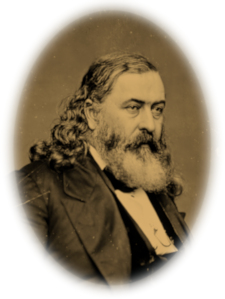
Albert Pike to Secretary of State Toombs on Conditions in the Indian Territories

News of the Day
Fort Smith, Ark., May 29, 1861.
Hon. Robert Toombs,
Secretary of State, Confederate States of America:
Sir: I leave this morning for Tahlequah, the seat of government of the Cherokee Nation, and Park Hill, the residence of Governor Ross, the principal chief. Since 1835 there have always been two parties in the Cherokee Nation, bitterly hostile to each other. The treaty of that year was made by unauthorized persons, against the will of the large majority of the nation and against that of the chief, Mr. Ross. Several years ago Ridge, Boudinot, and others, principal men of the treaty party, were killed, with, it was alleged, the sanction of Mr. Ross, and the feud is to-day as bitter as it was twenty years ago. The full-blooded Indians are mostly adherents of Ross, and many of them—1,000 to 1,500 it is alleged—are on the side of the North. I think that number is exaggerated. The half-breeds or white Indians (as they call themselves) are to a man with us. It has all along been supposed, or at least suspected, that Mr. Ross would side with the North. His declarations are in favor of neutrality. But I am inclined to believe that he is acting upon the policy (surely a wise one) of not permitting his people to commit themselves until he has formal guarantees from an authorized agent of the Confederate States. These I shall give him if he will accept them. General McCulloch will be with me, and I strongly hope that we shall satisfy him, and effect a formal and firm treaty. If so, we shall have nearly the whole nation with us, and those who are not will be unimportant. If he refuses he will learn that his country will be occupied; and I shall then negotiate with the leaders of the half-breeds who are now raising troops, and who will meet me at the Creek Agency on Friday of next week. Several of those living near here I have already seen.
On Wednesday of next week I will meet the chiefs of the Creeks at the North Fork of the Canadian. I will then fix a day for a council of the Creeks, and go on to meet the Choctaws at Fort Washita. When I shall have concluded an arrangement with them I will go to the Chickasaw Country, and thence to the Seminoles.
I hope to meet [continue reading…]
0 comments

The letter which I wrote yesterday to Baron Rothschild—August Belmont (DNC Chairman)

Civil War Day-by-Day

To The Hon. W. H. SEWARD,

Secretary of State, Washington, D. C.

New York, May 29, 1861

My Dear Sir,—I am extremely obliged to you for the very kind and flattering manner with which you speak of a letter of mine to Baron Rothschild, of which a copy had been handed to you by Mr. Weed.

The Baron is a very intimate friend of Lord John Russell, both representing the city of London in Parliament, and he is on equally friendly relations with Lord Palmerston.

I know that his personal views and sympathies have been, and are, still, with the North, and I have no doubt but what he will communicate my views to his ministerial friends.

As you have given a favorable consideration to my views on the unfriendly attitude assumed by the British Crown, I beg to hand you the inclosed copy of another letter which I wrote yesterday to Baron Rothschild on the proclamation of the Queen, and which I hope you will find leisure to peruse.

0 comments

Action between the U.S. vessels Pawnee and Freeborn and the rebel batteries at Aquia Creek

Library of Congress

Action between the U.S. vessels Pawnee and Freeborn and the rebel batteries at Acquia CreekThe Battle of Aquia Creek was an exchange of cannon fire between Union Navy gunboats and Confederate shore batteries on the Potomac River at its confluence with Aquia Creek in Stafford County, Virginia. The battle took place from May 29, 1861 to June 1, 1861 during the early days of the American Civil War. The Confederates set up several shore batteries to block Union military and commercial vessels from moving in the Chesapeake Bay and along the lower Potomac River as well as for defensive purposes. The battery at Aquia also was intended to protect the railroad terminal at that location. The Union forces sought to destroy or remove these batteries as part of the effort to blockade Confederate States coastal and Chesapeake Bay ports. The battle was tactically inconclusive. Each side inflicted little damage and no serious casualties on the other. The Union vessels were unable to dislodge the Confederates from their positions or to inflict serious casualties on their garrisons or serious damage to their batteries. The Confederates manning the batteries were unable to inflict serious casualties on the Union sailors or cause serious damage to the Union vessels. Soon after the battle, on Sunday, July 7, 1861, the Confederates first used naval mines, unsuccessfully, off the Aquia Landing batteries. The Confederates ultimately abandoned the batteries on March 9, 1862 as they moved forces to meet the threat created by the Union Army’s Peninsula Campaign. The U. S. National Park Service includes this engagement in its list of 384 principal battles of the American Civil War. (Read more at Wikipedia)

Library of Congress Information:

Title: Action between the U.S. vessels Pawnee and Freeborn and the rebel batteries at Acquia [sic] Creek
Creator(s): Waud, Alfred R. (Alfred Rudolph), 1828-1891, artist
Date Created/Published: [1861 June 27?]
Medium: 1 drawing on brown paper : pencil, Chinese white, and black ink wash ; 19.2 x 26.0 cm. (sheet).
Reproduction Number: LC-DIG-ppmsca-21146 (digital file from original item) LC-USZ62-166 (b&w film copy neg.)
Rights Advisory: No known restrictions on publication.
Call Number: DRWG/US – Waud, no. 277 recto (A size) [P&P]
Repository: Library of Congress Prints and Photographs Division Washington, D.C. 20540 USA
Notes:
…..Title inscribed below image.
…..Inscribed above image with indicators: Gunboat Freeborn; rebel batteries; RR depot and long dock on fire; rebel batteries; U.S. Sloop Pawnee.
…..Gift, J.P. Morgan, 1919 (DLC/PP-1919:R1.2.277)
…..Reference print available in the Civil War Drawings file 1861.
…..Forms part of: Morgan collection of Civil War drawings.

Image at Library of Congress

Blog post
___________
Mike’s notes:

Note – This image has been digitally adjusted for one or more of the following:
– fade correction,
– color, contrast, and/or saturation enhancement
– selected spot and/or scratch removal
– cropped for composition and/or to accentuate subject

0 comments

The Indians of Kansas.

News of the Day

Leavenworth Daily Times
Kansas
May 29, 1861

We are informed by Mr. Ross, the agent of the Pottawotomies, that they heartily sympathize with their Great Father, in his efforts to subdue his rebellious and wayward Southern children, and have formed companies to aid, if necessary, in defending Kansas from any hostile or invading force. While this is undoubtedly true of the Pottawotomies, who are comparatively intelligent, there are other tribes in the State who may not be so thoroughly devoted to the Government. The Shawnees and Osages, especially, should be closely watched. We advise the agents of those Indians to ascertain, beyond question, whether they are disposed to be friendly to the Government. It may not be long before Kansas has to cope with the treacherous slaveholding savages of the Cherokee Nation, and we should therefore be certain that we have no enemy in our own midst.
0 comments

Extracts from the journal of Commander Semmes, C.S. Navy, commanding C.S.S. Sumter

War of the Rebellion: from the Official Records of the Union and Confederate Armies and Navies
Saturday, June 29.—The pilot having reported from aloft that the Brooklyn was no where to be seen, got up steam immediately and ran down Pass à l’Outre with the intention of running the blockade, but after running down the pass 3 or 4 miles we were disappointed to learn that the ship was still at her anchors, our drifting from our own anchor having caused us to shut the Brooklyn in behind some trees, which gave rise to the pilot’s mistake. Returned to our anchorage, changing our position a little to the northward. At 10 p.m. dispatched guardboats down both the passes. At about 11:30 p . m . the telegraphic operator from Pass à l’Outre reported that the enemy had sent a boat to the station and carried off his instruments.
0 comments

“Went to the 69th, Col Corcoran, opposite Georgetown. Extensive and strong ‘works’ going up there.”—Horatio Nelson Taft

Diary of US patent clerk Horatio Nelson Taft.

WEDNESDAY 29

It has been a fine, cool, and airy day. Took a longer walk than I have for some time. Got a “pass” from Genl Mansfield and about 12 o’clock started with Mr Vansantvoord for Virginia over the Long Bridge. Visited the encampments of some 6000 men and their entrenchments. Was at “Arlington House,” “the Head Quarters” of Genl Sanford. Most delightful place, within fine view of the City. The NY 8th Regt are there. The 25th (Including the Albany Burgeses Corps[?]) are about one mile below or south, 3 miles from the River. Went to the 69th, Col Corcoran, opposite Georgetown. Extensive and strong “works” going up there. Crossed the Aqueduct (canal) to Georgetown, got Home about 6 o’c. Walked about 8 miles.


The three diary manuscript volumes, Washington during the Civil War: The Diary of Horatio Nelson Taft, 1861-1865, are available online at The Library of   Congress.

0 comments

Letter from Pensacola.

News of the Day

Daily Constitutionalist
Augusta, Georgia
May 29, 1861

We have been permitted to make the following extracts from a private letter, received in this city from a member of the Irish Volunteers:
Pensacola, Fla., May 21st, 1861.
My Dear Friend Mc: We are camped about one mile from this town. At the time that we arrived on the ground it was a perfect wilderness, so we all had to pitch in with shovels, axes and spades, and it was a caution to see how we made those bushes fly. We have now about fifty acres of land cleared.
The whole of the Fifth Regiment is here. Each company has its tents arranged in the form of a street, and they all run in the same direction. We went into the woods and cut down pine trees and evergreens, and have made beautiful arbors outside of our tents, so that under all the circumstances, we are as comfortable as we could expect.—There are five men in each tent. My messmates are Dennis O’Donohoe, Frenchy, Sergeant Fox and James McKeegan. They are all first rate fellows. I like Frenchy very much, a brother could not be more kind to me—we all pull together, and get along smoothly. It is the greatest advantage, in a place like this, to get in with some men that can understand each other. There is something to be done here all the time, between washing, cooking, marching, drilling, cleaning, scraping, and the dickens knows what. We get five days’ rations at a time. We get bacon, rice, sugar, coffee, beans, &c., in fact, we get a plenty to eat, but I can’t go the bacon. It is about a foot and a half thick, and if you were to stand on a side of this bacon, [continue reading…]
0 comments

Taney and Cadwallader.

News of the Day

The New York Times
May 28, 1861

The controversy between Chief Justice Taney and Gen. Cadwallader is in all respects unfortunate. A collision of civil and military authority is always to be, if possible, shunned; because the majesty of law must, in all cases, succumb to the necessities of war, and the respect which the magistracy must assert for itself in a period of peace, is impaired by the sight of a fruitless struggle for supremacy at a period when military law is in the ascendant. In the case of John Merriman, the interposition of Chief Justice Taney can only be regarded as at once officious and improper. If the questions of right in the matter had to be tested, there were other legal authorities, whose intervention would have been quite as effectual as that of the Chief Justice, before whom, should the case give rise to litigation, it may eventually come for final adjudication. The issue, moreover, was one to which the State of Maryland was a party, and which therefore should have been raised by a magistrate of that State. In thus energetically interposing, Judge Taney presents the ungracious spectacle of a judicial and a military authority of the United States at variance, the soldier eager to punish, and the jurist to exculpate a traitor. The antithesis might have been very easily avoided; and an impression that the zeal of the Justice might have been less fervent, had not the prisoner been a citizen of his own State a neighbor, and a personal friend, would not have countenanced.
0 comments

Invasion Rumors.

News of the Day

Memphis Daily Appeal
Tennessee
May 29, 1861

Reports have been circulated of the advance of Jim Lane and his men into Arkansas from the State of Kansas, but little attention was paid to them until yesterday, when some fifty women, many of them with children, entirely without protectors of the other sex, arrived in this city by way of the Little Rock railroad and ferry-boat. They were generally from Madison and adjoining parts of St. Francis county. One of the gentlemen on the same train stated that information had been received of the presence of Lane on Black river, between Pocahontas and Jacksonport. He said he was one of a committee appointed at a meeting of the citizens of Madison to request Gen. Bradley, and also Gen. Pillow, to send troops and arms to their defense. He also stated that Gov. Rector had telegraphed Gen. Bradley to hasten with what troops could be spared from his command, and meet the invading enemy. John D. Adams, of the steamboat Notrebe, yesterday received a dispatch from George Morrison, of Little Rock, informing him that great excitement existed there in consequence of the prevalence of a report of the same tenor as given above. We were informed that dispatches had been received from Mr. Morrill, editor of the Des Arc Citizen, which stated that the steamboat Mary Patterson had arrived at that place, and her people informed them that the story of Lane and his men being on Black river was false; also that a thousand Arkansas troops were on the watch on the Missouri line to prevent invasion. This dispatch came in last evening. The Mary Patterson had twelve tuns of lead on board, brought overland to a point on the river, from Iron Mountain, Mo.; there was more to come. It was also confidently stated that Gen. Harney with Lincoln troops was at Ironton, the termination of the St. Louis and Iron Mountain railroad.
0 comments

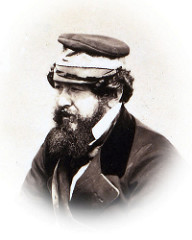
It is a strange country, indeed;—William Howard Russell

My Diary North and South – William Howard Russell

May 29th.—Dined in the evening with M. Aristide Milten-berger, where I met His Excellency Mr. Moore, the Governor of Louisiana, his military secretary, and a small party.

It is a strange country, indeed; one of the evils which afflicts the Louisianians, they say, is the preponderance and influence of South Carolinian Jews, and Jews generally, such as Moise, Mordecai, Josephs, and Judah Benjamin, and others. The subtlety and keenness of the Caucasian intellect give men a high place among a people who admire ability and dexterity, and are at the same time reckless of means and averse to labor. The Governor is supposed to be somewhat under the influence of the Hebrews, but he is a man quite competent to think and to act for himself—a plain, sincere ruler of a slave state, and an upholder of the patriarchal institute. After dinner we accompanied Madame Milten-berger (who affords in her own person a very complete refutation of the dogma that American women furnish no examples of the charms which surround their English sisters in the transit from the prime of life towards middle age), in a drive along the shell road to the lake and canal; the most remarkable object being a long wall lined with a glorious growth of orange trees: clouds of mosquitoes effectually interfered with an enjoyment of the drive.

0 comments

Driven from Missouri.

News of the Day

Leavenworth Daily Times
Kansas
May 29, 1861

Mrs. A. Hackey, of Ohio, came to this city yesterday on her return from Missouri, whither she went to visit her father, who resides near Macon City, on the Hannibal and St. Joseph Railroad. On arriving at the place where he lived, she was informed that the old man, who is in his seventy-third year, and two sons in law, had been given twenty-four hours to leave, by the secessionists in that region, and they had accordingly gone, leaving behind them most of their property, as they were unable to carry it away. The old gentleman’s name is Wm. More. How long will this state of things be permitted to continue in Missouri?— Springfield Journal.
0 comments

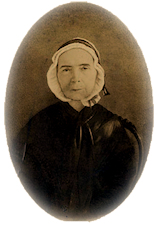
“I feel so anxious and restless about those so near and dear to us…”

Diary of a Southern Refugee During the War by Judith White McGuire

May 29.—I cannot get over my disappointment—I am not to return home!—The wagon was engaged. E. W. had promised to accompany me; all things seemed ready; but yesterday a gentleman came up from the Seminary, reporting that the public roads are picketed far beyond our house, and that he had to cross fields, etc., to avoid an arrest, as he had no pass. I know that there are private roads which we could take, of which the enemy knows nothing; and even if they saw me, they surely would not forbid ingress and egress to a quiet elderly lady like myself. But Mr. thinks that I ought not to risk it. The fiat has gone forth, and I am obliged to submit. I hear that the house has been searched for arms, and that J’s old rifle has been filched from its corner. It was a wonderfully harmless rifle, having been innocent even of the blood of squirrels and hares for some time past. I wonder if they do suppose that we would leave good fire-arms in their reach when they are so much wanted in the Confederacy, or if it is a mere pretext for satisfying a little innocent curiosity for seeing the interior of Southern homes? Ah, how many Northerners—perhaps the very men who have come to despoil these homes, to kill our husbands, sons and brothers, to destroy our peace—have been partakers of the warmhearted hospitality so freely [continue reading…]

0 comments

Civil War Day-By-Day

Civil War Day-by-Day

May 29, 1861

A Chronological History of the Civil War in America1

  • President Davis reached Richmond, the new seat of the Confederate Government.
  • Federals advanced toward Harper’s Ferry; rebels retired toward Martinsburg, Va.

  1. A Chronological History of the Civil War in America by Richard Swainson Fisher, New York, Johnson and Ward, 1863
0 comments

“It would be difficult for me to convey to you an idea of the general feeling of disappointment and irritation produced in this country, by this manifesto of the British government..,”—August Belmont (DNC Chairman)

Civil War Day-by-Day

To Baron LIONEL de ROTHSCHILD, M.P.,

London.

New York, May 28

Dear Baron,—Since my letter by the Africa steamer we have received the proclamation of the Queen, commanding a strict neutrality to her subjects in the struggle in which the government of the United States is now engaged against a portion of its citizens, now in rebellion against their constituted authorities.

It would be difficult for me to convey to you an idea of the general feeling of disappointment and irritation produced in this country, by this manifesto of the British government, by which a few revolted States are placed, in their relations with Great Britain, upon the same footing as the government of the United States.

People naturally compare the position which England takes now against us, to her stand during the Carlist war in Spain. The rebellion in the South has not the same chances of success as there existed certainly at one time for the cause of the Spanish pretender. Yet it certainly never occurred to the British crown for one moment to acknowledge Don Carlos in the light of a belligerent. On the contrary, we saw a British legion, armed and equipped in England, and commanded by an English general officer, fight for the cause of the constitutional and rightful sovereignty. [continue reading…]

0 comments

A Good Work Going On.

News of the Day

Memphis Daily Appeal
Tennessee
May 28, 1861

The Nashville Union speaks encouragingly of the manner in which military work is being forwarded in the penitentiary. On visiting that institution on Friday last, the editor found sixtyfive men employed alone in making cartridges, turning them out at the rate of 20,000 per diem. A little practice will greatly increase the result of their labors. Thirty men are employed in
repairing and cleaning muskets, who finish up, as bright and perfect as when new, about one hundred daily. The manufacture of cap boxes, cartridge belts, haversacks, camp chairs, stools, cots, military chests, etc., etc., is also being vigorously prosecuted. Of course all these preparations are being made at a very trifling expense to the State.

0 comments

Families of Volunteers.

News of the Day

Memphis Daily Appeal
Tennessee
May 28, 1861

Although the county court have agreed to furnish regular aid to the wives and children of those who are gone to the war, we are informed by the mayor that he has many applications made to him by those who are entitled to this aid, and whose necessities require immediate attention, but that he is unable to direct them what to do, as the mode of dispensing the promised assistance has not been agreed upon. This is an important subject; we are bound to prevent distress and want reaching the families of those who have devoted their lives to their country. Let no “red tape-ism,” no “circumlocution office” obstructions stand in the way of the performance of this sacred duty. Since writing the preceding, we have been informed that any proper person calling upon any magistrate, (Esquire Hume and Mallory have been appointed in this city) and presenting a certificate of the volunteer’s enlistment, when he enlisted, and in what company, will at once obtain relief.

0 comments