Daily Times
Leavenworth, Kansas
June 1, 1861
Daily Times
Leavenworth, Kansas
June 1, 1861
Chantilly, June 1.—We came here (the house of our friend Mrs. S.) this morning, after some hours of feverish excitement. About three o’clock in the night we were aroused by a volley of musketry not far from our windows. Every human being in the house sprang up at once. We soon saw by the moonlight a body of cavalry moving up the street, and as they passed below our window (we were in the upper end of the village) we distinctly heard the commander’s order, “Halt.” They again proceeded a few paces, turned and approached slowly, and as softly as though every horse were shod with velvet. In a few moments there was another volley, the firing rapid, and to my unpractised ear there seemed a discharge of a thousand muskets. Then came the same body of cavalry rushing by in wild disorder. Oaths loud and deep were heard from the commander. They again formed, and rode quite rapidly into the village. Another volley, and another, then such a rushing as I never witnessed. The cavalry strained by, the commander calling out “Halt, halt,” with curses and imprecations. On, on they went, nor did they stop. While the balls were flying, I stood riveted to the window, unconscious of danger. When I was forced away, I took refuge in the front yard. Mrs. B. was there before me, and we witnessed the disorderly retreat of eighty-five of the Second United States Cavalry (regulars) before a much smaller body of our raw recruits. They had been sent from Arlington, we suppose, to reconnoitre. They advanced on the village at full speed, into the cross-street by the hotel and court-house, then wheeled to the right, down by the Episcopal church. We could only oppose them with the Warrenton Rifles, as for some reason the cavalry could not be rendered effective. Colonel Ewell, who happened to be there, arranged the Rifles, and I think a few dismounted cavalry, on either side of the street, behind the fence, so as to make it a kind of breastwork, whence they returned the enemy’s fire most effectively. Then came the terrible suspense; all was confusion on the street, and it was not yet quite light. One of our gentlemen soon came in with the sad report that [continue reading…]
June 1, 1861
A Chronological History of the Civil War in America1
Memorandum for General Lee.
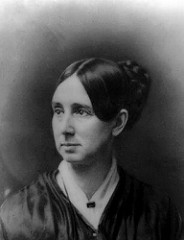
Before any battles, Dorothea Dix says don’t send women of any age looking for employment unless the need is announced.
The New York Times
May 31, 1861
Report of Flag Officer Sands, U. S. Navy, commanding U. S. Brazil Squadron, of departure of U. S. S. Seminole for Philadelphia, in obedience to orders.
FRIDAY, MAY 31, 1861.
Weather very delightful. Boys some sick last night (much fever) but better today. Nothing of particular interest has occured. The 7th NY Regt returned home today, term (30 days) being up, other Regts are arriving every day. Went down to the N Yard after dinner with H N Jr, ten or twelve War Steamers there at the Dock. Thirty odd prisoners taken at Alexandria (Capt Balls troopers) were in confinement on the Powhattan. Saw the 71st NY Regt parade in the yard where they are quartered. Came home direct before dark, did not go out again.
The three diary manuscript volumes, Washington during the Civil War: The Diary of Horatio Nelson Taft, 1861-1865, are available online at The Library of Congress.
The New York Times
May 31, 1861
Chicago, Thursday, May 30.
Up to last night it was thought that Senator Douglas was getting better. Since then he has been gradually sicking, and fears are entertained by his friends and physicians that he will not live through the night.
MAY 31ST.—I arrived in Richmond about 1 o’clock P.M. The meeting with my family was a joyful scene. All were well.
I lost no time in securing rooms for the department in the new custom-house. Mr. Giles had been employed in this business by the Congressional Committee, and I found him every way accommodating. I succeeded without difficulty in convincing him that the War Department was the most important one, and hence entitled to the first choice of rooms. I therefore selected the entire suites on both sides of the hall on the lower floor. The Treasury, the Executive office, Cabinet chamber, and Departments of Justice and the Navy were located on the floor above. This arrangement, however, was understood to be but a temporary one; Mechanics Hall was leased for future purposes; and I was consulted on the plan of converting it into suites of offices.
Daily Constitutionalist
August, Georgia
May 31, 1861
May 31st.—I went with Mr. Mure to visit the jail. We met the sheriff, according to appointment, at the police court. Something like a sheriff—a great, big, burly, six-foot man, with revolvers stuck in his belt, and strength and arms quite sufficient to enable him to execute his office in its highest degree. Speaking of the numerous crimes committed in New Orleans, he declared it was a perfect hell upon earth, and that nothing would ever put an end to murders, manslaughters, and deadly assaults till it was made penal to carry arms; but by law every American citizen may walk with an armoury round his waist if he likes. Bar-rooms, cock-tails, mint juleps, gambling-houses, political discussions, and imperfect civilization do the rest.
The jail, is a square white-washed building, with cracked walls and barred windows. In front of the open door were seated four men on chairs, with their legs cocked against the wall, smoking and reading newspapers. “Well, what do you want?” said one of them, without rising. “To visit the prison.” “Have you got friends inside, or do you carry an order?” The necessary document from our friend the sheriff was produced. We entered through the doorway, into a small hall, at the end of which was an iron grating and door. A slightly-built young man, who was lolling in his shirt sleeves on a chair, rose and examined the order, and, taking down a bunch of keys from a hook, and introducing himself to us as one of the warders, opened the iron door, and preceded us through a small passage into a square court-yard, formed on one side by a high wall, and on the other three by windowed walls and cells, with doors opening on the court. It was filled with a crowd of men and boys; some walking up and down, others sitting, and groups on the pavement; some moodily apart, smoking or chewing; one or two cleaning their clothes or washing at a small tank. We walked into the midst of them, and the warder, smoking his cigar and looking coolly about him, pointed out the most desperate criminals.
This crowded and most noisome place was filled with felons of every description, as well as with poor wretches merely guilty of larceny. Hardened murderers, thieves, and assassins were here associated with boys in their teens who were undergoing imprisonment for some trifling robbery. It was not pleasant to rub elbows with miscreants who lounged past, almost smiling defiance, whilst the slim warder, in his straw hat, shirt sleeves, and drawers told you how such a fellow had murdered his mother, how another had killed a policeman, or a third had destroyed no less than three persons in a few moments. Here were seventy murderers, pirates, burglars, violators, and thieves circulating among men who had been proved guilty of no offence, but were merely waiting for their trial. [continue reading…]
Memphis Daily Appeal
Tennessee
May 31, 1861
We have extreme pleasure in stating that ample relief will be extended to the families of those who are in the army of their country and whose families are without the means to maintain themselves. It was proposed to pay such families in orders on the county treasurer; these orders were to be used as money and paid to the storekeepers who would collect the cash from the treasurer. This system would have exposed the women who received the orders to the operation of “shaving” from such harpies as might be ready to take advantage of their helplessness, and of their ignorance of the stature of county paper, to fleece them. The orders would therefore have actually been worth to them a much lower sum than appeared on their face. They might have lost forty cents on the dollar, yet the county treasury would not be advantaged a cent, as the whole amount must be paid there. Another evil effect would have resulted from the depression of these orders—the county paper generally could not escape participating in the depreciation. To save the families of the volunteer from any possible imposition, and to secure to them all the advantages the county court intended, the banks of the city have undertaken to advance money to the county, and this money will be paid to the families of volunteers, enabling those who receive it to use it to the best advantage, to make their purchases where they please, and in such amounts as they choose, which could not have been done with county orders. On Monday a meeting of magistrates will be held at Raleigh, when the details of the mode of making the allowances will be decided upon; the scheme will then go into practical operation. Some individual, whose patriotic benevolence will prompt him gratuitously to perform the labor, will probably be appointed treasurer of the county fund for the relief of the families of volunteers; to him the persons entitled to receive relief will apply at set intervals—once a week would be a good time—and he will pay them their allotted allowance.
Memphis Daily Appeal
Tennessee
May 31, 1861
At one o’clock to-day the two negroes, Moses and Isaac, found guilty of murder, are to be executed in the field on the Raleigh road, this side the fair grounds. The prisoners will leave the jail about noon, escorted by Capt. Jackson’s company of Bluff City Guards and the Italian company of Garibaldi Guards, which companies will preserve order at the place of execution, forming a cordon around the gallows. The prisoners were visited by several clergymen, and other pious persons yesterday. Moses, who killed an Italian organ-player, is of somewhat obtuse intellect. He says little, but shows some signs of distress. Isaac, who killed an overseer, is an intelligent fellow. He has occupied most of his time, of late, in reading the Bible, and in writing some incidents of his religious experience. He is devotional, and anxious to be
prepared for the great future he has this day to face. Spite of babbling theorists, Isaac is acute enough to know that while he “who spake as never man spake” forgave a criminal at the place of execution, and assured him an entrance into paradise, there is firm hope for the worst if earnestly sought for. This is the first legal execution that ever took place in this city; a negro who committed an atrocious murder was hung here some years ago by the enraged mob. The execution of Levi Stover is fixed for June 28th. Barnes, who was also sentenced to be hung, obtained a new trial.
CINCINNATI, May 31, 1861.
DEAR UNCLE:–I made my preparations to start for Fremont by way of Toledo tomorrow, as intimated in my letter of the early part of the week, but a gleam of light breaks in upon us in regard to our war project, and I concluded to wait; but if nothing turns up, I will come and see you a week hence. Mother is quite well again. All the rest of us in excellent health.
The times are no better, and I see nothing which indicates an early termination of the war. We must make up our minds for hard rations and little money.
Sincerely,
R. B. HAYES.
S. BIRCHARD.

Title: The 71st reg. N.Y. at Alexandria
Creator(s): Waud, Alfred R. (Alfred Rudolph), 1828-1891, artist
Date Created/Published: [1861 May 24-31]
Medium: 1 drawing on brown paper : pencil and Chinese white ; 20.3 x 16.1 cm. (sheet).
Summary: Soldiers resting in front of buildings.
Reproduction Number: LC-DIG-ppmsca-21025 (digital file from original item) LC-USZC4-5171 (color film copy transparency) LC-USZ62-14343 (b&w film copy neg.)
Rights Advisory: No known restrictions on publication.
Call Number: DRWG/US – Waud, no. 179 (A size) [P&P]
Repository: Library of Congress Prints and Photographs Division Washington, D.C. 20540 USA
Notes:
…..Signed above title lower left: AR Waud.
…..Title inscribed below image.
…..Inscribed below image: This regt. went over today without camp equipage. The 71st N.Y. wore Cardigan jackets gray in color.
…..Published in: New York Illustrated News, June 15, 1861.
…..Gift, J.P. Morgan, 1919 (DLC/PP-1919:R1.2.179)
…..Reference print available in the Civil War Drawings file 5.
…..Forms part of: Morgan collection of Civil War drawings.
https://www.flickr.com/photos/exit78/2376501436/
___________
Mike’s notes:
Note – This image has been digitally adjusted for one or more of the following:
– fade correction,
– color, contrast, and/or saturation enhancement
– selected spot and/or scratch removal
– cropped for composition and/or to accentuate subject
May 31, 1861
A Chronological History of the Civil War in America1
(excerpts)
RICHMOND, May 30th.
“After a terribly fatiguing journey we arrived here safely yesterday morning. We left Montgomery on Sunday night, at 8 o’clock, and travelled night and day, until yesterday morning.
“The President was everywhere most rapturously received. . . . I was all packed to start for Texas, when your father found that the President was so unwilling for him to go back at that time, that he determined to accept the position of Aide and at least act in that capacity until the opening of Congress, which will be on the 20th July. So here we are. These Virginians seem likely to overwhelm your father with their attentions and kill him with kindness—for yesterday he had to make no less than four speeches.
“The whole country as we came through was like a military camp. The cars crowded with troops, and all as jubilant as if they were going to a frolic, instead of to fight. The President is to take the field; but I don’t know the exact programme, and if I did it would not be safe to write it—for there is no telling who may read our letters now-a-days. Your father of course will go with him. It seems strange to me that I don’t feel more frightened.”
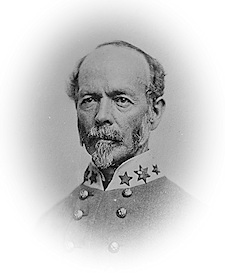
MAY 29TH and 30TH.—The remainder of the journey was with-out interest, until we arrived at Wythville, Va, where it was discovered Gen. Floyd was in the cars. He was called out and made a speech in vindication of his conduct, at Washington, as Secretary of War, wherein he had caused the transfer of arms, etc. from the North to the South. He was then organizing a brigade for the field, having been commissioned a brigadier-general by the President.
May 30th.—Wrote in the heat of the day, enlivened by my neighbor, a wonderful mocking bird, whose songs and imitations would make his fortune in any society capable of appreciating native-born genius. His restlessness, courage, activity, and talent ought not to be confined to Mr. Mure’s cage, but he seems contented and happy. I dined with Madame and M. Miltenberger, and drove out with them to visit the scene of our defeat in 1815, which lies at the distance of some miles down the river.
A dilapidated farmhouse surrounded by trees and negro huts marks the spot where Pakenham was buried, but his body was subsequently exhumed and sent home to England. Close to the point of the canal which constitutes a portion of the American defences, a negro guide came forth to conduct us round the place, but he knew as little as most guides of the incidents of the fight. The most remarkable testimony to the severity of the fire to which the British were exposed, is afforded by the trees in the neighborhood of the tomb. In one live oak there are no less than eight round shot embedded, others contain two or three, and many are lopped, rent, and scarred by the flight of cannon ball. The American lines extended nearly three miles, and were covered in the front by swamps, marshes, and water cuts, their batteries and the vessels in the river enfiladed the British as they advanced to the attack.
Among the prominent defenders of the cotton bales was a notorious pirate and murderer named Lafitte, who with his band was released from prison on condition that he enlisted in the defence, and did substantial service to his friends and deliverers.
Without knowing all the circumstances of the case, it would be rash now to condemn the officers who directed the assault; but so far as one could judge from the present condition of the ground, the position must have been very formidable, and should not have been assaulted till the enfilading fire was subdued, and a very heavy covering fire directed to silence the guns in front. The Americans are naturally very proud of their victory, which was gained at a most trifling loss to themselves, which they erroneously conceive to be a proof of their gallantry in resisting the assault. It is one of the events which have created a fixed idea in their minds that they are able to “whip the world.” [continue reading…]
30th May 1861
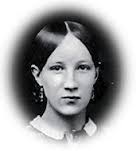
It never occurred to me Gen’l Sanford that I could be forced to sue for permission to enter my own house and that such an outrage as its military occupation to the exclusion of me and my children could ever have been perpetrated by anyone in the whole extent of this country. I had been warned by an anxious friend that such a design was in contemplation nearly a month ago & advised to remove to a place of safety all my property that was of any value. Still incredulous I complied with his earnest entreaties in regard to the Mt. Vernon relics, plate, & pictures that we could never replace and after a visit of about 10 days to a friend in Fairfax was preparing to return to enjoy the season of all others most delightful and prepare for the reception of my younger children who will soon be returning from their different schools when I was informed that the whole place as well as the mansion was occupied by Northern troops. I intended to have obtained a permit and have returned to make some further arrangements for the comfort of my servants many of them old and infirm but was told by a gentleman who had made the same attempt that none could be given. So I am left homeless not even able to get or send to Alex where my funds are deposited to obtain means for my support.
Indeed the Zouaves are comnitting such enormities there upon every defenceless person they meet that it is not safe even to go in with a [illeg.]and the whole country is filled with men and women and children flying in terror. The South have never been at all deceived as to the pretext assumed of the government of the defence of the Capitol. Had they designed to attack it what prevented them months ago from fortifying the Arlington Heights. However, I forget that I am a suppliant and cannot trust my pen to write what I feel. You have a beautiful home and people that you love and can sympathize perhaps even with the wife of a “Traitor” and a rebel. I implore you by the courtesy due to any woman and which no brave soldier could deny, to allow my old coachman by whom I send this letter to get his clothes and give some letters to my manager relative to the farm and to give my market man a pass that will enable him to go and return from Washington as usual where his family resides. My gardner Ephraim also has a wife in Washington and is accustomed to go over every Saturday and return on Monday. My old cook has also [continue reading…]
The New York Times
May 30, 1861
May 15.—Miss Anna Gaylord is one of my teachers at the seminary and when I told her that I wrote a journal every day she wanted me to bring her my last book and let her read it. I did so and she said she enjoyed it very much and she hoped I would keep them for they would be interesting for me to read when I am old. I think I shall do so. She has a very particular friend, Rev. Mr Beaumont, who is one of the teachers at the Academy. I think they are going to be married some day. I guess I will show her this page of my journal, too. Grandmother let me make a pie in a saucer to-day and it was very good.
May.—We were invited to Bessie Seymour’s party last night and Grandmother said we could go. The girls all told us at school that they were going to wear low neck and short sleeves. We have caps on the sleeves of our best dresses and we tried to get the sleeves out, so we could go bare arms, but we couldn’t get them out. We had a very nice time, though, at the party. Some of the Academy boys were there and they asked us to dance but of course we couldn’t do that. We promenaded around the rooms and went out to supper with them. Eugene Stone and Tom Eddy asked to go home with us but Grandmother sent our two girls for us, Bridget Flynn and Hannah White, so they couldn’t. We were quite disappointed, but perhaps she won’t send for us next time. [continue reading…]