Civil War Day-By-Day

Civil War Day-by-Day

September 18, 1861

  • Having received supplies, including ammunition, the Confederates launched a major assault on Lexington. The Union defenders were cut off from their fresh water supplies by Confederate snipers.

A Chronological History of the Civil War in America1

  • Members (18), Speaker, and clerk of the Maryland Legislature arrested at Frederick and sent to Fort McHenry.
  • Banks of New Orleans suspended specie payments.
  • Skirmish near Columbus and Barboursville, Kentucky.

  1. A Chronological History of the Civil War in America by Richard Swainson Fisher, New York, Johnson and Ward, 1863
0 comments

New Secretary of State“didn’t know who to see.” — Rebel War Clerk

Civil War Day-by-Day
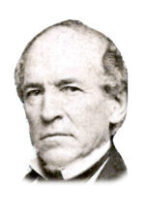
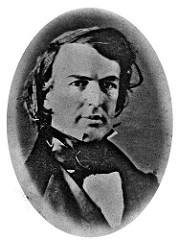
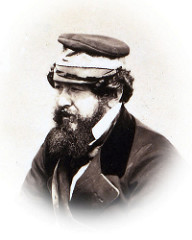
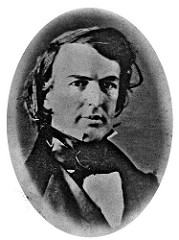
A likeness of Jones when he was editor and majority owner of the Daily Madisonian during President John Tyler’s administration.

SEPTEMBER 17 th.—A man from Washington came into my office to-day, saying he had important information from Washington. I went into the Secretary’s room, and found Mr. Benjamin surrounded by a large circle of  visitors, all standing hat in hand, and quite silent. I asked him if he would see the gentleman from Washington. He said he “didn’t know who to see.” This produced a smile. He seemed to be standing there waiting for some one to speak, and they seemed to be waiting an invitation from him to speak. I withdrew from the embarrassing scene, remarking that my gentleman would call some other time. Meanwhile I wrote down the information, and sent it to the President.

0 comments

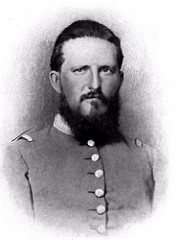
William Raleigh Clack–43rd Tennessee Infantry Regiment.

Library of Congress

Civil War Era Photographic Portraiture No. 25

Private W.R. Clack of Co. B, 43rd Tennessee Infantry Regiment, with saber, pistol, and small book
Title: [Private W.R. Clack of Co. B, 43rd Tennessee Infantry Regiment, with saber, pistol, and small book]
Date Created/Published: [between 1861 and 1865]
Medium: 1 photograph : half-plate ambrotype, hand-colored ; 15.7 x 12.7 cm (case)
Summary: Photo shows identified soldier.
Reproduction Number: LC-DIG-ppmsca-34982 (digital file from original item)
Rights Advisory: No known restrictions on publication.
Access Advisory: Use digital images. Original served only by appointment because material requires special handling.
Call Number: AMB/TIN no. 3074 [P&P]
Repository: Library of Congress Prints and Photographs Division Washington, D.C. 20540 USA
Notes:
…..Title devised by Library staff.
…..Case: Berg, no. 1-3S.
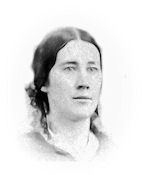
…..Photograph of William Clack’s wife, Sabria, processed as AMB/TIN no. 3075.
…..Gift; Tom Liljenquist; 2012; (DLC/PP-2012:127).
…..More information about this collection is available at http://hdl.loc.gov/loc.pnp/pp.lilj
…..Purchased from: The Historical Shop, Metairie, La., 2012.
…..Forms part of: Liljenquist Family Collection of Civil War Photographs (Library of Congress).
…..Forms part of: Ambrotype/Tintype photograph filing series (Library of Congress).
Library of Congress item permalink

__________

Mike’s notes:

Image restoration note – This image has been digitally adjusted for one or more of the following:
– fade correction,
– color, contrast, and/or saturation enhancement
– selected spot and/or scratch removal
– cropped for composition and/or to accentuate subject matter
– straighten image

Image restoration is the process of using digital restoration tools to create new digital versions of the images while also improving their quality and repairing damage.

0 comments

Firing at an imaginary enemy

Diary of Battery A, First Regiment, Rhode Island Light Artillery, by Theodore Reichardt

Tuesday, September 17.—Our piece kept on firing at an imaginary enemy for a whole hour; the Major of the Thirty-fourth being present. Nothing remarkable up to (Sunday, September 22).

0 comments

“The Rebels have a large army within thirty miles of the City, probably near 200,000 men.”—Horatio Nelson Taft

Diary of US patent clerk Horatio Nelson Taft.

TUESDAY 17

This has been a nice cool day until near night when there was a violent rain for an hour or two, flooding the streets. I saw the Comr of patents today. I shall go back into the office again in a short time. There is no particular news. Some people are expecting an attack upon the City. The Rebels have a large army within thirty miles of the City, probably near 200,000 men. They must do something soon. I was at the Pt off two or three hours. I think that Mr Scheopf will go into the army soon. Mr Holt backs him.

______

The three diary manuscript volumes, Washington during the Civil War: The Diary of Horatio Nelson Taft, 1861-1865, are available online at The Library of   Congress.

0 comments

Jay Hawking

Civil War Day-by-Day

Daily Times [Leavenworth, Ks], September 17, 1861

Leavenworth, Sept. 16, 1861.

At a meeting of the Committee of Safety, the following resolutions were passed and ordered to be published:

Resolved, That this committee disapprove of, and denounce “;” and that they will do all in their power to prevent it; and, in this regard, they invite the co-operation of all good citizens in the State; also,

Resolved, That the City Authorities be requested to strictly enforce the vagrant acts.

S. F. Atwood, Sec’y.

0 comments

At their old tricks

Miscellaneous document sources, News of the Day

Daily Times [Leavenworth, Ks],
September 17, 1861

The Missouri Secessionists living on the Southern border of Kansas, are at their old tricks. Families are coming into this and other northern counties every day, being driven out of their homes by the border rebels.–The rebels take everything they can get their hands on, regardless as to the articles. Something should be done in the way of protecting the settlers of Southern Kansas.

0 comments

War Diary of Luman Harris Tenney.

War Diary of Luman Harris Tenney.

Tuesday, 17th. Went through with the regular routine of camp life until five. Went over to Uncle’s and took tea. Wrote home and to Fannie Andrews.

0 comments

Several new men enrolled today.–Alexander G. Downing.

Diary of Alexander G. Downing; Company E, Eleventh Iowa Infantry

Tuesday, 17th–Several new men enrolled today and things look more encouraging. I boarded at the tavern today.

0 comments

“Our mess have this p.m. confiscated the roof of a man’s barn to cover our cook house with.”–Army Life of an Illinois Soldier, Charles Wright Wills.

Civil War Day-by-Day
Note: This letter—a document written in 1861—includes terms and topics that may be offensive to many today.   No attempt will be made to censor or edit 19th-century material to today’s standards.

September 17, 1861.

Well, I’ve slept half of this day and feel sleepy yet. I had a tough time on picket last night. We were divided into four squads and owing to the small number of men we had out (only 50) the corporals had to stand guard as privates; so I had all the stationing of reliefs to do myself and did not get a minute’s sleep all night. We were not troubled any by the enemy but the mosquitoes and fleas gave us the devil.

A coon came sliding down the tree Sam Nutt was stationed under, and he thought he was taken sure. The people here say that there are lots of bears and tiger cats killed here every winter. Sam has been to Cairo to-day and says that Keef, Fred Norcott and Cooper are all much better. There is a rumor now that our right is going to Virginia, but I don’t believe it. It is too good to be true. Our cook has been sick for several days and we have been just about half living on account of our being too lazy to cook. I don’t mean to be disrespectful when I say I was about as glad to see him cooking again this morning, as I would be to see you. He is a splendid nigger, seems to think the world of us boys. He buys a great many little things for us with his own money, which as we are all out, is a good institution. We are to get our pay next week the officers say. My pay is some $18 or $20 a month now. I am entitled to a straight sword now, but as I have to carry a musket also, I’ll trade it off for gingerbread if they’ll let me, and if they won’t I’ll lose it sure for I have enough to carry without it. I can hear the tattoo now before the colonel’s quarters at the other end of the camp and our boys are singing, “Home Again” as they lie around me in our tent. I thank goodness that none of them get homesick like some do that I know in our right. I do despise these whiners. I expect [continue reading…]

0 comments

“…an immense improvement has taken place and military men are most sanguine of the future.”—Adams Family Letters.

Civil War Day-by-Day

Charles Francis Adams, Jr., To Henry Adams

Boston, Tuesday, September 17, 1861

As I hear nothing more of your coming home I hope you have forgotten that folly. The few of your friends in the army here, like Billy Milton and Howard Dwight, opened their eyes wide with astonishment at the suggestion. Just now I certainly hope that you have n’t left, as I send you by this mail a couple of copies of yesterday’s and today’s Courier, in which you will find two leaders headed “English Views,” written by me and which, if you have any opening yet in the English press you may turn to advantage as extracts from the American. The letter of the Times correspondent of 30th August printed in last Saturday’s Times (N.Y.) seemed to intimate that the wind now lay in this quarter and American views to the point might, I thought, be of use. These articles were written, however, before I saw that letter, or the Times (London) editorials in the same direction. I offered these articles to Charles Hale who declined to publish them editorially, and so I sent them to the Courier; but Hale remembered my line of thought and reproduced it in his leader of last Monday, which I also send you. So, for once, the Courier and the Advertiser were brought close together on the same day.

Here we feel immeasurably better and not only are things outwardly more encouraging, but I am informed from private correspondents of military men in Washington that the appearance is not deceptive, an immense improvement has taken place and military men are most sanguine of the future.

I wait anxiously to hear from you. By the way, in case you think favorably of my suggestion of an English article on the American press, did you notice a few days ago an article in the N.Y. Times about the Herald, in which Bennett was called “the old liar,” “a skunk,” a “stink-pot,” etc., etc. How would the two read if the editorial of the celebrated Potts in the Eatanswill Gazette about the “buff-ball in a buff neighborhood” and that were put side by side? Which would be the caricature? . . .

0 comments

Civil War Day-By-Day

Civil War Day-by-Day

September 17, 1861

  • Judah P. Benjamin, Confederate Attorney General, and a man with no military experience, becomes Confederate Secretary of War. He will become embroiled in difficulties with a number of generals and be blamed for the loss of Roanoke Island off North Carolina in the next year. His Jewish ancestry makes him a target for anti-Semitism.

A Chronological History of the Civil War in America1

  • Skirmish at Blue Mills Landing, Mo. Union troops repulsed.
  • Bridge on the Ohio and Mississippi Railroad, near Huron, broke through while a train of cars with the Illinois 19th Regiment was passing over; 26 were killed and 112 wounded.
  • Skirmish at Mariatown, Mo.

  1. A Chronological History of the Civil War in America by Richard Swainson Fisher, New York, Johnson and Ward, 1863
0 comments

Skirmish, loss of four men.

Diary of Battery A, First Regiment, Rhode Island Light Artillery, by Theodore Reichardt

Monday, September 16.—In the evening, some of [the Thirty-fourth New York Regiment crossed the river, had a skirmish with the rebels, and returned with the loss of four men. Capt. Reynolds being promoted to Major, le? the battery. So did Lieut. Albert Munroe, promoted to Captain. Lieut. Tompkins, also promoted, took command of our battery.

0 comments

Julia got a boquet from the Prests Garden…—Horatio Nelson Taft

Diary of US patent clerk Horatio Nelson Taft.

MONDAY, SEPTEMBER 16, 1861.

Today went with Doct David to the Smithsonian and to the Washington Monument. Called at the U.S. Treasury, saw Genl Spinner (the Treasurer). He told me that $800,000 pr day was now paid out or the average was that. Julia got a boquet from the Prests Garden for the Dr to take home to his wife. He left on the 21/2 train. I went with him to the Depot. We all like the Dr very much, never saw much of him before. Capt Meeks spent and hour with us this evening, left for his camp 1/2 past 9 o’clk.

______

The three diary manuscript volumes, Washington during the Civil War: The Diary of Horatio Nelson Taft, 1861-1865, are available online at The Library of   Congress.

0 comments

Mr. Benjamin’s smile fades when he realized he was now the most important member of the cabinet.—Rebel War Clerk

Civil War Day-by-Day

SEPTEMBER 16th.—Mr. Benjamin’s hitherto perennial smile faded almost away as he realized the fact that he was now the most important member of the cabinet. He well knew how arduous the duties were; but then he was robust in health, and capable of any amount of labor.

It seems, after all, that Mr. Benjamin is only acting Secretary of War, until the President can fix upon another. Can that be the reason his smile has faded almost away? But the President will appoint him. Mr. Benjamin will please him; he knows how to do it.

0 comments

Commenced camp life.—War Diary of Luman Harris Tenney.

War Diary of Luman Harris Tenney.

Monday, 16th. Bid all the dear friends at home good-bye, and left Oberlin for the camp. (Camp Wade, Cleveland, Ohio.) Accompanied Lizzie Cobb home, and called on Helen Cobb. Took tea at Lizzie’s with Charlie Fairchild. Commenced camp life.

0 comments

“The papers brought us news of success in the West, General Floyd having overcome Rosecranz on Gauley River.”—Diary of a Southern Refugee, Judith White McGuire.

Diary of a Southern Refugee During the War by Judith White McGuire

Sept. 16th.—Just returned from Annfield, where we have spent a charming day, with most delightful society. The papers brought us news of success in the West, General Floyd having overcome Rosecranz on Gauley River. This gave us great satisfaction, as we are peculiarly anxious about that part of Virginia. We passed the time in talking over the feats of our heroes, as well as in enjoying the elegancies by which we were surrounded.

0 comments

The disagreeable weather seems to make everybody feel gloomy. –Alexander G. Downing.

Diary of Alexander G. Downing; Company E, Eleventh Iowa Infantry

Monday, 16th–I returned to Tipton this morning. Our company had no drill today on account of the rain—it rained all day. There were no enlistments. The disagreeable weather seems to make everybody feel gloomy.

0 comments

William Howard Russell’s Diary: News from the Far West.

My Diary North and South – William Howard Russell

September 16th.–It is most agreeable to be removed from all the circumstance without any of the pomp and glory of war. Although there is a tendency in the North, and, for aught I know, in the South, to consider the contest in the same light as one with a foreign enemy, the very battle-cries on both sides indicate a civil war. “The Union for ever”–”States rights “– and “Down with the Abolitionists,” cannot be considered national. McClellan takes no note of time even by its loss, which is all the more strange because he sets great store upon it in his report on the conduct of the war in the Crimea. However, he knows an army cannot be made in two months, and that the larger it is, the more time there is required to harmonize its components. The news from the Far West indicated a probability of some important operations taking place, although my first love–the army of the Potomac–must be returned to. Any way there was the great Western Prairie to be seen, and the people who have been pouring from their plains so many thousands upon the Southern States to assert the liberties of those coloured races whom they will not permit to cross their borders as freemen. Mr. Lincoln, Mr. Blair, and other Abolitionists, are actuated by similar sentiments, and seek to emancipate the slave, and remove from him the protection of his master, in order that they may drive him from the continent altogether, or force him to seek refuge in emigration.

0 comments

“Don’t talk about furloughs. They are played out.”–Army Life of an Illinois Soldier, Charles Wright Wills.

Civil War Day-by-Day

Norfolk, September 16, 1861.

We are still here at Norfolk and now in camp for we don’t know how long. We got tents the day after the date of my last, and splendid ones they are. They are full 10 feet high and 15 feet across. They each accommodate about 15 men. Since we have been here we have been out scouting three times. The first time we were down the river about five miles. That was the time our gunboats had the fight with the “Yankee” and the land batteries. Two days afterward a body of the enemy’s cavalry came up almost to our camp, and after dinner we were sent out to look them up. We were scooting along through a thick wood when one of our cavalry men came back half scared out of his wits (we had about 20 of the cavalry ahead acting as scouts) and reported a whole mess of men just over a rise of ground ahead of us. Our company was in the van, and the column came into line on us and our cavalry tried to draw the enemy back on our position, but Mr. Enemy “drawed” the other way and again we missed our little fight. Last Saturday we started out again at noon and went down the river 10 miles where we thought sure we’d find secesh, but he had again left. We had 2,000 men this time and 6 pieces of artillery. We had stopped to rest when a cloud of dust was observed rising on our side of the river about four miles from us. Some of the boys had glasses with them and made out the cause to be a body of cavalry. Our right was marched a few hundred yards to the front and placed in line of battle with the left at the river bank and our right extending along an edge of woods and fronting a cornfield and open pass between it and the river. A splendid place (for our side) for a fight. Our gunboat then started down the river, fired at and dispersed one body they saw and then slipped a few shells into Columbus and returned. We were within four or five miles of Columbus where there are (our colonel says) 26,000 troops, and on ground where the secesh were encamped but lately with 16 pieces of artillery. We started back at dusk and got home about 10 o’clock; some of the boys pretty tired. I stand these little trips like a horse and would rather go every day than lay around camp. Yesterday (Sunday) the “Yankee” came up and shelled the woods where we were the day before. She tried to throw some shells into our camp but they didn’t reach us by a mile and a half. One of our gunboats has to lay here all the time or the “Yankee” would make us skedaddle out of this on double quick. Don’t talk about furloughs. They are played out. A dispatch came this last week to Colonel Oglesby that his wife was dying. He went up to Cairo but General McClernand showed him an order from McClellan, vetoing furloughs, no matter for what. So the colonel had to return here. I’d like very much to go home but I’ll enjoy it all the more when this business is finished. The 17th is encamped just opposite us on Island No. 1, but we can’t get to see them. Our boys are in good spirits. Sid. and Sam and Theo. are now all right. Milo Farewell thinks he has the dumb ague. Fred Norcott is sick in Cairo. Charley Cooper is also sick I have heard. I am all right. My office is sergeant, two grades below private. Our company goes out on picket to-night.

0 comments

“Before the war is done many, I fear, must fall, and I may be one of the number.”–Letters from Elisha Franklin Paxton.

Elisha Franklin Paxton – Letters from camp and field while an officer in the Confederate Army

Fairfax C. H., September 16, 1861.

I did not write my regular Sunday letter to you on yesterday. As usual, after breakfast I left the camp on duty, and did not return until dinner, when, very tired, I slept a couple of hours. Very soon I got orders to leave again for a ride of thirteen miles, and did not get back until bedtime. This morning we all left for our new encampment, where all are comfortably quartered.

I received your letter of 9th inst. a few days since. Indeed, Love, the perusal of your letters gives me more pleasure than I ever received from any other source. Should I not be happy to know there is some one in the world who loves me so well and looks with such deep interest to my fate? To be with you again is the wish which lies nearest my heart. But the duty to which my life is now devoted must be met without shrinking. Before the war is done many, I fear, must fall, and I may be one of the number. If so, I am resigned to my fate, and I bequeath to you our dear little boys in the full assurance that you will give to my country in them true and useful citizens. I wish, Love, the prospect were brighter, but indeed I see no hope of a speedy end of this bloody contest.

0 comments

Civil War Day-By-Day

Civil War Day-by-Day

September 16, 1861

  • Union reinforcements sent to Lexington were captured en route by the Confederates who knew their movements beforehand.
  • Committee of Naval Constructors recommends three plans for building ironclads, Galena, Ironsides, and Monitor

A Chronological History of the Civil War in America1

  • Ship Island evacuated by the C. S. forces and occupied by Union troops.
  • Camp Talbot, Mo., captured by Union troops.
  • Rebels under Gen. Price commenced the bombardment of Lexington, Mo.

  1. A Chronological History of the Civil War in America by Richard Swainson Fisher, New York, Johnson and Ward, 1863
0 comments

Rebel War Clerk

Civil War Day-by-Day

SEPTEMBER 15th.—And, just as I expected, Mr. Benjamin is to be Mr. Walker’s successor. Col. Bledsoe is back again; and it devolved on me to inform Major Tyler that the old chief of the bureau was now the new chief. Of course he resigned the seals of office with the grace and courtesy of which he is so capable. And then he informed me (in confidence) that the Secretary had resigned, and would be appointed a brigadier-general in the army of the Southwest; and that he would accompany him as his adjutant-general.

0 comments

To be inspected and mustered into State service.

Woolsey family letters during the War for the Union
Abby Howland Woolsey

Lenox, Sept. 15, 1861.

Charley talks of going down to-morrow to be inspected and mustered into State service with the regiment–the Home-Guard. He thinks his fine for non-attendance will about equal his railroad fare down and up. He is to stay over night and will see Mary at Astoria.

0 comments

Horatio Nelson Taft

Diary of US patent clerk Horatio Nelson Taft.

SUNDAY 15

A hot day. M. 86. Went to ch[urch] in the morning with Julia & one of the boys and heard Dr Smith, church well filled. Wife went in the afternoon. Chas & Sallie were up to dine with us. Walked with Dr D. & Chas up to Camp Cameron to see the “Anderson Zouaves.” Saw Capt Lafata of the Co of the French Zouaves. He is an Italian. Came down to tea and went over to Camp Anderson to hear the music of the “Regulars” Band, it was fine.

______

The three diary manuscript volumes, Washington during the Civil War: The Diary of Horatio Nelson Taft, 1861-1865, are available online at The Library of   Congress.

0 comments