Clothing and Other Articles

Miscellaneous document sources, News of the Day

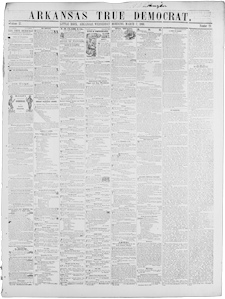
Arkansas True Democrat [Little Rock], September 19, 1861

To the people of Ashley, Desha, Drew,
Dallas, Hot Spring and Union counties,
Arkansas.

Pursuant to an order addressed to the commanders of regiments and battalions composing the army of the north west in Virginia, by the General commanding that division, to select each a suitable officer to return to the places in which the men composing their regiments were enrolled, to receive and convey to them such clothing and other articles as may be required during the winter, and may be furnished by their families, neighbors and friends, I have detailed Lieutenant J. M. D. Sturges for that purpose. Under the army regulations of the Confederate States, the government pays each soldier forty-two dollars per annum in lieu of clothes which are to be supplied by the soldiers themselves.

Justly appreciating the patriotism and devotedness of the people of Arkansas, which seems only to increase with the new demands their country is compelled to make upon them, I deem it only necessary to tell them that the soldiers under my command are operating in the mountains of Virginia, where more and warmer clothing is necessary to their comfort and health, than any where else in the Confederate States, to insure a liberal supply of flannel shirts, drawers, yarn socks, heavy pants, a warm coat for each, and two pairs of heavy shoes. I would suggest that the counties of Union, Ashley, Drew and Desha, make Monticello their depot, and the citizens of Hot Spring and Dallas forward the articles for the soldiers from those counties to the quarter master of the Confederate States at Memphis, there to await the order of Lieut. Sturges. Each parcel should be marked with the name of the person for whom it is designed, and each box addressed to the Captain of the company for whom it contains clothing, to my care. After the goods are delivered into the possession of Lieut. Sturges, he is on no account to become separated from them until they reach their destination.

A. Rust, Colonel
Com’d’g 3d Ark. Reg.
Brigade Headqu’rs, North-west, Va.
September, 1861.

0 comments

The Free Market

Miscellaneous document sources, News of the Day

Arkansas True Democrat [Little Rock], September 19

They have a free market at New Orleans–free for the families of those who have volunteered in the war. Contrast it with the miserable soup houses of the North, where the starving wives and children of their soldiers draw an allowance of thin soup made of dead horses and a modicum of stale bread.

“The Free Market–The free market was opened yesterday, and 1160 families of volunteers derived from it their provisions for the three following days. The managers had not an easy task; for they had to distribute in the course of the morning 30 barrels of meal, 10 of rice, 10 of sugar, 1 of peas, 9 of beef, 3 of beans, and 5 of molasses; 30 hams, 21 sacks of sweet potatoes, 10 barrels of onions, 5 of dried apples and peaches, and 5 of flour baked into bread, besides a great variety of vegetables.”–N. O. Picayune.

There may be a great deal of wickedness in the Crescent city, but such things as these go far to redeem it. We doubt much if any city, in either confederacy can show greater or nobler charities. Their hospitals, free markets, asylums and relief associations are all on a large scale, denoting a big hearted, generous people.

0 comments

“Saw the Auctioneer in regard to my sale of furniture. Next Tuesday is the day, 1/2 past 10 a.m. Varnished over some of my furniture.”—Horatio Nelson Taft

Diary of US patent clerk Horatio Nelson Taft.

THURSDAY, SEPTEMBER 19, 1861.

Weather continues delightful. I spent some time at the Pat office. Saw the Comr, could get no decisive answer as to the precise time that I could go back into the office. It would not be long. Saw the Auctioneer in regard to my sale of furniture. Next Tuesday is the day, 1/2 past 10 a.m. Varnished over some of my furniture. Spent the evening with Julia at Chas rooms, Capt Kendig and Dr John [Bulkley?] there. K is a fine singer.

______

The three diary manuscript volumes, Washington during the Civil War: The Diary of Horatio Nelson Taft, 1861-1865, are available online at The Library of   Congress.

0 comments

The Salt Springs of Arkansas

Miscellaneous document sources, News of the Day

Arkansas True Democrat [Little Rock], September 19, 1861

Salt springs are to be found in the counties of Van Buren, Pope, Franklin, Crawford, Hot Spring, Dallas and Sevier. We are led to call attention to them now, because there is every probability that this necessary article will become scarce and high priced, unless the people of the South take immediate steps to furnish themselves. . . .

0 comments

Since the retreat of the enemy I have been too busy to write.— Diary and Letters of Rutherford B. Hayes.

Diary and Letters of Rutherford Birchard Hayes

Cross Lanes, Near Gauley River,
South of Summersville, Virginia,
September 19, 1861.

Dear Mother:   I am in the best possible health. Since the retreat of the enemy I have been too busy to write. You must look in the correspondence of the Commercial or Gazette for my welfare. If I should lose a little toe, it will be told there long before a letter from me would reach [you]. Their correspondents send by telegraph and couriers every day from this army. Their accounts, making proper allowance for sensational exaggeration, are pretty truthful.

Dr. Joe and his assistant performed their duty and the duty of about half a dozen other surgeons during and after the fight. Everybody was well cared for – even the enemy. The number of killed and badly wounded did not exceed twenty-five; other wounds about seventy-five, mostly very slight. The suffering is not great. Gunshot wounds are accompanied with a numbness which relieves the wounded. Laura’s bandages figured largely.

We are now enjoying ourselves very much; beautiful weather; fine fruit, vegetables, and other food, also pretty nights. Love to all.

Affectionately your son,

R. B. Hayes.

P. S. – You must excuse my short letter. I have a prodigious amount of writing to do. I am acting judge-advocate and have tried five cases lately. – H.

Mrs. Sophia Hayes.

0 comments

“…the first thing they have to do is to learn military duty.”

The Letters of Samuel Ryan Curtis

Camp of Instruction
Benton Barrack
Sept. 19, 1861

Major J. C. Kelton1
Asst. Adt Genl
Sir

The matter of a Company of Sappers and minors raised in Illinois Commanded by Capt. Snyder has been referred to me, with direction to ascertain whether fraud had been practised to prevent the Company from joining Col Bissels Regiment and if so to dispose of them according to the justice of the matter.

The Company was and is divided in Counsils on several questions, but the matters in dispute did not so much refer to their regiment as to the kind of duty they would have to perform. They have been tampered with and to some extent deceived as to their duties by being told Sappers mean one thing Engineers another and Soldiers another. They are generally Mechanics and hope as such to be employed. I have told them as far as the Service would allow they would be so employed but the first thing they have to do is to learn military duty. Upon this injunction they have now settled down to drill and duty. If the regiment called Engineers is to be specially devoted to Mechanical persuits it would be well to attach them to that regiment. If otherwise they could and should remain as the regular Sappers and Minors are, an independent or Separate organization to do mechanical work similar to that done by such corps in the U States Service. They were mustered as Sappers and Minors. The law relating to volunteers authorizes the organization “as in the regular service” and under this clause I can find the only legal authority for carrying out the expectations and promises made to this Company (See Sec 2 Page 21 Statutes 37th Congress) Finding no evidence of fraud towards anybody but finding the company mustered as sappers and minors I report the facts.

Very Respectfully
Your Obt Sert.
Saml. R. Curtis
Camp of Instruction


1. John C. Kelton, U. S. Military Academy, 1851, brvt capt. by May 1861, Capt. Aug. 3, 1861, Col. 9 Missouri Inf. Sept. 19, 1861, Kelton rose in rank after the close of the war to that of brig gen adjt. gen. by 1880.

0 comments

“I send a Complete requisition for Clothing nine regiments Iowa volunteers.”

The Letters of Samuel Ryan Curtis

Benton Barracks Mo
Sept 19. 1861

Dr General

In Conformity with your instructions I send a Complete requisition for Clothing nine regiments Iowa volunteers. When in Washington I made a partial requisition for two regiments but nothing has yet arrived. If it does, it does not matter, as we are receiving from Iowa several more regiments and the clothing will all be properly applied to Iowa troops

To secure proper safety in my absence I wish the boxes directed to Capt Henry Z. Curtis1 Quincy from whence he can supervise the proper direction to the regiments wherever they may be located.

I am very Respectfully
Your Obt Servt
Saml R. Curtis
Brig Geni. U.S.A.


1. Son of S. R. Curtis

0 comments

War Diary of Luman Harris Tenney.

War Diary of Luman Harris Tenney.

Thursday, 19th. Drilled during the day. Received bundle from home through Delos (Haynes), also a line.

0 comments

The Preachers’ Regiment

Miscellaneous document sources, News of the Day

Arkansas True Democrat [Little Rock], September 19, 1861

A regiment of Arkansas troops, from the southern part of the State, says the Helena Shield, passed up last Sunday, en route for the seat of war, that should properly be styled the Preachers’ Regiment.–The colonel, Bradley, from Pine Bluff, is a Methodist minister, and besides him there are no less than eight preachers in the regiment–one of whom is over seventy years of age!

0 comments

One thing in the new appointment: If I can’t get out of it, you may see me one of these days…— Diary and Letters of Rutherford B. Hayes.

Diary and Letters of Rutherford Birchard Hayes

Cross Lanes, September 19, 1861.

Dearest:   It is a lovely moonlight evening. I mailed you a letter this morning, but as Lieutenant Wall of Captain McIlrath’s company has resigned to go with the navy, and will go to Cincinnati tomorrow, I thought I would say a word further while our band plays its finest tattoo tunes. They are sweet, very. I have tried four or five cases on general orders, and here comes an order making me permanently a J. A. [judge-advocate]. It is not altogether agreeable. I shall get out of it after a while somehow. For the present I obey. It is pleasant in one respect as showing that in my line I have done well. Lieutenant Wall will, I hope, call and see you. He is a good soldier and we are sorry to lose him. If this reaches you before other letters from here and Birch River, you may know that two older and longer ones are after you.

One thing in the new appointment: If I can’t get out of it, you may see me one of these days, sooner than you otherwise would, as it confers some privileges, and that would be sweet. Love to all.

Affectionately,

R. B. Hayes.

P. S. – We hear tonight of the death of Colonel Lorin Andrews at Kenyon.[1] We feel it more deeply than in most cases. He was my classmate – a fellow student of Colonel Matthews. He took a great interest in our efforts to get a place in the war, and rejoiced with us when we got a fine regiment. McCook gave me Andrews’ spurs when he left for home, to wear until his return. Alas! we are not to see him. He was an earnest, true man. Hail and farewell! We have been so full of humor tonight and this saddens us. Good-bye again, dearest.

Mrs. Hayes. R.


[1] Lorin Andrews born at Ashland, Ohio, April 1, 1819. Studied law, but soon gave up the practice to devote himself to work of education. He was President of Kenyon College at the outbreak of the war and was the first man in Ohio to offer his services to the country. He was colonel of the Fourth O. V. I. in the first campaign of the war and “died, a martyr to the Union, September 18, 1861.”

0 comments

Camden Knights

Miscellaneous document sources, News of the Day

Arkansas True Democrat [Little Rock],
September 19, 1861

The “Camden Knights,” Company B, Capt. Logan, reached Memphis last Monday as a part of Col. Smith’s 11th regiment of Arkansas volunteers, and are now encamped near the Fair Grounds. They are represented to be one of the best drilled companies that has yet been raised in the State, and are armed in excellent style for a fight with the Hessians–each one having a minnie musket, a navy repeater, and a ponderous “toothpick,” which they have learned to use in a very expert manner. The company is the thirteenth one that has been furnished to the Confederate service by Washita county, which has a voting population of eighteen hundred.–Memphis Appeal, Sept. 7.

0 comments

Offered the place of judge-advocate general by General Rosecrans. —Diary of Rutherford B. Hayes.

Diary and Letters of Rutherford Birchard Hayes

September 19. – Offered the place of judge-advocate general by General Rosecrans. Have served in five cases – [on the] 5th and 6th at Sutton, 16th, 17th and 18th at Cross Lanes (also the 12th) –and a few days between those dates preparing reports of proceedings.

0 comments

Gone to the Hospital

Miscellaneous document sources, New York Times

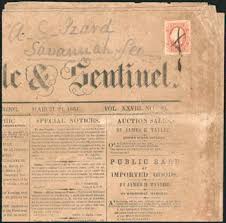
Daily Chronicle & Sentinel [Augusta, GA],
September 19, 1861

On Friday night last two ladies from Atlanta–Mrs. Hiram Jones and Mrs. Bryan, went to Richmond as nurses in the Georgia Hospital. God bless the ladies who are always ready with willing hearts and hands in every good work.

0 comments

“You must look in the correspondence of the Commercial or Gazette for my welfare.”—Rutherford B. Hayes.

Diary and Letters of Rutherford Birchard Hayes

Cross Lanes, Near Gauley River,
South Of Summersville, Virginia,
September 19, 1861.

Dear Mother : – I am in the best possible health. Since the retreat of the enemy I have been too busy to write. You must look in the correspondence of the Commercial or Gazette for my welfare. If I should lose a little toe, it will be told there long before a letter from me would reach [you]. Their correspondents send by telegraph and couriers every day from this army. Their accounts, making proper allowance for sensational exaggeration, are pretty truthful.

Dr. Joe and his assistant performed their duty and the duty of about half a dozen other surgeons during and after the fight. Everybody was well cared for – even the enemy. The number of killed and badly wounded did not exceed twenty-five; other wounds about seventy-five, mostly very slight. The suffering is not great. Gunshot wounds are accompanied with a numbness which relieves the wounded. Laura’s bandages figured largely.

We are now enjoying ourselves very much; beautiful weather; fine fruit, vegetables, and other food, also pretty nights. Love to all.

Affectionately your son,

R. B. Hayes.

P. S. – You must excuse my short letter. I have a prodigious amount of writing to do. I am acting judge-advocate and have tried five cases lately. – H.

Mrs. Sophia Hayes.

0 comments

“I have tried four or five cases on general orders, and here comes an order making me permanently a J. A. [judge-advocate].”—Rutherford B. Hayes.

Diary and Letters of Rutherford Birchard Hayes

Cross Lanes, Near Gauley River, Below
Summersville, Virginia, September 19,
Thursday A. M., [1861].

Dearest: – I fear you do not get the letters I have written the last ten days, as we are out of the reach of mail facilities. I got your letter of the 5th about forty miles north of here out of a waggon-train that I stopped. You can always know of my welfare from the correspondence in the Gazette and [the] Commercial. They are informed directly from headquarters. I see their correspondents daily. Colonel Scammon being at the head of a brigade (a very little one), Colonel Matthews commands our regiment. On the day of the fight, and most of the time since, I have had an independent command. Most [of] the time almost a regiment, made up from our regiment, the Thirtieth, and small parties of cavalry. I have thus far been the sole judge advocate also of this army; so I am very busy. We tried three cases yesterday. It is a laborious and painful business. And after writing so much I would not write you but for my anxiety to have you know how much I think of and love you. Love and kisses to all the boys.

My impression is that the enemy has left our bailiwick entirely, but there are rumors of re-enforcements, etc., etc. If so, we shall have another fight within ten days. With anything like management and decent luck, we shall surely beat them. But there is a great deal of accident in this thing. Not enough to save them unless they do better than heretofore.

Dr. Joe is well. All of us getting thin and tough. Matthews has lost twenty-five pounds, Dr. Joe five pounds. I have lost five to eight. The soldiers generally from ten to twenty pounds. I never was so stout and tough. You need not send my pants unless you see somebody coming direct or get a chance with Mr. Schooley’s things. I am well fixed. Dr. McDermott is here, [continue reading…]

0 comments

A few new recruits came in. –Alexander G. Downing.

Diary of Alexander G. Downing; Company E, Eleventh Iowa Infantry

Thursday, 19th–Nothing of importance today. A few new recruits came in. There is no excitement in getting men to enlist; only plain facts are presented as to our duty to sustain the Government.

0 comments

Civil War Day-By-Day

Civil War Day-by-Day

September 19, 1861

  • Confederate forces captured the hills around Lexington thus making the city even more open to artillery attacks. An attempt to get supplies to the Union defenders via the river system failed when the Confederates captured the supply boats along with their supplies.
  • Crossing into Kentucky through the Cumberland Pass, Brigadier General Felix Zollicoffer disperses a small federal garrison at Barboursville.

A Chronological History of the Civil War in America1

  • Ex-Gov. Morehead and others in Louisville arrested for treason.

  1. A Chronological History of the Civil War in America by Richard Swainson Fisher, New York, Johnson and Ward, 1863
0 comments

Sabria Caroline Newport holding a photo of Private W.R. Clack, her future husband.

Library of Congress

Civil War Era Photographic Portraiture No. 26


The lady in this image is identified as Sabria Clack in the photograph’s information at the Library of Congress, where it is part of the Liljenquist Family Collection of Civil War Photographs.  Given that she is holding an image of William Clack in uniform, this photo was almost certainly taken while William was away during the war.  William and Sabria were married September 12, 1865, so Sabria would have still been Sabria Caroline Newport.

Library of Congress and other information:

Title: [Sabria Clack holding cased photograph of her husband, Private W.R. Clack, of Co. B, 43rd Tennessee Infantry Regiment]
Date Created/Published: [between 1861 and 1865]
Medium: 1 photograph : sixth-plate tintype ; 15.7 x 12.7 cm (case)
Reproduction Number: LC-DIG-ppmsca-34983 (digital file from original item)
Rights Advisory: No known restrictions on publication.
Access Advisory: Use digital images. Original served only by appointment because material requires special handling.
Call Number: AMB/TIN no. 3075 [P&P]
Repository: Library of Congress Prints and Photographs Division Washington, D.C. 20540 USA http://hdl.loc.gov/loc.pnp/pp.print
Notes:
…..Title devised by Library staff.
…..Sabria Caroline Newport Clack identified by descendant Edna Sachs, June 2013.
…..Case: Berg, no. 5-10G (variant).
…..Photograph of Sabria Clack’s husband, William, processed as AMB/TIN no. 3074.
…..Gift; Tom Liljenquist; 2012; (DLC/PP-2012:127).
…..More information about this collection is available at http://hdl.loc.gov/loc.pnp/pp.lilj
…..Purchased from: The Historical Shop, Metairie, La., 2012.
…..Forms part of: Liljenquist Family Collection of Civil War Photographs (Library of Congress).
…..Forms part of: Ambrotype/Tintype photograph filing series (Library of Congress).

Library of Congress item permalink

__________

Mike’s notes:

Image restoration note – This image has been digitally adjusted for one or more of the following:
– fade correction,
– color, contrast, and/or saturation enhancement
– selected spot and/or scratch removal
– cropped for composition and/or to accentuate subject matter
– straighten image

Image restoration is the process of using digital restoration tools to create new digital versions of the images while also improving their quality and repairing damage.

__________

“William Raleigh Clack Journal – 1870’s.” USGenWeb archives – census wills deeds genealogy. Accessed September 18, 2021. http://files.usgwarchives.net….

“Tennessee Confederate Pension Applications : Rhea County.” Tennessee department of State: Tennessee State library and archives. Accessed September 18, 2021. https://sharetngov.tnsosfiles.com….

Guffy, Pat Hawkins. “William Raleigh Clack, A Man of Purpose.” Pieces From The Past. The Herald-News. Dayton, Tennessee, June 24, 2016. Accessed September 18, 2021. https://www.rheaheraldnews.com….

Guffy, Pat Hawkins. “William Raleigh Clack, the Woman behind the Man.” Pieces From The Past. The Herald-News. Dayton, Tennessee, August 5, 2016. Accessed September 18, 2021. https://www.rheaheraldnews.com….

“William Raleigh ‘Rollie’ Clack.” Daily Observations from The Civil War . Accessed September 18, 2021. http://dotcw.com/w-r-clack/.

“Clack, William Raleigh ‘Rollie’ (1919).” Rhea County TNGenWeb. Accessed September 18, 2021. https://tngenweb.org…clack.

“Clack, Sabria Newport.” Rhea County TNGenWeb. Accessed September 18, 2021. https://tngenweb.org…sabria.

0 comments

War Diary of Luman Harris Tenney.

War Diary of Luman Harris Tenney.

Wednesday, 18th. Arose at the firing of the cannon. After the morning drill started for town and met Uncle. (Albert Harris.) Returned and was introduced to Colonel (Chas. W. Doubleday), Major Miner and the Quartermaster. (Lt. Abbey.)

0 comments

—the first step towards Washington.

Woolsey family letters during the War for the Union
Caroline Carson Woolsey.

Sept. 18.

Charley left on Monday to be with his regiment, which has been drafted into the U. S. Service–the first step towards Washington. The members singly can resign at any time, and Charley will do this when called upon to leave the city.

.   .   .   .   .   .

The family took this consoling view of Charley’s duty to his country, and saw him leave Lenox without anxiety. Charley’s private views developed later, when, after valuable service with the Sanitary Commission at the front, he entered the 164th N. Y. regiment and was immediately assigned as aide de camp to very active duty at Army Headquarters.
0 comments

“On my return purchased 6 dry goods boxes on the Ave for packing furniture, intend to have a sale of our bulky articles soon.”—Horatio Nelson Taft

Diary of US patent clerk Horatio Nelson Taft.

WEDNESDAY 18

Delightful day bright & cool. M. 70. Went over to the Depot to see about freight to NY. Went from there to the Western Wharves “Morgan & Rhinehart” on the same errand. Visited the Govt “Corrall,” 3000 horses and some 2000 mules there and acres of Govt Wagons. On my return purchased 6 dry goods boxes on the Ave for packing furniture, intend to have a sale of our bulky articles soon. Wife and children will go to L[ong] I[sland] for the present, or until times are better.

______

The three diary manuscript volumes, Washington during the Civil War: The Diary of Horatio Nelson Taft, 1861-1865, are available online at The Library of   Congress.

0 comments

Gen. Floyd attacked at Gauley.—Rebel War Clerk

Civil War Day-by-Day

SEPTEMBER 18th.—Gen. Floyd has been attacked at Gauley, by greatly superior numbers. But he was intrenched, and slew hundreds of the enemy before he retreated, which was effected without loss.

0 comments

To the People of North Texas

Miscellaneous document sources, News of the Day

Dallas Herald, September 18, 1861

In accordance with the wishes of Adjutant General Byrd, as expressed in his address, I will hold myself in readiness to receive and receipt for all contributions to supply the wants of our soldiers. Attention is called to his address to the people, and especially to the fact therein set forth, that all clothing thus supplied will be paid for in bonds of the Confederate States.

Contributions and supplies furnished under this call, will be stored at Dallas until their removal and destination be ordered by the proper authorities; and it is requested that all persons thus contributing will forward the articles to me at Dallas, for which the proper receipts will be given.

I deem it unnecessary to appeal to the patriotism of the people, when the whole country is moved as one man, in the hallowed cause of liberty and justice. The fact that our soldiers need proper clothing is only to be known, to obtain the supplies; and in view of this, I now call upon the people of Northern Texas to come forward and contribute whatever lies in their power. S. B. Pryor.

Relief Association.–It will be seen by reference to another column, that Dallas county is not behind any other in the State in her noble efforts to send relief to the soldiers that are now engaged in her defense. The ladies, ever alive to the wants of the gallant soldier, have determined to do all in their power to contribute to their comfort during the coming winter. We have seen numerous letters from members of Col. Greer’s regiment, all of which contain instances of want of clothing among the men. This has awakened in the hearts of our people the warmest emotions of sympathy and the determination to supply them. The farmers, merchants and in fact, every class of citizens, have contributed liberally towards this movement, and the ladies have met and decided to make up sufficient clothing not only for our own men, in the army, but enough for several other companies.

All praise is due our citizens for their generous devotion, especially when it is done without any expectation or desire of remuneration from the Confederate Government. While the contributions have been very liberal, we learn that a further supply of material is needed, which like the other, will be placed in the hands of ladies to be made into clothing. A committee has been appointed to receive and send off all that is contributed. It is desirable that all contributions should be sent in by the end of next week. We shall publish regularly, if desired, a full list of all contributions for this purpose.

0 comments

More enrollments today.–Alexander G. Downing.

Diary of Alexander G. Downing; Company E, Eleventh Iowa Infantry

Wednesday, 18th–There were more enrollments today, and there is some hope now of raising a company. The weather has become settled and everybody seems more cheerful. We have drill twice a day now, and have a good drill ground out on the town commons.

0 comments

“A graphic description of the fight…”—Diary of a Southern Refugee, Judith White McGuire.

Diary of a Southern Refugee During the War by Judith White McGuire

Sept. 18th.—I have been greatly interested in a letter, which has been sent me, written by my nephew, Lt. W. B. N., to his wife, the day after the battle of Manassas. I copy it here because I want his little relations, for whom I am writing this diary, to have a graphic description of the fight, and to know what their family and friends suffered for the great cause.

“Centreville, July 22,1861.

“My dear _____:—For the last four days we have never been longer than two hours in any one place, have slept upon the ground in good weather and bad, eaten nothing but crackers and fried bacon, and rested little at any time; for all of which privations and a thousand others we have been more than compensated (thanks to the just God who governs the councils of history and decrees the destiny of nations) in the glorious results of yesterday. On the morning of the 17th, we had received reliable information that the enemy was advancing, over 50,000 strong, and were not surprised, at five o’clock in the morning, to hear the fire of our pickets, who were slowly retiring before the advancing foe. The order was given to pack. In ten minutes baggage was packed, tents struck, and the wagons driven to the rear; and the whole command forward to line of battle. In a few minutes the glittering bayonets of the enemy lined the neighbouring hills. From the heavy signal-guns being fired at intervals along our line—commencing at Germantown and stretching along to [continue reading…]

0 comments