A Rebel War Clerk’s Diary

A Rebel War Clerk’s Diary at the Confederate States Capital, By John Beauchamp Jones
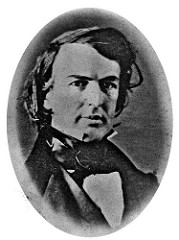
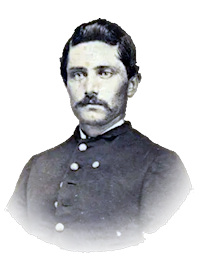
A likeness of Jones when he was editor and majority owner of the Daily Madisonian during President John Tyler’s administration.

JULY 27th.—Cloudy and warm; light shower at 3. P.M.

Gen. Lee’s dispatch, giving an account of a victory last Sunday, near Winchester, has diffused hope and satisfaction anew in the city.

The following dispatch was received from Gen. Bragg:

“ATLANTA, July 26th, 1864.

———”Leave to-morrow to confer with Major-Gen. Maury at Montgomery, and urge matters beyond. Lieut.-Gen. Lee arrived. Tone of the army fine, and strength increasing daily, etc. All is quiet to-day.

“B. BRAGG, General.

“CoL. J. B. SALE, Mil. Sec.”

Nevertheless, the clerks are ordered out this afternoon at five, to march to Chaffin’s Farm.

I met Mr. Benjamin as I was passing to the office of the Secretary of War with Gen. Bragg’s dispatch, and showed it him. After reading it carefully, he said, “That’s very good.”

Gen. Lee may be on the eve of attacking Grant, or Grant him, or we may be reinforcing Early, as the solution of the marching of the clerks. No doubt one of Grant’s corps is on this side of the river, but I think that is to guard the river against our batteries.

During my conversation with Mr. Benjamin, I hoped that in two months the Federal armies would be called to Washington for the defense of the capital. He did not express any such belief. He was at the department procuring passports from Judge Campbell, for a young Jew to pass the lines into the United States.

0 comments

Yanks still shelling Atlanta, the raide seems now to be pressing Jackson, Miss.

Diaries and Letters of Belle Edmondson

July, Wednesday 27, 1864

We all got up very early this morning—Bro. Eddie had to go to Columbus, Eddie arrived in time for the train, and left for Okolona. Bro. came back quite late this evening, bro’t no reliable news, from any point. Yanks still shelling Atlanta, the raide seems now to be pressing Jackson, Miss. instead of our front, those on the Charleston R. R. seem to be resting on their cares, wacthing , and guided by movements in Ga. God grant their plans may be frustrated, and our arms Victorious. Cousin Frazor arrived today and has been quite sick all evening. I am as unhappy as mortal can be. Bro. opposes my going for some time. I have my plans made, however, and have no idea of changeing them. I have had so much to try me, I have no patience to argue the question, and trust there will be no more unpleasantrys with regard to it. Oh! God give me strength, give me strength to bear up.—

0 comments

Downing’s Civil War Diary.–Alexander G. Downing.

Diary of Alexander G. Downing; Company E, Eleventh Iowa Infantry

Wednesday, 27th–It is quite warm. Nothing of importance. One month ago today I was taken sick with the intermittent fever, at Kenesaw mountain.

0 comments

A Woman’s Wartime Journal.

Dolly Sumner Lunt Burge – A Woman’s Wartime Journal.

July 27, 1864.

Major Ansley and family have remained. We are feeling more settled and have begun to bring to light some of the things which we had put away.

0 comments

War Diary of Luman Harris Tenney.

War Diary of Luman Harris Tenney.

26th. Day spent improving the picket line, etc. Word came in P. M. that rebs were preparing for a movement on the left. Caution ordered. No demonstration.

0 comments

0

Civil War Diary of Charles H. Lynch, 18th Conn. Vol’s.
Charles Lynch

July 26th. Called up early this morning. Wade the Potomac River over into Maryland. Marching on down the river road, across the Burnside Bridge, over Antietam Creek and the battlefield, passing the Dunker Church, located in the woods on the right. The rail fences were riddled with bullet holes, showing how fierce the battle must have been. Marched on through Sharpsburg, going into camp near the town, which shows the effects of the battle. The battle is known in the South as Sharpsburg. A fearful hot day, and a hard march. Our record for today is a march of about fifteen miles. Many of us fellows are marching shoeless.

0 comments

A Rebel War Clerk’s Diary

A Rebel War Clerk’s Diary at the Confederate States Capital, By John Beauchamp Jones
A likeness of Jones when he was editor and majority owner of the Daily Madisonian during President John Tyler’s administration.

JULY 26th.—Clear and pleasant; later cloudy.

Yesterday, Mr. Peck, our agent, started South to buy provisions for the civil officers of the department. He had $100 from each, and it is to be hoped he will be back soon with supplies at comparatively low prices. He obtained transportation from the Quartermaster-General, with the sanction of the Secretary, although that ____ ____had refused to order it himself.

Gen. Lee advises that all government stores be taken from Wilmington, as a London newspaper correspondent has given a glowing account (republished in the New York Herald) of the commerce of that place, and the vast amount of government property there. Gen. Lee advises that the stores be deposited along the line of railroad between Columbia and Danville, and be in readiness to move either way, as the roads are “liable to be cut at any moment.” Will the government act in time to save them?

Gen. Cooper went to the President to-day in high dudgeon, because papers were referred to him from the Quartermaster-General’s and Ordnance offices signed by subordinates, instead of the heads of the bureaus. The President wrote an elaborate decision in favor of the general, and ordered the Secretary to “make a note of it.” Thus, important affairs wait upon “red tape.”

I saw Secretaries Benjamin and Mallory, and some lesser lights, riding down the river in an ambulance-wagon, supposed to be going a fishing. They were both excessively fat and red.

0 comments

.., brot news of 25th. from Ga. the Yanks were shelling Atlanta, nothing decisive as to the fate of either Army in that State—

Diaries and Letters of Belle Edmondson

July, Tuesday 26, 1864

Ah! sad and lonely days, are these now passing. Eddie went to Columbus this morning, returned this evening, brot news of 25th. from Ga. the Yanks were shelling Atlanta, nothing decisive as to the fate of either Army in that State—Hood gave them a bad thrashing, but from Telegrams since, I fear our Victories cannot be followed up. God grant we may be blessed with glorious news from them in a day or two—nothing important from other points. Tate and her crowd did not leave Columbus until today. Robert was sick yesterday and they could not leave. I heard through Therese from them, they spent last eve at Mrs. Weaver’s. I am so unhappy, I don’t know what to do, whether to go on home, or not,—oh! my heavenly redeemer, guide me, teach my heart forbearance, and for pity lighten my trials.

I finished one of Eddie’s socks today, had a long nap this eve, consequently am not sleepy tonight, recieved letters from Capt. Barber and Shallie Kirk. We all sat up late—oh! heaven have mercy, I am so unhappy.

0 comments

Downing’s Civil War Diary.–Alexander G. Downing.

Diary of Alexander G. Downing; Company E, Eleventh Iowa Infantry

Tuesday, 26th–It is very warm. Still lying on my old cot. The hospital is one of the hardest places that I have found since I have been in the service; but when a soldier gets sick, he has to go there so that he can be taken care of. I have been in the United States service three years now, and this is the first time for me in the hospital. I hope that it may be the last time.

0 comments

War Diary of Luman Harris Tenney.

War Diary of Luman Harris Tenney.

25th. Monday. Waited till 10 o’clock and saw John off Started for home. We envy him. Would we could go too. Got home about noon. In the evening marched to left of the army and relieved a brigade of the 2nd Div. on picket. Our regiment on the right of the brigade.

0 comments

0

Civil War Diary of Charles H. Lynch, 18th Conn. Vol’s.
Charles Lynch

July 25th. Bunker Hill. A very severe rain storm set in last night. We are wet through. Orders to march on to Martinsburg. My feet keep me reminded of the rough roads, stubs and briers in the lots. We reach Martinsburg after a march of ten miles. After holding the enemy in check for a while we are again on the march. I picked up a pair of old boots, no doubt discarded by some cavalryman. They were much too large for me, and not having stockings I could not wear them as they galled my feet, making them worse. Was obliged to throw them away.

After a very tedious march we reached Williamsport on the Potomac River, twenty miles from Bunker Hill. Will remain here for the night. Foot-sore, weary, glad to lie down for the night on the wet ground for rest and sleep. Often wonder how the men can keep so patient. Sometimes we are made to feel that much of our trouble is brought on to us by jealousy and mismanagement on the part of our officers high up in rank. Our boys are always ready for any kind of duty. We have made marches over this Williamsport Pike before. Like all the pikes it is hard marching over the rough stones, up and down hill. That’s our experience.

0 comments

“During the battle, our regiment changed position three times, facing east, west and south.”–Army Life of an Illinois Soldier, Charles Wright Wills.

Army Life of an Illinois Soldier, Charles Wright Wills, (8th Illinois Infantry)

July 25, 1864.

We moved up to the rear of the corps on the 21, and had just got comfortably fixed for the night when orders came that we should report back to the brigade on the front line. Just as we started a heavy rain set in, and continued while we marched one and one-half miles to the left, where we stacked arms in rear of a line of work occupied by the 6th Iowa. The Rebel line lay in plain sight, just across an open field, and the bullets made us keep pretty close.

At sunset we were ordered to extend, or rather build a line of works to hold our regiment, between the 6th Iowa and 40th Illinois. We had fairly commenced, and the boys were scattered everywhere, bringing rails, logs, etc., when the Johnnie’s bugle sounded “forward,” and the Rebels raised a yell and fired a couple of volleys into us. There was a lively rush for our guns, but we saw through it in a minute, and in three minutes were at work again. Only two men were hurt in the regiment, one from Company C, and Wm. Nicholson of my company had the small bone of his leg broken just above the ankle. We got our works in shape about daylight, and about 8 a.m. I heard a cheer from our skirmishers, and saw the Rebel skirmishers run right over their works like deer. Our line followed them and took possession of their works, and no Rebel or works being in sight, and our boys knowing they were only two miles from Atlanta, thought sure they had the town, and all started on the “double quick” for it, yelling, “potatoes” or “tobacco,” or what he particularly hankered for. They got along swimmingly until within about three-quarters of a mile from town, when they ran against a strong line of works and were brought up standing, by a volley therefrom. They deployed immediately, and by the time their officers got up had a good line established, and were whacking away at the fort apparently as well satisfied as if they had got their tobaco. [continue reading…]

0 comments

A Rebel War Clerk’s Diary

A Rebel War Clerk’s Diary at the Confederate States Capital, By John Beauchamp Jones
A likeness of Jones when he was editor and majority owner of the Daily Madisonian during President John Tyler’s administration.

JULY 25th.—It rained all night! Cloudy and windy to-day.

Gen. Hood corrects his dispatch of Saturday; we captured only 13 guns; but we captured some 18 stand of colors.

“HEADQUARTERS, ATLANTA,
“July 23d, 1864.

———“HON. JAMES A. SEDDON, SECRETARY OE WAR.
———“The enemy shifted his position on Peach Tree Creek last night, and Gen. Stewart’s and Cheatham’s corps formed line of battle around the city.
———“Gen. Hardee’s corps made a night march, and attacked the enemy’s extreme left to-day. About 1 o’clock he drove him from his works, capturing artillery and colors. Gen. Cheatham attacked the enemy, capturing six pieces of artillery.
———“During the engagement we captured about 2000 prisoners.
———“Gen. Wheeler’s cavalry routed the enemy in the neighborhood of Decatur, to-day, capturing his camp.
———“Our loss is not yet fully ascertained.
———“Major-Gen. Walker was killed. Brig.-Gens. Smith, Gist, and Mercer were wounded.
———“Prisoners report that Gen. McPherson was killed.
———“Our troops fought with great gallantry.

“J. B. HOOD, General.”

It is certain that a considerable force of the enemy has crossed to the north side of James River; for what purpose is not yet clear.

A detachment of our forces has been defeated near Winchester, by superior numbers, losing 4 guns.

The Dispatch of this morning says:

“All accounts received of the engagement at Snicker’s represent that the Yankees were badly whipped on that occasion. It is stated that some fifteen hundred of the enemy fell to rise no more, and only six were made prisoners. It is probable that a considerable number were drowned in their attempt to recross the Shenandoah.”

Gen. Beauregard wrote to the department a few days ago that the country in the rear of the enemy was filled with their deserters, and suggested that by proclamation or otherwise, desertion should be encouraged. They ought to be welcomed and subsisted, and transported to any point near their own country designated by them. On this the Secretary of War indorsed rather a cold negative. But he went too far—the country must be saved—and the President, while agreeing that no proclamation should be issued, indorsed an emphatic approval of any other means to encourage desertion from the enemy.

My cabbages and turnips (fall) are coming up already.

We had but 13,500 men and 44 pieces artillery in the recent march into Maryland. The enemy say we had 40,000!

Letters are pouring in, denouncing the new schedule of prices, sanctioned by the Secretary, and demanding a prompt modification. The President wrote the Secretary to-day that immediate action is necessary.

0 comments

Our Enemy have every advantage, yet in the God of battles we put our trust, and have faith that all will be well.

Diaries and Letters of Belle Edmondson

July, Monday 25, 1864

How very cold it was this morning, We must have had a great Victory in Ga. as this cool weather always indicates a great Southern Victory. No news over the wires again today, it seems strange, but God grant we may be victorious. Our Enemy have every advantage, yet in the God of battles we put our trust, and have faith that all will be well. Mrs. Smith returned to Aberdeen this morning. Sister Amirilla and I spent the day mostly alone, Bro. was off on the farm. I did not quite finish my Sock, had a good nap after dinner. Eddie arrived this evening from Gen. Chalmers Hd. Qts.—no news from Ga. or Va. yet. Eddie is right sick, has not been well since the fight. We all retired early. Katie is going to sleep with me, Rachel will make her pallet in here also. I am the greatest coward in the world. Still undecided in my movements, I reckon Hal & her crowd are happy tonight. May God soften my heart, I cannot but feel bitter, oh! guide and give me strength to bear my unhappy fate—

0 comments

Downing’s Civil War Diary.–Alexander G. Downing.

Diary of Alexander G. Downing; Company E, Eleventh Iowa Infantry

Monday, 25th–It is hot and sultry. Lieutenant Carey died this morning here in the hospital, from his wounds, after suffering thirty-five days, he having been wounded on the skirmish line on the 15th of June. He was shot in the left thigh, the minie ball glancing from his hip and lodging near the spine. But the doctors were not able to locate it until after his death, when they removed it. I had not seen Lieutenant Carey from the time he was wounded until after he had died, being present when his body was dressed for burial. John Zitler came over to my ward and we went down together. We saw his clothing and other articles packed by the chaplain, who has charge of all the effects of the deceased soldiers, and they will be forwarded to Mrs. Carey at their home in Cedar County, Iowa. Lieutenant Carey’s body was buried in his uniform here at Rome, Georgia.

0 comments

A Diary From Dixie.

A Diary From Dixie by Mary Boykin Miller Chesnut.

July 25th.–Now we are in a cottage rented from Doctor Chisolm. Hood is a full general. Johnston[1] has been removed and superseded. Early is threatening Washington City. Semmes, of whom we have been so proud, risked the Alabama in a sort of duel of ships. He has lowered the flag of the famous Alabama to the Kearsarge.[2] Forgive who may! I can not. We moved into this house on the 20th of July. My husband was telegraphed to go to Charleston. General Jones sent for him. A part of his command is on the coast.

The girls were at my house. Everything was in the utmost confusion. We were lying on a pile of mattresses in one of the front rooms while the servants were reducing things to order in the rear. All the papers are down on the President for this change of commanders except the Georgia papers. Indeed, Governor Brown’s constant complaints, I dare say, caused it–these and the rage of the Georgia people as Johnston backed down on them.

Isabella soon came. She said she saw the Preston sisters pass her house, and as they turned the corner there was a loud and bitter cry. It seemed to come from the Hampton house. Both girls began to run at full speed. “What is the matter?” asked Mrs. Martin. “Mother, listen; that sounded like the cry of a broken heart,” said Isabella; “something has gone terribly wrong at the Prestons’.”

Mrs. Martin is deaf, however, so she heard nothing and thought Isabella fanciful. Isabella hurried over there, and learned that they had come to tell Mrs. Preston that Willie was killed–Willie! his mother’s darling. No country ever had a braver soldier, a truer gentleman, to lay down his life in her cause.


[1] General Johnston in 1863 had been appointed to command the Army of the Tennessee, with headquarters at Dalton, Georgia. He was to oppose the advance of Sherman’s army toward Atlanta. In May, 1864, he fought unsuccessful battles at Resaca and elsewhere, and in July was compelled to retreat across the Chattahoochee River. Fault was found with him because of his continual retreating. There were tremendous odds against him. On July 17th he was superseded by Hood.

[2] Raphael Semmes was a native of Maryland and had served in the Mexican War. The Alabama was built for the Confederate States at Birkenhead, England, and with an English crew and English equipment was commanded by Semmes. In 1863 and 1864 the Alabama destroyed much Federal shipping. On June 19, 1864, she was sunk by the Federal ship Kearsarge in a battle off Cherbourg. Claims against England for damages were made by the United States, and as a result, the Geneva Arbitration Court was created. Claims amounting to $15,500,000 were finally awarded. This case has much importance in the history of international law.

0 comments

War Diary of Luman Harris Tenney.

War Diary of Luman Harris Tenney.

24th. Sunday. A. M. went to the Point for John. He came out and preached for us at 4 P. M. Goodly number out. Excellent remarks. A. B. and I rode back with him and remained over night on account of rain. Horse fell upon my leg going down. No serious harm. Came near breaking it. Good visit with John. Saw Dorsey.

0 comments

Diary of a Southern Refugee, Judith White McGuire.

Diary of a Southern Refugee During the War by Judith White McGuire

24th.—Amid all the turbulent scenes which surround us, our only grandchild has first seen the light, and the dear little fellow looks as quiet as though all were peace. We thank God for this precious gift, this little object of all-absorbing interest, which so pleasantly diverts our troubled minds. His father has left his far-off military post to welcome him, and before he returns we must by baptism receive him into the Church on earth, praying that he may be a “member of Christ, a child of God, and an inheritor of the kingdom of heaven.” This rite thus early administered, bringing him into the Episcopal Church, seems to belong to him by inheritance, as he is the grandson of a Presbyter on one side, and of a Bishop on the other.

The city looks warlike, though the inhabitants are quiet. Troops are constantly passing to and fro; army wagons, ambulances, etc., rattle by, morning, noon, and night. Grant remains passive on the Appomattox, occasionally throwing a shell into Petersburg, which may probably explode among women and children—but what matters it? They are rebels—what difference does it make about their lives or limbs?

0 comments

Winchester

Experience of a Confederate Chaplain—Rev. A. D. Betts, 30th N. C. Regiment

July 24—Whole army moves back to Winchester and drives the enemy with terror from their positions above and about Winchester. Follow them four miles below Winchester and camp. Many wagons burned. Rain at night.

0 comments

July 15 to 22, 1864

Experience of a Confederate Chaplain—Rev. A. D. Betts, 30th N. C. Regiment

July 15—Buy a little black mare for fifty dollars from the Quarter Master.

July 16—Ride early to Leesburg to get shoe and pants mended. Division passes Hamilton and cross mountain at Snicker’s Gap.

July 17—Meet Rev. F. C. Tebbs.

July 18—Hot fight near Snicker’s Ferry. Sergeant Black and others killed. Colonels Wool, Owen, Stallings, etc. Alas!

July 19—At Hospital. Division moves at night.

July 20—Division moves by White Post to within one and a half miles of Winchester. Meet Revs. Alliman and Hedges.

July 21—Move by Middletown and camp on Cedar Creek.

July 22—Division moves through Strasburg and camps near by.

July 23—Rest all day and sleep. Hold prayers at night.

0 comments

0

Civil War Diary of Charles H. Lynch, 18th Conn. Vol’s.
Charles Lynch

July 24th. Sunday morning, Kearnstown, hot. Ordered out into line early for inspection. Instead orders came to advance. Hot skirmishing began right off. Our regiment placed at the right of the line, west side of the pike. Colonel Mulligan with his division form the left of the line. Our position is on high ground where we can overlook the field. Orders came to charge into the woods. There we found the enemy en masse. They poured their fire on Mulligan’s division. Mulligan was killed, his division losing very heavy. They were ordered to fall back. Orders came for our regiment to fall back to Winchester. We marched back and later the enemy came out of the wood, when we saw plainly the large force they had. Owing to my naked feet I could hardly keep up, but kept pushing. There are many hills around Winchester. Before we could reach the earthworks the enemy had field guns posted on hills commanding our position. As I could not keep up with the boys I came near being captured. I made a running jump over into the rifle pits near the old Star Fort. As I landed in the pits a solid shot also struck there. As I looked at it was thankful it was not a shell. Running around in the pits I was able to get out on the opposite side from the enemy and take my place in our company, line being just in the rear of the fort, where we formed. Shells began to drop all around us. Finally one came in our midst, doing much damage, some being killed and wounded. It caused great excitement as the dust and dirt flew over us. A peculiar numbness came to me, making me think I was wounded. Picking up my gun that had fallen to the ground, I discovered that it had been hit by a piece of the exploded shell, the barrel being flat and bent. I threw it down and picked up another on the field. That was no doubt the cause of my numbness. Orders came for a change in our position and to fall back to Bunker Hill. Up to this time we had been fighting and falling back for about sixteen miles. Had the 6th Corps remained in the valley it would have given us more show against Early’s large force, as they are in plain sight and we can see them from the hills. We will hold Bunker Hill and remain here for the night. I am in agony with my feet. We are in a ragged, dirty condition. The life of a soldier is a hard one. Our suffering at times is intense. It’s all for our country that we all love.

0 comments

A Rebel War Clerk’s Diary

A Rebel War Clerk’s Diary at the Confederate States Capital, By John Beauchamp Jones
A likeness of Jones when he was editor and majority owner of the Daily Madisonian during President John Tyler’s administration.

JULY 24th.—Cloudy and cool, but dry.

Yesterday and last night both Grant and Lee, or Beauregard, were moving pretty heavy forces from the south side to the north side of the river. I am not advised which initiated this manœuvre, but it indicates renewed activity of the armies in this vicinity.

I hope the roads will not be cut again, or we shall starve!

0 comments

Diary of Belle Edmondson

Diaries and Letters of Belle Edmondson

July, Sunday 24, 1864

We all slept very late this morning, Bro. sent to Columbus for the news, boy did not get back until after dinner, then had no news. A note from Bro. Geo. saying he and his crowd would leave for Libby in the morning—nothing over the wires since we left yesterday evening. A note from Therese, she is anxious I should come in, & make another visit to Waverly. I am as unhappy as mortal can be at the manner in which Hal has treated me. I have no idea where or what will be my movements, I have no idea they will be to satisfy anyone else, but pray God may guide me right, and bless and brighten my sad path—

Mrs. Smith, Sister Amirilla, Bro and myself with the Children have spent the day quite pleasantly, sat up late after Tea. Mrs. Smith and I are still room mates—Sam is improveing very slowly, poor little fellow, he looks dreadfully—

0 comments

Downing’s Civil War Diary.–Alexander G. Downing.

Diary of Alexander G. Downing; Company E, Eleventh Iowa Infantry

Sunday, 24th–The weather is sultry. All is quiet, and no news from the front. I am gaining every day and can be up and around in the ward, but have not yet been out of doors.

0 comments

This raid is headed by Guerrard and is for the purpose of destroying our railroads.

Dolly Sumner Lunt Burge – A Woman’s Wartime Journal.

Sunday, July 24, 1864.

No church. Our preacher’s horse stolen by the Yankees. This raid is headed by Guerrard and is for the purpose of destroying our railroads. They cruelly shot a George Daniel and a Mr. Jones of Covington, destroyed a great deal of private property, and took many citizens prisoners.

0 comments