A Rebel War Clerk’s Diary

A Rebel War Clerk’s Diary at the Confederate States Capital, By John Beauchamp Jones
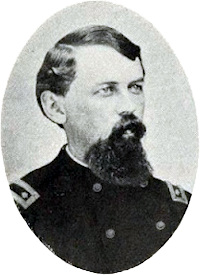
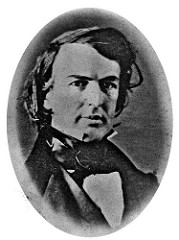
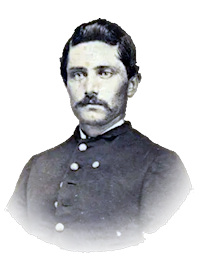
A likeness of Jones when he was editor and majority owner of the Daily Madisonian during President John Tyler’s administration.

JULY 31st.—Clear, dry, and hot.

A dispatch from Gen. Lee (I have not seen it yet) says, in the repulse of the enemy’s assault on the breach made by their mine, we captured over 800 prisoners—a general and his staff among them—some 12 stands of colors, and killed some 500. Our loss very light.

The enemy has mostly countermarched from this side of the river, followed, of course, by our army at double-quick, and rumor says there are little or no forces of either party on the north side of the James this morning.

This was probably Grant’s grand stratagem for our destruction, and it has failed disastrously for him. What will he do next? No matter what, Lee is the master of the situation.

My daughter’s large pet cat died last night under the cherry-tree, and was buried this morning under a rose-bush. I sympathize with Fannie in the grief natural on such an occasion; but really, the death of the cat in such times as these is a great relief to me, as he was maintained at the cost of not less than $200 per annum. His death was probably occasioned by a surfeit of meat which his mistress obtained unexpectedly, seeing it fall in the street, and sending a servant for it.

This morning a large fat chicken was found in my yard, picked and prepared for cooking, brought hither by a cat which had stolen it from some kitchen. A portion of the breast only had been eaten, and our cook seized upon the remains for her own benefit. To such straits are we reduced by this cruel war!

0 comments

Diary of Belle Edmondson

Diaries and Letters of Belle Edmondson

July, Sunday 31, 1864

This morning has been spent very quietly, Mr. and Mrs. Hamilton,—Lou’s sister, and her husband,—were here. Mrs. H. invited us when she left to visit her bath this evening, owing to our religious scruples not allowing us to go in the fish pond. The rain however interfered with our plans. In the afternoon, Lou, Miss Mary Lou and I occupying one bed in our room while Mrs. Reynolds and Therese had the other. I was the only one who succeeded in “making the trip,” we started on—the others finding it impossible, for which non compliance of orders on their part I fully made up until I was awakened by the thunder not only in the Heavens, but in the bed beside me. We were interrupted in the midst of a highly intellectual conversation by the arrival of Miss Harris, Mrs. Martin and Mrs. Johnston, we dressed, spent a quiet evening and retired.

0 comments

Downing’s Civil War Diary.–Alexander G. Downing.

Diary of Alexander G. Downing; Company E, Eleventh Iowa Infantry

Sunday, 31st–Quite warm. It rained very hard this afternoon. There is no news of any importance. Everything appears so dull and the time passes so slowly. I am considered a convalescent now by the doctor and he has put me to work dealing out the medicine to the sick. Our chaplains here in the hospital hold preaching services in the churches of the town on Sundays. The convalescent soldiers make up the audience, as most of the citizens are gone, having given up their houses for hospital purposes.

0 comments

July 26 to 31, 1864

Experience of a Confederate Chaplain—Rev. A. D. Betts, 30th N. C. Regiment

July 26—Pass on to Martinsburg, but the enemy was gone. Camp near railroad and begin to tear up the track. Hear Bro. Thompson preach.

July 27—Preach for Doles’ Brigade. Bro. Powledge preaches for us.

July 29—Division moves early to Williamsport Ferry.

July 30—Move early to the camp we left yesterday. Hear from Mary. Needs bread and money. “Nobody wants to trust you!”

July 31—Move early to Bunker Hill. Our Regiment sent on picket. Preach to them in p. m.

0 comments

Robert M. McGill

Robert M. Magill – Personal Reminiscences of a Confederate Soldier Boy, 39th Georgia Regiment of Infantry

Saturday, 30th.—Pickets all round the front of city being pressed back; continual skirmishing all along the line.


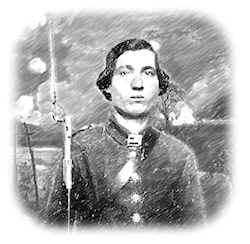
(Note: picture is of an unidentified Confederate soldier.)

0 comments

War Diary of Luman Harris Tenney.

War Diary of Luman Harris Tenney.

30th. Got a sightly position in front of the 18th Corps where all points of interest were in view. Lay till sunrise upon one of the leveled forts. a cannon ball visiting the vicinity frequently. Just at sunrise a cloud of dust and dirt rising suddenly into the air, followed by a distant rumble, gave us warning that the work had commenced. The dust had hardly reached its height when 200 guns opened. The scene was wonderfully grand. We watched for two hours. We couldn’t see the maneuvering of troops. As the fort went up, the 9th Corps went in with a yell, and took the works where the opening was made. The colored troops charged on against the next line and were repulsed with great slaughter. Many regard the whole thing as a failure. Returned to camp. (This refers to one of the most spectacular and unsuccessful events of the war–Burnside’s explosion of a mine under Mahone’s rebel division and forts in front of Petersburg. This “crater” is still a “show” place. 1911. A. B. N.).

0 comments

0

Civil War Diary of Charles H. Lynch, 18th Conn. Vol’s.
Charles Lynch

July 30th. This morning opens up very hot. Having a rest. Trying to break in my new shoes. A bad job for the feet, which are very sore. Early this afternoon, marching orders received. Confederate cavalry reported to be raiding into Pennsylvania and upper Maryland. Ordered to make a forced march. Fearful hot as we break camp and begin the march. Pushing on over Bolivar Heights down through Harper’s Ferry, over the railroad bridge into Maryland. Many of the boys are dropping out on account of the severe heat, the sun beating down on us, and no air. New shoes, woolen stockings, sore feet, make me about sick, while pushing along. I was obliged to drop out by the roadside. A member of our company, George W. Cross, said he would drop out and stick to me. After the sun went down we pushed along. Came to a brook of good cold water. Gave my feet a good bath, after which I was able to push on. Found the regiment in camp for the night, after making a forced march of sixteen miles. Glad to get my shoes and stockings off for the night and get a little rest.

0 comments

William

Journal of Meta Morris Grimball
Meta Morris Grimball

July 30

       Mr Grimball received a letter from William written from the 3d N.C. Hospital, Charlotte Street, Charleston, telling him he was there ill, & at the end of the letter said there was such a buzzing in his head from Quinine he could hardly write, he had received the stockings sent down, & had a pair on, was thankful for them. Arthur wrote the next day, & Berkley Wilkins, both saying William was very ill. Arthur sent a telegram begging his Papa to come down at once, Mr Grimball set off on Monday, arrived in Charleston about 5 o’clock on Tuesday 25[?]. William knew him but when he spoke wandered. Arthur met his father at the cars, Berkley was at the Hospital. Mr Grimball passed the night there & at about 7 o’clock on Wednesday morning William passed away, apparently without pain, his father closing his eyes. He was placed in the Wilkin’s vault, temporarily, on Thursday morning at 10 o’clock, Mr Gadsden performing the Service, having visited and prayed for William, on Tuesday afternoon before Mr G arrived, Ham was with him Dr Geddings attended, and he had a room to himself, and was as comfortable as possible.

       It has pleased Almighty God to take from us this good, affectionate, and gifted child, just when the promise of his youth and care, he took with himself to train and prepare himself for his profession might have yeilded some fruit. He was handsome, elegant, & cultivated in his manners & so much interested in his family, the letters I have from him always allude to them, & propose some benefit for them. I believe him among the saved in Heaven: his fever was the consequence of the exposure on the Coast, while attending to his duties, he was 1st Lieutenant 1st S.C. Artilery. My God give me Resignation to thy will, and lift up my poor, sinful heart to trust, & to pray always.—

0 comments

A Rebel War Clerk’s Diary

A Rebel War Clerk’s Diary at the Confederate States Capital, By John Beauchamp Jones
A likeness of Jones when he was editor and majority owner of the Daily Madisonian during President John Tyler’s administration.

JULY 30th.—Clear and hot.

Dispatches from Bragg, at Montgomery, .of yesterday, give no accounts of more fighting, although the press dispatches, etc. did mention four of our generals who have been wounded.

There is a revival of murmurs against the President. He will persist in keeping Bragg in command, that is “of the armies in the field,” though he does not lead any of them, and Gen. Pemberton really has command of all the batteries defending Richmond. The raiders are cutting the Georgia and Alabama Road since Bragg went South, and we have lost four pieces of artillery near this city a few days ago. ILL LUCK is indefensible!

To-day the enemy sprung a mine at Petersburg, but were repulsed in the attempt to rush in. This is all we know of it yet. Again it is rumored that the major parts of both armies are on this side of the river. This I believe, and I think that unless there be a battle immediately, Grant’s intention is to abandon the “siege” of Richmond at the earliest practicable moment.

The local troops are back again. The President directed the Secretary of War to inform Gen. Ewell that he misapprehended the character of these troops. They were only for special and temporary service, having also civil duties to perform, and desired them to be sent back in twenty-four, or at most, forty-eight hours. Gen. E. writes that he will employ them exclusively hereafter in the city fortifications, and only in times of extreme peril. And he says there was peril on Thursday, the enemy’s cavalry being between our infantry and the city, and it will not do to rely always on his want of enterprise.

0 comments

No late news from the Army today—

Diaries and Letters of Belle Edmondson

July, Saturday 30, 1864

Bro. and Eddie were undecided for some time this morning whether or not I should return to Columbus. Eddie at last consented to bring me in. We had a warm, disagreeable ride, found Therese at home and glad to see me. Eddie came round after dinner, and sat with Therese and I some time, poor Eddie, I was so grieved to bid him good-bye, hope to meet him before he leaves for Camp. Lou Young came round to see us, invited us home with her, which I of course did not refuse, Therese also—We had a nice ride out—Dr. Butts came with us—her Bro. Willie at home, we had a game of grab, did not last long. We then went down to the pond, and had a nice bath. I still have a great horror of the water.

No late news from the Army today—none from my friends at Tibby—I am really sad at parting from my Brothers—oh! heaven guide me, and protect me from harm. Lou, Therese and I are room mates tonight—

0 comments

Downing’s Civil War Diary.–Alexander G. Downing.

Diary of Alexander G. Downing; Company E, Eleventh Iowa Infantry

Saturday, 30th–It is quite warm and sultry. We have a man in our ward who is very homesick; he sits on his cot and cries like a child. He has been promised a furlough, and I believe that if he could not get it he would die. All the wounded here able to take care of themselves on the way, are going home on thirty-day furloughs. Three from our company, Thomas R. McConnoll, John Zitler and John Hilton, are going. John Esher is not going until his wound gets better. A great many of the wounded men are dying, for the weather is so hot the wounds quickly mortify. No news from the front.

0 comments

“It was the toughest fight of the campaign, but not a foot of our line gave way, and our loss is not one-twentieth of theirs.”–Army Life of an Illinois Soldier, Charles Wright Wills.

Army Life of an Illinois Soldier, Charles Wright Wills, (8th Illinois Infantry)

One and three-quarter miles southwest of Atlanta,

July 29, 1864.

On the evening of the 26th, Adj. Frank Lermond sent me word that the Army of the Tennessee was going to evacuate its position, the movement to commence at 12 p.m. When the lines are so close together the skirmish line is a ticklish place.

The parties can tell by hearing artillery move, etc., nearly what is going on, and in evacuation generally make a dash for the skirmish line or rear guard. At nearly every position Johnston has fortified we caught his skirmish line when he evacuated. Luckily our line got off about 4 a.m. on the 27th though they shelled us right lively.

That day our three corps moved along in the rear of the 23d, 4th, 14th and 20th, the intention being, I think, to extend the line to the right, if possible, to the Montgomery and Atlanta railroad and thus destroy another line of communication. We have thoroughly destroyed 50 miles of the Augusta and Atlanta railroad. The 16th Corps formed its line on the right of the 14th, and the 17th joined on the 16th, and on the morning of the 28th, we moved out to extend the line still further. At 12 m. we had just got into position and thrown a few rails along our line, when Hood’s Rebel corps came down on Morgan L’s and our divisions like an avalanche. Our two divisions did about all the fighting, and it lasted until 5 p.m.

We whipped them awfully. Their dead they left almost in line of battle along our entire front of two divisions.

It was the toughest fight of the campaign, but not a foot of our line gave way, and our loss is not one-twentieth of theirs. The rails saved us. I am tired of seeing such butchery but if they will charge us that way once a day for a week, this corps will end the war in this section.

Our loss in the regiment was 17 out of 150 we had in the fight, and the brigade loss will not exceed 100. I never saw so many Rebels dead. We are in excellent spirits, and propose to take Atlanta whenever Sherman wants it.

0 comments

A Rebel War Clerk’s Diary

A Rebel War Clerk’s Diary at the Confederate States Capital, By John Beauchamp Jones
A likeness of Jones when he was editor and majority owner of the Daily Madisonian during President John Tyler’s administration.

JULY 29th.—Clear and warm.

The local troops did not march until this morning, and no one supposes Richmond is seriously menaced by Grant. I believe the object of the demonstration on the part of the enemy is to draw our forces away from the vicinity of Washington.

The Chief of the Signal Corps reports, on information supposed by him to be reliable, that Gen. Early’s captures in Maryland were worth $12,000,000—consisting of some 10,000 horses, 10,000 cattle, 7000 hogs, 4000 sheep, 200,000 barrels of flour, and a large amount of bacon, etc. Also, that he got between 2000 and 3000 recruits. All this doubtful.

Mr. G. W. Lamar, Augusta, Ga., writes the Secretary of War that he knows, personally, over one hundred men who have bought exemptions, and that they are bought and sold every day at a certain price. Now will the Secretary order an investigation? Mr. L. has, or had, nine sons in the army, and he says he could have bought exemptions for all, as he is rich. And yet a poor ensigncy is refused one of his sons.

0 comments

…news of Kirby Smith’s crossing the River from Trans Mississippi to this Department.

Diaries and Letters of Belle Edmondson

July, Friday 29, 1864

I think without doubt, this is the warmest day I ever experienced, knit all day, finished Eddie’s socks, and Amanda washed them out for me, just finished them in time, Eddie arrived from Columbus this eve, spent yesterday and part of today with Tate and the girls at Tibbee. They sent me no messages or regrets that I was not with them. I hope it will all be right—God be with and guide me. No late news from either Army, Va. or Ga. news of Kirby Smith’s crossing the River from Trans Mississippi to this Department. God is with us, and the light of independence now glimmering in the distance will soon burst forth with a halo of unfading light and glory.

Sam was not so well, sent for Dr. Brice, he came, bro’t his daughter, Kate Brice, who is my room mate for tonight. Eddie, Brother and all of us sat up quite late talking—my dear Brothers how dearly I love them. God grant we may all be spared to meet once more around the hearthstone of dear old Father—God bless and protect him—

0 comments

Downing’s Civil War Diary.–Alexander G. Downing.

Diary of Alexander G. Downing; Company E, Eleventh Iowa Infantry

Friday, 29th–It is quite sultry today. Six deaths occurred today in the three wards of our building. One of the sick men, William Gibson of the Thirty-second Ohio Cavalry, died last night. He had been very sick, but was getting better, and just before he lay down for the night, told me that he felt better than for several days; but a few hours later he was dead, dying very suddenly. He left a small family. Life is indeed very uncertain. We should be prepared to meet death any moment, for we know not when the brittle thread of life will be broken, and we have to go to meet our Lord, prepared or unprepared.

0 comments

Is this the way to make us love them and their Union?

Dolly Sumner Lunt Burge – A Woman’s Wartime Journal.

July 29, 1864.

Sleepless nights. The report is that the Yankees have left Covington for Macon, headed by Stoneman, to release prisoners held there. They robbed every house on the road of its provisions, sometimes taking every piece of meat, blankets and wearing apparel, silver and arms of every description. They would take silk dresses and put them under their saddles, and many other things for which they had no use. Is this the way to make us love them and their Union? Let the poor people answer whom they have deprived of every mouthful of meat and of their livestock to make any! Our mills, too, they have burned, destroying an immense amount of property.

0 comments

War Diary of Luman Harris Tenney.

War Diary of Luman Harris Tenney.

28th. Boys exchanged papers with Johnnies. Got one of the 27th. No news. Have played chess considerably for a week or two. Have not been victor for a few days.

0 comments

0

Civil War Diary of Charles H. Lynch, 18th Conn. Vol’s.
Charles Lynch

July 28th. Pleasant Valley. All one can see from this point is mountains, trees, grass, the Potomac River, great flocks of turkey buzzards sailing through the air. About noontime orders came to fall in for a march. Our march led back over the river road, through Sandy Hook, on over the railroad bridge, through Harper’s Ferry, up over Bolivar Heights by Camp Hill, out on the Charlestown Pike, going into camp near Halltown. A march of ten miles. Here we find a wagon train loaded with supplies. Orders to draw five days’ rations. This will pass for another hot, dry, and dusty day, and I marching barefooted over the rough, stony roads, up and down hill. Orders to put up our shelter tents. A large mail received. The 6th Corps showing up again. Trouble must be brewing. They are camping near our Corps, the 8th. Drew a pair of shoes and two pairs of woolen stockings. My feet are in bad condition to break in new shoes, or army brogans. Hope to get along all right now. Wrote a few letters. Our camp is on high ground, and all is quiet while we try to sleep and rest.

0 comments

A Rebel War Clerk’s Diary

A Rebel War Clerk’s Diary at the Confederate States Capital, By John Beauchamp Jones
A likeness of Jones when he was editor and majority owner of the Daily Madisonian during President John Tyler’s administration.

JULY 28th.—Cloudy, but no rain.

Nothing new from Georgia or Petersburg. But a dispatch from Gen. Ewell, received to-day at half past two P.M., orders the local troops (they did not march yesterday) or other disposable forces to occupy the Darby Town, New Bridge, and Williamsburg roads, for the enemy’s cavalry were working round to our left. This was dated “27” when, no doubt, it should be 28th. The Secretary was over at the President’s office, whither I sent the dispatch. I suppose the troops were ordered out, provided there was a mistake in the date. All dispatches should have the day written out in full as well as the day of the mouth, for the salvation of a city might depend on it.

0 comments

Bro. was very angry with me this evening because I would not consent to remain.

Diaries and Letters of Belle Edmondson

July, Thursday 28, 1864

Another long, long weary day. I have been knitting very hard, to try and keep down my miserable feelings. Rachel very kindly offered to clean my head nicely—I accepted, so tonight I have one consolation, a nice, clean head. Nothing important has passed today, neither have we heard one word of news. Oh! it would kill me to live in the Country—Bro. was very angry with me this evening because I would not consent to remain. I of course did not agree to any such arrangement. I am dependent on him however, for a conveyance to Columbus, and he cannot take me before Sunday. God grant me contentment until then. I am going in opposition to my realtive’s advice. My life has not been one to make me bound by affection to obey. I cannot live thus—I am going, I know not when. Oh! God guide and protect me—I will do my duty to myself, though the world condemn me—

0 comments

Downing’s Civil War Diary.–Alexander G. Downing.

Diary of Alexander G. Downing; Company E, Eleventh Iowa Infantry

Thursday, 28th–No news. All is quiet. I am still gaining strength slowly. We get very poor board here for a sick man to gain strength on, but we must make the best of it at present. The room we occupy, called a ward, is about one hundred feet long north and south, and fifty feet wide. There is a row of cots on each side. My cot is on the west side, and in the afternoons it is so hot that we can hardly stand it. There are windows in front and along the west side.

0 comments

“The Yankees are coming. Mrs. Burge, hide your mules!”

Dolly Sumner Lunt Burge – A Woman’s Wartime Journal.

July 28, 1864.

I rose early and had the boys plow the turnip-patch. We were just rising from breakfast when Ben Glass rode up with the cry: “The Yankees are coming. Mrs. Burge, hide your mules!” How we were startled and how we hurried the Major to his room! [The Yankees did not come that day, but it was thought best to send Major Ansley away. He left at 2 A. M.]

0 comments

War Diary of Luman Harris Tenney.

War Diary of Luman Harris Tenney.

27th. In morning accompanied Col. P. and Maj. N. on a tour to visit our line, and brigade of infantry. Rebs in plain view. No firing in front of infantry for two weeks.

0 comments

Diary of a Southern Refugee, Judith White McGuire.

Diary of a Southern Refugee During the War by Judith White McGuire

July 27.—General Early has returned from Maryland, bringing horses, cattle, etc. While near Washington, the army burned Mr. Montgomery Blair’s house, which I cannot persuade myself to regret, and spared the residence of his father, by order, it is said, of General Breckinridge. I know that General B. was right, but I think it required great forbearance, particularly in the soldiers, who have felt in their own persons and families the horrors of this cruel war of invasion. It seems to our human view that unless the war is severely felt by those in high authority, it will never cease. Hunter has just passed through the upper part of the Valley of Virginia, his pathway marked by fire and sword; and Sheridan has followed Early into Virginia, with no very gentle intent, I fear. I am glad that Maryland was spared as a general thing, particularly as our friends might have suffered with our foes, for it would have been difficult to discriminate; but I cannot avoid thinking that if other places, besides Governor Bradford’s house and the town of Chambersburg, had been burnt, it would shorten the war. Yet God has said, “Vengeance is mine, I will repay;” and I hope that Christian principles will ever be observed by our commanders. There seems to be no touch of pity in the hearts of many of the Federal generals. Women and children are made homeless at midnight, and not allowed to save any thing, even their clothes. When houses are not burned, they are robbed of every thing which a rapacious soldiery may desire. The last barrel of flour, the last ham, is taken from store-rooms; and this is done, not in Virginia only; nor are Hunter, Sheridan, Kilpatrick, or Stoneman the only men who do it; but every State in the Confederacy has felt the heel of the despot. North and South Carolina have suffered on their eastern borders most severely; the same of Georgia and Florida. Alabama has had much to bear. The Mississippi country in Louisiana, Arkansas, and the State of Mississippi, has been ravaged and desolated; Tennessee has perhaps had more to bear than any of them. But poor old Virginia has been furrowed and scarred until her original likeness is gone. From the Potomac to the Roanoke, from the seaboard to the Kentucky boundary, including the downtrodden Eastern Shore, she could scarcely be recognized by her sons. Marked by a hundred battle-fields, and checkered by fortifications, almost every spot is classic ground. From the beginning she has acted her part nobly, and has already covered herself with glory; but when the war is over, where shall we find her old churches, where her noble homesteads, scenes of domestic comfort and generous hospitality? Either laid low by the firebrand, or desecrated and desolated. In the march of the army, or in the rapid evolutions of [continue reading…]

0 comments

0

Civil War Diary of Charles H. Lynch, 18th Conn. Vol’s.
Charles Lynch

July 27th. Up early this hot morning. On the march along the river road, going south. Nothing important has taken place since we waded the river at Williamsport. After a march of about six miles we came to the Maryland Heights. Passing on down, the road runs along beside the Ohio and Chesapeake Canal. Opposite is Harper’s Ferry. Here we stop for rest and rations, making coffee from the water in the canal. After a short rest we continue our march on down the road beside the river and canal, on through Sandy Hook into Pleasant Valley, Maryland, where we go into camp on high ground, overlooking the river and the canal.

Owing to the severe service many of the boys are giving out and are sent to a hospital. I would be all right, only for my feet. This is suffering for one’s country. We are in it to the finish, in spite of what we must endure. I doubt at this time, if any man would take a discharge. I have not seen or heard of any who would. We are all very anxious for the finish, when peace will reign over our fair land. We remain here for the night, but don’t know how much longer.

0 comments