–The Texas State Convention, at Galveston, passed an ordinance of secession, to be voted on by the people on the 28d of February, and if adopted, to take effect March 2.–(Doc. 30.)–New Orleans Picayune, Feb. 7.
American Civil War Chronicles
“There now seems to be a disposition in Congress to do something.”—Horatio Nelson Taft.
January 31, 2026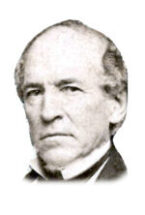
THURSDAY, JANUARY 31, 1861.
Mercury this morning 20 above zero, cold and pleasant all day. Interesting debates in Congress now. Chas Francis Adams took high conservative ground today in the “House.” There now seems to be a disposition in Congress to do Something. Attended the meeting of the “Raven Club” this evening at Prof Whitakers on 11th St. J. S. Willson delivered an address, The Ideas of the Ist & IIIrd Napoleon. Ended by paying a fine tribute to the Founders of our Govt and the Value of the Union. Mr Fuller of N.C. followed in a few very eloquent remarks. No particular news. Doct John C. Smith, 4th Pres[byterian] Ch[urch] called on me today at office.
The three diary manuscript volumes, Washington during the Civil War: The Diary of Horatio Nelson Taft, 1861-1865, are available online at The Library of Congress.
A Diary of American Events – January 31, 1861
January 31, 2026
–The State of South Carolina, by her attorney-general, I. W. Hayne, offered to buy Fort Sumter, and declared that, “if not permitted to purchase, she would seize the fort by force of arms.” The United States, in reply, asserted political rights superior to the proprietary right, and not subject to the right of “eminent domain.”–Times, Feb. 9.
–The United States branch mint, and the custom-house at New Orleans, seized by the State authorities. In the mint were government funds to the amount of $389,000, and in the sub-treasury, $122,000–(Doc. 29.)–Louisville Journal, Feb. 2.
“The Brooklyn will coal at this place, and then proceed to Fort Jefferson.”—Operations in Florida
January 31, 2026
FORT TAYLOR, FLA., January 31, 1861.
Col. L. THOMAS, Assistant Adjutant-General, U. S. Army:
SIR: My company left Fortress Monroe, Va., on the 24th of the present month, and arrived at this place this morning. The Brooklyn will coal at this place, and then proceed to Fort Jefferson. As there was but a very small supply of fixed ammunition at Fort Monroe for field howitzers, I took only two 12-pounder field howitzers and four mountain howitzers. There was plenty of ammunition for these last, but I could only obtain about one hundred and fifty rounds for the 12-pounders.
I have communicated your instructions to Captain Brannan, in command at this place, and have been informed by him that Major Arnold arrived at Fort Jefferson on the 18th instant. Captain Brannan furnished him with six 8-inch columbiads, ten 6-inch field guns, two 12-pounder field howitzers, 10,000 pounds of powder, 700 8-inch shells, and a small amount of ammunition for the field guns. Captain Brannan states that the supply of ammunition on hand is small and the quality bad. The citizens of this place are well disposed, and when the re-enforcements arrive it can be maintained against any force that the seceders may bring against it.
The desiccated vegetables for my command could not be had in Norfolk. Will you please have a supply sent me as soon as possible? I understand that it is impossible to obtain any fresh provisions at Pensacola.
A schooner arrived at this place yesterday, after five days from Pensacola. All of the forts except Fort Pickens were in the hands of the seceders. The strength of these forts was about 3,000 men. All was quiet when the schooner left, and the volunteers were not at all satisfied with their duties. I give you this report as it was given to me. It is probable that you may be in possession of later and more reliable information, but for fear that you may not, I here mention it in my communication.
The privates taken from the companies at Old Point to fill up my company were not regularly transferred. Will you be kind enough to order their regular transfer, as it will greatly simplify the company returns?
I am somewhat doubtful about being able to obtain a supply of fuel at Fort Pickens. However, I shall write to you as soon as I arrive, and give you all the information in my power.
Lieutenant Craven, U. S. Navy, leaves this place this evening for New York, and has kindly offered to take charge of this communication for me. Lieutenant Craven has been very kind, and disposed to afford any assistance in his power to the troops stationed at this place.
I have the honor to be, yours,
I. VOGDES,
Captain, First Artillery.

P. S.–My having just arrived from a sea voyage I trust may be deemed a sufficient excuse for any irregularities in this communication.
Operations in Charleston Harbor
January 31, 2026
FORT SUMTER S. C., January 31, 1861.
(Received A. G. O., February 4.)
Col. S. COOPER, Adjutant-General:
COLONEL: The South Carolinians are still busily engaged at work at two places on Cummings Point, They are using heavy timbers, which they square and frame. Last night they worked at least half the night. The agent of the New York steamers informed us yesterday that he could not get a lighter to come down for the women and children, but that he will send one for them to-morrow, 80 as to take them in the Saturday steamer. No reply, as yet, from the Charleston butcher, Our beef contractor. I presume that he dare not send us any provisions, for fear that he will be regarded as a traitor to South Carolina for furnishing comfort and aid to her enemies.
God save our country.
I am, colonel, your obedient servant,
ROBERT ANDERSON,
Major, First Artillery, Commanding.

_____
FORT SUMTER, S.C., January 31, 1861.
(Received A. G. O., February. 4.)
Col. S. COOPER, Adjutant-General:
COLONEL: I hasten to write this letter, to be taken to the city by my friend, the Hon. Robert N. Gourdin, to say that the butcher has sent down a supply of fresh beef, with a note from him stating that he had not received my note, and that he did not, therefore, know of my order to him to continue my supplies as when I was in Fort Moultrie. He states that he sends the beef to-day in compliance with instructions from Mr. Gourdin, who has received a letter from me, in which I had alluded to my having written to him about it. He concluded by saying that he will cheerfully send what I require. Mr. Gourdin says that his excellency the governor is very desirous that we shall receive our supplies regularly, and thinks that there can be no difficulty in reference to groceries also. Hoping in God that there can be no further difficulty of any sort in this harbor,
I am, colonel, respectfully, your obedient servant,
ROBERT ANDERSON,
Major, First Artillery, Commanding.
_____
FORT SUMTER, S.C., January 31, 1861.
General Jos. G. TOTTEN,
Chief Engineer U. S. Army, Washington, D. C.:
GENERAL: I have the honor to acknowledge the receipt of your letter of the 28th instant, informing me that $15,000 was placed to my credit with the assistant treasurer of the United States at New York. This relieves me from my present embarrassment. I shall, however, require $5,000 more for Fort Sumter by the end of the month of February. The operations of the South Carolinians around us continue to be carried on with activity by means of a large force of negroes. The battery on Cummings Point, mentioned in my last letters, is being enlarged into a field work, the parapet of which is not sufficiently formed to distinguish the trace with accuracy. To the west of this field work they have commenced what appears to be a redoubt. This is quite near the western point of Cummings Point.
Steamers are quite active, especially at night, in delivering materials at this point. A very large quantity of timber has been delivered, in and used for revetments, platforms, and, apparently, bomb-proof shelters.
On Sullivan’s Island I have learned that the battery in the cross street opposite Dr. Ravenel’s house, also opposite where the chaplain, Rev. Mr. Harris (now at Fort Washington), lived, is for mortars, apparently, as no embrasures are formed, but that neither guns or mortars are, yet, placed in it. The batteries on the island above Fort Moultrie are two in number. The first is only a short distance above the Moultrie House, and about 1,460 yards above Fort Moultrie. It is armed with three guns, either 24-pounders or 32 pounders. It is not in sight of this fort, being in range of and beyond the Moultrie House. Its position is opposite that portion of the Maffitt Channel which comes closest to the island.
The second battery is at the upper or east end of the island, and is armed with two guns, 24 or 32 pounders.
The last information from the island gave the number of men there as 1,450. But of these a very large number are raw recruits for the regular regiment that they are forming.
In this fort we are hard at work perfecting the arrangements for defense and offense, and creating new ones. Three 10-inch columbiads and four 8-inch columbiads (for which there are no carriages) are arranged as mortars.
The women and children are to leave for New York to-morrow by steamer.
The authorities have promised to send over my private effects from Sullivan’s Island, but have declined to allow me, or any one sent by me, to go over to collect them and pack them. I am, however, pleased to secure what I can in the way that is indicated by the authorities. I will write again in detail as soon as I can determine the trace of the works on Cummings Point.
Very respectfully, your obedient servant,
J. G. FOSTER,
Captain, Engineers.
“If my company was raised to a hundred and a sloop of war stationed here there would be no apprehension of an attack at present.”—Operations in Florida
January 31, 2026
FORT TAYLOR, KEY WEST, FLA.,……….
January 31, 1861.
SIR: I have the honor to acknowledge the receipt on the 26th instant of a communication [following] from the headquarters of the Army dated the 4th instant, ordering my whole company to this fort. I had anticipated the order some time ago. This is the only dispatch I have received from the Department on this subject. There are about sixty men, mechanics and laborers, on the work, who are willing to take the fate of it, and assist in defending the same. I require at least fifty more muskets for these men. If my company was raised to a hundred and a sloop of war stationed here there would be no apprehension of an attack at present. The powder is not the best, and the supply of ammunition is limited except for heavy guns. It is very necessary that the Ordnance Department should attend to it immediately. I have sent a requisition direct to Colonel Craig. The fort is being put in a very good state of defense by Captain Hunt, and will be in a short time able to stand an attack very successfully. With a vessel of war in the harbor a landing could be easily prevented.
I transferred to Major Arnold six 8-inch columbiads, with seven hundred shells; two 6-pounder and two 12-pounder howitzers, with a small supply of ammunition for the latter; 10,000 pounds of powder. He has all of his guns mounted and in position, and is really stronger than I am, as he cannot be attacked by land. We have communication with each other every few days.
In about a week I shall have ten 8-inch guns on the gorge or land front, which will enable me to prevent the establishing of breaching batteries without considerable difficulty. The General-in-Chief may rest assured that this work will not be taken without a severe struggle.
The Macedonian passed Key West on the night of the 29th instant for Tortugas. The Brooklyn arrived in the harbor this morning and will sail to-morrow night. All well on board.
I would suggest that a paymaster be ordered here to pay the troops. Last payment to October 31.
I am, sir, very respectfully, your obedient servant,
J. M. BRANNAN,
Captain, First Artillery, Commanding.
Lieut. Col. L. THOMAS,
……….Asst. Adjt. Gen., Hdqrs. of the Army, Washington, City, D. C.
.
P. S.–I send this by the U.S. steamer Mohawk.
.
HEADQUARTERS OF THE ARMY,
Washington, January 4, 1861.SIR: It is the direction of the General-in-Chief that you transfer the whole of your company to Fort Taylor. Be on your guard against surprise or assault, and do the utmost in your power to prevent the seizure of your fort. Consult with the commander of any United States man-of-war in the harbor, and invite his co-operation. Such commander will probably have received orders (if they can be got to him) to act in concert with you.
Major Arnold with his company is ordered from Boston, to proceed by steamer, if possible to garrison Fort Jefferson. There is some apprehension that an expedition is fitting out in Charleston to take one or both of the forts, Taylor and Jefferson. It is hoped that Captain Hunt may, with his workmen, be able to give you some assistance in defending yourself. If necessary for that purpose you may take one or two boxes of the muskets shipped in the Water Witch intended for Captain Meigs.
I am, sir, very respectfully, your obedient servant,
G. W. LAY,…….
Lieutenant-Colonel, and A.D.C.Capt. John M. BRANNAN,
……………First Artillery, Commanding Key West Barracks, Fla.
The President-Elect and the Crisis—Warlike News from Springfield.
January 31, 2026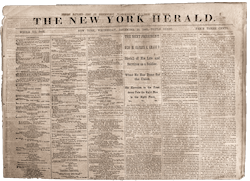
January 31, 1861; The New York Herald
Our late cheering advices from Washington, indicating the seasonable cooperation of the President elect in some compromise arrangement in behalf of the Union, and the peace of the country, were too good, it appears, to be true. With the receipt of these advices at Springfield, the republican newspaper there accredited as the home organ of Mr. Lincoln, indignantly denies the soft impeachment as to his conservative inclinations. We are thus told that in Abraham Lincoln the country will have a republican President – one who will give them a republican President – one who will give them a republican administration, and that instead of being committed to the border State compromise or any other, “Mr. Lincoln stands immovably on the Chicago platform, and will neither acquiesce in, nor advise his friends to acquiesce in, any compromise that surrenders one iota of it.”
In confirmation of this unwelcome intelligence, our Springfield correspondent, in the same emphatic tone, assures us that Mr. Lincoln will adhere to the doctrine of the restriction of slavery upon which he was elected, he becomes convinced of its fallacy not by threats, treason and rebellion, but by his own sense of justice; and that will hold himself altogether aloof from attempts to intermeddle with the strife of congressional factions, and the troubles of the present administration, until he shall have assumed the reins of government. We are thus relieved of all doubt concerning the views and position of Mr. Lincoln on the subject of a Union saving compromise. He was elected on the Chicago platform, not by the democrats and their allies, but by their adversaries, the republicans and he will be a republican President. In the interval to his inauguration he will not interfere in the proceedings of Congress or of Mr. Buchanan’s administration; and when invested with the duties of the Presidency, if moved to a compromise at all, it will not be threats, treason and rebellion, but by his own sense of duty. On the other hand, we have been over and over again assured that the first duty and the first object of the incoming administration will be to enforce the laws and restore the authority and integrity of the general government, before stooping to compound with the traitors who have conspired to overthrow it.
In theory this line of policy is consistent and correct; but in practice we must deal with the stubborn facts which surround us. Let us look at these facts. Six States have withdrawn from the Union, and they stand before us today each in the attitude of an independent republican. During the present month, however, they will have organized themselves [continue reading…]
Magnanimous Buchanan
January 31, 2026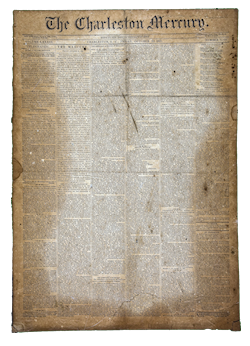
January 31, 1861, The Charleston Mercury
There is something base, on the part of the President, in keeping Major ANDERSON at Fort Sumter under the present circumstances. Knowing him to be a Southron and a slaveholder, he should be offered a furlough or leave of absence, and a substitute sent who is not a Southron. Leave all the DOUBLEDAYs – whether three score or one. The people of South Carolina have been measurably disarmed by their sympathy for Major ANDERSON, and President BUCHANAN knows it. Why was the former commandant at Fort Moultrie withdrawn, and ANDERSON put in his place, just at the beginning of our issues? Had the latter been as good a politician as a soldier, he would have declined the appointment, and then was his moment to resign. Now, it is a point of honor with him to remain, unless the Federal Government will show more magnanimity than is its character, and will voluntarily move to relieve him. Au contraire: the purpose is to disarm us, through him. But this cannot last. The result will be the sacrifice of a brave man, at the post of a supposed duty, whose government deliberately sacrifices him with the hope of some small temporary profit. Why not send General WOOL, who seems spoiling for a fight, and ought to be indulged, in consideration of his name, if nothing more. We should be more readily disposed to wool him than the brave Kentuckian whom they have selected for the sacrifice. Anyhow, we cannot well keep our hands off from wooling somebody shortly after the 4th of February. We cannot suffer a flag so hateful as that of the United States to wave in insolent defiance in the harbor of an independent State.
From the Old Dominion
January 31, 2026
January 31, 1861, The Charleston Mercury
Our Richmond Correspondence.
RICHMOND, January 29. Richmond Waking Up – Speech of Judge Robertson – What Virginians think of South Carolina – Future Course of the Old Dominion – The Inevitable Botts – A Slow Legislature, etc., etc.
At last the darkness seems about to break here. The day is about to dawn. Last night an immense meeting of the citizens took place at the African Church, and the policy of taking Virginia out of the Union before the fourth of March was announced by every speaker, and received with deafening applause and cheers. Let me not forget to notice, too, that the very mention of South Carolina was met with shouts, and that the call of three cheers for her was responded to with a voice of thunder. The meeting was held to nominate candidates to represent the metropolis in the Convention to assemble on the 13th February, and the gentlemen selected by the assemblage are all out and out, open avowed secessionists. They are Captain GEORGE W. RANDOLPH, Mr. JOHN O. STEGER, and Judge JOHN ROBERTSON. In their responses to the nomination these gentlemen avowed their willingness to remain in the present Union, if every guarantee demanded by the South was yielded, and the Constitution so amended that it would embrace thorough protective provisions, placing it out of the power of the North to invade Southern rights. But both Captain RANDOLPH and Mr. STEGER – Judge ROBERTSON was with you – declared that they had not the least expectation of any such event. The adoption of any such policy, by the present legislators in Congress, or by a Convention – and that the conclusive remedy, the panacea for all our woes, was secession before the fourth of March, confederation with our Southern sisters, and armed defiance of the vulgar oppressor of the North. In addition to making these good and sound nominations, the meeting adopted a resolution calling on the Legislature to redeem its pledge, that no Southern State should be invaded – in view of the intelligence received that day, that Fort Monroe was being reinforced, and her guns, that should have pointed seaward, turned upon the town of Hampton, inward. This resolution passed unanimously with deafening applause, and a reference by one of the speakers to the timidity of the Legislature, and its utter failure to represent the feelings of the people, was greeted in the same unmistakable manner.
The time for talking has passed – the hour for action has arrived.
Reinforcements Coming—Alleged Orders of the Brooklyn, etc., etc., etc.
January 31, 2026
January 31, 1861, The Charleston Mercury
FROM WASHINGTON.
Treachery of the Administration.
(FROM OUR OWN CORRESPONDENT.)
WASHINGTON, January 30 – 10:45 a.m. – The President has replied to the despatch of Senator MALLORY, of Florida. He says the Brooklyn has gone to Pensacola; that she will land provisions at Fort Pickens, and then lay off to assist the fort with troops, should an attack be made upon it.
There is intense anxiety this morning at the Executive mansion to hear from Fort Pickens. An immediate conflict is anticipated by all parties.
I have it from undoubted authority that the commander of the Brooklyn has been ordered to keep a strict watch on all the movements at the Pensacola Navy Yard, and in the neighborhood of Fort Pickens. In the event of his discovering the slightest preparations for an attack, or of an attack being made, his orders are instantly to land the artillery forces for the fort and bring his own guns to bear upon those who make the attack upon it.
The Constitution newspaper, now no longer supported by the Federal patronage, will collapse tomorrow.
The Editor, W. N. BROWNE, announces that he will shortly resume its publication somewhere in the great Southern Confederacy – probably at Montgomery, Alabama.
SECOND DESPATCH.
WASHINGTON, January 30, 9 p. m. – My despatch of yesterday to the MERCURY, stating that HAYNE had made the formal demand upon the President for the surrender of Fort Sumter, was correct in every particular. [continue reading…]
The Revolution
January 31, 2026
January 31, 1861, The New York Herald
WASHINGTON, Jan. 30, 1861.
Private advices from the South, received tonight, indicate that there will be a fight in less than thirty hours.
The President declared to a member of Congress yesterday that he had no doubt that Fort Sumter would be attacked in less than a week, when a fight would ensure and the war would commence. The congressman inquired why he did not reinforce Major Anderson? The president replied, that there were not vessels enough in the American navy to reach Fort Sumter. In the first place, they would have to enter in the day time, and move slowly in order to clear the old vessels, that have been sunk in the channel as barriers against any attempt of government vessels to enter the arbor. This fact, it is asserted, would cause their sure destruction by the outer lighthouse batteries on Morris Island, and before encountering the fire of the Morris light beacon batteries, and Point Cummin’s batteries, and the guns of fort Johnson on James Island, and Fort Moultrie on Sullivan’s Island, all of which they would have to suffer before reaching Fort Sumter. Besides, Major Anderson could afford no protection to a vessel against the outer batteries of Morris Island.
This is the opinion of the authorities having the power to send relief; but in justice to those who would have to execute the work and risk their lives before the fire of the secessionists, I am assured that the harbor of Charleston can be entered by light draft vessels of war, and Major Anderson can be reinforced. There are men in the American navy who believe that the business of firing cannon is a game that two can play at, and that as good a shot can be made from the deck of an American ship of war, as from Morris Island.
Letters are received from Fort Sumter as late as the 26th inst., stating that all the officers and men are well. While they would like some fresh meat for a change, they are a unit in feeling against succumbing to the terms of the authorities of Charleston to supply them either by courtesy or to let them have daily rations, which they can cut off at any moment. When the authorities will allow Major Anderson to contract for a quantity of supplies according to the usual practices, untrammelled by threats or any improper influence, he will do so, and not before. Unless he can do this the men prefer to confine themselves to the fare they now have, and of which they have ample supply.
Floating batteries, the superstructures of which are composed of cotton bales, are in course of erection, by which means in part the South Carolinians expect to attack Fort Sumter. The officer who writes from Fort Sumter, alluding to these [continue reading…]
Village Life in America
January 30, 2026
January 30 (1856).–I came home from school at eleven o’clock this morning and learned a piece to speak this afternoon, but when I got up to school I forgot it, so I thought of another one. Mr. Richards said that he must give me the praise of being the best speaker that spoke in the afternoon. Ahem!
Southern States are going out one after another and the border states undetermined
January 30, 2026
[January] 30th
Lewis returned and had a very nice time was handsomely entertained and enjoyed the change, the negroes seemed to like it too. Mr John Townsand was very much interested in the Fort—
Things seem to progress, the Southern States are going out one after another and the border states undetermined.—
We dined with Papa last week, a very handsome affair, and the party consisted of Mrs Wayne, ourselves & Miss Butler, Charlotte’s new Governess, he gave us a nice dinner. Charlotte & her little girls & Governess took lunch with us on Saturday, we had music, & cake, & wines, and I enjoyed Charlotte’s society. She says Miss Butles[?] seems to be a very pleasant tempered person with rather more of the Irish accent than she expected. She hopes she will answer her purposes for 2 years, and seems very much concerned to have these children well educated.—
Things seem to progress in a slow but certain way. John is now in command of a Steamboat to watch the harbor, he alternates with Pilot and I hope will get paid for his services.—
Charles has resigned, and intends offering his services to the State of Georgia. I am sorry he will lose his pay, but the State will pay. Lewis made a visit to the Fort at Edisto to see if Bing Smith intended resigning his place of Captain, for then Lewis would try for it.—
He went down in the boat and had lunch here, at 11 o’clock, and the next day returned & dined here. 4 went with him, W. Simons, Megget, Weston, Walters,—but Bing Smith chooses to keep his post.—
We returned Mrs Barnwells visit the other day & found her at home; she expressed herself very much concerned by the ill health of her husband. Last summer Dr Ogiier[?] said he ought to go away & take care or himself he said he could not leave his business, & now he looks very badly has most painful symptoms, palpitation of the heart, & all that, and is afraid of a disease of that organ. I met with an annoying accident a few days since, in walking up the road. I took off my glove, a large dog skin one, and having lately worn on my little finger my wedding ring, because it had become too small, it slipped off and I have not been able to find it. I am going to purchase another & in the mean time wear the ring belonging to my eye-glasses, which had become loosened.—
“The southerners here are greatly offended and pretend innocence.”—Horatio Nelson Taft.
January 30, 2026
WEDNESDAY 30
A pleasant cold day, freezing in the shade, Streets muddy. Another Company of Flying Artillery arrived last night—90 men & four “pieces.” They are quartered in the old Wm Wirt House where Mrs Smith had her Young Ladies Select School or “Institute,” something of a change on those premises. The southerners here are greatly offended and pretend innocence. But in truth these preparations thwart their plans for seizing the City. No news of importance today, but some compromise seems more likely to be made now than heretofore. Did not go down to the Ave tonight.
The three diary manuscript volumes, Washington during the Civil War: The Diary of Horatio Nelson Taft, 1861-1865, are available online at The Library of Congress.
Things here are not working right.
January 30, 2026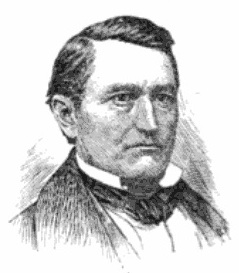
Junius Hillyer to Howell Cobb..
Washington [D. C], Jan. 30th, 1861.
Dear Sir: I wish you would take a few moments of your time to drop me a line. Things here are not working right. Since the Southern men have left Washington there seems to be nobody standing up for the Southern movement, and the pressure in favour of the Union is so strong as to silence all opposition. This state of things may be unimportant as to the States that have seceded but it is producing a most melancholy effect in the border States. In fact you may prepare your mind for a defeat in Virginia and all the rest of the border States. But that is not all that I dread. It is proper that occupying the position you do, you should be informed of the worst signs of the times. My fear is that we are in danger of meeting not only the opposition of the border States, but their hostility.
You may give more credence to the strong language of Phil Clayton than you do to what I say. He speaks as he feels; I speak as I see and observe. And I tell you, I warn our friends at Montgomery that unless you proceed with the greatest caution you will have the border slave States strongly bound with our foes against us and making common cause with them to conquer a settlement. That there is danger of this is just as true as we live. The great prolific source of danger is upon three subjects mainly. The idea is extensively abroad that the manufacturing interest of Va. is in danger and that the navigation of the Mississippi will be obstructed and that the slave trade will be reopened. I don’t understand the question of the tariff in its details, but if you establish free trade we are certain to lose Va. and Md. The navigation of the Mississippi up and down is important to the States on that river and its tributaries and unless this navigation is properly provided for we will lose Ark., Tenn., Ken., and Mo. I have no fear about the slave trade. .But I tell you, Gov[ernor], we must raise revenue from a judicious tariff. This is what our people are accustomed to. And it is desirable that our revolution should be attended with as slight a jar as possible to the habits of our people. You have need of all your wisdom and forecast.
I hope I shall be at home in time to vote for you for President. If the election should come on before the 4th Mar., as it ought, I will come home to vote. . . . Old Buck and his Cabinet are trying honestly in their bungling way to have a peaceful solution in some way of this matter. I honour him for it and am willing, so long as the country remains at peace, to continue with his administration.[i] Write to me and give me your views about this course on my part. I hope you will be elected President and that I may be the Solicitor of the Treas. I could start that bureau on a proper plan and make it efficient.
P. S.—One word more. There is such a likeness between your intellect and mine that I know that you will concur with me—that we ought to keep in view the good old Democratic doctrine of “a tariff for revenue, with incidental protection.”
From what I learn the Border Congress that meets here on the 4th will break down. Nothing will be done. And now everything depends upon the wisdom, justice and moderation, at Montgomery. Let such action be had as will inspire confidence in the border slave States and will induce them to cast their destinies with us. Write to me.
[i] Hillyer continued to hold office as Solicitor of the United States Treasury until Feb. 13, 1861, when he resigned.
From Annual Report of the American Historical Association for the Year 1911.
Junius Hillyer (April 23, 1807 – June 21, 1886) was an American lawyer, judge, and politician who served two terms in the United States Congress. After his congressional career, Hillyer was appointed by President James Buchanan as Solicitor of the United States Treasury, and served from 1857 until February 13, 1861 when, as a result of Georgia’s seccession from the Union, he resigned his post and returned to Georgia. This marked the end of Hillyer’s career in public service. For his remaining years he concentrated on the private law practice.
Howell Cobb was an American political figure. A southern Democrat, Cobb was a five-term member of the United States House of Representatives and Speaker of the House from 1849 to 1851. He also served as the 40th Governor of Georgia and as a Secretary of the Treasury under President James Buchanan. Cobb is, however, probably best known as one of the founders of the Confederacy, having served as the President of the Provisional Congress of the Confederate States.
“… a third armed body of men took forcible possession of the works and engineer property at Ship Island.”—The Secession of Alabama and Mississippi
January 30, 2026
BILOXI, MISS., January 30, 1861.
SIR: I have the honor to report that the works at Ship Island were visited by an armed body of men on the forenoon of the 13th instant. They stated to the overseer that their object was to take possession of the works, and, also, that they were acting on their own responsibility. After a short stay on the island, they left without interfering in any way with the work. On the afternoon of the same day another party, also armed, landed at Ship Island; their statement to the overseer was the same as that made by the first party. A flag was hoisted previous to their departure that evening. Ten men were left on the island, who occupied a vacant engineer building. As no interference was attempted on their part, operations were continued, so as to close the works as rapidly as possible. On the morning of the 20th instant, a third armed body of men took forcible possession of the works and engineer property at Ship Island. From that moment I considered myself relieved from all connection with those works. The forcible seizure on the 18th instant of the works and engineer property on east end of Dauphin Island (reported to the Department by Lieutenant Reese) has, in like manner, relieved me from all responsibility respecting Fort Gaines. The forcible occupation of Fort Morgan and my arrest at Pensacola have, I consider, relieved me from all connection with my other works, unless it be Fort Pickens, now garrisoned by the line of the Army. My duties are thus restricted to the settlement of outstanding liabilities against the works formerly in my charge. Should the Department, however, consider that I have, or may have hereafter, other duties to discharge with respect to these works, I would respectfully request that I be furnished with instructions to that effect.
……….I am, sir, very respectfully, your obedient servant,
FREDERICK E. PRIME,……..
First Lieutenant, Engineers.
Bvt. Brig. Gen. J. G. TOTTEN,
Chief of Engineers.
.
.
Capt. H. G. WRIGHT:
DEAR CAPTAIN: Dame Rumor says all the expeditions to capture Ship Island have been made without any authority from the governor, and have not as yet received his sanction.
F. E. P.
The News
January 30, 2026
January 30, 1861, The New York Herald
The announcement of the peaceful mission of the steam sloop-of-war Brooklyn to Florida is confirmed by late advices from Washington. The provisions on board the Brooklyn are to be delivered at Fort Pickens, but she is not to enter the harbor of Pensacola, nor to land troops at the fort, unless the fort should be attacked. Her commander is ordered to act strictly on the defensive, and to give no pretext of hostilities.
Companies D and K of the artillery went forward yesterday from Governor’s Island to Washington city. They numbered 112 men.
The first duel which has resulted from the present political complications took place yesterday morning, on the Pennsylvania border, between Dr. Jones, a partisan of Senator Douglass and Mr. Wilson, a Breckinridge democrat, both residents of Washington. Wilson was wounded in the hip. The constabulary are said to be in pursuit of the parties.
The radical abolitionists yesterday exhibited another example of the reaction on the slavery question that is going on at the North. These incendiaries arranged for a Convention at Syracuse, a place where they have had the largest liberty for years past. But the citizens, determined to tolerate them no longer, assembled at the hall, organized a meeting, and compelled the abolitionists to beat a retreat.
Fort Sumter as Property
January 30, 2026
January 30, 1861, The Charleston Mercury
The Government of the United States insists on holding Fort Sumter as property. They pretend to think that this is by no means a hostile attitude against South Carolina. They do not hold it was a military instrumentality by which the waters of our bay and the commerce of our city are controlled. It is true that we have offered to take it, and pay for it, as property. But they will not let us have it; and keep it – a threat, an insult, and an instrument of coercion by the power of the cannon. Fort Sumter is property, like every other fortress in the world; but was it ever heard of that a power can have a right to hold on to a fortress within the jurisdiction of another power, simply because it is property? A fortress is not like a cotton factory, or a pottery, harmless in nature, and incapable of assailing or injuring the people of a country. It is an instrument of war; and when kept possession of by one nation with an armed soldiery, in defiance of the will of another nation, that possession itself is a declaration of hostility. Cannon are property. Suppose a river divides two nations, as is the case for thousands of miles in Europe, and one nation plants cannon on one side of the river, opposite to a city on the other side of the river – would it not be considered a measure of war? The cannon and soil are property, belonging to the people on the side of the river opposite to the city, but when made a fortress, commanding the city, it is more than property. It is an instrument of force, and means war. This is the position taken by writers on the laws of nations. In what does such a case differ from the present state of things in the bay of Charleston? A fortress, belonging to us, in common with other States, is erected in the bay of Charleston, to protect the city. South Carolina withdraws from the Union with her co-States in the Confederacy of the United States. The Government of the United States, instead of surrendering this fortress to the authorities of the State, persists in holding it, for no purpose which can be conceived of, except to assail and coerce the State. As property, it is valueless to them for any other purpose. As property, the State has offered to pay for it. What, then, is its continued possession, but an insult – an act of hostility? Is it not like the cannon planted on the opposite side of the river? If Fort Sumter was not built, and the Government of the United States owned the land on which it stands – would it be now tolerated, that it should send troops and laborers, and erect the fort on this land? Would any publicist or jurist doubt that we would be justified in preventing the erection of the fort? and if this position is correct, how can it be doubted that we have a right to take Fort Sumter now that it is built or to destroy it if we can? What is a right in matters affecting the security of a State, implies a duty to enforce it.
Civil War Day-by-Day
January 30, 2026
January 30, 1861
- Louisiana Secessionist Convention selects 6 delegates to represent the state at the Convention of Seceded States in Montgomery, AL
“An armed guard now tramps through the Halls of the Patent Office every night…”—Horatio Nelson Taft.
January 29, 2026
TUESDAY 29
There are indications today that the Republicans are “coming down” from the Chicago Platform and that something like the Crittenden proposition will be accepted by them. Secession seems to be now a fixed fact and we have to look Disunion in the face, while a subversion of the Government is threatened. This City is still considered in danger. There is a thousand U.S. Soldiers now quartered here. An armed guard now tramps through the Halls of the Patent Office every night and the other Public Buildings are guarded in the same way. Warm & pleasant today.
The three diary manuscript volumes, Washington during the Civil War: The Diary of Horatio Nelson Taft, 1861-1865, are available online at The Library of Congress.
Georgia’s Declaration of Causes for Secession
January 29, 2026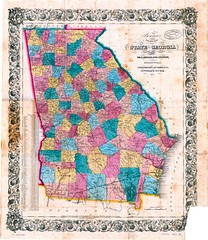 The people of Georgia having dissolved their political connection with the Government of the United States of America, present to their confederates and the world the causes which have led to the separation. For the last ten years we have had numerous and serious causes of complaint against our non-slave-holding confederate States with reference to the subject of African slavery. They have endeavored to weaken our security, to disturb our domestic peace and tranquility, and persistently refused to comply with their express constitutional obligations to us in reference to that property, and by the use of their power in the Federal Government have striven to deprive us of…
Read the entire Georgia Declaration of Causes for Secession.
A Diary of American Events – January 29, 1861
January 29, 2026
–The United States revenue cutter Robert McClelland, Captain Breshwood (a Virginian), was surrendered at New Orleans to the State of Louisiana.–Times, Feb. 8.
–Secretary Dix’s dispatch to Hemphill Jones, to “shoot on the spot” any one who attempts to “haul down the American flag” caused great enthusiasm.–(Doc. 28.)
“You are instructed to act strictly on the defensive, and avoid as far as possible a collision with the hostile troops concentrated at Pensacola and in the adjacent forts.”—Operations in Florida
January 29, 2026
WAR DEPARTMENT, January 29, 1861.
Lieut. ADAM J. SLEMMER,
First Regiment Artillery, U. S. Army, Commanding Fort Pickens :
SIR: The dispatch of which the inclosed is a copy was transmitted today, and the hope is indulged that it will be received before the arrival of the Brooklyn. Lieutenant Saunders goes as the bearer of this communication in order that the Department may be assured that the dispatch has reached you safely, and has suffered no alteration in its transmission, and also that his return may afford you an opportunity of reporting fully all that has occurred in connection with your command since the transfer of your forces to Fort Pickens. In the absence of any detailed information as to the circumstances under which this movement was made, I can only commend its patriotic purpose and express the gratification felt by the Department at its success.
You are instructed to act strictly on the defensive, and avoid as far as possible a collision with the hostile troops concentrated at Pensacola and in the adjacent forts. Should you, however, be attacked you will make the best defense of which your position and resources are capable. The naval forces of the United States now at Pensacola, or which may hereafter arrive there, it is expected will cordially co-operate with you. You will observe that it is expressly understood as the basis of instructions forwarded to you that the communication between yourself and others in command at Pensacola and the Government is to be kept open and unobstructed. You will avail yourself of this provision, and report by special messenger to the Department as events may justify or require it.
In your dispatches by Lieutenant Saunders you will make known the details of the transfer of your command, the forces which you now have available for active service, the strength of your position, the character of the preparations, if any, in progress which look to an assault upon the fort, and all other matters in any manner bearing upon your ultimate safety.
Respectfully, your obedient servant,
J. HOLT,
Secretary of War.
[Inclosure.]
WASHINGTON, January 29, 1861.
To JAMES GLYNN, commanding the Macedonian; Capt. W. S. WALKER, commanding the Brooklyn, and other naval officers in command; and Lieut. ADAM J. SLEMMER, First Regiment Artillery, U. S. Army, commanding Fort Pickens, Pensacola, Fla.:
In consequence of the assurances received from Mr. Mallory in a telegram of yesterday to Messrs. Slidell, Hunter, and Bigler, with a request it should be laid before the President, that Fort Pickens would not be assaulted, and an offer of such an assurance to the same effect from Colonel Chase, for the purpose of avoiding a hostile collision, upon receiving satisfactory assurances from Mr. Mallory and Colonel Chase that Fort Pickens will not be attacked, you are instructed not to land the company on board the Brooklyn unless said fort shall be attacked or preparations shall be made for its attack. The provisions necessary for the supply of the fort you will land. The Brooklyn and other vessels of war on the station will remain, and you will exercise the utmost vigilance and be prepared at a moment’s warning to land the company at Fort Pickens, and you and they will instantly repel an attack on the fort. The President yesterday sent a special message to Congress commending the Virginia resolutions of compromise. The commissioners of different States are to meet here on Monday, the 4th February, and it is important that during their session a collision of arms should be avoided, unless an attack should be made or there should be preparation for such an attack. In either event the Brooklyn and the other vessels will act promptly.
Your right, and that of the other officers in command at Pensacola, freely to communicate with the Government by special messenger, and its right in the same manner to communicate with yourself and them, will remain intact as the basis on which the present instruction is given.
J. HOLT,
Secretary of War.
ISAAC TOUCEY,
Secretary of the Navy.
Transportation of Families–Operations in Charleston Harbor
January 29, 2026
Fort SUMTER, S.C., January 29, 1861.
(Received A. G. O., February 1.)
Col. S. COOPER,
Adjutant-General U.S. Army:
COLONEL: The South Carolinians are at work in large force on Cummings Point, apparently framing heavy timbers, for what purpose I am unable yet to state. They succeeded this morning, favored by a very high tide, in getting the Columbia off. I send herewith two slips cut from yesterday’s Mercury, which show unmistakably the animus of these people. They are determined to bring on a collision with the General Government. Everything around us shows this to be their determination and their aim. I had a contract made yesterday for the transportation of the women attached to this command. The number is much greater than the legal allowance, but under the present excited state of feeling toward our command it would not do to send to the city or to Sullivan’s Island any of the relatives of our soldiers’ wives who have been living with them. The number who will be sent (twenty) embraces those attached to the companies and the wives of the members of the band, and also the wives of the non-commissioned staff. Inclosed you will also receive the muster and pay rolls of this command, which have been signed by the husbands of the women. I will thank you to have them sent by the Pay Department to the paymaster in New York, with instructions to hand the pay to the women. I will thank you also to have the necessary instructions sent to New York for the rations, &c., for these women and children.
Very respectfully, your obedient servant,
ROBERT ANDERSON,
Major, First Artillery, Commanding.
[Inclosure No. 1.]
OBITUARY.–Died, on Saturday night, at the Marine. Hospital, Thaddeus S. Strawinski, aged 18 years and 7 days, from an accidental wound from a revolver. This promising young man was on duty in the Columbia Artillery at Fort Moultrie when the sad accident occurred. He was a noble fellow, and, just a week after entering the freshman class of the South Carolina College, with his spirited father joined the ranks at the call of the State. While on the litter being carried to the hospital he said to those who were conveying him: “Friends, O how sorry I am you are to attack Fort Sumter without me!” During his sufferings he mourned that he could not be at the taking of the fort. He was calm and resigned, and met his end prayerfully, with the Lord’s Prayer on his lips. A mother’s gentle influence soothed his dying hour, and a soldier’s spirit nerved a fathers heart to resign his son to his Creator. The sympathy of the whole community is with them in their bereavement.
[Inclosure No. 2.]
Mr. Yeadon, from the committee of conference on the disagreeing votes of the two houses on that clause of the appropriation bill which appropriates $30,000 for dredging Maffitt’s Channel, submitted a report recommending the adoption of the following: “For deepening or otherwise improving Maffitt’s Channel, $30,000, to be drawn by and expended under the direction of a commission, as follows: Messrs. George A. Trenholm, Henry Gourdin, George N. Reynolds, W. G. De Saussure, F. I. Porcher, Hugh E. Vincent, and the mayor of Charleston ex officio: Provided, The work shall not be resumed until Fort Sumter passes into the possession of the authorities of the State, and all the troops of the United States shall be removed from the harbor of Charleston.
The report was agreed to.
Mr. Buist offered the following resolution:
“Resolved, That it is the opinion of the general assembly that no sessions of courts of law or equity in this Stale should be holden so long as the Government at Washington has control of the fortress known as Fort Sumter?
Ten members objecting, the resolution was ordered for consideration on Monday.
The News
January 29, 2026
January 29, 1861, The New York Herald
It is now stated that the mission of the war steamer Brooklyn to Pensacola is one of peace. She has been sent out to intercept vessels of the Gulf squadron that have been ordered to Pensacola to prevent them from going there, and thus obviate difficulty and perhaps bloodshed.