JANUARY 2d.—The enemy are making preparations to assail us everywhere. Roanoke Island, Norfolk, Beaufort, and Newbern; Charleston, Savannah, Mobile, Pensacola, and New Orleans are all menaced by numerous fleets on the sea-board, and in the West great numbers of iron-clad floating batteries threaten to force a passage down the Mississippi, while monster armies are concentrating for the invasion of Tennessee and the Cotton States. Will Virginia escape the scourge? Not she; here is the bull’s-eye of the mark they aim at.
American Civil War Chronicles
Unlike most in 1862, Dr. Alfred L. Castleman treats the mental attitude of his patients, along with the physical ailments.
January 2, 2022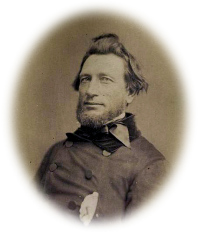
2nd.–I think my hospital can boast, just now, the happiest set of sick men I ever saw. I have now twenty-seven of them. This morning, as I was prescribing for them, (all sitting up) some reading the morning papers, and talking loudly over war news, some playing whist, some checkers, some chess, some dominoes–all laughing and merry, Gen. H——— walked in, and, looking for a moment along the line of sick, exclaimed, “What the h–ll have you got here?” “My hospital, General.” “A Brigade,” replied he in his roughest manner, “of a d–d sight better men than you have left me. Where are your sick, sir?” “All here, sir.” “Well, this beats anything I have seen in the army, and if you give your men such beds and such comforts as this, you will have every man of your regiment in hospital before a month.” They have had a glorious holiday. The boxes, and other presents received within the last eight days, have awakened vivid recollections of home, and of “the girls they left behind them.” They are all the better for these things, and when I return them to their quarters, they take hold of their work with a will, and with a feeling that if taken sick, they have a pleasant hospital to go to.
I make here a record of some observations in relation to “hospital fevers,” “hospital sores,” “foul air of hospitals,” and such clap-trap. I have lately visited many tent hospitals, in the open field, where I have witnessed cases of “hospital gangrene,” low typhoid fevers, with gangrenous toes or fingers dropping off, and heard scientific men, in scientific discussions, attributing it all to the foul air of the hospital! And this, too, in the open field, where not more than thirty or forty were together, and where the wind swept past them, free as the fresh breezes on the top of the Alleghanies!! ‘Twas a gangrene of the mind, for want of free ventilation of the brain. There is no disease so contagious, or so depressing to vital energy when taken, as inactivity and gloominess of mind. Introduce one such temperament into your hospital, without an accompanying antidote, and the condition will be communicated to all others in the hospital, with as much certainty, and with greater rapidity, than would the infection of small-pox or measles. Let the admission of such a patient be accompanied by the presence of a long, sour-faced hospital steward, who keeps in the hospital tent a table covered with cups, and spoons, and vials, and pill-boxes, and syringes, and who mingles with every potion he gives a homily on hospital sickness, on fatality in the army, on the number of deaths from typhoid in the next tent, and my word and observation for it, though the breezes of that hospital come fresh “from Greenland’s icy mountains,” they will be freighted with the mephitic vapors of hospital fever and gangrene.
Instead of the above, let the Surgeon pass frequently through his hospital, making it a rule never to leave till he has elicited a hearty laugh from every one in it. For his Steward’s table of mirth-repelling instruments, introduce light reading, chess-men, checkers, dominoes, cards, puzzles, their use to be regulated by a corps of jolly, mirth loving, but judicious nurses. Then let him throw up the bottoms of his tent walls, giving everything around an air of cheerfulness, and if he does not find the diseases of the field hospital milder and more tractable than at home, my word for it, it will be in consequence of the officious over-dosing by the doctor. I do not mean that cleanliness is not an essential; but I must bear in mind that a pile of nasty, out-of-place rubbish, is as incompatible with cheerfulness, as it is with purity of surrounding air. A clean bed, even, exhilarates the mind, as promptly as it corrects the foul odors of a soiled one. Since I have been in the army, I have lost all dread of the much-talked-of foul air of hospitals, only so far as it is difficult to correct the mental atmosphere about it. This is in reference to its influence on diseases. I have not yet had an opportunity of observing the effects of crowds in surgical wards–that will come before long, and I shall be greatly relieved if I find the same records applicable there.
A Union woman in the largest city in the Confederacy, New Orleans, says good riddance to 1861, the most miserable year of her life.
January 2, 2022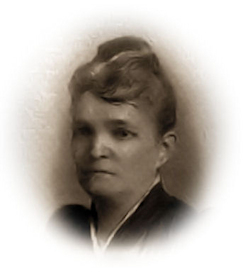
Jan. 2, 1862.—I am glad enough to bid ‘61 goodbye. Most miserable year of my life! What ages of thought and experience have I not lived in it.
Last Sunday I walked home from church with a young lady teacher in the public schools. The teachers have been paid recently in “shin-plasters.” I don’t understand the horrid name, but nobody seems to have any confidence in the scrip. In pure benevolence I advised my friend to get her money changed into coin, as in case the Federals took the city she would be in a bad fix, being in rather a lonely position. She turned upon me in a rage.
“You are a black-hearted traitor,” she almost screamed at me in the street, this well-bred girl! “My money is just as good as coin you’ll see! Go to Yankee land. It will suit you better with your sordid views and want of faith, than the generous South.”
“Well,” I replied, “when I think of going, I’ll come to you for a letter of introduction to your grandfather in Yankee land.” I said good-morning and turned down another street in a sort of a maze, trying to put myself in her place and see what there was sordid in my advice.
Luckily I met Mrs. B. to turn the current of thought. She was very merry. The city authorities have been searching houses for fire-arms. It is a good way to get more guns, and the homes of those men suspected of being Unionists were searched first. Of course they went to Dr. B.’s. He met them with his own delightful courtesy. “Wish to search for arms? Certainly, gentlemen.” He conducted them through all the house with smiling readiness, and after what seemed a very thorough search bowed them politely out. His gun was all the time safely reposing between the canvas folds of a cot-bed which leaned folded up together against the wall, in the very room where they had ransacked the closets. Queerly, the rebel families have been the ones most anxious to conceal all weapons. They have dug pits quietly at night in the back yards, and carefully wrapping the weapons, buried them out of sight. Every man seems to think he will have some private fighting to do to protect his family.
Note: To protect Mrs. Miller’s job as a teacher in post-civil war New Orleans, her diary was published anonymously, edited by G. W. Cable, names were changed and initials were generally used instead of full names—and even the initials differed from the real person’s initials. (Read Dora Richards Miller’s biographical sketch.)
Diary of Horatio Nelson Taft
January 1, 2022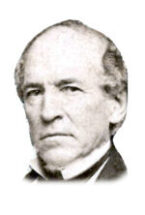
January 1st 1862
This has been a warm pleasant day, rather too warm in the middle of the day with an overcoat on. Called in the morning upon Rev J C Smith, our pastor, and went from there up to the Presidents, found an immence crowd there outside. Could not get in on account of the crowd, found my Jersey City friend J Burrows Hyde there. We left and began our calls on the Secys, Mr Seward first, Cards rcd below four policeman at the Door. Cards rcd below and the Reception upstairs. Mr S., Frederick S. & Lady name announced at the parlor door. Mr S in good spirits and received us very cordialy. No refreshments at any of the Secretaries. Called next upon Comodore Wilkes of the San Jacinto. Then Sec’y of War, D[itt]o Navy, and all the rest of the Cabinet officers. Then at Genl McClellans, he was sick, confined to his room. Genl Blenker and Staff in the most Brilliant Uniforms I have seen today. Went the “rounds.” Refreshments were furnished at all the houses of those who rcd calls, the “ardent” generaly found. I called upon Comr Holloway before I came home. Col Merrick was not able to go out with me today. There was a heavy cannonading heard last night and it was thought that there was certainty [sic] a “fight” over the River. It proved to be a wake up of a German Regt for the New Year. It is said that they sent over and purchased 150 lbs powder and 200 kegs of “Lager” for the occasion. The Regt of “Lancers” presented a marked feature of the day in the City as it marched through. Lances about 9 ft long, carried upright with a small red flag to each, 1000 strong. Went down 7th street with Willie after his Magic Lantern. Got home after dark. Willie & “Tad” Lincoln were here to dinner and the boys H N & Holly went home with them. The day has passed off pleasantly and peacefully all over the City.
______
The three diary manuscript volumes, Washington during the Civil War: The Diary of Horatio Nelson Taft, 1861-1865, are available online at The Library of Congress.
War Diary of Luman Harris Tenney.
January 1, 2022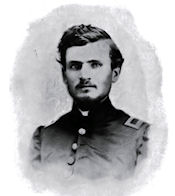
Jan. 1st. Wrote, rode and read some. In the morning went over to Company I’s quarters. Wrote to Ella Clark. Made some resolutions for the future.
Diary of David L. Day.
January 1, 2022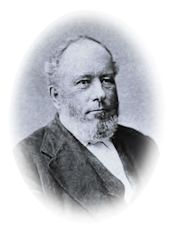
A Dull Day.
Jan. 1, 1862. The new year is ushered in with a light fall of snow and very cold weather. There is just snow enough to prevent drills or any sports the boys may have been anticipating. Altogether the day will be a dull one. The sutler, anticipating our removal, has not much to sell or steal. The sutler is regarded as the common enemy of the soldier, and when forced contributions are levied on him it is considered entirely legitimate and rather a good joke. The boys will have to content themselves with card playing and writing letters home. We have just got a new stove running in my tent, and Long Tom is detailed today to supply it with wood. I think we shall make a comfortable day of it, if Tom does his duty. Things certainly begin to look like leaving; the harbor is full of vessels, transports, gunboats and supply ships. Appearances indicate that somebody will hear it thunder somewhere along the southern coast before very long.
A New Year’s dinner.–Alexander G. Downing.
January 1, 2022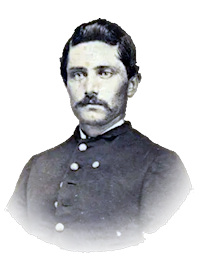
Wednesday, 1st–I am back with the company again. The boys are having a big chicken dinner today, Lieutenant Compton having bought four dozen chickens and presented them to the company for a New Year’s dinner.
Rebel War Clerk
January 1, 2022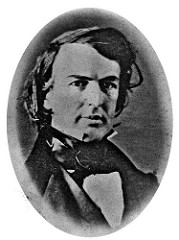
JANUARY 1st, 1862.—Seward has cowered beneath the roar of the British Lion, and surrendered Mason and Slidell, who have been permitted to go on their errand to England. Now we must depend upon our own strong arms and stout hearts for defense.
Surgeon Alfred L. Castleman records a lively celebration of New Year’s Day 1862.
January 1, 2022
A great day of sport to usher in the new year. Amongst other amusements in our army, Hancock’s Brigade “got up a time on its own hook.” At twelve o’clock I went into the parade ground, and found about 10,000 people, soldiers and civilians, collected to witness the sport. Hancock’s Brigade is composed of the 5th Wisconsin, 6th Maine, 43d New York, and 49th Pennsylvania Volunteers. The sport commenced by a foot race of one thousand yards, purse $20 for the first out, $10 for second. About twenty started. The 5th Wisconsin took both prizes. Then jumping three jumps, prize $15, won by a member of the 5th Wisconsin. Next, climbing a greased pole, first prize won by a member of 6th Maine. Second, by 5th Wisconsin. Next, a greased pig (a two hundred-pounder) with a face as long as the moral law, or as a “speech in Congress, shorn of his hair, the knot which had been tied in his tail to prevent his crawling through fence cracks, was untied, and his whole skin thoroughly ” greased” with soft soap, was turned loose, with the announcement, “get what you can, and hold what you get.” The holder was to have the pig and ten dollars. For this prize, there were about four thousand competitors. The word was given, and the “Grand Army of the Potomac ” was at last on the move. This chase commenced a little before sun-set. Pig had one hundred yards the start. One fellow far outran all the rest, and as he drew close on to his game, piggy suddenly turned on him with a “booh,” and the fellow ran t’other way as if he had seen a rebel. The whole crowd came rushing on piggy, expecting him to run; but piggy stood his ground and said “booh!” “The front line ” suddenly brought a halt. But the rear, not prepared for so sudden a check, pressed forward, and the whole came down in a heap. A scream of “murder.” Piggy answered “booh.” At every “booh” a “line was swept away.” The pile of humanity became impassable. Those in the rear, filed to right and left, and by a “flank movement” took piggy in the rear. And now came a hand to hand encounter. As the last streak of the expiring day shed its light upon the excited combatants, it revealed a living mass of four thousand people–and a pig ; the pig crowning the heap at the moment when the ray withdrew its light. Night was then made hideous by the screams of murder and replies of “booh.” Neither party could distinguish friend from foe; and as I retire for rest, the combat still rages. I I do not permit myself to doubt, however, that the morning will bring us the news of “another great victory by the grand army of the Potomac.”[1]
At twelve o’clock last night, just as the old year was being crowded out of existence to make room for the new, I was awoke by a gentle thumbing of a guitar. ‘Twas right at the door of my tent. In a moment commenced at the other end of the tent, the soft, sweet notes of a violin ; then, from all sides came up, low, soft, sweet sounds, as ever a band of small instruments poured forth. The music stopped for awhile, and a voice asked, “Shall we now strike up with the band?” “No! no! No drum, nor fife, nor horn;– they will disturb the sick, and he will not like that!!” Could a more delicate compliment than was-conveyed in this remark have been devised by a soldiery whose business is pomp and noisy war! ” He won’t like it–it will disturb his patients.” I appreciated this. It struck a cord which vibrated in unison with my pride, my vanity, my ambition. I of course acknowledged it; and so deeply felt the compliment that I record it, as worthy of my remembrance. “The hospital boys” got up a handsome supper to-night, at which the Surgeons were guests. It was a very pretty supper, and to me a pleasant affair.
[1] Notice that in this athletic contest for prizes, three Eastern and one Northwestern Regiment engaged ; all the prizes save one (climbing the pole, which was taken by a Maine sailor) were carried off by the one Western Regiment.
William Howard Russell fails to see Mason and Slidell at their surrender and bemoans the revival of his own unpopularity.
January 1, 2022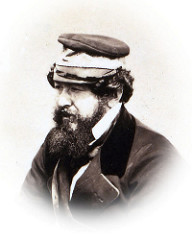
Lord Lyons has evinced the most moderate and conciliatory spirit, and has done everything in his power to break Mr. Seward’s fall on the softest of eider down. Some time ago we were all prepared to hear nothing less would be accepted than Captain Wilkes taking Messrs. Mason and Slidell on board the San Jacinto, and transferring them to the Trent, under a salute to the flag, near the scene of the outrage; at all events, it was expected that a British man-of-war would have steamed into Boston, and received the prisoners under a salute from Fort Warren; but Mr. Seward, apprehensive that some outrage would be offered by the populace to the prisoners and the British Flag, has asked Lord Lyons that the Southern Commissioners may be placed, as it were, surreptitiously, in a United States boat, and carried to a small seaport in the State of Maine, where they are to be placed on board a British vessel as quietly as possible; and this exigent, imperious, tyrannical, insulting British Minister has cheerfully acceded to the request. Mr. Conway Seymour, the Queen’s messenger, who brought Lord Russell’s despatch, was sent back with instructions for the British Admiral, to send a vessel to Providence town for the purpose; and as Mr. Johnson, who is nearly connected with Mr. Eustis, one of the prisoners, proposed going to Boston to see his brother-in-law, if possible, ere he started, and as there was not the smallest prospect of any military movement taking place, I resolved to go northwards with him; and we left Washington accordingly on the morning of the 31st of December, and arrived at the New York Hotel the same night.
To my great regret and surprise, however, I learned it would be impracticable to get to Fort Warren and see the prisoners before their surrender. My unpopularity, which had lost somewhat of its intensity, was revived by the exasperation against everything English, occasioned by the firmness of Great Britain in demanding the Commissioners; and on New Year’s Night, as I heard subsequently, Mr. Grinell and other members of the New York Club were exposed to annoyance and insult, by some of their brother members, in consequence of inviting me to be their guest at the club.
Downing’s Civil War Diary.–Alexander G. Downing.
December 31, 2021
Tuesday, 31st–The boys are all preparing for New Year’s Day celebration. Thus ends 1861.[1]
[1] The last day of 1661 found our regiment stationed as follows: Company E at Lookout Station, Companies B, G, K and H at California, Companies A, C, D, F and I at Fulton, all in the State of Missouri, and not far apart. They were all in winter quarters, occupying vacant store buildings. We saw some pretty hard service during the month of December, but only in the suffering by exposure to the cold weather.–A. G. D.
Rebel War Clerk
December 31, 2021
DECEMBER 31st.–Northern papers, received in this city, show very conclusively that the enemy are pretty accurately informed of the condition of our defenses and the paucity of the numbers in our regiments.
“The Banks in all the Cities and also the U.S. Treasury have suspended specie payments today.”—Horatio Nelson Taft
December 31, 2021
TUESDAY 31
The old year goes out today, bright and dry. I have been in the office nearly all day. The boys called about 1/2 past two. I came home with them, stopped and bought Bud a cap. After dinner, bought some coal, and went down to the Ave with Holly and bought him a suit of clothes, and an overcoat for Bud, paid $12.00. Paid my fuel bill for Dec $9.00, grocery bill $24.00. Bud (H N Jr) went up to the Presidents this evening. The boys have a Dark lantern to exhibit. The President looked in at the boys show. Genl McClellan is sick abed. A fight is expected over the River now anytime. The Army seems to be getting ready. The Banks in all the Cities and also the U.S. Treasury have suspended specie payments today. No particular excitement in the City tonight, but the Ave & 7th St are swarming with people and business was never so brisk. I have been over to Mr Hartlys after Julia. The Band of the Regulars on Franklin Square are performing now and do every night. VanMaster called today, Col is improving. The health of our family is now good.
______
The three diary manuscript volumes, Washington during the Civil War: The Diary of Horatio Nelson Taft, 1861-1865, are available online at The Library of Congress.
“There are but few men left in this locality..,”–Alexander G. Downing.
December 30, 2021
Monday, 30th–We made all the citizens at this place take the oath; they have to take the oath not to aid or shelter those who are fighting against the Union. There are but few men left in this locality, they having enlisted, some of them in the Union army, but most of them with the South.
“Troops are moveing some across the River, and we may soon expect lively times.”—Horatio Nelson Taft
December 30, 2021
MONDAY, DECEMBER 30, 1861.
We have had no winter weather as yet. No snow at all to lay on the ground. Today has been cool and fine. Troops are moveing some across the River, and we may soon expect lively times. I have been in the office as usual today. Col Merrick is improving, has been out doors today. I was on the Ave this evening at Willards, Browns & the National Hotels. Nothing new in particular. At almost every corner on the Ave the mounted guard (Cavalry) stand as still & immovable as the Bronze statue on Lafayette Square. Their business is (principaly) to prevent rapid riding & Driving.
______
The three diary manuscript volumes, Washington during the Civil War: The Diary of Horatio Nelson Taft, 1861-1865, are available online at The Library of Congress.
Rebel War Clerk
December 30, 2021
DECEMBER 30th.—Some of our officers on furlough complain of the dullness of the war. The second year will be different.
“…not fit for duty.”–Alexander G. Downing.
December 29, 2021
Sunday, 29th–I am staying at the tavern on account of having taken a severe cold. As we are here without the regimental surgeon, the captain marked me “not fit for duty.” The landlady is very kind to me and is helping break up my cold. The company had to clean up this morning for inspection.
Diary of Horatio Nelson Taft
December 29, 2021
SUNDAY 29
A mild cool day. All the family went to church but myself. I staid with the Col who is improving and has spent most of the day down in our family room. It has been quite a still day. No soldiers (in bodys) have passed and but little druming and Bugle blowing has been heard. I went out awhile this evening. Called at Charleys, eat some pear preserves in cream, a little rich cake, a pickel, and drank a cup of milk, besides a [sic] eating a little mince pie. If my stomach dont rebel at such treatment it will be well for my rest tonight. I do not often treat it so badly.
______
The three diary manuscript volumes, Washington during the Civil War: The Diary of Horatio Nelson Taft, 1861-1865, are available online at The Library of Congress.
“They ‘don’t know nothing’ about soldiering.”–Army Life of an Illinois Soldier, Charles Wright Wills.
December 29, 2021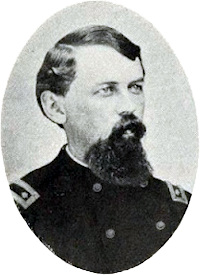
Bird’s Point, December 29, 1861.
Your letter giving us notice of your sending a box came to hand yesterday with express charges inclosed. I shall go over to Cairo to-morrow to get them if they are there. I haven’t been to Cairo for a month. All of the 7th cavalry are on this side now and there are about a dozen of them here all the time. Colonel Kellogg will be here next week. One company in that regiment did the first scouting for the 7th this morning. They rode out southwest about 15 miles and brought in 22 prisoners. ‘Tis said there are two or three officers among them, but I rather think they are only a lot of swamp farmers. The boys got only three or four guns it is said, and that is not more than the complement of one woodsman in this country. The boys think they have almost taken Columbus. It was not our Canton company. We are at last established in our quarters and thoroughly “fixed up” with all the modern improvements in the housekeeping line, coupled with the luxuries of the ancients and the gorgeous splendor and voluptuousness of the middle ages. We have a chimney whose base is rock, the age of which man cannot tell, whose towering top is constructed of costly pecan wood boughs embalmed in soft Missouri mud cement. We have a roof and floor, beds and door, of material carved or sawed from the lofty pines of Superior’s rock-bound shores. Our door latch is artfully contrived from the classic cypress, and curiously works by aid of a string pendant on the outside, and when our string is drawn inside who can enter? We have tables and chairs and shelves without number and a mantle piece, and, crowning glories, we have good big straw sacks, a bootjack and a dutch oven. Government has also furnished a stove for each mess of 15 in our regiment, so we have nothing more to ask for; not a thing. This is just no soldiering at all. Its hard, but its true that we can’t find a thing to pick trouble out of. We are to-day more comfortable than 45 out of 50 people in old Canton. Our building is warmer than our house at home, our food is brought to us every third day in such abundance that we can trade off enough surplus to keep us in potatoes, and often other comforts and luxuries. Within 500 yards of us there is wood enough for 10,000 for 20 years, and—I can’t half do it justice, so I’ll quit. I borrowed a horse of the cavalry, Christmas, slipped past our picket through to the brush and had a long ride all over the country around Charleston. No adventures though. General Paine took command here to-day. He is an old grannie. We are glad he is here though, for we will get our colonel back by it. You can’t imagine what a change the last month of cool weather has produced in our troops. From a sick list six weeks ago of nearly 300 in our regiment, with 65 in the hospital, we have come down or up rather, to eight in hospital, and not over 25 or 30 on the “sick in quarters” list. It is astonishing! And here these “damphool” “Forward to Richmond” papers are talking about the fearful decimation that winter will make in our ranks. They “don’t know nothing” about soldiering.
Rebel War Clerk
December 29, 2021
DECEMBER 29th.—Persons are coming here from that portion of Western Virginia held by the enemy, with passports from Gen. Cox, the Yankee commander. They applied to me to-day for passports to return to Kanawha, which I refused. They obtained them from the Assistant Secretary of War, Mr. Ould.
“…Jackson is not disposed to lie idle when there is an opportunity to win laurels for himself and render service to our cause.”–Letters from Elisha Franklin Paxton.
December 29, 2021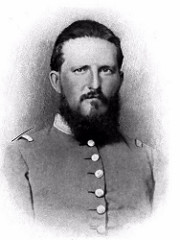
Winchester, December 29, 1861.
The weather opened this morning cloudy and showing signs of snow, but, much to my disappointment, the clouds have passed off leaving a clear sky and pleasant day. It is not often I wish for bad weather, but when it opens a way for me of getting home for a little while I bid it a hearty welcome. It troubled me less when there was no prospect of getting a leave of absence and no use of asking it; but as I have been so anxiously indulging the hope of late, it troubles me much to have it deferred. If the bright sunshine of to-day is destined to last, you need not expect me, for Jackson is not disposed to lie idle when there is an opportunity to win laurels for himself and render service to our cause. The arrival of our forces from the West under Loring has given him a very fine army, which I think he is disposed to turn to a very profitable use as soon as an occasion may offer itself. I have much reason to be gratified at the proofs of his good opinion and confidence which I am continually receiving from him. I can rely upon his influence and efforts for my promotion, but my ambition does not run in that direction. The sympathies of my heart and my aspirations for the future are all absorbed in the wife and little ones left at home, and my highest ambition is to spend my life there in peace and quiet. The hope of winning military titles and distinction could not tempt me to leave home, if I were left to consult my wishes and feelings alone. But the sense of public duty which prompts us, and the strong public sentiment which forces us, to leave our homes and families for the public service, now with equal force compels us to remain. If we left the army now, it would be at the sacrifice of such good opinion as we have of ourselves and the good opinion entertained of us by our neighbors and friends at home. Our term of service will expire in May, when each will be left to pursue for himself such course as duty and inclination may then determine. It is sad, indeed, to think of being a stranger in my own home, that wife and children are becoming used to my absence and forced by it to seek other sources of happiness than that which we used to have when the society of each other was the greatest source of enjoyment. When separation is so long protracted it seems akin to that which lasts forever, when the body has gone to its long home in the grave and the soul for weal or woe to eternity, when the loved left behind to mourn our loss are no longer left a hope, and after a while become used to the desolation which death has left them. But hope whispers, Love, that all may yet be well with us. The storm may pass away, and, living happily together in after years, it will be a source of pride and happiness to us that the duty patriotism exacts of me now has been faithfully discharged, and the pleasure and comfort of home for the time foregone.
I wrote you a long business letter on Friday, in which you will think, no doubt, I have marked out work enough to keep you employed next year. You will be too busy to think of me and the troubles which this war is bringing on us. Now, darling, as my half sheet is finished I will bid you good-bye. Kiss my three little baby boys for me, and send me your likeness–the old one which I used to have– by the first person who comes from Lexington.
Diary of David L. Day.
December 28, 2021
Rumors.
Dec. 28. The camp is full of rumors about our leaving, but I hardly think any one knows much about it as yet, although it is quite probable we shall leave before long. The expedition is all here and has been perfected in drill. Nothing that I can see prevents us from leaving at any time. When we break this camp we can count our happy time over, that we have seen our best days of soldiering. Campaign life in the field, as I understand it, is at the best a life of hardship, privation and danger, and the man who expects much else, will be grievously disappointed.
The first death in Company E.–Alexander G. Downing.
December 28, 2021
Saturday, 28th–We had to send two patrols of five men each down the railroad track each way from the station. There is always some danger of the track’s being torn up by organized bands of the “secesh” in this locality.[1]
[1] William Dwiggans died of typhoid fever on this day, in the hospital at Jefferson City. His was the first death in Company E. He was a good boy and a dutiful soldier.–A. G. D.
“We shall have to have a fight with England before long, no matter how soon, after the Rebellion is crushed out.”—Horatio Nelson Taft
December 28, 2021
SATURDAY 28
A good deal of excitement in the City in reference to the surrender of Mason and Slidel. I suppose it was the only way to avert a war with England, which at this particular juncture would be an increase of business for the Country not very desirable. But a War with England on the “Trent affair” question would be very popular and unanimously supported by the Country. We shall have to have a fight with England before long, no matter how soon, after the Rebellion is crushed out. Col Mirrick is a little better today, will be well by Monday.
______
The three diary manuscript volumes, Washington during the Civil War: The Diary of Horatio Nelson Taft, 1861-1865, are available online at The Library of Congress.
Rebel War Clerk
December 28, 2021
DECEMBER 28th.—The fathers and mothers and sisters of our brave soldiers continue to send their clothing and provisions. They do not relax in the work of independence.