28th. Moved to Independence. Quartered in the Academy, a very pretty building. Met several acquaintances formed at the fight the other day–a good time–a beautiful town.
American Civil War Chronicles
Journal of Surgeon Alfred L. Castleman.
February 28, 2022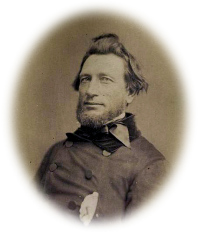
28th.–All the stirring news of yesterday did not uproot us. I begin to think that we are so deeply stuck in the mud that nothing can get us out, short of the sight of a rebel. That might galvanize us into a move.
This morning we received an order countermanding the last one to be ready, so that we are again unready. This is the last day of winter, and the coldest we have had. It snows and blows, and this is probably the reason of the countermand.
It seems to me a great shame that our soldiers have been kept here doing nothing all winter, and yet not one in fifty of them has been permitted to visit the National Capitol and learn something of the modus operandi of the Government for which he fights. Very few of them, I fear, will ever enjoy another opportunity to do so.
“The enemy yesterday entered Charlestown—in what force I do not know, or for what purpose.”–Letters from Elisha Franklin Paxton.
February 28, 2022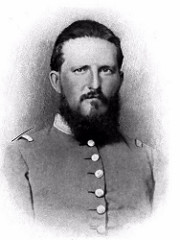
Winchester, February 28, 1862.
I reached here day before yesterday, and expected to devote yesterday evening to a letter home; but so soon as I got pen and paper ready to commence we had an order to change our camp. My ride here was as pleasant as I could expect. The first night I stayed at Mr. Sproul’s, the next at Dr. Crawford’s, the next at Mr. Williamson’s, and the last at Strasburg, reaching Winchester about twelve o ‘clock. Self and horse both in good condition.
I doubt not you will hear any quantity of news before this reaches you: that Winchester has been evacuated, the enemy approaching in countless numbers from all directions, and Jackson’s army flying before him. All I can say is, do not be alarmed, and make up your mind to bear in patience whatever of good or evil the future may have in store for us. Try, so far as possible, to divert your mind from the troubles of the country. The future is not so bright as it was before our late disasters, but we have yet many strong arms and brave hearts in the field, and should not despair.
As to our situation here, place no confidence in the rumors which you may hear. The enemy yesterday entered Charlestown–in what force I do not know, or for what purpose. It may be to take possession of the Baltimore & Ohio R. R. and rebuild it, or it may be a part of a force intended to advance on this place. All I can say is: I think, unless his force largely outnumbers ours, we shall fight him, and if it is overpowering we shall evacuate the place.
I write, darling, in the open air and a freezing wind, and will bid you good-bye until my next. I will write regularly, so that my letters may reach you Sunday morning when you go to church. Should anything happen me, I will have a letter written to your father, who will send it to you. Kiss the children for me, and for yourself, dearest, accept all that a fond husband can offer.
Diary of Horatio Nelson Taft.
February 27, 2022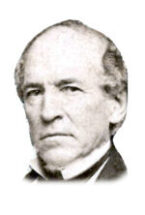
Thursday 27th Feb 1862
A great movement of troops over the river and from here over, has taken place. The Trains from the City going East have been stopped and no one is allowed to leave the City without a passport. All Telegraph lines as well as Railroads are in the hands of the Govt. Various reports are afloat in reference to the fighting over the River but nothing seems to be known. But there is little dou[b]t that the “Army of the Potomac” is on the move after its long season of inactivity. We shall hear of stirring news soon.
______
The three diary manuscript volumes, Washington during the Civil War: The Diary of Horatio Nelson Taft, 1861-1865, are available online at The Library of Congress.
John B. Jones: Evacuating Columbus. — Battery being built at Island No. 10.
February 27, 2022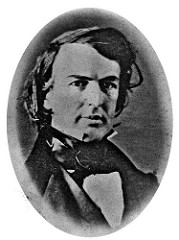
FEBRUARY 27th.—Columbus is to be evacuated. Beauregard sees that it is untenable with Forts Henry and Donelson in possession of the enemy. He will not be caught in such a trap as that. But he is erecting a battery at Island No. 10 that will give the Yankees trouble. I hope it may stay the catalogue of disasters.
Downing’s Civil War Diary.–Alexander G. Downing.
February 27, 2022
Thursday, 27th–There are no hopes of leaving this place. We cleaned up for inspection and muster tomorrow. The five companies of the Eleventh which went to Fulton, Missouri, last December, are still at that place.
0
February 27, 2022
February 27th. Practiced the ship’s company at target-firing with the battery; thirty to forty rounds were fired, at some fifteen hundred yards, and some splendid shots were made. The marines were also drilled with muskets at a target.
“Oh, I hope they may have mercy on our prisoners!”—Diary of a Southern Refugee, Judith White McGuire.
February 27, 2022
27th.—Nothing new or important in our army. We were relieved to hear that the number who surrendered at Donelson was not so great as at first reported; the true number is 7,000, which is too many for us to lose! I trust they may be kindly treated. I know that we have friends at the North, but will they dare to be friendly openly? Oh, I hope they may have mercy on our prisoners! We have had some hope of recognition by France and England, but they still look on with folded arms.
Things are very dark just now & for ourselves ruin seems pretty certain.
February 27, 2022
27th Feb.
All the boys except W. are now out again, B & A joined the Marion Artillery and Lewis the 1[?] Regiment Infantry as Assist Surgeon quite distinguished with his uniform &c. William still unfixed. Lotty and Ella & Harry have had the Measles are now better. Things are very dark just now & for ourselves ruin seems pretty certain. The whole Country seems to be abandoned to the enemy and the troops are to be concentrated in Charleston & Savannah. The Episcopal Churches are open for prayer and we have had in succession two fast days last Friday and this. Thy will be done is the prayer and when we really feel so there is some comfort. John is in Savannah in command of 5 guns living in a Flat and highly delighted with his situation.
The Militia of the City was disbanded and is still in an unorganized state. William has applied for a regular Commission, and is still uncertain of getting it. Berkley & Arthur joined the Marion Artillery as the most agreeable Company being composed of gentlemen.—
I dare not think of the consequences or this war, our ruin and the loss of my brave boys but we are sadly in earnest, and I pray we may succeed.—
Journal of Surgeon Alfred L. Castleman.
February 27, 2022
27th.–Three days ago we received orders again to be ready to move at a moment’s warning. But here we are yet. I was in Washington to-day. Went intending to. spend two days and witness the “doings of Congress.” But, on my arrival got intelligence that Gen. Banks had crossed the Potomac at Edward’s Ferry; that the Government had seized the Railroads here, and was sending off troops to his aid, and not doubting that this would start us also, I immediately returned to my post.
War Diary of a Union Woman in the South
February 27, 2022
Feb. 27, 1862.—The people here have hardly felt the war yet. There are but two classes. The planters and the professional men form one; the very poor villagers the other. There is no middle class. Ducks and partridges, squirrels and fish, are to be had. H. has bought me a nice pony, and cantering along the shore of the lake in the sunset is a panacea for mental worry.
Note: To protect Mrs. Miller’s job as a teacher in post-civil war New Orleans, her diary was published anonymously, edited by G. W. Cable, names were changed and initials were generally used instead of full names—and even the initials differed from the real person’s initials. (Read Dora Richards Miller’s biographical sketch.)
Diary of Horatio Nelson Taft.
February 26, 2022
Wednesday 26th
Cloudy morning and rain before noon again. The roads were getting quite passable yesterday. There was a stir among the Military. Genl Banks crossed the River (above) it is said, and some Regts & Batteries were sent over from here. Julia was at Genl McClellans. Mrs M told her that the Genl had gone to parts unknown over the River. There is a good deal of excitement in the City in consequence of the reported Advance. There has been some skirmishing among the Pickets today. Mr David of N.H. with his son, Edward from Dubuque, called on me at the office today with a letter from the Dr, of introduction. He left this afternoon for home. I was at the National tonight to see E, he has a brother in the Army who is now here.
______
The three diary manuscript volumes, Washington during the Civil War: The Diary of Horatio Nelson Taft, 1861-1865, are available online at The Library of Congress.
Downing’s Civil War Diary.–Alexander G. Downing.
February 26, 2022
Wednesday, 26th–Nothing of importance. We are in a regular tented camp here, and it seems more like being in the army than it did at Lookout Station.
War Diary of Luman Harris Tenney.
February 26, 2022
26th. Went down and saw Brownell and the other wounded boys. All getting along well. Guarded against Quantrell. The boys, about two hundred, saddled and went out to meet the wagons. Met them and escorted them in. Quantrell captured two horses. Another night alarm.
Martia law authorized. — Army to fall back from Manassas. — Diary of John Beauchamp Jones.
February 26, 2022
FEBRUARY 26th.—Congress, in secret session, has authorized the declaration of martial law in this city, and at some few other places. This might be well under other circumstances; but it will not be well if the old general in command should be clothed with powers which he has no qualifications to wield advantageously. The facile old man will do anything the Secretary advises.
Our army is to fall back from Manassas! The Rappahannock is not to be our line of defense. Of course the enemy will soon strike at Richmond from some direction. I have given great offense to some of our people by saying the policy of permitting men to go North at will, will bring the enemy to the gates of the city in ninety days. Several have told me that the prediction has been marked in the Secretary’s tablets, and that I am marked for destruction if it be not verified. I reply that I would rather be destroyed than that it should be fulfilled.
Visiting camp.—Readiness to march at very short notice. (Eliza Woolsey Howland’s journal)
February 26, 2022
Wednesday, February 26.
Encouraged by several windy days, which were likely to dry the roads, we ventured out to Joe’s camp for the first time since early in January, to show it to Mother and Hatty. The roads were unexpectedly good, the only really bad places being near the camp. J. had dined, but gave us a nice and hearty after-lunch, and Mother enjoyed the experience very much. While we were there the general order arrived placing the army in readiness to march at very short notice. Four wagons are allowed to each regiment, and quartermasters are to see that they are not heavily loaded: the men to carry knapsacks and blankets and the little shelter-tents large enough for three or four men to creep under. The order cast a gloom over our little visit, but the effect on the troops was very different. As we sat in J’s tent we could hear the cheers ringing through the camps as the order was read–three times three and a tiger.
Just before this J. H. had mailed a little box of trailing arbutus “from camp” to J. S. W. and this acknowledgment came back.
Arbutus from Camp, near Alexandria.
Sent by Capt. J. H., 1862.
“ Thank God for Spring!” I said;
While no one watches, through the gloomy hours
She walks the weary earth with noiseless tread
And fills the graves with flowers.
And, holding in my hand
My Soldier’s message, in its leaves I read
Through winter-sorrows of a weeping land
A dawn of Spring indeed!
Dull, sodden leaves o’er-strown,
Then, tears of rain, and then, these flowers for me.
The wild war horses tread the blossoms down
And set the sweetness free.
So get me flowers again
Dear Soldier;–not alone of Hope and Spring,
Flowers of full Summer, through the crimson rain
And battle thunder of the stormy plain,
Close on their blossoming!
Red roses, flushed and bold,
Red victor-roses,–sea-blue bells wide blown
That ring for joy the river-edges down,
And white Peace-lilies with the spike of gold
That clasp the perfect crown.
J. S. W.

Presented with a sword by hospital attendants. — Journal of Surgeon Alfred L. Castleman.
February 26, 2022
26th.–A pleasant little interlude to-day, to the troubles and hard work through which I have had to pass: At about twelve o’clock, a soldier stepped to the door of my quarters, and said that some friends wished to see me at the door. I stepped out and found my whole corps of hospital attendants, and the patients of the hospital who were able to be up, in a circle. The head nurse stepped forward, and in a very neat little speech, presented me, in the name of himself and the others, a very pretty regulation dress sword and belt. I replied to it as well and as appropriately as I could; the ceremony closed by a vociferous testimonial of kind feelings, and we parted. I confess that I have been highly gratified. The compliment was appreciated by the fact that it came directly from those who most intimately know me, both personally and officially.
Army Life of an Illinois Soldier, Charles Wright Wills.
February 25, 2022
Commerce, Mo., February 25, 1862.
We start to-morrow morning for ______ with from 25,000 to 40,000 men, who are all piled up here in all kinds of shifts. Our regiment takes the advance. At a venture I’ll bet we get whaled, by vastly superior forces. Goodnight.
Diary of David L. Day. — Hunting for Relics (Roanoke Island).
February 25, 2022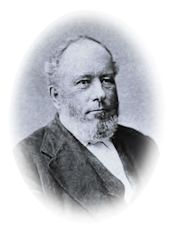
Hunting for Relics (Roanoke Island).
Feb. 25. This being a warm, sunny day, a small party of us thought we would take a stroll up to the head of the island, a mile or two, and perhaps we might find some traces or relics of Raleigh’s expedition. Arriving at our destination, we discovered a large, weather-beaten two-storied house, built at some remote period, and surrounded by large live oak trees. We had not the slightest doubt but that this was the house built by Lane and his party. Seeing a man standing outside, whom we supposed was the gentlemanly proprietor of the ranche, we approached, and saluting him very respectfully, inquired if he was in receipt of any recent advices from Raleigh’s expedition. He looked at us in utter astonishment and said he knew nothing about it and reckoned there had been “no sich expedition yere.” He said, “Burnside’s expedition was yere,” and “reckoned that was about enough;” he couldn’t see the use of any more coming. We bade the gentleman good day and left. In looking around for relics, Whipple picked up an old shoe heel. Here was a prize surely, a veritable relic of Raleigh’s party. Whipple put it in his pocket, intending, as he said, to send it to the antiquarian society at Worcester, and indulging in the hope that for presenting such a priceless relic, they would at least vote him an honorary member of the society. Relics being scarce, we went up to the shore where we could look up the Albemarle. The wind was blowing gently down the sound, and the little rollers were breaking on the beach at our feet. It was pretty warm; the water looked clear and really refreshing. Some one proposed taking a dip. No sooner said than off came our clothes and in we plunged. Egad! [continue reading…]
Diary of Horatio Nelson Taft.
February 25, 2022
Tuesday Feb 25th 1862
Nothing in particular has occured today. But it has been a clear dry day with a bright sun. Yesterday the wind did much damage blowing off roofs and ruining the Baptist church on 13th Street. Went over with the boys after dinner to see it today. Called on our return at Franklin Square to see the Dress Parade of the “Regulars,” parts of the 3rd & 10th Regts, 11 Companies. Called down to the “National” this evening, got NY papers.
______
The three diary manuscript volumes, Washington during the Civil War: The Diary of Horatio Nelson Taft, 1861-1865, are available online at The Library of Congress.
Rebel War Clerk
February 25, 2022
FEBRUARY 25th.—And Nashville must fall—although no one seems to anticipate such calamity. We must run the career of disasters allotted us, and await the turning of the tide.
Downing’s Civil War Diary.–Alexander G. Downing.
February 25, 2022
Tuesday, 25th–No news of any importance. There is some talk of our having to stay at this place all summer. We have company drill twice a day and with the other four companies of our regiment here now, have dress parade at 5 p. m.
0
February 25, 2022
February 25th. Had quite a scare through the bursting of one of our boilers, which made a loud report and a large amount of confusion, but did slight damage.
Nashville lost.—Mary Chesnut’s diary.
February 25, 2022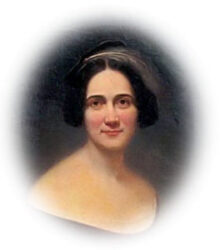
February 25th.—They have taken at Nashville ¹ more men than we had at Manassas; there was bad handling of troops, we poor women think, or this would not be. Mr. Venable added bitterly, “Giving up our soldiers to the enemy means giving up the cause. We can not replace them.” The up-country men were Union men generally, and the low-country seceders. The former growl; they never liked those aristocratic boroughs and parishes, they had themselves a good and prosperous country, a good constitution, and were satisfied. But they had to go–to leave all and fight for the others who brought on all the trouble, and who do not show too much disposition to fight for themselves.
That is the extreme up-country view. The extreme lowcountry says Jeff Davis is not enough out of the Union yet. His inaugural address reads as one of his speeches did four years ago in the United States Senate.
A letter in a morning paper accused Mr. Chesnut of staying too long in Charleston. The editor was asked for the writer’s name. He gave it as Little Moses, the Governor’s secretary. When Little Moses was spoken to, in a great trepidation he said that Mrs. Pickens wrote it, and got him to publish it; so it was dropped, for Little Moses is such an arrant liar no one can believe him. Besides, if that sort of thing amuses Mrs. Pickens, let her amuse herself.
______
¹ Nashville was evacuated by the Confederates under Albert Sidney Johnston, in February, 1862.