10th. Finished our march to Fort Scott. Strong wind in our faces–great dust to trouble us. Had colic most all way. Thunderstorm during the night. Encamped near the Ninth Wisconsin a little beyond the village.
American Civil War Chronicles
Marching Orders.
March 10, 2022
Eliza’s Journal.
0 comments
We went to bed in a state of great excitement and were awakened early Monday morning by a knock from George and a note from Joe saying it was all true. He wrote at 2 A. M., having been up all night. They had just received their marching orders–the brigade to leave at 5 A. M., the rest of the corps at 9. I sent George over at once with a note to J., and he found him on horseback just starting, the regiments formed and ready, and the General and staff in their saddles, all off for Fairfax Court House, which they reached, J. writes me, at 5 P. M., all in good spirits, having borne the march well. The rebs have abandoned both Centreville and Manassas, falling back, the “Star” says, as far as the Rapidan and Gordonsville–whether by panic or by a preconcerted plan, is unknown.
J. writes the climate at Fairfax C. H. is lovely and the air dry, pure and very sweet, but the country is utterly desolate, houses burnt or pulled to pieces, fences gone, and the inhabitants, except a few miserable negroes, fled.
All strange rumors come on Sunday.
March 10, 2022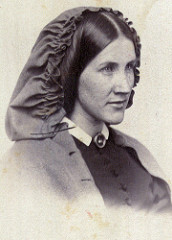
Georgeanna’s Journal.
March 10.
All strange rumors come on Sunday. Josepha Crosby, Hatty and I went down to spend the afternoon at the Patent Office Hospital. During the week the camps had been emptied of convalescents, sent north to recover, and their places in the hospitals were occupied by others. The Patent Office is full again; four rows of beds and very sick men in them. I stooped down between two 8th New York Cavalry men in their little cots while they told me that their regiment had moved off silently on Saturday night. Coming away, I hurried up to Mrs. Captain Rodgers’ house and heard the story of the Merrimac fight. The first intimation they had of it was in church on Sunday morning, when, during service, a messenger came in and was seen to whisper something to General Meigs, who immediately left the church. A little while later General Totten was summoned, and then a Commodore somebody, by which time the congregation was in a state of suppressed excitement miserable to bear. Dr. Pine preached an unusually long sermon, and finally the people rushed out and heard the bad news.
While I was talking at the door with Mrs. Rodgers a four-horse ambulance was standing at McClellan’s door, and we sat down on the steps intending to see who got into it, and which way it went, a determination shared by plenty of other people on their way from church. At last a servant brought blankets, and McClellan and Franklin got in and started on their way over the Potomac; and then I came home, and presently Colonel McClure came in and told us that Heintzelmann, with whom he had been sitting an hour, expects to move in the morning and that Manassas was reported evacuated. Contrabands brought word of it to Kearney’s quarters; he made an armed reconnaissance and discovered the truth; word was sent to McClellan, and his ride on Sunday P. M. was in consequence. Mrs. Rodgers came in as we were in our petticoats, getting ready for bed, and confirmed it all.
A Diary From Dixie
March 10, 2022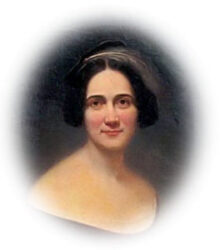
March 10th.–Second year of Confederate independence. I write daily for my own diversion. These mémoires pour servir may at some future day afford facts about these times and prove useful to more important people than I am. I do not wish to do any harm or to hurt any one. If any scandalous stories creep in they can easily be burned. It is hard, in such a hurry as things are now, to separate the wheat from the chaff. Now that I have made my protest and written down my wishes, I can scribble on with a free will and free conscience.
Congress at the North is down on us. They talk largely of hanging slave-owners. They say they hold Port Royal, as we did when we took it originally from the aborigines, who fled before us; so we are to be exterminated and improved, à l’Indienne, from the face of the earth.
Medea, when asked: “Country, wealth, husband, children, all are gone; and now what remains?” answered: “Medea remains.” “There is a time in most men’s lives when they resemble Job, sitting among the ashes and drinking in the full bitterness of complicated misfortune.”
Bearer of despatches.
March 10, 2022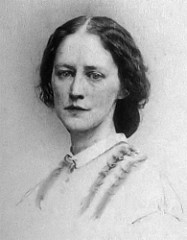
Jane Stuart Woolsey to Eliza..
0 comments
March 10, ‘62.
Theodore Bronson has just called to say that he saw Mr. Woolsey (Charley) in Baltimore last night all well. He saw his name in the papers as bearer of despatches and wondered whether he really had any, or if it was a sort of passport. I am glad if he has been able to do any service, but I should not like him to go into the army.
Journal of Surgeon Alfred L. Castleman.
March 10, 2022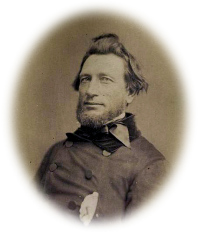
March 10th, 1862.–Well, the Army of the Potomac is at last in motion. After having lain still with 150,000 men, comparatively idle, for nearly eight months, our National Capital besieged, its great thoroughfare blockaded by a foe of which we have habitually spoken with contempt, the Van Winkle-ish sleep is apparently broken, and we are at last in motion.
We left Camp Griffin at 4 o’clock this A.M, and now–1 P.M., are bivouacked in sight of Fairfax Court House. Freedom Hill, Vienna, Flint Hill, all passed, and we have met no enemy. We are within eight miles of Centreville, and are receiving reports that the place is already in our possession. There is nothing authentic, but we shall know to-night. We are within ten miles of the famous Bull Run battle field, within fifteen of Manassas. Ho! for Richmond!
We have had a most unpleasant march to-day. Rain, rain, mud, mud. The men have suffered much, and many have fallen out of the ranks. I have received another official reprimand to-day, and still another. I suppose I deserved them. Only last night I wrote a letter to _____, in which I expressed my joy that I had at last come to the determination that feelings of humanity should not again enter into any of my plans or conduct during the war–that I should now take the “Army Regulations” as my guide. They recognize no benevolence, no affection. Commands and obedience are all they know, and I left camp this morning firmly resolved that these alone should govern me in the future. Five miles from camp I overtook a poor, weakly little fellow who had fallen out of the ranks. He had unpacked his knapsack and thrown away his clothes, to enable him to keep up. My resolution of three hours’ ago was all forgotten. I had his knapsack repacked, carried it for him till I overtook an ambulance and put it in. Captain _____, one of the General’s staff, saw me put it into the ambulance, and I “caught it.” This reminded me of my resolve, and I renewed it. I pushed forward, and overtaking the regiment I found F. staggering under his load of knapsack, arms and accoutrements. Poor F., the pale boy, who had been my assistant since I joined the army, but now, through the arbitrary vindictiveness of a little military despot, reduced to the ranks; could I leave him stuck in the mud and in the enemy’s country? I forgot again! Shouldered his gun and knapsack, took his place in the ranks, and mounted him on my horse to rest. I confess it was not very dignified to see a Surgeon–a staff officer–and at this time accidentally on the General’s staff,[1] wading through the mud, with knapsack and musket, whilst a soldier was riding. ‘”Twas derogatory to the staff.” So to the usual reprimand, the polite military addendum of “d__mn_d fool” was this time appended. Well, a man who will so often forget his good resolutions, deserves it, and I will try not to forget again, so far as to permit my kind feelings to derogate from the dignity of my commander’s staff.
Report of the evacuation of Manassas is confirmed. We got news of a terrible naval battle in the James River. Congress and Cumberland lost! Merrimac disabled! But today we have Fairfax, Centreville Manassas and Ocoquan; that pays for the work of the Merrimac.
Journal of Surgeon Alfred L. Castleman.
March 10, 2022
March 10th. (AM)–Returned early last night; but before midnight received orders to have two days’ rations cooked, and be ready to move at 4 o’clock this A.M. Before I got dressed I found myself not only Regimental Surgeon, but in consequence of the absence of the Brigade Surgeon, I had charge of his duties also. My hands were full. I guess the watch is almost old enough.
We know nothing as to where we go, but a party of scouts who were out through the day yesterday, report that Manassas is evacuated, and that the rebel army of the Potomac has all gone South. About ten o’clock to-day we heard a terrible explosion, supposed to be the blowing up of some bridge to prevent pursuit. And has that army been so disrespectful to General McClellan as to go off without going into his bag? Fie on them!
And now we are off. The sick whom I have nursed till my care grew into affection for them, are sent away. Those to come will be new ones. The last few weeks have taught me that in the army the Surgeon’s duty is to take care of the Surgeon, and to leave conscience and humanity to take care of themselves. These, with the affections which are apt to accompany them, may be good enough in civil life; in the army they are obsolete, fit only for fogies. True, there are a few yet in the Regiment, for whom, should they be suffering, I might yield to the sheepish impulse of humanity, and even become interested in their comfort. But Surgeon first, is to be my motto now. Hurrah! we are on the move!
Rebel War Clerk
March 9, 2022
MARCH 9th—Gen. Winder has appointed Col. Porter Provost Marshal,—Godwin not being high enough in rank, I suppose.
Downing’s Civil War Diary.–Alexander G. Downing.
March 9, 2022
Sunday, 9th–Had a cold rain all day. There was no church for us today. The quartermaster with a detail of men loaded some of the supplies on open cars, the wagons being taken apart and loaded. The mules and horses were put in the stock cars. The cars came for us about 9 p. m. and we finished loading about midnight and left for Jefferson City, some of the men in box cars and others in open cars with the baggage.
0
March 9, 2022
March 9th. The Brooklyn tried all day, but with no effect, to cross the barrier before us. Capt. Bell went up the river in the gunboat Winona on a reconnoissance, and this evening came down with five prisoners, who were duly examined by the flag-officer, who after examination discharged them as neutrals.
War Diary of Luman Harris Tenney.
March 9, 2022
9th. Left Butler at 8 A. M. Major Wilson of our regiment marched the rest of the distance to Fort Scott, under arrest by order of the General for drunkenness. Rode by the side of Nettleton. Crossed one of the branches of the Osage, Marais des Cygnes, very swift. Great time crossing with the mules led by ropes–one team rolled down the bank. Encamped by a little stream on the prairie. Found considerable muddy road during the day along the river bottom.
Diary of David L. Day.
March 9, 2022
March 9. A beautiful Sabbath morning, not a ripple disturbs the smooth surface of the sound, Religious services this morning in the saloon; in the afternoon on the promenade deck. All the troops, except one or two regiments, left to garrison the island, are again afloat, and the talk now is that Newbern is the next point of attack.
A Confederate Girl’s Diary
March 9, 2022
Baton Rouge, Louisiana,
March 9th, 1862.
Here I am, at your service, Madame Idleness, waiting for any suggestion it may please you to put in my weary brain, as a means to pass this dull, cloudy Sunday afternoon; for the great Pike clock over the way has this instant struck only half-past three; and if a rain is added to the high wind that has been blowing ever since the month commenced, and prevents my going to Mrs. Brunot’s before dark, I fear I shall fall a victim to “the blues” for the first time in my life. Indeed it is dull. Miriam went to Linewood with Lydia yesterday, and I miss them beyond all expression. Miriam is so funny! She says she cannot live without me, and yet she can go away, and stay for months without missing me in the slightest degree. Extremely funny! And I – well, it is absurd to fancy myself alive without Miriam. She would rather not visit with me, and yet, be it for an hour or a month, I never halfway enjoy myself without her, away from home. Miriam is my “Rock ahead” in life; I’ll founder on her yet. It’s a grand sight for people out of reach, who will not come in contact with the breakers, but it is quite another thing to me, perpetually dancing on those sharp points in my little cockleshell that forms so ludicrous a contrast to the grand scene around. I am sure to founder!
I hold that every family has at heart one genius, in some line, no matter what – except in our family, where each is a genius, in his own way. Hem! And [continue reading…]
“The great demon ship, Merrimac, and the new Ericsson iron-plated steamer, the “Monitor.” — Eliza Woolsey Howland’s Journal.
March 9, 2022
Eliza‘s journal.
March 9.
A day of great excitement, for beside the news of the evacuation of Leesburg and the capture of Cockpit Point battery, we have the great naval fight at Fortress Monroe. The great demon ship, the Merrimac, came down from Norfolk toward Newport News and attacked our ships Congress and Cumberland, destroying both. She split the latter in two and sank her, and burned the Congress to the water’s edge. The Minnesota meantime was aground and perfectly useless, as well as several others of our vessels.
This ended the first day’s fight–a victory for the rebels and a terrible disaster for us; but early this Sunday morning, when the Merrimac came out again, expecting to finish her little affair by defeating the Minnesota and then running out to sea, she found the new Ericsson iron-plated steamer, the “Monitor,” all ready to receive her. From 8 A. M. till noon the two fought hand to hand, their sides touching, and then the Merrimac was towed off towards Norfolk, supposed to be in a sinking condition, while the “Monitor” was unhurt. The submarine cable from Fortress Monroe was laid just in time to bring the news. The cable was finished at 4 P. M. and the news flashed over it at 7.
Journal of Surgeon Alfred L. Castleman.
March 9, 2022
9th.–All is bustle and confusion. Though there is no order to move, we are all packing, and ambulances are running with our sick to general hospital. This looks like clearing the decks for action. We are notified that when we do march, we shall do so without baggage or tents. So long have we been here that, notwithstanding we have been long impatient to move, it will be like breaking up our home. My home attachments are very strong. I shall feel sadly at breaking up, but I shall be glad to be again in active service.
Since the late ebullition of vindictiveness by Gen. ______, I have been schooling myself in the hardest lesson of my life –that is to sit and wait for orders, regardless of humanity, of everything, indeed, except the little eighty-seven dollars and fifty cents per month, and my own ease and comfort. This is a lofty ambition. A prize worthy a better patriot than I have ever claimed to be. Last night and this morning I labored in my hospital till three A.M. But that work is now over. We leave behind us those to whom my care and their suffering had attached me; and I will see to it that neither conscience nor humanity shall again so strongly attach me to the sick. It only lays me liable to indignities and insults.
Diary of Horatio Nelson Taft.
March 8, 2022
Saturday March 8th
The weather is now fine & the roads are drying up. Troops are coming into the City and crossing over the River. Rumors afloat of fighting today near Mt Vernon. Nothing is published and little is known publicly of War operations. The prospect now is that there will be a desperate Battle near here soon. The Rebels will try to retrieve their recent losses, and will fight with desperation. McClellan is well prepared and has an immense army near here all ready and anxious for a fight. Went up to Franklin Square with wife & the boys after dinner. Wife & myself continued our walk to Lafayette Square pass [sic] Genl McClellans home. He was standing at the Window. I did not go down to the Ave tonight, got a “Tribune” of the news boy & read Carl Shurze Speech at the Cooper Institute NY.
______
The three diary manuscript volumes, Washington during the Civil War: The Diary of Horatio Nelson Taft, 1861-1865, are available online at The Library of Congress.
Rebel War Clerk
March 8, 2022
MARCH 8th.—Gen. Winder has appointed Capt. Godwin Provost Marshal
Downing’s Civil War Diary.–Alexander G. Downing.
March 8, 2022
Saturday, 8th–The boys are in fine spirits because we have orders to leave. All are at work getting ready—some are mending their shirts, pants or coats, others their socks or shoes, or anything which needs fixing up before leaving for the South.
0
March 8, 2022
March 8th. This afternoon the Brooklyn made an attempt to cross the bar, being led by a gunboat, but the Brooklyn grounded, and after persevering with commendable zeal gave it up for the day. The men are grinding their cutlasses, and making other preparations of a warlike character.
War Diary of Luman Harris Tenney.
March 8, 2022
8th. Struck tents and were ready to march at 7 A. M. Enjoyed a ride of thirty miles to Butler, the burnt and deserted county seat of Butler County, once a thriving town, now but a few poor houses remaining.
Diary of a Southern Refugee, Judith White McGuire.
March 8, 2022
8th.—The family of Captain _____, of the navy, just arrived. They have been “refugeeing” in Warrenton; but now that there is danger of our army falling back from the Potomac to the Rappahannock, they must leave Warrenton, and are on their way to Danville. Their sweet home is utterly destroyed; the house burned, etc. Like ourselves, they feel as though their future was very dark.
Journal of Meta Morris Grimball
March 8, 2022
8th [March]
Mr Grimball & W came down yesterday with the people remaining, they are lodged in the Jail or work house.
My poor husband finds himself terribly tired by his situation & I really think without God’s mercy he would sink entirely under it.
Mr James Rose the President of the Rail Road Bank told Papa I might draw on his bank for the sum which is due to me and Papa must write to Harry to deposit the Money in the Bank of England. This was another unexpected kindness.
Through Some Eventful Years
March 8, 2022
March 8th, 1862.—I do not like Dr. Cleveland. I wonder how much longer he is going to stay? This morning while we were sitting at the breakfast table he was contending with Mother about the “sweet-briar.” It seems he has spent much time in England, perhaps he is an Englishman, but he insists that there has never been any “sweet briar,” or as he says, any “true Eglantine” in America. I think it is rude of him to be so positive with Mother, but Father says, “all scientific men love to dispute with the laity.” At last, when we were rising from the table Mother said, “Sue, show Dr. Cleveland the sweet briar by the school room.”
We went down the walk to the frame where it grew and I pointed it out to him. Now this happened to be the very tangle of vines into which I threw my algebra, on that memorable day when Miss Darner made me pick it up. The vines are all thorns and they scratched me dreadfully. Dr. Cleveland inspected the vine, pinched a leaf, smelled it, sniffing loudly and then he said, “This is the true Eglantine.”
“Mother told you it was,” I replied.
He took from his pocket a small sketch-book and pencil and proceeded to make a picture of it, not a finished drawing but just a sketch. He replaced the book and pencil in his pocket and, trying to speak very pleasantly, he said: “When I get to my drawing materials I shall make and send you a pretty picture of this Eglantine, it is very rare.”
“Do not trouble to do that, please, I have no pleasant associations with that thorny tangle,” I answered, and we returned to the house.
The mail had arrived in our absence and the family were gathered around the library table; aunt Robinson handed me a letter from Brother Junius, saying as she did so, “Here is another birthday gift for you.”
Dr. Cleveland, who was apologizing awkwardly to Mother for contradicting her so flatly as to the sweet briar, turned to Father and asked, “Her birthday, is it, how old?” “Sixteen,” said Father. “Indeed—” went on the talkative man of science, “I should never have imagined it—there is none of the `beaute du diable,’ which we naturally associate with that age.” “No,” said Father, “and I am glad of it, I do not want my baby to grow up too fast.”
Then the whole crowd proceeded to discuss me as calmly as if I had been one of my own dolls. It was embarrassing but I found out what they thought of me. Among other things, I learned that I was bluntly truthful and would have to learn that Madam de Geniis’ “Palace of Truth” was not practical and a white lie could sometimes be used to advantage. Mother’s constant teaching of the Ten Commandments will, I think, make even white lies difficult for me, though I do try to be polite.
I had some pretty presents even if it is war times, and I got a nice letter from Brother Junius, written two days ago so I would get it today. Brother Amos is here and Sister Mag is happy, we are too, for all love our jolly soldier boy, he has been at home for ten days and he has only two weeks furlough. It will be hard for Sister Mag to let him go.
There is something I have never told you, my Diary; ever since that day in August of last year, when we went to the depot to see the Howell Guards off to Virginia, Sister Mag has never failed to lock herself in her room for awhile every day to pray for her husband. I did not know just at first what she was doing, but I heard her tell him she never let a day pass without asking God to take care of him and he might know, wherever he might be, that her thoughts and her prayers were following him.
I felt real mean to have overheard this, for it was never intended for my ears, but I had sung Eddie to sleep and was holding him in my arms in the dark, waiting for Nellie to come for him, and they were talking on the porch just outside.
Colonel Joseph Howland.
March 8, 2022
Eliza‘s journal.
[1] Mr. Robert S. Hone to Eliza Woolsey Howland.
0 comments
Saturday, March 8th.
The item this morning is that Colonel Davies was confirmed yesterday by the Senate as Brigadier General, so J. is now Colonel of the 16th by unanimous choice of the officers, and will take command at once.[1] He writes by the orderly that he has been with General Slocum to see the regiment pitch their new tents in the valley of Four Mile Run.
[1] Mr. Robert S. Hone to Eliza Woolsey Howland.
New York, March, 1862.
Dear Mrs. Howland: Mr. Russell has just been in my office and wishes me to say that he has just left Governor Morgan, who informed him that he had to-day signed Joe’s commission as Colonel of the 16th Regiment, and that he was delighted to hear the very high terms in which the Governor spoke of Joe.
With congratulations, I am, etc
Diary of a Southern Refugee, Judith White McGuire.
March 7, 2022
7th.—Just returned from the hospital. Several severe cases of typhoid fever require constant attention. Our little Alabamian seems better, but so weak! I left them for a few moments to go to see Bishop Meade; he sent for me to his room. I was glad to see him looking better, and quite cheerful. Bishops Wilmer and Elliott came in, and my visit was very pleasant. I returned to my post by the bedside of the soldiers. Some of them are very fond of hearing the Bible read; and I am yet to see the first soldier who has not received with apparent interest any proposition of being read to from the Bible. To-day, while reading, an elderly man of strong, intelligent face sat on the side of the bed, listening with interest. I read of the wars of the Israelites and Philistines. He presently said, “I know why you read that chapter; it is to encourage us, because the Yankee armies are so much bigger than ours; do you believe that God will help us because we are weak?” “No,” said I, “but I believe that if we pray in faith, as the Israelites did, that God will hear us.” “Yes,” he replied, “but the Philistines didn’t pray, and the Yankees do; and though I can’t bear the Yankees, I believe some of them are Christians, and pray as hard as we do; [“Monstrous few on ’em,” grunted out a man lying near him;] and if we pray for one thing, and they pray for another, I don’t know what to think of our prayers clashing.” “Well, but what do you think of the justice of our cause? don’t you believe that God will hear us for the justice of our cause?” “Our cause,” he exclaimed, “yes, it is just; God knows [continue reading…]