Rebel War Clerk

Civil War Day-by-Day
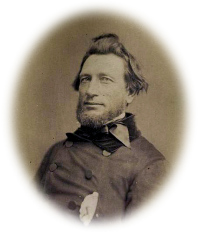
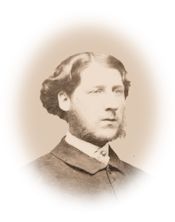
A likeness of Jones when he was editor and majority owner of the Daily Madisonian during President John Tyler’s administration.

JUNE 1st.—The ambulances are now bringing in the enemy’s wounded as well as our own. It is the prompting of humanity. They seem truly grateful for this magnanimity, as they call it; a sentiment hitherto unknown to them.

The battle was renewed to-day, but not seriously. The failure of Gen. Huger to lead his division into action at the time appointed, is alleged as the only reason why the left wing of the enemy was not completely destroyed. But large masses of the enemy did cross the river, on bridges constructed for the purpose, and they had 50,000 men engaged against a much less number on our part; and their batteries played upon us from the north bank of the Chickahominy. The flying foe kept under shelter of this fire—and these guns could not be taken, as the pontoon bridge was defended by heavy artillery.

All day the wounded were borne past our boarding-house in Third Street, to the general hospital; and hundreds, with shattered arms and slight flesh wounds, came in on foot. I saw a boy, not more than fifteen years old (from South Carolina), with his hand in a sling. He showed me his wound. A ball had entered between the fingers of his left hand and lodged near the wrist, where the flesh was much swollen. He said, smiling, “I’m going to the hospital just to have the ball cut out, and will then return to the battle-field. I can fight with my right hand.”

The detectives are jubilant to-day. They say one of their number, ______, did heroic feats of arms on the field, killing a Yankee colonel, and a private who came to the rescue. At all events, they brought in a colonel’s sword, pistols, and coat, as trophies. This story is to be in the papers to-morrow!

0 comments

Downing’s Civil War Diary.–Alexander G. Downing.

Diary of Alexander G. Downing; Company E, Eleventh Iowa Infantry

Sunday, 1st–It rained all day. I took “French leave” this morning and went into Corinth. The town appears to be deserted and it is a dilapidated looking place, as so much of it has been destroyed. I found it to be a fine place, however, on high ground, and when rebuilt it will be beautiful. There are two railroads running through the town and there are good schools and a college. The country around is rich and the farms are well fenced.

0 comments

A Confederate Girl’s Diary

Civil War Day-by-Day

June 1st, Sunday.

From the news brought by one or two persons who managed to reach here yesterday, I am more uneasy about mother and the girls. A gentleman tells me that no one is permitted to leave without a pass, and of these, only such as are separated from their families, who may have left before. All families are prohibited to leave, and furniture and other valuables also. Here is an agreeable arrangement! I saw the “pass,” just such as we give our negroes, signed by a Wisconsin colonel. Think of being obliged to ask permission from some low plowman to go in or out of our own house! Cannon are planted as far out as Colonel Davidson’s, six of them at our graveyard, and one or more on all the other roads. If the guerrillas do not attempt their capture, I shall take it upon myself to suggest it to the very next one I see. Even if they cannot use them, it will frighten the Yankees, who are in a state of constant alarm about them. Their reason for keeping people in town is that they hope they will not be attacked so long as our own friends remain; thereby placing us above themselves in the scale of humanity, since they acknowledge we are not brute enough to kill women and children as they did not hesitate to do.

Farragut pleads that he could not restrain his men, they were so enraged when the order was once given to fire, and says they would strike a few houses, though he ordered them to fire solely at horses, and the clouds of dust in the street, where guerrillas were supposed to be. The dust was by no means thick enough to conceal that these “guerrillas” were women, carrying babies instead of guns, and the horses were drawing buggies in which many a sick woman was lying.

A young lady who applied to the Yankee general for a pass to come out here, [continue reading…]

0 comments

War Diary of Luman Harris Tenney.

War Diary of Luman Harris Tenney.

1st. Wrote a line home. Marched south at 7. Went forward with Colonel Salomon and Adj. Ninth Wisconsin to find camping ground. Indian trading post. Several Indian graves. Cold day, drizzly rain. Enjoyed the trip well. 25 miles, Humboldt.

0 comments

Diary of David L. Day.

David L Day – My diary of rambles with the 25th Mass

A Change of Base.

June 1. And now something else has turned up, and here we are encamped just outside the city and behind our batteries. The order to move took us by surprise, as the first notice we had was to pick up our traps and be ready to march in half an hour. At the time appointed everything was packed and loaded on the wagons and we were on the march. Dark found us here with our tents up ready for housekeeping, and our coffee boiling for supper. All this and a march of twelve miles in one afternoon. Two companies, G and K, are left back for a few days, and are assisted by cavalry. All the advance regiments are drawn in behind the forts and the whole division, with the exception of three regiments, are now here. I have heard no reason why the division is concentrated, but perhaps the general expects company and intends to be in readiness to give them a right royal reception. Our line of defenses extends from the Neuse to the Trent rivers, a distance of about one mile, and on the line are three forts mounting in all 32 guns. There are also eleven light batteries of six guns each, with gunboats on the rivers that have an enfilading range in front of the line. With 10,000 troops behind the works, with a wide open field in front, it looks as though our position was a pretty safe one, and if anybody comes here with any hostile intent, hell will begin to fill up pretty soon after they get within the range of our guns. Our life up in the woods, on the whole was rather a pleasant one; I reckon the boys rather enjoyed it and were in no hurry about leaving. There was less restraint on them, they could do a little more as they pleased and were free from the drills, parades, red tape and formalities of the regular camp, with just enough excitement about it to keep them from getting dreary and homesick.

0 comments

Journal of Surgeon Alfred L. Castleman.

Journal of Surgeon Alfred L Castleman.

June 1st.–Am so much better, to-day, that I have to report for duty. Am instructed to remain at my quarters near the hospital till further orders. I think I can foresee a plan in this to keep me at this hospital during the fights before Richmond. It is a dangerous thing in this army for a subordinate officer to think.

0 comments

“General Lee is ordered to take General Johnston’s place. The fight may be renewed to-morrow.”—Diary of a Southern Refugee, Judith White McGuire.

Diary of a Southern Refugee During the War by Judith White McGuire

31st.—The booming of cannon, at no very distant point, thrills us with apprehension. We know that a battle is going on. God help us! Now let every heart be raised to the God of battles.

Evening.—General Johnston brought in wounded, not mortally, but painfully, in the shoulder. Other wounded are being brought in. The fight progressing; but we are driving them.

Night.—We have possession of the camp—the enemy’s camp. The place is seven miles from Richmond. General Lee is ordered to take General Johnston’s place. The fight may be renewed to-morrow.

0 comments

Rebel War Clerk

Civil War Day-by-Day
A likeness of Jones when he was editor and majority owner of the Daily Madisonian during President John Tyler’s administration.

MAY 31st.—Everybody is upon the tip-toe of expectation. It has been announced (in the streets!) that a battle would take place this day, and hundreds of men, women, and children repaired to the hills to listen, and possibly to see, the firing. The great storm day before yesterday, it is supposed, has so swollen the Chickahominy as to prevent McClellan’s left wing from retreating, and reinforcements from being sent to its relief. The time is well chosen by Gen. Johnston for the attack, but it was bad policy to let it be known where and when it would be made; for, no doubt, McClellan was advised of our plans an hour or so after they were promulged in the streets. Whose fault is this? Johnston could hardly be responsible for it, because he is very reticent, and appreciates the importance of keeping his purposes concealed from the enemy. Surely none of his subordinates divulged the secret, for none but generals of division knew it. It must have been found out and proclaimed by some one in the tobacco interest. It is true, Mr. Randolph told Mr. Jacques a great battle would begin at 8 A.M., to-day; but he would not propagate such news as that!

But the battle did not occur at the time specified. Gen. Huger’s division was not at the allotted place of attack at the time fixed upon. His excuse is that there was a stream to cross, and understanding Gen. Longstreet was his senior in command (which is not the fact, however), he permitted his division to have precedence. All the divisions were on the ground in time but Huger’s, but still no battle. Thousands of impatient spectators are venting their criticisms and anathemas, like an audience at a theater when some accident or disarrangement behind the scenes prevents the curtain from rising.

At last, toward noon, a few guns are heard; but it was not till 4 P.M. that Huger’s division came upon the field. Nevertheless, the battle began in earnest before that hour; and we could hear distinctly not only the cannon but the musketry.

The hearts of our soldiers have been inspired with heroic resolution, and their arms nerved with invincible power to overcome the difficulties known to be in the way. Every one is aware that the camp of the enemy, on this side of the Chickahominy, is almost impregnably intrenched; and in front of the works trees have been cut down and the limbs sharpened, so as to interpose every obstacle to our advance.

Ever and anon after rapid firing of cannon, and a tremendous rattle of musketry, a pause would ensue; and we knew what this meant! A battery had been taken at the point of the bayonet, and we cheered accordingly. One after another, we could in this manner perceive the strongholds of the enemy fall into our hands.

Toward sundown it was apparent that the intrenched camp had been taken; and as the deep booming of cannon became more distant, and the rattle of musketry less distinct, we felt certain that the foe was flying, and that our men were pursuing them. But we knew that our men would take everything they were ordered to take. They care not for wounds and death. This is their only country. But the enemy have a country to run to, and they hope to live, even if defeated here. If they kill all our young men, the old men and women, and even our children, will seize their arms and continue the conflict.

At night. The ambulances are coming in with our wounded. They report that all the enemy’s strong defenses were stormed, just as we could perceive from the sounds. They say that our brave men suffered much in advancing against the intrenchments, exposed to the fire of cannon and small arms, without being able to see the foe under their shelter; but when they leaped over the breastworks and turned the enemy’s guns on them, our loss was more than compensated. Our men were shot in front; the enemy in the back—and terrible was the slaughter. We got their tents, all standing, and a sumptuous repast that had just been served up when the battle began. Gen. Casey’s headquarters were taken, and his plate and smoking viands were found on his table. His papers fell into our hands. We got a large amount of stores and refreshments, so much needed by our poor braves! There were boxes of lemons, oranges, brandies and wines, and all the luxuries of distant lands which enter the unrestricted ports of the United States. These things were narrated by the pale and bleeding soldiers, who smiled in triumph at their achievement. Not one in the long procession of ambulances uttered a complaint. Did they really suffer pain from their wounds? This question was asked by thousands, and the reply was, “not much.” Women and children and slaves are wending to the hospitals, with baskets of refreshments, lint, and bandages. Every house is offered for a hospital, and every matron and gentle daughter, a tender nurse.

But how fares it with the invader? Unable to recross the swollen Chickahominy, the Yankees were driven into an almost impenetrable swamp, where they must pass the night in water up to their knees. The wounded borne off by them will have no ministrations from their sisters and mothers, and their dead are abandoned on the field. If Huger had come up at the time appointed, the enemy would have been ruined.
0 comments

Downing’s Civil War Diary.–Alexander G. Downing.

Diary of Alexander G. Downing; Company E, Eleventh Iowa Infantry

Saturday, 31st–There was still some fighting today with the fleeing rebels, and we took some prisoners, but the main part of the army had too much of a start on us.

The Eleventh Iowa received four months’ pay today. I drew $53.00. We had to make settlement at this time for all clothing purchased.

0 comments

A Confederate Girl’s Diary

Civil War Day-by-Day

May 31st.

I was interrupted so frequently yesterday that I know not how I continued to write so much. First, I was sent for, to go to Mrs. Brunot, who had just heard of her son’s death, and who was alone with Dena; and some hours after, I was sent for, to see Fanny, now Mrs. Trezevant, who had just come with her husband to bring us news of George. A Mrs. Montgomery, who saw him every day at Norfolk, said Jimmy was with him, and though very sick at first, was now in good health. The first news in all that long time! When the city was evacuated, George went with his regiment seven miles from Richmond, Jimmy to the city itself, as aide to Com. Hollins. This lady brought George’s opal ring and diamond pin. Howell and Mr. Badger, who had just joined the guerrillas as independents, spent the day with me.

We were all in such confusion that I felt ashamed: every one as dirty as possible; I had on the same dress I had escaped in, which, though then perfectly clean, was now rather – dirty. But they knew what a time we had had.

To return to my journal.

Lucy met mother some long way ahead of us, whose conscience was already reproaching her for leaving us, and in answer to her “What has become of my poor girls?” ran down the road to find us, for Lucy thinks the world can’t keep on moving without us. When she met us, she walked by the cart, and it was with difficulty we persuaded her to ride a mile; she said she felt “used” to walking now. About five miles from home, we overtook mother. The gentleman had been obliged to go for his wife, so Mary gave her her seat on the cart, and walked with Lucy three miles beyond, where we heard that Lilly and the children had arrived in a cart, early in the day. All the talk by the roadside was of burning homes, houses knocked to pieces by balls, famine, murder, desolation; so I comforted myself singing, “Better days are coming” and “I hope to die shouting, the Lord will provide”; while Lucy toiled through the sun and dust, and answered with a chorus of “I’m a-runnin’, a-runnin’ up to glo-ry!” [continue reading…]

0 comments

War Diary of Luman Harris Tenney.

War Diary of Luman Harris Tenney.

31st. Saturday. Wrote a short letter to Uncle. Issued seven days’ rations. The Major bought a mess box, $18, a splendid one. Received a letter from home.

0 comments

“The work of the Sanitary Commission, as connected with the army of the Potomac, is just at this time, as you doubtless know, a most important and indispensable one.”

Woolsey family letters during the War for the Union

Charles William Woolsey to New York Evening Post.

Sanitary Commission, Floating Hospital, Pamunkey River,
Off White House, Va., May 31, 1862.

The work of the Sanitary Commission, as connected with the army of the Potomac, is just at this time, as you doubtless know, a most important and indispensable one. More than two thousand sick and wounded men have been shipped by the Commission to New York, Washington and Boston during the past month, and it is safe to say that the lives of hundreds have been saved who would otherwise have died in camp and on the march.

The vessels used by the Commission are chartered by the government, and are first-class ocean steamers and Sound boats. They are supplied with all the necessary hospital apparatus at the expense of the Commission, and are furnished, so far as possible under the circumstances, with every convenience for the transportation of the sick, who are too often victims of neglect in regimental sanitary regulations. If your readers care to know something about the detail of management on board a hospital ship, let me give them briefly the program of a single day’s routine–a routine in the case of the majority on board, let them remember, of inevitable and monotonous suffering or sleepless pain.

Four bells,–but the day does not begin then, it is only a continuation of yesterday and the day before. On a hospital ship night and day are alike to all hands, and “on duty” for a nurse means only his “watch,” whether it comes at noon or midnight. Dr. Some-one is medical and military chief, and every well man on board, except the ship’s officers and crew, is subject to his authority. His command consists of four or five surgeons and physicians, a commissario-quartermaster, a purser perhaps, a varying number of volunteer nurses, eight or ten contrabands, and from one hundred to four hundred or five hundred sick men, according to the capacity of his vessel. On the ocean steamers the greater number of bunks are between decks, and roughly built of secession lumber, in tiers of three ranged on either side the length of the ship, and a double row down the centre. On this deck also are a dispensary, with an apothecary to preside, and a room or space reserved for the exclusive use of the lady nurses. [continue reading…]

0 comments

Journal of Surgeon Alfred L. Castleman.

Journal of Surgeon Alfred L Castleman.

29th, 30th and 31st.–I am still too unwell to resume charge of this hospital, and as I hear of no action in the army, I have nothing to record.

0 comments

Rebel War Clerk

Civil War Day-by-Day
A likeness of Jones when he was editor and majority owner of the Daily Madisonian during President John Tyler’s administration.

MAY 30th.—It is said some of the enemy’s mounted pickets rode through the city last night! Northern papers manifest much confidence in the near approach of the downfall of Richmond, and the end of the “rebellion.” The 15th of June is the utmost limit allowed us for existence. A terrific storm arose yesterday; and as our scouts report the left wing of the enemy on this side of the Chickahominy, Gen. Johnston has determined to attack it to-morrow. Thank God, we are strong enough to make the attack!

0 comments

A Confederate Girl’s Diary

Civil War Day-by-Day


May 30th, Greenwell.

After all our trials and tribulations, here we are at last, and no limbs lost! How many weeks ago was it since I wrote here? It seems very long after all these events; let me try to recall them.

Wednesday the 28th, – a day to be forever remembered, – as luck would have it, we rose very early, and had breakfast sooner than usual, it would seem for the express design of becoming famished before dinner. I picked up some of my letters and papers and set them where I could find them whenever we were ready to go to Greenwell, burning a pile of trash and leaving a quantity equally worthless, which were of no value even to myself except from association. I was packing up my traveling-desk with all Harry’s little articles that were left to me, and other things, and I was saying to myself that my affairs were in such confusion that if obliged to run unexpectedly I would not know what to save, when I heard Lilly’s voice downstairs, crying as she ran in – she had been out shopping – “Mr. Castle has killed a Federal officer on a ship, and they are going to shell –” Bang! went a cannon at the word, and that was all our warning.

Mother had just come in, and was lying down, but sprang to her feet and added her screams to the general confusion. Miriam, who had been searching the libraries, ran up to quiet her; Lilly gathered her children, crying hysterically all the time, and ran to the front door with them as they were; Lucy saved the baby, naked as she took her from her bath, only throwing a quilt over her. I bethought me of my “running-bag” which I had used on a former case, and in a moment my few precious articles were secured under my hoops, and with a sunbonnet on, I stood ready for anything. [continue reading…]

0 comments

War Diary of Luman Harris Tenney.

War Diary of Luman Harris Tenney.

30th. Friday. I wrote a letter to Ella Clark, in answer to one received weeks before. I am ashamed of my negligence or inability to write more. Showed the letter to the Oberlin boys.

0 comments

Army Life of an Illinois Soldier.

Civil War Day-by-Day

May 30, 1862. invitation to dine We have our horses saddled all the time since 2:30 yesterday morning. Owing to Colonel Kellogg’s continued illness he was this morning retired from further command of brigade, and Mizner put in his place. We could hear the cars running at Corinth all last night, and now there is a heavy black smoke hanging over the place. Some think they have evacuated, but ’tis doubtful. Firing all the time since 3 this morning. Up to this time we (our regiment) have had but three men killed and nine wounded here. Have been remarkably fortunate. I gave up my cot to Major Rawalt and am sleeping on the ground now, and the confounded lizards are working me into a fever. They are as thick as you ever saw grasshoppers. One of them ran into Allan Heald’s shirt bosom yesterday and they say he moved rather sprightly for a few minutes. Lots of snakes here, cottonmouths, copperheads, rattlesnakes, and commoner varmint. There’s also a scorpion that looks like a lizard with a green head. They say it is poisonous.

0 comments

Alexander G. Downing’s Civil War Diary

Diary of Alexander G. Downing; Company E, Eleventh Iowa Infantry

Friday, 30th–Corinth was evacuated during the night. Upon leaving, the rebels burned the depot and several houses, besides a large amount of other property, and also blew up their powder magazine. They burned some cars loaded with their own supplies which they could not get away because they had no engineers. At daylight General Pope with his force entered Corinth and then went in hot pursuit of the rebels.

0 comments

Diary of a Southern Refugee.

Diary of a Southern Refugee During the War by Judith White McGuire

29th.—No official accounts from “Stonewall” and his glorious army, but private accounts are most cheering. In the mean time, the hospitals in and around Richmond are being cleaned, aired, etc., preparatory to the anticipated battles. Oh, it is sickening to know that these preparations are necessary! Every man who is able has gone to his regiment. Country people are sending in all manner of things—shirts, drawers, socks, etc., hams, flour, fresh vegetables, fruits, preserves—for the sick and wounded. It is wonderful how these things can be spared. I suppose, if the truth were known, that they cannot be spared, except that every man and woman is ready to give up every article which is not absolutely necessary; and I dare say that gentlemen’s wardrobes, which were wont to be numbered by dozens, are now reduced to couples.

It is said that General Johnston, by an admirable series of manœuvres, is managing to retreat from Williamsburg, all the time concealing the comparative weakness of his troops, and is retarding the advance of the enemy, until troops from other points can be concentrated here.

0 comments

Rebel War Clerk

Civil War Day-by-Day
A likeness of Jones when he was editor and majority owner of the Daily Madisonian during President John Tyler’s administration.

MAY 29th.—More troops are marching into the city, and Gen. Lee has them sent out in such manner and at such times as to elude the observations of even the spies.

0 comments

Downing’s Civil War Diary.–Alexander G. Downing.

Diary of Alexander G. Downing; Company E, Eleventh Iowa Infantry

Thursday, 29th–There was heavy cannonading today off on the left flank and the pickets are still fighting. General Pope cut the railroad and with the aid of the Second Iowa Cavalry burned a train of cars and took one thousand stand of arms.

0 comments

0

Civil War Day-by-Day

May 29th. Early this morning the Brooklyn, with her attendants, arrived from up the river, when the Flag Officer ordered the troops, fifteen hundred in number, ashore to watch the city, while we broke out of our ship’s hold nearly all of our provisions for their use. At ten o’clock the Brooklyn got under way for New Orleans, and we soon followed, leaving two gunboats to guard the place by water. We anchored at night as usual, and on the morning had the misfortune to lose our anchor by the parting of the chain. We got under way early, and reached New Orleans a little after noon, where we found a display of shipping not unlike the happiest days of the Crescent City.

There were some half dozen men-of-war here, also the U. S. mail packet Ocean Queen, a large and splendid ship; also the U. S. transport Connecticut, with a mail for us, and a large number of transports and merchantmen lining the levee, while the merchant steamers flying about the river created a lively and pleasing appearance. On this passage, Quartermaster Donnelly died of apoplexy, induced by the heat of the sun and season, being the second case from the same cause. We lay here for more than a week, during which time steamships were constantly arriving from the North, bringing mails, dispatches, &c., and a corresponding number departed, among them the U. S. sloop-of-war Dacotah.

0 comments

War Diary of Luman Harris Tenney.

War Diary of Luman Harris Tenney.

29th. Thursday. Went to Neosho Falls, nine miles, to see the Indians play ball. Gay time and gay dinner. Visited them in their camp and home. Saw some slaves among them. Was disgusted with their primeval customs. Saw Seminoles and Delawares. About 7,000 encamped along the river.

0 comments

Rebel War Clerk

Civil War Day-by-Day
A likeness of Jones when he was editor and majority owner of the Daily Madisonian during President John Tyler’s administration.

MAY 28th.—Prisoners and deserters from the enemy say the Yankees get the Richmond papers, every day, almost as soon as we do. This is a great advantage they possess; and it demonstrates the fact that the Provost Marshal has interposed no effectual barriers between us and the enemy.

0 comments

Downing’s Civil War Diary.–Alexander G. Downing.

Diary of Alexander G. Downing; Company E, Eleventh Iowa Infantry

Wednesday, 28th–Some very hard fighting out on the right flank. Our men were driven back from their line, but rallied and regained the ground lost. In the mix-up we took some prisoners and there were some killed and wounded on both sides.

0 comments