Sunday, 22d–We had company inspection at 5 o’clock this evening. Our chaplain, John S. Whittlesey, died of diphtheria on May 11th at Durant, Iowa, and our regiment has no chaplain at present. We have no services on Sunday now, except that some of the companies occasionally have prayer meetings.
American Civil War Chronicles
War Diary of Luman Harris Tenney.
June 22, 2022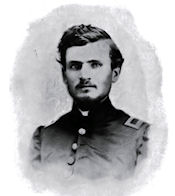
22nd. Sunday. Major Purington started at 5 for Ohio on 30 days furlough. Carried lots of money for the boys. We boys sent to Wilson Dodge, former Q. M,, to get the Major a ring worth $10. Got our pay. Commissary and Q. M. received alike this time.
Issued some rations and drew enough from Brigade Com’y for ten days.
Who wrote it?
June 22, 2022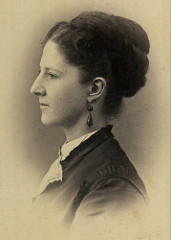
Eliza Howland to Joe, Howland, her husband.
Wilson Small, June –.
This morning I have your Sunday note with the charming little poem. Who wrote it? Be sure and tell me. It is a poem, and though entirely undeserved, I value it very much indeed.
[Poem by a Lieutenant of the 16th N. Y., dedicated to Eliza Woolsey Howland]
.
To Mrs. Joseph Howland.
________
From old Saint Paul till now,
Of honorable women not a few
Have quit their golden ease, in love to do
The saintly works that Christ-like hearts pursue.
.
Such an one art thou, God’s fair apostle,
Bearing His love in war’s horrific train;
Thy blessed feet follow its ghastly pain
And misery and death, without disdain.
.
To one borne from the sullen battle’s roar,
Dearer the greeting of thy gentle eyes,
When he aweary, torn and bleeding lies,
Than all the glory that the victors prize.
.
When peace shall come, and homes shall smile again,
Ten thousand soldier hearts, in Northern climes,
Shall tell their little children, with their rhymes,
Of the sweet saint who blessed the old war times..
Rebel War Clerk
June 21, 2022
JUNE 21st.—Gen. Beauregard is doubly doomed. A few weeks ago, when the blackness of midnight brooded over our cause, there were some intimations, I know not whether they were well founded, that certain high functionaries were making arrangements for a flight to France; and Gen. Beauregard getting intimation of an order to move certain sums in bullion in the custody of an Assistant Treasurer in his military department, forbid its departure until he could be certain that it was not destined to leave the Confederacy. I have not learned its ultimate destination; but the victory of the Seven Pines intervening, Gem Beauregard has been relieved of his command, “on sick leave.” But I know his army is to be commanded permanently by Gen. Bragg. There are charges against Beauregard. It is said the Yankee army might have been annihilated at Shiloh, if Beauregard had fought a little longer.
Downing’s Civil War Diary.–Alexander G. Downing.
June 21, 2022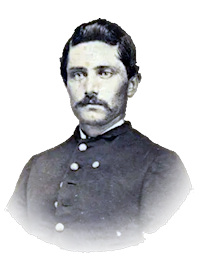
Saturday, 21st–We were relieved this morning by the Thirteenth Iowa. Some of the fruit in this locality is beginning to ripen and we will have some variety in our rations.
0
June 21, 2022
On the 8th of June, the Flag Officer having received the proper authority, once more turned the Hartford towards Vicksburg, followed by the Richmond–the Brooklyn being detained, but soon followed. We anchored near sunset, alongside the U. S. steam transport Tennessee, which had got aground. During the night the Brooklyn arrived, in company with several river steamers with troops. On the following morning two steamers fastened to the Tennessee, to tow her off, while we passed on, and arrived without accident at Baton Rouge on the 10th, where we found everything going off quietly. We lay here nearly ten days, during which time the mortar schooners of Capt. Porter’s fleet had passed by us, and having left one, we on the 19th took it in tow and started for Vicksburg. We proceeded with moderate speed and success until the 21st, in the evening, when we unexpectedly ran hard aground. Our attendant steamers immediately came up to our assistance, and after laboring the entire night, succeeded in getting afloat the following morning at eleven o’clock. Continuing on we passed some high bluffs, on which we looked for rebel batteries and accordingly kept prepared for them, but we were not molested. We observe that the river is rapidly falling, having thus far receded some six feet.
War Diary of Luman Harris Tenney.
June 21, 2022
21st. Saturday. Wrote home. Major Purington and Adjutant acted ridiculously in the evening. Out almost all night on a spree.
Downing’s Civil War Diary.–Alexander G. Downing.
June 20, 2022
Friday, 20th–Our regiment went out on picket this evening. Water is very scarce out on the picket line and so we have our canteens filled in the evening before we go out.
War Diary of Luman Harris Tenney.
June 20, 2022
20th. Friday. Attended to my usual duties. Read papers.
Robert M. McGill
June 20, 2022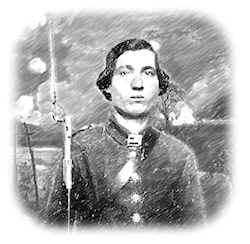
Friday, 20th.—No nurse in my room. Some very rough looking fellows in my room. Remained very sick all day.
(Note: picture is of an unidentified Confederate soldier.)
Through Some Eventful Years
June 20, 2022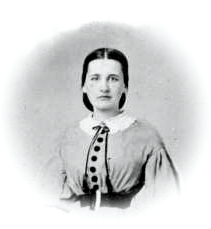
June 20th, 1862.—The tannery, under Mr. James, is a complete success. Father sent to Gadsden County for a shoemaker, and three of the black boys are working under him, learning the trade; he has three sons and they are motherless. John, the eldest, is fourteen years old, but is very small for his age; David is twelve and Nathan is nine; they have never been to school in their lives and Father wants me to teach them two hours every morning. I have taught Frances right along, since Grandpa gave her to me but I do not know if I can “instill knowledge,” as Dr. Cleveland says, into such unpromising specimens. However, I will try.
Susan Bradford is 16 years old when this entry was made.
Skedaddle
June 20, 2022by Thomas Bailey Aldrich 1,2
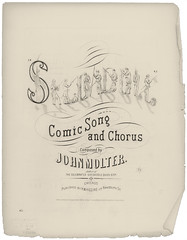
adapted to music by John Molter 3
.
 The shades of night were falling fast,
As through a Southern village passed
A youth, who bore, not over nice,
A banner with the gay device,
Skedaddle!
.
His hair was red, his toes beneath
Peeped, like an acorn from its sheath,
While with a frightened, voice he sang
A burden strange to Yankee tongue,
Skedaddle!
.
He saw no household fire where he
Might warm his tod or hominy;
Beyond the Cordilleras shone,
And from his lips escaped a groan,
Skedaddle!
.
“Oh! stay,” a cullered pusson said,
“An’ on dis bossom res’ your hed!”
The octoroon she winked her eye,
But still he answered, with a sigh,
Skedaddle!
.
“Beware McClellan, Buell, and Banks,
Beware of Halleck’s deadly ranks!”.
This was the planter’s last Good Night;
The chap replied, far out of sight,
Skedaddle!
.
At break of day, as several boys
from Maine, New York and Illinois
Were moving Southward, in the air
They heard these accents of despair,
Skedaddle!
.
A chap was found and at his side
A bottle, showing how he died,
Still grasping in his hand of ice
That banner with the strange device,
Skedaddle!
.
There in the twilight, thick and gray,
Considerably played out he lay;
And through the vapor, gray and thick,
A voice fell like a rocket-stick,
Skedaddle!
.
- Moore, F. (1882). Skedaddle. In Anecdotes, poetry, and incidents of the War: North And south: 1860-1865. New York: Arundel.
- Aldrich, T. (1864). Skedaddle. In F. Moore (Editor), Songs of the Soldiers (pp. 94-95). New York, New York: G. P. Putnam.
- Molter, J. (1862). Skedaddle. H. M. Higgins, Chicago. [Notated Music] Retrieved 7/21/21 from the Library of Congress, www.loc.gov/item/ihas.200000783/.
A battle is predicted to take place in three days.
June 20, 2022
From Edward Mitchell.
White House, June 20, 1862.
My dear Father: Heavy firing in the advance this A. M. Since writing to Fred. I have had no time to write another word. Sitting up late that night, I was waked up, with Drs. Jenkins and Haight, to go ashore for 24 hours at 3 A. M. In consequence of being routed out at this unusual hour, yesterday was spent, so far as leisure hours were concerned, in deep sleep. . . . I now write to thank you for your kind expressions of regard for my health, and of love for me; and for your desire to see me with you once more. . . .
My health–it is excellent. . . . And so far it has been possible to find an assistant, who though stupid to an extent and lazy, is willing to go twice a day to wait an hour or more for commissary stores;–it would be perfectly disgusting to me. . . . I doubt much if Mr. Olmsted will be willing to let me go home for some months at least. The staff is now well organized, and the departure of one would throw very much labor on another who would not understand it at all. This is especially so in my case. The drawing of rations requires much care, and to know what stores the Commission has, and where they are, one must be continually among them. . . . You were right about the rebel cavalry, not I. It was very bold. Gen. Stuart commanded. In case we had been called out, I had intended to use only the bayonet and to creep round if possible on the flank of the enemy and charge at my own time–have lain in ambush, in other words. I think Sawtelle would have been willing to allow me my own way, for as he was a regular, he of course placed not much reliance, if any, on such a Falstaff army. . . .
Olmsted has a deal of tact; as much as a woman. Also much shrewdness and a very quiet manner. In some characteristics he reminds me a little of you, or rather what you would have been if you had been called more actively into public life. . . .
A battle is predicted to take place in three days, by Capt. Sawtelle; time will show.
The Webster and Spaulding go to New York. Dr. ____ goes in charge of the latter. In my capacity of aide I delivered his sailing orders to him. He may be a very nice man and an excellent physician, but he has an unquenchable and unalterable desire to spread himself and his authority. I received instructions to bully him into staying on board in case he should attempt to come back to the White House! Some funny things occur here!
I regret immensely that I will be unable to be present at Neil’s commencement. I would rather loose $50 than not to be there. . . .
Drowned Out and Starved Out
June 20, 2022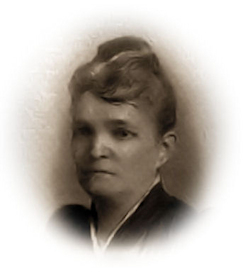
June 20, 1862.—As soon as our intended departure was announced, we were besieged by requests for all sorts of things wanted in every family—pins, matches, gunpowder, and ink. One of the last cases H. and Max had before the stay-law stopped legal business was the settlement of an estate that included a country store. The heirs had paid in chattels of the store. These had remained packed in the office. The main contents of the cases were hardware; but we found treasure indeed—a keg of powder, a case of matches, a paper of pins, a bottle of ink. Red ink is now made out of poke-berries. Pins are made by capping thorns with sealing-wax, or using them as nature made them. These were articles money could not get for us. We would give our friends a few matches to save for the hour of tribulation. The paper of pins we divided evenly, and filled a bank-box each with the matches. H. filled a tight tin case apiece with powder for Max and himself and sold the rest, as we could not carry any more on such a trip. Those who did not hear of this in time offered fabulous prices afterwards for a single pound. But money has not its old attractions. Our preparations were delayed by Aunt Judy falling sick of swamp fever.
Note: To protect Mrs. Miller’s job as a teacher in post-civil war New Orleans, her diary was published anonymously, edited by G. W. Cable, names were changed and initials were generally used instead of full names—and even the initials differed from the real person’s initials. (Read Dora Richards Miller’s biographical sketch.)
Village Life in America
June 19, 2022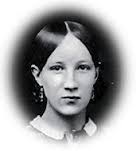
June 19.–Our cousin, Ann Eliza Field, was married to-day to George B. Bates at her home on Gibson Street. We went and had an elegant time. Charlie Wheeler made great fun and threw the final shower of rice as they drove away.
A Confederate Girl’s Diary
June 19, 2022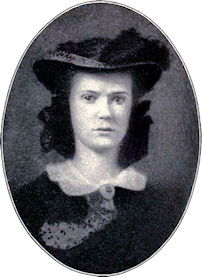
June 19th.
Miriam and I have disgraced ourselves! This morning I was quietly hearing Dellie’s lessons, when I was startled by mother’s shrieks of “Send for a guard – they’ve murdered him!” I saw through the window a soldier sitting in the road just opposite, with blood streaming from his hand in a great pool in the dust. I was downstairs in three bounds, and, snatching up some water, ran to where he sat alone, not a creature near, though all the inhabitants of our side of the street were looking on from the balconies, all crying “Murder!” and “Help!” without moving themselves. I poured some water on the man’s bloody hand, as he held it streaming with gore up to me, saying, “The man in there did it,” meaning the one who keeps the little grog-shop, though it puzzled me at the time to see that all the doors were closed and not a face visible. I had hardly time to speak when Tiche called loudly to me to come away, –she was safe at the front gate, – and looking up, I found myself in a knot of a dozen soldiers, and took her advice and retreated home. It proved to be the guard Miriam had roused. She ran out as I did, and seeing a gentleman, begged him to call the guard for that murdered man. The individual – he must have been a “patriot” – said he didn’t know where to find one. She cried out they were at Heroman’s; he said he did n’t believe they were. “Go! I tell you!” she screamed at last; but the brave man said he did n’t like to, so she ran to the corner and called the soldiers herself. O most brave man! Before we got back from our several expeditions, we heard mother, Lilly, Mrs. Day, all shouting, “Bring in the children! lock the doors!” etc. All for a poor wounded soldier! [continue reading…]
Rebel War Clerk
June 19, 2022
JUNE 19th.—To-day so many applications were made to the Secretary himself for passports to the armies, and beyond the lines of the Confederate States, that, forgetting the revocation of his former order, he sent a note into the Assistant Secretary, saying he thought a passport agent had been appointed to attend to such cases; and he now directed that it be done. Bledsoe came to me immediately, and said: “Jones, you’ll have to open a passport office again—I shall sign no more.”
Downing’s Civil War Diary.–Alexander G. Downing.
June 19, 2022
Thursday, 19th–Drill is now all dispensed with on account of the hot weather. But the men are kept busy at fatigue and picket duty.
War Diary of Luman Harris Tenney.
June 19, 2022
19th. Thursday. Went to the Commissary as usual at 9 A. M. Archie got thrown from his horse. Wrote to Fannie. Went bathing with Nettleton and Brownell. Talked Minnie and Professor. Two letters. Home and Fannie.
Robert M. McGill
June 19, 2022
Thursday, 19th.—Came orders for regimental baggage to be sent to Loudon. Not being able to go, was sent to hospital on College Hill.
(Note: picture is of an unidentified Confederate soldier.)
“All the prisoners and deserters that we get concur in saying that at least 10,000 have deserted since the evacuation.”–Army Life of an Illinois Soldier, Charles Wright Wills.
June 19, 2022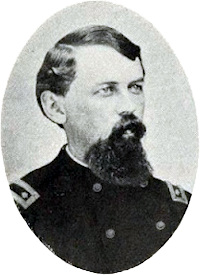
The following material contains wording that is offensive to many in the world of today. However, the work is provided unedited for its historical content and context.
Rienzi, Tishomingo Co., Miss., June 19, 1862.
This is one of the few days that remind one of Illinois, although there are very few nights that might not remind a Greenlander of his home. I think there has not been a night yet that I have not slept under three blankets, and there have been many nights that I would have used a dozen if I had had them. The natives say that ’tis the Gulf breeze that makes the air so cool after about 7 or 8 p.m. I wish that it would get along about eight hours earlier daily; but to-day there are clouds kiting about so o’erhead that the sun don’t amount to much only for light, and ’tis cool enough to make underclothing comfortable. The colonel, A. D. C. and myself visited the camp of the 7th Illinois yesterday at Jacinto. We found them surrounded with a brush parapet, felled trees, etc., ready as they said for a twelve-hour’s fight. They’d been visited by a scare. There is no enemy within 15 miles of them and hasn’t been. They are camped in the suburbs of a beautiful little town that fell in among the hills in a very tasty manner (for a Mississippi town). In one little valley near a fine residence there are three springs bubbling up in line and within a foot of each other, which are so independent that each furnishes a different kind of water. The first pure, cold, soft water without taste, another chalybeate, and the third, strong sulphur. The waters of the three fall into one little basin and run thence into a bathhouse twenty steps distant. There is a neat vine covered arbor over the springs with seats arranged within, and altogether ’tis a neat little place—good to water Yankee horses at. There were several gangs of negroes at work in the corn and [continue reading…]
Rebel War Clerk
June 18, 2022
JUNE 18th.—Lee is quietly preparing to attack McClellan. The President, who was on the battle-field, is very cheerful.
A Confederate Girl’s Diary
June 18, 2022
June 18th.
How long, O how long, is it since I have lain down in peace, thinking, “This night I will rest in safety”? Certainly not since the fall of Fort Jackson. If left to myself, I would not anticipate evil, but would quietly await the issue of all these dreadful events; but when I hear men, who certainly should know better than I, express their belief that in twenty-four hours the town will be laid in ashes, I begin to grow uneasy, and think it must be so, since they say it. These last few days, since the news arrived of the intervention of the English and French, I have alternately risen and fallen from the depth of despair to the height of delight and expectation, as the probability of another exodus diminishes, and peace appears more probable. If these men would not prophesy the burning of the city, I would be perfectly satisfied. . . .
Well! I packed up a few articles to satisfy my conscience, since these men insist that another run is inevitable, though against my own conviction. I am afraid I was partly influenced by my dream last night of being shelled out unexpectedly and flying without saving an article. It was the same dream I had a night or two before we fled so ingloriously from Baton Rouge, when I dreamed of meeting Will Pinckney suddenly, who greeted me in the most extraordinarily affectionate manner, and told me that Vicksburg had fallen. He said he had been chiefly to blame, and the Southerners were so incensed at his losing, the Northerners at his defending, that both were determined to hang him; he was running for his life. He took me to a hill from which I could see the Garrison, and the American flag flying over it. I looked, and saw we were standing in blood up to our knees, while here and there ghastly white bones shone above the red surface. Just then, below me I saw crowds of people running. “What is it?” I asked. “It means that in another instant they will commence to shell the town. Save yourself.” “But Will – I must save some clothes, too! How can I go among strangers with a single dress? I will get some!” I cried. He smiled and said, “You will run with only what articles you happen to have on.” Bang! went the first shell, the people rushed by with screams, and I awakened to tell Miriam what an absurd dream I had had. It happened as Will had said, either that same day or the day after; for the change of clothes we saved apiece were given to Tiche, who lost sight of us and quietly came home when all was over, and the two dirty skirts and old cloak mother saved, after carrying them a mile and a half, I put in the buggy that took her up; so I saved nothing except the bag that was tied under my hoops. Will was right. I saved not even my powder-bag. (Tiche had it in the bundle.) My handkerchief I gave mother before we had walked three squares, and throughout that long fearfully warm day, riding and walking through the fiery sunshine and stifling dust, I had neither to cool or comfort me.
Downing’s Civil War Diary.–Alexander G. Downing.
June 18, 2022
Wednesday, 18th–It is very hot, but the troops are in fine spirits. Some of the boys who were wounded at Shiloh, together with those who went home on furloughs on account of sickness, are now returning to their commands.