Tuesday, 16th–We drew some clothing today; I got a rubber poncho, which cost $2.50. It is about three by six feet, with eyelets every six inches all around the edges, so by four men going together in bivouac and putting their ponchos over a pole resting on two forks, they will have a roof that will turn rain better than any canvas roof. They are good, heavy rubber cloth.
American Civil War Chronicles
War Diary of Luman Harris Tenney.
September 16, 2022
Tuesday, 16th. A rainy, cold and dismal day. Brownell finished a little clamshell ring for me. I polished it up nicely. In the afternoon and evening read “John Brent.” Enjoyed it well. Never read a more thrilling story of a ride. The description of the horse Don Fulano, and his powers was grand. The horse seemed the hero of the tale. Went to town and testified against a prisoner taken while out with Major Burnett. I pitied his poor wife, in tears. Believed the man Union.
Robert M. McGill
September 16, 2022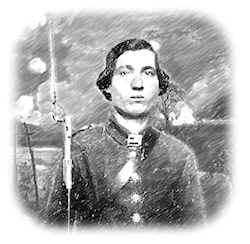
Tuesday, 16th.—Marched twenty-two miles and camped one mile north of Williamstown.
(Note: picture is of an unidentified Confederate soldier.)
Rebel War Clerk
September 16, 2022
SEPTEMBER 16th.—Intelligence from Missouri states that the Union militia have rallied on the side of the South.
Cross Antietam Creek and make a stand on hill adjacent.
September 16, 2022
Monday, Sep. 15, 1862—Regiment rest in field at 7 a. m. They need rest. Yesterday was a busy day and last night gave us rest. Cross Antietam Creek and make a stand on hill adjacent. An occasional artillery shot occupies the evening. Men in arms. I spent night with ambulances on vacant lot in Sharpsburg.
Sep. 16—Artillery begins at 8:30 a. m. After 11 firing ceases. We move our Brigade Hospital two miles in the rear.
Journal of Surgeon Alfred L. Castleman.
September 16, 202216th–The mystery is solved. At 8 o’clock yesterday morning, Harper’s Ferry capitulated, (report says, with eight thousand men, forty cannon, and one thousand two hundred horses,) and we have been for two days in sight, and marching less than five miles a day, by a circuitous route. It looks as if the old game is to be re-enacted. Who is there at Harper’s Ferry to be jealous of?
2 P. M.–Tremendous firing along the mountains to our right, some five miles distant. A rider has just arrived from that direction, and reports that Reno’s forces, to the number of ten thousand or fifteen thousand, has surrendered. I do not credit it, but if true, it would indicate a larger force in our front than I supposed, and will explain the necessity of our lying here idle, instead of going to Harper’s Ferry.
But it seems impossible that we could permit two surrenders in one day, in sight of us, and we lie all the while idle. Well, well; we are engaged with the enemy, and shall soon know the worst. Another arrival from Harper’s Ferry. He confirms the story of the surrender there, and says that Colonel Miles capitulated, almost without a fight, and that he was instantly shot by one of his own men. This last story I doubt, though he is certainly shot and mortally wounded. At night, Colonel Miles is dead.
Downing’s Civil War Diary.–Alexander G. Downing.
September 15, 2022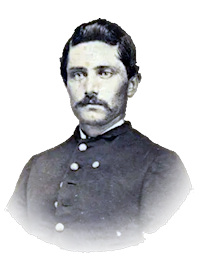
Monday, 15th–We pitched our tents and built our bunks today. It had rained all night and rained some more this afternoon. The men are not pleased with this camp ground, as it is low and level. There will be a great many on the sick list if we remain here. On account of the dry weather all summer, the springs no longer furnish the branch with running water, and we are compelled to get our drinking water from a stagnant pool. Our former camp here in Corinth, which we left in July, was on high ground and all had hoped that we would be permitted to occupy that spot, but we were disappointed in that—such is the life of a soldier.
War Diary of Luman Harris Tenney.
September 15, 2022
Monday, 15th. Okie and I went to town and got provisions for five days’ rations. Saw Haynes and went to his tent and took dinner with him. Had a good time. Read a letter from Fred Allen. Went into the hospital and visited Bigelow and Ohio boys. Saw Laundon and walked to camp with him. Full of fun as ever. Found Okie issuing rations. Helped during the rest of the afternoon.
Robert M. McGill
September 15, 2022
Monday, 15th.—Orders to cook rations and be ready to march by four to-morrow morning.
(Note: picture is of an unidentified Confederate soldier.)
Rebel War Clerk
September 15, 2022
SEPTEMBER 15th.—Our flag floats over the Capitol at Frankfort! And Gen. Marshall, lately the exile and fugitive, is encamped with his men on his own farm, near Paris.
Journal of Surgeon Alfred L. Castleman.
September 15, 2022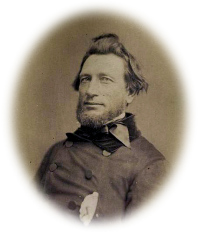
15th.–1 o’clock A. M.–I am now through dressing the wounds of those in my hospital. The next house to me is also an hospital, (a large church in the village of Burkettsville.) In it I hear the cries and moans of distress. To me, the sounds seem at this distance to be those of men neglected. God forbid that it be so, for they have plenty of Surgeons there.
Having, by the kind assistance of Doctor Garrett, a good and excellent physician of the village, got through with my dressings and seen my patients all asleep. I, in company with Doctor G., visited the other hospitals to offer our services to the Surgeons there, but we found the Surgeons had gone to bed, leaving the wounded to be cared for in the morning! I then returned to my hospital, and to my great gratification, found nearly every wounded man asleep, and this, notwithstanding they were wounded in all parts of the body–broken thighs, legs, feet, shot through the lungs, back, bowels. After they were dressed, the free use of anodynes and anasthætics had relieved the pain, and after a day of fatigue, danger and suffering, they were resting quietly.
**********
At 9 1-2 this morning, I was, at my earnest request, relieved from the care of hospital and permitted to return to my regiment.
A little circumstance occurred last night, which, as it may be important, I here journalize. A rebel Lieutenant was brought into my hospital to take care of his Captain, who was severely wounded. After I had got through my dressing, I fell into a conversation with him on the subject of the war and its probable results. He was well informed, intelligent, and communicative. During the conversation he quizzically asked me what I thought of the surrender of Harper’s Ferry! I replied, laughingly, that it would be time for me to think of it when it should take place. “But,” said he, “it has already taken place!” “When?” “About sun-down.” “How do you know?” “No matter; it is sufficient for us that it took place about sun-down.” His manner was assured and confident. What does it mean? Is there treason there, and has he had an inkling of it? This is a strange war, and a strange world. This noon we hear whispers that Harper’s Ferry is surrendered. At 9 o’clock this A. M., the firing there ceased. It could not have been surrendered at sun-down last night, as the Lieutenant stated; but has it been this morning? And if yes, had he any knowledge that it was to be, and some circumstances have occurred to delay the act? We must wait and learn.
But why did we not go yesterday to the relief of Harper’s Ferry, if it were in danger? We had whole divisions of men idle all day, and were within two hour’s inarch of the place? Had we another rival there to kill off? Why did we permit a whole transportation train to pass under easy range of our batteries, and escape without a shot? God forgive my suspicions as to our leaders, but preserve the country from their machinations–if they have any.
Downing’s Civil War Diary.–Alexander G. Downing.
September 14, 2022
Sunday, 14th–We started early this morning with General Crocker in command and marched fifteen miles without stopping to get a drink. But several of the men became overheated, for it was a dreadfully hot day and the roads were dusty. We reached Corinth at 1 p. m., and going out a mile south of town, stacked arms and remained there the rest of the day. We were nearly famished when we reached Corinth. Our road was on a pine ridge, hot and dusty, with a mile to water on either side, and it was utterly impossible for one to fall out of rank, get water, catch up and get back to his place in line. It was one of the hardest marches I have ever been on.[1] On passing through the town, by the college grounds, the young lady students worked hard at drawing water from the well and giving it to the men to quench their thirst. We bivouacked in a large cotton field, as our teams had not yet arrived with our tents. It commenced to rain about sundown and we lay on the ground without any protection.
[1] The fast march and doing without water so long was all uncalled for, as after we got to Corinth we did nothing but lie around.–A. G. D.
War Diary of Luman Harris Tenney.
September 14, 2022
Sunday, 14th. In the morning washed out some shirts, went to the creek and bathed and cleaned up generally. Mac Murray came up and spent the afternoon. He is a good boy. In the evening borrowed “Agnes of Sorrento” from Q. M. S. Mason and read till about 11 o’clock, by Capt. Welch’s permission. The boys were awake late, talking and making a noise. Col. complained about so much noise being made.
Diary of a Southern Refugee, Judith White McGuire.
September 14, 2022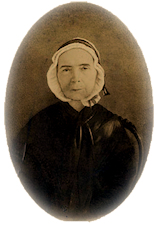
Sunday.—Just returned from church. Mr. K. gave us a delightful sermon on our dependence on God as a people. “When Moses held up his hand, then Israel prevailed; and when he let down his hand, then Amalek prevailed.” Oh, that our hands may always be “held up” for our cause and armies! Next Thursday (18th) is the day appointed by our President as a day of thanksgiving for our successes. His proclamation is so beautiful that I will copy it:
“To the People of the Confederate States:
“Once more upon the plains of Manassas have our armies been blessed by the Lord of Hosts with a triumph over our enemies. It is my privilege to invite you once more to His footstool, not now in the garb of fasting and sorrow, but with joy and gladness, to render thanks for the great mercies received at His hands. A few months since our enemies poured forth their invading legions upon our soil. They laid waste our fields, polluted our altars, and violated the sanctity of our homes. Around our capital they gathered their forces, and with boastful threats claimed it as already their prize. The brave troops which rallied to its defence have extinguished their vain hopes, and under the guidance of the same Almighty hand, have scattered our enemies and driven them back in dismay. Uniting those defeated forces and the various armies which had been ravaging our coasts with the [continue reading…]
Robert M. McGill
September 14, 2022
Sunday, 14th.—Rev. Kramer preached to-day; text, “Whatsoever thy hand findeth to do, do it with thy might.”
(Note: picture is of an unidentified Confederate soldier.)
Rebel War Clerk
September 14, 2022
SEPTEMBER 14th.—Our army has entered the City of Lexington, and the population hail our brave soldiers as deliverers. Three regiments were organized there in twenty-four hours, and thirty thousand recruits, it is thought, will flock to our standard in Kentucky.
General Garland is brought to his tent dead.
September 14, 2022
Sep. 14—Our Brigade goes out at 4:30 a. m. My horse being lame, I cannot go. General Garland is brought to his tent dead. I go to see him. A few days ago I saw him under different circumstances that will make me admire him forever. His Brigade was crossing a stream on a narrow footway. His men began to plunge into the little stream, up to their knees. He knew it would be bad for them to march with wet feet. He drew up his fiery horse in the road in the water and stayed there till his entire command had passed, pointing to the narrow bridge and shouting to the men, compelling them to take time and go over in single file. That manly form now lies before me silent but “speaking.” Hear Captain Wicker is wounded. At midnight wagons move circuitously to Williamsport. I start to my regiment and find everybody moving silently. Coming near Boonsboro, I feel lonely as I see not a form on the pike. Enter town and see Division after Division passing toward the west.
A Confederate Girl’s Diary
September 14, 2022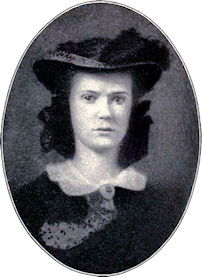
Sunday, September 14th, 1862.
I have been so busy making Lieutenant Bourge’s shirt that I have not had time to write, besides having very little to write about. So my industry saved my paper and spared these pages a vast amount of trash. I would not let any one touch Lieutenant Bourge’s shirt except myself; and last evening, when I held it up completed, the loud praises it received satisfied me it would answer. Miriam and Miss Ripley declared it the prettiest ever made. It is dark purple merino. The bosom I tucked with pleats a quarter of an inch deep, all the way up to the collar, and stitched a narrow crimson silk braid up the centre to hold it in its place. Around the collar, cuffs, pockets, and band down the front, the red cord runs, forming a charming contrast to the dark foundation. Indeed, I devoted the sole article the Yankees let fall from my two workboxes – a bunch of soutache – to the work. Large white pearl buttons completed the description, and my shirt is really as quiet, subdued, and pretty a one as I ever saw. I should first hear the opinion of the owner, though. If he does not agree with all the others, I shall say he has no taste.
I got a long sweet letter from Sophie on Friday that made me happy for the whole day. They were about leaving for Alexandria. I was glad to hear they would be out of danger, but still I was sorry they were going so far away. I have been laying a hundred wild schemes to reach Baton Rouge and spend a day or two with them, which is impossible now. Sophie writes just as she talks – and that means remarkably well, so I can at least have the pleasure of corresponding. At Dr. Carnal’s they will be out of the reach of all harm and danger; so I ought to rejoice. There is one thing in which Sophie and I agree, and that is in making Stonewall Jackson our hero. Talk of Beauregard! he never had my adoration; but Stonewall is the greatest man of the age, decidedly.
Still no authentic reports of the late battles in Virginia. I say late, referring to those fought two weeks ago. From the Federal accounts, glowing as they usually are, I should gather the idea that their rout was complete. I cannot imagine why we can hear nothing more from our own side. . . .
I think my first act on my return home will be to take a cup of coffee and a piece of bread, two luxuries of which I have been deprived for a long while. Miriam vows to devour an unheard-of number of biscuits, too. How many articles we considered as absolutely necessary, before, have we now been obliged to dispense with! Nine months of the year I reveled in ice, thought it impossible to drink water without it. Since last November, I have tasted it but once, and that once by accident. And oh, yes! I caught some hail-stones one day at Linwood! Ice-cream, lemonade, and sponge cake was my chief diet; it was a year last July since I tasted the two first, and one since I have seen the last. Bread I believed necessary to life; vegetables, senseless. The former I never see, and I have been forced into cultivating at least a toleration of the latter. Snap beans I can actually swallow, sweet potatoes I really like, and one day at Dr. Nolan’s I “bolted” a mouthful of tomatoes, and afterwards kept my seat with the heroism of a martyr. These are the minor trials of war. If that were all – if coarse, distasteful food were the only inconvenience!
When I think of what Lavinia must suffer so far from us, and in such ignorance of our condition, our trials seem nothing in comparison to hers. And think how uneasy Brother must be, hearing of the battle, and not knowing where we fled to! For he has not heard of us for almost two months. In return we are uneasy about him and Sister. If New Orleans is attacked, what will become of them with all those children?
Journal of Surgeon Alfred L. Castleman.
September 14, 2022
14th.–At 9 o’clock last night we took up our march across Catochtin Mountain. At 9 1-2, as we climbed the mountain side, the moon rose beautifully lighting up hill and valley, and shrub, and tree. ‘Twas all beautiful. The mountain air was brisk and cool. A march of four miles carried us over the mountain, and we bivouaced in Middletown Valley, one of the prettiest countries I ever saw, in the suburbs of the pleasant and flourishing little village of Jefferson. Here we got varied and various estimates of the strength of the enemy, who had passed through. We found here much evidence of loyalty, and were confirmed in the belief that Lee would be disappointed in his expectation of receiving fifty thousand recruits by his raid into Maryland.
Of all the States I have yet seen, Maryland bears off the palm. Its people, its hills, its valleys, its soil, its climate– all bespeak it one of the most favored States of the Union. The loyalty of its people, too, is intense, for whilst the sympathies of nine-tenths of them are with the people of the South, and opposed to our Administration, they positively refuse to join the insurgents in any illegal step. They would like to go out legally, but will fight for execution of the laws which confine them to the Union. The very limited success of Lee, in adding to his already large army in Maryland, is the strongest evidence of their sincerity. May God preserve this beautiful and loyal State from the ravages of actual war, and its people in their horror of treason and rebellion.
‘Tis again Sunday, and again we are fighting all around. How strange that so many of our big fights should occur on Sunday. Six miles to our right, and in full view, Generals Burnside and Sumner are fighting, in an attempt to force a strongly defended mountain pass, one mile and a half in our front, the advance of our own corps are trying to force another pass, (Crampton’s,) whilst seven miles to our left, the fight at Harper’s Ferry is raging. How much hangs on this day.
4 P. M.–Hurrah! Burnside has forced the pass at South Mountain, has crossed and is following up the retreating enemy. He has had a severe fight, with heavy loss on both sides. General Reno, I hear, is killed; another of our best men gone. Some are so uncharitable as to accuse General McClellan of wilfully and unnecessarily ordering him to a position from which escape from death was almost impossible. I will not believe it.
7 P. M.–Hurrah again! General Slocum, from our corps, has forced Crampton’s pass in our front, and is in pursuit. The enemy’s loss is heavy; ours comparatively slight. This is a terrible pass, and it seems wonderful that any army could force it against an opposing foe. It is in the shape of a triangle, the base being at the top of the mountain, the apex at the bottom. Into this narrow point our army had to crowd its way, up a mountain almost perpendicular, whilst musketry and artillery enfiladed our advancing lines at every point. Yet our men, with the cool determination of veterans, forced their way steadily through the Gap, up the precipitous sides of the mountain, and drove the enemy from his stronghold.
Again am I separated from my regiment. Sent for at 8 o’clock, to organize and take charge of another hospital for the wounded; but this time I do not complain. My regiment was not in the fight, and will not suffer by my absence, although I leave it without an Assistant Surgeon. How strange, that in no instance, since the battle of Williamsburg, have I had an assistant in the time of battle. Always sick or out of the way. Could I thus be absent without reproach? Not without self-reproach, at least.
Downing’s Civil War Diary.–Alexander G. Downing.
September 13, 2022
Saturday, 13th–We started at 7 o’clock and marched fifteen miles. Bivouacked for the night on the banks of the Tuscumbie river. It was very warm and dusty marching, but all held their places in the ranks. It is said that the rebels’ cavalry which kept up close to our rear guard, had something to do with keeping the men in line, for anyone falling out behind would surely have been taken prisoner.
War Diary of Luman Harris Tenney.
September 13, 2022
Saturday, 13th. In the afternoon a brigade left under General Salomon for Carthage. Dispatches from Col. Weir came, stating a fight was soon expected. I went down and got provisions for 88 men going from our regiment under Capt. Welch. No mail again. Read the latest papers.
Robert M. McGill
September 13, 2022
Saturday, 13th.—Skirmishing this evening on our right, between a squad of Federal cavalry and General Heth’s bodyguard; four Federals killed; nobody hurt on our side.
(Note: picture is of an unidentified Confederate soldier.)
Village Life in America
September 13, 2022
September 13.–Darius Sackett was wounded by a musket shot in the leg, at Maryland Heights, Va., and in consequence is discharged from the service.
Rebel War Clerk
September 13, 2022
SEPTEMBER 13th.—Buell has impressed 10,000 slaves, and is fortifying Nashville.
Journal of Surgeon Alfred L. Castleman.
September 13, 2022
Saturday, 13th.–Moved this morning at 7, leaving Frederick behind us. At 8, crossed the Monocacy, (a beautiful stream,) at Buckeytown, Maryland. Here heavy firing in the direction of Frederick, but as the day advances, swinging around towards Harper’s Ferry, from which we infer that Burnside is driving the enemy. Burnside is one of our reliable men, and rarely fails in what he undertakes. The enemy has been promised that if he will come in force into Maryland, he will get fifty thousand recruits from the State. He has come. Will the promise be met? A few days will tell. We too bear more towards the Ferry; I hope to intercept the retreat. But we move more slowly. Why? God forbid that our General, so rapidly rising, should, as he approaches danger, fall into his old habit, and disappoint all of our new born hopes. We laid still a long time at Buckeytown, then moved slowly forward for two miles, having made only four miles march to-day. At 9 P. M., as I write this, we are called to move, and the journal of to-morrow must tell the events of the night.