Diary of Horatio Nelson Taft.

Diary of US patent clerk Horatio Nelson Taft.

Washington Saturday Jan’y 3, 1863

We could not have finer weather, the air is soft and balmy as May. It is much like a northern Indian summer. The same blue haze rests upon the horizon. The roads and fields are dry and everything (out doors) invites one to make an excursion. But the beautiful groves on the hilltops have an ominous look even on this side of the River. Everything bears the Mark of the Camp. On the Virginia side of the River, the beautiful groves themselves have nearly all been destroyed to give a good and unobstructed sweep to the cannon in the Forts which crown the Hill Tops. War, like a destroying angel, has passed over the fair fields, and the hills and valleys of the “old dominion.” Rebellion has brot a bitter cup to her lips. War, like the dread Sirocco, has swept over her fields, leaving them desolate. A terrible battle has been raging near Nashville Tenn. for the past two or three days. We get no definite news from there tonight and do not yet know the result. But from all accounts it is the bloodiest battle of the War yet fought. Frank must be yet in the Hospital from his wounds rcd on the 8th Dec at Franklin. We may expect active operations now in the South West. Vicksburgh I think is now in our hands, if not it will soon. I wrote home today, sending a Draft for $50. I went up to the Navy Yard after office hours and took dinner at Mr Angels. Spent an hour or two very pleasantly. His Brother from NY City was there, a very shrewd inteligent man. I walked back to my lodgings, some 2½ miles. Mr Angel moves to Dutchess Co NY this month, He having purchased a farm there.

0 comments

Through Some Eventful Years

Through Some Eventful Years by Susan Bradford Eppes
Susa Bradford Eppes

January 3rd, 1863.—My dear, dear Grandpa is dead. I loved him so well and now I will never see him again. Mother was all ready to start to North Carolina today but a telegram came telling the sad news.

Mary Eliza died in the night and she will be buried here tomorrow. There is trouble and sorrow on every side. It proved to be whooping cough poor little Mary Eliza had and Mattie and I have taken it. I thought it was a baby disease but it seems grown people can have it.

Our men in camp are suffering for blankets. Mother has sent all of hers and she has several of the women on the place at work washing and carding wool, to make comforts to take the place of the covering she has sent to the army. She has already sent all the linen sheets to the Reid Hospital in Richmond; not as sheets but rolled in bandages for dressing wounds. We have used most of the table cloths to scrape lint, for this blockade cuts us off from any supplies for the sick or the wounded.

Father has taught Nan to make salve and we ship it every week. She keeps the pot of salve going all the time for our poor soldiers. They need so much and we can do so little.


Susan Bradford is 16 years old when this entry was made.

0 comments

A Rebel War Clerk’s Diary

Civil War Day-by-Day
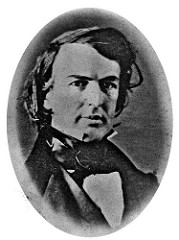
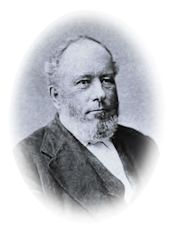
A likeness of Jones when he was editor and majority owner of the Daily Madisonian during President John Tyler’s administration.

JANUARY 3d.—To-day we have a dispatch from Vicksburg stating that the enemy had re-embarked, leaving their intrenching instruments, etc., apparently abandoning the purpose of assaulting the city. This is certainly good news.

Gen. Stuart did not cross the Potomac, as reported in the Northern press, but, doubtless, the report produced a prodigious panic among the Yankees. But when Stuart was within eight miles of Alexandria, he telegraphed the government at Washington that if they did not send forward larger supplies of stores to Burnside’s army, he (Stuart) would not find it worth while to intercept them.

Capt. Semmes, of the Alabama, has taken another prize—the steamer Ariel—but no gold being on board, and having 800 passengers, he released it, under bonds to pay us a quarter million dollars at the end of the war.

A large meeting has been held in New York, passing resolutions in favor of peace. They propose that New Jersey send a delegation hither to induce us to meet the United States in convention at Louisville, to adopt definitive terms of peace, on the basis of the old Union, or, that being impracticable, separation. Too late!

0 comments

Diary of Horatio Nelson Taft.

Diary of US patent clerk Horatio Nelson Taft.

Washington Friday Jan’y 2nd 1863.

Another most delightful day. The New Year commences very smilingly. May it be an indication of the future fortunes of our Country and may Peace through our whole land smile as brightly long before we see the last of 1863. It is reported tonight that a great Battle was fought yesterday in Tennessee betwen Rosecrantz & Joe Johnson, result not known. Genl B F Butler is serenaded tonight at “Willards.” He has just arrived from New Orleans, being relieved by Genl Banks. Genl McClellan is also here again before the courts of enquiry as a witness. It is rumored that He is to take Stantons place as Sec’y of War. Hope it is true. The Avenue seems to be more thronged than ever afternoons. Everybody is ‘out” these pleasant evenings either riding or walking and everything is seen from the Millionare to the beggar. The carriages of Foreign Ministers, of Cabinet Ministers are usualy seen in motion, and the Presidents carriage with its tall driver & footman one will frequently see standing in front of some Merchants door while Mrs L. sits in her seat and examines the rich goods which the obsequious Clerk brings out to her. I called at Mr Jordans this evening a few minutes and spent an hour or two with Chas & Sallie. “Puss” Woodward the youngest daughter was married last night unbeknown to her Father to a Mr A Lieb a clerk in the Land office, a foolish pair.

0 comments

Robert M. McGill

Robert M. Magill – Personal Reminiscences of a Confederate Soldier Boy, 39th Georgia Regiment of Infantry

Friday, 2d.—Passed through very poor country. Crossed Black Warrior River, 2 P. M.


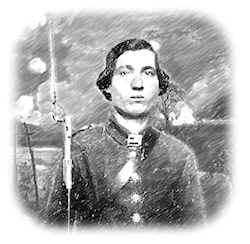
(Note: picture is of an unidentified Confederate soldier.)

0 comments

0

Civil War Day-by-Day
Charles Lynch

January 2d. Late last night, our second night out, pickets began firing. We were called out and soon had line formed. The supposed enemy proved to be Union scouts with orders for the Colonel to return to Baltimore. The enemy did not come into Maryland. The command was complimented for the way it turned out into line ready for duty. This morning, in line by the railroad waiting for the train. After a long wait in the cold the dirty train of box cars came along which we soon boarded. On to Baltimore. Arriving in the city, ordered to the west end, going into camp in Stuart’s woods. A surprise and disappointment as we expected to return to Camp Emory, our good quarters, in good warm barracks. Many disappointments come to soldiers.

In our camp was located Battery L, 5th U. S. Regulars. The battery boys did not like being inside the guard line of volunteers. Would run the guard line, making trouble for us. A sergeant of the battery, under the influence of drink, attempted to run the guard. Was halted, grabbed the sentinel’s musket, resulted in the sergeant’s being badly wounded. The wooden plug in the muzzle, with the bullet, passed through the sergeant’s body. He was not killed. (After a time he recovered.) After that event the battery boys and the 18th Regiment were friends. All were sorry over the event. No one blamed the sentinel. Cold rain and snow making the life of a soldier a very disagreeable one in tents, sleeping on the ground. Deep mud and very sticky all through our camp.

0 comments

War Diary of Luman Harris Tenney.

War Diary of Luman Harris Tenney.

2nd. Friday. Issued bread and beef. Read some. In the afternoon rode to town. Went up into the Senate and heard the big-bugs spout. Went to Quartermaster and selected some pants. Crabbed fellows.

0 comments

Downing’s Civil War Diary.–Alexander G. Downing.

Diary of Alexander G. Downing; Company E, Eleventh Iowa Infantry

Friday, 2d–We are now on less than half rations and the outlook for anything better in the next few days is not good, although a train was expected to come through from Memphis today.[1] The railroad east and west from us has been torn up; the rebel cavalry seem to be able to destroy it as fast as we can repair it.


[1] The train the day before did not have provisions.—A. G. D.

0 comments

A Rebel War Clerk’s Diary

Civil War Day-by-Day
A likeness of Jones when he was editor and majority owner of the Daily Madisonian during President John Tyler’s administration.

JANUARY 2d.—A dispatch from Gov. Harris gives some additional particulars of the battle near Murfreesborough, Tenn. He says the enemy was driven back six miles, losing four generals killed and three captured, and that we destroyed $2,000,000 commissary and other stores. But still we have no account of what was done yesterday on the “extreme left.”

Gen. Stuart has been near Alexandria, and his prisoners are coming in by every train. He captured and destroyed many stores, and, up to the last intelligence, without loss on his side. He is believed, now, to be in Maryland, having crossed the Potomac near Leesburg.

The mayor of our city, Jos. Mayo, meeting two friends last night, whom he recognized but who did not recognize him, playfully seized one of them, a judge, and, garroter fashion, demanded his money or his life. The judge’s friend fell upon the mayor with a stick and beat him dreadfully before the joke was discovered.

The President was at Mobile on the 30th December, having visited both Murfreesborough and Vicksburg, but not witnessing either of the battles.

We are in great exaltation again! Dispatches from Gen. Bragg, received last night, relieve us with the information that the stronghold of the enemy, which he failed to carry on the day of battle, was abandoned the next day; that Forrest and Morgan were operating successfully far in the rear of the invader, and that Gen. Wheeler had made a circuit of the hostile army after the battle, burning several hundred of their wagons, capturing an ordnance train, and making more prisoners. Bragg says the enemy’s telegraphic and railroad communications with his rear have been demolished, and that he will follow up the defeated foe. I think we will get Nashville now.

0 comments

Robert M. McGill

Robert M. Magill – Personal Reminiscences of a Confederate Soldier Boy, 39th Georgia Regiment of Infantry

January 1st.—Left banks of the Tennessee and marched up Sand Mountain.


(Note: picture is of an unidentified Confederate soldier.)

0 comments

0

Civil War Day-by-Day
Charles Lynch

January 1st. When off picket duty try to keep comfortable by the picket fires and chopping wood for the large camp fire just outside the church. No place in the church for fires.

0 comments

0

Civil War Day-by-Day

New Orleans, January 1st, 1863. Nothing of importance has occurred this day.

0 comments

A Confederate Girl’s Diary

Civil War Day-by-Day

January 1st, Thursday, 1863.

1863! Why I have hardly become accustomed to writing ’62 yet! Where has this year gone? With all its troubles and anxieties, it is the shortest I ever spent! ’61 and ’62 together would hardly seem three hundred and sixty-five days to me. Well, let time fly. Every hour brings us nearer our freedom, and we are two years nearer peace now than we were when South Carolina seceded. That is one consolation. . . .

I learn, to my unspeakable grief, that the State House is burned down.

0 comments

War Diary of Luman Harris Tenney.

War Diary of Luman Harris Tenney.

Friday, Dec. 28th, 1862, till Jan. 1st, 1863. Received and answered home letters. Kept at my old duties of Com. Sergt., not very arduous. Delos went home, having received a telegram that his presence was needed there. They had a real family gathering of friends from east, south and west. Came back the 31st and made us most homesick. Wrote a letter, a good one too, to Will, intending to send it by C. G. F. but he did not let me know when he left, so I destroyed it, getting too old.

Well, the year as a whole has passed much more rapidly and pleasantly than I anticipated a year ago. To be sure I never could be satisfied to spend a life in such service, still I have rather enjoyed the life I have been leading, because a sense of duty prompted me to it. My sufferings have been light indeed.

Of one thing I am sure. Had I spent the year at home, though I would have enjoyed it much, I would have been a poor, frail, sickly boy longing for death to come quickly and suddenly. Nearly so I felt January last. I hoped that health would come quickly or that by the fate of war my life would be sacrificed. A lingering death I have always had a horror of. Even now did I know that my fate were to die of consumption 8 or 10 years hence or to be shot in battle in six months, I should prefer the latter I believe. In fact, I have no desire to live a frail dependent boy any length of time. I presume this feeling has influenced me greatly in going upon so many expeditions, when I have been where I need not have gone at all. I have felt that this time I can go as well as any one else and if I fall, the world loses nothing, if somebody else fell, the contrary. Still I never went where bullets were flying but I thought seriously of my past life, my preparation to die. Sometimes there would be a hesitation, but only for a minute.

February, Independence.

March, Platte City, Fort Scott.

April, Carthage, Horse Creek, Neosho, Cowskin Prairie.

May, Fort Scott, Tola.

June, On the march to Indian Territory.

July, Cabin Creek.

August, Fort Scott, Lone Jack.

September, Springfield, Mo.

October, Sarcoxie, Grandby, Newtonia, Coalbed.

November, Arkansas, Pea Ridge, Bentonville, Maysville, The Mills, Osage Springs, Jones Mills, Fayetteville, Tannery, Boonsboro, Boston Mountains, Cane Hill.

December, Fort Scott, Leavenworth, Ohio.


Columbus, Ohio

Jan. 1st. In Camp Chase. Charlie went home and D. R. H. returned to camp. Saw D. R. and John Devlin. Brought a note and stick of candy from home.

0 comments

This war has been the death of a great many old ladies…

Journal of Meta Morris Grimball
Meta Morris Grimball

1 January

       This is New Years Day. I feel most thankful for all the unmerited mercies, we have had troubles, & losses, but how much worse they might have been. Through all this dreadful war we have as yet been spared, how long that may be, O! Lord thou knowest.

       We have had a most plentiful day, for breakfast, buttered eggs, hot rolls, butter, & sausages, tea, white sugar. For dinner a Turkey, ham, soup, stewed Beef, rice, a Batter pudding, and sauce, for Tea short cake.—

       We visited the Wilkinses, found them as usual, I sent her a present of some Beef, & 4 quarts of Peas this morning,—& Mrs Irwin a cup of sugar Loaf, some tea, a quarter of a lb, & some spices. She sent me a piece of butter.

       The Porters to day had a sale of their furniture, and are going off tomorrow. morning they all came over to bid us farewell & we kissed, and had kind words of adieu. Mrs Atkinson, a lady from George Town the Mother of Mrs Porter, is a fine looking woman. She lost one of her sons in the 2d battle of Manassas. Old Mrs Porter is a very artistic old girl, and gives the impression of acting for effect. Mr Porter seems to have the affection of his congregation.—I hope we shall soon be able to move ourselves.—

       The nearest neighbor we have on our side of the College is a Mrs Owens whose husband drinks deplorably, & is the boldest deserter to be found. He ought to be in Columbia with the conscritps from here, walks up & down in his uniform, and waits to be arrested. Sometimes he is brought home in a cart, perfectly drunk, sometimes he crawls in on all fours, they have a farm, a horse, & until lately 2 negroes hired, he paid the wages so irregularly that they have been recalled. The wife has 5 little children, takes in work, is a Mantua maker, spins, weaves, dyes, clothes children, & husband, is pretty, young & cheerful looking, always well dressed, the farm has a bunch of sage, & 3 or 4 cabbages, to keep them well and fat, but she buys corn & Beef, and they look very well indeed, even the drunken husband.—

       This morning the young men from the College rode about the Village, dressed up fantastically, one an old woman, one a lady in a riding dress, the rest in different ways, they came up here, Gabriella was very much amused with them.

       Mrs H Stevens has returned, but is kept at home by a cold. Col. Clement Stevens has lost his wife, & 2 children from Dyptheria. Mrs Bee, the wife of our Gen who died on the first field of Manassas, has lost both her children of the same disease. This is Pendleton where these deaths took place.—

       Berkley writes that his Christmas passed very pleasantly, they had a fine breakfast, of Opossum, Partridges, corn bread, & butter. A dinner with company.—In the Evening Theatricals burlesque on the Ghost Scene in Hamlet. The dying scene of Lady Macbeth, and then a piece called the stolen pig, a man comes to the Captain of the Company complaining of having lost a pig, & says his negro, Cuffy, saw who took it. The Court Martial is arranged and the whole company called out, and Cuffy is made to point to the man who stole the pig. The part of the negro is played by Simons; and to the great delight of the negroes present, composed of teamsters, & servants there was music between the acts. Berkley lead the Orchestra, which consisted of 2 Violins, a triangle, bones, a drum. The end of the play is that the man is sentenced to death, and dies like Othello.

       John has had a very tedious time with a boil on his leg, preventing his enjoying the dancing & ladies society he has found so pleasant in Mobile.—

       Received a nice letter from Papa he writes in better spirits.—

       This war has been the death of a great many old ladies, Mrs Pinckney, Mrs Hamilton,  (Mrs. Bowen added in pencil) We heard this evening that Mrs Wragg, the wife of Dr W. who had his house just completely fixed up, before the fire, and lost it, after passing through the summer in Pendleton, has been taken to Charleston in a confirmed melancholy.—

       When the war is ended we will hear of many terrible private calamities that are now lost sight of in view of the great struggle going on.—

       Old Miss Toomer, the Aunt of old Mrs Porter, has to be left up here with Miss Charlotte Toomer, she is 82 & bed ridden. There are still vestages of great beauty, she shewed us her minature taken when 19, a very sweet picture. Is fond of society, and now dying of consumption. It seems in early life she was a gay heedless girl, and exposed herself to scandalous remarks on account of her free manners with a Col. Byrn, & so with all her gifts of beauty & sprightliness, hers has been a lost life.—She now tells her friends to pray that she may be taken away. The nature of her illness makes her room very disagreeable; poor old lady how sad a speticle.—
0 comments

Downing’s Civil War Diary.–Alexander G. Downing.

Diary of Alexander G. Downing; Company E, Eleventh Iowa Infantry

Thursday, 1st–We have become somewhat indifferent about keeping our camp in the best possible order, for we have been disappointed so often in soon having to leave a camp which we took pains to build. We have, however, fairly good bunks in our tents, made of brush and leaves. Our duties are very laborious here, for besides the regular picket duty, we are almost constantly at work repairing the railroad. Today four companies were on picket patrol and at work repairing a railroad bridge. I was on picket duty with the countersign “helmet.” The army is on half rations, but we expect more soon, as a provision train came through today from Memphis. The Third Division went to Memphis. The weather is clear and cool.

0 comments

Diary of David L. Day.

David L Day – My diary of rambles with the 25th Mass

The New Year.

January 1, 1863. By the blessing of God we have entered the portals of another year. Who knows what storms within it hide? Who can tell how many of us will enter on another year? but let us not despond; let us look with bright hopes to the future, going manfully forward, overcoming all obstacles in our path. We know the hardships, privations and dangers through which we have passed the last year, perils by sea and perils by land, meeting death in a thousand forms, but by an unseen hand have been brought safely through. It has now been fifteen months since our regiment was organized, and we then thought that by this time the trouble would be over and the rebellion would have become a thing of the past. But not so; it seems to have taken deeper root and there is no telling when it will end. It is true our armies have met with many successes and have also met with some reverses; the army of the Potomac has met with nothing but disaster from the first and will probably meet with nothing else until let alone by the war office at Washington. The enemy has a number of cruisers afloat making havoc with our merchant marine, and every success of their army inspires them with fresh hope and courage. I am reminded of what my new-found friend here in town told me a few days after we came here, that I would, if nothing happened to me, serve out my three years and could then re-enlist. I thought then the man was crazy, now I am not quite sure but he was the better prophet of the two.

0 comments

Diary of Horatio Nelson Taft.

Diary of US patent clerk Horatio Nelson Taft.

Washington Thursday Jan’y 1st 1863. Diary.

The New Year has opened beautifully, it has been a mild and bright day. The Departments of the Govt have been (as usual) closed, and the whole City (Males) went at 12 o’clock to pay their respects to the President. The Foreign Ministers and the officers of the Army and Navy paid their respects before 12. I met Genl Halleck at Mr Sec’y Chases, Genl Heintzelman and Genl Meigs at Mr Sewards, Comodore Smith and Admiral Foot at Mr Sec’y Stantons, “lesser lights” of both Army and Navy were quite plenty. The expected Proclamation is “out” tonight in the “Star.” It carries out the one issued a hundred days ago. Mr Lincoln looks quite as well as he did a year ago. I have seen him frequently during the year. In the summer he used to ride out with a body guard of ten or twelve horsemen (Cavalry) round his carriage. I think he has dispensed with that of late. That was not done at his desire but at the desire of friends who feared for his life. Mr Seward receivedin State.” Six Policemen at and near the Door & Hall, and a “Gentleman Usher” at the parlor door anounced the name of each visitor in a loud voice as he entered the room. I suppose it was “done up” in the English style. No particular news today but indications of Army movements and more Battles. Assisted some today at an extra and realy luxurious Dinner given to the Patients at the Ascension Church Hospital. No choicer Bill of fare was to be found on any table in the City. The men were feasted on the greatest delicacies to their hearts content. I was in at “Willards” this evening, counted forty pairs of Shoulder Straps there at one time. It is quite disgusting to see (every night) such neglect of duty!!!

0 comments

A Rebel War Clerk’s Diary

Civil War Day-by-Day
A likeness of Jones when he was editor and majority owner of the Daily Madisonian during President John Tyler’s administration.

JANUARY 1st, 1863.—This first day of the year dawned in gloom, but the sun, like the sun of Austerlitz, soon beamed forth in great splendor upon a people radiant with smiles and exalted to the empyrean.

A letter from Gen. H. Marshall informed the government that Gen. Floyd had seized slaves in Kentucky and refused to restore them to their owners, and that if the government did not promptly redress the wrong, the Kentuckians would at once “take the law into their own hands.”

We had a rumor (not yet contradicted) that the enemy, or traitors, had burned the railroad bridge between Bristol and Knoxville, cutting our communication with the West.

Then it was said (and it was true) that Gen. Lee had sent his artillery back some 30 miles this side of the Rappahannock, preparatory to going into winter quarters. But this was no occasion for gloom. Lee always knows what is best to be done.

Next there was a rumor (not yet confirmed, but credited) that Stuart had made another of his wonderful reconnoissances, capturing prisoners and destroying much of the enemy’s stores beyond the Rappahannock.

Then came a dispatch from Bragg which put us almost “beside” ourselves with joy, and caused even enemies to pause and shake hands in the street. Yesterday he attacked Rosecrans’s army near Murfreesborough, and gained a great victory. He says he drove him from all his positions, except on the extreme left, and after ten hours’ fighting, occupied the whole of the field except (those exceptions!) the point named. We had, as trophies, thirty-one guns, two generals, 4000 prisoners, and 200 wagons. This is a Western dispatch, it is true, but it has Bragg’s name to it, and he does not willingly exaggerate. Although I, for one, shall await the next dispatches with anxiety, there can be no question about the victory on the last day of the bloody year 1862. Bragg says the loss was heavy on both sides.

I noticed that one of the brass pieces sent down by Lee to go to North Carolina had been struck by a ball just over the muzzle, and left a glancing mark toward the touch-hole. That ball, probably, killed one of our gunners.

0 comments

“The Lord reigneth, let the earth rejoice!”

Woolsey family letters during the War for the Union

On the 22nd of September, 1862, a gleam of light had shone, the President had issued “his preliminary proclamation of emancipation; and now on January 1st, 1863 came the announcement of full liberty to the captives.

Extract from the Proclamation.

“I, Abraham Lincoln, President of the United States, by virtue of the power vested in me as Commander-in-Chief of the Army and Navy of the United States, . . . and as a necessary war-measure, . . . do order and declare that all persons held as slaves (within the states in rebellion) are, and henceforward shall be free.”

The passage by Congress of the 13th Amendment to the Constitution followed, extending emancipation to all parts of the United States and its territories.

Abby Howland Woolsey writes, Jan., ’63:

I improved yesterday to my satisfaction in reading the President’s proclamation. “The Lord reigneth, let the earth rejoice!”

0 comments

“It is sad to look back on the year just closed. We have suffered much; many good men have gone to their long home.”–Letters from Elisha Franklin Paxton.

Elisha Franklin Paxton – Letters from camp and field while an officer in the Confederate Army

Camp Winder, Caroline Co., Va., January 1, 1863.

I have not heard from you since the battle. Since then we have had a quiet time and everything looks like rest for some time to come. The men are fixing up their shanties for the winter. They seem happy and contented. It is sad to look back on the year just closed. We have suffered much; many good men have gone to their long home. Our loss has been 1220 in killed and wounded– more men than we could turn out for a fight to-day. Out of the fifteen field officers elected last spring, five have been killed and six others wounded, leaving only four that have escaped unhurt. In these losses are many whom we were always accustomed to regard as our best men. I published to-day an order naming our camp, which gives some facts of our history, and I send you a copy of it.

How are the matters at home? In the excitement of active work, I have too much to do to harass myself with idle dreams of home; but now since we are at rest I cannot keep my mind from it. I feel there is nothing which I would not give to be with you for an hour or a day. I could have gone home and have spent a couple of weeks when I received my appointment, before taking command; but I really thought the brigade was sadly in need of a commander, and that it was my duty to stay. Now I am fixed and must apply for leave just as any private in the ranks. I know it would not improve my standing with my superior officers to ask for a leave, but still I feel very much tempted to do it. If the snow falls deep, and we have such severe weather as to preclude the possibility of active work, my homesick malady may get the better of me. I would like to see you, Matthew, Galla and the baby. Have the children forgotten me? It seems so long since I saw them. [continue reading…]

0 comments

Robert M. McGill

Robert M. Magill – Personal Reminiscences of a Confederate Soldier Boy, 39th Georgia Regiment of Infantry

Wednesday, 31st.—Crossed river at 9 A. M. Wind rose so high could not run ferry boat. Continued so throughout the day, and so 1862 passed away.


(Note: picture is of an unidentified Confederate soldier.)

0 comments

0

Civil War Day-by-Day
Charles Lynch

December 31st. We passed a very uncomfortable night in old dirty box cars. After a ride of sixty miles we reached a station known as Monrovia very early in the morning, just before daylight. Pickets were soon posted on the roads crossing the railroad. A sharp lookout was kept. After daylight we took possession of a small Quaker church and sheds for our quarters. We were obliged to, as we did not have any tents. Started off in light marching order. Most of the inhabitants were Quakers, very fine people. Kind to us. The warm rain turned to snow with freezing weather, making us feel very uncomfortable for picket duty.

0 comments

Downing’s Civil War Diary.–Alexander G. Downing.

Diary of Alexander G. Downing; Company E, Eleventh Iowa Infantry

Wednesday, 31st–We left our bivouac at 6 a. m. and entered the town of Moscow at 7 and were then ordered to move to Lafayette, Tennessee, on the Memphis & Charleston Railroad thirty-five miles east of Memphis, where we are to guard the railroad. The town is located on the Wolf river and is surrounded by heavy timber.

0 comments

“…success of our Army at Fredricksburg and the account of the difficulties at the North give us evidence of an end to this dreadful strife: but the change comes so slowly…”

Journal of Meta Morris Grimball
Meta Morris Grimball

31 Decr

       This is the last day of this year—the success of our Army at Fredricksburg and the account of the difficulties at the North give us evidence of an end to this dreadful strife: but the change comes so slowly, ones wishes are not realized. Patience will have its perfect work.

       Elizabeth had a charming Christmas day, owing to the kindness of Miss Legg. She was invited to spend the day with Mrs Dawkins, at Union, where there is a very nice Episcopal Church, the only difficulty was the rising so early to go by the cars. E. was up in time, and came back in the evening, unexpectedly accompanied by her father, who got a furlough, and is now with us. E. had a charming day. Mrs D. is an energetic woman, and having no children her self , takes great interest in other peoples children. There was a plentiful breakfast on their arrival, and then the Christmas tree for the children, with little gifts made by kind hands. After the tree they practised the Church Music, then went to Church, where E. took her place in the Choir, they returned to Mrs D’s, had a real Christmas dinner, and came home by the cars in the afternoon. We went to hear Mr Whiteford Smith preach in the morning, had a fine sermon, paid a visit to the W’s, came home to a dinner of Roast pig and a pudding, which we all enjoyed. I have my Turkey for New Year’s day. In the evening short cake, and a great deal of pleasant talk.—Just now we have some sausages, and I am glad Mr Grimball is with us to enjoy them.

0 comments