10th. Saturday. Robinson and I issued rations for ten days. Col. Abbey went home on the morning train, also Dan Arnold. In the afternoon had baked beans. Capt. Nettleton returned. Left Melissa with his friends near Delaware. Charlie F. returned.
American Civil War Chronicles
Downing’s Civil War Diary.–Alexander G. Downing.
January 10, 2023
Saturday, 10th–Two trains loaded with provisions came through on the railroad from Memphis, and we drew five days’ full rations. This was the first time that we drew full rations in forty days, but we have no way of drawing extra clothing, and our knapsacks in storage again failed to come today. The First Brigade passed by on its way to Memphis.
Diary of Horatio Nelson Taft.
January 10, 2023
Washington Saturday Jan’y 10th 1863
It has been a miserable cold rainy day, tonight it has poured right down since dark and has not ceased raining all day. I [ran?] to my room from the office after three o’clock and by virtue of rubbers, cloak, and umbrella did not get wet much. One of our Boarders here is named George Johnson, an Englishman who was in the Crimean War and what is more was one of the immortal “Six hundred” which made the celebrated “Charge at Balaclava.” He is about 28 years old, very modest & I should think a thorough Soldier. He is Captain in the Penna Cavalry. We do not dine till five o’clock, that is too late for me. It suits Englishmen to eat their dinner after dark. But not Americans. However our dinners are very nicely gotten up and the dishes are of the best in market & well cooked. There is said to be small pox occasionaly breaking out in the Hospital over our heads in the Patent office. That is not a very pleasant idea. Such cases (I presume) are immediately sent off to the irruptive Hospital at Kalorama, the former home of the celebrated Joel Barlow of revolutionary memory. Barlow was Minister to France afterwards and died on his way to meet the Emperor Napoleon at Wilna in 1812. No news of importance. “All quiet on the Potomac.” Banks getting ready at Baton Rouge to go up to Vicksburgh to help Sherman take that stronghold. Rosecrans is in pursuit of the Rebels since the Battle at Murfreesboro. Some movement is said to be on foot from Suffolk V.A. towards North Carolina. I could not go out tonight on account of the rain to take my accustomed walk. I fear I shall not be able to sleep well tonight.
A Rebel War Clerk’s Diary
January 10, 2023
JANUARY 10th.—We have news from the West, which is believed to be reliable, stating that Bragg captured 6000 prisoners altogether in his late battles; took 30 cannon, 800 stand of arms, and destroyed 1500 wagons and many stores. The estimated loss of the enemy in killed and wounded is put down at 12,000. Our loss in killed and wounded not more than half that number.
To-day we have official intelligence confirming the brilliant achievement at Galveston; and it was Magruder’s work. He has men under him fitted for desperate enterprises; and he has always had a penchant for desperate work. So we shall expect to hear of more gallant exploits in that section. He took 600 prisoners.
We have news also from Vicksburg, and the city was not taken; on the contrary, the enemy had sailed away. I trust this is reliable; but the Northern papers persist in saying that Vicksburg has fallen, and that the event took place on the 3d inst.
Six hundred women and children—refugees—arrived at Petersburg yesterday from the North. They permit them to come now, when famine and pestilence are likely to be added to the other horrors of war! We are doomed to suffer this winter!
Robert M. McGill
January 9, 2023
Friday, 9th.—Marched sixteen miles to-day through piney woods country.
(Note: picture is of an unidentified Confederate soldier.)
War Diary of Luman Harris Tenney.
January 9, 2023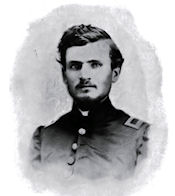
9th. Friday. Got the rations up from the post Commissary, ready for issue the 10th. Was kept quite busy. Finished “Canoe and Saddle” and read in January Atlantic.
Downing’s Civil War Diary.–Alexander G. Downing.
January 9, 2023
Friday, 9th–It is reported in camp that we are soon to go to Memphis for duty. Several cases of smallpox have broken out in the camp of the Sixteenth Iowa Regiment. All who had not been vaccinated before had to take their medicine. The country along the Charleston & Memphis Railroad from Memphis to Iuka, a distance of about one hundred miles, and for some miles on either side of the line where our armies are in camp and on the march, has been laid waste and is almost desolate. The men are desperate enough for anything. Vacant houses on plantations or in towns and villages have been burned. Many of these were substantial buildings with stone chimneys, which generally remained standing after the burnings. These the boys hilariously spoke of as headstones and on passing them would call out: “Here stands another Tennessee headstone,” or a “Mississippi headstone,” as the case might be.
Diary of Horatio Nelson Taft.
January 9, 2023
Friday Jan’y 9th 1863
No Startling news today afloat. Old Elisha Whittlesey died yesterday very suddenly aged about eighty years, his funeral took place this afternoon. He had been a long time in public life as Comptroller of the Treasury and he possessed the unbounded confidence of all who knew his character was unimpeachable. Called on Maj Williams this evening, paid him $10 for Lieut Belden. Met Doct Stone there, he is in attendance upon Mrs Williams who is sick. The Maj is as full of talk and sharp stories as ever. It is very amusing to hear his remarks upon men and things in Lyons. But I think he is disposed to speak fairly of all, personal feelings of bitterness and acrimony which used to distinguish him when speaking of those opposed to him in politics or otherwise have become much softened. He has learned much the last few years. Congress does not seem to be doing much. The currency Bill, the financial measure of Mr Chase, I fear will be smothered by outside influence. Members will acknowledge the justness and majesty of such a Bill but I fear will lack the courage to face the displeasure of the Banks and interested parties. Mr Chase (the Sec’y of the Treasury) reccommends that all paper money shall be U.S. Money and that all Banking Institutions shall be based upon U.S. Stocks. That would give us a safe and uniform Currency. There seems to be an increasing desire to see this terrible War ended, Negro or no Negro, Slavery or no Slavery. It does seem preposterous to me that we should be spending Millions, nay hundreds of Millions, and sacrificing scores of thousands of lives to abolish Slavery just now, when we have all we can do to hold our own and hope for success without bringing Slavery into the question.
A Rebel War Clerk’s Diary
January 9, 2023
JANUARY 9th.—The Northern papers say the Federals have taken Vicksburg; but we are incredulous. Yet we have no reliable intelligence from thence; and it may be so. It would be a terrible blow, involving, for a time, perhaps, the loss of the Mississippi River.
But we have cheering news from Galveston, Texas. Several of our improvised gun-boats attacked the enemy’s war vessels in the harbor, and after a sanguinary contest, hand to hand, our men captured the Harriet Lane, a fine United States ship of war, iron clad. She was boarded and taken. Another of the enemy’s ships, it is said, was blown up by its officers, rather than surrender, and many perished. If this be Magruder’s work, it will make him famous.
Our public offices are crowded with applicants for clerkships, mostly wounded men, or otherwise unfit for field duty.
How can we live here? Boarding is $60 per month, and I have six to support! They ask $1800 rent for a dwelling—and I have no furniture to put in one. Gen. Rains and I looked at one to-day, thinking to take it jointly. But neither of us is able to furnish it. Perhaps we shall take it, nevertheless.
Robert M. McGill
January 8, 2023
Thursday, 8th.—Passed Jonesboro 8 A. M.
(Note: picture is of an unidentified Confederate soldier.)
War Diary of Luman Harris Tenney.
January 8, 2023
Jan. 8th. Thursday. Saw Delos a few minutes. Wrote to Fannie. Read some in “The Canoe and Saddle” by Winthrop. Don’t like this as well as “John Brent.” Commenced getting bread from baker of 2nd O. V. C. (A. B. N. and Melissa Tenney married today.)
Downing’s Civil War Diary.–Alexander G. Downing.
January 8, 2023
Thursday, 8th–Although it is now quite warm, we are still waiting for our knapsacks containing our underwear which were stored at La Grange, but we were again disappointed in not getting them today as expected. Our boys have never been so bent on foraging as they have since going into camp here. Last night a squad of boys from Company K were out looking for whatever they could find, but apparently with little success, until returning to camp they passed by the camp of the Sixteenth Iowa, where they noticed two dressed hogs hanging up to cool during the night. What did they do but deliberately walk up and carry off one of the carcasses to their own camp! They immediately cut up the meat, put it into kettles over fires, cooked it, and divided it among the boys of their company, all before daylight. This morning when a squad of the boys of the Sixteenth Iowa walked along our regimental camp in quest of that missing hog, they did not see even a sign of meat, bone or campfire embers.
Diary of a Southern Refugee, Judith White McGuire.
January 8, 2023
January 8th.—On the 16th of December, the day after the last entry in my diary, I went to Richmond, and found B. B. at the house of Mr. P., on Grace Street, surrounded by luxury, and the recipient of unnumbered kindnesses; but so desperately ill! The surgeons had been up all night in the various hospitals, and, as numerous as they were, they were sadly deficient in numbers that night. The benevolent Dr. Bolton had taken his wife and her sister, who had learned the art of binding up wounds, to his hospital, and all night long they had been engaged most efficiently in their labour of love. Other ladies were engaged in offices of mercy. Women who had been brought up surrounded by the delicacies and refinements of the most polished society, and who would have paled at the sight of blood under other circumstances, were bathing the most frightful gashes, while others were placing the bandages. I found B. suffering the most intense agony, and Mrs. P. agitated and anxious. No surgeon could be obtained for private houses. I sent for one, who was not an army surgeon, to come at once. He sent me word that he had been up all night, and had just retired. Again I sent to implore him to come; in five minutes he was there. He told me at once that his situation was critical in the extreme; the Minié ball had not been extracted; he must die, if not soon relieved. He wanted assistance—another surgeon. To send in pursuit of Dr. Gibson for my brother, then stationed at Camp Winder, and to telegraph for his father, occupied but a few moments; but the surgeons could not come. Hour after hour I sat by him. To cut off his bloody clothes, and replace them by fresh ones, and to administer the immense doses of morphine, was all that Mrs. P. and myself could do. At dark, Surgeons G. and B., accompanied by my brother, arrived. They did what they could, but considered the case hopeless. His uncle, General C., arrived, to our great relief. He joined us in nursing him during the night. The cars were constantly coming in. Shouts of victory and wails for the dead were strangely blended. I was glad that I did not hear during that dreadful night that the body of that bright, beautiful boy, that young Christian hero, Randolph Fairfax, had been brought to town. The father, mother, sisters!—can they bear the blighting stroke? The hope, the pride, almost the idol of the family, thus suddenly cut down! We, too, mourn him dead, as we had loved and admired him living. We had watched his boyhood and youth, the gradual development of that brilliant mind and lofty character. His Christian parents are bowed down, but not crushed; their future on earth is clouded; but by faith they see his abundant entrance into the kingdom of heaven, his glorious future, and are comforted. Another young Christian soldier of the same battery was shot down about the same moment—our young friend David Barton, of Winchester. Three months ago his parents buried their oldest son, who fell nobly defending his native town, and now their second has passed into heaven. The Church mourns him as one who was about to devote his life to her sacred cause, but who felt it his duty to defend her against the hosts who are desecrating her hallowed precincts. How many, oh, how many of the young soldiers of the Cross are obliged to take up carnal weapons, to “save from spoil that sacred place!” Poor fellows! their life’s blood oozes out in a great cause. But our church!
“Will she ever lift her head
From dust, and darkness, and the dead?”
Yes, the time is at hand when she, our Southern Church, shall
“Put all her beauteous garments on,
And let her excellence be known.
Decked in the robes of righteousness,
The world her glory shall confess.
“No more shall foes unclean invade
And fill her hallowed walls with dread;
No more shall hell’s insulting host
Their victory and thy sorrows boast.”
The churches of Fredericksburg suffered dreadfully during the bombardment. Some were torn to pieces. Our dear old St. George’s suffered very little; but a shell burst through her revered walls, and her steeple was broken by a passing shot. She stands a monument of Vandalism, though still a Christian chapel, from which the Gospel will, I trust, be poured forth for many years, when we shall no longer be surrounded by those who cry, “Raze it, raze it, even to the foundations thereof.”
But to return to my patient. After days and nights of watching, I left him improving, and in the hands of his parents. The physicians seem still doubtful of the result, but I am full of hope. The ball, after much difficulty, was extracted, since which time he has gradually improved; but his sufferings have been indescribable, W. B. C. is also slowly convalescing. One night while sitting up with B., together with a surgeon and General C., when we had not been able to raise him up for two days, we were startled by his springing from the bed in agony, and running to the fire; the surgeon (his uncle) gently put his arm around him and laid him on the couch. I hastened to the bed to make it comfortable; but it was so large that I could not raise it up; at last I called out, “General, help me to make up this bed; come quickly!” In an instant the large feather bed was grasped by him with strength and skill, turned over and beaten thoroughly, the mattrass replaced; then to help me to spread the sheets, smooth the pillows, etc., was the work of a moment. The patient was replaced in bed and soothed to sleep. Not till then did I remember that my companion in making the bed was one who but a short time before had led his brigade in the hottest of the fight, and would, perhaps, do it again and again. I complimented him on his versatility of talent, and a pleasant laugh ensued. During the Christmas holidays, while most anxious about our wounded, a letter from Kentucky reached us, announcing the death of my lovely niece, Mrs. K. As soon as her home on the Mississippi became surrounded by the enemy, she was obliged to leave it. She then joined her husband, who is on General Breckinridge’s staff, and stationed near Knoxville. As her health was very delicate, she determined, as soon as General B. was ordered off, to attempt to get to her mother in Kentucky; her husband placed her in the care of an elderly physician and friend, who accompanied her in a carriage across the mountains, as the public conveyances between those hostile regions are, of course, discontinued. Before she had travelled many days she was compelled to stop at a small house on the roadside, and there, with much kindness from the hostess, and from her travelling companion, but none of the comforts to which she had been accustomed, she suffered intensely for many days, and then attempted to go on. She reached Georgetown, Kentucky, which was her summer home; her mother was telegraphed for, and reached, her just three days before she breathed her last. Dear H.! another victim of the war; as much so as was her brother, who received his mortal wound at Dranesville, or her brother-in-law, who was shot through the heart at Pea Ridge. Her poor mother deemed it a blessed privilege to be able to be with her in her dying hour; a comfort which she did not experience after her long trip to see her son. I fear she will sink under accumulated misfortunes; cut off as she is from all that makes life bearable under such circumstances. During the campaign of last summer around Richmond, she describes her feelings as being anxious and nervous beyond expression. She heard nothing but threats against us, and braggadocio, until she believed that we must be crushed; the many Southerners around her could not express their feelings except in subdued whispers. The Cincinnati and Covington papers expressed their confidence of success. Each day she would go to Cincinnati to hear the news, and come back depressed; but on the sixth day after the battles commenced, as she took her usual morning walk, she observed that the crowd around the telegraph office was more quiet than usual. As she approached, “curses, not loud, but deep,” reached her ear. Hope dawned upon her subdued spirit. “Is there any thing the matter?” she asked, meekly, of the first gentlemanly-looking man she saw. “The matter!” he exclaimed. “Oh! madam, we are defeated. McClellan is retreating down the river towards Harrison’s Landing. I don’t know where that is, but we are shamefully beaten.” She did not allow herself to speak, but rapidly wended her way home, her face bathed in tears of thankfulness, and singing the Gloria in Excelsis.
Several days ago General Bragg reported a victory at Murfreesboro’, Tennessee. There was certainly a victory on the first day, as 4,000 prisoners were secured, with thirty-one pieces of cannon, and sent to Chattanooga. On the third day the enemy were reinforced, and our army was obliged to fall back. A friend remarked that the Bragg victories never seem to do us much good. The truth is, the Western Yankees fight much better than the Eastern, and outnumber us fearfully. They claim the victory, but acknowledge the loss of 30,000 men. It must have been a most severe conflict. At Vicksburg they have made another attack, and been repulsed; and yet another misfortune for them was the sinking of their brag gun-boat Monitor. It went down off Cape Hatteras. In Philadelphia the negroes and Abolitionists celebrated the 1st of January with mad demonstrations of delight, as the day on which Lincoln’s proclamation to abolish slavery would take effect. In Norfolk the negroes were deluded by the Abolitionists into great excitement. Speeches were made, encouraging them to take up arms against their masters! Hale has offered a resolution in the Northern Congress to raise two hundred regiments of negroes! The valiant knight, I hope, will be generalissimo of the corps. He is worthy of the position!
0
January 8, 2023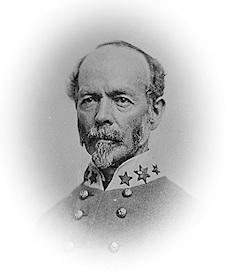
“JACKSON, Jany. 8th, 1863.
“My dear Wigfall:
“Mrs. Johnston, who arrived evening before last, brought me your letter, which had come to Chattanooga before she left it. Your military criticism has been more strongly called for since the writing of that letter. And no doubt it has been made. I can’t help thinking myself that we ought to have won at Murfreesboro’. You think I am sure, that we ought to have renewed the attack on the morning of the 1st, instead of postponing it nearly two days, when the enemy had reorganized his forces behind intrenchments. You think too, that having failed to attack on the 1st, we should either have turned the fortified position or cut off supplies from the enemy by our cavalry.
“The present state of things fully confirms the opinion I expressed to the President here that this command of mine is a nominal one, imposing upon me responsibilities which I cannot possibly meet. It is not a unit; the armies of Bragg and Pendleton have different objects. They can’t be united without abandoning one of them. I can have no command when they are not united except by taking the place of Bragg or Pemberton, which could not have been intended. As it would work great injustice to the officer thus superseded, without probabilities of benefit. I cannot, from an intermediate point, direct the operations of the two armies. No man could do it well; these departments are too completely separated to form one proper command—they ought to be separated. Tell Mr. Seddon so. Had I been in Tennessee I could have done nothing except by depriving Bragg of his command. Here in the recent battle I did nothing—not choosing to supersede Pemberton. I have asked the President to take me out of a position so little to my taste. It is very like being on the shelf with the responsibilities of command. . . . I have just read a slip from the N. O. Delta, giving account of a glorious affair at Galveston; but am afraid to believe it. You will see it of course long before this reaches you. Mrs. Johnston is looking extremely well and I trust much to this mild climate for continued good health.
“I have an office and staff here, but very little office work. Mrs. Johnston desires to be cordially remembered to Mrs. Wigfall, yourself and the young ladies.
“Yours as ever,
“J. E. JOHNSTON.
“GENL. WIGFALL,
“C. S. Senate.”
Diary of Horatio Nelson Taft.
January 8, 2023
Washington Thursday January 8th 1863
This is the anaversary of the Battle of New Orleans. It brings to mind the exploits of Andrew Jackson. O that his old mantle and white hat were still in the “White House.” The present times require his energy, his fire and resolution. The Country has been calling for “Jacksons” to Lead our armies but as yet none has appeared. It is said that the crisis brings the Man, but the Man has not appeared as yet. Perhaps the crisis has not yet arrived, perhaps we have not yet suffered enough, have not sacrificed enough. We are not yet humbled enough, and our cause has not yet become desperate enough. Well, we must wait and suffer still. In Gods own time the black clouds of War will clear away and we shall behold again the sun of peace and National prosperity. Our news from Vicksburgh was premature. The City is not yet ours as was supposed. The Rebels are there in great strength but the City must fall, but only after much hard fighting. Went to the Pay office again today and succeeded in geting the “greenbacks” for Lieut Belden, at least fifty officers were waiting in the office. We pushed bye and got through in half an hour. There is nothing like pushing ahead in these “red tape” offices. Called at Mr Hartleys this evening. “Mat[ty]” has a bad cold and wants to see Julia. She is attending Madam [Burrs or Barrs?] School where they speak nothing but French. Julia would like that. It has been a fine winters day, bright but cold in the morning, indications of snow in the afternoon, a few flakes seen.
A Rebel War Clerk’s Diary
January 8, 2023
JANUARY 8th.—Gen. French writes that the enemy at Suffolk and Newbern amounted to 45,000; and this force now threatens Weldon and Wilmington, and we have not more than 14,000 to oppose them. With generalship that should suffice.
All the Virginia conscripts are ordered to Gen. Wise, under Major-Gen. Elzey. The conscripts from other States are to be taken to Gen. Lee. If the winter should allow a continuance of active operations, and the enemy should continue to press us, we might be driven nearly to the wall. We must help ourselves all we can, and, besides, invoke the aid of Almighty God!
We have nothing fresh from Bragg—nothing from Vicksburg—and that is bad news.
I like Gen. Rains. He comes in and sits with me every day. Col. Lay is the active business man of the bureau. The general is engaged in some experiments to increase the efficiency of small arms.
He is very affable and communicative. He says he never witnessed more sanguinary fighting than at the battle of the Seven Pines, where his brigade retrieved the fortunes of the day; for at one time it was lost. He was also at Yorktown and Williamsburg; and he cannot yet cease condemning the giving up of the Peninsula, Norfolk, etc. Gen. Johnston did that, backed by Randolph and Mallory.
W e have all been mistaken in the number of troops sent to the rescue of North Carolina; but four or five regiments, perhaps 3000 men, have gone thither from Virginia. A letter from Gen. Lee, dated the 5th inst., says he has not half as many men as Burnside, and cannot spare any. He thinks North Carolina, her-self, will be able to expel the Federals, who probably meditate only a marauding expedition. And he supposes Bragg’s splendid victory (what did be suppose the next day?) may arrest the in-roads of the enemy everywhere for a season. At this moment I do not believe we have 200,000 men in the field against 800,000! But what of that, after seeing Lee beat 150,000 with only 20,000 in action! True, it was an ambuscade.
Through Some Eventful Years
January 8, 2023
January 8th, 1863.—Cousin Sam Donelson came last night. I have not seen him since the summer of 1859 and I would never have known him. Instead of a slender, pale boy, he is a splendid looking man. He is on Uncle Daniel’s staff, with the rank of Lieutenant.
Aunt Margaret left her home at the beginning of hostilities in the West. She had the farm wagons packed with belongings of the negroes and they walked behind and drove a herd of fine cattle uncle Daniel had raised. Old Aunt Purdy rode one saddle horse and Grace another and so on, until all the numerous riding nags were safely on the road and all the old and feeble negroes had a means of transportation. It is a wonder they got away but she managed to locate them in middle Georgia, where they are still waiting for the war to be over.
Cousin Sam is young and daring, he is having a good time in the main and he doesn’t care how long it lasts. He says Uncle Daniel has grown thin; they are pleased, as, indeed, we all are, at his promotion to be a Major-General. I am sure he deserves it. I love him dearly. He was so good to me when Father was so ill at his home in Tennessee.
Susan Bradford is 16 years old when this entry was made.
Portsmouth Grove Hospital
January 8, 2023
The boxes of home supplies now had Portsmouth Grove Hospital as their principal destination. The following is one of the letters in return for supplies:
The games, as well as the slates, which came in the boxes and barrels, are a great delight. I have just been over to see Fitch and set him up at a solitaire board. He was all over smiles, and pegging away with his game in bed.
With another gift of tools, the boys in Ward 20 knocked up a nice little bagatelle board with glass balls and a cambric cover. Ward 6 went over to inspect and imitate. They came back disgusted; “would scorn to play on such a thing; would have a board on which a lady could dance a hornpipe, if she pleased.” Highly improbable that any one would please to do that, but I promised them that if they would make a first-rate board, they should have all that was necessary. So they went to work, and the result was a beauty. The table is seven or eight feet long, covered with scarlet flannel, and with turned balls and walnut cups, and the men of the ward have enjoyed every minute of its existence for the past month. I have never gone in when there hasn’t been a crowd round the table pushing balls or keeping count, and I really think that the health of the ward has improved under the treatment.
Money spent in lemons for bronchitis, oranges for fever patients, mittens and socks for “convalescents” (who have to go on guard in puddles of snow-water) and in games and tools for wretched, bored, half-sick, half-well, wholly demoralized men, may not seem a great investment to the givers; would not seem so to me, if I did not live in a general hospital, and know where Government munificence stops and where private beneficence may to advantage begin.
The meals in our hospital mess-hall are nicely served and well cooked. At the beating of the drum the “convalescents” form in line, and march, by wards, into the long hall, where three lines of tables, each 250 feet long, are set. Last night, when we inspected the supper, there were shining tins up and down the tables with a very large portion of rice and molasses, hot coffee, and plenty of bread for each man, and many little pots of butter and jam came in under the Braves’ arms, out of their home boxes, to help garnish the tea.
This morning I was invited by a soldier to join him in a banquet over a box from home; “and all I want beside,” observed he, “is a little gin.” “It is very lucky for you that there was none,” was my answer, “or the whole box would have been confiscated.” “Confiscated, indeed!” returned the Brave; “I should like to see that thing done. I’m none of your cream and chocolate men. I’d carry the case up to Abraham himself! ”
The other day Miss – was washing a boy’s face very gently. “Oh!” said he, “that reminds me of home–” (Miss – highly gratified); “that’s like my sister; she often did that for me. My eyes! wasn’t she a rough one! She’d take off dirt, and skin too, but she’d get the dirt off.”
“There is the d___st state of affairs in this country now that ’tis possible to think of.”–Army Life of an Illinois Soldier, Charles Wright Wills.
January 7, 2023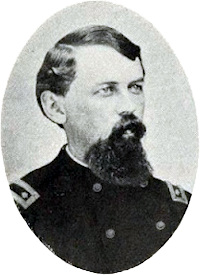
Holly Springs, Miss., January 7, 1862 1.
The colonel and I were ordered to report here to give evidence before the “Court of Inquiry,” convened to inquire into the case of the 109th Illinois Infantry reported for disloyalty. I started from Jackson yesterday but had to lay over at Grand Junction last night waiting for a train. We got here this p.m., immediately gave our evidence, and will return to-morrow. Don’t know that they will do anything with the 109th, but am satisfied that to prevent its dishonoring our state it should be broken up. I heard General Grant say that if the charges were sustained he would transfer the loyal men to some of the old regiments, cashier the officers and make the disloyal men work their time out at Alton. Am staying tonight at Mr. Barney’s. He is a Northern man and thank God, a loyal one. He built a portion of the M. & C. R. R. and most of the M. C. R. R.. His wife is also Northern and loyal. Have been very wealthy, but the war has reduced them. They both, after seven years in the South, bear me out in the opinion I expressed in my last, of these Southern people. They have lost $50,000 worth of negroes by our army, but are willing to lose the rest for our cause. The army has all moved back to the M. & C .R. R. line except one division, Lanman’s, which occupies this place. General Grant’s headquarters are yet here. There is the d___st state of affairs in this country now that ’tis possible to think of. Every house within ten miles of the army is visited about five times a day by our soldiers, and the guerrillas (both work on the same principles) and each time visitors divide with the family the provisions and household goods. There is more stealing in one day here than the whole United States suffered in a year before the war. The correspondent of the St. Louis Democrat is writing on the same table with me for his paper, ever and anon ripping out some tall oaths because he was not at the Vicksburg battle. We heard last night, direct, that the place was taken, but we are not sure of it yet. We have lost immensely at that place but the gain is worth it. Trains are coming through from Memphis now and the army will be on full rations again shortly. The M. & O. R. R. will not be running for ten days yet. There are some eight miles of the latter road almost totally destroyed above Trenton, much of it trestle work. The sick will all leave here to-night and within five days this secesh hole (what there is left of it) will be left to its secesh inhabitants.
__________
1 This entry was dated wrong in the book. Apparently Wills failed to date the letter for the new year, dating it instead for the old year, a common enough error.
War Diary of Luman Harris Tenney.
January 7, 2023
7th. Wednesday. In the morning rode to town and took a telegram for Lt. Abbey to his wife. Went and got Rob’s boots and tried some on. Then rode back to camp again in time for supper.
Downing’s Civil War Diary.–Alexander G. Downing.
January 7, 2023
Wednesday, 7th–The quartermaster placed a strong guard around the corral where the provision wagons were parked last night. But some of the boys of my company and of Company K were determined to have something to eat without waiting on the slowly-moving formalities. They slipped through the guard line in the night to the wagons and succeeded in getting away well loaded, having secured a small chest of tea and two boxes of crackers, which they divided among the boys of the two companies before daylight. Expecting Van Dorn’s cavalry to make a dash into town today, we formed a line of battle at 2 o’clock and awaited the attack. But no cavalry appeared, and in the evening all our teams with a strong guard were sent out to forage corn and fodder.
Diary of Horatio Nelson Taft.
January 7, 2023
Washington Wednesday Jan’y 7th 1863
Quite cold today with a Sharp raw wind. Went to the Pay Mast[er]s office with Lieut Belden today, left his papers and we are to call tomorrow afternoon. It is very quiet in the City. No further news from the South West. Genl B F Butler is here from New Orleans still. Where he is to be placed is as yet not known. The Country cannot well spare him at this crisis. He would make an admirable Sec’y of War. His administrative abilities are not surpassed in this Country.
My Landlord is an Englishman, Mr Cadman. He rents rooms and takes some boarders. A Capt Thornet boards here, an officer of Cavalry who has seen much service in the English Army. He is an Englishman, was all through the Crimean War, has a due quantity of English brag in his composition, has a great many distinguished friends in England and tells large stories. He has been even noticed by the Duke of Richmond [!! or II?]. Cadman likes a good dinner and consequently we live pretty well. He thinks more of his dog and his gun and field sports than any Yankee could, and English fox hunting and Horse racing are his hobbies. He is in govt employ here and is an excellent Clerk. Mr Mulvany as [sic] an Artist painter at our table. He puts the delicate touches to Bradys pictures (Photographs). He is half Italian, half Irish, and on excellent terms with himself, but a great talker and an unsparing critic of other Artists productions. Lieut Belden stays with me tonight & is to breakfast with me in the morning.
A Rebel War Clerk’s Diary
January 7, 2023
JANUARY 7th.—To-day I was requested to aid, temporarily, in putting in operation a new bureau, created by the military authorities, not by law, entitled the Bureau of Conscription. From conscription all future recruits must be derived. I found Gen. Rains, the chief, a most affable officer; and Lieut.-Col. Lay, his next officer, was an acquaintance. I shall not now, perhaps, see so much of the interior of this moving picture of Revolution; my son, however, will note important letters. It is said that Sumner’s corps (of Burnside’s army) has landed in North Carolina, to take Wilmington. We shall have news soon.
We are sending troops rapidly from Virginia to North Carolina.
The Northern papers say the following dispatch was sent to Washington by our raiding Stuart: “Gen. Meigs will in future please furnish better mules; those you have furnished recently are very inferior.” He signed his own name.
A large body of slaves passed through the city to-day, singing happily. They had been working on the fortifications north of the city, and go to work on them south of it. They have no faith in the efficacy of Lincoln’s Emancipation.
But it is different in Norfolk; 4000 enfranchised slaves marched in procession through the town the other day in a sort of frantic jubilee. They will bewail their error; and so will the Abolitionists. They will consume the enemy’s commissary stores; and if they be armed, we shall get their arms.
Lee and Beauregard were telegraphed to-day in relation to the movement on Wilmington; and the President had the cabinet with him many hours.
Gen. Rains is quite certain that the fall of New Orleans was the result of treachery.
By the emancipation, Gen. Wise’s county, Princess Ann, is excepted—and so are Accomac and Northampton Counties; but I have no slaves. All I ask of the invaders is to spare my timber, and I will take care of the land—and I ask it, knowing the request will never be known by them until the war is over.
Vicksburg
January 7, 2023
January 7th, 1863.—I have had little to record recently, for we have lived to ourselves, not visiting or visited. Every one H. knows is absent, and I know no one. H. tells me of the added triumph since the repulse of Sherman in December, and the one paper published here shouts victory as much as its gradually diminishing size will allow. Paper is a serious want. There is a great demand for envelopes in the office where H. is. He found and bought a lot of thick and smooth colored paper, cut a tin pattern, and we have whiled away some long evenings making envelopes. I have put away a package of the best to look at when we are old. The books I brought from Arkansas have proved a treasure, but we can get no more. I went to the only book-store open; there were none but Mrs. Stowe’s “Sunny Memories of Foreign Lands.” The clerk said I could have that cheap, because he couldn’t sell her books, so I am reading it now. The monotony has only been broken by letters from friends here and there in the Confederacy. One of these letters tells of a Federal raid and says, “But the worst thing was, they would take every tooth-brush in the house, because we can’t buy any more; and one cavalry man put my sister’s new bonnet on his horse, and said ‘Get up, Jack,’ and her bonnet was gone.”
Note: To protect Mrs. Miller’s job as a teacher in post-civil war New Orleans, her diary was published anonymously, edited by G. W. Cable, names were changed and initials were generally used instead of full names—and even the initials differed from the real person’s initials. (Read Dora Richards Miller’s biographical sketch.)
Robert M. McGill
January 6, 2023
Tuesday, 6th.—Got off Sand Mountain to-day; been marching on it all this year.
(Note: picture is of an unidentified Confederate soldier.)