August 29th.–No more feminine gossip, but the licensed slanderer, the mighty Russell, of the Times. He says the battle of the 21st was fought at long range: 500 yards apart were the combatants. The Confederates were steadily retreating when some commotion in the wagon train frightened the “Yanks,” and they made tracks. In good English, they fled amain. And on our side we were too frightened to follow them–in high-flown English, to pursue the flying foe.
In spite of all this, there are glimpses of the truth sometimes, and the story leads to our credit with all the sneers and jeers. When he speaks of the Yankees’ cowardice, falsehood, dishonesty, and braggadocio, the best words are in his mouth. He repeats the thrice-told tale, so often refuted and denied, that we were harsh to wounded prisoners. Dr. Gibson told me that their surgeon-general has written to thank our surgeons: Yankee officers write very differently from Russell. I know that in that hospital with the Sisters of Charity they were better off than our men were at the other hospitals: that I saw with my own eyes. These poor souls are jealously guarded night and day. It is a hideous tale–what they tell of their sufferings.
Women who come before the public are in a bad box now. False hair is taken off and searched for papers. Bustles are “suspect.” All manner of things, they say, come over the border under the huge hoops now worn; so they are ruthlessly torn off. Not legs but arms are looked for under hoops, and, sad to say, found. Then women are used as detectives and searchers, to see that no men slip over in petticoats. So the poor creatures coming this way are humiliated to the deepest degree. To men, glory, honor, praise, and power, if they are patriots. To women, daughters of Eve, punishment comes still in some shape, do what they will.
Mary Hammy’s eyes were starting from her head with amazement, while a very large and handsome South Carolinian talked rapidly. “What is it? ” asked I after he had gone. “Oh, what a year can bring forth–one year! Last summer you remember how he swore he was in love with me? He told you, he told me, he told everybody, and if I did refuse to marry him I believed him. Now he says he has seen, fallen in love with, courted, and married another person, and he raves of his little daughter’s beauty. And they say time goes slowly” –thus spoke Mary Hammy, with a sigh of wonder at his wonderful cure.
“Time works wonders,” said the explainer-general. “What conclusion did you come to as to Southern men at the grand pow-wow, you know?” “They are nicer than the nicest–the gentlemen, you know. There are not too many of that kind anywhere. Ours are generous, truthful, brave, and–and–devoted to us, you know. A Southern husband is not a bad thing to have about the house.”
Mrs. Frank Hampton said: “For one thing, you could not flirt with these South Carolinians. They would not stay at the tepid degree of flirtation. They grow so horridly in earnest before you know where you are.” “Do you think two married people ever lived together without finding each other out? I mean, knowing exactly how good or how shabby, how weak or how strong, above all, how selfish each was?” “Yes; unless they are dolts, they know to a tittle; but you see if they have common sense they make believe and get on, so so.” Like the Marchioness’s orange-peel wine in Old Curiosity Shop.
A violent attack upon the North to-day in the Albion. They mean to let freedom slide a while until they subjugate us. The Albion says they use lettres de cachet, passports, and all the despotic apparatus of regal governments. Russell hears the tramp of the coming man–the king and kaiser tyrant that is to rule them. Is it McClellan?– “Little Mac?” We may tremble when he comes. We down here have only “the many-headed monster thing,” armed democracy. Our chiefs quarrel among themselves.
McClellan is of a forgiving spirit. He does not resent Russell’s slurs upon Yankees, but with good policy has Russell with him as a guest.
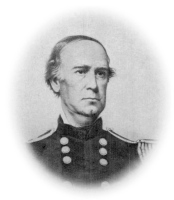
The Adonis of an aide avers, as one who knows, that “Sumter” Anderson’s heart is with us; that he will not fight the South. After all is said and done that sounds like nonsense. “Sumter” Anderson’s wife was a daughter of Governor Clinch, of Georgia. Does that explain it? He also told me something of Garnett (who was killed at Rich Mountain). ¹ He had been an unlucky man clear through. In the army before the war, the aide had found him proud, reserved, and morose, cold as an icicle to all. But for his wife and child he was a different creature. He adored them and cared for nothing else.
One day he went off on an expedition and was gone six weeks. He was out in the Northwest, and the Indians were troublesome. When he came back, his wife and child were underground. He said not one word, but they found him more frozen, stern, and isolated than ever; that was all. The night before he left Richmond he said in his quiet way: “They have not given me an adequate force. I can do nothing. They have sent me to my death.” It is acknowledged that he threw away his life– “a dreary-hearted man,” said the aide, “and the unluckiest.”
.……..……..……..……..……..……..……..……..…….
On the front steps every evening we take our seats and discourse at our pleasure. A nicer or more agreeable set of people were never assembled than our present Arlington crowd. To-night it was Yancey ² who occupied our tongues. Send a man to England who had killed his father-in-law in a street brawl! That was not knowing England or Englishmen, surely. Who wants eloquence? We want somebody who can hold his tongue. People avoid great talkers, men who orate, men given to monologue, as they would avoid fire, famine, or pestilence. Yancey will have no mobs to harangue. No stump speeches will be possible, superb as are his of their kind, but little quiet conversation is best with slow, solid, common-sense people, who begin to suspect as soon as any flourish of trumpets meets their ear. If Yancey should use his fine words, who would care for them over there?
Commodore Barron, when he was a middy, accompanied Phil Augustus Stockton to claim his bride. He, the said Stockton, had secretly wedded a fair heiress (Sally Cantey). She was married by a magistrate and returned to Mrs. Grillaud’s boarding-school until it was time to go home –that is, to Camden.
Lieutenant Stockton (a descendant of the Signer) was the handsomest man in the navy, and irresistible. The bride was barely sixteen. When he was to go down South among those fire-eaters and claim her, Commodore Barron, then his intimate friend, went as his backer. They were to announce the marriage and defy the guardians. Commodore Barron said he anticipated a rough job of it all, but they were prepared for all risks. “You expected to find us a horde of savages, no doubt,” said I. “We did not expect to get off under a half-dozen duels.” They looked for insults from every quarter and they found a polished and refined people who lived en prince, to say the least of it. They were received with a cold, stately, and faultless politeness, which made them feel as if they had been sheep-stealing.
The young lady had confessed to her guardians and they were for making the best of it; above all, for saving her name from all gossip or publicity. Colonel John Boykin, one of them, took Young Lochinvar to stay with him. His friend, Barron, was also a guest. Colonel Deas sent for a parson, and made assurance doubly sure by marrying them over again. Their wish was to keep things quiet and not to make a nine-days’ wonder of the young lady.
Then came balls, parties, and festivities without end. He was enchanted with the easy-going life of these people, with dinners the finest in the world, deer-hunting, and foxhunting, dancing, and pretty girls, in fact everything that heart could wish. But then, said Commodore Barron, “the better it was, and the kinder the treatment, the more ashamed I grew of my business down there. After all, it was stealing an heiress, you know.”
I told him how the same fate still haunted that estate in Camden. Mr. Stockton sold it to a gentleman, who later sold it to an old man who had married when near eighty, and who left it to the daughter born of that marriage. This pretty child of his old age was left an orphan quite young. At the age of fifteen, she ran away and married a boy of seventeen, a canny Scotchman. The young couple lived to grow up, and it proved after all a happy marriage. This last heiress left six children; so the estate will now be divided, and no longer tempt the fortune-hunters.
The Commodore said: “To think how we two youngsters in our blue uniforms went down there to bully those people.” He was much at Colonel Chesnut’s. Mrs. Chesnut being a Philadelphian, he was somewhat at ease with them. It was the most thoroughly appointed establishment he had then ever visited.
.……..……..……..……..……..……..……..……..…….
Went with our leviathan of loveliness to a ladies’ meeting. No scandal to-day, no wrangling, all harmonious, everybody knitting. Dare say that soothing occupation helped our perturbed spirits to be calm. Mrs. C is lovely, a perfect beauty. Said Brewster: “In Circassia, think what a price would be set upon her, for there beauty sells by the pound!”
Coming home the following conversation: “So Mrs. Blank thinks purgatory will hold its own–never be abolished while women and children have to live with drunken fathers and brothers.” “She knows.” “She is too bitter. She says worse than that. She says we have an institution worse than the Spanish Inquisition, worse than Torquemada, and all that sort of thing.” “What does she mean?” “You ask her. Her words are sharp arrows. I am a dull creature, and I should spoil all by repeating what she says.”
“It is your own family that she calls the familiars of the Inquisition. She declares that they set upon you, fall foul of you, watch and harass you from morn till dewy eve. They have a perfect right to your life, night and day, unto the fourth and fifth generation. They drop in at breakfast and say, ‘Are you not imprudent to eat that?’ ‘Take care now, don’t overdo it.’ ‘I think you eat too much so early in the day.’ And they help themselves to the only thing you care for on the table. They abuse your friends and tell you it is your duty to praise your enemies. They tell you of all your faults candidly, because they love you so; that gives them a right to speak. What family interest they take in you. You ought to do this; you ought to do that, and then the everlasting ‘you ought to have done,’ which comes near making you a murderer, at least in heart. ‘Blood’s thicker than water,’ they say, and there is where the longing to spill it comes in. No locks or bolts or bars can keep them out. Are they not your nearest family? They dine with you, dropping in after you are at soup. They come after you have gone to bed, when all the servants have gone away, and the man of the house, in his nightshirt, standing sternly at the door with the huge wooden bar in his hand, nearly scares them to death, and you are glad of it.”
“Private life, indeed!” She says her husband entered public life and they went off to live in a far-away city. Then for the first time in her life she knew privacy. She never will forget how she jumped for joy as she told her servant not to admit a soul until after two o’clock in the day. Afterward, she took a fixed day at home. Then she was free indeed. She could read and write, stay at home, go out at her own sweet will, no longer sitting for hours with her fingers between the leaves of a frantically interesting book, while her kin slowly driveled nonsense by the yard–waiting, waiting, yawning. Would they never go? Then for hurting you, who is like a relative? They do it from a sense of duty. For stinging you, for cutting you to the quick, who like one of your own household? In point of fact, they alone can do it. They know the sore, and how to hit it every time. You are in their power. She says, did you ever see a really respectable, responsible, revered and beloved head of a family who ever opened his mouth at home except to find fault? He really thinks that is his business in life and that all enjoyment is sinful. He is there to prevent the women from such frivolous things as pleasure, etc., etc.
I sat placidly rocking in my chair by the window, trying to hope all was for the best. Mary Hammy rushed in literally drowned in tears. I never saw so drenched a face in my life. My heart stopped still. “Commodore Barron is taken prisoner,” said she. “The Yankees have captured him and all his lieutenants. Poor Imogen–and there is my father scouting about, the Lord knows where. I only know he is in the advance guard. The Barron’s time has come. Mine may come any minute. Oh, Cousin Mary, when Mrs. Lee told Imogen, she fainted! Those poor girls; they are nearly dead with trouble and fright.”
“Go straight back to those children,” I said. “Nobody will touch a hair of their father’s head. Tell them I say so. They dare not. They are not savages quite. This is a civilized war, you know.”
Mrs. Lee said to Mrs. Eustis (Mr. Corcoran’s daughter) yesterday: “Have you seen those accounts of arrests in Washington?” Mrs. Eustis answered calmly: “Yes, I know all about it. I suppose you allude to the fact that my father has been imprisoned.” “No, no,” interrupted the explainer, “she means the incarceration of those mature Washington belles suspected as spies.” But Mrs. Eustis continued, “I have no fears for my father’s safety.”

______
¹ The battle of Rich Mountain, in Western Virginia, was fought July 11, 1861, and General Garnett, Commander of the Confederate forces, pursued by General McClellan, was killed at Carrick’s Ford, July 13th, while trying to rally his rear-guard.
² William Lowndes Yancey was a native of Virginia, who settled in Alabama, and in 1844 was elected to Congress, where he became a leader among the supporters of slavery and an advocate of secession. He was famous in his day as an effective public speaker.