8th. Breakfasted and moved out about sunrise. Boys found amusement reading our brother soldiers’ letters which Morgan had feasted upon. Morgan reported near Elizabethtown. Find he turned off towards Brandenburg on the Ohio Road, over the hills. Reached Garnettsville before dark. Some fun with a girl who thought I looked like her former sweetheart–now dead. Three miles from Ohio. Morgan across the river. Captured several steamboats. Lay in the road till morn.
American Civil War Chronicles
Last summer was nothing at all to this one in Pennsylvania.
July 8, 2023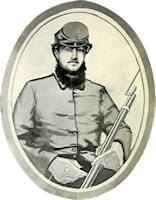
WILLIAMSPORT, MD., July 8, 1863.
My Dear Mother:
As I think there will be an opportunity of sending off a letter in a day or two, I believe I will drop you a few lines to let you know of some of my adventures since I last wrote you (Winchester). We have had rain every day since we left Winchester. I’ve been marching about ten to twenty miles a day. After the first two days our squad of two hundred dwindled down to about fifteen men, most of whom were officers. A Lieutenant from Texas commanded us. We were bound to form squads of some strength to prevent “bushwhackers” and the enraged citizens from attacking us on the road. Last summer was nothing at all to this one in Pennsylvania. Although I did not have the pleasure of going into Yankeeland with them, I was following them in the rear and could see the havoc they did. The squad that I was in, the first night we got into Pennsylvania, killed a hog near a man’s house and then sent two men to him to borrow cooking utensils to cook it in, most of them would make the expression, “I reckon you got your rations out of the field.”
The Fourth of July we got in eight miles of the battlefield, all that day the citizens tried their best to prevent our going any farther. Told us we were certainly gone chickens if we went any farther, that the Yankees were on picket some little distance off in large force. We didn’t put any confidence in their chat but kept on. The last day of the three days’ big fight, we got within a few miles of the battlefield, when we met General Imboden’s Cavalry, the advance guard of our whole wagon train, who turned us back by orders from General Lee, ordering us at the same time to keep with the train, which did not stop until we arrived at this place, we (the wagon train) intended to ford the river here and again set foot on Virginia soil, but it has rained so much we have been waiting four days for the river to fall low enough to ford it. The Yankees attacked us here day before yesterday with the intention of capturing us, but they were driven off. I can’t form the most distant idea what the army is going to do, whether they intend to stay this side of the river or go back into Virginia. There is not a day passes but you hear of fighting going on. You don’t feel right unless you hear cannonading going on. The stillness doesn’t seem natural. There are five or six thousand Yankees here waiting for the river to fall to cross.
When I have more time I will write again. Captain Thompson was wounded slightly and has crossed the river, I don’t know with what intention. Buck Nolly was killed in our company.
Write to me as soon as you get this and let me hear from you all, direct to Richmond and I will get it. This letter is No. 3.
WALTER.
Letters from two brothers who served in the 4th North Carolina Infantry during the Civil War are available in a number of sources online. Unfortunately, the brothers are misidentified in some places as Walter Lee and George Lee when their names were actually Walter Battle and George Battle. See The Battle Brothers for more information on the misidentification.
0
July 8, 2023
July 8th. At eight o’clock in the morning an orderly from General Banks’s headquarters came on board, bringing despatches for the Commodore. Very soon after he had left the ship we started fires and got up steam, as did also all the gunboats and army transports around us. Between the hours of four and six P. M., heavy squalls of wind and rain came up from the northward and westward, accompanied with thunder and lightning. At six thirty, received the news of General Gardner, C. S. A. at Port Hudson, having surrendered to Major-General Banks, U. S. A., “in rear of same.” The event occurred at two o’clock of this day, and was received with great joy. From six to eight o’clock, the army forces at Port Hudson signalized to us, we answering their signals.
Robert M. McGill
July 8, 2023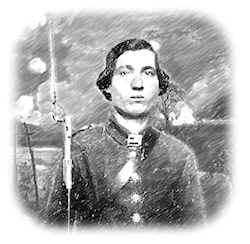
Wednesday, 8th.–Marched into town and got our paroles to-day.
____
Copy Of My Parole.
Vicksburg, Miss., July 8th A. D., 1863.
To All Whom It May Concern, know ye that; I, R. M. Magill, a private of Company F, of 39th Georgia, Volunteers, C. S. A., being a prisoner of war in the hands of the United States forces, virtue of the capitulation of the City of Vicksburg, and its garrison by Lieutenant-General John C. Pemberton, C. S. A., commanding, on the 4th day of July, 1863, do in pursuance of the terms of said capitulation, give this, my solemn parole, under oath; That I will not take arms again against the United States, nor serve in any military, police or constabulary force in any fort, garrison or field work, held by the Confederate States of America against the United States of America, nor as guard of prisoners, depots or stores, nor discharge any duties usually performed by officers or soldiers against the United States of America until duly exchanged by the proper authorities.
R. M. Magill,
Private, Company F, 39th Regiment, Georgia Volunteers. Sworn to and subscribed before me at Vicksburg, Miss., this 8th day of July, 1863.
J. O. Pollen, Captain and Par oiling Officer,
20th Regiment, Illinois Volunteers.
(Note: picture is of an unidentified Confederate soldier.)
.
Diary of a Southern Refugee, Judith White McGuire.
July 8, 2023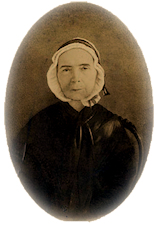
8th.—Accounts from Gettysburg very confused. Nothing seems to be known certainly; but Vicksburg has fallen! So says rumour, and we are afraid not to believe. It is a terrible loss to us; but God has been so good to us heretofore that we can only say, “It is the Lord.” A victory is announced to the War Department gained by General Loring in the West; and another gained by General Richard Taylor over Banks. For these successes I thank God from my heart. Many troops have passed here to-day, for what point we know not. Our anxiety is very great. Our home is blessed with health and comfort.
0
July 8, 2023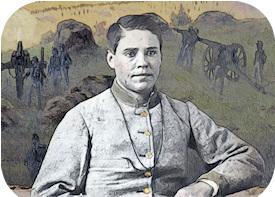
(Excerpts from a letter written just after the battle of Gettysburg, on the march—dated July 7th, 1863. Camp near Williamsport, Maryland.)
“Dear Papa,
“Since the 13th of June, inclusive, there has not been a day on which we have not marched. Our battery and two guns of McGregor’s were with the cavalry, Fitz and W. H. F. Lee’s brigades and Hampton’s on the expedition round the enemy. We started on the march the 24th of June and reached our lines at Gettysburg the 2nd of July just before night. Genl. Hampton captured a train of 200 wagons and burnt some of them within seven miles of Georgetown, the Yankee army lying at Frederick. We brought into our lines at Gettysburg one hundred and sixty odd. We reached this place yesterday afternoon while a fight was going on for the possession of the ford, the enemy endeavoring to drive us from it. The battery was not engaged however. Orders have just come to move.
“July 8th. We are now near Funkstown. Young Winston is going over the river this morning and may go as far as Hanover. Everything is wet around, it having rained nearly all night and there is not much chance for elegant letter writing. We were engaged on the third day of the fight at Gettysburg with a battery of the enemy at long range. It was opposite the left of our line where the Cavalry was fighting. Tell Mama to write to L. for me if she is not with you and until we halt for a day or two at least you may not expect to hear much or often from me. Give my best love to dearest Mama and L. and little F. Good-bye dear Papa and believe me as ever,
“Your affectionate son,
“HALSEY.”
“HALSEY.”
(Note: picture is of an unidentified Confederate soldier.)
A Rebel War Clerk’s Diary
July 8, 2023
JULY 8th.—I am glad to copy the following order of Gen. Lee :
“HEADQUARTERS ARMY NORTHERN VIRGINIA,
“CHAMBERSBURG, PA., June 27th, 1863.
“GENERAL ORDERS No. 73.
………………….“The commanding general has observed with marked satisfaction the conduct of the troops on the march, and confidently anticipates results commensurate with the high spirit they have manifested. No troops could have displayed greater fortitude, or better performed the arduous marches of the past ten days. Their conduct in other respects has, with few exceptions, been in keeping with their character as soldiers, and entitles them to approbation and praise.
……………………“There have, however, been instances of forgetfulness on the part of some, that they have in keeping the yet unsullied reputation of the army, and that the duties exacted of us by civilization and Christianity are not less obligatory in the country of the enemy than in our own.
…………………“The commanding general considers that no greater disgrace could befall the army, and through it, our whole people, than the perpetration of the barbarous outrages upon the innocent and defenseless, and the wanton destruction of private property, that have marked the course of the enemy in our own country. Such proceedings not only disgrace the perpetrators and all connected with them, but are subversive of the discipline and efficiency of the army and destructive of the ends of our present movements. It must be remembered that we make war only upon armed men, and that we cannot take vengeance for the wrongs our people have suffered without lowering ourselves in the eyes of all whose abhorrence has been excited by the atrocities of our enemy, and offending against Him to whom vengeance belongeth, without whose favor and support our efforts must all prove in vain.
……………… “The commanding general, therefore, earnestly exhorts the troops to abstain with most scrupulous care from unnecessary or wanton injury to private property; and he enjoins upon all officers to arrest and bring to summary punishment all who shall in any way offend against the orders on this subject.
” R. E. LEE, General.”
We have no additional news from the battle-field, except the following dispatch from Winchester:
……………… “Our loss is estimated at 10,000. Between 3000 and 4000 of our wounded are arriving here to-night. Every preparation is being made to receive them.
……………… “Gens. Scales and Pender have arrived here wounded, this evening. Gene. Armistead, Barksdale, Garnett, and Kemper are reported killed. Gens. Jones, Heth, Anderson, Pettigrew, Jenkins, Hampton, and Hood are reported wounded.
….. ……….. “The Yankees say they had only two corps in the fight on Wednesday, which was open field fighting. The whole of the Yankee force was engaged in the last three days’ fighting. The number is estimated at 175,000.
……………… “The bills around Gettysburg are said to be covered with the dead and wounded of the Yankee Army of the Potomac.
………. ……. “The fighting of these four days is regarded as the severest of the war, and the slaughter unprecedented; especially is this so of the enemy.
……………… “The New York and Pennsylvania papers are reported to have declared for peace.”
But the absence of dispatches from Gen. Lee himself is beginning to create distrust, and doubts of decisive success at Gettysburg. His couriers may have been captured, or he may be delaying to announce something else he has in contemplation.
The enemy’s flag of truce boat of yesterday refused to let us have a single paper in exchange for ours. This signifies something—I know not what. One of our exchanged officers says he heard a Northern officer say, at Fortress Monroe, that Meade’s loss was, altogether, 60,000 men; but this is not, of course, reliable.
Another officer said Lee was retiring, which is simply impossible, now, for the flood.
But, alas! we have sad tidings from the West. Gen. Johnston telegraphs from Jackson, Miss., that Vicksburg capitulated on the 4th inst. This is a terrible blow, and has produced much despondency.
The President, sick as he is, has directed the Secretary of War to send him copies of all the correspondence with Johnston and Bragg, etc., on the subject of the relief of Pemberton.
The Secretary of War has caught the prevailing alarm at the silence of Lee, and posted off to the President for a solution—but got none. If Lee falls back again, it will be the darkest day for the Confederacy we have yet seen.
A Diary From Dixie
July 8, 2023
Portland, Ala., July 8, 1863.–My mother ill at her home on the plantation near here–where I have come to see her. But to go back first to my trip home from Flat Rock to Camden. At the station, I saw men sitting on a row of coffins smoking, talking, and laughing, with their feet drawn up tailor-fashion to keep them out of the wet. Thus does war harden people’s hearts.
Met James Chesnut at Wilmington. He only crossed the river with me and then went back to Richmond. He was violently opposed to sending our troops into Pennsylvania: wanted all we could spare sent West to make an end there of our enemies. He kept dark about Vallandigham.[1] I am sure we could not trust him to do us any good, or to do the Yankees any harm. The Coriolanus business is played out.
As we came to Camden, Molly sat by me in the cars. She touched me, and, with her nose in the air, said: “Look, Missis.” There was the inevitable bride and groom–at least so I thought–and the irrepressible kissing and rolling against each other which I had seen so often before. I was rather astonished at Molly’s prudery, but there was a touch in this scene which was new. The man required for his peace of mind that the girl should brush his cheek with those beautiful long eyelashes of hers. Molly became so outraged in her blue-black modesty that she kept her head out of the window not to see! When we were detained at a little wayside station, this woman made an awful row about her room. She seemed to know me and appealed to me; said her brother-in-law was adjutant to Colonel K––, etc.
Molly observed, “You had better go yonder, ma’am, where your husband is calling you.” The woman drew herself up proudly, and, with a toss, exclaimed: “Husband, indeed! I’m a widow. That is my cousin. I loved my dear husband too well to marry again, ever, ever!” [continue reading…]
Downing’s Civil War Diary.–Alexander G. Downing.
July 7, 2023
Tuesday, 7th–A high wind today ended in rain tonight. Colonel Chambers of the Sixteenth Iowa, who has been commanding our brigade, left for Vicksburg this morning to obtain release from this command in order to return to the regular army. The boys of the brigade are glad to see him leave. Colonel Hall takes charge again of our brigade. I went on brigade guard tonight. Our countersign is “Vicksburg.”
War Diary of Luman Harris Tenney.
July 7, 2023
7th. Morgan still 20 hours ahead of us. Out at 2 A. M. Passed through Fredericksburg. Forded Rolling Fork and through Bardstown. Got breakfast 2 miles farther on. Rested an hour. Reached Bardstown Junction (Kentucky) near dark. Got supper and fed. Train came in from Louisville, 36 miles with rations, bacon and bread. Issued them before midnight. Slept till morning, a very hot day.
0
July 7, 2023
July 7th. The miniature army steamer Bee (General Banks’s despatch boat,) came down from Bayou Sara, at 12 o’clock midnight, bringing the cheering news of the fall of Vicksburg, which she had previously received from the steamer Gen. Sterling Price, just arrived from Vicksburg, and now lying aground off Point Coupée, opposite Bayou Sara. General Pemberton of the C. S. A., in command of the forces at Vicksburg, surrendered that city to General U. S. Grant (or, as he is more familiarly known, “Unconditional Surrender Grant”), in command of the Union forces, at ten o’clock on the morning of the glorious Fourth of July. An armistice between both armies had taken place on the evening previous. At eight A. M., steamers Gen. Price and Empire Parish came down the river—the former with despatches and a mail for us. Lieutenant Watson started for General Banks’s headquarters, and Ensign Hazeltine for the lower fleet, with the news of the surrender of Vicksburg. From twelve noon until one thirty P. M., heavy cannonading at Port Hudson, on the left and right wings of the army; between the hours of five and six o’clock, the steamer General Price, with our mail on board, left for Vicksburg.
Robert M. McGill
July 7, 2023
Tuesday, 7th.—Signing paroles to-day. Reported that there has been some fighting between here and Jackson.
(Note: picture is of an unidentified Confederate soldier.)
Diary of David L. Day.
July 7, 2023
I Get Promoted.
July 7. Today a sergeant, corporal and eight privates from each company have been detailed to manipulate the big guns. I had the honor of being selected from my company, and was assigned the left gun, a most dangerous and hazardous position. I feel proud of my promotion and am sure I shall sustain the honor of the artillery service. For a day or two we shall be under the instructions of a battery sergeant who will instruct us in loadings and firings. We shall also have to inform ourselves from a small book, giving instruction in loading and firing, and in calculating distances, elevations and depressions of the guns. My gun on the left occupies a very commanding position, being some ten feet higher than the other guns. From the top of the parapet to the bottom of the ravine, it is some 30 or 40 feet, and a part of the way nearly perpendicular. I have a range of the whole clearing and covering both the other guns; because of its great natural strength and commanding position, I have dubbed it the Malakoff. I being the senior sergeant, am styled on all hands, by both officers and men, as the chief of artillery, a rank I accept and have assumed all the privileges which that rank implies.
The little steamer Undine plies between town and this port, making her trips mornings and afternoons, giving us frequent and easy transit to town. I intend giving my command two or three passes a day, so they can visit town if they wish to. I am going to be liberal with them, and then if their professional services should be required, I shall expect them to stand by those guns and fight like bloodhounds till the last armed foe expires.
A Rebel War Clerk’s Diary
July 7, 2023
JULY 7th.—It appears that the fighting near Gettysburg began on Wednesday, July 1st, continued until Sunday, the 5th, and perhaps longer. Up to Friday the Northern papers claim the advantage.
This morning at 1 P.M. another dispatch was received from the same (unofficial) source, stating that on Sunday the enemy made a stand, and A. P. Hill’s corps fell back, followed by the enemy, when Longstreet’s and Ewell’s corps closed in their rear and captured 40,000 prisoners—who are now guarded by Pickett’s division. It states that the prisoners refused to be paroled. This might possibly be true.
This account is credited. Col. Custis Lee, from the President’s office, was in my office at half-past two P.M. to-day, and said nothing had been received from his father yet–but he did not deny that such accounts might be substantially true.
The President still keeps his eye on Gen. Beauregard. A paper from the general to Gen. Cooper, and, of course, referred to the President, in relation to the means of defense in his department, and a call for more guns, was sent back to-day, indorsed by the President, that by an examination of the report of Gen. Huger, he thought some discrepancies would appear in the statements of Gen. B. Thus, it would seem, from a repetition of similar imputations, the President has strong doubts of Gen. B.’s accuracy of statements. He is quick to detect discrepancies.
Gen. D. H. Hill sends in a characteristic letter. He says the rivers are all swollen, and he can make no movement to-day in pursuit of Dix’s army of the Pamunky—or rather “the monkey army.” He says that the Brooke Pike outer defenses are so defective in design, that a force there could be driven off in five minutes by the enemy’s sharpshooters. He wants them amended, and a certain grove cut down—and recommends that engineers be put to work, with orders to leave their “kid gloves behind.” He thinks more is to be apprehended from an attack on Petersburg than Richmond; and requests that Gen. Wise be ordered to march thither from Chaffin’s Bluff, on the first alarm. He had not heard of the reported victory of Lee.
0
July 7, 2023
July 7th. Near where General Reno fell, during the battle of Antietam. Passed down the west side of the mountain into the Antietam country, becoming a part of the 3d Corps, Army of the Potomac, General French commanding, taking part in the battle of Boonsborough, and supporting the cavalry at the battle of Falling Waters. Both armies are back in Maryland from the battle of Gettysburg.
Surrender and After.
July 7, 2023
July 7th, 1863.—I did not enjoy quiet long. First came Martha, who announced her intention of going to search for her sons, as she was free now. I was hardly able to stand since the severe cold taken in the cave that night, but she would not wait a day. A colored woman came in wanting a place, and said she had asked her mistress for wages and her mistress had turned her out. I was in no condition to stand upon ceremony then, and engaged her at once, but hear to-day that I am thoroughly pulled to pieces in Vicksburg circles; there is no more salvation for me. Next came two Federal officers and wanted rooms and board. To have some protection was a necessity; both armies were still in town, and for the past three days every Confederate soldier I see has a cracker in his hand. There is hardly any water in town, no prospect of rain, and the soldiers have emptied one cistern in the yard already and begun on the other. The colonel put a guard at the gate to limit the water given. Next came the owner of the house and said we must move; he wanted the house, but it was so big he’d just bring his family in; we could stay till we got one. They brought boarders with them too, and children. Men are at work all over the house shoveling up the plaster before repairing. Upstairs they are pouring it by bucketfuls through the windows. Colonel D. brought work for H. to help with from headquarters. Making out the paroles and copying them has taken so long they wanted help. I am surprised and mortified to find that two-thirds of all the men who have signed made their mark; they cannot write. I never thought there was so much ignorance in the South. One of the men at headquarters took a fancy to H. and presented him with a portfolio, that he said he had captured when the Confederates evacuated their headquarters at Jackson. It contained mostly family letters written in French, and a few official papers. Among them was the following note, which I will copy here, and file away the original as a curiosity when the war is over.
HEADQUARTERS DEPT. OF TENN.
TUPELO, AUG 6, 1862.
Capt.: The Major-General Commanding directs me to say that he submits it altogether to your own discretion whether you make the attempt to capture General Grant or not. While the exploit would be very brilliant if successful, you must remember that failure might be disastrous to you and your men. The General commends your activity and energy and expects you to continue to show these qualities.
I am, very respectfully, yr. obt. svt.
Thomas L. Snead, A.A.G.
CAPT. GEO. L. BAXTER,
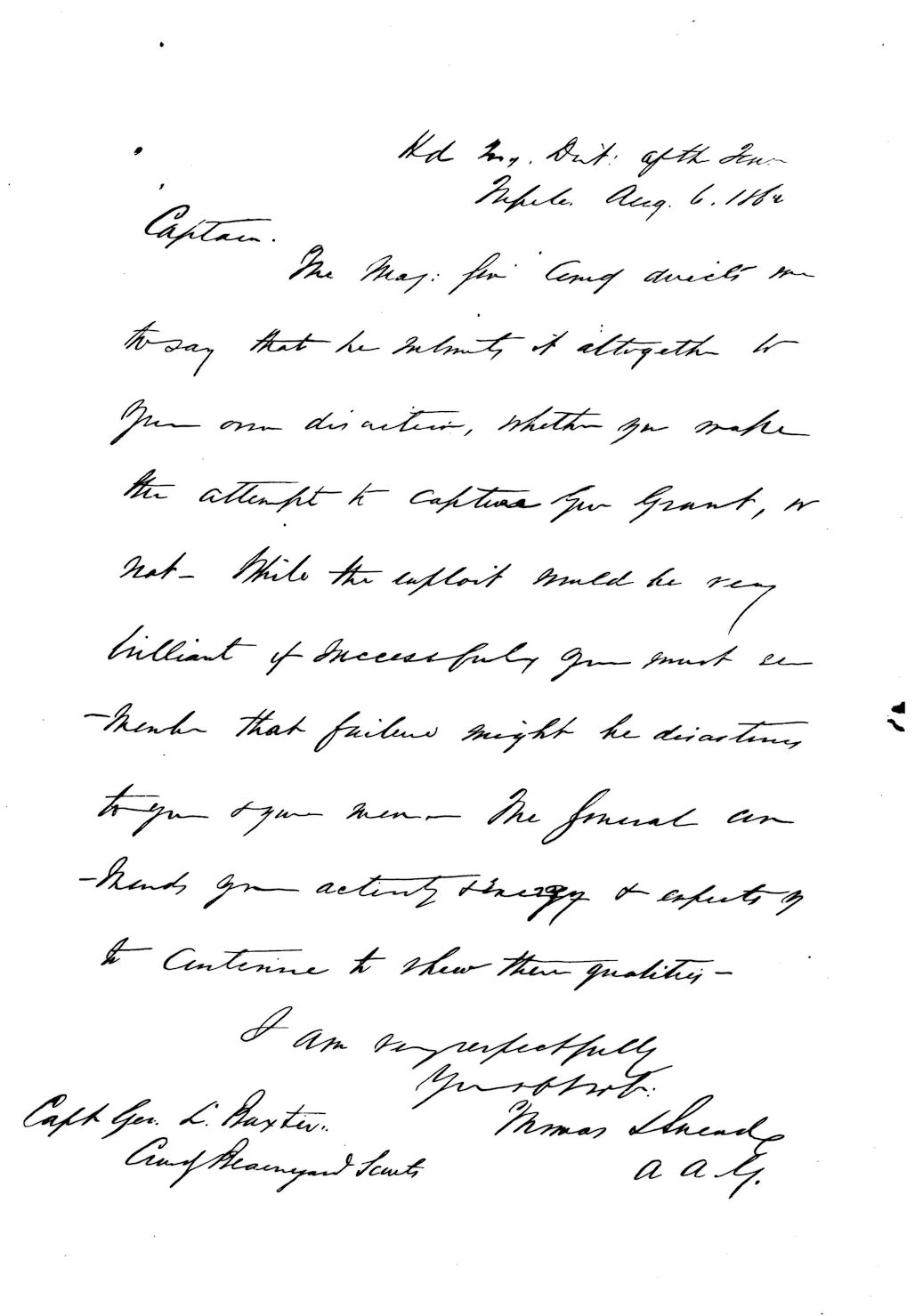 Commanding Beaureguard Scouts.
I would like to know if he tried it and came to grief or abandoned the project. As letters can now get through to New Orleans, I wrote there.
Note: To protect Mrs. Miller’s job as a teacher in post-civil war New Orleans, her diary was published anonymously, edited by G. W. Cable, names were changed and initials were generally used instead of full names—and even the initials differed from the real person’s initials. (Read Dora Richards Miller’s biographical sketch.)
Downing’s Civil War Diary.–Alexander G. Downing.
July 6, 2023
Monday, 6th–We have had very changeable weather for a week now—hot and sultry, then cool and pleasant, then warm and hazy. The Eleventh Iowa received two months’ pay today. I got $37.25; of this, $11.25 was allowed for clothing not drawn. The Thirteenth Iowa and the Tenth Ohio Battery went out on picket duty.
War Diary of Luman Harris Tenney.
July 6, 2023
6th. Aroused early and breakfasted. Marched two or three miles and got forage. Our brigade in advance. Passed through several villages. A beautiful country for farming, good residences. Reached Lebanon at 3 P. M. 20th Ky. 350, surrendered here to Morgan, but not till punishing him. Out a mile, fed and got supper. Passed through Springfield, 9 miles and camped on Pike, 8 miles.
0
July 6, 2023
July 6th. At nine in the morning inspected crew at quarters. Ship’s company engaged in repairing fore and main standing-rigging, which has been shot away in action. Between the hours of four and six in the afternoon, U. S. naval batteries were engaged with the enemy at Port Hudson. From eight o’clock till twelve midnight, heavy squalls of wind and rain, accompanied with thunder and lightning. All quiet at Port Hudson at this hour.
Robert M. McGill
July 6, 2023
Monday, 6th.—Drew crackers, bacon, pickled beef, peas, sugar, coffee and vinegar; very unwell to-day.
(Note: picture is of an unidentified Confederate soldier.)
Diary of a Southern Refugee, Judith White McGuire.
July 6, 2023
Monday Morning.—The hope I expressed in my last line on Saturday night was delusive. About one o’clock I was awakened by E. leaning over me, and saying in a low, tremulous tone, “Mother, get up, the Yankees are come.” We sprang up, and there they were at the telegraph office, immediately opposite. In an instant the door was broken down with a crash, and the battery and other things thrown out. Axes were at work cutting down the telegraph-poles, while busy hands were tearing up the railroad. A sentinel sat on his horse at our gate as motionless as if both man and horse had been cut from a block of Yankee granite. We expected every moment that they would come to the house, or at least go into the hotel opposite to us; but they went off to the depot. There was a dead silence, except an occasional order, “Be quick,” “Keep a sharp look-out,” etc., etc. The night was moonlight, but we dressed ourselves and sat in the dark; we were afraid to open the window-shutters or to light a lamp, lest they might be attracted to the house. We remained in this way perhaps two hours, when the flames suddenly burst from the depot. All parts of the building seemed to be burning at once; also immense piles of wood and of plank. The conflagration was brilliant. As soon as the whole was fairly blazing the pickets were called in, and the whole party dashed off, with demoniac yells. Soon after, as the dawn began to break upon us, doors were thrown open, and the villagers began to sally forth to the fire. In a short time all of us were there, from every house—even the babies; and as it became daylight, an amusing group was revealed. Every one had dressed in the dark, and all manner of costumes were to be seen—dressing-gowns, cravatless old gentlemen, young ladies in curl-papers, collars pinned awry, etc. Some ladies presented themselves in full costume—handsome dresses, lace collars, ear-rings and breastpins, watches, etc.—giving as a reason, that, if they were burnt out, they would at least save their best clothes—forgetting, the while, that a Yankee soldier has an irresistible penchant for watches and other jewelry. Some of us were more cautious, and had put all our valuables in unapproachable pockets—the pockets to a lady’s dress not having proved on all occasions a place of safety. The loss to the railroad company will be considerable; to the public very small, for they are already replacing the broken rails, and the telegraph was put in operation yesterday.
The morning papers give the Northern account of a battle in Gettysburg, Pennsylvania. It gives the victory to the Federals, though it admits a very heavy loss on their side; announces the loss of Major-General Reynolds and Brigadier-General Paul by death. We pause for the truth.
A Rebel War Clerk’s Diary
July 6, 2023
JULY 6th.—Yesterday evening we received Baltimore and New York papers with accounts (and loose ones) of the battle of Gettysburg. The Governor of Pennsylvania says it was “indecisive,” which means, as we read it, that Meade’s army was defeated.
The forces (Federal) are withdrawing from the neighborhood of this city, another indication that Lee has gained a victory. Dix has done but little damage. In retreating from HanoverCounty, he burnt the bridges to retard pursuit.
The “War Department Guard” have returned, my son among them, sunburnt and covered with dust. They were out five days and four nights, sleeping on the ground, without tents or blankets, and with little or nothing to eat, although the Commissary-General had abundance. The President, however, is better to-day, and able to get out of bed; but his health is apparently gone, and it may be doubtful whether he will ever be quite well again.
The Vice-President went down to the flag of truce boat on Saturday, some say to Fortress Monroe, and others to Washington. It is surmised that he is authorized by the President to have a definitive understanding with the Federal authorities, whether or not private property is to be respected hereafter in the future progress of the war. If not, Gen. Lee will have orders to desolate the Northern States, where he has the power. Some, however, think he goes to Washington, to propose terms of peace, etc.
There is a rumor in the city, generally credited, that another battle was fought in Pennsylvania on Friday, and that the enemy was annihilated; these rumors sometimes assume form and substance, and this one, as if by some sort of magnetism, is credited by many. It is certain that Mr. Morris, superintendent of the telegraph office, has called upon his friends for the largest Confederate flag in the city to hang out of his window. He says nothing more; but he may have sent dispatches to the President, which he is not at liberty to divulge. There may be later news from Lee; or Vicksburg may be relieved; or New Orleans taken; or an armistice; or nothing.
I am glad my son’s company were ordered in to-day; for, after a week of fine fair weather, it is now raining furiously. This would have prostrated the tender boys with illness.
0
July 5, 2023
July 5th. Left camp very early this morning. A heavy downpour of rain. Passed through Georgetown, on through Washington. The mud in Pennsylvania Avenue was ankle deep. Marching very hard and disagreeable, so much so that we were obliged to take off our leggins and throw them away. Our first time in Washington. Boarded a train at the B. & O. R. R. station, going north. Nothing important taken place. At the Relay House, near Baltimore, train switched to the west bound track. After a long tedious ride we reached the Monocacy Junction, thence to Frederick City, where we left the train and began a march out on the South Mountain Road, passing New York’s crack regiment, the 7th, on picket duty. Stopped at the top of South Mountain.
Downing’s Civil War Diary.–Alexander G. Downing.
July 5, 2023
Sunday, 5th–We came in this morning at 10 o’clock from an all night picket along the Big Black river. We were relieved by General Tuttle’s Brigade. Our brigade then fell back a mile and went into bivouac in heavy timber. The rebels all left last night, it is thought, for Jackson, Mississippi, with the forces of Sherman and Ord in pursuit of them. Sherman passed us, crossing the Big Black at Messenger’s ford, while Ord’s army crossed the river over the railroad bridge. There is great rejoicing in camp over the fall of Vicksburg and the boys are singing songs and celebrating.
War Diary of Luman Harris Tenney.
July 5, 2023
5th. Aroused at daylight. Marched very soon, roads quite muddy. Crossed Green River about 7:30 and camped one mile out. Fed and breakfasted. Got a good meal at a large white house. Passed through a now almost wilderness till reaching the Green River. Some day this will be a rich country, good pine timber. Several little showers. Moved on to Dan Tucker’s, 22 miles from Lebanon. Got supper and ordered to unsaddle ready to start again at daylight. Rained and all got wet through. Great time getting supper.