December 17th. A severe, cold storm, rain freezing on the ground and trees. The people in town say the Yankees brought the cold weather with them. Claim the weather is colder than it has been for years. Most of the houses here not built very warm. The people suffer from the cold, have only wood fires.
American Civil War Chronicles
A Rebel War Clerk’s Diary
December 17, 2023
DECEMBER 17th.—Averill (Federal) made a raid a day or two since to Salem (Roanoke County, Va.), cutting the Virginia and Tennessee Railroad, destroying the depot, bridges, court-house, etc.
Gen. J. E. Johnston has been ordered to take command of Bragg’s army.
I saw a communication from Lieut.-Col. Ruffin (Commissary Bureau), suggesting the trade of cotton to the enemy in New Orleans for supplies, meat, etc., a Mr. Pollard, of St. Louis, having proposed to barter meat for cotton, which Col. Ruffin seems to discourage.
Gen. Halleck has proposed a plan of exchange of prisoners, so far as those we hold go. We have 15,000; they, 40,000.
A letter from Mr. Underwood, of Rome, Ga., says our people fly from our own cavalry, as they devastate the country as much as the enemy.
We have a cold rain to-day. The bill prohibiting the employment of substitutes has passed both Houses of Congress. When the Conscription act is enlarged, all substitutes now in the army will have to serve for themselves, and their employers will also be liable.
War Diary of Luman Harris Tenney.
December 16, 2023
16th. Long, Normaldorf and I went ahead and lay down by a fire. Went back early to command and took breakfast on popcorn, rather weak subsistence. Our brigade in rear. Remained two hours after command left. Rebels soon commenced work and we fell back and soon took positions. 7th O. V. C. in rear. Rebels came out, skirmishers dismounted and reserve mounted in line of battle. 7th fell back and the rebs charged. 2nd Ohio formed on a hill in time to check rebs. Howitzer fired several shots. Continued to fire back to two miles of cross roads and went into camp.
Downing’s Civil War Diary.–Alexander G. Downing.
December 16, 2023
Wednesday, 16th–It rained nearly all day, commencing about 1 o’clock in the night. I being on picket had a hard night of it, for the water at our post in the bottom stood about a foot deep. It was a fearful night to be out on picket; one could not even find protection standing, let alone lying down.
Diary of Horatio Nelson Taft.
December 16, 2023
Wednesday Dec 16th 1863
The “Army of the potomac” is virtualy in Winter quarters. The roads are so bad in Virginia now that heavy Artillery cannot move. Genl Mead is still in com[ma]nd of the Army and it is generaly conceded that He was not to blame in falling back under the circumstances. Longstreets army were compelled to retreat from before Knoxville Tenn. From what we can learn from rebel papers, there is a general despondency throughout the Rebel states. But they have still powerful armies in the field and still seem determined to fight it out. Their leaders are desperate. They know that there is but three things for them, succeed, run, or hang. No amnesty will be granted them. Everything looks well in Tennessee and our army in Western Texas has been successful so far. Matters at Charleston remain without much change. Genl Gilmore keeps up the bombardment of the Forts and treats the inhabitants of the City to a few shells each day. Fort Sumpter is about demolished but is not yet in our possession. It is thought that Louisiana, Arkansaw & Tennessee will be represented in this congress this winter. Today I have been in the Genl Land office as usual preparing the Agricultural Land Scrip for Issue. Some of the States have got their Scrip already. I am now at work on Maine. That state gets Two hundred and eighty thousand acres. It is distributed according [to] congressional representation. New York gets near a million acres. It is issued to the States in Scrip each for 160 acres and which are much like a Land Warrant. Julia and Miss Hartley called at the office at half past two today and I went out with them and walked on the Avenue awhile and then we went up to the Stanton Hospital and went through the Wards. The soldiers expect to see me there as often as once a week and are pleased to see the ladies. Some there have lain six months on their beds and their wounds are not healed yet. Such a one is John Peters of the 115th P.a. Regt. There are a number of rebels in the Hospital who receive the same attention as our own soldiers. Some of them are grievously wounded, some have died there. All the Hospitals have more or less of them but they are sent to the Lincoln Hospital as soon as they become convalesent.
A Rebel War Clerk’s Diary
December 16, 2023
DECEMBER 16th.—The Examiner to-day discovers that if the President’s project of enrolling all men, and detailing for civil pursuits such as the Executive may designate, be adopted, that he will then be constituted a DICTATOR—the best thing, possibly, that could happen in the opinion of many; though the Examiner don’t think so. It is probable the President will have what he wants.
Per contra, the proposition of Senator Johnson, of Arkansas, requiring members of the cabinet to be renominated at the expiration of every two years, if passed, would be a virtual seizure of Executive powers by that body. But it won’t pass.
War Diary of Luman Harris Tenney.
December 15, 2023
15th. Last night I accompanied Col. Garrard, carrying his orders. He is very cool under fire and indifferent as to the nearness of shell, shot and musket ball, many of which gave him a close call. Hugh White, Co. A. killed. Many narrow escapes. The scene after dark was fine. I felt a wild enthusiasm at the work. Fell back 1 ½ miles and in line till morning. Moved back to some infantry who made breastworks. Skirmishing all day. 250 lbs. of hardbread for the Brigade. Fell back through Rutledge during the night.
Downing’s Civil War Diary.–Alexander G. Downing.
December 15, 2023
Tuesday, 15th–Quite cool this morning, with a high wind all day. Quite a number of the Eleventh Iowa have re-enlisted, though only eighteen of our company.
0
December 15, 2023
(excerpts)
“Dec. 15th, 1863.
“Dec. 15th, 1863.
“I have passed many anxious months lately, in this siege of Charleston. My only child and son was at Fort Sumter, a First Lieutenant in the 1st Regular Artillery Regiment. He passed through the first attack in April safely—though occupying a post of danger, but, on the 17th of August, in the attack upon Sumter from the enemy’s land batteries, on Morris Island, my poor boy was wounded by a fragment of a 200-pound parrots shell: he was slightly cut in the back of the head and wounded in two places in the shoulder; and picked up insensible. I went to him as soon as the news reached us of his being wounded, but was but two days in Charleston, when we were roused from our slumbers, at two hours past midnight, by the enemy shelling the town filled with sleeping, helpless women and children. The next day I left with my wounded boy to return to my quiet home in Georgia. He was with me but ten days, when he returned to Charleston, though he had not then recovered the use of his right hand and arm, which had been, from the severe contusions on the shoulder, entirely paralyzed. He had been in command of his company, at Sumter, since the first of the attack, his captain being absent on sick leave, so that he was anxious to return to duty and has been ever since, for the last three months, at a battery on James Island, near Fort Johnson, where I am again anxious about him. He is a devoted son, and the trial to me of having the boy so constantly exposed to danger is almost more than I can bear. . . . I had hoped you were spared the anxiety of having an only son in the service, so young as he is, I can truly feel for you, but then he is not your only child. You have daughters at home to cheer and comfort you. I never wished until this cruel war that my son had been a daughter, but we must believe it is ordered for the best. I was made very happy last week by my son’s return to us on a short leave—he makes everything bright and joyous for me and I miss him sadly when away. If we had only had a navy to fight for us, as the army has done, this war would have ended in a few months, I imagine; and now, who can see the end of it? With the coming spring instead of peace and joy, when the earth is all beautiful and smiling, we are told to prepare for another fierce attack of our cruel foe and more carnage and blood and slaughter await us. My heart sickens at the thought. I heard from Aunt N. from New York, December 6th. She seems very miserable about us all, and wishes I were in New York to share some of the many comforts they enjoy. Much as I once liked New York, I never desire to see it again and would rather starve and die here than live and grow fat under Lincoln! They have no idea, even our Southern friends there, of the feelings aroused in our hearts by this war. I am busy getting John ready to return to his post on James Island. As it breaks my heart to think of the poor boy being on picket all night in the rain and having only dry hominy and cold water for breakfast, I am scouring the country to buy syrup and eggs and a few comforts to keep him from starving.
A Rebel War Clerk’s Diary
December 15, 2023
DECEMBER 15th.—Bright, beautiful day–but, alas! the news continues dark. Two companies of cavalry were surprised and taken on the Peninsula day before yesterday; and there are rumors of disaster in Western Virginia.
Foote still keeps up a fire on the President in the House; but he is not well seconded by the rest of the members, and it is probable the President will regain his control. It is thought, however, the cabinet will go by the board.
War Diary of Luman Harris Tenney.
December 14, 2023
Bean Station, Tenn.
Monday, 14th. Dark, cloudy and foggy. Hear Jacob Smallered of “C” Co. was killed yesterday. At noon Col. Garrard came along with the Brigade. Teams ordered to hitch up. Didn’t feel well but concluded to go out. June went with me to station. Artillery firing commenced. Found rebels near the station in position. Forces were disposed of and work commenced. 2nd Ohio moved from under fire. Ordered back again. Hot fire from 2 till dark, awful firing. Heavy body of rebels on flanks and center.
Downing’s Civil War Diary.–Alexander G. Downing.
December 14, 2023
Monday, 14th–A pleasant day and all is quiet. This is washday in camp. But since there are so many negro women here, thankful for the job, and who do it so cheaply, most of the boys hire their clothes washed. I got my week’s washing done for twenty-five cents. In the early morning we see dozens of negro women going to the springs, each with a tub of soiled clothes on her head and a pail in each hand, singing “the day ob jubilee hab come.” In the evening they return with the clean clothes in the same fashion, many of them singing some quaint negro melody.
0
December 14, 2023
December 14th. On picket, which comes every other day and night. All things seem to be very quiet. Bought a watch. The first one I ever owned. Paid one of the boys ten dollars. Wrote many letters to friends at home. When off duty visited the many points of interest around the town. Here old John Brown was tried and hung for treason against the state of Virginia. I visited the court house where he was tried, the jail where he was confined, and the ground just outside of town where he was hung. These places were pointed out to us by old residents of the town.
0
December 14, 2023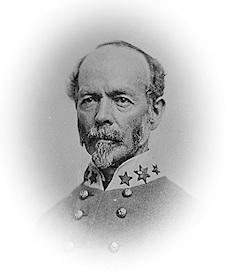
“BRANDON, Dec. 14th, 1863.
“My dear Wigfall:
“I see in the newspapers reports of resolutions of what is called the Mississippi campaign. One of them calling for the correspondence connected with it.
“Let me suggest that the campaign really commenced in the beginning of December, 1862—and that my connection with it dates from November 24th of that year—the day on which I was assigned to supervision of Bragg’s, Pemberton’s and Kirby Smith’s Commands. If investigation is made it should include that time, to make it complete. Or if correspondence or papers are called for begin with the order of November 24th just referred to. At that time we had the means of preventing the invasion of Mississippi and those means were pointed out by me in writing, as well as orally, to the Secretary of War in your presence. Such a publication would justify me fully in the opinions of all thinking men. It would show that while it was practicable I proposed the true system of warfare. That I could not go to Mississippi sooner than I did, and that I was ‘too late’ to repair the consequences of previous measures and never had the means of rescuing Vicksburg or its garrison.
“Very truly yours,
“J. E. JOHNSTON.”
A Rebel War Clerk’s Diary
December 14, 2023
DECEMBER 14th.—We have President Lincoln’s message today, and his proclamation of amnesty to all who take an oath of allegiance, etc., and advocate emancipation. There are some whom he exempts, of course. It is regarded here as an electioneering document, to procure a renomination for the Presidency in the radical Abolition Convention to assemble in a few months. But it will add 100,000 men to our armies; and next year will be the bloody year.
Congress spent much of the day in secret session.
A Baltimorean, last week, seeing a steamer there loading with goods of various kinds for the Federal prisoners here, bought a box of merchandise for $300, and put it on board, marked as if it contained stores for the prisoners. He ran the blockade so as to meet the steamer here; and obtained his box, worth, perhaps, $15,000. But all this is forbidden hereafter.
A Diary From Dixie.
December 14, 2023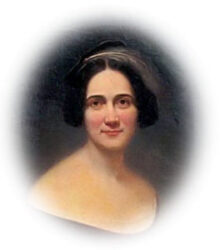
December 14th.–Drove out with Mrs. Davis. She had a watch in her hand which some poor dead soldier wanted to have sent to his family. First, we went to her mantua-maker, then we drove to the Fair Grounds where the band was playing. Suddenly, she missed the watch. She remembered having it when we came out of the mantua-maker’s. We drove back instantly, and there the watch was lying near the steps of the little porch in front of the house. No one had passed in, apparently; in any case, no one had seen it.
Preston Hampton went with me to see Conny Cary. The talk was frantically literary, which Preston thought hard on him. I had just brought the St. Denis number of Les Miserables.
Sunday, Christopher Hampton walked to church with me. Coming out, General Lee was seen slowly making his way down the aisle, bowing royally to right and left. I pointed him out to Christopher Hampton when General Lee happened to look our way. He bowed low, giving me a charming smile of recognition. I was ashamed of being so pleased. I blushed like a schoolgirl.
We went to the White House. They gave us tea. The President said he had been on the way to our house, coming with all the Davis family, to see me, but the children became so troublesome they turned back. Just then, little Joe rushed in and insisted on saying his prayers at his father’s knee, then and there. He was in his night-clothes.
Diary of a Southern Refugee, Judith White McGuire.
December 13, 2023
Sunday, Dec. 13.—The first anniversary of the battle of Fredericksburg, where we lost so many valuable lives, and where the Federals were thoroughly whipped. Since that time we have lost many lives, which nothing can repay; but we hold our own, have had some victories, and have been upon the whole much blessed by God. At St. James’s Church, this morning, and heard a very fine sermon from the Rev. Mr. Peterkin, from the text, “Blessed are the poor in spirit.” To-night we expect to hear Bishop Lay.
War Diary of Luman Harris Tenney.
December 13, 2023
Sunday, 13th. Remained at quarters nearly all day. Rainy in the morning. Read in the Independent. About noon ordered to pack wagons ready to move. Struck tents and all ready. Troops returned to camps and tents again pitched. Begin to worry about Thede. A. B. thinks he had better be discharged. So do I.
Downing’s Civil War Diary.–Alexander G. Downing.
December 13, 2023
Sunday, 13th–We were relieved from picket and arrived in camp about noon. For a wonder we did not have inspection of any kind on this, the Lord’s Day. It rained some this morning, but turned off quite clear in the afternoon.
A Rebel War Clerk’s Diary
December 13, 2023
DECEMBER 13d.—Rained last night—and this morning we have warm April weather and bright sunshine.
It is getting to be the general belief among men capable of reflection, that no jugglery can save the Confederate States currency. As well might one lift himself from the earth by seizing his feet, as to legislate a remedy. Whatever scheme may be devised to increase the value of the Confederate States paper money, the obligor is the same. For the redemption of the currency (now worth about five cents in specie to the dollar), every citizen, and every description of property, has been pledged; and as the same citizens and the same property must be pledged for the redemption of any newly created currency, there is no reason to suppose it would not likewise run the same career of depreciation. Nor can bonds be worth more than notes. Success in the field, only, can appreciate either; for none will or can be paid, if we fail to achieve independence.
The weather, this afternoon, is warm, calm, and clear; but the roads are too soft for military operations.
I am reading the Memoirs of Bishop Doane, by his son, Rev. William Croswell Doane. He was the great bishop truly; and his son proves an admirable biographer. I knew the bishop personally, and much of his personal history; and hence this work is to me, and must be to many others, very interesting. The coming year is to be an eventful one. We shall be able (I hope) to put 400,000 effective men in the field; and these, well handled, might resist a million of assailants from without. We have the center, they the circumference; let them beware of 1864—when the United States shall find herself in the throes of an embittered Presidential contest!
Diary of a Southern Refugee, Judith White McGuire.
December 12, 2023
December 12.—To-day I was examined on arithmetic—”Denominate numbers, vulgar and decimal fractions, tare and tret,” etc., etc., by Major Brewer, of the Commissary Department. I felt as if I had returned to my childhood. But for the ridiculousness of the thing, I dare say I should have been embarrassed. On Monday I am to enter on the duties of the office., We are to work from nine till three.
We have just received from our relatives in the country some fine Irish and sweet potatoes, cabbages, butter, sausages, chines, and a ham; and from a friend in town two pounds of very good green tea. These things are very acceptable, as potatoes are twelve dollars per bushel, pork and bacon two dollars fifty cents per pound, and good tea at twenty-five dollars per pound. How are the poor to live? Though it is said that the poor genteel are the real sufferers. Money is laid aside for paupers by every one who can possibly do it, but persons who do not let their wants be known are the really poor.
War Diary of Luman Harris Tenney.
December 12, 2023
12th. After breakfast rode to station and got bread. Went down to the 2nd O. V. C. and saw Co. C boys. Seems good to mingle with them occasionally. Brigade ordered out to scout. Gone before I was aware of movement, but unable to go anyway. Went four miles above Morristown, and ran against too large a force, and obliged to fall back. Unpleasant rainy afternoon. Read a little in “Scottish Chiefs.” Pleased.
Downing’s Civil War Diary.–Alexander G. Downing.
December 12, 2023
Saturday, 12th–It came the Eleventh Iowa’s turn to go on reserve picket, down in the river bottom. It is a fine place for a reserve post, plenty of wood to burn these rather cold nights.
0
December 12, 2023
December 12th. Off picket. Cold rain continues, making life miserable. A large campfire near the church. When off duty do some scouting around the vicinity. The 1st Connecticut Cavalry in camp near the town. Visited the cavalry boys at their camp.
A Rebel War Clerk’s Diary
December 12, 2023
DECEMBER 12th.—There was a rumor that Chattanooga had been evacuated; but it turns out that the enemy are fortifying it, and mean to keep it, while operating in East Tennessee. It is said Gen. Grant is to bring 30,000 men to Virginia, and assume command of the Army of the Potomac, superseding Meade. He may be ordered to take Richmond next—if he can. Hardee is yet commanding Bragg’s army.
I saw to-day a project, in Mr. Benjamin’s handwriting, for a Bureau of Export and Import.
Mr. G. A. Myers got a passport to-day for a Mr. Pappenheimer, a rich Jew; it was “allowed” by the Assistant Secretary of War. And a Mr. Kerchner (another Jew, I suppose) got one on the recommendation of Col. J. Gorgas, Chief of Ordnance, to bring back stores in his saddle-bags.
Orders to-day were given that no more supplies from the United States should be received by the Federal prisoners here. It seems that our men in their hands are not even allowed the visits of their friends.