Thursday, 11th–We moved but ten miles today, when we went into bivouac. Our men are foraging on the way, especially for meat, of which there is a plenty of fresh pork. Some of the foraging parties sent out today were captured and roughly used by the rebels. General McPherson had his headquarters in a large mansion on a rich plantation today. There had been hundreds of slaves on this plantation, but all the able-bodied negro men were taken along by the rebels for their army.
American Civil War Chronicles
A Confederate Girl’s Diary
February 11, 2024
11th.
O God, O God, have mercy on us! George is dead! Both in a week. George, our sole hope – our sole dependence.
Diary of David L. Day.
February 11, 2024
The following diary entry contains wording that is offensive to many in the world of today. However, the entry is provided unedited for its historical content and context.
The Expedition.
Feb. 11. The morning of February 6th found us in line on the parade ground, New York and Massachusetts shoulder to shoulder. Capt. Phillips, wanting a brave and valiant veteran on the left of his company, assigned me to that post of honor. I reckon the reason for it was that two of his sergeants were on the sick list. While standing in line, waiting the order to march, a scene is transpiring which to us of the 25th is altogether new and strange. The ladies living here in camp are all out, and wetting their handkerchiefs with their tears, are watching the preparations to leave. They are struggling under a fearful burden of anxiety which will not be removed until our return. Groups of men and women are standing around, taking each other by the hand and kissing their good-byes. Our Brooklyn friends are visibly affected, while the 25th boys look on stoically. While men and women with streaming eyes are bidding perhaps their last farewells, these roughened, hardened sons of Mars look with unpitying eye on this affecting scene and laugh. I confess I should have taken a greater interest in the thing and my sympathies would have flowed more freely if I could have taken a hand in the kissing.
We marched into town where the brigade line was formed, consisting of the 139th and 118th New York, two regiments of colored troops and one U. S. battery, (the 2d I think). The mounted rifles were to follow later. This comprised the whole force under command of Brig. Gen. Wistar, whoever he is. The line of march was taken up the country on the road towards Richmond. Arriving at the woods, about a mile from town, [continue reading…]
A Rebel War Clerk’s Diary
February 11, 2024
FEBRUARY 11th.—Night before last 109 Federal prisoners, all commissioned officers, made their escape from prison—and only three or four have been retaken!
The letter of Mr. Sloan, of North Carolina, only produced a reply from the Secretary that there was not the slightest suspicion against Gen. W., and that the people of North Carolina would not be satisfied with anybody.
Eight thousand men of Johnston’s army are without bayonets, and yet Col. Gorgas has abundance.
Governor Milton, of Florida, calls lustily for 5000 men—else he fears all is lost in his State.
To-day bacon is selling for $6 per pound, and all other things in proportion. A negro (for his master) asked me, to-day, $40 for an old, tough turkey gobbler. I passed on very briskly.
We shall soon have martial law, it is thought, which, judiciously administered, might remedy some of the grievous evils we labor under. I shall have no meat for dinner to-morrow.
0
February 10, 2024
February 10th. Norwich, Connecticut. Left New York last night by boat. Arrived here all right. Came from New London to Norwich on the engine with my cousin Sidney Williams. Made my way to the home of my aunt, Mrs. Jane Tubbs. Gave the family a great surprise. Did not have time to let them know that I was coming.
Downing’s Civil War Diary.–Alexander G. Downing.
February 10, 2024
Wednesday, 10th–We left Morton early this morning, and covering fifteen miles, reached the town of Hillsborough at about 3 o’clock. There was some skirmishing in front with a loss of three to the rebels. By the time the rear reached town it was all on fire, the citizens having fled. Our army moves rather slowly, on account of the bridges being burned, and the engineers must rebuild or throw out the pontoons. But things are marching along fine.
A Rebel War Clerk’s Diary
February 10, 2024
FEBRUARY 10th.—Gen. Lee wrote to the Secretary of War, on the 22d of January, that his army was not fed well enough to fit them for the exertions of the spring campaign; and recommended the discontinuance of the rule of the Commissary-General allowing officers at Richmond, Petersburg, and many other towns, to purchase government meat, etc. etc. for the subsistence of their families, at schedule prices. He says the salaries of these officers ought to be sufficient compensation for their services; that such allowances deprived the officers and soldiers in the field of necessary subsistence, and encouraged able-bodied men to seek such easy positions; it offended the people who paid tithes, to see them consumed by these non-combating colonels, majors, etc., instead of going to feed the army; and it demoralized the officers and soldiers in the field.
This letter was referred to the Commissary-General, who, after the usual delay, returned it with a long argument to show that Gen. Lee was in “error,” and that the practice was necessary, etc.
To this the Secretary responded by a peremptory order, restricting the city officers in the item of meat.
Again the Commissary-General sends it back, recommending the suspension of the order until it be seen what Congress will do! Here are twenty days gone, and the Commissary-General has his own way still. He don’t hesitate to bully the Secretary and the highest generals in the field. Meantime the Commissary-General’s pet officers and clerks are living sumptuously while the soldiers are on hard fare. But, fortunately, Gen. Lee has captured 1200 beeves from the enemy since his letter was written.
And Gen. Cobb writes an encouraging letter from Georgia. He says there is more meat in that State than any one supposed; and men too. Many thousands of recruits can be sent forward, and meat enough to feed them.
The President has issued a stirring address to the army.
The weather is still clear, and the roads are not only good, but dusty—yet it is cold.
They say Gen. Butler, on the Peninsula, has given orders to his troops to respect private property—and not to molest noncombatants.
Downing’s Civil War Diary.–Alexander G. Downing.
February 9, 2024
Tuesday, 9th–Starting early this morning we reached Morton about noon, where we went into bivouac and remained the balance of the day. The rebels took their first stand here, forming a line of battle, but our two corps being brought together to engage them, they feared to risk a battle and hastily fell back. The Sixteenth Army Corps then passed ahead of the Seventeenth, taking the advance in pursuit. It is estimated that the rebels have a force of fifteen thousand men. Our army is burning all railroad and public property on the way. This town even is literally wiped out, for when the citizens flee before our army and leave their homes vacant, there is always someone ready to set the vacant houses on fire.
Through Some Eventful Years
February 9, 2024
February ___[1], 1864.—We did not hear anything more of the Colonel and his boys yesterday but this morning we have a note from Aunt Sue with a postscript from uncle Arvah, telling us of the arrival at Tallahassee of a battalion of artillery, which had encamped on the Magnolia Hill to the east, of town. Aunt Sue says we must pack our prettiest clothes and come prepared to stay with her, while they are encamped so near Goodwood. She wants us to help her entertain them. Uncle Arvah’s P. S. reads like this, “In these days of hard fighting it is your duty to do everything you can to add to the pleasure of these soldiers, who are here today and gone tomorrow. Tell Mrs. Bradford and the doctor this, with my love.”
Sister Mart and I are hoping Father and Mother will realize that the path of duty lies that way. Aunt Sue says they have a fine brass band and she is going to have some of them over as often as they can come; won’t that be fine?—That is if, we can go.
[1] This diary was written in pencil and in many instances the dates are almost, or quite, illegible. The month and year are plain but the figures are not so plain; particularly is this the case during the years of warfare, possibly the pencils were poor, or the paper might have been. At any rate we ask our readers to be lenient if some little mistakes occur.
Susan Bradford is nearly 17 years old when this entry was made.
Through Some Eventful Years
February 9, 2024
February 9th, 1864.—For more than a year we have not attended large parties nor have we given entertainments. Of course we have had our friends with us in social intercourse and enjoyed it, too, but we were wearing black and, while we do this, it is not suitable that we should be seen in gay places.
We are taking off black now and there is some talk of a great big affair at Goodwood. This has put us to thinking of something to wear; a far more difficult problem than that which confronted “Miss Flora McFlimsey of Madison Square.”
Sister Mag is living in Georgia now, but we get letters from her nearly every day. Last night, when mother opened and read a letter from her, she gave me a key and told me I could search through the big black trunk in the attic and see if I could find anything worth having. I had never been allowed to do this before and it sounded so interesting I could hardly wait until morning. As soon as breakfast was over I rushed up stairs and what do you suppose I found? That trunk was full of party finery sister Mag had worn when she was a young lady. It has not been so very long either, for she was married in 1859.
Susan Bradford is 17 years old when this entry was made.
A Rebel War Clerk’s Diary
February 9, 2024
FEBRUARY 9th.—A letter from Gen. Johnston says he received the “confidential instructions” of the President, from the Secretary of War, and succeeded in getting Gen. Cleburn to lay aside his “memorial,” the nature of which is not stated; but I suspect the President was getting alarmed at the disposition of the armies to dictate measures to the government.
Hon. Mr. Johnson, Senator, and Hon. Mr. Bell, Representative from Missouri, called on me to-day, with a voluminous correspondence, and “charges and specifications” against Lieut.-Gen. Holmes, by my nephew, Lieut.-Col. R. H. Musser. They desired me to read the papers and submit my views. I have read them, and shall advise them not to proceed in the matter. Gen. Holmes is rendered unfit, by broken health, for the command of a Western Department, and his conviction at this time would neither benefit the cause nor aid Lieut.-Col. Musser in his aspirations. It is true he had my nephew tried for disobedience of orders; but he was honorably acquitted. Missouri will some day rise like a giant, and deal death and destruction on her oppressors.
Col. Gorgas, Chief of Ordnance, says the enemy have taken more guns from us than we from them—exclusive of siege artillery—but I don’t think so.
Our people are becoming more hopeful since we have achieved some successes. The enemy cannot get men again except by dragging them out, unless they should go to war with France—a not improbable event.
Diary of Horatio Nelson Taft.
February 9, 2024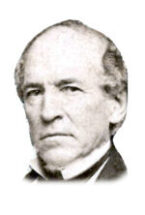
February 9th 1864 Monday
Julia and myself took the Govt Steam Tug “Lookout” at 3 o’clock P.M. on Saturday and went down to Rosiers Bluff or to “Fort Foot” three miles below Alexandria on the Maryland side on a visit to Maj E. P. Taft who is at present in command. We returned last evening. While there we enjoyed ourselves much. We visited Mt Vernon with a select company and in a special steamer which is employed for the Fort. The Company consisted of Maj Taft & Lady, Capt Lyon & Lady, Surgeon Sabin & Lady, Capt & Lady, Surgeon Chamberlin of the 9th, Capt Winchester, Commissary of the 9th at Fort Foot, Lieut Wellington, and ourselves. Capt Roeselle at the Fort was quite attentive to Julia. He was officer of the day and did not go on the trip. Surge[o]n Chamberlin did the polite to her on the trip.
A Diary From Dixie.
February 9, 2024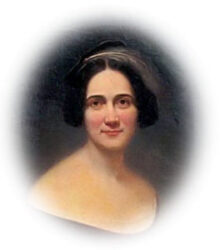
February 9th.–This party for Johnny was the very nicest I have ever had, and I mean it to be my last. I sent word to the Carys to bring their own men. They came alone, saying, “they did not care for men.” “That means a raid on ours,” growled Isabella. Mr. Lamar was devoted to Constance Cary. He is a free lance; so that created no heart-burning.
Afterward, when the whole thing was over, and a success, the lights put out, etc., here trooped in the four girls, who stayed all night with me. In dressing-gowns they stirred up a hot fire, relit the gas, and went in for their supper; réchauffé was the word, oysters, hot coffee, etc. They kept it up till daylight.
Of course, we slept very late. As they came in to breakfast, I remarked, “The church-bells have been going on like mad. I take it as a rebuke to our breaking the Sabbath. You know Sunday began at twelve o’clock last night.” “It sounds to me like fire-bells,” somebody said.
Soon the Infant dashed in, done up in soldier’s clothes: “The Yankees are upon us!” said he. “Don’t you hear the alarm-bells? They have been ringing day and night!” Alex Haskell came; he and Johnny went off to report to Custis Lee and to be enrolled among his “locals,” who are always detailed for the defense of the city. But this time the attack on Richmond has proved a false alarm.
A new trouble at the President’s house: their trusty man, Robert, broken out with the smallpox.
We went to the Webb ball, and such a pleasant time we had. After a while the P. M. G. (Pet Major-General) took his seat in the comfortable chair next to mine, and declared his determination to hold that position. Mr. Hunter and Mr. Benjamin essayed to dislodge him. Mrs. Stanard said: “Take him in the flirtation room; there he will soon be captured and led away,” but I did not know where that room was situated. Besides, my bold Texan made a most unexpected sally: “I will not go, and I will prevent her from going with any of you.” Supper was near at hand, and Mr. Mallory said: “Ask him if the varioloid is not at his house. I know it is.” I started as if I were shot, and I took Mr. Clay’s arm and went in to supper, leaving the P. M. G. to the girls. Venison and everything nice.
0
February 8, 2024
February 8th. My birthday, 19 years old. Left Baltimore at 9 o’clock last night. Passed through Philadelphia about midnight. Arrived in Jersey City at 8 A. M. Made my way to the home of my relations, taking breakfast with my grandmother. All were surprised and glad to see me. New York was my early boyhood home, having been born in that city, but left it when eleven years old, going to Connecticut to live. My time passed quickly and very pleasantly. Nothing happened to mar the pleasure of my visit.
Downing’s Civil War Diary.–Alexander G. Downing.
February 8, 2024
Monday, 8th–We left bivouac at 8 o’clock and covered seventeen miles today. There was some skirmishing in front. The roads were good and but few bridges to cross. All is quiet in the rear. This section of the country is heavily timbered, mostly pine, and the soil is quite sandy. It is thinly settled through here.
War Diary of Luman Harris Tenney.
February 8, 2024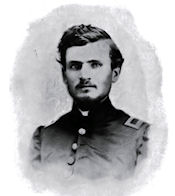
8th. Saw several committees in C. About 11 made arrangements for rest of company in Polk Township, Cranford County. $100 bounty. Several of us went to town and to theatre. Restaurant first for supper.
A Rebel War Clerk’s Diary
February 8, 2024
FEBRUARY 8th.—The air is filled with rumors—none reliable.
It is said Gen. Lee is much provoked at the alarm and excitement in the city, which thwarted a plan of his to capture the enemy on the Peninsula; and the militia and the Department Battalions were kept yesterday and to-day under arms standing in the cold, the officers blowing their nails, and “waiting orders,” which came not. Perhaps they were looking for the “conspirators;” a new hoax to get “martial law.”
A Union meeting has been held in Greensborough, N. C. An intelligent writer to the department says the burden of the speakers, mostly lawyers, was the terrorism of Gen. Winder and his corps of rogues and cut-throats, Marylanders, whose operations, it seems, have spread into most of the States. Mr. Sloan, the writer, says, however, a vast majority of the people are loyal.
It is said Congress is finally about to authorize martial law.
My cabbages are coming up in my little hot-bed—half barrel.
Gen. Maury writes from Mobile that he cannot be able to obtain any information leading to the belief of an intention on the part of the enemy to attack Mobile. He says it would require 40,000 men, after three months’ preparation, to take it.
Gov. Brown, of Georgia, says the Confederate States Government has kept bad faith with the Georgia six months’ men; and hence they cannot be relied on to relieve Gen. Beauregard, etc. (It is said the enemy are about to raise the siege of Charleston.) Gov. B. says the State Guard are already disbanded. He says, moreover, that the government here, if it understood its duty, would not seize and put producers in the field, but would stop details, and order the many thousand young officers everywhere swelling in the cars and hotels, and basking idly in every village, to the ranks. He is disgusted with the policy here. What are we coming to?
Everywhere our troops in the field, whose terms of three years will expire this spring, are re-enlisting for the war. This is an effect produced by President Lincoln’s proclamation; that to be permitted to return to the Union, all men must first take an oath to abolish slavery!
Through Some Eventful Years
February 8, 2024
February ___,[1] 1864.—I did not write yesterday, nor for three days before that and now I cannot quite remember the date. We have had a delightful visit, or rather two delightful visits, first at Goodwood and then at Woodstock; just the two pleasantest places that you could imagine. I am sure no girl ever had two sweeter aunts than Aunt Sue and Aunt Nannie; both are charming, each in a different way.
Eliza Lane was at Goodwood with us and, when we went home with her, I was so glad to see dear little Sallie, who is so anxious to be “a grown-up young lady” too.
Aunt Nannie has a beautiful bride staying with her, Mrs. Dr. Goldthwaite, from Mobile, as well as I can remember. She told us of her wedding, which took place some ten days ago. Dr. Goldthwaite had thirty-six hours leave of absence, so there was need for haste. There is a dearth of young men, when you get away from a military post and she had twenty young ladies for attendants. The groom, the minister and the bride’s father were the only men present. They left immediately after the ceremony for Tallahassee, where Dr. Goldthwaite thought he was stationed but, much to his disappointment, his regiment had moved on, so he left his wife with Aunt Nannie. Everybody is just as kind as possible and tries to make things cheerful for her and she is as pretty and sweet as can be.
But I am not telling you of the exciting day we missed. On our way home, opposite the Berryhill Place, to be exact, we saw a number of soldiers, preparing to camp. We could see that it was a battery of artillery but that was all, we could not even go slowly by the camp, for Father and Mother are very strict in their ideas and, while some girls do not mind stopping to talk with any stranger who wears the gray, we have been told not to do it. So we went on, wondering as we went, who they could be?
As we drove in at home, we met uncle Randal with one wagon and little Randal with another, we thought nothing of this, but no sooner had we entered the house than Mother and Mattie began to tell us all we had missed. This same battery of artillery had dined at Pine Hill that day.
Mother was enthusiastic in her praises of Colonel Capers and his command and Father was so taken with them that he had sent the wagons we met to take them some supper. Well, we can’t have everything. When uncle Randal came home he brought just the nicest note of thanks you ever read to Father, for his kindness to him and his men.
[1]This diary was written in pencil and in many instances the dates are almost, or quite, illegible. The month and year are plain but the figures are not so plain; particularly is this the case during the years of warfare, possibly the pencils were poor, or the paper might have been. At any rate we ask our readers to be lenient if some little mistakes occur.
Susan Bradford is nearly 17 years old when this entry was made.
Last night about ten o’clock, their camp fires all died out and this morning the Yankees were all gone, except their line of pickets.
February 8, 2024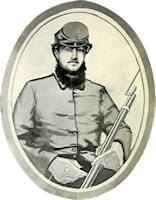
…a tramp of ten miles through the mud ankle deep is enough to tire a mule.
CAMP NEAR ORANGE COURT HOUSE, VA.,
February 8, 1864.
Dear Mother:
I received your letter last week and I had just commenced to answer it when I heard commotion at Morton’s Ford. Our Brigade was on picket last week, one week sooner than our time, in consequence of Gen. Battle’s and Johnston’s Brigades having gone somewhere, I suppose to North Carolina. I was on camp guard at the time and was left for camp duty. Our Brigade had fallen in to start back to camp when our cannon on picket fired into the Yankees then graping. Before the boys could get to the breastworks, the Yankees had driven the picket line into them. They kept up a pretty sharp skirmish for three or four hours. The sharpshooters got so near to each other that they run and shot each other around a house, one Yankee was killed on the piazza of the house. There was only one man in our Brigade that was hurt, his name was W. A. Driver, belonging to our company. He was wounded on the skirmish line. The Yankees lost some ten or fifteen. We killed one of their Generals, but they succeeded in getting him across the river. That night our line of pickets were posted in their same old posts. We heard here in camp that the Yankees were about to take our breastworks.
Next morning, Sunday, Peter Christman and myself rolled up our things and by daylight were on our way to the breastworks. When we got there our army was lying in our breastworks and the Yankees were scattered all over the fields about a half-mile the other side of the river. All their cannons were in position and remained so during the day. There were two lines of artillery just the right distance from each other to do the best execution, frowning at each other the whole day, neither willing or inclined to commence the fight across the river.
Last night about ten o’clock, their camp fires all died out and this morning the Yankees were all gone, except their line of pickets.
We pretty soon started back to camp and got here an hour ago, and I am in hopes they will not trouble us any more this winter. The mountains in Yankeedom were covered with snow this morning. I am in hopes we will have some shortly to put an end to all military operations for this winter. I will write again in a day or two. I am as tired as a horse at present, a tramp of ten miles through the mud ankle deep is enough to tire a mule. Give love to all.
As ever, your devoted son,
WALTER.
Letters from two brothers who served in the 4th North Carolina Infantry during the Civil War are available in a number of sources online. Unfortunately, the brothers are misidentified in some places as Walter Lee and George Lee when their names were actually Walter Battle and George Battle. See The Battle Brothers for more information on the misidentification.
0
February 7, 2024
February 7th. Arrived in Baltimore at 7 A. M. Had breakfast, then made our way across the city to the Philadelphia R. R. Station. There learned that we could not get a train out of the city until 9 P. M. A great disappointment. When leaving camp thought we could connect right through to New York. As we had a long time to wait, we put up at the Union House. Made a few calls, as we had acquaintances in the city. Called at the Stuart Mansion Hospital, where I was during my long illness, early in 1863. I found the nurses still on duty. All were pleased to see me. One woman and two men, in charge of ward 4. At this time it was known as the Jarvis Hospital, west end of Baltimore. The day passed very pleasantly.
“These women here have so disgusted me with the use of tobacco that I have determined to abandon it.”–Army Life of an Illinois Soldier, Charles Wright Wills.
February 7, 2024
Scottsboro, Ala., February 7, 1864.
This has indeed been a day of rest. More like a home Sabbath, than the Lord’s day often seems, here in the “show business.” None of my company have been on duty, and as the day has been bright and warm, the men have been nearly all out in front of the quarters; all looking natty and clean and healthy, sunning themselves real country-Sunday fashion. Seems to me that I grow prouder every day of being captain over these men. If I could only get 30 good, healthy recruits, I expect I’d have to be “hooped.” The boys brought a fiddle in with them yesterday from our Lebanon march, and as nearly all of them play, “more or less,” it has seen but little rest to-day. Every man I have present (42) is for duty, and if there are any soldiers in the army who can outmarch them, or do duty better, “I want them for Babcockses,” as the boys say. Frank Post was in my tent to-day, and informed me that in her last letter, Laura told him that some horrible stories of my cruelty to women and children while in command of the mounted detachment, were in circulation at home. He wanted me to trace the author of them, but I respectfully begged to be excused. The person who told such stuff, falsifies; for I never killed a fly, or stepped on a worm, or kicked a dog, or threw a stone at a cat, and know I wouldn’t treat a woman or child worse, if they were Rebels. I do take a little private satisfaction in knowing that I have never said a word, except respectfully, to any woman in the Confederacy, that I have ever touched a cent’s worth of private property for my own use. We, with 600 more of our brigade, had to take horses and rations from a poor set of people, but that was no more our fault than the war is. Those pretty crystals I sent you by Lieutenant Dorrance, are “Iceland Spar,” which is, I believe, the only stone which possesses the power of double refraction. If you put a thin piece of it over a black mark on paper, and look closely, you will see two marks; try this piece which I enclose. I took a lesson in chess last night, played a couple of games. Don’t think I would ever make a player. Colonel Dickerman is at present commanding the brigade, and Major Willison the regiment, Lieutenant Colonel Wright being on detached service as a division inspector general. Mattison is in his quartermaster department almost constantly, and Dorrance’s absence leaves me quite alone. Dorrance was in a way, good company. Always in a good humor and talking. Real accommodating, too, if carefully handled. [continue reading…]
Downing’s Civil War Diary.–Alexander G. Downing.
February 7, 2024
Sunday, 7th–We started early this morning and after reaching Brandon, about thirteen miles east of Jackson, went into bivouac about a mile from the town. There was no skirmishing in the front today, the rebels rapidly falling back. Our men set fire to the town this evening and burned almost the whole town. Most of the citizens had fled from the place before our forces entered. We captured a great quantity of tobacco here.
War Diary of Luman Harris Tenney.
February 7, 2024
7th. Made arrangements for 13 men. Went to camp again after making diligent inquiries, and partial agreement.
A Rebel War Clerk’s Diary
February 7, 2024
FEBRUARY 7th, Sunday.—The tocsin is sounding at 9 A.M. It appears that Gen. Butler is marching up the Peninsula (I have not heard the estimated number of his army) toward Richmond. But, being in the Secretary’s room for a moment, I heard him say to Gen. Elzey that the “local defense men” must be relied on to defend Richmond. These men are mainly clerks and employees of the departments, who have just been insulted by the government, being informed that no increased compensation will be allowed them because they are able to bear arms. In other words, they must famish for subsistence, and their families with them, because they happen to be of fighting age, and have been patriotic enough to volunteer for the defense of the government, and have drilled, and paraded, and marched, until they are pronounced good soldiers. Under these circumstances, the Secretary of War says they must be relied upon to defend the government. In my opinion, many of them are not reliable. Why were they appointed contrary to law? Who is to blame but the Secretaries themselves? Ah! but the Secretaries had pets and relatives of fighting age they must provide for; and these, although not dependent on their salaries, will get the increased compensation, and will also be exempted from aiding in the defense of the city—at least such has been the practice heretofore. These things being known to the proscribed local troops (clerks, etc.), I repeat my doubts of their reliability at any critical moment.
We have good news from the Rappahannock. It is said Gen. Rosser yesterday captured several hundred prisoners, 1200 beeves, 350 mules, wagons of stores, etc. etc.
Nevertheless, there is some uneasiness felt in the city, there being nearly 12,000 prisoners here, and all the veteran troops of Gen. Elzey’s division are being sent to North Carolina.
0
February 6, 2024
February 6th. Martinsburg, West Virginia. Cloudy, cold. Detailed for picket duty. Located on Charlestown Pike, southeast of town. On post two hours and off four. So I passed the day. Along in the evening, while out on post, was relieved from duty, informed that I had been granted a furlough for ten days, giving to me an opportunity to visit old Connecticut. On my return to camp, found that Edwin White of our company had also received a furlough. After a bath and a change of raiment, we decided to journey together. We left camp about eleven o’clock at night. At the depot was informed that the next train North would leave at 2 A. M., which would be Sunday morning. About midnight we started up town to find something to eat. The town being under martial law, provost guards were at every corner to protect the town and preserve order. I was in possession of the countersign, having received it early in the evening while on picket duty. Did not find anything to eat, had a good time walking around while waiting for the train. Whenever challenged by the guards, I would advance and give the countersign. Few trains were run on the B. & O. R. R. in the night. Shall not be able to get anything to eat until our arrival in Baltimore, where the train is due about 7 A. M. We are very happy over the prospect of seeing home and friends once more, having been in the service for eighteen months.