A Rebel War Clerk’s Diary

Civil War Day-by-Day
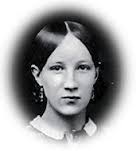
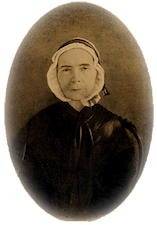
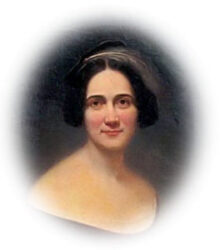
A likeness of Jones when he was editor and majority owner of the Daily Madisonian during President John Tyler’s administration.

April 11th.–Cloudy and misty. It is reported that Gen. Johnston has surrendered his army in North Carolina, following the example of Gen. Lee. But no salutes have been fired in honor of the event. The President (Davis) is supposed to be flying toward the Mississippi River, but this is merely conjectural. Undoubtedly the war is at an end, and the Confederate States Government will be immediately extinct–its members fugitives. From the tone of leading Northern papers, we have reason to believe President Lincoln will call Congress together, and proclaim an amnesty, etc.

Judge Campbell said to Mr. Hart (clerk in the Confederate States War Department) yesterday that there would be no arrests, and no oath would be required. Yet ex-Captain Warner was arrested yesterday, charged with ill treating Federal prisoners, with registering a false name, and as a dangerous character. I know the contrary of all this; for he has been persecuted by the Confederate States authorities for a year, and forced to resign his commission.

My application to Gen. Shepley for permission to remove my family to the Eastern Shore, where they have relatives and friends, and may find subsistence, still hangs fire. Every day I am told to call the next day, as it has not been acted upon.

0 comments

Downing’s Civil War Diary.—Alexander G. Downing.

Diary of Alexander G. Downing; Company E, Eleventh Iowa Infantry

Tuesday, 11th–Weather quite pleasant. We started at 6 a. m. and marched twelve miles. Our march was very slow, the road being through one continuous swamp. We had to lay corduroy the whole way. Our division, the First, was in front of the corps, and there was some skirmishing in our front.

0 comments

War Diary of Luman Harris Tenney.

War Diary of Luman Harris Tenney.

11th. Marched out in advance of the Corps–Custer commanding. Grant passed us. Boys cheered him lustily. Went into camp 9 miles from Burke’s Station. Little rain.

0 comments

“The whole army, mules, wagons, bummers and generals have come out new from Goldsboro.”–Army Life of an Illinois Soldier, Charles Wright Wills.

Civil War Day-by-Day

On picket, Raleigh road, three miles from Nahanta
Station, on Weldon and Goldsboro railroad,
April 10, 1865.

Our division moved north to-day along the Weldon railroad to Nahanta, where we crossed and took a main Raleigh road. Our 1st brigade had the advance and had light skirmishing all day. Wheeler’s cavalry is opposing us. Our regiment is on picket to-night, and the enemy shot a little at us before dark, but all is quiet just now. Passed through a very fine country to-day. It has rained all day. Some cannonading on our left. I think the whole army moved to-day. The 20th corps passed us near town this morning in exactly opposite direction to ours. The whole army, mules, wagons, bummers and generals have come out new from Goldsboro. The whole machine looks as nicely as an army can look. Our 1st brigade took a swamp crossing from the enemy to-day, that our brigade could hold against a corps. A bullet passed miserably near to me as I was arranging our picket line this evening.

0 comments

A Rebel War Clerk’s Diary

Civil War Day-by-Day
A likeness of Jones when he was editor and majority owner of the Daily Madisonian during President John Tyler’s administration.

April 10th.–Raining. I was startled in bed by the sound of cannon from the new southside fort again. I suppose another hundred guns were fired; and I learn this morning that the Federals declare, and most people believe, that Lee has really surrendered his army–if not indeed all the armies.

My Diary is surely drawing to a close, and I feel as one about to take leave of some old familiar associate. A habit is to be discontinued–and that is no trifling thing to one of my age. But I may find sufficient employment in revising, correcting, etc. what I have written. I never supposed it would end in this way.

Ten A.M. It is true! Yesterday Gen. Lee surrendered the “Army of Northern Virginia.” His son, Custis Lee, and other generals, had surrendered a few days previously. The men are paroled by regimental commanders, from the muster rolls, and are permitted to return to their homes and remain undisturbed until exchanged. The officers to take their side-arms and baggage to their homes, on the same conditions, etc. There were 290 pieces of artillery belonging to this army a few weeks ago. This army was the pride, the hope, the prop of the Confederate cause, and numbered, I believe, on the rolls, 120,000 men. All is lost! No head can be made by any other general or army–if indeed any other army remains. If Mr. Davis had been present, he never would have consented to it; and I doubt if he will ever forgive Gen. Lee.

0 comments

Downing’s Civil War Diary.—Alexander G. Downing.

Diary of Alexander G. Downing; Company E, Eleventh Iowa Infantry

Monday, 10th–Had an all-day rain. The entire army moved forward today, some starting at 8 a. m. We packed our knapsacks early this morning, but did not start until 10 o’clock. While we were waiting, some of the Twenty-fourth Iowa Regiment which had arrived at Goldsboro came over to our “ranches” for a visit. We boys had a visit from Homer Curtis of Company C, Twenty-fourth Iowa. We marched ten miles today. The Fifteenth and Seventeenth Corps form the right wing, the Twenty-third Corps, in command of General Schofield, the center, and the Fourteenth and Twentieth Corps form the left wing. Some heavy cannonading off on the left.

0 comments

War Diary of Luman Harris Tenney.

War Diary of Luman Harris Tenney.

10th. Camped last night side by side with Lee’s army. A great jubilee among the boys. Soon after sunrise moved out. Sheridan passed us. Cheered him as he passed. Camped at Prospect Station.

0 comments

0

Civil War Day-by-Day
Charles Lynch

April 10th. The firing of heavy field guns at midnight aroused everybody. Great rejoicing when we learned that General Lee has surrendered to our Grant. Crowds of people began to come to town very early to hear the latest news. It was hard for some to believe it. We hope the four years of struggling with death and destruction are at an end. As the people returned to their homes, informed me that they would again have an open road, and not be stopped to answer questions and show a pass. They won’t be any more pleased about it than these same soldiers who are very anxious to return to our homes in Yankee land. This is a fine country. We are happy over the prospects that the war is coming to an end. Passed a very pleasant time in charge of the picket post, out on the Tuscaror road.

0 comments

Village Life in America

Village Life in America, 1852 – 1872, by Caroline Cowles Richards

Monday, April 10. – “Whether I am in the body, or out of the body, I know not, but one thing I know,” Lee has surrendered! and all the people seem crazy in consequence. The bells are ringing, boys and girls, men and women are running through the streets wild with excitement; the flags are all flying, one from the top of our church, and such a “hurrah boys” generally, I never dreamed of. We were quietly eating our breakfast this morning about 7 o’clock, when our church bell commenced to ring, then the Methodist bell, and now all the bells in town are ringing. Mr. Noah T. Clarke ran by, all excitement, and I don’t believe he knows where he is. No school to-day. I saw Capt. Aldrich passing, so I rushed to the window and he waved his hat. I raised the window and asked him what was the matter? He came to the front door where I met him and he almost shook my hand off and said, “The war is over. We have Lee’s surrender, with his own name signed.” I am going down town now, to see for myself, what is going on. Later–I have returned and I never saw such performances in my life. Every man has a bell or a horn, and every girl a flag and a little bell, and every one is tied with red, white and blue ribbons. I am going down town again now, with my flag in one hand and bell in the other and make all the noise I can. Mr. Noah T. Clarke and other leading citizens are riding around on a dray cart with great bells in their hands ringing them as hard as they can. Dr. Cook beat upon an old gong. The latest musical instrument invented is called the “Jerusalem fiddle.” Some boys put a dry goods box upon a cart, put some rosin on the edge of the box and pulled a piece of timber back and forth across it, making most unearthly sounds. They drove through all the streets, Ed Lampman riding on the horse and driving it.

Monday evening, April 10.–I have been out walking for the last hour and a half, looking at the brilliant illuminations, transparencies and everything else and I don’t believe I was ever so tired in my life. The bells have not stopped ringing more than five minutes all day and every one is glad to see Canandaigua startled out of its propriety for once. Every yard of red, white and blue ribbon in the stores has been sold, also every candle and every flag. One society worked hard all the afternoon making transparencies and then there were no candles to put in to light them, but they will be ready for the next celebration when peace is proclaimed. The Court House, Atwater Block, and hotel have about two dozen candles in each window throughout, besides flags and mottoes of every description. It is certainly the best impromptu display ever gotten up in this town. “Victory is Grant-ed,” is in large red, white and blue letters in front of Atwater Block. The speeches on the square this morning were all very good. Dr. Daggett commenced with prayer, and such a prayer, I wish all could have heard it. Hon. Francis Granger, E. G. Lapham, Judge Smith, Alexander Howell, Noah T. Clarke and others made speeches and we sang “Old Hundred” in conclusion, and Rev. Dr. Hibbard dismissed us with the benediction. I shook hands with Mr. Noah T. Clarke, but he told me to be careful and not hurt him, for he blistered his hands to-day ringing that bell. He says he is going to keep the bell for his grandchildren. Between the speeches on the square this morning a song was called for and Gus Coleman mounted the steps and started “John Brown” and all the assenibly joined in the chorus, “Glory, Hallelujah.” This has been a never to be forgotten day.

0 comments

Diary of a Southern Refugee, Judith White McGuire.

Diary of a Southern Refugee During the War by Judith White McGuire

10th.—Another gloomy Sabbath-day and harrowing night. We went to St. Paul’s in the morning,.and heard a very fine sermon from Dr. Minnegerode–at least so said my companions. My attention, which is generally riveted by his sermons, wandered continually. I could not listen; I felt so strangely, as if in a vivid, horrible dream. Neither President was prayed for; in compliance with some arrangement with the Federal authorities, the prayer was used as for all in authority! How fervently did we all pray for our own President! Thank God, our silent prayers are free from Federal authority. “The oppressor keeps the body bound, but knows not what a range the spirit takes.” Last night, (it seems strange that we have lived to speak or write of it,) between nine and ten o’clock, as some of the ladies of the house were collected in our room, we were startled by the rapid firing of cannon. At first we thought that there must be an attack upon the city; bright thoughts of the return of our army darted through my brain; but the firing was too regular. We began to think it must be a salute for some great event. We threw up the windows, and saw the flashes and smoke of cannon towards Camp Jackson. Some one present counted one hundred guns. What could it be? We called to passers-by: “What do those guns mean?” Sad voices answered several times: “I do not know.” At last a voice pertly, wickedly replied: “General Lee has surrendered, thank God! ” Of course we did not believe him, though the very sound was a knell. Again we called out: “What is the matter? ” A voice answered, as if from a broken heart: “They say General Lee has surrendered.” We cannot believe it, but my heart became dull and heavy, and every nerve and muscle of my frame seems heavy too. I cannot even now shake it off. We passed the night, I cannot tell how—I know not how we live at all. At daybreak the dreadful salute commenced again. Another hundred guns at twelve to-day. Another hundred—can it be so? No, we do not believe it, but how can we bear such a doubt? Where are all our dear ones, our beloved soldiers, and our noble chief to-night, while the rain falls pitilessly? Are they lying on the cold, hard ground, sleeping for sorrow? or are they moving southward trinmphantly, to join General Johnston, still able and willing—ah, far more than willing—to avenge their country’s wrongs? God help us!—we must take refuge in unbelief.

0 comments

A Rebel War Clerk’s Diary

Civil War Day-by-Day
A likeness of Jones when he was editor and majority owner of the Daily Madisonian during President John Tyler’s administration.

April 9th.–Bright and beautiful. Rev. Mr. Dashiell called, after services. The prayer for the President was omitted, by a previous understanding.

Rev. Dr. Minnegerode, and others, leading clergymen, consider the cause at an end. A letter from Gen. Lee has been found, and its authenticity vouched for (Rev. Dr. M. says) by Judge Campbell, in which he avows his conviction that further resistance will be in vain–but that so long as it is desired, he will do his utmost in the field.

And Dr. M. has information of the capture of three divisions of Longstreet since the battle of Sunday last, with some eight generals – among them Lieut.-Gen. Ewell, Major-Gen. G. W. Custis Lee, etc.

The clergy also seem to favor a convention, and the resumption by Virginia of her old position in the Union–minus slavery. Charlottesville has been named as the place for the assembling of the convention. They also believe that Judge Campbell remained to treat with the United States at the request of the Confederate States Government. I doubt. We shall now have no more interference in Caesar’s affairs by the clergy–may they attend to God’s hereafter!

Ten o’clock P.M. A salute fired–100 guns–from the forts across the river, which was succeeded by music from all the bands. The guard promenading in front of the house says a dispatch has been received from Grant announcing the surrender of Lee!

I hear that Gen. Pickett was killed in the recent battle!

0 comments

Downing’s Civil War Diary.—Alexander G. Downing.

Diary of Alexander G. Downing; Company E, Eleventh Iowa Infantry

Sunday, 9th–Very pleasant weather. Our division was inspected this forenoon by General Smith. Two regiments in the division did not pass inspection and were sent back to their “ranches” with the order to get themselves up in better style and come back at 4 o’clock for inspection. The Eleventh Iowa was complimented for its neat appearance. We were ordered to come over to General Smith’s headquarters at 5 o’clock in the evening to hold our dress parade. The officers of the two disgraced regiments were ordered to appear at his headquarters to see our regiment go through the manual of arms on our dress parade. We returned to our “ranches” much elated over the high compliments we had received from our division commander. We set to work at once preparing for our dress parade, not even taking time to cook our noon-day mess. A number of the boys were sent down town to buy all the white gloves and white collars they could find, besides shoe blacking and shoe brushes, and then we spent all the time till the parade in fixing ourselves up. We went over to the general’s headquarters looking our best, and every move ordered by our colonel was nicely executed in the presence of the line officers of the other two regiments.[1]


[1] The next day when we started for Raleigh, one of those two regiments having marched out on the road ahead of our regiment, was ordered to halt while ours passed to the front. While we were marching by they could not find words strong enough to express their contempt for us.—A. G. D.

0 comments

War Diary of Luman Harris Tenney.

War Diary of Luman Harris Tenney.

9th. Sunday. Fighting commenced early. 24 and 15 Corps up. Infantry coming up double quick. Rebs attacked. Drove cavalry back. Infantry turned the tide. Grant summoned Lee to surrender. Lee asks for terms. Grant orders Sheridan to press him. Whole thing moves up, Custer in advance. White flag meets him. Silence reigns. The whole cavalry cheer. A rebel cavalry force attack. Easily repulse it. Whole reb army before us. Glorious day. Surrender.[1]


[1] On April 9, 1865, recognizing that the end of the war was at hand, and that his relations with the Third Cavalry Division must soon be sundered, its beloved commander promulgated to his troops that memorable address best known as

Custer’s Farewell Order

Headquarters Third Cavalry Div., Appomattox Court House, Virginia, April 9, 1865.

With profound gratitude toward the God of Battles, by whose blessings our enemies have been humbled and our arms triumphant, your Commanding General avails himself of this, his first opportunity, to express to you his admiration of the heroic manner in which you have passed through the series of battles which today resulted in the surrender of the enemy’s entire army.

The record established by your indomitable courage is unparalleled in the annals of war. Your prowess has won for you even the respect and admiration of your enemies. During the past six months, although in most instances confronted by superior numbers, you have captured from the enemy, in open battle, one hundred and eleven pieces of field artillery, sixty-five battle flags, and upwards of ten thousand prisoners of war, including seven general officers. Within the past ten days, and included in the above, you have captured forty-six field pieces of artillery, and thirty-seven battle flags. You have never lost a gun, never lost a color and have never been defeated; and notwithstanding the numerous engagements in which you have borne a prominent part, including those memorable battles of the Shenandoah, you have captured every piece of artillery which the enemy has dared to open on you. The near approach of peace renders it improbable that you will again be called upon to undergo the fatigue of toilsome march, or the exposure of the battlefield; but should the assistance of keen blades wielded by your sturdy arms, be required to hasten the coming of that glorious peace for which we have been so long contending, the General Commanding is firmly confident that, in the future as in the past, every demand will meet with a hearty and willing response.

Let us hope that our work is done, and that, blest with the comforts of peace, we may be permitted to enjoy the pleasure of home and friends. For our comrades who have fallen let us ever cherish a grateful remembrance; to the wounded and those who languish in Southern prisons let our heartfelt sympathy be tendered.

And now, speaking for myself alone, when the war is ended and the task of the historian begins–when those deeds of daring, which have rendered the name and fame of the Third Cavalry Division imperishable, are inscribed on the bright pages of our country’s history, I only ask that my name be written as that of the Commander of the Third Cavalry Division.

G. A. Custer,

Brevet Major General Commanding.

Official:

L. W. Barnhart,

Captain and A. A. A. G.

_

Extract from an account of the surrender given by J. T. Haskell, Co. H, at the Reunion of the 2nd Ohio Cav. held in Cleveland, Ohio, October 10, 1911.

“It seems fitting and proper as a final word of the 2nd Ohio Cavalry’s part in this account of the surrender, Gen. Custer’s Headquarters being almost in the immediate front of the Regiment, to give an account of his (Gen. Custer’s) receiving the flag of truce from the Rebel officer carrying the same, and as that account is given by the Rebel General John B. Gordon better than any other account I have ever seen, I will give his words: He says, “I had received word from Gen. Lee informing me that there was a flag of truce between him and Gen. Grant, and that I should notify the Union Army in my front. I called for my Chief of Staff and said, ‘take a flag of truce, bear this message to the Union commander, quick.’ He said, ‘I have no flag of truce.’ ‘O well,’ I said, ‘take your handkerchief and tie it on a stick and go.’ He said, ‘General, I have no handkerchief.” I said, ‘Tear up your shirt, put that on a stick and go.’ He said, ‘I have no white shirt, and see you have none, there is not a white shirt in the whole Army.’ I said, ‘Get something, get something and go.’ He got something and went. There soon returned with him one of the most superb horsemen that ever sat a saddle, and as I looked into his flashing blue eyes, with his long curls falling to his shoulders, I found myself in the presence of that afterwards great Indian fighter, that man who ought forever to hold a place in every American heart, the gallant Custer.

“With a wave of his sword, which embodied all the grace of the schools, he said to me, ‘Gen. Gordon, I bring you the compliments of Gen. Sheridan. I also bring you, sir, Gen. Sheridan’s demand for your immediate and unconditional surrender.’ Just then a white flag was seen in my front, and with it rode Gen. Sheridan and his staff.”

_

Note–Mrs. Elizabeth B. Custer, widow of General Custer, has recently presented me with a souvenir consisting of a part of this famous Flag of Truce (which flag was a crash towel), a fragment of the table on which Grant and Lee signed the Articles of Surrender at Appomatox, and a piece of the red necktie worn by Gen. Custer on this occasion. A. B. N., June 14, 1911.

_

Letter from L. H. Tenney to His Mother and Sisters

“Oakland,” Alabama, Sunday P. M., April 8, 1866.

My Dear Friends:

I am reminded every day of the campaign during those last days of the rebellion. On this day, one year ago–the sun far down in the west–our brigade with no noise save the clamping of horses’ feet and the clanking of sabre scabbards, charged down upon the worried Johnnies at Appomattox Station. The surprise was complete. Three trains of cars, well loaded with provisions and munitions of war for Gen. Lee’s mere skeleton of an army, with the force guarding them fell into our hands without the loss of a man. Three miles away to the east and rear was Appomattox Court House, where the flying and discomforted army was halting. Gen. Walker, Reb., had been sent ahead with the Artillery brigade to take the cars for Lynchburg, only twenty-three miles distant, where Lee was coming. The Artillery was just coming in from the east as we reached the station from the south. The Gen. wheeled his guns, 25, in the road where they were, hoping by a hard fight to get the station. Grape, canister and shell came thick and fast and infantry stood firmly by the guns as we made charge after charge. Night came. Other divisions were coming up. Gen. Custer became impatient. He rode along the line and shouted, “Boys, the 3rd Div. must have those guns. I’m going to charge if I go alone.” The guns were belching forth red fire. The word was given. Gen. Custer did not charge alone. Guns, wagons and prisoners were ours and our boys did not stop until they had passed the Court House where the camp-fires marked the location of the rebel army along the hillsides. Several 2nd Ohio boys were there, Major Easton, Capt. Co. M and Lieut. Rand. The boys were full of enthusiasm and eager to “charge them.” Mounted men were in our front. I ordered “cease firing” and asked who they were. “Gen. Geary and his staff,” was the reply. Looking down to the left of the road, we noticed by the light of the camp-fires a line advancing. We were almost in rear of it. We expected a volley as we withdrew, but the confusion saved us.

At midnight our Div. was relieved. We camped at the station. We wondered what the morrow would bring forth. We knew that we were in front of Lee without Infantry support. And the continual skirmishing told us that Lee was not to be penned without a hard fight. The morning of the 9th came. The Cavalry was being pushed back rapidly towards the station. The boys were falling, scores of them–why was it with victory so near?–when over the hill a dark column was espied coming down the road in close column at quick time. What relief from the awful suspense! What cared we for the color or race of those men so they brought relief to us. We saw courage and determination in their coal-black faces. Give them the ballot, for they insured victory that day. The Cavalry, after being relieved, formed squadrons and at a trot, under flank fire, moved through the fields toward the Court House.

Lines of Infantry were in our rear, moving up from the south and west. Aids came down the line, shouting “Make no noise! Gen. Grant has ordered Lee to surrender and Sheridan to press him! We are going to do it!”

We reach the wooded hills, south of and in sight of the Court House. All at once the Artillery ceases firing. A white flag appears in front. The column halts. Gen. Custer meets it. Again Aids dash off and we see it in their faces, “Lee has surrendered!” Oh the wild and mad huzzas which followed! Pen can not picture the scene. The four years of suffering, death and horrid war were over. Thank God! thank God!! was upon every tongue. Peace, home and friends were ours. Yes, thank God! What wonder that we were crazy with joy? Right here some of Wheeler’s Cavalry, not advised of the truce, came charging upon us. We held our fire, forbore till they meanly persisted, when our boys without orders drove them back. They learned of the truce just in time to save precious blood. Not eighty rods in front of us, when we halted in a hollow, was a brigade of rebel infantry with twelve pieces of artillery loaded to the muzzle with grape shot, waiting for us to come over the hill. Here Sergt. Weary of Co. A fell while demanding the colors of the brigade. He was a brave man and left a family of children to mourn him. How many loving friends were waiting then for the coming of their brave boys, who now mourn their noble dead, whose graves mark the bloody struggle during those eight days from Petersburg to Appomattox.

In the exultations of victory the fallen were well-nigh forgotten. Then on either side of Appomattox C. H. the two armies went into camp–all friends. Rations were issued to all–and the rank and file on each side happy and thankful, I ween, that no more bugle calls were to summon them to battle.

I have spun out this account, but I remember that Lu was absent at the time and the circumstances and incidents are so fresh in my mind that I have enjoyed reviewing them.

May the President and Congress so act as to secure the fruits of the dearly bought victory.

I don’t know and cannot decide what is best in the way of imposing requirements upon the Southern people and establishing guaranties for the rights of freedmen.

The long and bitter discussion preparatory to action on the part of the government, I am confident, is working evil among Southerners. It tends to alienate them. They feel that the spirit of the majority of the Northern people is unfriendly towards them. The conduct of the people in this section has seemed consistent. We couldn’t expect more.

Much more delay in giving them some kind of show will exasperate a great many, I think, and make them unfriendly to Northerners, unkind and unjust to freedmen and disloyal to the government, while now I think the reverse is true.

I enjoyed the letter from Uncle Albert.

With much love to all and two kisses to Carrie,

Your brother Luman.
0 comments

0

Civil War Day-by-Day
Charles Lynch

April 9th. Detailed for picket duty. Located out on Tuscaror road, in charge. One duty I had to perform was to examine all citizens who enter town, as the town is under martial law, and they must have passes to go in and out, which are obtained from the Provost Marshal. They must take the oath of allegiance to the United States. They can then go in and out on business.

0 comments

Village Life in America

Village Life in America, 1852 – 1872, by Caroline Cowles Richards

Sunday, April 9.–There were great crowds at church this morning. Dr. Daggett’s text was from Prov. 18: 10: “The name of the Lord is a strong tower; the righteous runneth into it, and is safe.” It was a very fine sermon. They sang hymns relating to our country and Dr. Daggett’s prayers were full of thanksgiving. Mr. Noah T. Clarke had the chapel decorated with flags and opened the Sunday School by singing, “Marching On,” “My Country, ’tis of Thee,” “The Star Spangled Banner,” “Glory, Hallelujah,” etc. Hon. Wm. H. Lamport talked very pleasantly and paid a very touching tribute to the memory of the boys, who had gone out to defend their country, who would never come “marching home again.” He lost his only son, 18 years old (in the 126th), about two years ago. I sat near Mary and Emma Wheeler and felt so sorry for them. They could not sing.

0 comments

Diary of Horatio Nelson Taft.

Diary of US patent clerk Horatio Nelson Taft.

April 9th

Genl Lee has surrendered to Genl Grant with his whole Army!! Mr Lincoln has returned to Washington as in fine Spirits at the prospect of a speedy peace. It is thought that Johnson and the other rebel Genls will give up now that Lee has surrendered.

0 comments

Village Life in America

Village Life in America, 1852 – 1872, by Caroline Cowles Richards

Saturday, April 8.–The cannon has fired a salute of thirty-six guns to celebrate the fall of Richmond. This evening the streets were thronged with men, women and children all acting crazy as if they had not the remotest idea where they were or what they were doing. Atwater block was beautifully lighted and the band was playing in front of it. On the square they fired guns, and bonfires were lighted in the streets. Gov. Clark’s house was lighted from the very garret and they had a transparency in front, with “Richmond” on it, which Fred Thompson made. We didn’t even light “our other candle,” for Grandmother said she preferred to keep Saturday night and pity and pray for the poor suffering, wounded soldiers, who are so apt to be forgotten in the hour of victory.

0 comments

A Rebel War Clerk’s Diary

Civil War Day-by-Day
A likeness of Jones when he was editor and majority owner of the Daily Madisonian during President John Tyler’s administration.

April 8th.–Bright and pleasant weather.

We are still in uncertainty as to our fate, or whether an oath of allegiance will be demanded.

Efforts by Judge Campbell, Jos. R. Anderson, N. P. Tyler, G. A. Myers and others, are being made to assemble a convention which shall withdraw Virginia from the Confederacy.

Hundreds of civil employees remained, many because they had been required to volunteer in the local defense organization or lose their employment, and the fear of being still further perfidiously dealt with, forced into the army, notwithstanding their legal exemptions. Most of them had families whose subsistence depended upon their salaries. It is with governments as with individuals, injustice is sooner or later overtaken by its merited punishment.

The people are kinder to each other, sharing provisions, etc.

A New York paper says Gen. H. A. Wise was killed; we hear nothing of this here.

Roger A. Pryor is said to have remained voluntarily in Petersburg, and announces his abandonment of the Confederate States cause.

0 comments

Downing’s Civil War Diary.—Alexander G. Downing.

Diary of Alexander G. Downing; Company E, Eleventh Iowa Infantry

Saturday, 8th–All is quiet. Sherman’s army received orders to march on the 10th. Our wagon trains are loaded with thirty-five days’ rations, and we are to carry five days’ rations in our haversacks. The news is so good that all are anxious to move at once. The boys are all happy, thinking that this will be our last campaign. Our brigade received orders to clean clothing and accouterments for regimental inspection.

0 comments

War Diary of Luman Harris Tenney.

War Diary of Luman Harris Tenney.

8th. Moved out early and met the 2nd Div., Crook’s, at Prospect Station on R. R. A beautiful day. Troops all cheer for Custer. Captured at Appomattox Station 4 trains of cars, charged and captured 24 pieces of artillery and heavy train of wagons after fighting until 10 P. M. Did not stop till reached rebel camp at Appomattox C. H. Horse hit by a shell and I struck by a spent ball.

0 comments

A Rebel War Clerk’s Diary

Civil War Day-by-Day
A likeness of Jones when he was editor and majority owner of the Daily Madisonian during President John Tyler’s administration.

April 7th.–Slight showers.

Wm. Ira Smith, tailor, and part owner of the Whig, has continued the publication as a Union paper.

I visited the awful crater of the magazine. One current or stream of fire and bricks knocked down the east wall of the cemetery, and swept away many head and foot stones, demolishing trees, plants, etc.

It is said President Lincoln is still in the city. Dr. Ellison informed me to-day of the prospect of Judge Campbell’s conference with Mr. Lincoln. It appears that the judge had prepared statistics of our resources in men and materials, showing them to be utterly inadequate for a prolongation of the contest, and these he exhibited to certain prominent citizens, whom he wished to accompany him. Whether they were designed also for the eye of President Lincoln, or whether he saw them, I did not learn. But one citizen accompanied him–Gustavus A. Myers, the little old lawyer, who has certainly cultivated the most friendly relations with all the members of President Davis’s cabinet, and it is supposed he prosecuted a lucrative business procuring substitutes, obtaining discharges, getting passports, etc.

The ultimatum of President Lincoln was Union, emancipation, disbandment of the Confederate States armies. Then no oath of allegiance would be required, no confiscation exacted, or other penalty; and the Governor and Legislature to assemble and readjust the affairs of Virginia without molestation of any character.

Negotiations are in progress by the clergymen, who are directed to open the churches on Sunday, and it was intimated to the Episcopalians that they should pray for the President of the United States. To this they demur, being ordered by the Convention to pray for the President of the Confederate States. They are willing to omit the prayer altogether, and await the decision of the military authority on that proposition.

0 comments

Downing’s Civil War Diary.—Alexander G. Downing.

Diary of Alexander G. Downing; Company E, Eleventh Iowa Infantry

Friday, 7th–Weather still pleasant. Company drill two hours a day. Our brigade came out in review and was inspected by General Smith. A statement was read to us by the assistant adjutant general of our brigade, stating our loss at Richmond, and also that of the enemy. Our loss was seven thousand killed and two thousand taken prisoners, while that of the enemy was forty thousand in killed, wounded and prisoners.

0 comments

War Diary of Luman Harris Tenney.

War Diary of Luman Harris Tenney.

April 7th. Marched out, 32 reb colors behind Custer. Crossed S. S. R. R. at Rice’s Depot. Passed through Prince Edward’s C. H. and camped on a fork of the Appomattox. Lee’s army off to the right on the Lynchburg road.

0 comments

Village Life in America

Village Life in America, 1852 – 1872, by Caroline Cowles Richards

April, 1865.–What a month this has been. On the 6th of April Governor Fenton issued this proclamation: “Richmond has fallen. The wicked men who governed the so-called Confederate States have fled their capital, shorn of their power and influence. The rebel armies have been defeated, broken and scattered. Victory everywhere attends our banners and our armies, and we are rapidly moving to the closing scenes of the war. Through the self-sacrifice and heroic devotion of our soldiers, the life of the republic has been saved and the American Union preserved. I, Reuben E. Fenton, Governor of the State of New York, do designate Friday, the 14th of April, the day appointed for the ceremony of raising the United States flag on Fort Sumter, as a day of thanksgiving, prayer and praise to Almighty God, for the signal blessings we have received at His hands.”

0 comments

A Diary From Dixie.

Civil War Day-by-Day

April 7th.–Richmond has fallen and I have no heart to write about it. Grant broke through our lines and Sherman cut through them. Stoneman is this side of Danville. They are too many for us. Everything is lost in Richmond, even our archives. Blue black is our horizon. Hood says we shall all be obliged to go West–to Texas, I mean, for our own part of the country will be overrun.

Yes, a solitude and a wild waste it may become, but, as to that, we can rough it in the bush at home.

De Fontaine, in his newspaper, continues the old cry. “Now Richmond is given up,” he says, “it was too heavy a load to carry, and we are stronger than ever.” “Stronger than ever?” Nine-tenths of our army are under ground and where is another army to come from? Will they wait until we grow one?

0 comments