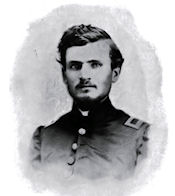
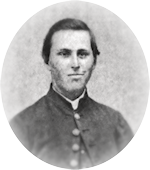
“I don’t remember at any time of being despondent over the war or being doubtful of the issue. Was I?”–Army Life of an Illinois Soldier, Charles Wright Wills.

Civil War Day-by-Day

Raleigh, April 15, 1865.

To-day makes four years soldiering for me. It is a terrible waste of time for me who have to make a start in life yet, and I expect unfits me for civil life. I have almost a dread of being a citizen, of trying to be sharp, and trying to make money. I don’t think I dread the work. I don’t remember of shirking any work I ever attempted, but I am sure that civil life will go sorely against the grain for a time. Citizens are not like soldiers, and I like soldier ways much the best. We were to have moved out this morning but did not. Logan went out with our 4th division, report says, to confer with Johnston. Big rumors going that our campaign is over, and that Johnston’s men are going home. We have been having heavy showers during the day, but the boys feel so good over the prospect ahead that they raise the most tremendous cheers right in the midst of the hardest rains. We think Johnston is in as tight a place as Lee was, and if he don’t surrender we will go for him in a way that will astonish him. We consider our cause gained and are searching each other’s records to see who was ever doubtful of success. I don’t remember at any time of being despondent over the war or being doubtful of the issue. Was I? I did think the war might last for years yet, but take that back. I have not been in town since we came through, and think no one from the brigade has. Curiosity over captured cities is “old.”

0 comments

Downing’s Civil War Diary.—Alexander G. Downing.

Diary of Alexander G. Downing; Company E, Eleventh Iowa Infantry

Saturday, 15th–We started at 7 a. m., marched only four miles and went into camp again. News came from the front that Johnston had stopped fighting for the purpose of surrendering his army to General Sherman. It rained hard all day, but we don’t mind that when hearing such glorious news as the surrender of Johnston. The Third and First Divisions remained in camp.

0 comments

War Diary of Luman Harris Tenney.

War Diary of Luman Harris Tenney.

15th. Wrote several letters and read the papers. Yesterday put in application for leave of absence. I am very anxious to see my dear mother. Would that Johnston would be wise and surrender. Think he will be. Thank God that peace is so near and a united country will live to advance religion, justice and liberty. Forage detail. Virginians thoroughly submissive.

0 comments

0

Civil War Day-by-Day
Charles Lynch

April 15th. Early morning news from the pump. Reported the assassination of our beloved President. At first it could not be believed. I saw an orderly galloping into camp, going right to the Colonel’s quarters. He brought the official report. It was soon known through camp. It was a great shock and cast a great gloom over our camp. How sudden the change. Joy turned to sorrow, when we were rejoicing over the prospects of peace and the end of the cruel war. At first it was reported that he might recover. Later report he was dead. We could not do anything but talk over the sad event. We all became angry and hated the South worse than ever. Thought all the leaders should be condemned to death. Indignation and rage was expressed alike by citizens and the soldiers. We wondered who could do such an awful thing. Later we were informed who the assassin was. Excitement continues in our camp as this sad day comes to a close.

0 comments

Village Life in America

Village Life in America, 1852 – 1872, by Caroline Cowles Richards

April 15.–The news came this morning that our dear president, Abraham Lincoln, was assassinated yesterday, on the day appointed for thanksgiving for Union victories. I have felt sick over it all day and so has every one that I have seen. All seem to feel as though they had lost a personal friend, and tears flow plenteously. How soon has sorrow followed upon the heels of joy! One week ago tonight we were celebrating our victories with loud acclamations of mirth and good cheer. Now every one is silent and sad and the earth and heavens seem clothed in sack-cloth. The bells have been tolling this afternoon. The flags are all at half mast, draped with mourning, and on every store and dwelling-house some sign of the nation’s loss is visible. Just after breakfast this morning, I looked out of the window and saw a group of men listening to the reading of a morning paper, and I feared from their silent, motionless interest that something dreadful had happened, but I was not prepared to hear of the cowardly murder of our President. And William H. Seward, too, I suppose cannot survive his wounds. Oh, how horrible it is! I went down town shortly after I heard the news, and it was wonderful to see the effect of the intelligence upon everybody, small or great, rich or poor. Every one was talking low, with sad and anxious looks. But we know that God still reigns and will do what is best for us all. Perhaps we’re “putting our trust too much in princes,” forgetting the Great Ruler, who alone can create or destroy, and therefore He has taken from us the arm of flesh that we may lean more confidingly and entirely upon Him. I trust that the men who committed these foul deeds will soon be brought to justice.

0 comments

Diary of a Southern Refugee, Judith White McGuire.

Diary of a Southern Refugee During the War by Judith White McGuire

Good-Friday.—As usual, I went to the hospital, and found Miss T. in much trouble. A peremptory order has been given by the Surgeon-General to remove all patients. In the opinion of our surgeon, to five of them it would be certain death. The ambulances were at the door. Miss T. and myself decided to go at once to the Medical Director and ask him to recall the order. We were conducted to his office, and, for the first time since the entrance of the Federal army, were impolitely treated. On two occasions we had been obliged to make application to officials, and had been received with great respect and consideration, and we believe it has been uniformly the case; and we were, therefore, very much surprised when a request which seemed to us so reasonable was at first refused most decidedly. We could not give up our application, as it seemed to be a matter of life and death; so we told him what our surgeon had said, and that we hoped he would reconsider his order. He replied, that he should send a surgeon with the ambulances, and if in his judgment they could be removed, it should be done without hesitation, as he was determined to break up the small hospitals which you have all about town, (ours is the only small hospital in town,) and that he had ordered neither rations nor medicines to be issued to them. Miss T. told him that nothing of the sort was necessary; she had never asked nor received rations from the Federal Government; that she had now but five men under her care, and they were desperately wounded, and she would greatly prefer that the hospital should be considered in the light of a private establishment, which we could take care of without asking help. A change came over his countenance, but not his manner; he brusquely told us that he would “see about it.” In an hour afterwards the surgeon and the ambulance came, but after what seemed to me rather a pompous display of surgical examination and learned medical terms, addressed to the lady-nurses, he determined to leave our dear mangled soldiers to our care. One of them is in a dying condition; he cannot survive many hours.

We had no service in our churches to-day. An order came out in this morning’s papers that the prayers for the President of the United States must be used. How could we do it? Mr. –– went to the hospital by the request of Colonel Richardson, and had prayers in his room. Ambulances are constantly passing with horses in the finest possible condition—even finer than ours were in the beginning of the war. It seems to me passing strange that, with all their advantages, we kept them at bay so long, and conquered them so often. Had one port been left open to us—only one, by which we might have received food and clothing—Richmond would not now be in their hands; our men were starved into submission.

0 comments

Diary of Horatio Nelson Taft.

Diary of US patent clerk Horatio Nelson Taft.

April 14th ½ past 10 o’clock P.M.

O, fatal day. O, noble Victim. Treason has done its worst. The President has been Assassinated. It has just been announced at my door that he was shot a half hour ago at Fords Theatre. Is it possible? I have just come from near the scene, it is too True. 11 o’clock P.M.

Hoatio Nelson Taft's diary entry on the assasination of Abarham Lincoln.
0 comments

“Our headquarter’s foragers brought in five Rebel deserters to-night, and five dozen eggs which I think were the most valuable.”–Army Life of an Illinois Soldier, Charles Wright Wills.

Civil War Day-by-Day

Raleigh, N. C., April 14, 1865, 1 p.m.

We passed through town and were reviewed by Sherman, who stood at the south gate of the State Capitol grounds. Just as Colonel Wright saluted, his horse turned his heels towards Sherman and did some of the finest kicking that ever was seen. It was most amusing. Raleigh is a fine old town. Many beautiful residences, and the gardens filled with the choicest shrubbery

The 14th A. C. guards the place. Wheeler’s men sacked it. Division hearquarters received orders to save their rations. What we have is to last 30 days and maybe 40 days. That means a long march, though it is hinted that we do not follow Johnston. Some think we are going into East Tennessee. The citizens of Raleigh generally come to their gates to look at us, but make no demonstrations that I have heard of. The 14th A. C. is protecting them in all their rights. Not a thing disturbed.

High rolling country and large farms. The town is fortified all around, but works were old. I never saw so few negroes in a Southern city. Our headquarter’s foragers brought in five Rebel deserters to-night, and five dozen eggs which I think were the most valuable.

0 comments

A Rebel War Clerk’s Diary

Civil War Day-by-Day
A likeness of Jones when he was editor and majority owner of the Daily Madisonian during President John Tyler’s administration.

April 14th.–Bright and cool.

Gen. Weitzel and his corps having been ordered away, Major-Gen. Ord has succeeded to the command at Richmond, and his corps has been marching to Camp Lee ever since dawn. I saw no negro troops among them, but presume there are some.

Gen. Weitzel’s rule became more and more despotic daily; but it is said the order dictating prayers to be offered by the Episcopal clergy came from Mr. Stanton, at Washington, Secretary of War. One of the clergy, being at my house yesterday, said that unless this order were modified there would be no services on Sunday. To-day, Good Friday, the churches are closed.

The following circular was published a few days ago:

“To the People of Virginia.

“The undersigned, members of the Legislature of the State of Virginia, in connection with a number of the citizens of the State, whose names are attached to this paper, in view of the evacuation of the City of Richmond by the Confederate Government, and its occupation by the military authorities of the United States, the surrender of the Army of Northern Virginia, and the suspension of the jurisdiction of the civil power of the State, are of opinion that an immediate meeting of the General Assembly of the State is called for by the exigencies of the situation.

“The consent of the military authorities of the United States to the session of the Legislature in Richmond, in connection with the Governor and Lietenant-Governor, to their free deliberation upon public affairs, and to the ingress and departure of all its members under safe conducts, has been obtained.

“The United States authorities will afford transportation from any point under their control to any of the persons before mentioned.

“The matters to be submitted to the Legislature are the restoration of peace to the State of Virginia, and the adjustment of questions involving life, liberty, and property, that have arisen in the State as a consequence of the war.

“We therefore earnestly request the Governor, Lieutenant-Governor, and members of the Legislature to repair to this city by the 25th April (instant).

“We understand that full protection to persons and property will be afforded in the State, and we recommend to peaceful citizens to remain at their homes and pursue their usual avocations, with confidence that they will not be interrupted.

“We earnestly solicit the attendance in Richmond, on or before the 25th of April (instant), of the following persons, citizens of Virginia, to confer with us as to the best means of restoring peace to the State of Virginia. We have procured safe conduct from the military authorities of the United States for them to enter the city and depart without molestation: Hon. R. M. T. Hunter, A. T. Caperton, Wm. C. Rives, John Letcher, A. H. H. Stuart, R. L. Montague, Fayette McMullen, J. P. Holcombe, Alexander Rives, B. Johnson Barbour, James Barbour, Wm. L. Goggin, J. B. Baldwin, Thomas S. Gholson, Waller Staples, S. D. Miller, Thomas J. Randolph, Wm T. Early, R. A. Claybrook, John Critcher, Wm. Towns, T. H. Eppes, and those other persons for whom passports have been procured and especially forwarded that we consider it to be unnecessary to mention.

“A. J. Marshall, Senator, Fauquier; James Neeson, Senator, Marion; James Venable, Senator elect, Petersburg; David I. Burr, of House of Delegates, Richmond City; David J. Saunders, of House of Delegates, Richmond City; L. S. Hall, of House of Delegates, Wetzel County; J. J. English, of House of Delegates, Henrico County; Wm. Ambers, of House of Delegates, Chesterfield County; A. M. Keily, of House of Delegates, Petersburg; H. W. Thomas, Second Auditor of Virginia; St. L. L. Moncure, Chief Clerk Second Auditor’s office; Joseph Mayo, Mayor of City of Richmond; Robert Howard, Clerk of Hustings Court, Richmond City; Thomas U. Dudley, Sergeant Richmond City; Littleton Tazewell, Commonwealth’s Attorney, Richmond City; Wm. T. Joynes, Judge of Circuit Court, Petersburg; John A. Meredith, Judge of Circuit Court, Richmond; Wm. H. Lyons, Judge of Hustings Court, Richmond; Wm. C. Wickham, Member of Congress, Richmond District; Benj. S. Ewell, President of William and Mary College; Nat. Tyler, Editor Richmond Enquirer; R. F. Walker, Publisher of Examiner; J. R. Anderson, Richmond; R. R. Howison, Richmond; W. Goddin, Richmond; P. G. Bayley, Richmond; F. J. Smith, Richmond; Franklin Stearns, Henrico; John Lyons, Petersburg; Thomas B. Fisher, Fauquier; Wm. M. Harrison, Charles City; Cyrus Hall, Ritchie; Thomas W. Garnett, King and Queen; James A. Scott, Richmond.

“I concur in the preceding recommendation.

“J. A. Campbell. “

Approved for publication in the Whig, and in handbill form.

“G. Weitzel, Major-Gen. Commanding.

“Richmond, Va., April 11th, 1865.”

To-day the following order is published:

“Headquarters Department Of Virginia,
“Richmond, Va., April 13th, 1865.

“Owing to recent events, the permission for the reassembling of the gentlemen recently acting as the Legislature of Virginia is rescinded. Should any of the gentlemen come to the city under the notice of reassembling, already published, they will be furnished passports to return to their homes.

“Any of the persons named in the call signed by J. A. Campbell and others, who are found in the city twelve hours after the publication of this notice, will be subject to arrest, unless they are residents of the city.

“E. O. C. Ord, Major-Gen. Commanding.”

Judge Campbell informs me that he saw Gen. Ord yesterday, who promised to grant me permission to take my family to the Eastern Shore of Virginia, and suggesting some omissions and alterations in the application, which I made. Judge C. is to see him again to-day, when I hope the matter will be accomplished.

Judge Campbell left my application with Gen. Ord’s youngest adjutant, to whom he said the general had approved it. But the adjutant said it would have to be presented again, as there was no indorsement on it. The judge advised me to follow it up, which I did; and stayed until the adjutant did present it again to Gen. Ord, who again approved it. Then the polite aid accompanied me to Gen. Patrick’s office and introduced me to him, and to Lieut.-Col. John Coughlin, “Provost Marshal General Department of Virginia,” who indorsed on the paper: “These papers will be granted when called for.”
0 comments

Downing’s Civil War Diary.—Alexander G. Downing.

Diary of Alexander G. Downing; Company E, Eleventh Iowa Infantry

Friday, 14th–We started at 5 a. m. and marched twenty-one miles. We crossed the Neuse river at noon and passed through Raleigh about dusk, going into bivouac four miles west of town. Raleigh is a very nice place, and not a building was burned. Our division had the advance, the Eleventh and Thirteenth Iowa being on train guard.

0 comments

War Diary of Luman Harris Tenney.

War Diary of Luman Harris Tenney.

14th. Spent the day reading the papers and writing letters. Wrote to Mr. Porter and Bails’ people. The whole north seems jubilant over the glorious successes, and becomingly ascribes the praise to God. All seem disposed to be lenient to the enemy, too, all but Davis. Salute fired. Four years today since the flag came down from Sumter.

0 comments

0

Civil War Day-by-Day
Charles Lynch

April 14th. Orders to clean up and prepare for a parade in town to celebrate the surrender of General Lee, and the capture of Richmond. The parade to take place in the afternoon. All troops in this vicinity to take a part in the big parade. Our company, C, color company, made a fine appearance in the parade, every man doing his best. During the parade there was great excitement, cheering, and rejoicing, all along the line of march. After the parade we were allowed our liberty for the rest of the day and evening. In the evening the townspeople illuminated the best they could under present conditions. Returned to camp quite late tonight, tired but happy.

0 comments

Diary of a Southern Refugee, Judith White McGuire.

Diary of a Southern Refugee During the War by Judith White McGuire

Thursday Night.—Fearful rumours are reaching us from sources which it is hard to doubt, that it is all too true, and that General Lee surrendered on Sunday last, the 9th of April. The news came to the enemy by telegram during the day, and to us at night by the hoarse and pitiless voice of the cannon. We know, of course, that circumstances forced it upon our great commander and his gallant army. How all this happened—how Grant’s hundreds of thousands overcame our little band, history, not I, must tell my children’s children. It is enough for me to tell them that all that bravery and self-denial could do has been done. We do not yet give up all hope. General Johnston is in the field, but there are thousands of the enemy to his tens. The citizens are quiet. The calmness of despair is written on every countenance. Private sorrows are now coming upon us. We know of but few casualties.

0 comments

“They found an ice house and to-night we have ice water.”–Army Life of an Illinois Soldier, Charles Wright Wills.

Civil War Day-by-Day

Four miles from Raleigh, April 13, 1865, 4 p.m.

The fourth anniversary of the fall of Fort Sumter. How are you, chivalry? Made a nice little march of 16 miles and could go on to town as well as not before dark if it was necessary. Our left wing occupied Raleigh this morning with Kilpatrick and the 14th A. C. No fighting worth mentioning. We crossed the Neuse six miles from Raleigh on the paper mill bridge. This is the prettiest campaign we ever made. No night marching, 60 miles in four days, and just what rations we started with from Goldsboro in haversacks. Beautiful country to-day, high and rolling. The bummers found whisky to-day and I saw a number dead drunk by the roadside. They found an ice house and to-night we have ice water. Picked up a number of Rebel deserters to-day. The woods are full of them.

0 comments

Downing’s Civil War Diary.—Alexander G. Downing.

Diary of Alexander G. Downing; Company E, Eleventh Iowa Infantry

Thursday, 13th–It rained nearly all day and I never saw it rain harder than it did this forenoon. We left our bivouac at 5 a. m. and marched eighteen miles. The roads are good now. The left wing of our army marched into Raleigh, the capital of North Carolina, the rebels having evacuated the place last night.

0 comments

War Diary of Luman Harris Tenney.

War Diary of Luman Harris Tenney.

13th. Contrary to the general expectation, marched. A little rain. Went into camp near Nottoway Station. Put up picket poles and laid out camp in order. Letter of the 6th from home. Folks are all resigned and cheerful. I am so glad.

0 comments

0

Civil War Day-by-Day
Charles Lynch

April 13th. Our happiness continues. Ten minutes walk from camp, towards town, is a pump where we are obliged to go for water. Good water. A great meeting place for the people and the soldiers. News of the day is talked over. It is known as the news pump. Newspapers are not very plenty. They come from Baltimore and Ohio. Those who are first at the pump in the morning bring the news and stories that can be picked up, and are soon circulated through camp. So we look for the morning news from the pump.

0 comments

Diary of a Southern Refugee, Judith White McGuire.

Diary of a Southern Refugee During the War by Judith White McGuire

Wednesday Night.—We have heard nothing new to-day confirming the report of the surrender, which is perhaps the reason my spirit feels a little more light. We must hope, though our prospects should be as dark as the sky of this stormy night. Our wounded are doing well—those who remain in our hospital and the convalescents have been ordered to “Camp Jackson.” Indeed, all the patients were included in the same order; but Miss T. having represented that several of them were not in a condition to be removed, they have been allowed to remain where they are.

Colonel R. is improving, for which we are most thankful.

0 comments

“Look for me July 4th, 1865.”–Army Life of an Illinois Soldier, Charles Wright Wills.

Civil War Day-by-Day

April 12, 1865, 10 a.m.

We hear this a.m. that Lee has surrendered to Grant the army of northern Virginia. It created a great deal of enthusiasm among us. It is hard to make our men believe anything, but Logan told us half an hour ago as he passed it is true as gospel. We have passed a large infantry camp that the Rebels left yesterday. Johnston is moving towards Raleigh. Our division has the advance to-day. We consolidated the regiment for the campaign into five companies.

Left bank of Neuse River, 20 miles East of Raleigh,
April 12, 1865, 4 p.m.

Twelve miles to-day. Our cavalry pushed ahead and drove the Rebels past here at 8 a.m. Saw a barn and cotton press in flames to-day. There has been no burning this trip worth mentioning. This to-day was all I have seen and it was to destroy the cotton. Poor country to-day, but one very nice country place; the house 4th rate, but the grounds and shrubbery finer than any in our part of Illinois.

This is an army of skeptics, they won’t believe in Lee’s surrender. I do, and I tell you it makes this one of my brightest days. His surrender makes sure beyond any chance that what we have been fighting for for four years is sure. Look for me July 4th, 1865. [This promise was kept. Ed.]

0 comments

A Rebel War Clerk’s Diary

Civil War Day-by-Day
A likeness of Jones when he was editor and majority owner of the Daily Madisonian during President John Tyler’s administration.

April 12th.–Warm and cloudy. Gen. Weitzel publishes an order to-day, requiring all ministers who have prayed for the President of the Confederate States to pray hereafter for the President of the United States. He will not allow them to omit the prayer.

In answer to my application for permission to take my family to the Eastern Shore of Virginia, where among their relations and friends shelter and food may be had, Brevet Brig.-Gen. Ludlow indorsed: “Disallowed–as none but loyal people, who have taken the oath, are permitted to reside on the Eastern Shore of Virginia.” This paper I left at Judge Campbell’s residence (he was out) for his inspection, being contrary in spirit to the terms he is represented to have said would be imposed on us.

At 1 ½ P.M. Another 100 guns were fired in Capitol Square, in honor, I suppose, of the surrender of Johnston’s army. I must go and see.

Captain Warner is still in prison, and no one is allowed to visit him, I learn.

Three P.M. Saw Judge Campbell, who will lay my paper before the military authorities for reconsideration to-morrow. He thinks they have acted unwisely. I said to him that a gentleman’s word was better than an enforced oath–and that if persecution and confiscation are to follow, instead of organized armies we shall have bands of assassins everywhere in the field, and the stiletto and the torch will take the place of the sword and the musket–and there can be no solid reconstruction, etc. He says he told the Confederate States authorities months ago that the cause had failed, but they would not listen. He said he had telegraphed something to Lieut.-Gen. Grant to-day.

The salute some say was in honor of Johnston’s surrender–others say it was for Lee’s–and others of Clay’s birthday.

0 comments

Downing’s Civil War Diary.—Alexander G. Downing.

Diary of Alexander G. Downing; Company E, Eleventh Iowa Infantry

Wednesday, 12th–We started at 8 a. m. and marched five miles, all the way through one continuous swamp. News came to us this forenoon that General Lee had surrendered his entire army to General Grant. It was glorious news. We forgot all about our hard marching, and the whole brigade commenced singing songs—”John Brown’s body lies a-mouldering in the grave, As we go marching on!”

0 comments

War Diary of Luman Harris Tenney.

War Diary of Luman Harris Tenney.

12th. Marched at usual hour in rear of Division train. Bad roads and very tedious marching. Col. Nettleton met us near the Junction. Had a good visit with him. Line from home. How anxious I am to see dear mother and sisters. I love them more dearly than ever. Camped at B. New colors arrived. Rained. All begin to talk of home and peace. I do desire to be a true exemplary Christian during my remaining days.

0 comments

0

Civil War Day-by-Day
Charles Lynch

April 12th. Not much duty done since the last date. Talking and rejoicing over the events of the past few days. Orders to resume drilling. It creates opposition and much kicking. What’s the use. The war is over although peace has not been declared. Our term ends with the close of the war. Three years, or during the war.

0 comments

Diary of a Southern Refugee, Judith White McGuire.

Diary of a Southern Refugee During the War by Judith White McGuire

Tuesday Night.—No light on our sorrow—still gloomy, dark, and uncertain.

I went to-day to the hospital, as was my duty. My dear friend S. T. cheers me, by being utterly incredulous about the reported surrender. As usual, she is cheerfully devoting her powers of mind and body to her hospital. For four years she has never thought of her own comfort, when by sacrificing it she could alleviate a soldier’s sorrow. Miss E. D., who has shared with her every duty, every self-sacrificing effort in behalf of our sick and wounded soldiers, is now enduring the keenest pangs of sorrow from the untimely death of her venerable father. On the day of the evacuation, while walking too near a burning house, he was struck by a piece of falling timber, and the blow soon closed his long life. Alas! the devoted daughter, who had done so much for other wounded, could do nothing for the restoration of one so dear to her.

0 comments

“Got me a new servant (a free boy) to-day.”–Army Life of an Illinois Soldier, Charles Wright Wills.

Civil War Day-by-Day

Beulah, N. C., April 11, 1865, 12 m.

Our division is alone on this road I find, and the extreme right of the army. Our brigade ahead to-day. Dibbrell’s division of Wheeler’s men is ahead of us. We pushed them so closely that we saved all the bridges to this place. They destroyed the bridge here some way without burning it. Country to-day nearly all under cultivation, but no large farms. I reckon that the larger a farm a man has of this kind of land or sand the poorer he is. Our eyes were rested by seeing a little clay hill and a stony field, signs that we are again getting out of the coast flats. There was a house on our picket line last night with six women in it who were sights. They were the regular “clay-eaters.” This Rebel cavalry ahead don’t amount to a cent. They have not yet hurt a man on our road, and we don’t know that more than two of them have been hit. They keep shooting all the time, but are afraid to wait until we get within range of them. They have not hindered our march a minute. Got me a new servant (a free boy) to-day. Both his grandmas were white women. He says the Rebel cavalry have been impressing all the able-bodied negroes for the army until within a few days. He understands they quit it because they found out in Richmond that they couldn’t make “Cuffie” come up to the work.

Eight miles North of Smithfield, 4:30 p.m.

Crossed the river as quick as the bridge could be built and moved out three miles. The rest of our corps crossed two and one-half miles below. Country is quite rolling here. I hear that Johnston has left Smithfield, going towards Raleigh. Miserable set of citizens through here.

0 comments